Any year as strong a 2019 is going to see its share of snubs
in the Oscar race because there are just too damn many worthy films and
performances. It’s a blessing, really. But we will complain anyway.
First, though, we’ll celebrate Scarlet Johansson for finally
getting a nomination, and then getting a second. She nabbed a nom in both lead
and supporting categories this year. Antonio
Banderas and Cynthia Erivo nab their first Oscar nominations—Banderas waited
just a tad longer for the recognition, but both are well deserved. Also
thrilled to see Parasite clean up, JoJo Rabbit and 1917
collecting so much love.
But where was Uncut
Gems? Not a peep for Adam Sandler’s career-turning performance or for the
Safdie Brothers writing, direction or film. Same for Awkwafina and
writer/director Lulu Wang’s The Farewell, both films that deserved a
spot.
The most obvious snubs belong to Jennifer Lopez, whose
brilliant turn in Hustlers was forgotten, Frozen 2, which didn’t garner an animation nomination (although
we’re OK with that), and Apollo 11, which went unnoticed in the
documentary category.
Here’s what we did get.
Best Film
Ford v Ferrari
The Irishman
Jojo Rabbit
Joker
Little Women
Marriage Story
1917
Once Upon a Time in
Hollywood
Parasite
Surprises
Knives Out struck us as a clear contender for Best
Picture. It would be great to fill the list out to its full capacity of 10,
include Knives Out and either The
Farewell or Uncut Gems.
Best Director
Martin Scorsese for The Irishman
Todd Philips for Joker
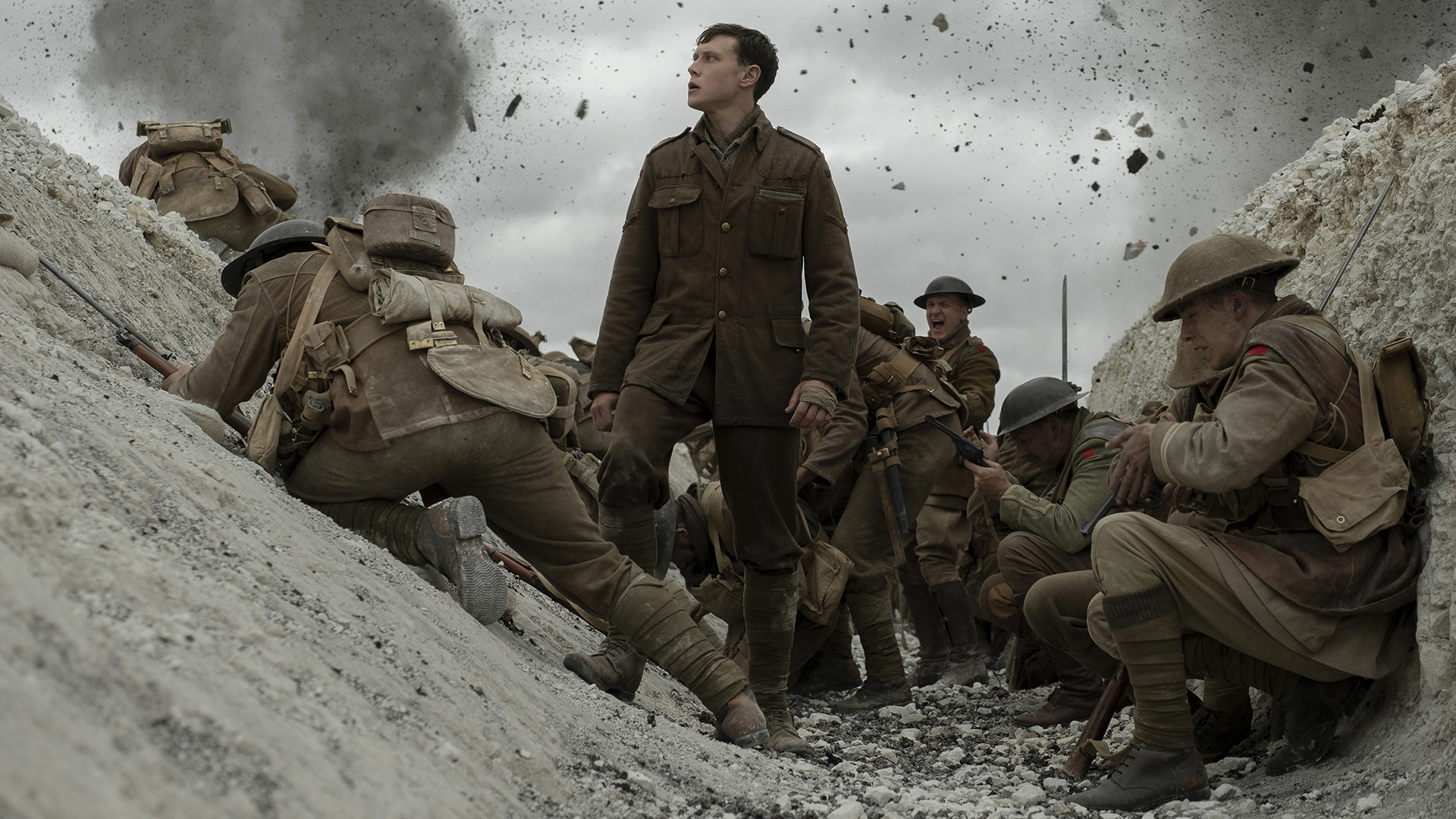
Sam Mendes for 1917
Quentin Tarantino for Once Upon a Time in Hollywood
Bong Joon Ho for Parasite
Surprises
Greta Gerwig needed to be here for Little Women, not just because this is once again the All Male Olympics, but because she deserves to be here. We’d give her Phillips’s spot.
Best Performance by a Lead Actress
Cynthia Erivo for Harriet
Scarlett Johansson for Marriage Story
Saoirse Ronan for Little Women
Charlize Theron for Bombshell
Renee Zellweger for Judy
Surprises
Awkwafina, who won the Golden Globe and showed remarkable
skill, vulnerability and range in The
Farewell deserved a slot as did Lupita Nyong’o for Us. We’d have put
them in over Theron and Erivo. It would not have made us unhappy to see Tessa
Thompson or Elisabeth Moss make the list for Little Woods and Her
Smell, respectively, but that would have been asking a lot.
Best Performance by a
Lead Actor
Antonio Banderas for Pain and Glory
Leonardo DiCaprio for Once Upon a Time in Hollywood
Adam Driver for Marriage Story
Joaquin Phoenix for Joker
Jonathan Pryce for The Two Popes
Surprises
Hooray for Antonio Banderas. It’s about damn time.
I don’t know that we’re surprised the Academy voters didn’t go with Adam Sandler, but we’re definitely disappointed. He should have had Pryce’s spot. It’s a tough, stacked year for lead actor, which is why glorious work by Robert Pattinson (The Lighthouse), Eddie Murphy (Dolemite Is My Name) and Kelvin Harrison, Jr. (Luce) went unnoticed. More surprising are snubs for DeNiro (The Irishman), Taron Edgerton (Rocketman) and Christian Bale (Ford v. Ferrari), but again, this category is loaded.
Best Performance by
an Actor in a Supporting Role
Tom Hanks for A Beautiful Day in the Neighborhood
Anthony Hopkins for The Two Popes
Al Pacino for The Irishman
Joe Pesci for The Irishman
Brad Pitt for Once Upon a Time in Hollywood
Surprises
Who are those guys? Never heard of them.
If we had our way, Song Kang Ho’s incandescent turn as
patriarch in Parasite would have edged out Hopkins, but the biggest let
down is Willem Dafoe, whose insane wickie in The Lighthouse deserved a
spot.
Best Performance by an
Actress in a Supporting Role
Kathy Bates in Richard Jewell
Laura Dern in Marriage Story
Scarlett Johansson in Jojo Rabbit
Florence Pugh in Little Women
Margot Robbie in Bombshell
Surprises
If you’d asked us ten years ago whether we would ever utter the
line, “Jennifer Lopez deserves the Oscar nomination that went to Kathy Bates,”
we would have assumed you were high. But there you have it. Or maybe Robbie
took J Lo’s place, we don’t know. They were all good, but Lopez was better.
Best Screenplay, Adapted
The Irishman
Jojo Rabbit
Joker
Little Women
The Two Popes
Surprises
That’s an exciting category.
Best Screenplay, Original
Knives Out
Marriage Story
1917
Once Upon a Time in Hollywood
Parasite
Surprises
Another great category, and one that’s hard to argue. The
Farewell deserved a spot as did Uncut
Gems, but we don’t know where we would have put them.
Best Documentary
American Factory
The Cave
The Edge of Democracy
For Sama
Honeyland
Surprises
No Apollo 11? We’d have given the damn Oscar to that
breathtaking piece of history, and here it isn’t even nominated. It was a great
year for docs, though, and here’s proof.
Best Animated Film
How to Train Your Dragon:
The Hidden World
I Lost My Body
Klaus
Missing Link
Toy Story 4
Surprises
Lots. I Lost My Body
might come as a surprise to a lot of people, but we thought it might crack the
list. Hell, Missing Link might
surprise some folks, even with the Golden Globe win. But Klaus is certainly a film that few expected to see named on this
list. What did we expect? Frozen 2,
although if we’re honest, we’re pleased as punch to see this list. (As long as TS4 wins.)
Best International
Feature Film
Corpus Cristi
Honeyland
Les Miserables
Pain and Glory
Parasite
Surprises
Great to see the brilliant
Honeyland draw noms in both
International Picture and Documentary, but where the hell is Portrait of a
Lady on Fire?
Best Cinematography
The Irishman
Joker
The Lighthouse
1917
Once Upon a time in Hollywood
Surprises
All deserving. We are just grateful they recognized the
glorious cinematography in The Lighthouse.
Best Score
Joker
Little Women
Marriage story
1917
Star Wars: The Rise of Skywalker
Surprises
No Us? We’d
put Michael Abels score in Skywalker’s place, but the rest sound fine to
us.
Best Original Song
“I Can’t Let You Throw Yourself Away” (Toy Story 4) — Randy Newman “(I’m Gonna) Love Me Again” (Rocketman) — Elton John & Bernie Taupin “I’m Standing With You” (Breakthrough) — Diane Warren “Into the Unknown” (Frozen 2) — Robert Lopez & Kristen Anderson-Lopez “Stand Up” (Harriet) — Joshuah Brian Campbell & Cynthia Erivo
Surprises “Glasgow” from Wild Rose would have been a nice inclusion, but everyone here is battling for second place after Rocketman.
The
92 annual Academy Awards will be held February 9th, and aired live
on ABC.
Ever feel like you’ve been here before? This week we celebrate that spooky feeling with some of the best horror movies to take advantage of time loop nuttiness.
5. Haunter (2013)
Nicolas Vincenzo (Cube) starts off with the standard Groundhog Day premise—surly teen Lisa (Abigail Breslin) wakes up to the walkie talkie sound of her brother playing hidden treasure with an imaginary friend. It’s not Sonny & Cher, but it’s not that far off.
But Vincenzo (working from Brian King’s screenplay) starts bending the time loop structure, blending it with a more recognizable horror trope and subverting expectations. Breslin delivers a solid performance, and Pontypool’s Stephan McHattie’s outstanding as the devilish Pale Man. Plus, excellent support work from Siouxsie Sioux’s big face on Lisa’s tee shirt!
The film does kind of collapse on itself by the third act as it gets all Frequency (or Lake House or Don’t Let Go) on us, but for a good chunk of time Haunter delivers.
4. Happy Death Day (2017)
Tree (Jessica Rothe) wakes up on her birthday in some rando’s dorm room with no memory of the night before, a raging hangover and an attitude. She’s murdered that night by a knife-wielding marauder in a plastic baby mask, only to wake up back in that same dorm room under that same They Live poster.
It doesn’t take too many déjà vu mornings before Tree decides there is a mystery to solve here and just like that, we’re off in Phil Connors territory: reliving the same day again and again gives you the chance to become a better person, right?
Director Christopher Landon (Scout’s Guide to the Zombie Apocalypse) wisely mines Scott Lobdell’s screenplay for laughs. Rothe boasts strong comic timing and a gift for physical comedy, a skill that transitions nicely to the demands of being repeatedly victimized by a slasher.
3. The Endless (2017)
There is something very clever about the way Justin Benson and Aaron Moorehead’s movies sneak up on you. Always creepy, still they defy genre expectations even as they play with them.
Camp Arcadia offers the rustic backdrop for their latest, The Endless. A clever bit of SciFi misdirection, the film follows two brothers as they return to the cult they’d escaped a decade earlier.
It is this story and the pair’s storytelling skill that continues to impress. Their looping timelines provide fertile ground for clever turns that fans of the filmmakers will find delightful, but the uninitiated will appreciate as well.
2. Timecrimes (2007)
This one is nutty, and absolutely required viewing for anyone with an interest in space/time continuum conundrums.
Writer/director/co-star Nacho Vigalondo (Colossal) mocks our desire for control and our fear of the doppelganger with a very quick and dirty trip through time. So much can go wrong when you travel just one hour backward. The less you know going in, the better.
An always clever experiment in science fiction, horror and irony, Timecrimes is a spare, unique and wild ride.
1. Resolution (2012)
Not exactly a traditional time loop horror, Resolution plays with the concept of time in ways that are baffling and eerie.
Michael (Chris Cilella) is lured to a remote cabin, hoping to save his friend Chris (Vinny Curan) from himself. Chris will detox whether he wants to or not, then Michael will wash his hands of this situation and start again with his wife and unborn baby.
But Michael is in for more than he bargained, and not only because Chris has no interest in detoxing. Directors Aaron Moorhead and Justin Benson (working from Benson’s screenplay) begin with a fascinating and bizarre group of characters and a solid story, layering on bizarre notions of time, horror and storytelling in ways that are simultaneously familiar and wildly unique. The result is funny, tense, and terrifying.
Yes, she will probably forever be first known as that girl from Twilight, unfortunately. But, in the same way her ex-vampire lover Robert Pattinson has relentlessly carved a stronger impression via challenging independent film roles, Stewart has been honing her craft and developing a reputation as a solid talent via varying roles in small budget films.
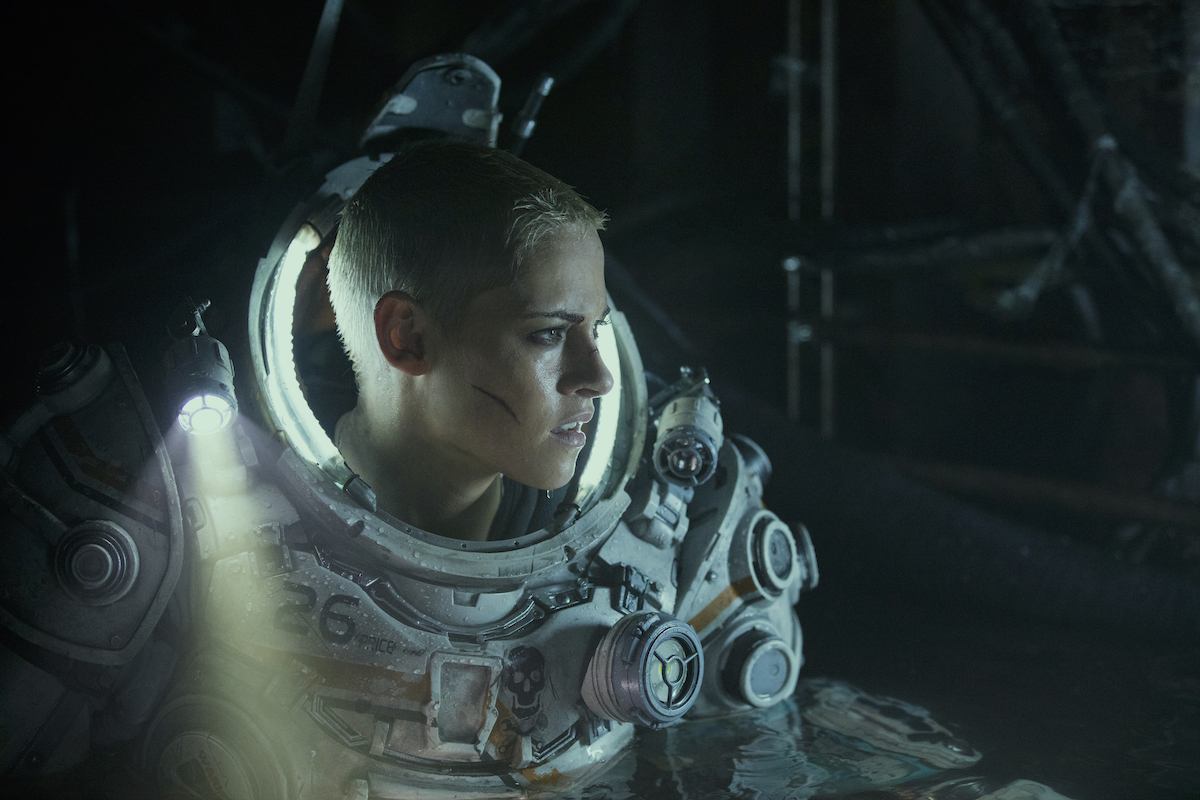
William Eubank’s deep sea horror Underwater sees Stewart as Nora, a no-nonsense, quick thinking, fast acting survivor—the kind who just might keep the remaining crew alive as they try to make their way from an irreversibly damaged deep sea drill rig to a nearby vessel that might have pods to float them to safety.
But what caused the damage in the first place and what is
making that noise?
Eubank has assembled a surprisingly solid cast for his “Alien Under the Sea” flick. Joining Stewart as the rig’s humbly heroic captain is the always excellent Vincent Cassel, while John Gallagher Jr. plays the latest in his long line of effortlessly likeable good guys, Smith. Chubby comic relief is delivered by T.J. Miller.
If that sounds like your basic set of recognizable
stereotypes assembled to be picked off one by one, you’ve detected the first
major problem with Eubank’s film: a breathtaking lack of originality.
The script, penned by Brian Duffield (The Babysitter)
and Adam Cozad (The Legend of Tarzan), offers nothing in the way of
novelty and much of the dialog is stilted, and Nora’s third act reveal of the
emotional damage she must overcome is false and forced.
Luckily, Eubanks somehow convinced a bunch of genuinely
talented actors to deliver these lines, so they mainly come off fine. And while
the director frustratingly and consistently undercuts the claustrophobic
tension he’s begun building, his monsters are pretty cool looking.
Stewart gets to try on the action hero role, and she’s not too bad. For a 95 minute sea monster movie, neither is Underwater. It’s not too good, either, but at least there are no sparkly vampires.
“Three grown men who believe they are Jesus Christ—it’s almost comical,” reads Bradley Whitford’s Clyde, a Ypsilanti mental patient who happens to be one of those three men. There is something bittersweet and meta about his reading that particular line from Dr. Stone’s (Richard Gere) report on the experimental procedure the doctor is undertaking with his three chosen patients.
On its surface, Three Christs itself seems almost comical. Whitford, Walton Goggins and Peter Dinklage play real life patients institutionalized in Michigan in the 1960s, each of whom believed they were Jesus. Just below the surface is a sad, lonesome story of a medical system ill-equipped and unwilling to treat the individual, and of the peculiar, touching struggles of three souls lost within that system.
Director Jon Avnet, writing with Eric Nazarian, adapts
social psychologist Milton Rokeach’s nonfiction book on his own study, “The
Three Christs of Ypsilanti.”
Whitford’s performance is fine, but he’s somewhat out of his
league when compared to Dinklage and Goggins. Dinklage is the film’s heartbeat
and he conveys something simultaneously vulnerable and superior in his behavior.
He’s wonderful as always, but it’s Goggins who steals this film.
Walton Goggins continues to be an undervalued and under-recognized talent. He can play anything from comic relief to sadistic villainy to nuanced dramatic lead (check out his turn in Them That Follow for proof of the latter). Here the rage that roils barely beneath the surface speaks to the loneliness and pain of constantly misunderstanding and being misunderstood that has marked his character’s entire life.
Gere is the weakest spot in the film. He charms, and his rare scenes with Juliana Margulies, playing Stone’s wife Ruth, are vibrant and enjoyable. But in his responses to his patients and in his struggles against the system (mainly embodied by Stephen Root and Kevin Pollak), he falls back on headshakes, sighs and bitter chuckles.
Aside from two of the three Christs’ performances, Avent’s film looks good but lacks in focus, failing to hold together especially well. The point of the extraordinary treatment method is never very clear, nor is its progress. Stone’s arc is also weak, which again muddies the point of the film.
Three Christs misses more opportunities than it grabs, which is unfortunate because both Dinklage and especially Goggins deliver performances worth seeing.
Got some stuff this week – good week to avoid the chill, pull out that ratty old throw and stay on the couch, especially if you like to watch white guys descend into madness. If you do, this is your week, brother.
Any time a film is remade, you have to ask why. Not to be
cynical, but because it’s a legitimate query. Is there a compelling reason to
watch this new one?
Nicolas Pesce hopes there’s reason to watch his retooling of
The Grudge.
The Grudge began in 2000 with Takashi Shimizu’s Japanese horror Ju-on, which spawned three Japanese sequels and now four English language reworkings, two of which Shimizu directed himself. His 2004 version starring Sarah Michelle Geller became a tentpole of our J-horror obsession of the early 2000s.
Pesce, working with co-writer Jeff Buhler (The Midnight Meat Train—that was your first problem), pulls story ideas from across the full spate of Ju-on properties and braids them into a time-hopping horror.
Is there room for hope? There is, because Pesce landed on horror fanatics’ radars in 2016 with his incandescent feature debut, The Eyes of My Mother. He followed this inspired piece of American gothic in 2018 with a stranger, less satisfying but utterly compelling bit of weirdness, Piercing.
And then there’s this cast: Andrea Riseborough, John Cho,
Lin Shaye, Betty Gilpin, Jacki Weaver, Frankie Faison, Damian Bichir—all solid
talents. You just wouldn’t necessarily know it from this movie.
Pesce’s basically created an anthology package—four stories
held together by a family of especially unpleasant ghosts. But that one
sentence contains two of the film’s biggest problems.
Let’s start with the ghosts. Shimizu’s haunters—Takako Fuji and Yuya Ozeki—were sweet-faced, fragile and innocent seeming. The perversion of that delicacy is one of the many reasons Shimizu’s films left such a memorable mark. Pesce’s substitute family loses that deceptive, macabre innocence.
The way the film jumps from story to story and back again
undermines any tension being built, and each story is so brief and so dependent
on short-hand character development (cigarettes, rosaries, ultrasounds) that
you don’t care what happens to anyone.
Jacki Weaver, who seems to be in a comedy, is wildly miscast. Go-to horror regular Shaye has the only memorable scenes in the film. Riseborough, who is a chameleonic talent capable of better things, delivers a listless performance that can’t possibly shoulder so much of the film’s weight.
Jump scares are telegraphed, CGI and practical effects are unimpressive, editing is uninspired and, worst of all, the sound design lacks any of that goosebump-inducing inspiration Shimizu used to such great effect.
2019 was an exceptional year in film. There were so many great movies to catch, undoubtedly some slipped by you. Here we offer a list of the best films we think you might not have seen this year in the hopes that you’re able to remedy that situation stat.
The second decade of the 2000s saw remarkable leaps forward in technology, a fact that democratized filmmaking in a way we’d never seen before. Between the tech available to help low-budget filmmakers get their vision created, and the platforms available to get that product out to consumers, we saw more high-quality (and low) films than ever before. This only meant that it got tougher to convince people to get off their bums and fork over the cash to see something on the big screen, but some filmmakers answered that challenge with the visual wonder and glory.
It’s a great time to be a movie lover. Here are our 25 favorite films from 2010 – 2019.
1. Mad Max: Fury Road (2015)
Holy shit.
To say that George Miller has stepped up his game since he left
us at Thunderdome would be far too mild a statement to open with. Mad Max: Fury Road is
not just superior to everything in this franchise, as well as everything else
Miller has ever directed. It’s among the most exhausting, thrilling, visceral
action films ever made.
Unsurprisingly, the great Tom Hardy delivers a
perfect, guttural performance as the road warrior. As his reluctant partner in
survival, Charlize Theron is the perfect mix of compassion and badassedness.
Hardy’s a fascinating, mysterious presence, but Theron owns this film.
Fury Road amounts
to a film about survival, redemption and the power of the universal blood
donor. Clever, spare scripting makes room for indulgent set pieces that
astonish and amaze. There’s real craftsmanship involved here – in the practical
effects, the pacing, the disturbing imagery, and the performances that hold it
all together – that marks not just a creative force at the top of his game, but
a high water mark for summer blockbusters.
2. Toy Story 3 (2010)
It had been 11 years – time for all of us to grow up and
forget about all our favorite toys. And then Pixar returned to Andy’s room in
maybe the most honest and heartbreaking coming of age film every digitally
created.
Andy’s leaving for college. The toys’ jobs are done. Crated
to be packed away in the attic, the toys are accidentally donated to a day care
center. There, they will learn the true meaning of horror.
Sequels are not supposed to surpass the quality of their
predecessors, but this franchise has always been different. There is love and
pathos among these toys and between the toys and the audience. Whether it was
the handholding scene on the conveyor belt or Woody and Andy’s final goodbye,
something in this movie got to you. If it didn’t, we’re not calling you a
sociopath directly, but we do have our doubts about you.
https://www.youtube.com/watch?v=JcpWXaA2qeg
3. 12 Years a Slave (2013)
Steve McQueen artfully and impeccably
translates Solomon Northup’s memoir of illegal captivity to the screen.
Northup, played with breathtaking beauty by Chiwetel Ejiofor, was a free family
man in New York State, a violinist by trade, duped, drugged, shackled and sold
into slavery in Louisiana. We are privy to the next 12 years of this man’s
life, and while it is often brutally difficult to watch, it’s also a tale so
magnificently told it must not be missed.
12 Years a Slave transcends filmmaking, ultimately become an event, one that
is destined to leave a profound, lasting impression. He’s matched by Lupita
Nyong’o, whose almost otherworldly performance netted her an Oscar, and Michael
Fassbender in one of the most brilliantly
unsettling pieces of acting you’ll ever find.
Even the smallest role leaves a scalding
impression. Whether it’s Paul Giamatti’s casual evil, Benedict Cumberbatch’s
cowardly mercy, Paul Dano’s spineless rage or Adepero Oduye’s unbridled grief,
there’s an emotional authenticity to the film that makes every character, no
matter how brief their appearance in Northup’s odyssey, memorable.
4. Take Shelter (2011)
For years, the undeniably talented Michael Shannon’s been a
bit of a “that guy.” His performance here as a man fighting a possible descent
into madness may make him that guy you can’t stop thinking about.
Shannon’s blue collar family man Curtis is plagued by
frightening dreams and apocalyptic visions. In telling his tale, filmmaker Jeff
Nichols exhibits the patience of an artist who knows just where he is taking us
and how much the journey will resonate once we get there. In one sense, the film
is a modern horror story reaching the parts of our deepest fears that no maniac
in a hockey mask could ever touch. More pointedly, it’s an allegory for now, a
beautifully shot summation of the anxieties of our time.
5. The Tree of Life (2011)
If you don’t mind a challenge, Tree of Life offers the most
personal and introspective work yet from writer/director Terrence Malick. He
begins at the beginning of life itself, then in a loose, autobiographical
narrative, he focuses on a Texas family in the 1950s and on the complicated
relationship between young Jack (Hunter McCracken) and his domineering father
(Brad Pitt) before leaping to a reflective, even spiritual present day.
Malick works on a bold vision and he’s not interested in
dumbing it down. For some filmmakers, this mix of the celestial and the
biographical wouldn’t work. In fact, you may be sure while watching it that The
Tree of Life doesn’t work. But ultimately, it leaves you feeling a way that
no lesser film could.
6. The Master (2012)
A seriously damaged WWII vet-turned-vagabond
(Joaquin Phoenix, in an astonishing performance) stows away on a yacht. Its
enigmatic commander (Philip Seymour Hoffman, incandescent as always) takes the
boy under his wing, determined to use this vessel to prove his theories about the
human mind – to himself, to the veteran, and to an increasingly hostile public.
Phoenix is a tightly coiled spring
of rage and emotion, so honest and raw as to make your jaw drop. He’s flanked
on all sides by impressive turns, not the least of which is Hoffman’s perfectly
nuanced megalomaniac. His presence provides the counterbalance to Phoenix
that allows filmmaker Paul Thomas Anderson to explore core American ideas of
freedom versus security, submission versus power, self-determination versus
subservience. It’s a challenging but awe-inspiring film that proves Anderson
the true master.
7. Selma (2014)
Ava DuVernay’s account of the civil rights marches
in Selma, Alabama doesn’t flinch. You can expect the kind of respectful
approach and lovely, muted frames common in historical biopics, but don’t let
that lull you. This is not the run of the mill, laudable and forgettable
historical art piece, and you’ll know that as you watch little girls descend a
staircase within the first few minutes. Selma is a straightforward, well-crafted
punch to the gut.
Working from a screenplay by first time
scripter Paul Webb, DuVernay unveils the strategies, political factions,
internal frictions and personal sacrifices at play in the days leading to the
final march from Selma to Montgomery, Alabama. Yes, she simplifies some
complicated issues and relationships, but she is a powerful storyteller at the
top of her craft and her choices are always for the good of the film.
8. Moonlight (2016)
Saving the world is great, so is
finding love, or cracking the case, funnying the bone or haunting the house.
But a movie that slowly awakens you to the human experience seems a little
harder to find at the local multiplex.
You can find one in Moonlight, a minor
miracle of filmmaking from writer/director Barry Jenkins. With just his second
feature (after 2008’s Medicine for Melancholy), Jenkins presents a journey of
self-discovery in three acts, each one leading us with graceful insight toward
a finale as subtle as it is powerful.
The performances are impeccable, the
craftsmanship precise, the insight blinding. You will be a better human for
seeing Moonlight. It is a poignant reminder that
movies still have that power.
9. The Act of Killing (2012)
Surreal, perverse, curious and
horrifying, The Act of Killing demands to be seen as much as any film in recent memory.
Co-director Joshua Oppenheimer met with some of the most
famous death squad leaders of the 1965 overthrow of Indonesian government and
made them a distasteful yet ultimately brilliant offer: would they re-enact
their savagery on camera?
The result is mesmerizing,
can’t-believe-what-I’m-seeing-stuff. The Act of
Killing is unforgettable. It
calls to mind past cruelty, an Orwellian present and an uncertain future,
emerging as essential, soul-shaking viewing.
10. Cave of Forgotten Dreams (2010)
Rarely has a film transported an audience back in time as
effectively as Werner Herzog’s Cave of Forgotten Dreams. The time is 30,000
years ago and the place is France’s Chauvet Cave, home of the earliest known
recorded visions in human history.
Herzog films in 3D, reminding you that the technique can be
so much more than a gimmick. You feel the breadth and the depth of the cave and
ogle the beautiful contours of its walls, adorned with the work of incredibly
sophisticated artists. Herzog’s camera lingers as art from tens of thousands of
years ago speak to you so loudly that you may find yourself holding your
breath.
11. Drive (2011)
Nicolas Winding Refn washes deliberately paced scenes in
neon, hangs on long pauses, and builds slow, existential dread that he
punctuates on rare occasions with visceral, brutal smacks of violence.
The perfect embodiment of this trancelike atmosphere and its
sudden spurts of violence, Ryan Gosling simmers quietly, a brooding, almost
childlike outsider in a weird satin jacket. He’s closed off, poetic in his
efficiency, until he’s drawn to the warmth and humanity of another. And others
always mean complications.
The aesthetic and the framing, the sound design and score,
the stillness and explosions of violence define this film as an impeccable and
bizarre vision unlike anything in its gangster genre.
12. The Revenant (2015)
There’s a natural poetry to Alejandro Gonzales
Inarritu’s filmmaking. The Oscar winning director seeks transcendence for his characters,
finding the grace in human frailty regardless of the story unfolding. And The Revenant is quite a story.
With no more than 15 lines in English, DiCaprio
manages to capture the essence of this grieving survivor brought to his most
primal self. This is easily the most physical performance of his career.
DiCaprio is alone for the majority of his time onscreen, and his commitment to
this character guarantees that those scenes are riveting.
One year after winning the Oscar for Birdman’s
intimate, internal journey, Innaritu snagged a second statuette, taking that
human journey toward redemption to the out of doors with a brutally gorgeous,
punishingly brilliant film.
13. Boyhood (2014)
Filmmaker Richard Linklater’s genius has always
been his generosity and patience with his cast and his mastery in observing the
small event. Many of his films feel as if they are moving of their own accord
and he’s simply there to capture it, letting the story unveil its own meaning
and truth.
Never has he allowed this perception to define
a film quite as entirely or as eloquently as he does in Boyhood. With the collaborative narrative Linklater
sets a tone that is as close to reality as any film has managed. It’s both
sweeping and precise, with Linklater’s deceptively loose structure strengthened
by his near flawless editing and use of music to transition from one year to
the next.
An effort that proves Linklater to be
indefinable as an artist even as it feels like a natural evolution of his best
work, Boyhood is a movie like no other.
14. Roma (2018)
A breathtaking culmination of his work to date, Roma pulls
in elements and themes, visuals and curiosities from every film Alfonso Cuarón
has made (including a wonderfully organic ode to the inspiration for one of his
biggest), braiding them into a semi-autobiographical meditation on family life
in the early 1970s.
At the film’s heart is an extended
group concerning an affluent Mexico City couple (Fernando Grediaga and the
scene-stealing Marina de Tavira), their four children and their two live-in
servants Adela (Nancy Garcia Garcia) and Cleo (Yalitza Aparicio).
Sequence upon sequence offers a
dizzying array of beauty, as foreground and background often move in glorious
concert during meticulously staged extended takes that somehow feel at once
experimental and restrained. The effect is of a nearly underwater variety, a
profound serenity that renders any puncture, from a street parade moving
blindly past the distraught woman in its path to a murder in broad daylight,
that much more compelling.
15. Toy Story 4 (2019)
Though a 4th installment seemed needless if not
sacreligious, the stars aligned, the talents gelled, and the history and
character so beautifully articulated over a quarter century found some really
fresh and very funny ideas. Toy Story 4 offers
more bust-a-gut laughs than the last three combined, and while it doesn’t pack
the emotional wallop of TS3 (what
does?!), it hits more of those notes than you might expect.
Between Forky’s confounded sense of self and Woody’s own
existential crisis, TS4 swims some heady waters. These themes are brilliantly,
quietly addressed in a number of conversations about loyalty, devotion and
love.
Characteristic of this franchise, the peril is
thrilling, the visuals glorious, the sight gags hilarious (keep an eye on those
Combat Carls), and the life lessons far more emotionally compelling than what
you’ll find in most films. To its endless credit, TS4 finds new ideas to explore and fresh but
organic ways to break our hearts.
16. The Witch (2015)
In set design, dialog,
tension-building and performances this film creates an unseemly familial
intimacy that you feel guilty for stumbling into. There is an authenticity here
– and an opportunity to feel real empathy for this Puritan family – that may
never have been reached in a “burn the witch” horror film before.
On the surface The Witch is an “into the woods” horror film that
manages to be one part The Crucible, one
part The Shining. Below that, though, is a peek into
radicalization as relevant today as it would have been in the 1600s.
Beautiful, authentic and boasting
spooky lines and images that are equally beautiful and haunting, it is a film –
painstakingly crafted by writer/director Robert Eggers – that marks a true new
visionary for the genre.
17. You Were Never Really Here (2017)
Lynne Ramsay adapts Jonathan Ames’s brisk
novella into a dreamy, hypnotic fable, an in-the-moment pileup of Taxi Driver, Taken and Drive.
Together, Ramsay and lead Joaquin Phoenix
ensure nearly each of the film’s 89 minutes burns with a spellbinding
magnetism. While Phoenix lets you inside his character’s battered psyche just
enough to want more, Ramsay’s visual storytelling is dazzling. Buoyed by
purposeful editing and stylish soundtrack choices, Ramsay’s wonderfully artful
camerawork (kudos to cinematographer Thomas Townend) presents a stream of
contrasts: power and weakness, brutality and compassion, celebration and
degradation.
18. Get Out (2017)
What
took so long for a film to manifest the fears of racial inequality as smartly
as does Jordan Peele’s Get Out.
Peele
writes and directs a mash up of Guess Who’s Coming to Dinner, Rosemary’s
Baby and a few other staples that should go unnamed to preserve
the fun. Opening with a brilliant prologue that wraps a nice vibe of homage
around the cold realities of “walking while black,” Peele uses tension, humor
and a few solid frights to call out blatant prejudice, casual racism and
cultural appropriation.
Peele is clearly a horror fan, and he gives knowing winks to
many genre cliches (the jump scare, the dream) while anchoring his entire film
in the upending of the “final girl.” This isn’t a young white coed trying to
solve a mystery and save herself, it’s a young man of color, challenging the
audience to enjoy the ride but understand why switching these roles in a horror
film is a social critique in itself.
19. Parasite (2019)
Joon-ho Bong, as both director and co-writer, dangles multiple
narrative threads, weaving them so skillfully throughout the film’s various
layers that even when you can guess where they’ll intersect, the effect is no
less enlightening.
Filming in an ultra-wide aspect ratio allows Bong to give his
characters and themes a solid visual anchor. In single frames, he’s able to embrace
the complexities of a large family dynamic while also articulating the detailed
contrasts evident in the worlds of the haves and have nots.
Parasite tells
us to make no plans, as a plan can only go wrong.
Ignore that, and make plans to see this brilliantly mischievous,
head-swimmingly satisfying dive down the rabbit hole of space between the
classes.
20. The Irishman (2019)
Scorsese’s sly delivery suggests that he’s
interested in what might have happened to Hoffa, sure, but he’s more intrigued
by memory, regret and revisionism in the cold glare of time. The result is
sometimes surprisingly funny, with a wistful, lived-in humor that more than suits
the film’s greying perspective.
Robert De Niro’s longtime partnership with
Scorsese makes it even easier to view his Frank Sheeran as an extension of the
director himself, taking stock of his legacy in film. Alongside career
re-establishing turns from Al Pacino, embracing type, and Joe Pesci, a gem
playing against type, De Niro reminds you just why he has the legacy he does.
Away from the chatter of Scorsese’s views on
superhero movies or the proper role of Netflix, The
Irishman stands as a testament to cinematic storytelling, and
to how much power four old warhorses can still harness.
21. Django Unchained (2012)
Quentin Tarantino’s first Oscar winning
screenplay since Pulp Fiction unleashed a giddy bloodbath that’s one
part blaxploitation, two parts spaghetti Western, and all parts awesome.
Astonishing performances from Leonardo DiCaprio and Oscar winner Christoph
Waltz might keep you from noticing the excellent turns from Sam Jackson, Jamie
Foxx and Kerry Washington. That’s why you’ll need to see it again.
22. Dunkirk (2017)
Solid
performances abound without a single genuine flaw to point out, but the real
star of Dunkirk is filmmaker Christopher Nolan. He dials back the score –
Hans Zimmer suggesting the constant tick of a time bomb or the incessant roar of
a distant plane engine – to emphasize the urgency and peril, and generating
almost unbearable tension.
Visually, Nolan’s scope is breathtaking, oscillating between the
gorgeous but terrifying open air of the RAF and the claustrophobic confines of
a boat’s hull, with the threat of capsize and a watery grave constant.
What
the filmmaker has done with Dunkirk –
and has not done with any of his previous efforts, however brilliant or flawed
– is create a spare, quick and simple film that is equally epic.
23. Black Panther (2018)
Just when you’ve gotten comfortable with the
satisfying superhero origin story at work, director/co-writer Ryan Coogler and
a stellar ensemble start thinking much bigger.
Coogler works with many of these basic themes
found in nearly any comic book film—daddy issues, becoming who you are, serving
others—but he weaves them into an astonishing look at identity, radicalization,
systemic oppression, uprising and countless other urgent yet tragically
timeless topics. The writing is layered and meaningful, the execution
visionary.
24. The Babadook (2014)
Like a fairy tale or nursery rhyme, simplicity
and a child’s logic can be all you need for terror.
Radek Ladczuk’s vivid cinematography gives scenes a properly
macabre sense, the exaggerated colors, sizes, angles, and shadows evoking the
living terror of a child’s imagination.
Much of
what catapults The Babadook beyond similar “presence in my house”
flicks is the allegorical nature of the story. There’s an almost subversive
relevance to the familial tensions because of their naked honesty, and the
fight with the shadowy monster as well as the film’s unusual resolution
heighten tensions.
25. Young Adult (2011)
Charlize Theron is singular perfection here as a walking
middle finger to the world. Director Jason Reitman and writer Diablo Cody
create a world in which Theron can soar, vainglorious, damaged, vulnerable,
cynical, shallow and perhaps ready for redemption.
Or is she?
Surrounded by a whip-smart cast, each of whom offering
Theron opportunity for chemical spark, the Oscar winner proved that award was
no fluke. Hysterically subversive and deeply human, Young Adult offers the
greatest cinematic train wreck in recent memory.