Tag Archives: movie review

Anything But

Normal

by Hope Madden

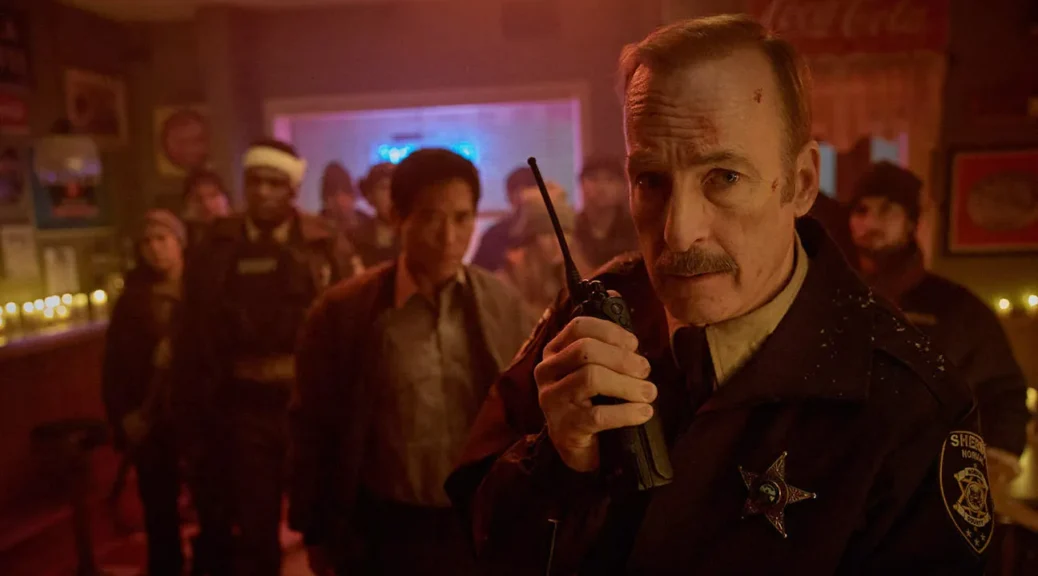
Do you know what’s especially fun about watching Normal? It’s not seeing Bob Odenkirk crack heads and blow stuff up. I mean, that’s always fun, but it’s nothing new. Nor is it new to see what fresh fisticuffs and cutlery mayhem writer Derek Kolstad (John Wick [all four], Nobody [both], Ballerina) can dream up. We’ve seen his dreams. They’re somewhat similar.

What is especially fun about watching the star of Nobody and its writer team up again to drop a middle aged schmo into a sudden and unexpected explosion of violence is that Ben Wheatley is directing. We haven’t seen Ben Wheatley get really nuts in a bit.

Odenkirk, who co-writes the script with Kolstad, is Ulysses. He used to be a real sheriff, but now he takes interim sheriff gigs around the country and leaves rambling accounts of his days on his estranged wife Penny’s voicemail.

His latest assignment: Normal, Minnesota.

The town of about 1500 people and one moose looks…strangely prosperous. Not like the small towns shuttering due to a poor economy. When two good hearted, down-on-their-luck bank robbers roll into town, Ulysses gets a glimpse of the what’s really going on.

That leaves us with about 45 minutes of handguns, rifles, Tommy Guns, knives, fists, rocket launchers, chains, dynamite, and knitting needles. Plenty of time for Wheatley to help us remember what a blast he had directing 2016’s Freefire.

Odenkirk’s ideal as the begrudgingly heroic schlub, and Normal surrounds him with eclectic characters and solid comic performances. But there’s no question the relish Wheatley takes in wry, witty bursts of extreme violence, each gag its own punchline, is what delivers the film’s fun.

There’s a touch of Fargo, a smidge of Hot Fuzz, a bit of the filmmaker’s own Freefire, and maybe a hint of his Sightseers. These borrowed flavors blend favorably with the inescapable familiarity of the concept—Bob Odenkirk, badass—as well as Kolstad’s routine action beats.

Normal is a ton of bloody fun that you’ll kind of remember later but you’ll laugh and enjoy yourself now.


Screening Room: Kingdom of the Planet of the Apes, Last Stop in Yuma County, The Dry 2 & More

Two Minute Warning

Baghead

by Hope Madden

Back in 2013’s Texas Chainsaw, a young woman receives word that she’s inherited a building from a mysterious relative. She ignores the notes explaining her duties until it’s too late and she’s already stumbled into what lives in her basement.

Laberto Corredor’s Baghead—an expansion of his 2017 short of the same name—treads similar real estate. Iris (Freya Allan) gets word that her estranged dad (Peter Mullan) has passed and she’s inherited his dilapidated Berlin pub. Currently penniless, jobless and homeless in England, Iris signs the deed and takes over the old place.

She doesn’t watch the video explaining the current basement tenant until it’s too late. But it’s not Leatherface down in Iris’s cellar. It’s Baghead, a centuries old witch condemned to freakshow status. For a fee, she’ll swallow a relic of a deceased loved one and turn into said loved one for two minutes.

But—as was the case with last year’s similarly themed Talk to Me—the conversation comes with more baggage than you might expect.

There are some exceptional shots in this film and solid performances. The small ensemble boasts memorable support work from Mullan, Ned Dennehy and Svenja Jung, as well as strong lead performances.

Ruby Barker elevates the thankless best friend role, while Jeremy Irvine smartly inhabits the character of a grieving husband.

Iris makes a lot of inexcusably dumb choices, but because Allan crafts her as angry and short sighted, this feels less like a misstep than it could have.

The plot—co-written by Christina Pamies, Bryce McGuire and the short film’s writer, Lorcan Reilly—becomes needlessly complicated. Worse, Corredor undermines the excellent production value of his locations with gimmicky and weak VFX.

Irvine and Allan nearly save the film, though. The result is a modestly entertaining mixed bag.

Screening Room: Eyes of Tammy Faye, Copshop, Prisoners of the Ghostland, Cry Macho, Hellarious & More

Killer Queen

Death Drop Gorgeous

by Rachel Willis

Don’t let the low-budget look of Death Drop Gorgeous deter you from watching this film because if you do, you’ll miss out on a hilarious, campy slasher film.

Recently dumped, Dwayne (Wayne Gonsalves) has returned to Providence and begged back his old job as a bartender at The Aut Haus. Rooming with best friend, Brian (Christopher Dalpe), Dwayne comes back to work just as a serial killer begins hunting the queens and patrons of The Aut Haus. Using the dating app, Poundr, the killer lures his victims to their doom.

Populated by drag queens and serious shade, this movie sends up some of the best of 80’s camp horror. Writers, directors and stars Dalpe, Michael J. Ahern and Brandon Perras manage a lot with a low budget. By doing double and triple duty with their cast and crew, they mine every bit of talent they can from what they have available.

That’s not to say the film doesn’t have its distractions. The camerawork and lighting are occasionally poor. However, there are also times when it perfectly sets the tone. Some of the actors, most of whom have no previous acting experience, are better than others. Michael McAdam is perfectly cast as gloriously named Gloria Hole, a queen who no longer commands the respect she used to. McAdam plays perfectly against younger, hotter queen Janet Fitness (Matthew Pidge). Their nasty back and forth offers some of the film’s stand-out moments.

A few scenes toward the beginning of the film are a bit longer than necessary. But the pace picks up in the second act as more and more people are dispatched in gruesome ways. You’ll probably never look at a meat grinder the same again.

Social commentary is delivered via catty banter and barroom brawls. The culture surrounding Dwayne and Brian is quick to deride certain qualities. One man goes so far as to say Brian is “too fem” and that he doesn’t date “blacks” in reference to Dwayne. Gloria Hole is shamed simply for aging. This is deeper content than one might expect from a campy slasher flick, but it works.

The writers and the actors camp it up for all its worth, and it makes Death Drop Gorgeous a cut above many films benefiting from a bigger budget.

Bzzz

Mosquito State

by Hope Madden

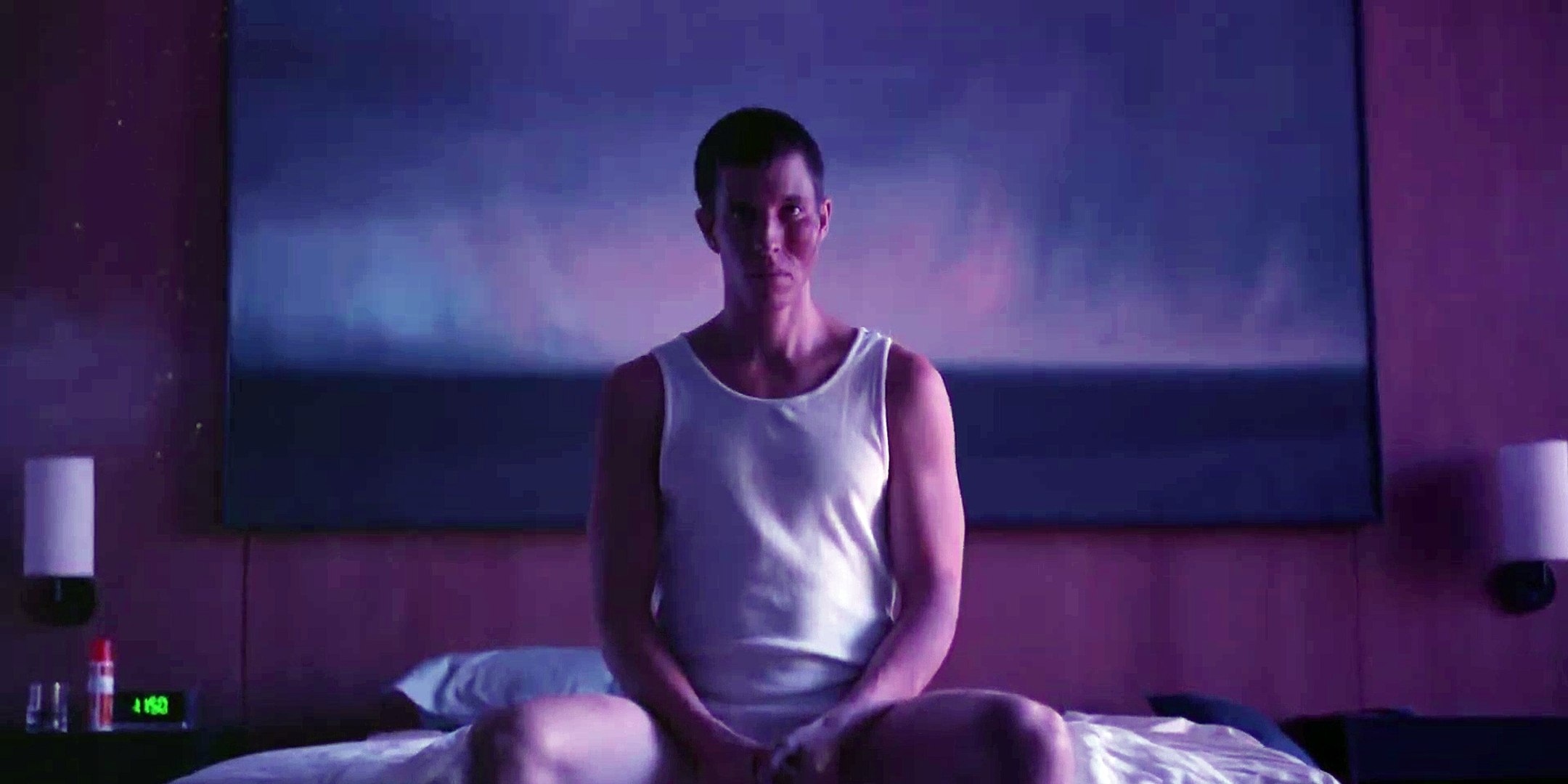
Right from its scientifically precise and profoundly unsettling opening, Filip Jan Rymsza’s Mosquito State is almost unwatchable. The film, about Wall Street analyst Richard Boca (Beau Knapp) and the 2008 financial collapse, takes on an upsetting metaphor.

Richard, brilliant and socially awkward in equal measure, brings two bodies home with him one evening: the poised and lovely Lena (Charlotte Vega) and a thirsty mosquito. Thanks to Richard’s intimacy ineptitude, things don’t go well with Charlotte, but that mosquito gets all she came for.

Though the buzzing of the bloodsuckers that soon breed in Richard’s apartment may suggest those Wall Street parasites whose appetites will soon collapse the market, Rymsza has something less obvious on his mind.

Any underlying themes about benevolence versus predation serve the filmmaker’s somewhat confounding allegory, but his aesthetic is as pointedly horrific as they come. My god, that whining buzz! The sound threatens to overwhelm you as certainly as the insects themselves overwhelm Richard, who becomes utterly submissive, offering his naked body to the unholy swarm.

Rymsza orchestrates a certain ghastly beauty, but first he has to immerse you in sounds and sights that trigger an automatic, primal revulsion and need to swat and flee.

Knapp’s performance suggests a bloodless Nicolas Cage as Elephant Man — bloodless not just because he’s made Richard the mosquitos’ feast, but because Knapp drains his character of charisma and flamboyance. Richard’s as unpredictable and difficult to enjoy as the film itself, but that makes him —and Mosquito State — no less distressingly intriguing.

Rymsza’s anticlimactic finale will leave many unsatisfied with his film. But for a wild combination of revulsion and beauty, Mosquito State is worth a look.

Revealing Our Privates in Public

Materna

by Christie Robb

With Materna, director David Gutnik presents four emotional vignettes of women and their relationships with either their mother figures, their children, or both.

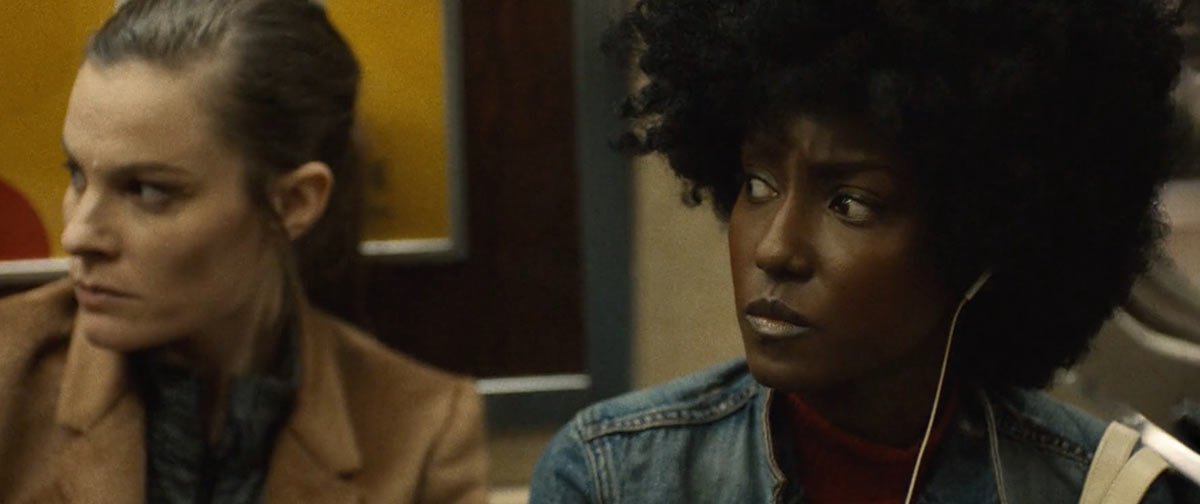
While the four women’s stories intersect in a brief, tense moment on a New York subway car, their backstories and how they came to be in that particular car are quite different.

The flashbacks don’t depict simple, saccharine, Hallmark Mother’s Day card relationships. These relationships are layered and complicated—with longing and frustration, the urge to shelter and the urge to smack.

Each of the four lead actresses, Kate Lyn Sheil, Jade Eshete, Lindsay Burdge, and Assol Abdullina, rises to the challenge and convincingly demonstrates the emotional range of her subject. (Eshete and Abdullina also co-wrote the screenplay with Gutnik.)

Rory Culkin shows up to illustrate that the maternal instinct is not solely the purview of those with two X chromosomes.

It’s not a perfect film. The initial segment, while it does pique the viewer’s interest, maybe doesn’t best set the stage for the ones that follow. There are elements that seem to signal sci-fi or body horror that aren’t carried through in the rest of the film. And because of the brevity of each of the vignettes, some of them seem a little roughly sketched, lacking in details that would more solidly ground the perspective of the woman depicted.

At the point of intersection in the subway car, each of the women is keeping herself to herself and adhering to the unspoken etiquette of public transportation. But then a white man starts loudly trying to engage them in conversation that quickly devolves into harassment and violence.

This screaming, egomaniac clearly sees himself as the most important person in the shared space and aims to capture everyone’s attention, making his private life public, doing a kind of emotional manspreading. It’s interesting to contrast this with what the women are dealing with and how their private lives either do or do not impact this public space.  

This is Gutnik’s first feature film and I’m looking forward to seeing what’s next.

Table for Three

First Blush

by Rachel Willis

When Nena (Rachel Alig) meets Olivia (Kate Beecroft), there’s an instant spark. So even though Nena is married to Drew (Ryan Caraway), that doesn’t stop her from pursuing Olivia. In writer/director Victor Neumark’s first film, First Blush, an unconventional relationship forms as a duo becomes a trio in an exploration of a polyamorous relationship.

The best part of First Blush is that the characters seem like normal people. Save Olivia’s background as a Parisian model, the rest of the people we meet feel a lot like people we know. There were several moments that nailed the transition from single (or dating) twenty-somethings into married thirty-somethings – anxious Nena particularly reminded me of quite a few people (myself included).

Overall, these are characters who struggle with happiness, with what it means to be grown up, and with how to be brave. Nena’s resolve to say ‘yes’ more often is what leads her to pursue Olivia. While at first Drew seems simply along for the ride, Neumark makes sure to insert him (no pun intended) into the relationship as more than a bystander but an equal part.

The predictable ménage à trois montage, when it comes, is light on the sex, and more interested in illustrating the fun the three have as they fall into a relationship. The movie never stoops to voyeurism, instead it plays out as one would expect of any romantic dramedy – not to say it entirely follows a pattern, but by following a semi-predictable model, the film means to normalize the polyamorous lifestyle as a valid choice.

But the third act flounders. Following the film’s unnecessary time jump, Neumark isn’t as skillful at navigating the complications that arise within the trio. Unlike the naturalistic first and second acts, the third relies on things we’ve been told rather than shown. It would have been more interesting to see the interim time between the second and third acts, to give us a chance to watch as the tensions arise between the characters.

However, the movie never fails to engage emotionally. We’re invested in this relationship, we want to know how it will work, where it will go. While it might not be a relationship style most of us will experience, that doesn’t mean we can’t understand the appeal. You want the characters to be happy, in whatever relationship style that works best for them.