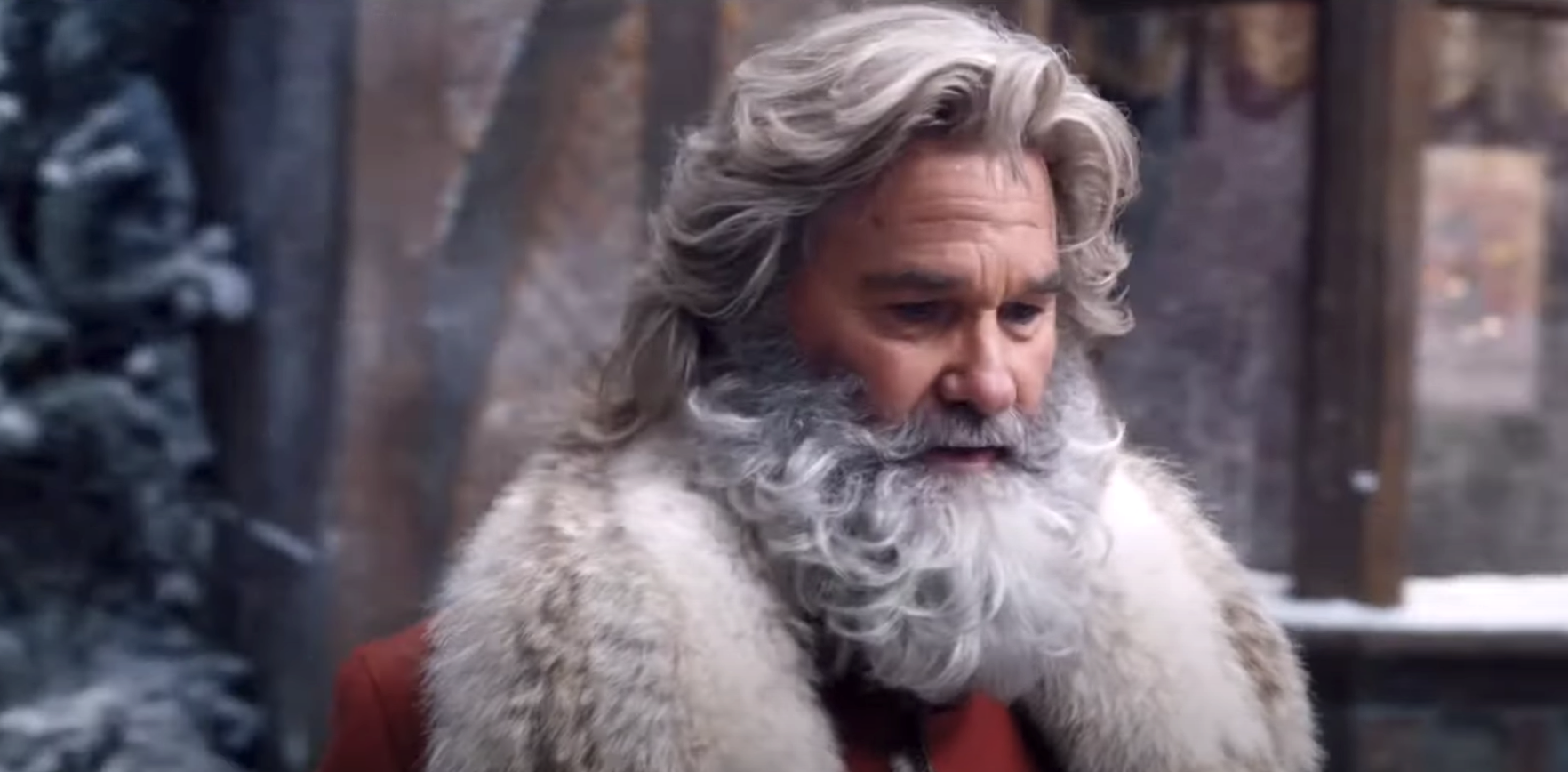
From the moment Sheriff Woody lamented that snake in his boot, it’s been inevitable that Tom Hanks would star in a Western. Not because he personifies the bruised masculinity, the solitary grit—that’s just ornamentation, anyway.
Tom Hanks would inevitably be the hero in a Western because we
believe he would do the right thing, however difficult that is.
The Western News of the World is a film we’re less inclined to expect from director Paul Greengrass. His kinetic camerawork and near-verite style that lent realism to United 93 and added tension to his Jason Bourne films hardly suit a Western. He adapts with a more fluid camera that underscores the tension as well as the lyricism inherent in the genre.
He also takes full advantage of our faith in Tom Hanks.
Hanks is Captain Jefferson Kyle Kidd, a Civil War veteran who travels from town to town reading news stories to weary people looking for a distraction. In his travels he comes across a 10-year-old girl (Helena Zengel, wonderful) who’d been raised by Kiowa people and is now being returned against her will to her natural aunt and uncle.
Reluctantly, Captain Kidd agrees to transport her 200 miles
across dangerous territory. Not because he wants to or because he will benefit
in any way from it. In fact, he will probably die, and she with him.
Greengrass adapts Paulette Jiles’s nove with the help of Luke Davies. An acclaimed poet, Davies can be a handful for some directors. His material, even when done well, as it was with Garth Davis’s 2016 film Lion, can feel overwrought and overwritten. But Greengrass’s touch is lighter, his style always bending more toward realism than poetry, and here he’s struck a lovely balance.
Westerns lend themselves to poetry of a sort. News of the World offers a simple hero’s journey, understated by Greengrass’s influence and Tom Hanks’s natural abilities. A damaged soul faces an opportunity to prove himself, perhaps only to himself, and he takes it. And he is forever changed.
Director Jamie Babbit specializes in comedies about unlikeable women. While the films invariably appeal to a fairly select taste, they are almost always appealing.
Not today. Today she’s made the longest 2-hour comedy in history.
I felt myself age. I did not feel myself laugh.
The Stand In should be a by-the-numbers twist on All
About Eve, an evil twin kind of comedy caper. According to its promotion,
it’s “the story of a disaffected comedy actress and her ambitious stand-in
trading places.”
Eventually, that’s what it is. Candy Black (Drew Barrymore, better than this) hates her fame, her life and her career. It’s driven her to bottles of pills and liquor and finally, into reclusion. That reclusion has driven her stand-in Paula (also Barrymore, still better than this) to unemployment and homelessness.
So eventually, they switch identities. “Eventually” being
the key word because even though you can see where this is going from the film’s
opening scene, The Stand In takes a full 45 minutes to get there.
That is to say that Act 1 is 45 minutes long. And once you’re
there you realize you know where things will go from here, so why on earth did
you wait this long to just settle into a brazenly predictable if inexplicably lengthy
and surprisingly mean spirited trajectory?
It is not because you were so busy laughing you didn’t
notice the time.
Sam Bain wrote 2010’s magnificent Four Lions, a smart,
provocative political comedy that too few people saw. Babbit directed the
ballsy cult comedy But I’m a Cheerleader. Barrymore is likable, talented
and funny. What the hell went so miserably, soul crushingly wrong with this
movie?!
A big part of the problem is a lack of commitment to tone.
Both director and writer have experience with satire, although this film fails
miserably at the wit or social commentary required. Moments of farce don’t
land, the romantic comedy angle—Barrymore’s bread and butter—is maybe its
weakest attempt.
Babbit’s film feels most at home as a belabored attempt at
dark comedy—dark mainly because every character is loathsome, so at least that
part is a success.
Does every crappy small town in America have a dive called Polo’s
where mangey kids—many of them well, well under age—line up to try to get in?
Well, if not, writer/director Jeff Roda’s 18 to Party
makes that and just about everything else seem universal. His Linklater-esque
exploration of near-adolescence runs its course in a single evening, but that
doesn’t make it any easier to forget.
Sure, the high schoolers are all lined up out front waiting for the sun to go down and the bouncer to start letting people in. But Missy, Kira and James, Shel and Brad, Peter and Dean are stuck out behind the club, wasting time and hoping against hope that night manager Rizzo is cool enough to let them in.
Eventually.
Roda understands small town socializing and boredom enough
to know that most of the evening’s intrigue, and most of its memories, will
take place in those hours before Rizzo makes up his mind.
It’s 1984 and Generation X is, as happened to usually be the
case, unsupervised. Well, Shel (a standout Tanner Flood) is supposed to be at
Brad’s (Oliver Gifford). Everyone else’s parents are at the town meeting about
the UFO sighting.
Thoughts of extra-terrestrials, worries about getting in, general
social anxiety and inevitable personality clashes take a back seat to the realization
that Lanky (James Freedson-Jackson, really excellent) is back.
No one’s seen him since that thing with his brother.
Roda’s approach is lackadaisical, although the energy that
comes naturally off a gaggle of 14-year-olds is enough to deliver regular
explosions. Why doesn’t Shel want to fool around with Amy? What is Brad so mad
about? Why is Kira so weird?
The film and the evening are loosely structured, allowing
for plenty of riffs that occasionally provide a wink to the times (“U2 ripped
off The Alarm,” Kira claims. “Check back with me in 5 years and we’ll see who’s
still aroud.”)
More often, though, Roda develops darker threads that
suggest the kind of doom that can dog you even before you start high school,
kiss a girl or get into your first party.
Roda has a light, meandering touch, far more interested in a slice of mid-Eighties life than in the specificity of a John Hughes retread. Characters are familiar, the situation feels authentic, and the mixture of nostalgia, dread and optimism paint a fascinating if unfinished picture.
If you haven’t seen writer/director Can Evrenol’s 2015
feature debut Baskin,
you really must. Watch it right now.
Unless you’re squeamish. Then maybe don’t. But there is
another film you might like, Evrenol’s surprisingly good natured post-apocalyptic
kid adventure, Girl with No Mouth.
A little bit Goonies, a little bit Mad Max
(you know, the one with the kids with the mullets), a little bit Peter Pan,
and a lot of deformed children. He is Can Evrenol, after all.
His film is set ten years after The Corporation’s big
disaster. Ten-year-old Peri (Elif Sevinc, an effective hero regardless of the fact
that she has no dialog) bears the evidence of that disaster. When The
Corporation sends goons around to finish cleaning up any remaining evidence,
Peri is on the run in the woods, where she finds three friends with similar birth
defects.
They believe they’re pirates.
You have to give it to Evrenol, who flavors the film with
childlike innocence and fantasy without soft peddling the horror of their
situation. It’s a wildly unusual tone the film hits, but it never misses.
Girl has a sense of humor entirely lacking in Baskin, as well as a feeling of optimism. There is blood and death, maggots and burning flesh, but there’s real joy in this film, however weird that is to say.
The four children—Denizhan Akbaba, Ozgur Civelek and Kaan
Alpdayi, alongside Sevinc—utterly captivate. Their performances are not showy,
but they are vibrant and sometimes giddy. It’s the liveliest post-apocalypse
you’re likely to see.
It may never live up to the sheer WTF nastiness of Baskin, nor is it likely to haunt your nightmares the way that descent into hell would. Girl with No Mouth is an adventure film more than a horror movie, and its hopeful resolution may seem out of place in a landscape devoid of such whimsy.
It’s also the second excellent film I’ve seen this week (along with Adrian Panek’s Werewolf) that realizes adults ruin everything and there’s really only one way to fix it.
I can’t help but wonder if writers Matt Black and Laurence Vannicelli have. It’s a low rent affair that suckers a group of moviegoers into watching a violent horror flick that unleashes—you guessed it—demons.
More than three decades later, Vannicelli and Black pen a more good natured horror that traps five Christian teens in the small town cinema where they work circa 1992. After closing they chase a homeless intruder into an unknown basement, find additional theaters, movie posters for Orgy of the Dead and other unsavory features, and a canister.
Here’s where things get a little familiar. The teens decide to screen the film from the basement canister. But it’s not exactly a grisly horror film, like Bava’s. For these sexually repressed teens, it’s worse.
It’s porn.
Hell for sure.
Black and Vannicelli give director Keola Racela plenty to work with, whether touching the funny bone or the gag reflex. Porno is strangely upbeat and even sweet for a film whose villain (Katelyn Pearce) doesn’t deliver a single line or wear any clothes the entire running time (unless you count her merkin).
And it’s gross. You don’t even want to know what happens to Heavy Metal Jeff’s nut sack.
Four of the five teens are afraid they’re pervs in one way or another and are therefore headed to hell. (Not Jeff. Jeff’s keeping his edge.) Racela and cast have fun with this idea, thanks in large part to charming performances.
Porno nails the time period and the mood, delivering some
carnage-laden laughs pointed at both the uptight and the nasty. But Racela gets
a little lost in the storytelling. Porno would benefit from a serious
edit. It runs a mere 90 minutes but feels much longer, likely because storylines
spin out all over the building with little thought to pacing or tension.
Between the sloppy structure and some sophomoric comedy, even the brightest and wildest moments can be overlooked. (Well, not that thing with Jeff.) The weaknesses pile up and by the end, Porno feels like a near miss.
I can’t say I’m a big Ron Howard fan. I find his films safe
and sentimental. But I’d certainly say they were all competently made.
Until today.
What the hell is going on with Hillbilly Elegy?
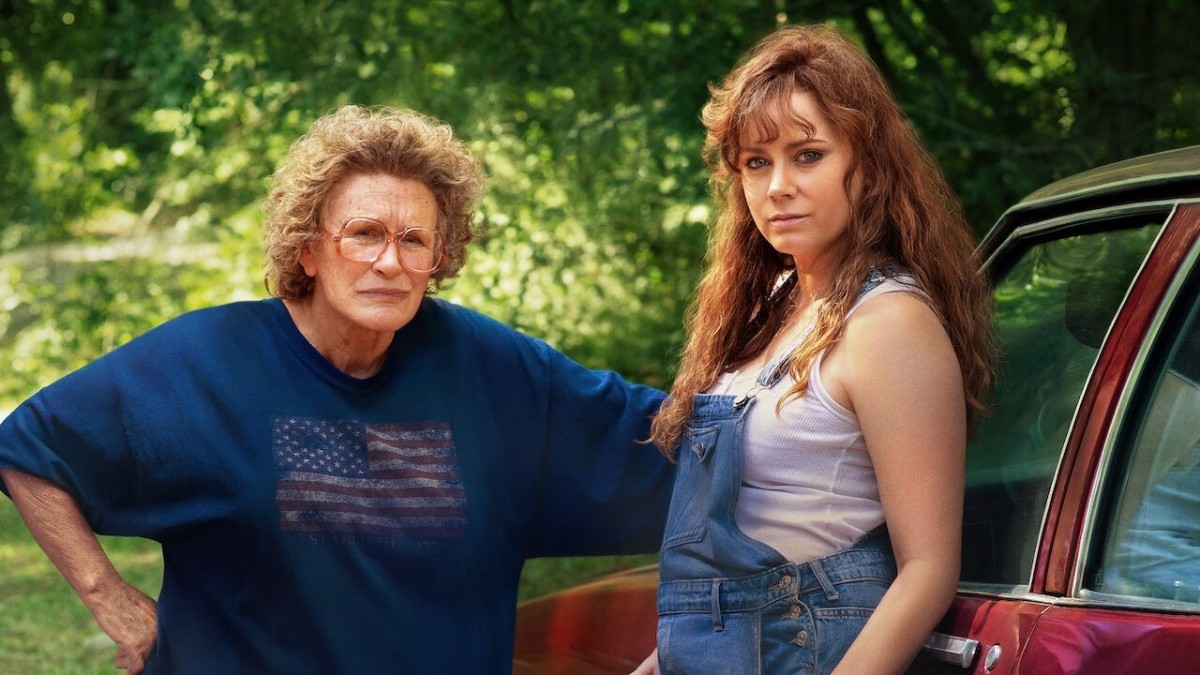
Howard’s adaptation of J.D. Vance’s memoir does boast the one-two punch of perennial Oscar contenders Amy Adams and Glenn Close. Adams plays Vance’s unstable mother, Beverly. It’s less a character than a collection of outbursts, so I can’t even say whether she’s good.
Close, as Vance’s beloved Mamaw, gets more opportunity to
carve out an actual character. But like everything else in the film, Mamaw
exists in snippets to illustrate the Middletown, Ohio chains J.D. needs to
break.
The main story is of law student J.D. (Gabriel Basso) trying
to land summer employment at a firm so he can afford Yale next year. His mother
overdoses on heroin just days before his interview. Can he get to Ohio, sort
that out, and still make it back to Connecticut in time? Or will he be forever
waylaid by all the hyperventilating, acid washed jeans, scrunchies and
hysterics that populate his flashbacks?
Howard’s characters don’t show us much, but they do tell us a lot of things. J.D. tells us his mother is the smartest person he’s ever met. We never see even a glimpse of that, so we’ll have to take him at his word. He also tells us twice that he will do whatever it takes to make sure his mother gets the help she needs.
That’s supposed to be the heart of the story. Does there
come a time when you have to put yourself first? Is it ever wrong to sacrifice
yourself for your family?
Too bad Howard, working from a screenplay by Vanessa Taylor,
can’t find that heartbeat.
Flashbacks do little to differentiate J.D. (played in youth by Owen Asztalos) from the others who can look forward to a life of “food stamps or jail.”
Never does the film see J.D. as possessing any privileges
that may make success easier for him than for his grandmother, mother, or
sister (Haley Bennett). Nope. J.D. just worked harder.
The reason Howard’s film seems like it refuses to say anything, which gives it the feel of a poorly pieced together puzzle, is that it says two things simultaneously. 1) Redneck is a term elitists use to make themselves feel superior to perfectly valuable people. 2) If rednecks worked hard enough, they could go to Yale and stop being rednecks.
Well there’s an uncomfortable topic! Of course, that’s what makes it so perfect for horror. Any idea that automatically induces a wince or a grimace, anything you want instinctively to turn away from, immediately creates the kind of discomfort that only horror can truly manipulate.
It’s been used for lurid ends in films like Flowers in the Attic, and has become the source of comedy in others – Tromeo and Juliet springs to mind. But often, it creates a particular kind of tension that drives a film in truly horrific directions: Jug Face, Crimson Peak, Pin, Angel Heart, The Crazies.
Here are the films we think handle the topic best. SPOILERS AHEAD!!!
6. 100 Bloody Acres (2012)
A testament to the entrepreneurial spirit and the bonds of family, 100 Bloody Acres is Australia’s answer to The Texas Chainsaw Massacre. Same body count and more blood, but a far sweeter disposition and loads more laughs.
Brothers Reg (Damon Herriman) and Lindsay (Angus Sampson) sell organic fertilizer. Business is good. Too good. Demand is driving the brothers to more and more extreme measures to gather ingredients.
Interesting the way writing/directing brothers Cameron and Colin Cairnes explore sibling rivalry, but the film’s strength is in its humor: silly enough to make even the most repugnant bits enjoyable. (I’m looking at you, Aunt Nancy. Oh, no! Why did I look?!)
5. The Woman (2011)
There’s something not quite right about Chris Cleese (an unsettlingly cherubic Sean Bridgers), and his family’s uber-wholesomeness is clearly suspect. This becomes evident once Chris hunts down a feral woman (an awesome Pollyanna McIntosh), chains her, and invites the family to help him “civilize” her.
The film rethinks family – well, patriarchy, anyway. You know from the opening, sunshiny segment that nothing is as lovely as it seems, but what lurks underneath this wholesome facade begins with some obvious ugliness—abuse, incest—but where it leads is diabolical.
Nothing happens in this film by accident – not even the innocent seeming baking of cookies – nor does it ever happen solely to titillate. It’s a dark and disturbing adventure that finds something unsavory in our primal nature and even worse in our quest to civilize. Don’t even ask about what it finds in the dog pen.
https://www.youtube.com/watch?v=GL50yBcw5wA
4. Bad Boy Bubby (1993)
Writer/director Rolf de Heer’s astonishing film is horribly marred by the fact that a cat is, in fact, killed on camera, so buyer beware. For most people, that will be reason enough to miss this one. But that just makes the director’s choice that much more tragic, because this is a really good movie.
Nicholas Hope is astonishing as the titular Bubby, a 30-year-old manchild who’s never, ever left the room he keeps with his mum.
Remember the Oscar-winning indie film Room? Remember how tragedy is somehow skirted because of the courageous love of a mother for her son? Well, this was not Bubby’s mum. Bad things are happening in that room, and once Bubby is finally free to explore the world, his adventure is equal parts deranged and soul-crushing. Hope is so frustratingly empathetic in the lead that no matter what he does, you root for him. You root for friends who will love him, for someone who will care for him, but it’s the resigned cheerfulness with which he faces any kind of abuse that really just kills you.
This taboo-shattering film is so wrong in so many ways, and yet it’s also lovely, optimistic, sweet, and funny. And just so, so fucked up.
3. Henry: Portrait of a Serial Killer (1986)
Director John McNaughton’s picture offers a uniquely unemotional telling – no swelling strings to warn us danger is afoot and no hero to speak of to balance the ugliness. He confuses viewers because the characters you identify with are evil, and even when you think you might be seeing this to understand the origins of the ugliness, he pulls the rug out from under you again by creating an untrustworthy narrative voice. His film is so nonjudgmental, so flatly unemotional, that it’s honestly hard to watch.
What’s diabolically fascinating, though, is the workaday, white trash camaraderie of the psychopath relationship in this film, and the grey areas where one crazy killer feels the other has crossed some line of decency.
Rooker’s performance unsettles to the bone, flashing glimpses of an almost sympathetic beast now and again, but there’s never a question that he will do the worst things every time, more out of boredom than anything.
It’s a uniquely awful, absolutely compelling piece of filmmaking.
https://www.youtube.com/watch?v=QcM5L-ZBmXk
2. The Loved Ones (2009)
Writer/director/Tasmanian Sean Byrne upends high school clichés and deftly maneuvers between gritty drama and glittery carnage in a story that borrows from other horror flicks but absolutely tells its own story.
Brent (Xavier Samuel) is dealing with guilt and tragedy in his own way, and his girlfriend Holly tries to be patient with him. Oblivious to all this, Lola (a gloriously wrong-minded Robin McLeavy) asks Brent to the end of school dance. He politely declines, which proves to be probably a poor decision.
Inside Lola’s house, we’re privy to the weirdest, darkest image of a spoiled princess and her daddy. The daddy/daughter bonding over power tool related tasks is – well – I’m not sure touching is the right word for it.
The Loved Ones is a cleverly written, unique piece of filmmaking that benefits from McLeavy’s inspired performance as much as it does its filmmaker’s sly handling of subject matter.
1.Oldboy (2003)
This is the one that’s utterly spoiled by the upfront knowledge of incest. It’s also easily the best example of the topic’s handling in a horror film, plus the movie is 17 years old, so we went ahead and included it. Sue us. You were warned.
A guy passes out after a hard night of drinking. It’s his daughter’s birthday, and that helps us see that this guy is a dick. He wakes up a prisoner in a weird, apartment-like cell. Here he stays for years and years.
The guy is Dae-su Oh (Min-sik Choi). The film is Oldboy, director Chan-wook Park’s masterpiece of subversive brutality and serious wrongdoing.
Choi is unforgettable as the film’s anti-hero, and his disheveled explosion of emotion is perfectly balanced by the elegantly evil Ji-tae Yu.
Choi takes you with him through a brutal, original, startling and difficult to watch mystery. You will want to look away, but don’t do it! What you witness will no doubt shake and disturb you, but missing it would be the bigger mistake.