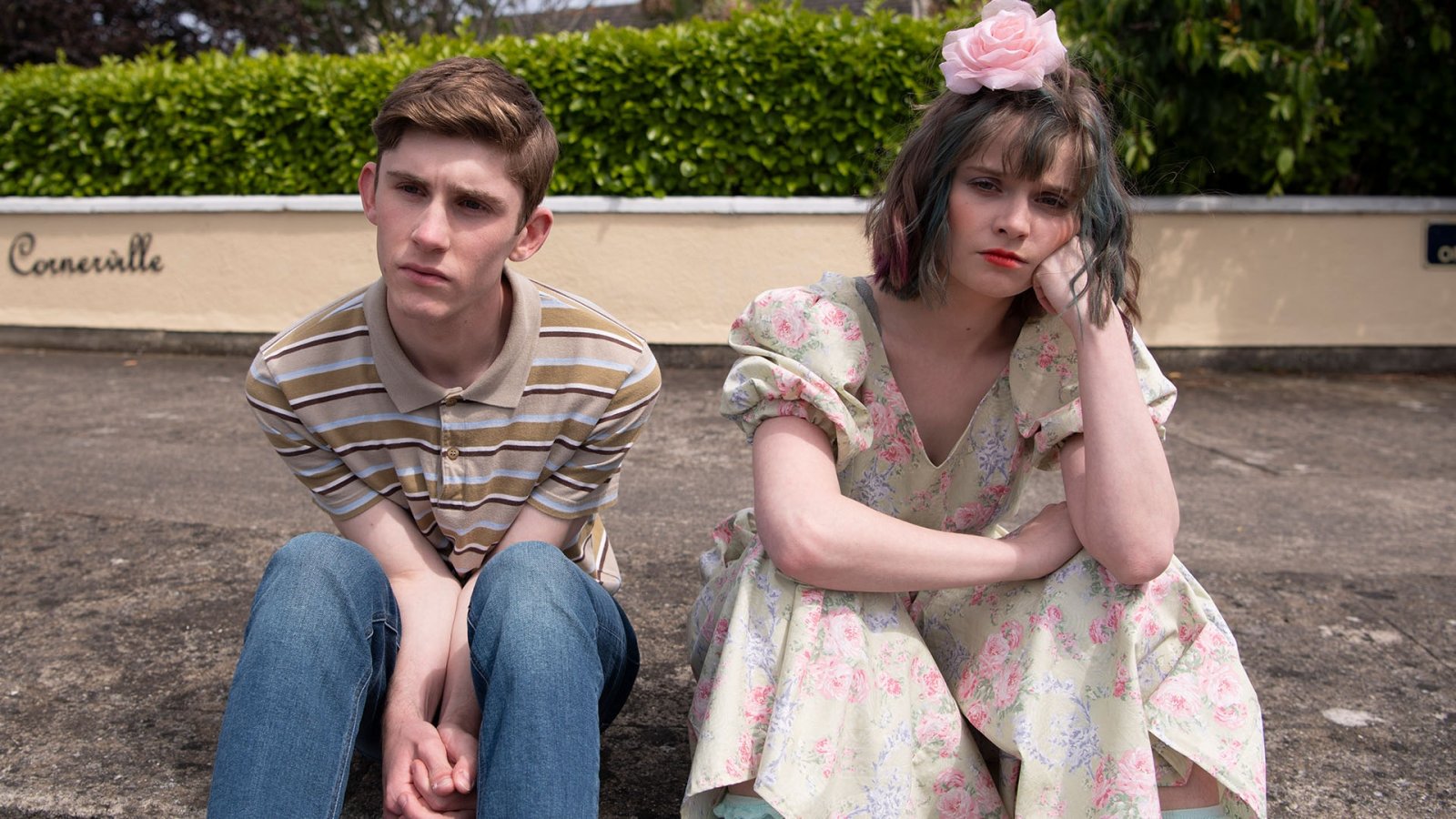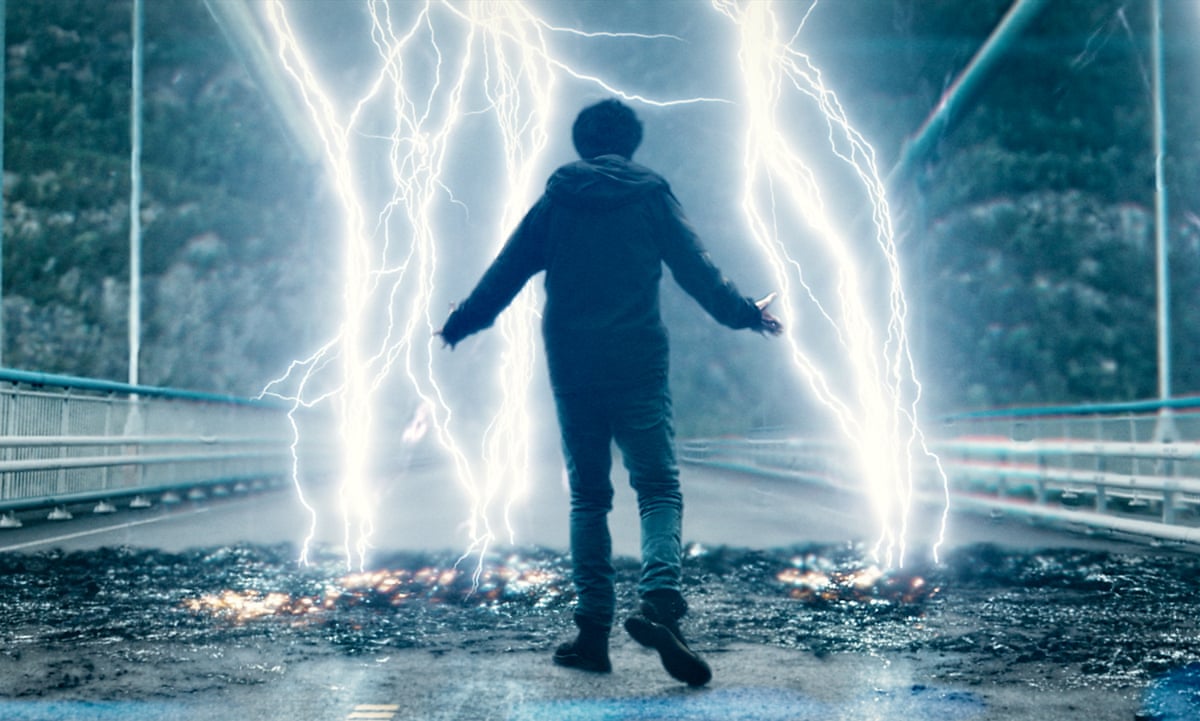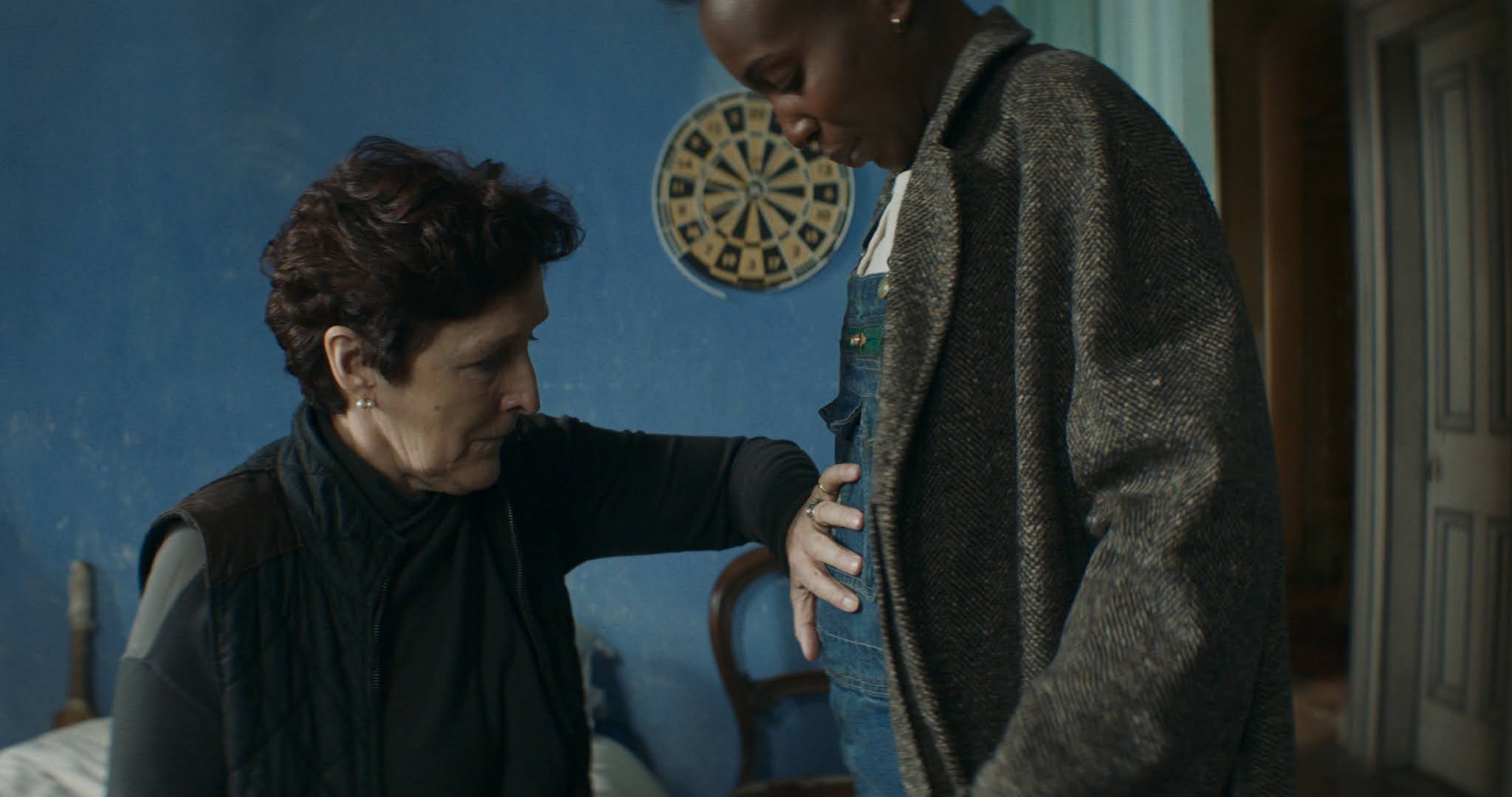
Has there ever been a place as glorious as the video store? The brain trust behind the horror anthology Scare Package clearly understands the secret joys of the independent VHS retailer and their beloved horror wares.
“This weekend is all about no rules, no clothes, and no cell
service,” begins Emily Hagins’s surprisingly fresh meta-horror Cold Open.
It sets the stage for a really funny way to spend about an hour and 40 minutes.
Chad Buckley of Rad Chad’s Horror Emporium (directed
by Aaron B. Koontz) is training a new employee, covering the ins and outs of
the VHS game and dodging that creepy regular customer. Periodically we get a
glimpse at the store’s rentals, taking shape as the set of horror shorts that
make up the anthology.
Chris McInroy’s consistently funny One Time in the Woods plays like a good natured Troma flick. So, it’s a bloody, gooey, gore-soaked, viscera-saturated mess with a bright disposition.
Noah Segan (Knives Out) makes his directorial debut with M.I.S.T.,E.R., which boasts the great casting of Noah Segan (how’d he get him?!) as well as Jocelyn DeBoer (Thunder Road, Greener Grass). You wouldn’t call it inspired, but a nice sleight of hand and one subtly creepy bartender are enough to keep you guessing and entertained.
Anthony Cousins’s The Night He Came Back IV: The Final Kill doesn’t offer much in the way of a fresh perspective and feels especially tame compared to the two other meta-horror episodes in the package. The two shorts that bridge sci fi and horror—Courtney and Hilary Andujar’s Girls’ Night Out of Body and Baron Vaughn’s So Much To Do—don’t answer nearly as much as they ask, but they do keep your attention.
The collection is weaved together with love and a lot of
nerdy horror know-how. Was it destined for Shutter? Well, that Jo Bob Briggs
cameo couldn’t have hurt.
Scare Package sports an excellent use of budget for a fun, campy set of horror-loving films—the kind of short movies that lovingly mock the genre. Most of the episodes offer a knowing lampooning, and each ends abruptly enough to avoid wearing out its welcome.
Leave it to Spike Lee to follow up the socially searing
masterwork in direction BlackKklansman
with something bigger, badder and even more immediately relevant.
Da 5 Bloods follows four Vietnam Vets (Delroy Lindo, Clarke Peters, Isiah Whitlock Jr., Norm Lewis) back to the jungle where they left so much. They left a lot more than most, actually, including a beloved brother and a lot of gold.
Chadwick Boseman haunts the frames and the buddies as
Stormin’ Norm, the young platoon leader and inspiration that didn’t make it
home. If he represents past tragedies, Jonathan Majors represents the way those
pains echo into today.
A heist movie on the surface, Da 5 Bloods is clearly about a great deal more than making it rich. Lee has a lot to say about how those in power tell us what we want to hear so we will do what they want us to do.
As is always the case with Lee’s films, even the most overtly
political, deeply felt performances give the message meaning. The entire cast
is excellent, but Delroy Lindo is transcendent.
Lindo’s never given a bad performance in his 45 years on screen. As commanding a presence as ever at 68 playing Paul, Lindo again blends vulnerability into every action, whether funny, menacing or melancholy. His MAGA hat-wearing, self-loathing, dangerously conflicted character gives Lee’s themes a pulse. This may finally be the performance to get Lindo the Oscar he’s deserved for ages.
Staggeringly equal to the effort is Majors (The Last Black Man in San Francisco) as Paul’s son David. His performance illustrates a resilience as well as a tenderness that is utterly heartbreaking.
Even so, here Lee avoids the sentimentality that undermined
his 2008 war film Miracle at St. Anna. In its place is a clear-eyed look
at the many, insidious effects of not just war but systemic oppression.
It should surprise no one that Lee’s latest happens to hit the exact nerve that throbs so loudly and painfully right now, given that he’s been telling this exact story in minor variations for 30+ years.
We didn’t want to let Black History Month slip by without recognizing the best Black characters in horror. Obviously, this is actually a countdown and podcast we could have done at any time, but any particular excuse to talk about William Marshall must be taken!
Regardless of the (far too often proven) cliche that the token Black character in any horror film is simply the first victim, there are many amazing characters and actors worth celebrating in this list. The all time kickass Pam Grier stars as a voodoo practitioner in Scream Blacula Scream (1973), Morgan Freeman brings his characteristic gravitas to the role of mentor cop and general smartypants in Seven (1995). Wesley Snipes combined vampire and badass in the Blade trilogy, as did Grace Jones in Vamp (1986) – and these are just a few of the candidates we will not be mentioning.
Nope, instead we present you with the five best Black characters in horror.
5. Selena (Naomi Harris), 28 Days Later (2002)
When it outbreak comes – and you know it will – what you want on your team is a pharmacist (someone with some medical training) who is not afraid to use a machete. Naomi Harris was the brains and the backbone of the ragtag group of survivors in 28 Days Later. Without her, Cillian Murphy wouldn’t have made it.
The great Danny Boyle, working from a script by Alex Garland (who wrote and directed the magnificent Ex Machina last year), upended a lot of expectations, giving us tenderness in the form of the great Brendan Gleeson, and a vulnerability in the newly-acquainted-with-the-apocalypse Murphy, but the brains and the bravery are Selena’s. That isn’t to say the realities of gender inequality disappear during the apocalypse – Nope! But this is a really uncommon character in a horror film: a strong, Black female survivor.
4. Peter (Ken Foree), Dawn of the Dead (1978)
When George Romero returned to his zombie apocalypse in 1978 – nearly a decade after he’d rewritten the zombie code with Night of the Living Dead – he upped the ante in terms of onscreen gore, but there were some pieces of the formula he wasn’t ready to let go of.
Two members of SWAT join their newsman buddy and his producer girlfriend, take off in a helicopter, land at a mall, and set up house while that whole zombie thing blows over. Ken Foree and Scott Reiniger as the buddies from SWAT create the most effective moments, whether character-driven tension or zombie-driven action. While the leads were flat and bland, Foree not only delivers the film’s strongest performance, but Peter is the most compelling character and the one you’re least willing to see go.
Oh my God, that voice! Yes, Candyman is a bad dude, but isn’t he kind of dreamy?
Like a vampire, the villain of Cabrini Green needed to be both repellant and seductive for this storyline to work, and Todd more than managed both. With those bees in his mouth and that hook for a hand, he is effortlessly terrifying. But it’s Todd’s presence, his somehow soothing promise of pain and eternity, that makes the seduction of grad school researcher Helen (Virginia Madsen) realistic.
Clive Barker wrote the original story, and the racial tensions that run through the film are both intentional and required. Madsen’s raspy-voiced heroine offers a perfect counterpoint to Todd, both of them a blend of intelligent and sultry that make them more parallel than opposite.
Todd would go on to love again in the Candyman sequel Farewell to the Flesh, as well as star or co-star in countless other horror films, but it was the first time you hear that voice in this film that sealed his fate as an iconic horror villain.
Did someone mention awesome voices and onscreen presence? The great William Marshall is the picture of grace and elegance as Mamuwalde, the prince turned vampire.
The film is a cheaply made Blaxploitation classic, with all that entails. For every grimace-inducing moment (bats on strings, homophobic humor) there’s a moment of true genius, almost exclusively because of Marshall’s command of the screen and the character.
Though he’s often hampered by FX as well as writing, the character remained true throughout the film, even to his death. It’s the kind of moment that could be brushed aside, in a low budget flick with a lot of plot holes and silly make up. But there’s more to Blacula than meets the eye.
Blacula is a tragic antihero and it’s all but impossible to root against him. Marshall brought more dignity to the role of vampire than any actor has, and the strength and respectability he imbues in the character were not just revolutionary at the time, but were so pivotal to that particular character that he has become a legendary character in the genre.
1. Ben (Duane Jones), Night of the Living Dead (1968)
Over the years, much has been made of director George Romero’s assertion that Duane Jones’s casting in Night of the Living Dead had nothing to do with his color; Romero simply gave the role to the best actor.
Maybe so – and certainly Jones’s performance alone has a great deal to do with the success of the film – but casting a Black male lead in this particular film at this particular juncture in American history is among the main reasons the film remains relevant and important today.
Jones plays Ben, the level-headed survivor holed up in a Pennsylvania farmhouse trying to wait out the zombipocalypse. Ben is the clear cut leader of this group of survivors, caring for the shell-shocked young white woman (Judith O’Dea), working in tandem with the young couple also hiding out, and engaging in a needless and ugly power struggle with that dick Mr. Cooper.
Jones’s performance is, as Romero points out, easily the strongest in the ensemble, and that work alone would have made the role and the film memorable. But it’s the kick to the gut documentary-style ending that not only marks the film’s sociological period, it is a horrifying reminder of all that has not changed in the world.
I’m not sure which thrilled me more, that Elisabeth Moss was
set to portray the great Shirley Jackson, or that Josephine Decker was slated
to direct.
If you’re not familiar with Decker, give yourself the gift
of her 2014 minor miracle Thou Wast Mild and Lovely. Decker’s languid
style seduces you, keeps you from pulling away from her films’ underlying
tensions, darkness, sickness. She specializes in that headspace that mixes the
story as it is and the story as it’s told, which makes her a fitting guide for
Susan Scarf Merrell’s fictionalized account of this slice of Jackson’s life.
Which brings us to Moss, quickly ascending the ranks of “best actors of our generation” into the rarified air of “genius.” Moss has proven time and again that she can inhabit any character with a fearlessness that allows her to disappear and the character to emerge, fully human. Such is the case with the enigmatic, damaged and brilliant Jackson.
Shirley takes us into the period where the already
reclusive writer begins work on her novel Hangsaman.
This stretch of time coincides with the arrival of some help
for Jackson’s husband Stanley Hyman (Michael Stuhlbarg). The couple will be
opening their home to Stanley’s new teaching assistant (Logan Lerman), and his pregnant
wife, Rose (Odessa Young).
The film’s plot follows Jackson’s relationship with Rose,
which develops in tandem with her newest manuscript. The friendship unveils unkind
truths about power, sexual politics and other uglinesses that Jackson always
mined so formidably in her creepiest work.
Decker manipulates the pacing, melancholy and sensuality of
her tale beautifully, drawing a stirring performance from Young. But my god,
what she gets from Moss and Stuhlbarg.
To witness two such remarkable talents sparring like this,
aided by a biting script that offers them ample opportunity to wade into the
sickness and dysfunction of this marriage—it’s breathtaking.
The result is dark and unseemly, appropriately angry and gorgeously told—fitting tribute to the author.
Good documentaries transcend art and commerce by helping us understand who we are, where we came from and where (hopefully) we may be going. These five films prove the necessity and urgency of the #blacklivesmatter movement and help to contextualize our current situation and the need for dramatic change.
Whose Streets?
Available on Amazon Prime, YouTube, GooglePlay, Vudu, Hulu.
Moving like a living, breathing monument to revolution, Whose Streets? captures a flashpoint in history with gripping vibrancy, as it bursts with an outrage both righteous and palpable. Activists Sabaah Folayan and Damon Davis share directing duties on their film debut, bringing precise, insightful storytelling instincts to the birth of the Black Lives Matter movement. Together, they provide a new and sharp focus to the events surrounding the 2014 killing of 18-year-old Michael Brown by Ferguson, Missouri police officer Darren Wilson.
Wexner Center’s Paul Hill and filmmaker April Martin’s documentary exposes the similarities between 2014 events in Ferguson, MO surrounding the murder of Michael Brown and events in Cincinnati beginning in 1995 and culminating in riots following the suspicious, police-involved deaths of Roger Owensby in November, 2000 and Timothy Thomas in April, 2001.
The final product delivers an incisive look at
the roots and ramifications of systemic racism. The filmmakers speak candidly
with bereaved family members and witnesses, weave in crime scene footage and
the news coverage of the day, and speak to historians, activists, police and
political leaders to paint a picture that becomes jarringly prescient.
13th
Available on Netflix.
Director Ava DuVernay followed her triumphant Selma with an urgent dissection of mass incarceration in the United States. Packed with testimony from those who know, propelled by the force and vision of a director who knows how to tell a story, this is as gripping and necessary a film as you will find. Informative, stirring, and heartbreaking, 13th delivers a lesson that is essential to understanding both the ugly roots of America, and how shamefully deep they remain.
https://www.youtube.com/watch?v=45jBRPjImuw
The Seven Five
Available on Amazon Prime, YouTube, GooglePlay.
If current events haven’t satisfied your appetite for stories of cops behaving badly, take a trip back to the 1980s with The Seven Five. It’s a sobering look at Mike Dowd, the man dubbed “the dirtiest cop in history,” as well as the law enforcement code of silence that still appears shockingly prevalent.
Director Tiller Russell uses footage from
Dowd’s 1993 hearing testimony as an effective bookend to current interviews
with Dowd and several of his cohorts. The chill that comes from a younger Dowd
testifying that a good cop means “being 100 percent behind anything another cop
does” only intensifies when you hear one of his old partners recalling the
prevailing attitude of their criminal heyday.
Peace Officer
Available on Tubi, Sling TV, Amazon Prime, YouTube, Google Play, Vudu.
How, and why, did we get the point where tactics and weapons of the military are standard issue for police forces across the country?
This film’s strength lies in its
nuance, and in its refusal to provide snap judgements. Rather than looking to
vilify police officers, the goal here is to understand how the system itself
has become untenable, all but guaranteeing continued tragedies.
It’s not a fun conversation, but
it’s one that’s long overdue. Peace Officer may
speak softly, but it’s hard to imagine an American film that is more urgent.
You can’t go home again. You can go to Cyprus again, though,
which is what director Peter Medak does in an attempt to come to terms with the
project that nearly derailed his blossoming career.
Objectivity be damned!
Medak’s documentary The Ghost of Peter Sellers
deconstructs the disaster that was his unreleased 1973 pirate comedy Ghost
in the Noonday Sun. Medak believes he may be the first director to make
such a documentary.
He’s not entirely wrong. Richard Rush directed a doc about the making of his own The Stunt Man – but that was an Oscar-nominated success. And though Terry Gilliam was involved in Lost in La Mancha—a doc outlining the endless disasters that doomed his first attempt to film The Man Who Killed Don Quixote— he was not the director.
Rather, this time the documentary is the filmmaker himself documenting
not his successes but his massive, almost career-ending failure. That failure
was partly due to incessant weather troubles and other catastrophes—hell, his
pirate ship sank the day it arrived in Cyprus.
But according to Medak, those involved in the shoot and
those who knew the actor best, the main problem was Peter Sellers.
“It’s not as if any of us didn’t know that Peter was nuts,”
remarks the incredibly sage producer John Hayman, nearly 50 years after the
fact. “But none of us knew how nuts.”
Medak’s clearly been haunted by the production—and, to a
degree, by Sellers—since the shoot wrapped. Riding high at the time on two
critical and box office successes (Negatives, The Ruling Class), the
in-demand director jumped at the chance to direct the brilliant Sellers, then considered
the greatest comedic actor in the world.
But Sellers—possibly, as friends suggest in the film, a man suffering
from an undiagnosed mental health condition who was exploited by money hungry
moviemakers—would not be the artist Medak hoped he’d be.
Lunatic behavior combined with an outright desire to sink
the film turned an already underwhelming script, underfunded production and
nightmarish environment into something crippling.
The stories from the set are fascinating, as are moments of
commiseration between Medak and directors who’d dealt with Sellers on other
films (Casino Royale and the Fiendish Plot of Dr. Fu Manchu).
Equally interesting are the sympathetic but knowing, even giggling responses
Medak’s tales of woe elicited from Sellers’s family and friends.
“Oh, yes. He definitely did that.”
But too much time spent with director who is also subject
turns many scenes into a self-indulgence.
That doesn’t topple The Ghost of Peter Sellers. Medak’s confessional pity party delivers a compelling look at the wrong side of filmmaking as it offers yet another take on Sellers—his genius as well as his demons.
It’s hard to watch Lucky Grandma without giving at least a passing thought to Lulu Wang’s 2019 gem The Farewell. This story could not be more different, honestly, but at the heart of both movies is the undeniable force of a nai nai.
In writer/director Sasie Sealy’s tale, Tsai Chin portrays Nai Nai Wong as a dead-eyed hoot. Cigarette dangling, disgusted expression, Nai Nai doesn’t play. Her dismissive stare is priceless. Her confrontational giggle even better.
One routine trip to see her fortune teller/doctor/friend
(Yan Xi) convinces her that her luck is changing. She boards a bus, hits a casino
and lets it roll.
But luck is not always what you hoped for and the next thing
Nai Nai knows, some homely gangsters are after her.
What makes this film the savvy, funny adventure it is results from Sealy’s manipulation of the familiar. The basic story follows many an Underdog Runs Afoul of the Mob stories (Hard 8, Jackie Brown, Millions, True Romance, etc.)
The difference here, obviously, is the underdog.
Like the movie on the whole, the elderly and beloved old grandmother at the center of this mess is simultaneously familiar and alien. Her aches, pains, poverty and the clear patterns of her behaviors suggest something authentic and recognizable. She’s just not a movie grandma—not like any in the movies we’re used to. Her will is as strong as steel, whether her body keeps up or not.
Sealy’s careful not to mock Nai Nai Wong (a good thing, as
she would clearly kick a person’s ass). But Chin makes certain this character
is not only formidable, but hilarious.
She’s aided by her odd couple sidekick Big Pong (Hsiao-Yuan
Ha), a gentle giant of a bodyguard hired in the savviest, old-ladiest of ways.
(You know who can spot a bargain? Grandma can.)
Michael Tow also lends a fascinating, unseemly quality to
his scenes as creepy gangster henchman Little Handsome.
The emotional grounding for the film never feels forced, which allows the Lucky Grandma to run its course without the predictable sentimentality that crushes most “look how funny this old person is” films. It’s there—the weighty pull of family over self-reliance, of dependence over loneliness—but, like everything else in the film, it respects the character Chin has so meticulously developed.
We spend a lot of time ripping on weak and lazy jump scares. But today we want to acknowledge that, when done well, jump scares can be an incredibly effective tool for a horror filmmaker.
Here are our 10 favorite jump scares from horror movies.
10. It Follows (2014): tall man at the door
This movie is a freak show of scares beginning to end, and the different images the demon takes throughout is forever terrifying and fascinating. But it was the tall man at the door that really got to us.
9. Les Diaboliques (1955): alive in the tub
First of all, this is a spoiler. But the film came out 65 years ago, so if you haven’t seen it by now (we even showed it once!), that’s on you, man. It’s a classic, and a classic scare.
8. The Ring (2002): I saw her face
Again, here is a film chocker block full of utterly fantastic creeps, all told a moment at a time. But it was that first one, when we see Samara’s first victim, that set the stage and made us jump out of our seats.
7. A Tale of Two Sisters (2003): under the sink
So much nuttiness, so many confusing ideas to keep track of, such a master class piece of atmosphere building in this film. You just are not expecting jump scares in this one. And yet, as one dinner party goes wrong…
6. Hereditary (2018): signpost
Tell us you saw this one coming and we will tell you that you are a liar.
5. Carrie (1976): Carrie White’s grave
Oh holy shit. You think Sue Snell has been through enough, what with missing out on prom and watching every friend she has die in a flaming blood bath. But you would think wrong.
4. Audition (1999): What’s in the bag?
Ring ring. Ring ring. The way Takashi Miike frames this scene, lovely Asami’s hair draped in front of her, her spine showing, that loud phone – you can’t take your eyes off her, waiting for her to rouse, to answer. You might not even notice that burlap sack…
3. Jaws (1975): Hey, it’s Bruce!
Jaws has two classic jump scares, and it was hard to pick. Remember when Hooper’s digging that tooth out of Ben Gardner’s boat and then, all the the sudden, a human head! Well, that would have been enough for most movies, but after waiting nearly 2/3 of the film to see that shark, Steven Spielberg introduces his lead with authority.
2. The Conjuring (2013): bureau
James Wan’s instant classic haunted house movie also boasts more than one strong contender for this list. That hand clapping scene, showcased in the trailer, was reason enough for us to buy our tickets. But the one that did the most damage starts with a sleep walker and ends with the best jump scare in the last twenty years.
https://www.youtube.com/watch?v=GOgC_YUyTYs
1. The Exorcist III: guy in the hall
There are so many utterly priceless moments in this underrated horror show: Patrick Ewing and Fabio as angels, Sam Jackson as a blind man, that terrifying confessional scene. But there is this one flash of white that is the reason everybody who sees this movie remembers it.