Funny thing about The D Train…it’s not really funny.
In fact, if Jack Black wasn’t the lead, you’d be hard pressed to describe it as a comedy in the first place. It’s awkward, uncomfortable in spots, slightly amusing in others and carries exactly one big laugh out loud moment. But it also has a big heart, an unexpected social conscience, thoughtful writing and fine performances that make it worth a look.
Black stars as Dan, a socially challenged guy in Pittsburgh who keeps inventing nicknames for himself in hopes that one of them will stick. Think George Costanza and his quest to be called T-Bone, but less abrasive.
Dan remains stoic and upbeat, taking his position as chairman of his 20th high school class reunion committee very seriously…even if none of the other members will include him in their after meeting get-togethers. The RSVPs for the reunion are pretty sparse, but then Dan sees old classmate Oliver Lawless (James Marsden) in a TV commercial for sunscreen and has an epiphany.
He’ll come up with a bogus reason for an L.A. business trip, track Oliver down and convince the homegrown Hollywood star to come back for the reunion. With that, attendance will skyrocket and Dan will finally be the BMOC of his dreams!
It will come as no surprise that things don’t quite go as planned. What is surprising is how the film turns away from comedic high jinks to embrace a little introspection in today’s complicated times. Writers Andrew Mogul and Jarrad Paul (Yes Man) also make their directing debut with The D Train, displaying a commendable, if not completely successful ambition to bring a classic genre some fresh perspective.
While they cast the always funny Kathryn Hahn as Dan’s wife Stacey, she is asked to do nothing at all comedic. Talent wasted? Maybe. Or maybe her sympathetic turn is another way the film keeps you guessing and consistently entertained despite the lack of hilarity.
Both Black and Marsden are perfect, crafting a nice chemistry as they gradually give Dan and Oliver some layers of insecurity and misconception that may look pretty familiar.
You won’t be quoting many lines from The D Train at your next party, but you won’t be regretting the trip either.
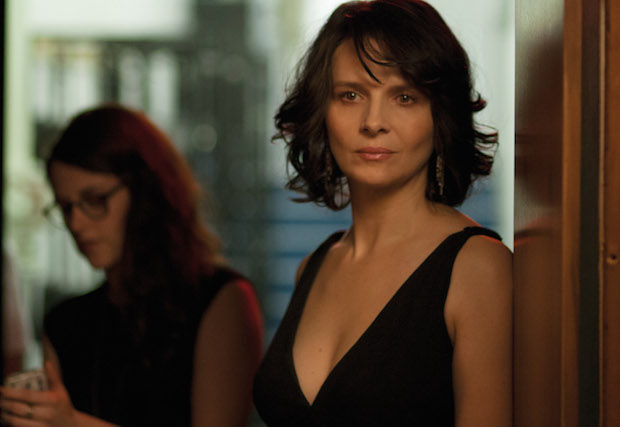
Somewhere between Twilight and the tabloids, Kristen Stewart began doing some real acting. She’s better than ever in Clouds of Sils Maria, and though hers is a supporting role alongside one of the screen’s major talents, Stewart pulls plenty of weight in a terrific drama with much to say.
Juliette Binoche is customarily excellent as Maria, a famous actress returning to the stage in a revival of the play that launched her career twenty years earlier. This time, though, she’s playing the older female lead, while a Lindsay Lohan clone named Jo-Ann (Chloe Grace Moretz, striking just the right tone of clueless entitlement) is taking the role Maria originated.
Stewart is Maria’s ever-present personal assistant Valentine, who not only runs both errands and lines for Maria, but serves as her bridge to a younger generation.
Writer/director Olivier Assayas (Summer Hours) takes the intimate psychological playground of Polanski’s Venus in Fur, and laces it with the pop culture commentary of Cronenberg’s Maps to the Stars. Binoche and Stewart swim gracefully inside the play within a play setup, slowly moving Maria and Valentine in directions that mirror the script both characters are reading.
The actresses display an easy chemistry, never more apparent than when Valentine is trying to sell Maria on the merits of young Hollywood. In the film’s most deliciously meta moment, Stewart might just as well be telling all of us Twilight haters to get over it already.
Assayas’s script is sharp and his camera is fluid, effectively blurring the line between onstage and off. Revisiting the play forces Maria to confront her past and question her present, and Binoche reveals the various layers with a gentle, masterful touch.
The beauty of Clouds of Sils Maria lies in its subtle complexity. It offers sly insights that sneak up on you, and an exceptional cast to make them stick.
It’s official. Our flux capacitor is running out of power, our time travels are coming to a close. We’ve highlighted the best horror films of the 60s, 70s, 80s, 90s and the first decade of the 2000s, and now it’s time to bring things up to the present with the best in horror from 2010 – 2015. Who would have thought that list would be so hard to put together?
You know the drill: 5 college kids head into the woods for a wild weekend of doobage, cocktails and hookups but find, instead, dismemberment, terror and pain. You can probably already picture the kids, too: a couple of hottie Alphas, the nice girl, the guy she may or may not be into, and the comic relief tag along. In fact, if you tried, you could almost predict who gets picked off when.
But that’s just the point, of course. Making his directorial debut, Drew Goddard, along with his co-scribe Joss Whedon, uses that preexisting knowledge to entertain holy hell out of you.
Goddard and Whedon’s nimble screenplay offers a spot-on deconstruction of horror tropes as well as a joyous celebration of the genre. Aided by exquisite casting – particularly the gloriously deadpan Richard Jenkins and Bradley Whitford – the filmmakers create something truly special.
Cabin is not a spoof. It’s not a satire. It’s sort of a celebratory homage, but not entirely. What you get with this film is a very different kind of horror comedy.
4. The Conjuring (2013)
Yes, this is an old fashioned ghost story, built from the ground up to push buttons of childhood terror. But don’t expect a long, slow burn. Director James Wan expertly balances suspense with quick, satisfying bursts of visual terror.
Wan cut his teeth – and Cary Elwes’s bones – with 2004’s corporeal horror Saw. He’s since turned his attention to something more spectral, and his skill with supernatural cinema only strengthens with each film.
Ghost stories are hard to pull off, though, especially in the age of instant gratification. Few modern moviegoers have the patience for atmospheric dread, so filmmakers now turn to CGI to ramp up thrills. The results range from the visceral fun of The Woman in Black to the needless disappointment of Mama.
But Wan understands the power of a flesh and blood villain in a way that other directors don’t seem to. He proved this with the creepy fun of Insidious, and surpasses those scares with his newest effort.
Wan’s expert timing and clear joy when wielding spectral menace help him and his impressive cast overcome the handful of weaknesses in the script by brothers Chad and Carey Hayes. Claustrophobic when it needs to be and full of fun house moments, The Conjuring will scare you while you’re in the theater and stick with you after. At the very least, you’ll keep your feet tucked safely under the covers.
http://www.youtube.com/watch?v=Vjk2So3KvSQ
3. Let Me In (2010)
With Hollywood’s 2010 reboot of the near-perfect 2008 Swedish film, director Matt Reeves (Cloverfield) managed to retain the spirit of the source material, while finding ways to leave his own mark on the compelling story of an unlikely friendship.
Twelve year old Owen (Kodi Smit-McPhee) is a lonely boy who’s being bullied at school. When young Abby (Chloe Moretz) and her “dad” (Richard Jenkins) move in next door, Owen thinks he’s found a friend. As sudden acts of violence mar the snowy landscape, Owen and Abby grow closer, providing each other a comfort no one else can.
Moretz (Kick-Ass) and Smit-McPhee (The Road) are both terrific, and give the film a touching, vulnerable soul.
Reeves, also adapting the screenplay, ups the ante on the gore, and provides more action, scares and overall shock value. Incredibly, he even manages to build on the climactic “revenge” scene that was damn-near flawless the first time.
https://www.youtube.com/watch?v=8h39ikMdei4
2. The Babadook (2014)
Like a fairy tale or nursery rhyme, simplicity and a child’s logic can be all you need for terror.
You’re exhausted – just bone-deep tired – and for the umpteenth night in a row your son refuses to sleep. He’s terrified, inconsolable. You check under the bed, you check in the closet, you read a book together – no luck. You let him choose the next book to read, and he hands you a pop-up you don’t recognize: The Babadook. Pretty soon, your son isn’t the only one afraid of what’s in the shadows.
It’s a simple premise, and writer/director Jennifer Kent spins her tale with straightforward efficiency. There is no need for cheap theatrics, camera tricks or convoluted backstories, because Kent is drilling down into something deeply, frighteningly human.
Kent’s film is expertly written and beautifully acted, boasting unnerving performances from not only a stellar lead in Essie Davis, but also the alarmingly spot-on young Noah Wiseman. Davis’s lovely, loving Amelia is so recognizably wearied by her only child’s erratic, sometimes violent behavior that you cannot help but pity her, and sometimes fear for her, and other times fear her.
1. It Follows (2015)
David Robert Mitchell invites you to the best American horror film in years. He’s crafted a coming of age tale that mines for primal terror. Moments after a sexual encounter with a new boyfriend, Jay discovers that she is cursed. He has passed on some kind of entity – a demonic menace that will follow her until it either kills her or she passes it on to someone else the same way she got it.
Yes, it’s the STD or horror movies, but don’t let that dissuade you. Mitchell understands the anxiety of adolescence and he has not simply crafted another cautionary tale about premarital sex. Mitchell has captured that fleeting yet dragging moment between childhood and adulthood and given the lurking dread of that time of life a powerful image. There is something that lies just beyond the innocence of youth. You feel it in every frame and begin to look out for it, walking toward you at a consistent pace, long before the characters have begun to check the periphery themselves.
Mitchell borrows from a number of coming of age horror shows, but his film is confident enough to pull it off without feeling derivative in any way. The writer/director takes familiar tropes and uses them with skill to lull you with familiarity, and then terrify you with it.
Mitchell’s provocatively murky subtext is rich with symbolism but never overwhelmed by it. His capacity to draw an audience into this environment, this horror, is impeccable and the result is a lingering sense of unease that will have you checking the perimeter for a while to come.
Listen to the whole conversation on our FRIGHT CLUB podcast.
The Nineties boasted more good horror than you might remember. It was a time of big budget, Oscar nominated studio films like Misery and early genre work from filmmakers who would go on to become the best in the business, like Fincher’s Seven, M. Night Shyamalan’s The Sixth Sense, Tarantino and Rodriguez’s From Dusk Til Dawn, and Adrian Lyne’s Jacob’s Ladder. Foreign films made a splash – Michael Haneke’s Funny Games, Peter Jackson’s Dead Alive, and a wave of Japanese films that would have a powerful influence in the next decade of American horror. Here we pick the best of the decade.
5. Cape Fear (1991)
In 1991, Martin Scorsese toyed with the horror genre with a remake of the ’62 Gregory Peck/Robert Mitchum power struggle between a steamy psychopath and an uptight lawyer. Scorsese mines the very ripe concept for more outright horror, recasting Robert DeNiro – still on top of his game and garnering an Oscar nomination – as Max Cady, a deeply disturbed criminal who should not be underestimated. Nick Nolte takes on the Peck role, but it’s Juliette Lewis (also Oscar nominated) as Nolte and Jessica Lange’s teenage daughter who amps up the unseemly tension.
Scorsese and his cast know how to wring anxiety from an audience and their film brims with a sultry tension that keeps everything on edge. It’s masterful storytelling with a throwback feel, the kind of film that finds you yelling at the screen, not because characters are doing anything stupid, but because you know better than they do just how terrifying Max Cady is. Still, the evil that he can do manages to stagger every single time.
4. Scream (1996)
In its time, Scream resurrected a basically dying genre, using clever meta-analysis and black humor. What you have is a traditional high school slasher – someone dons a likeness of Edvard Munch’s most famous painting and plants a butcher knife in a local teen, leading to red herrings, mystery, bloodletting and whatnot. But director Wes Craven’s on the inside looking out and he wants you to know it.
What makes Scream stand apart is the way it critiques horror clichés as it employs them, subverting expectation just when we most rely on it. We spent the next five years or more watching talented TV teens and sitcom stars make the big screen leap to slashers, mostly with weak results, but Scream stands the test of time. It could be the wryly clever writing or the solid performances, but I think it’s the joyous fondness for a genre and its fans that keeps this one fresh.
3. The Blair Witch Project (1999)
Blair Witch may not date especially well, but it scared the hell out of a lot of people back in the day. This is the kind of forest adventure that I assume happens all the time: you go in, but no matter how you try to get out – follow a stream, use a map, follow the stars – you just keep crossing the same goddamn log.
One of several truly genius ideas behind Blair Witch is that filmmakers Daniel Myrick and Eduardo Sanchez made the audience believe that the film they were watching was nothing more than the unearthed footage left behind by three disappeared young people. Between that and the wise use of online marketing (then in its infancy) buoyed this minimalistic, naturalistic home movie about three bickering buddies who venture into the Maryland woods to document the urban legend of The Blair Witch. Twig dolls, late night noises, jumpy cameras, unknown actors and not much else blended into an honestly frightening flick that played upon nightmares I have almost every night.
2. Audition, 1999
Audition tells the story of a widower convinced by his TV producer friend to hold mock television auditions as a way of finding a suitable new mate. He is repaid for his deception.
Nearly unwatchable and yet too compelling to turn away from, Audition is a remarkable piece of genre filmmaking from horror master Takashi Miike. The slow moving picture builds anticipation, then dread, then full-on horror. Midway through, Miike punctuates the film with one of the most effective startles in modern horror, and then picks up the pace, building grisly momentum toward a perversely uncomfortable climax. By the time Audition hits its ghastly conclusion, Miike and his exquisitely terrifying antagonist (Eihi Shina) have wrung the audience dry. She will not be the ideal stepmother.
Keep an eye on that burlap sack.
1. The Silence of the Lambs
It’s to director Jonathan Demme’s credit that Silence made that leap from lurid exploitation to art. His masterful composition of muted colors and tense but understated score, his visual focus on the characters rather than their actions, and his subtle but powerful use of camera elevate this story above its exploitative trappings. Of course, the performances didn’t hurt.
Hannibal Lecter ranks as one of cinema’s greatest and scariest villains, and that accomplishment owes everything to Anthony Hopkins’s performance. It’s his eerie calm, his measured speaking, his superior grin that give Lecter power. Everything about his performance reminds the viewer that this man is smarter than you and he’ll use that for dangerous ends. But it’s Ted Levine who goes underappreciated. Levine’s Buffalo Bill makes such a great counterpoint to Hopkins’s Lecter. He’s all animal – big, lumbering, capable of explosive violence – where Lecter’s all intellect. Buffalo Bill’s a curiously sexual being, where Lecter is all but asexual.
Demme makes sure it’s Lecter that gets under our skin, though, in the way he creates a parallel between Lecter and Clarice Starling (Jodie Foster). It’s Clarice we’re all meant to identify with, and yet Demme suggests that she and Lecter share some similarities, which means that maybe we share some, too.
Usually, a director shoots a villain from below, making him look larger and more menacing. The victim is usually shot from above, which makes them seem smaller, less powerful, more vulnerable, and cuter. When Clarice and Lecter are talking in the prison, they’re shot at the same angle, eliminating that power struggle. They’re shot as equals.
More than that, during their conversations, Demme captures each character’s reflection in the partition glass as the other speaks, once again making the visual impression that these two are equals, have similarities, are in some ways alike. No one is like Buffalo Bill. He’s incomprehensible. Unacceptable. But Demme generates something akin to sympathy in his depiction of Hannibal in relation to Clarice, and given how terrifying he is, that’s equally unsettling.
So, I went to a car racing movie and the next Avengers broke out. And that’s okay.
After six installments of Fast & Furious, a savvy new director is smart enough to go all in and take number seven to the superhero playground that the previous installments were yearning for.
The entire premise puts the “donk” in redonkulous anyway, so why not go..ahem, full throttle? Remember, these are street racing criminals that have “won” their freedom and are now working for the Feds to take down drug lords and mercenaries. Up to now, the films were just too earnest about what they were shoveling. Credit director James Wan for a welcome “let’s just have fun and do some cool stunts” attitude.
Wan (The Conjuring, Insidious, Saw) lets you know this is a different sort of ride even before the first credits, with a fluid opening full of action and style. After that, we learn that ex-British black ops killing machine Deckard Shaw (Jason Statham) has come to avenge his brother from part 6, which means Dominic (Vin Diesel) and his gang have to take Shaw out first.
That mission is sidetracked by Mr. Nobody (Kurt Russell), a covert intelligence honcho who offers Dominic a deal. Track down a hacker who has invented the world’s best surveillance program (“God’s Eye”!), and get the the full support of U.S. black ops in return.
Ooh, it’s on!
Turns out, though, the hacker gave her program to some guy in Dubai, so it’s off to the UAE so she can sport a bikini and Letty (Michelle Rodriguez’) can fight Ronda Rousey and Dom can fly a super car between two…check that…three skyscrapers!
Wan makes sure that stunt and many others, both car and fist related, look fantastic. In particular, the sequence with Brian (Paul Walker) escaping as a bus falls over cliff is likely to bring roars of gleeful approval.
Dwayne Johnson is still huge, Vin Diesel is still as wooden as his dialogue, and the plot is much more convoluted than necessary, bloating the film by at least thirty minutes. A faster Furious is a leaner, meaner, better Furious.
But there’s fun here. As the gang fights a terrorist and blows up half of downtown LA in the process, just think of these cars as Iron Man’s newest super suit, and go with it.
A lump of coal on Christmas Day. Ten thousand spoons when all you need is a knife. The movie Get Hard.
What are huge disappointments, Alex?
Correct.
Will Ferrell and Kevin Hart are two of the funniest people around, and it’s easy to see the potential in an onscreen teamup. The problem is the project that brought them together should have died in the idea phase.
Ferrell is James King, a high-rolling hedge fund manager who lives in luxury but still can’t please his trophy girlfriend (Alison Brie). At their lavish engagement party, right in the middle of jamming on guitar with John Mayer, James is hauled away by the Feds and charged with securities fraud.
Ignoring his lawyers advice to take a plea deal, James is found guilty and sentenced to 10 years in San Quentin. Given 30 days to report, James turns to Darnell (Hart), the guy who details his car, to teach him how to survive inside.
See, Darnell is black, so James just assumes he’s been in prison, and that’s just one of the stereotypes the film tries, and fails, to have fun with. In the right hands, race, class and sexuality can be fertile ground for sharp comedy. Those hands never touch Get Hard.
Ferrell and creative partner Adam McKay (who gets a story credit) have been on target before, even managing to work some scattered moments of social commentary into their hilarious lunacy. The mistake may have been relying too much on director/co-writer Etan Cohen, who shows no instinct for restraint. The film is overplayed on all fronts, giving it a crass, borderline nasty and often humorless air.
With the “revenge of the common man” storyline you get the feeling the intention here may have been an updated Trading Places. It isn’t long, though, before you wished they’d have just done a straight-up remake, and spared us the buzzkill that is Get Hard.
The efforts of a talented, veteran cast, coupled with a refreshing attitude toward the love lives of senior citizens, enabled The Best Exotic Marigold Hotel to rise above a tendency for silly contrivance.
The Second Best Exotic Marigold Hotel can’t quite measure up.
Director John Madden and screenwriter Ol Parker return, along with most of the original cast, for a trip back to India where things are busy at the eccentric hotel which caters to “the elderly and beautiful.”
Hotel proprietor Sonny (Dev Patel) and girlfriend Sunaina (Tina Desai) are planning their wedding, but Sunny is distracted by business. He wants to expand, and has reached out to a U.S. firm for financial backing. When American “writer” Guy Chambers (Richard Gere) checks in to the hotel, Sonny is convinced he’s actually a spy sent by the prospective business partners.
Guy has barely gotten his room key before Madge (Celia Imrie) has the hots for him, he has his eye on Sonny’s mom (Lillette Dubey), Sonny is jealous of Sunaina’s childhood friend “Kush” (Shazad Latif), and Norman (Ronald Pickup) is afraid he accidentally took out a hit on his girlfriend Carol (Diana Hardcastle). Plus, Douglas (Bill Nighy) and Evelyn (Judi Dench) still haven’t gotten together!
Maybe Captain Stubing can talk some sense into everyone!
It doesn’t take long to realize how much this installment misses the dear departed Graham, as played by Tom Wilkinson. Beyond Wilkinson’s immeasurable talent, Graham’s thoughtful storyline grounded part one in a graceful humanity that the sequel sorely needs. Gere is a fine addition for sheer star power, but his character only serves as a means to add more empty conflict to all the sit-comery.
It’s too bad, because even with Wilkinson gone, this cast features a vast wealth of talent that can instantly improve most any flailing script. The odd man out again is Patel, whose exaggerated histrionics serve as an annoying distraction from his sublime co-stars.
Despite a few charming moments, this sequel is overlong, overdone, and easily Second Best.
There’s something inherently cool about heist movies, isn’t there? Exotic locales, beautiful people, and outlandish schemes to steal lots of cash often play well together. Focus has all the ingredients to be a solid entry to the genre – as long as you don’t mind a certain irony in the film’s title.
Will Smith is Nicky, a veteran con man operating a well-oiled group of sophisticated thieves. He isn’t looking for any new recruits, until young Jess (Margot Robbie) impresses him with her grifting skills and her eagerness to move into the big leagues. So, she joins the team, but after a big score and some quality alone time, Nicky leaves Jess disappointed and hurt.
Fast forward three years, and Nicky is hired to help a Formula One racing hotshot pull a con, only to discover that hotshot’s longtime girlfriend is his own former flame Jess. With old wounds reopened, Nicky is thrown off his game as we try to keep up with just who is conning whom.
The irony is, a film that points out how people are conned with misdirection can’t keep you from noticing the ridiculous age difference in the romantic leads. Older man/much younger woman casting may be a Hollywood tradition, but that doesn’t mean it’s a good one.
That’s not a knock on the actors. Smith is ultra smooth and remains in great shape, and Robbie’s sexy, spunky mix nearly steals the show, but he’s farther past 40 than she is past 19, and the romantic chemistry between them never feels quite true.
The writing/directing team of Glenn Ficarra and John Requa, already with fine credits including I Love You, Phillip Morris, Crazy, Stupid Love and Bad Santa, exhibit a nice feel for the basics that make a heist film tick. It’s often confident, clever and stylish, especially during an early segment which finds Nicky’s crew wandering through a crowd of Bourbon Street revelers and systemically pilfering at will.
Though the final con is a bit underwhelming and the few nods to character development are rushed enough to be unnecessary, Focus delivers some high-gloss fun. It’s fast-paced and sure to keep you guessing, which is good. You don’t want to look too hard for substance.
Valentine’s Day came and went, but we are still in a romantic mood. Why not celebrate those great, doomed romances so often found in horror? Surely, The Bride of Frankenstein may be the all-time best, but we wanted to share some of our lesser-appreciated favorites, beginning with one of the very best horror films of the last decade.
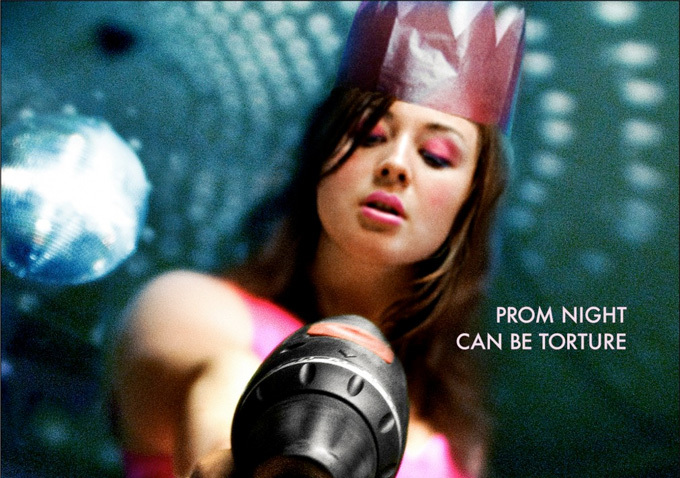
The Loved Ones (2009)
Brent (Xavier Samuel) is dealing with guilt and tragedy in his own way, and his girlfriend Holly tries to be patient with him. Oblivious to all this, Lola (a gloriously wrong-minded Robin McLeavy) asks Brent to the school dance. He politely declines, which proves to be probably a poor decision.
The Loved Ones is a cleverly written, unique piece of filmmaking that benefits from McLeavy’s inspired performance as much as it does its filmmaker Sean Byrne’s sly handling of subject matter. It’s a wild, violent, depraved to spend 84 minutes. You should do so now.
https://www.youtube.com/watch?v=olB5Wrg8Sxc
Thirst (2009)
Leave it to the great Chan-wook Park (Oldboy) to think of turning the Postman Always Rings Twice storyline into a vampire tale. Thirst would be a weird movie regardless, but the steamy/guilty romantic entanglements with an ailing friend’s young wife take on a peculiar tone when the other man is not just a vampire, but a former priest to boot.
Father Sang-hyeon (Kang-ho Song) volunteers for a medical experiment, but instead of a cure the procedure creates vampirism. The poor guy’s barely wrapped his head around his new drinking problem before he falls for his buddy’s scheming wife. Park’s visuals are a sumptuous wonder, and his romantic bloodletting is as curiously humorous as it is creepy.
May (2002)
Few horror films are as touching, funny, heartbreaking or bloody as May. Lucky McKee’s 2002 breakout is a showcase for his own talent as both writer and director, as well as his gift for casting. As the title character, Angela Bettis inhabits this painfully gawky, socially awkward wallflower with utter perfection. McKee’s screenplay is as darkly funny as it is genuinely touching, and we’re given the opportunity to care about all the characters: fragile May, laid back love interest Adam (a faultless Jeremy Sisto), hot and horny Polly (a wonderful Anna Faris).
McKee’s film pulls no punches, mining awkward moments until they’re almost unendurable and spilling plenty of blood when the time is right. He deftly leads us from the sunny “anything could happen” first act through a darker, edgier coming of age middle, and finally to a carnage laden climax that feels sad, satisfying and somehow inevitable.
https://www.youtube.com/watch?v=es0HnQqCqg0
The Signal (2007)
A transmission – a hypnotic frequency – broadcasting over TV, cell and landline telephones has driven the good folks of the city of Terminus crazy. David Bruckner, Dan Bush and Jacob Gentry created a film in three segments, or transmissions. Transmission 1 introduces our lover heroes as well as the chaos. Can Mya and Ben remain sane, reunite and outrun the insanity? Transmission 2 takes a deeply, darkly funny turn as we pick up on the illogical logic of a houseful of folks believing themselves not to have “the crazy.” The final transmission brings us full circle.
The movie capitalizes on the audience’s inability to know for certain who’s OK and who’s dangerous. Here’s what we do know, thanks to THE SIGNAL: duct tape is a powerful tool, bug spray is lethal, and crazy people can sure take a beating.
Hellraiser
Here’s an alternative to Fifty Shades of Grey. Clive Barker’s feature directing debut worked not only as a grisly splatterfest, but also as a welcome shift from the rash of teen slasher movies that followed the success of Halloween. Barker was exploring more adult, decidedly kinkier fare, and Hellraiser is steeped in themes of S&M and the relationship between pleasure and pain.
Hedonist Frank Cotton solves an ancient puzzle box, which summons the fearsome Cenobites, who literally tear Frank apart and leave his remains rotting in the floorboards of an old house. A gash on brother Larry’s leg spills blood on the floor, which awakens the remains of Frank, who then requires more blood to complete his escape from the underworld. Larry’s wife (and Frank’s lover) Julia, both repulsed and aroused by her old flame’s half-alive form, agrees to make sure more blood is soon spilled.
2014 was a banner year, with great films in an enormous range of genres: blockbusters and indies, horror and SciFi, dramas and comedies, as well as films from first time filmmakers, a lot of great stuff from women directors, and an unusually high number of excellent films with one-word titles. No idea that that trend might mean. Anyway, today we walk through our 20 favorites of the past 365 days.
20. Into the Woods: Rob Marshall proves again that he’s the man you want filming a musical, using inventive techniques to bring the cross-cutting fairy tale narratives in this Sondheim musical to glorious life. Not your traditional Disney effort, Into the Woods offers a sophisticated, often dark but insightful and imaginative look at the other side of fairy tales.
https://www.youtube.com/watch?v=sNVGDZHRJXM
19. The Lego Movie: The tone is fresh and irreverent, the voice talent spot-on, and the direction is endlessly clever. The Lego Movie was the most fun to be had at the cinema in 2014.
18. Guardians of the Galaxy: Director James Gunn nails the tone, the color, the imagery, and the sound of one Earthling dartin’ about space scavenging, smooching, and basically living the dream. The effortlessly likeable Chris Pratt leads a crew of ragtag misfits who collectively become the most enjoyable team of intergalactic scoundrels since Han Solo piloted the Falcon. This is the definition of a great summer movie.
17. Calvary: World-weary humor, brilliant writing and one stellar performance from the always remarkable Brendan Gleeson mark this underseen gem from Ireland about humanity, betrayal, forgiveness and redemption.
16. The Imitation Game: A wonderful mix of exciting historical mystery and heartfelt examination of the complicated man at the mystery’s center, The Imitation Game is a film about secrets boasting an Oscar-worthy performance from Benedict Cumberbatch.
15. American Sniper: The bio of America’s most lethal sniper is tense, heartfelt, and wise. Director Clint Eastwood hasn’t been this invested in years, and along with an astonishing lead performance from Bradley Cooper, strikes just the right tone with a story that could have easily been mined for manipulation. It isn’t, which is another reason to salute American Sniper.
14. Locke: A masterpiece in simplicity, Locke tags along on a solo car trip: just you, the great Tom Hardy, and several simultaneous crises he handles on his mobile.
13. Under the Skin: This hypnotic, low-key SciFi thriller – the latest from filmmaker-to-watch Jonathan Glazer – follows Scarlett Johansson around Glasgow in a van. Light on dialogue and void of exposition, Under the Skin demands your attention, but it delivers an enigmatic, breathtaking, utterly unique vision of an alien invasion.
12. The Babadook: A familiar tale given primal urgency, the horror fueled by compassion, the terror unsettling and genuine – this film is more than a scary movie, and it immediately ranks among the freshest and most memorable the genre has to offer.
11. Inherent Vice: Paul Thomas Anderson’s latest defies easy summarization as an inebriated PI (played by Joaquin Phoenix as you’ve never seen him) fits together pieces from several different puzzles to create an unpredictable, barely coherent but wildly enjoyable whole.
10. A Most Violent Year: This gem is a film about the merits versus moral compromise of the American dream, and a slow boil drama that keeps you on edge for its full 125 minute running time because there is absolutely no guessing what is coming next.
9. Snowpiercer: Though incompetently marketed and abysmally underseen, Snowpiercer is an immediate dystopian classic. Visionary direction from Joon-ho Bong maximizes claustrophobic tension while brazen casting victories (Oh my God, Tilda Swinton!) and another solid lead turn from Chris Evens work together to create an enthralling allegory of the makers and the takers.
8. Foxcatcher: Director Bennett Miller’s understated true crime film benefits from seriously unusual casting. Steve Carrel is revelatory as John du Pont, millionaire weirdo and wrestling enthusiast who bankrolled Olympic hopefuls (Mark Ruffalo and Channing Tatum, both award worthy), ensnaring then in his unpredictable psychosis. It’s riveting stuff.
7. Only Lovers Left Alive: The great Jim Jarmusch (Ohio boy!) updates the vampire genre with a well conceived twist on the unusual, aided by Tilda Swinton and Tom Hiddleston’s wonderful performances as well as his own dry humor and magnificent eye for visuals.
6. The Grand Budapest Hotel: The great eccentric genius Wes Anderson inches his way closer to mainstream acceptance and Oscar with the most meticulously framed, wickedly clever dark comedy. Filled with melancholy and whimsy, full to bursting with fascinating cameos, and boasting an almost unimaginably perfect performance by Ralph Fiennes, it’s a work of genius that could spring only from the mind of Anderson.
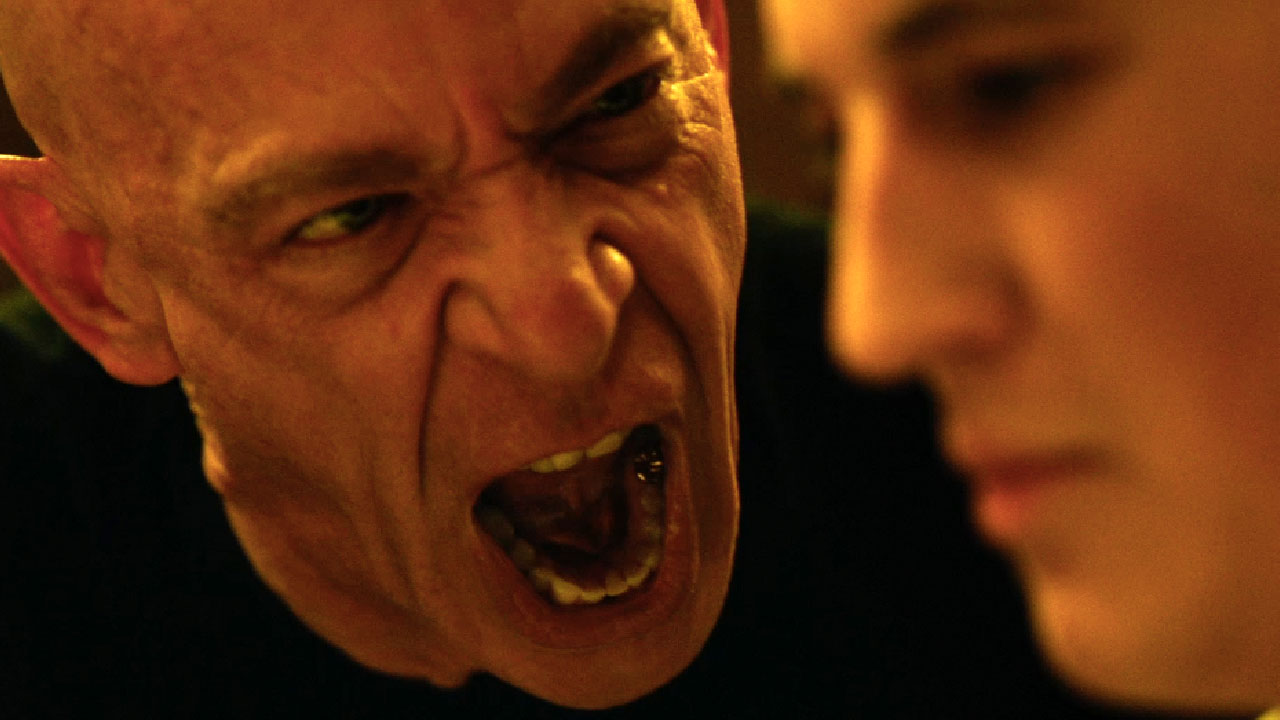
5. Whiplash: As sure as J.K. Simmons will walk home with his first Oscar this year, Whiplash will astonish you. No film this year ratchets tension like this one, as one musician and his mentor do battle that makes the Hobbit look light hearted. Brilliantly written, expertly directed, and boasting two excellent performances (not to mention some really great music!), Whiplash is easily one of the best features of 2014.
4. Nightcrawler: No telling why it took so long to combine Network and American Psycho, but Nightcrawler is here now, so buckle down for a helluva ride. Jake Gyllenhaal is at his absolute best in a film that is as scorchingly relevant an image of modern media as it is a brilliant character study in psychosis.
3. Birdman: Meta-magical-realism at its finest, Alejandro Gonzales Inarritu’s look at the transience and transcendence of fame will nab some Oscars this season. This is a brilliant director and a magnificent cast at their playful, creative best.
2. Selma: Ava DuVernay’s account of the civil rights marches in Selma, Alabama doesn’t flinch. You can expect the kind of respectful approach common in historical biopics, but don’t let that lull you. This is not a laudable and forgettable historical art piece, and you’ll know that as you watch little girls descend a staircase within the first few minutes. Selma is a straightforward, well crafted punch to the gut.
1. Boyhood: Richard Linklater manages the impossible. By checking in on one family every year for 12 years, collecting not the major incidents but all those everyday moments, he provides an achingly, hilariously, touchingly realistic impression of an entire childhood. The cast is brilliant, and the sense of family they evoke is as authentic as anything you will ever see on film. Boyhood is a film like none other ever made, and it is imperative viewing.