Category Archives: Slider

For the homepage slider

Persona Non Grata

Clementine

by Matt Weiner

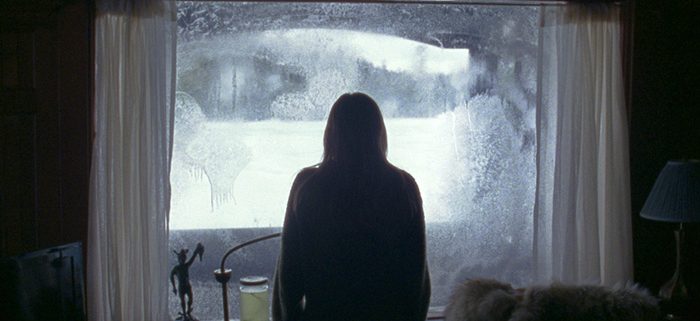
A woman trespassing in a cabin in the woods tends to foretell a very different kind of film than Clementine’s smart, sensual coming-of-age story.

But writer and director Lara Jean Gallagher’s feature debut, while exploring the relationships that make (and break) us, also doesn’t spare the menace lurking just beneath the surface. Maybe it’s the remote cabin in the woods vibe, but it’s also in large part due to the beautiful gauzy shots of the Pacific Northwest from cinematographer Andres Karu that manage to feel always just on the cusp of sliding from languid daydream to nightmare.

Gallagher brings the same inseparable emotions to the story. When Karen (Otmara Marrero) flees Los Angeles and a toxic relationship to break into her ex’s cabin in Oregon, she discovers that she’s not the only interloper in the area. A young aspiring actress Lana (Sydney Sweeney) is also crashing at a nearby house, but quickly finds herself drawn to Karen, open to either validation or love, but undecided on which would be more important.

Their relationship starts out relatively chaste, with Karen still smarting from her breakup and wary about the age gap between her and Lana. Driven by a powerful and nuanced performance from Sweeney, Lana’s mix of aloofness and desire turns even the slightest touch into a highly charged event that seems to stop time. 

There are the aching moments between Karen and Lana as the two bond over heartbreak and trauma. But the sharpest emotional insight that Gallagher brings to her tightly crafted coming-of-age story is to structure it as a psychological drama—one that gets increasingly fraught as the two women push and pull each other into their respective lives.

It makes perfect sense though. Trying to discover who we are as teenagers was horrifying enough, but Karen is an unsettling reminder that learning from these mistakes is an imperfect, lifelong process. The thought that adolescence can be a terror not so removed from Hitchcock is a sobering realization. That we might continue to repeat these traumas, and enact them on the ones we love most, is a horrifying one.

The Perfect Beast

How to Build a Girl

by Hope Madden

There may be nothing braver than an open heart. That kind of bravery accompanies a lack of cynicism that makes others hide their eyes. It is also what drives Coky Giedroyc’s big screen depiction of Caitlin Moran’s memoir (adapted by Moran herself), How to Build a Girl.

Though events have been condensed and details changed (including the main character’s name), Moran’s inimitable upbeat and insightful voice remains, finding its ideal avatar in Booksmart’s Beanie Feldstein.

Feldstein is Johanna, unrepentantly resilient odd duck. Friendless, in love with life, desperate for an adventure, Johanna is the fearless hero in this quest. Feldstein, aside from a few struggles with the accent, commands your attention and very best wishes. You root out loud for her.

After a local TV spot as student poet turns mortifying, Johanna’s brother (one of four) suggests she audition for a London magazine’s “gunslinger” opening as music critic. She unironically writes up a piece on the soundtrack to Broadway’s “Annie”—which nabs her an interview, but only as a joke. Undeterred, she overwhelms the smarmy hipsters into an assignment.

There are moments where How to Build a Girl transcends its coming-of-age trappings. Those are the moments when it directly quotes the book, giving us a peek inside the skill as a writer that will carry Johanna through it all.

The film bears a resemblance to Lady Bird, in which Feldstein portrayed shy bestie to Saoirse Ronan’s adolescent work-in-progress. Like Lady Bird, Johanna craves life outside her hometown. The two heroines also share a lovely knack for forgiveness (of self and others) as well as a strength for self-definition.

Feldstein’s work thus far (Neighbors 2, Lady Bird and, most notably, Booksmart) has announced her as the go-to for funny, brainy, less-than-popular teens—which is not to call her a one-trick pony. Part of her draw is her ability to carve out individuals, to recognize and unveil the human heart inside each girl. Her charisma is almost blinding in this film.

That’ll help you miss some of the weaker elements. Minor characters are allowed little opportunity to develop and the story feels boiled down to the most obvious plot points. There is nothing superficial about Johanna, but the film itself fails to dive far enough beneath the surface to do her justice.

Moran’s audacious humor sometimes feels muted, and that is an outright shame. Nonetheless, Feldstein’s a 1000 watt bulb who makes even the most ordinary scene glow happily. There is also something fearless in a film that decides it is up to every girl to build and rebuild herself in her own image.

Imagine There’s No Heaven

Z

by Hope Madden

There is a moment that currently fascinates horror filmmakers. It is the moment when we forever lose the sweet little white boy destined to become a sociopath.

Director Brandon Christensen (writing with Colin Minnihan) examines parental involvement and even responsibility with the imaginary friend horror, Z.

Beth Parsons (Keegan Connor Tracy) and her husband Kevin (Minnihan regular Sean Rogerson) are at odds about how best to handle son Josh (Jett Klyne) and his new buddy.

This sounds familiar.

Mother is immediately creeped out. Dad is lenient. Boy begins to lash out, blaming imaginary friend. Mom wants to enlist expert help. Dad agrees within reason, but begins to pull away once Mom becomes convinced of a supernatural presence. Bodies begin to pile up.

Brightburn

The Boy

Brahms: The Boy II

Hole in the Ground

Prodigy  

That’s just in the last three years. This phenomenon means two things: filmmakers have hit upon a provocatively of-the-moment topic and it will be hard to find a unique perspective on that topic.

Though Z never seems fresh, there are moments that feel more authentic than they have any right to. Christensen’s direction lets conversations, in particular, breathe. Actors get the chance to give their characters a heartbeat. Adult family relationships have a lived-in quality that both reinforces themes and carves out layers for the story.

As is often the case in this subgenre, the film lives or dies on the role of the mother. Lucky, then, that Tracy gives such a powerful performance. Never showy, Tracy’s weary, passive, put-upon delivery creates a mysterious yet believable character. Beth’s actions feel both natural and unpredictable, which creates a lot of space for the filmmaker to build in surprises.

Too much convenience, too many unearned jump scares and too much predictability threaten to sink the effort, but a handful of narrative choices and a few truly solid performances (plus a cameo from the always welcome Stephen McHattie) elevate the film.

It’s no We Need to Talk about Kevin (the high water mark for the category), but what is? It is an unsettling way to worry about what we pass on to our kids.

I Can’t Go Out – Week of May 4

If you are feeling stir crazy, you’re starting to believe your own trapped family is leading you to lunacy, maybe even murder, have we got the movie for you! Indeed, it’s a stellar week for horror fans. Read on!

Click the film title to link to the full review.

The Lodge

Tigers Are Not Afraid (DVD)

Gretel & Hansel (DVD)

Greed (DVD)

Bloodshot (DVD)

I Still Believe (DVD)

Fright Club: Best of Troma

Here it is—the topic to test the marriage. Luckily, so George did not have to watch every film on the list, we were able to snag a couple of experts. Phantom Dark Dave and Jen Dreadful join Fright Club to gush, ooze, splurt, spray and basically get sloppy with Troma.

5. Poultrygeist: Night of the Chicken Dead (2006)

Are you squeamish? If so, best of luck trying to make it through anything on this list. Poultrygeist is certainly not recommended.

Part Better Off Dead, part Night of the Living Dead, a whole lot of Poltergeist, Kaufman’s film picks apart horror tropes and fast food chains. The film will do nothing for your appetite.

4. Tromeo and Juliet (1996)

James Gunn is one of many cinematic giants who got started with Troma. Along with Troma co-founder Lloyd Kaufman and Shakespeare, Gunn penned a troma-tastic version of the Bard’s star-crossed romance. Truth be told, things work out a little better for Gunn’s cute couple.

Incest, cannibalism, homoeroticism, body fluids, poor food safety protocols and more delirious nastiness mark this as a bone-deep Troma effort, so don’t let the highbrow source material throw you.

3. The Toxic Avenger (1984)

Here’s the classic. No way we could put together a tribute to Troma without Toxie. The Eighties underdog flick feels tame compared to what came before and after, but Eighties Troma tended to be a little friendlier, almost mainstream.

Well, that might be an exaggeration, but Toxic Avenger offers an excellent first toe into the massive, polluted gene pool that is Troma.

2. Father’s Day (2011)

The creative team behind loving giallo spoof Editor started off making what could reasonably be considered a spoof of a Troma film that wound up being an actual Troma film because, let’s be honest, who could tell the difference?

Story schmory—the film sets up every conceivable way to offend, disgust and dismay and it has the best time doing it. You’ll know if this film is for you within two minutes. Chances are good you won’t make it through that opening scene, and even better that you be sickened before the end of the movie if you do stick it out. What they do is vile and hilarious.

1. Killer Condom (1996)

A Troma-distributed splatter/horror/comedy, Killer Condom is an enormous amount of fun. This is a German film—German actors delivering lines in German—but it’s set in NYC. You can tell because of the frequent shots of someone opening a New York Times newspaper machine.

Luigi Mackeroni (Udo Samel) is the grizzled NYC detective who longs for the good old days in Sicily. In German. He’s assigned to a crime scene in a seedy Time Square motel he knows too well, where it appears that women just keep biting off men’s penises.

Or do they?

This film is refreshingly gay, to start with, as nearly every major character in the film is a homosexual. The run-of-the-mill way this is handled is admirable, even when it is used for cheap laughs. (Babette, I’m looking at you).

It’s fun. It’s funny. It’s gory and wrong-headed and entertaining from start to finish. Who’d have guessed?

Killer Style

Deerskin

by Hope Madden

What makes a good midlife crisis? What gives it swagger? Physicality? Style? Maybe a little fringe?

Deerskin.

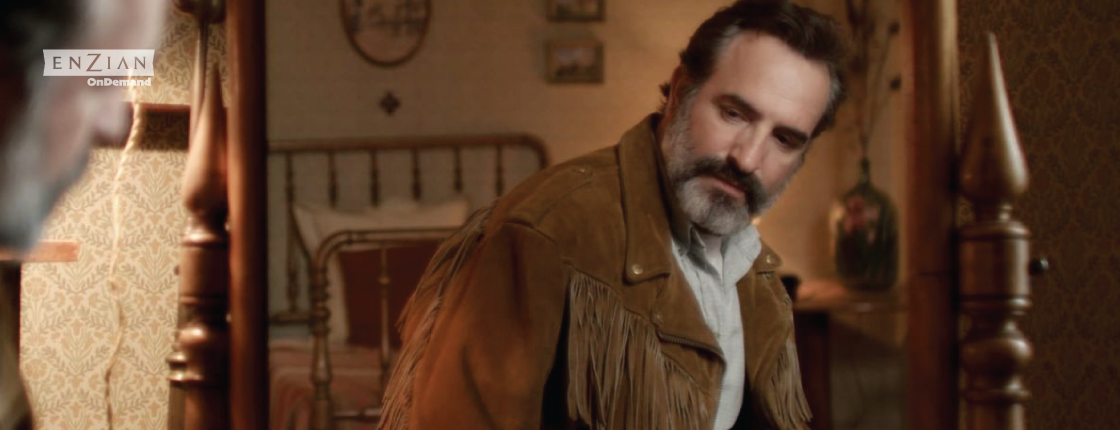
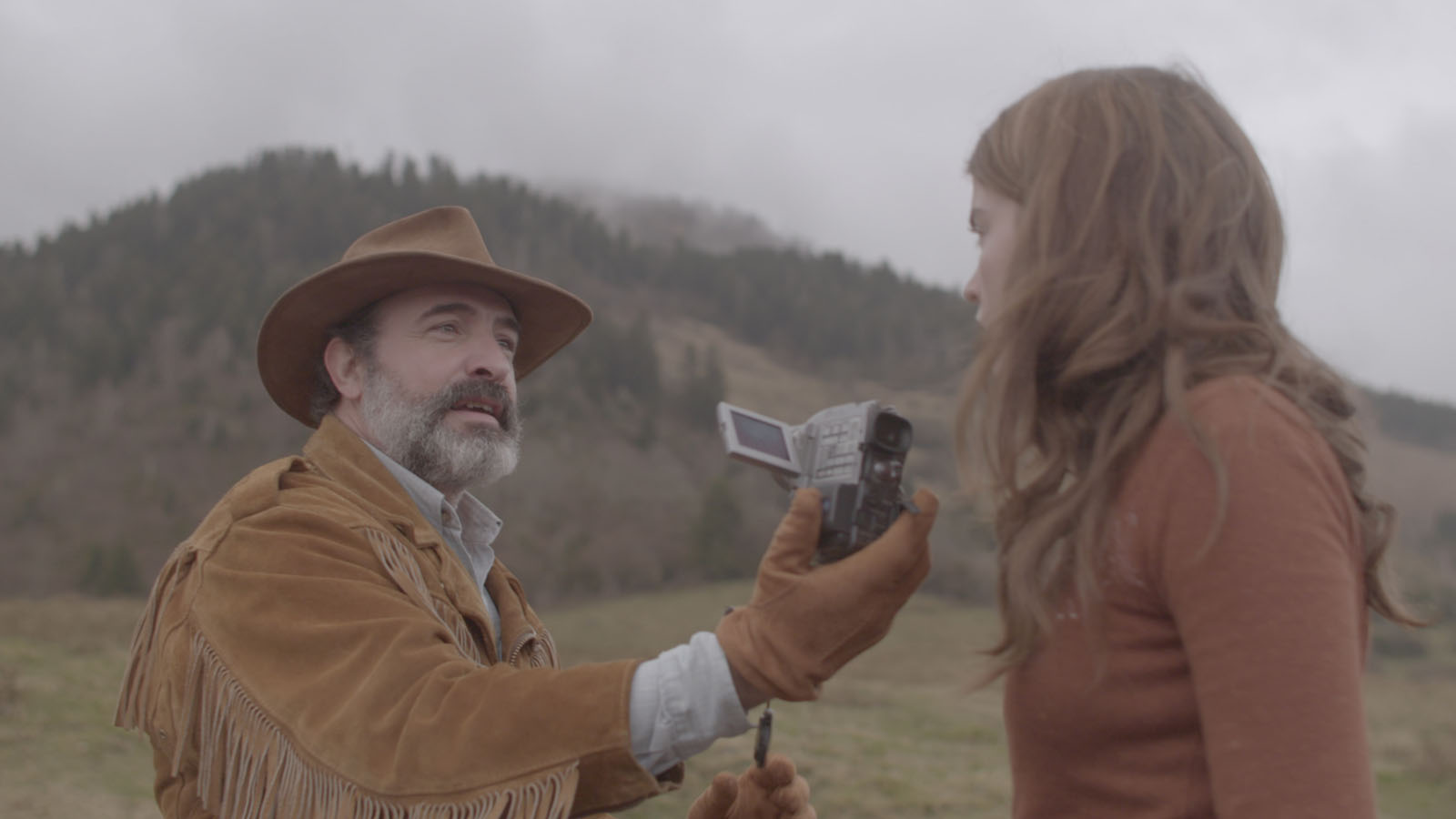
Oscar winner Jean Dujardin (The Artist) is Georges, a man willing to pay an awful lot for a jacket—so much that his wife locks him out of their account. No matter, Georges will just hole up in this little French town, learn how to use the digital camera that came with his purchase, and spend some quality time with his new jacket.

If that sounds absurd, it should. You’ve just stumbled into the one-paragraph synopsis of the latest bit of lunacy from filmmaker Quentin Dupieux. As he did with 2010’s Rubber (a sentient tire on a cross-country rampage), Dupieux sets up one feature-length joke.

It’s funny, though.

Again the filmmaker draws hysterically deadpan, even confused performances from the many nameless characters supporting his leads. Adèle Haenel (Portrait of a Lady on Fire), playing town barkeep and would-be filmmaker, offers a wily and enjoyable counterpoint to Dujardin’s earnestness.

Aside from a couple of utterly priceless Dupieux flourishes, it’s Dujardin that sells this film. He’s deeply committed to the wildly wrong-headed internal logic of the film and the character. There’s an underlying sadness to it, and the willful obliviousness required of a character so willing to commit to a plan as ludicrous as Georges’s. He’s wonderful.

Deerskin is also slyly autobiographical in a way Dupieux’s other films are not. An odd duck wants to follow his vision (in this case, the obsessive love of a deerskin jacket) and make a movie. Creative partnerships and collaboration, while possibly necessary, also soil the vision and make the filmmaker feel dumb.

No one understands him!

Or maybe they do and his ruse is up.

No matter. He still has killer style.

Night of the Living

Blood Quantum

by Hope Madden

It’s 1981 on the Red Crow Indian reservation and white people have lost their damn minds.

Since it is 1981, no way they know it’s zombies. Sure, Romero’s Night of the Living Dead came out in ’69, but the genre doesn’t really take off until later in the Eighties. No, they have to figure this out for themselves – no meta commentary, no preconceived notions.

It wouldn’t help them anyway because Jeff Barnaby’s Blood Quantum is a zombie movie with a twist, which he uses to his advantage to subvert your knowledge of the genre.

Traylor (Michael Greyeyes) is having a busy morning. He had to shoot his ex-wife’s dog, his sons have both been arrested, Sugar keeps calling the station because his woman’s sick, and Traylor’s dad needs him to come see something down at the store.  

It’s always nutty like that right before the zombie apocalypse, though. Although, to be honest, Blood Quantum often works a little more like 30 Days of Night and Stakeland – both vampire films that riff on zombie tropes—but the filmmaker utilizes Romero when it makes sense.

Barnaby takes common horror themes and bends them to serve the film’s purpose as an apt allegorical nightmare. It’s the combination of social commentary and intimate family drama that makes the film memorable.

Blood Quantum would have been interesting solely on the basis of “plagued up Opies” invading indigenous space—sometimes wrapped in infected blankets, even. But the film derives its real strength from a more intimate struggle. Yes, a diseased white population threatens to overwhelm and destroy the folks of the Mi’gMaq reserve, but Barnaby’s focus is internal.

Whites are a mainly nameless burden, a privileged but parasitic condition of life. Traynor and his boys need to take care of their own shit if they want to survive this.

Greyeyes offers a level performance to build around. Kiowa Gordon brings sinister charm to the bad boy Lysol role, balanced nicely as favorite son Joseph by The Revenant’s Forrest Goodluck, (“He killed my boy!”)

Better still are longtime character actor Gary Farmer (love him!) and relative newcomer Stonehorse Lone Goeman as a couple of guys who’ve lived through a lot and bring rich if not always valuable perspective.

Performances are not always exceptional, and you would not call this a feminist effort, but the underlying wry, weary wit separates the film from anything else like it.

There’s also an excellent use of resources – minimal sets maximized results: claustrophobia, tension, horror.  Barnaby’s spare but effective use of animation is another reason Blood Quantum delivers a vital new perspective for the genre.

I Can’t Go Out – Week of April 28

The time will come within weeks that we have no post-theatrical releases to discuss. How insane is that? Until then, you can pass the time with two early 2020 releases that, according to box office, you probably missed. Both are worth a look – one is actually excellent.

Click the film title to link the complete review.

The Assistant

The Rhythm Section