It’s hard to watch Lucky Grandma without giving at least a passing thought to Lulu Wang’s 2019 gem The Farewell. This story could not be more different, honestly, but at the heart of both movies is the undeniable force of a nai nai.
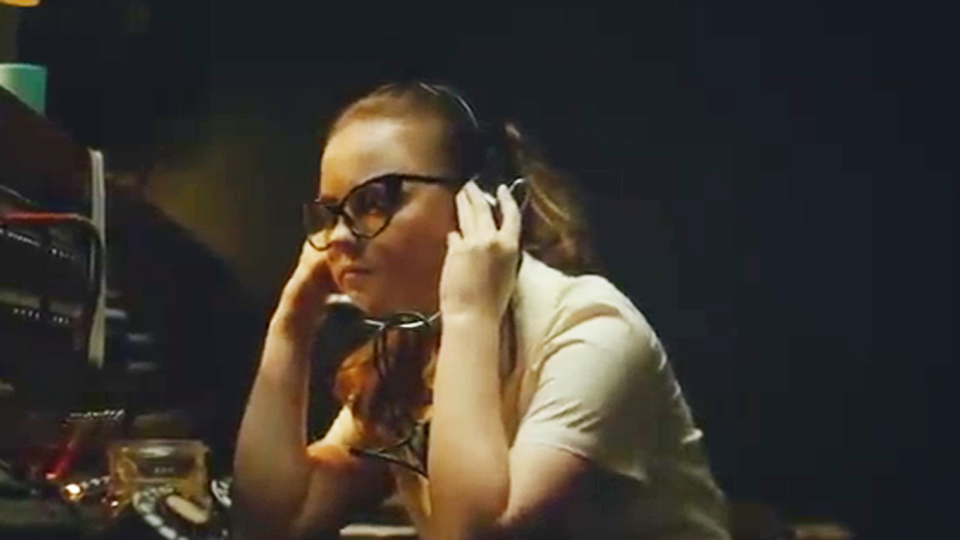
In writer/director Sasie Sealy’s tale, Tsai Chin portrays Nai Nai Wong as a dead-eyed hoot. Cigarette dangling, disgusted expression, Nai Nai doesn’t play. Her dismissive stare is priceless. Her confrontational giggle even better.
One routine trip to see her fortune teller/doctor/friend
(Yan Xi) convinces her that her luck is changing. She boards a bus, hits a casino
and lets it roll.
But luck is not always what you hoped for and the next thing
Nai Nai knows, some homely gangsters are after her.
What makes this film the savvy, funny adventure it is results from Sealy’s manipulation of the familiar. The basic story follows many an Underdog Runs Afoul of the Mob stories (Hard 8, Jackie Brown, Millions, True Romance, etc.)
The difference here, obviously, is the underdog.
Like the movie on the whole, the elderly and beloved old grandmother at the center of this mess is simultaneously familiar and alien. Her aches, pains, poverty and the clear patterns of her behaviors suggest something authentic and recognizable. She’s just not a movie grandma—not like any in the movies we’re used to. Her will is as strong as steel, whether her body keeps up or not.
Sealy’s careful not to mock Nai Nai Wong (a good thing, as
she would clearly kick a person’s ass). But Chin makes certain this character
is not only formidable, but hilarious.
She’s aided by her odd couple sidekick Big Pong (Hsiao-Yuan
Ha), a gentle giant of a bodyguard hired in the savviest, old-ladiest of ways.
(You know who can spot a bargain? Grandma can.)
Michael Tow also lends a fascinating, unseemly quality to
his scenes as creepy gangster henchman Little Handsome.
The emotional grounding for the film never feels forced, which allows the Lucky Grandma to run its course without the predictable sentimentality that crushes most “look how funny this old person is” films. It’s there—the weighty pull of family over self-reliance, of dependence over loneliness—but, like everything else in the film, it respects the character Chin has so meticulously developed.
We spend a lot of time ripping on weak and lazy jump scares. But today we want to acknowledge that, when done well, jump scares can be an incredibly effective tool for a horror filmmaker.
Here are our 10 favorite jump scares from horror movies.
10. It Follows (2014): tall man at the door
This movie is a freak show of scares beginning to end, and the different images the demon takes throughout is forever terrifying and fascinating. But it was the tall man at the door that really got to us.
9. Les Diaboliques (1955): alive in the tub
First of all, this is a spoiler. But the film came out 65 years ago, so if you haven’t seen it by now (we even showed it once!), that’s on you, man. It’s a classic, and a classic scare.
8. The Ring (2002): I saw her face
Again, here is a film chocker block full of utterly fantastic creeps, all told a moment at a time. But it was that first one, when we see Samara’s first victim, that set the stage and made us jump out of our seats.
7. A Tale of Two Sisters (2003): under the sink
So much nuttiness, so many confusing ideas to keep track of, such a master class piece of atmosphere building in this film. You just are not expecting jump scares in this one. And yet, as one dinner party goes wrong…
6. Hereditary (2018): signpost
Tell us you saw this one coming and we will tell you that you are a liar.
5. Carrie (1976): Carrie White’s grave
Oh holy shit. You think Sue Snell has been through enough, what with missing out on prom and watching every friend she has die in a flaming blood bath. But you would think wrong.
4. Audition (1999): What’s in the bag?
Ring ring. Ring ring. The way Takashi Miike frames this scene, lovely Asami’s hair draped in front of her, her spine showing, that loud phone – you can’t take your eyes off her, waiting for her to rouse, to answer. You might not even notice that burlap sack…
3. Jaws (1975): Hey, it’s Bruce!
Jaws has two classic jump scares, and it was hard to pick. Remember when Hooper’s digging that tooth out of Ben Gardner’s boat and then, all the the sudden, a human head! Well, that would have been enough for most movies, but after waiting nearly 2/3 of the film to see that shark, Steven Spielberg introduces his lead with authority.
2. The Conjuring (2013): bureau
James Wan’s instant classic haunted house movie also boasts more than one strong contender for this list. That hand clapping scene, showcased in the trailer, was reason enough for us to buy our tickets. But the one that did the most damage starts with a sleep walker and ends with the best jump scare in the last twenty years.
https://www.youtube.com/watch?v=GOgC_YUyTYs
1. The Exorcist III: guy in the hall
There are so many utterly priceless moments in this underrated horror show: Patrick Ewing and Fabio as angels, Sam Jackson as a blind man, that terrifying confessional scene. But there is this one flash of white that is the reason everybody who sees this movie remembers it.
Mara (Tallie Medel) and Jo (Norma Kuhling) make an odd couple, or so says Mara’s one-time dinner date who remembers the pair of best friends from high school. Mara’s quiet, no-fuss. And Jo?
“She’s cutting.”
In fact, Mara and Jo resemble any number of very real relationships, those that maneuver childhood and the dramatic complexities of adolescence to settle into something adult that may not be sustainable.
Jo is flashy, passionate, needy. Mara is level-headed and
supportive. Dan Sallitt’s understated character study Fourteen picks up
their relationship somewhere into adulthood and follows it from Mara’s point of
view with a detached but caring comment on how life, responsibility and
surrender finally look.
Matter-of-fact performances eliminate any hint of melodrama
as Fourteen wades through a series of the duo’s scenarios across about a
decade. The performers’ delivery and the director’s style undercut any
artifice, nearly every scene focused exclusively on a conversation, most of
which feel improvisational.
It offers a loose but relentless progression, a regrettable
erosion focused on growing up and growing apart, caring for each other and
caring for yourself.
Sallitt rarely focuses squarely on big moments. Jo’s breakdowns and histrionics remain almost entirely off screen, and what we see is Mara’s inevitable response as well as quietly significant moments: the first dinner with a new boyfriend, a trip back home for a timely visit.
The progression of time told in haircuts and apartments is handled more gracefully in Fourteen than what you might expect, but again, Sallitt’s style is not showy. More than the visual backdrop to mark a new era, it’s Medel and Kuhling’s recognizable reacquaintance, first halting then quickly entrenched in familiar patterns: this is who we are.
Medel’s performance, aided by her enormous eyes, is deceptively
compelling. As the friend less likely to draw notice (she mentions at one point
that, in Jo’s presence, she sometimes feels as if she’s not even there), she’s
comfortable in the background. At the same time, Mara is clearly and constantly
observing, making a mental note, internally balancing what’s best for Jo versus
what’s best for herself.
Kuhling is a bit weaker, her believable amalgamation of tics
in early scenes do not translate well to her climactic breakdown, which at
times feels like a student actor’s workshop.
It’s a minor flaw, though, in a film that feels quietly courageous in its interest in one of life’s great heartbreaks.
You’ve seen Capone on film: films about him, films containing
him, films about gangsters reminiscent of him. A lot of these movies have been
great – some of them classic. But you have never seen Alphonse Capone
the way writer/director Josh Trank sees him.
Wisely, Trank realized Tom Hardy would be able to translate
his vision.
There are moments, especially early in the film, where Hardy
and Trank seem to be conjuring Vito Corleone (Hardy has always carried the same
dangerous charisma of Brando, anyway). But it doesn’t take long before the role
defines itself as something we truly have not seen before.
The film focuses on the final year of the infamous mobster’s
life—the adult diapers and dementia year. He’s served his prison term for tax
evasion, the syphilis he contracted in his youth has taken its toll on his mind
and body, and his money is quickly evaporating.
Maybe he’s hidden $10 million somewhere. Maybe he’s just
nuts.
Trank’s loose narrative is less concerned with the scheming, criss-crossing and backstabbing from underlings trying to find the money than it is with Capone’s deterioration, and that’s what makes this film so gloriously odd.
There is a grotesque humor underlying many of these scenes. Trank doesn’t ask you to sympathize with this notorious villain, nor does he revel in his decrepitude. But he definitely explores it, and that’s a brave decision. Many a mobster film fanatic will be annoyed by this glimpse into the post-badass years, but defying expectations is something Capone does early and often.
If Trank doesn’t trade in sympathy, we can still expect
Hardy to generate empathy. As is characteristic of every performance in his
career, Tom Hardy finds the faulty humanity in this character. His depiction of
Capone’s confusion is unerringly human, and in his hands Trank’s macabre humor
never feels like mockery.
Linda Cardellini flexes more in the role of Capone’s wife Mae than she has in her many other turns as put-upon spouse. She’s a great sparring partner for Hardy, and their volatile but ultimately tender relationship creates a needed grounding for a film so busy with the shadowy unreality of a diseased mind.
Because of the borderline surreal nature of a film told from
the point of view of a man in the throes of dementia, it’s often tough to suss
out the reality of the events onscreen. This generally works, but there are
certainly moments—generally those inserted to give us stepping stones of a
plot–that seem stiffly ill placed.
Thankfully, Hardy’s there to command your attention. No doubt some viewers will be disappointed—those who tuned in to see Hardy play a badass at the top of his game. My guess is that the reason one of the finest actors working today was drawn to Capone was the opportunity to do something just this unexpected.
There may be nothing braver than an open heart. That kind of bravery accompanies a lack of cynicism that makes others hide their eyes. It is also what drives Coky Giedroyc’s big screen depiction of Caitlin Moran’s memoir (adapted by Moran herself), How to Build a Girl.
Though events have been condensed and details changed
(including the main character’s name), Moran’s inimitable upbeat and insightful
voice remains, finding its ideal avatar in Booksmart’s
Beanie Feldstein.
Feldstein is Johanna, unrepentantly resilient odd duck. Friendless,
in love with life, desperate for an adventure, Johanna is the fearless hero in
this quest. Feldstein, aside from a few struggles with the accent, commands
your attention and very best wishes. You root out loud for her.
After a local TV spot as student poet turns mortifying, Johanna’s
brother (one of four) suggests she audition for a London magazine’s “gunslinger”
opening as music critic. She unironically writes up a piece on the soundtrack
to Broadway’s “Annie”—which nabs her an interview, but only as a joke.
Undeterred, she overwhelms the smarmy hipsters into an assignment.
There are moments where How to Build a Girl
transcends its coming-of-age trappings. Those are the moments when it directly
quotes the book, giving us a peek inside the skill as a writer that will carry Johanna
through it all.
The film bears a resemblance to Lady Bird, in which Feldstein portrayed shy bestie to Saoirse Ronan’s adolescent work-in-progress. Like Lady Bird, Johanna craves life outside her hometown. The two heroines also share a lovely knack for forgiveness (of self and others) as well as a strength for self-definition.
Feldstein’s work thus far (Neighbors 2, Lady Bird and, most notably, Booksmart) has announced her as the go-to for funny, brainy, less-than-popular teens—which is not to call her a one-trick pony. Part of her draw is her ability to carve out individuals, to recognize and unveil the human heart inside each girl. Her charisma is almost blinding in this film.
That’ll help you miss some of the weaker elements. Minor
characters are allowed little opportunity to develop and the story feels boiled
down to the most obvious plot points. There is nothing superficial about
Johanna, but the film itself fails to dive far enough beneath the surface to do
her justice.
Moran’s audacious humor sometimes feels muted, and that is an outright shame. Nonetheless, Feldstein’s a 1000 watt bulb who makes even the most ordinary scene glow happily. There is also something fearless in a film that decides it is up to every girl to build and rebuild herself in her own image.
Here it is—the topic to test the marriage. Luckily, so George did not have to watch every film on the list, we were able to snag a couple of experts. Phantom Dark Dave and Jen Dreadful join Fright Club to gush, ooze, splurt, spray and basically get sloppy with Troma.
5. Poultrygeist: Night of the Chicken Dead (2006)
Are you squeamish? If so, best of luck trying to make it through anything on this list. Poultrygeist is certainly not recommended.
Part Better Off Dead, part Night of the Living Dead, a whole lot of Poltergeist, Kaufman’s film picks apart horror tropes and fast food chains. The film will do nothing for your appetite.
https://www.youtube.com/watch?v=s74J-XtfOE4
4. Tromeo and Juliet (1996)
James Gunn is one of many cinematic giants who got started with Troma. Along with Troma co-founder Lloyd Kaufman and Shakespeare, Gunn penned a troma-tastic version of the Bard’s star-crossed romance. Truth be told, things work out a little better for Gunn’s cute couple.
Incest, cannibalism, homoeroticism, body fluids, poor food safety protocols and more delirious nastiness mark this as a bone-deep Troma effort, so don’t let the highbrow source material throw you.
3. The Toxic Avenger (1984)
Here’s the classic. No way we could put together a tribute to Troma without Toxie. The Eighties underdog flick feels tame compared to what came before and after, but Eighties Troma tended to be a little friendlier, almost mainstream.
Well, that might be an exaggeration, but Toxic Avenger offers an excellent first toe into the massive, polluted gene pool that is Troma.
2. Father’s Day (2011)
The creative team behind loving giallo spoof Editor started off making what could reasonably be considered a spoof of a Troma film that wound up being an actual Troma film because, let’s be honest, who could tell the difference?
Story schmory—the film sets up every conceivable way to offend, disgust and dismay and it has the best time doing it. You’ll know if this film is for you within two minutes. Chances are good you won’t make it through that opening scene, and even better that you be sickened before the end of the movie if you do stick it out. What they do is vile and hilarious.
https://www.youtube.com/watch?v=tMZBXdf-6qA
1. Killer Condom (1996)
A Troma-distributed splatter/horror/comedy, Killer Condom is an enormous amount of fun. This is a German film—German actors delivering lines in German—but it’s set in NYC. You can tell because of the frequent shots of someone opening a New York Times newspaper machine.
Luigi Mackeroni (Udo Samel) is the grizzled NYC detective who longs for the good old days in Sicily. In German. He’s assigned to a crime scene in a seedy Time Square motel he knows too well, where it appears that women just keep biting off men’s penises.
Or do they?
This film is refreshingly gay, to start with, as nearly every major character in the film is a homosexual. The run-of-the-mill way this is handled is admirable, even when it is used for cheap laughs. (Babette, I’m looking at you).
It’s fun. It’s funny. It’s gory and wrong-headed and entertaining from start to finish. Who’d have guessed?
It’s 1981 on the Red Crow Indian reservation and white people have lost their damn minds.
Since it is 1981, no way they know it’s zombies. Sure, Romero’s Night of the Living Deadcame out in ’69, but the genre doesn’t really take off until later in the Eighties. No, they have to figure this out for themselves – no meta commentary, no preconceived notions.
It wouldn’t help them anyway because Jeff Barnaby’s Blood
Quantum is a zombie movie with a twist, which he uses to his advantage to
subvert your knowledge of the genre.
Traylor (Michael Greyeyes) is having a busy morning. He had
to shoot his ex-wife’s dog, his sons have both been arrested, Sugar keeps
calling the station because his woman’s sick, and Traylor’s dad needs him to
come see something down at the store.
It’s always nutty like that right before the zombie
apocalypse, though. Although, to be honest, Blood Quantum often works a
little more like 30 Days of Night and Stakeland – both vampire
films that riff on zombie tropes—but the filmmaker utilizes Romero when it
makes sense.
Barnaby takes common horror themes and bends them to serve
the film’s purpose as an apt allegorical nightmare. It’s the combination of
social commentary and intimate family drama that makes the film memorable.
Blood Quantum would have been interesting solely on the basis of “plagued up Opies” invading indigenous space—sometimes wrapped in infected blankets, even. But the film derives its real strength from a more intimate struggle. Yes, a diseased white population threatens to overwhelm and destroy the folks of the Mi’gMaq reserve, but Barnaby’s focus is internal.
Whites are a mainly nameless burden, a privileged but
parasitic condition of life. Traynor and his boys need to take care of their
own shit if they want to survive this.
Greyeyes offers a level performance to build around. Kiowa Gordon brings sinister charm to the bad boy Lysol role, balanced nicely as favorite son Joseph by The Revenant’s Forrest Goodluck, (“He killed my boy!”)
Better still are longtime character actor Gary Farmer (love
him!) and relative newcomer Stonehorse Lone Goeman as a couple of guys who’ve
lived through a lot and bring rich if not always valuable perspective.
Performances are not always exceptional, and you would not
call this a feminist effort, but the underlying wry, weary wit separates the
film from anything else like it.
There’s also an excellent use of resources – minimal sets maximized results: claustrophobia, tension, horror. Barnaby’s spare but effective use of animation is another reason Blood Quantum delivers a vital new perspective for the genre.
There is something appealing to the glam trainwreck that is Bit,
Brad Michael Elmore’s anti-Twilight.
An angsty adolescent fresh from high school graduation voice
overs: “You know those teen vampire movies that feel like the horny soap opera
fever dreams of an 8th grade diary? Here’s how mine began.”
Like it. It’s self-aware, a little deadpan funny, a little whatever.
Go on.
Laurel (Nicole Maines), the recent grad, packs up her Oregon-plated
car and takes off to spend the summer with her brother in LA. On her very first
night in town, she’s hit on by the super
hot girl Izzy (Zolee Griggs), brought to an after hours full of incredibly cool
people, and immediately she feels as if she’s found acceptance, found home.
Naturally, Izzy and her also-hot friends are lesbian
vampires who see Laurel’s specialness and invite her to Bite Club.
First rule of Bite Club: No. Fucking. Boys.
Maines is a transgender actress, a fact that elevates Laurel’s
angsty “oh, high school was kind of a horror show” schtick because it probably
was. Maines does not show an enormous amount of range, unfortunately, and
Elmore’s script offers her few opportunities to shine.
She’s entirely convincing with her eyes at half mast, enduring the well-meaning but clueless affection of her family. But Elmore penned very few realistic reasons for Laurel’s behavior and Maines is left struggling to convince us, simply repeating the phrase “I’m fine” ad nauseam.
Diana Hopper, on the other hand, cuts an impressive figure as Bit’s Tyler Durden. Hopper elevates Elmore’s sometimes weak dialog (there are times when it works) with wearied badassedness.
It is fun and sometimes really witty the way Bit mocks
boys, though, even if Elmore’s core theme is, “Some of us are OK!” Indeed, Bit
undercuts its feminist intent as often as it offers genuine insight.
But maybe its main thesis is that kids are stupid, because Laurel’s
philosophy for the future of the human race is…well, it’s stupid.
Still, there’s low-rent garbage fun to be had with this. Everything about it could have been better, but like most guilty pleasures, it appeals in a sugar high kind of way.