Lingua franca is literally a language used between two people who don’t share a native tongue. But what goes unsaid in Lingua Franca carries far more weight than anything we’re actually told.
Writer/director/producer/star Isabel Sandoval has mastered cinematic
understatement. Her approach, as filmmaker and performer, is never showy. Her
third and most confident feature is a slice of life drama that meditates
quietly on need, agency, love and capital in Brighton Beach, Brooklyn.
Olga (a perceptive Lynn Cohen) sometimes forgets where she
is. She gets a little agitated and a little weary.
Olivia (Sandoval) calms her, keeps her safe, keeps her well, but has worries of her own.
Alex (Aemon Farren) just needs to catch a break, so he’s
staying with his grandmother and helping out Olivia when he can. But we can’t
all help each other, even when we mean to.
Sandoval’s film says so much with so few words, it’s remarkable. By way of Olga’s apartment we enter an entirely lived-in world, one that is likely to be utterly unfamiliar and yet feels as authentic as any you’ve seen. The ordinariness of extraordinary circumstances, unusual measures and extreme tensions emerges by way of Olivia’s resigned, world-wearied gaze.
There is a cultural currency to the story, one in which Olivia’s position as a transgender woman of color is actually less dangerous than her situation as an illegal immigrant in the age of ICE. That anxiety plays as a backdrop to a desperate romance between Olga’s two needy houseguests.
As Olivia’s sketchy love interest, Farren offers a nuanced
and authentic turn. Alex is a man of squandered potential, dim prospects, and a
fleeting if recurring notion that he can be something of value.
There’s a lonesome transience to the story, a feeling of impermanence that’s frightening, sad and just slightly freeing. Lingua Franca tells a lovely, sad story that’s very much worth hearing.
The horror Western is an under-explored subgenre. There have
been some great
ones. In fact, just two years ago filmmaker Emma Tammi took a look at isolation
and outlaws from a female perspective with her effective nightmare The
Wind.
Co-writer/director Aaron B. Koontz (Scare
Package) pits a bunch of women against some scurrilous train robbers in
a Wild West ghost town for his latest, The Pale Door.
The title is a Poe reference, a line from his poem The Haunted Palace. Poe wasn’t much of a gun slinger, but that doesn’t matter because the title has nothing to do with anything. Just go with it. You’ll enjoy Koontz’s odd concoction more if you do.
Little brother Jake (Devin Druid) and big brother Duncan (Zachary Knighton) grew up on opposite sides of the law. Duncan runs the Dalton Gang, a bunch of quick shootin’ and hard drinkin’ outlaws. But that’s not the life Duncan ever wanted for his bro, who sweeps up at a saloon and saves his nickels to buy back the old farm.
Until the gang is one man down with a big payday coming on the next train. Jake steps in, the gang robs the train, but this score is not what they expected and next thing they know, wouldn’t ya figure it? Witches.
I am all in for a ghost town full of witches—it’s like a
Scooby Doo episode gone wonderfully off track. Production values do not evoke a
period and the props are hardly authentic, but the atmosphere is fun and the
cast has a good time.
Pat Healey is the wrong-headed good choice he always is.
Noah Segan (who directed one of the shorts in Koontz’s Scare Package) is
basically playing Noah Segan, but luckily that character is always so
entertaining.
Veteran character actor Stan Shaw is mainly saddled with
exasperated entrances and hypermasculine melodrama (because this is, after all,
a Western). Meanwhile, Bill Sage (We Are What We Are) charms as a kind
of poor man’s Bruce Campbell. (That’s not an insult. We can’t all be Bruce
Campbell.)
So the gang finds themselves in a sort of Wild West Titty
Twister (let’s assume you’ve seen From Dusk Till Dawn), and young,
wholesome Jake may be their only hope for survival.
Does the leap from Salem to Western ghost town make sense? It does not. How about the basic internal mythology, the blood ritual, the sex, the ending? Not really. And no one will accuse The Pale Door of taking a female perspective.
But for a witchtastic Western, is it fun?
Edgar Allen Poe couldn’t have made it any more fun.
The last time I saw Jesse Williams get into a car on a road trip to horror, the journey delivered one of the most fun flicks of 2011, Cabin in the Woods.
He’s back on the road in co-writer/director/co-star Jay
Baruchel’s graphic novel adaptation, Random Acts of Violence. Williams
plays Todd, creator of the adult comic series Slasherman.
Though writer’s block is keeping him from finishing the
final installment, Todd hits the road with his publisher Ezra (Baruchel),
assistant Aurora (Niahm Wilson), and girlfriend Kathy, played by Jordana
Brewster. (Brewster also starred in a road trip to hell—for character and
viewer—with the 2006’s Texas Chainsaw Massacre: The Beginning.)
Their goal is to visit the landmarks associated with the comic’s inspiration, the gruesome serial killer dubbed the I-90 killer who terrorized a stretch of highway from 1987 – 1991. Todd and Ezra hope to drum up some publicity for their comic con appearances. Kathy is researching her own related project, a nonfiction and victim-centric book about the same killer.
The film lands on ground fertile for horror examination. Most
interesting and timely is the conversation around perspective. Are we beyond the
point as a society where we make the serial killer our protagonist when we can
instead take the point of view of the victim? (The popularity of the book and
series I’ll Be Gone in the Dark suggests that we may be.)
Too bad the film relegates this conversation to a single argument: men create horror and women hate that; meanwhile, women create something more wholesome. (Counterpoint: much of the best horror of the last decade was made by women, and if it’s gruesome you want, please see Julia Ducournau’s fantastic 2016 rumination on adolescence and meat, Raw.)
The film does boast moments of provocative carnage, plus flashes of intriguing content. Rather than the traditional creepiness inspired by the Midwest rural route gas station—the isolated community somehow suggesting incest and cannibalism without every directly saying so—Baruchel conjures the far more realistic and modern blight of meth to achieve the same unhealthy atmosphere.
Never a particularly compelling presence, Williams lacks the
gravitas to shoulder the suffering artist schtick and Brewster’s presence doesn’t
elevate the tensions. Both Baruchel (an outstanding purveyor of nerdy support
in any cast) and the tenderly engaging Wilson offset this lack of chemistry in
their brief screen time, but it’s not enough.
Random Acts of Violence could have been an interesting indictment of the true crime phenomenon. It might have been an intriguing entry into the Writer’s Block Turns Horrific family (of which The Shining is patriarch). Instead, it’s a mainly competent but frequently lazy flick with gore to spare and some fun animations, but it could have been a lot more.
Aside from maybe the musical, there is no genre in film more dependent on sound for audience response. From the creaks, groans and jangling chains of old fashioned haunted house pics to the hiss and slither of modern monster movies, things can hardly go bump in the night if you can’t hear the bump. So George sat down and determined the best examples of sound design in horror.
That’s right, George is driving. Did Hope recommend any movies to consider when thinking through the best use of sound in horror? She did. Did any make the list?
They did not.
Well, turnabout is fair play and sound is definitely George’s jam. So here, friends and Fright Clubbers, are George’s picks for the best sound design in horrorl
5. It Follows (2014)
Like A Quiet Place and Us, It Follows
is a perfect example of how modern filmmakers are molding the soundtrack with
sound effects and even score to create the sound experience.
Writer/director David Robert Mitchell, working with
Disasterpeace on a score that incorporated music, ambient sound and sound
effects, develops an immersive, nightmarish environment for the imagination to
flourish. The synths reflect the film’s difficult-to-pin-down time period,
simultaneously reflecting a recent past as well as a currency. Meanwhile,
creaky doors and blowing wind call to mind old fashioned scares.
The score almost doesn’t sound like a score, and the sound
sets a different mood every time the different demon appears. Few films are
this masterful in the way it brings together sound track and sound effects.
Together they create an inescapable mood.
4. The Haunting (1963)
Director Robert Wise obviously knew the importance of sound
coming into this film, sitting, as it does, between his two biggest efforts, West
Side Story and The Sound of Music. But musicals are not the only
films that really deserve close attention to sound. What you hear is even more
important than what you see in a good old fashioned ghost story.
We wanted to make sure the list included at least one
example of old school Foley-style sound. Wise worked with AW Watkins, 4-time
Oscar nominee for sound design (Doctor Zhivago, Libel, Knights of the Round
Table, Goodbye Mr. Chips).
This is a great example of old time Foley sound effects used
to create the mood, making things you can’t see scary.
3. The Lighthouse (2019)
The atmosphere is thick and brisk
as sea fog, immersing you early with Jarin Blasche’s chilly black and white
cinematography and a Damian Volpe sound design echoing of loss and one
persistent, ominous foghorn.
For
everything Eggers brings to bear, from the Bergmanesque lighting and spiritual
undertones to the haunting score to the scrupulous set design to images
suitable for framing in a maritime museum – not to mention the script itself
– The Lighthouse works because of two
breathtaking performances.
But what a world Eggers and crew create for Robert Pattinson
and Willem Dafoe.
2. Berberian Sound Studio (2012)
Madman Peter Strickland (In Fabric) made an entire film
about sound, and it gets so much right. Not just about sound—about the era, the
equipment, giallo sensibilities and moviemaking.
Strickland, working with a sound department of 34, creates a
psychological experience through sound almost exclusively. The amazing Toby
Jones plays Gilderoy, flown in specifically to helm the sound in a horror
movie.
“This isn’t a horror movie. This is a Santini movie!”
Gilderoy’s arc is profound, and sound is our only window
into what is changing him. We don’t see what he sees, only his reaction to it
and the sound of it that makes his psychological breakdown believable.
1. Alien (1979)
The great soundman Ben Burtt, with an impressive team and
the direction of Ridley Scott, uses silence as another instrument in the
terrifying sound design for this film.
Given the tag line, that powerful use of silence is more
than evocative, it’s required. But layered in, Burtt offers plenty of aural
evidence that this spaceship is not like those we were used to seeing onscreen.
The Nostromo is no sleek vehicle. Creeks and chains, water leaks and thudding
echoes depict a dilapidated bucket of bolts, giving Alien a creaky old
house atmosphere.
From the chest bursting, Ash’s unattached vocal cord
gurgling to the hissing sound the creature makes as he announces his presence,
the sounds in this film have been copied and retooled as often as its storyline
and look. But there is only one first time.
We Die Alone—writer/director Marc Cartwight’s award-winning short horror/thriller—prizes both character and story. It benefits from committed performances that develop textured characters you feel for.
Baker Chase Powell is effective as Aidan. Cripplingly
anxious about women, Aidan is also far too handsome to believe his issues are
insurmountable. Surely someone will fall for this dangerously isolated young
man if given the chance, right?
Likewise, the tenderness and insecurity shining from Ashley
Jones’s performance—along with just a handful of ostensibly throwaway lines
from her co-stars—cement her as a believable lonely heart you hope can turn
things around.
And of course, there is the catalyst for their developing storyline,
Chelsea (a perfectly cynical Samantha Boscarino). The filmmaker brings together
characters, makes you root for them, makes you anxious for their emotional
wellbeing, and then delivers on a promise you didn’t realize he made.
Cartwright understands how story develops and uses this expertise to subvert expectations. His film plays with your preconceptions but never substitutes clever gimmick for story. The result is a sly, entirely satisfying journey into love, loneliness and how little we understand each other.
For low-key, throwback sci-fi horror, Sputnik is a
fine time.
A Russian film, Sputnik takes us back to Soviet Union circa 1983 in all its concrete walls, dirty snow and drab greys. Comrade Tatyana Klimova (a formidable Oksana Akinshina) is brought to a secret military facility to consult on a strange case: Cosmonaut Konstantin Veshnyakov (Pyotr Fyodorov) has partial amnesia and can’t fully explain his mission’s failure.
First of all, I love that these guys always call each other
by their entire first and last names, usually with the prefix Comrade. It
requires that they get right to the point, otherwise conversations would become
just too long.
Little details like these, along with a convincingly
oppressive set design and performances of understated perfection, convey the
repressive, even terrifying conditions of the time. It’s a fascinating
atmosphere to evoke when introducing something as wondrous and horrific as the
film’s little monster.
That’s right, Cosmonaut Konstantin Veshnyakov did not return
from space alone, but separating the Soviet hero from the alien visitor is
proving very difficult.
Part Venom, part Alien and all manner of
Russian, the film pulls in images and ideas that feel familiar—sometimes too
familiar—but the execution maintains your interest.
Akinshina’s stoic and unimpressed doctor is at the center of a film concerned with heroism and adaptability. Comrade Tatyana Klimova carries with her an unerring and unemotional sense of what’s right, which is often at odds with the sense of purpose that drives this mission. It’s a solid emotional center for the film, but let’s be honest, who wants to see a monster movie unless there’s a cool monster?
There is! Director Egor Abramenko, working with FX and puppetry, creates something almost del Toro-esque. All phalanges, tail and teeth where teeth ought not be, the creature’s creepy design scores Sputnik plenty of points.
As true to the period as the subdued tone feels, it also robs the movie of a sense of urgency. But Abramenko weaves in elements of an indie drama that work better than they should to round out this picture of Soviet heroes and monsters.
Documentarian Scott Crawford has an interest in
location-specific counter culture. His 2014 doc Salad Days recounted a
decade of unsurpassed DIY punk rock transforming the underground of Washington,
DC.
Now he turns his attention to Detroit.
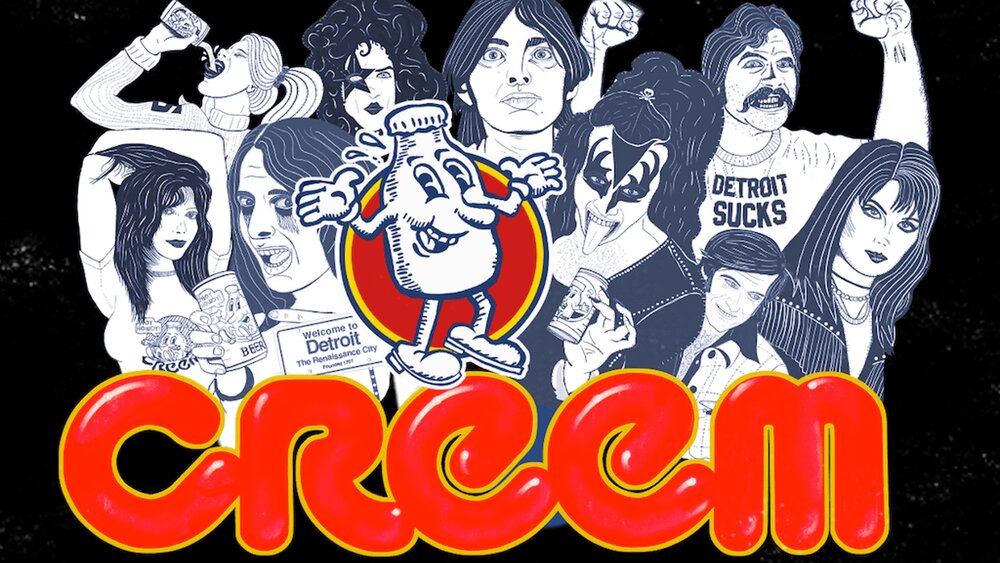
Creem: America’s Only Rock ‘n’ Roll MagazIne documents the inner dysfunction and outward impact of the Motor City’s “screw you” to the rock establishment. (Lookin’ at you, Rolling Stone.)
Launched in 1969 by Detroit head shop entrepreneur Barry
Kramer, the magazine immediately defined itself among rock mags as the most
personal, most irreverent, least sophisticated and most vital. Like the
decaying, even dangerous city it represented, Creem Magazine existed outside
the mainstream.
Boasting a litany of groundbreaking rock writers and more
women on the editorial and writing staff than nearly any other magazine at the
time, the magazine pushed boundaries. It didn’t just cover punk rock, it was
punk rock. And like punk rock (or Detroit, for that matter), it was basically
doomed.
Crawford’s gift is in establishing the period, time stamping the singular moment in rock history he wants to unveil. Archival footage and behind the scenes photos illustrate the hard core, nearly derelict quality of the working conditions. Kramer’s commitment was almost blind, and the untested staff—many of whom would reveal themselves to be rock writing geniuses—attacked their assignments with equal self-destructive passion.
We hear directly from many of them: Dave Marsh, Cameron
Crowe, Jaan Uhelzski (who co-writes the film). We also hear from the rock stars
that were covered (Alice Cooper, Gene Simmons, a very testy Joan Jett), as well
as those modern day musicians whose young minds were warped by Creem’s pages
(Michael Stipe, Kirk Hammett, Chad Smith).
The film’s production design does justice to its source material. Scott Gordon’s animated sequences are an inspired avenue into reenactments. Between the cartoons, stories, photos and excerpts of his writing, a provocative image of Lester Bangs emerges. And who could be more fitting to provide all the movie’s original music than MC5’s Wayne Kramer?
The film, produced by publisher Barry Kramer’s son JJ, is absolutely a mash note to rock’s most rebellious rag. For many it will be a lesson on the significance of Detroit, even after Motown, in the evolution of American music. More than anything, though, Crawford’s film is a testament to the legacy of America’s Only Rock ‘n’ Roll Magazine.
There’s a real thread of forgiveness, consequences and redemption in current horror. It fuels Romola Garai’s Amulet, Jayo Bustamante’s La Llorona, and now, Limbo, the cheeky neo noir from writer/director/producer Mark H. Young.
Jimmy (Lew Temple) looks like a pretty cut-and-dried case to
Balthazar (Lucian Charles Collier). He shot a grandmother (Veronica Cartwright)
in the head robbing a pawn shop, caught a bullet in the back and now he’s here,
facing judgment. But why has the man upstairs deemed Jimmy worthy of his own
defense angel (Scottie Thompson)?
Must be something big. Even the other guy’s getting in on
the deal. Both sides are weirdly interested in the outcome of this one case.
Young (Feral)
has a knack for efficient, low budget horror. His work is not inspired, but it
definitely makes the most of its budget. And in this case, you also have to
hand it to him for casting.
Besides the always-welcome Temple and the great-to-see Cartwright, Limbo brings in familiar faces Richard Riehel (jump! to conclusions guy from Office Space), and James Purefoy as Lucifer.
Lauryn Canny (Darlin’)
delivers the strongest performance as a prostitute back in real life that may
or may not prove Jimmy’s worthiness of forgiveness, but everyone’s fun.
Purefoy, who relishes these campy roles, chooses a hillbilly accent for Satan.
Odd.
Odder still is whatever accent
Collier is attempting, but that hardly sinks the film. It’s a goofy fantasy and
just about anything flies.
The circular logic isn’t as tight as Young may think it is, but again, Limbo provides serviceable fun. No scares and not a ton of laughs—indeed, where Young is hoping to land on the horror-comedy spectrum is a bit muddy—but thanks mainly to a game cast, Limbo is still a pretty good time.
Prolific Norwegian filmmaker Hans Petter Moland follows up
his first foray into blockbuster territory—a Liam Neeson-fronted English
language remake of his own vengeance thriller Cold
Pursuit—with the decidedly non-blockbuster, specifically Norwegian
drama Out Stealing Horses.
This pensive and utterly gorgeous film sifts through time to
land on the moment that irreversibly alters the course of a life.
In this case, it’s Trond’s life. It’s winter of
‘99—almost the millennium—and the aging Trond (Stellan Skarsgård) is just
settling into hermithood. Though he’s been in Sweden for years, the death of
his wife in a car accident (he was at the wheel) convinced him to cross the
river back to his childhood home of Norway to sit quietly and think.
And then he meets his neighbor, who inadvertently stirs
up memories and gives Trond’s meditation new direction.
Moland adapts Petterson’s beloved novel, streamlining until what’s left is an extremely intimate tale only mildly hampered by the tiresome flashback structure. Moland only hints at the novel’s historical context, instead developing a sense of fearful awe in the face of life, the small moments that determine an individual’s trajectory, and the insistent longing to imagine what could have been.
The technical mastery at work in this film—from sound design to lighting, from Rasmus Videbæk’s gorgeous cinematography to Kaspar Kaee’s unerring score—adds power to Moland’s every meditative moment. In perfect harmony with the team, Moland effortlessly evokes the senses throughout this sometimes Malick-esque photo album of the summer that everything changed.
Moland and team create the glimmering, lush and gorgeous memories Trond relives—too gorgeous to be exact, but exactly as gorgeous as needed to be memory.
Out Stealing Horses can’t quite make the current-day footage ache or resonate quite so clearly. The events adult Trond deals with feel artificial, a forced structure. But that doesn’t rob the film of its magic.