Writer Amy Koppelman does not fear the murky, unpopular waters of an unredeemed female protagonist. She challenges you to face that character and recognize your own discomfort, your own desire to either wag your finger or to pity, but not to understand.
Her novel I Smile Back gave Sarah Silverman fodder for a blistering, unforgettable lead role in Adam Salky’s uneven 2015 film adaptation. What Silverman ran with was the notion that depression and trauma create selfishness, necessarily, and audiences hate to see selfishness in women.
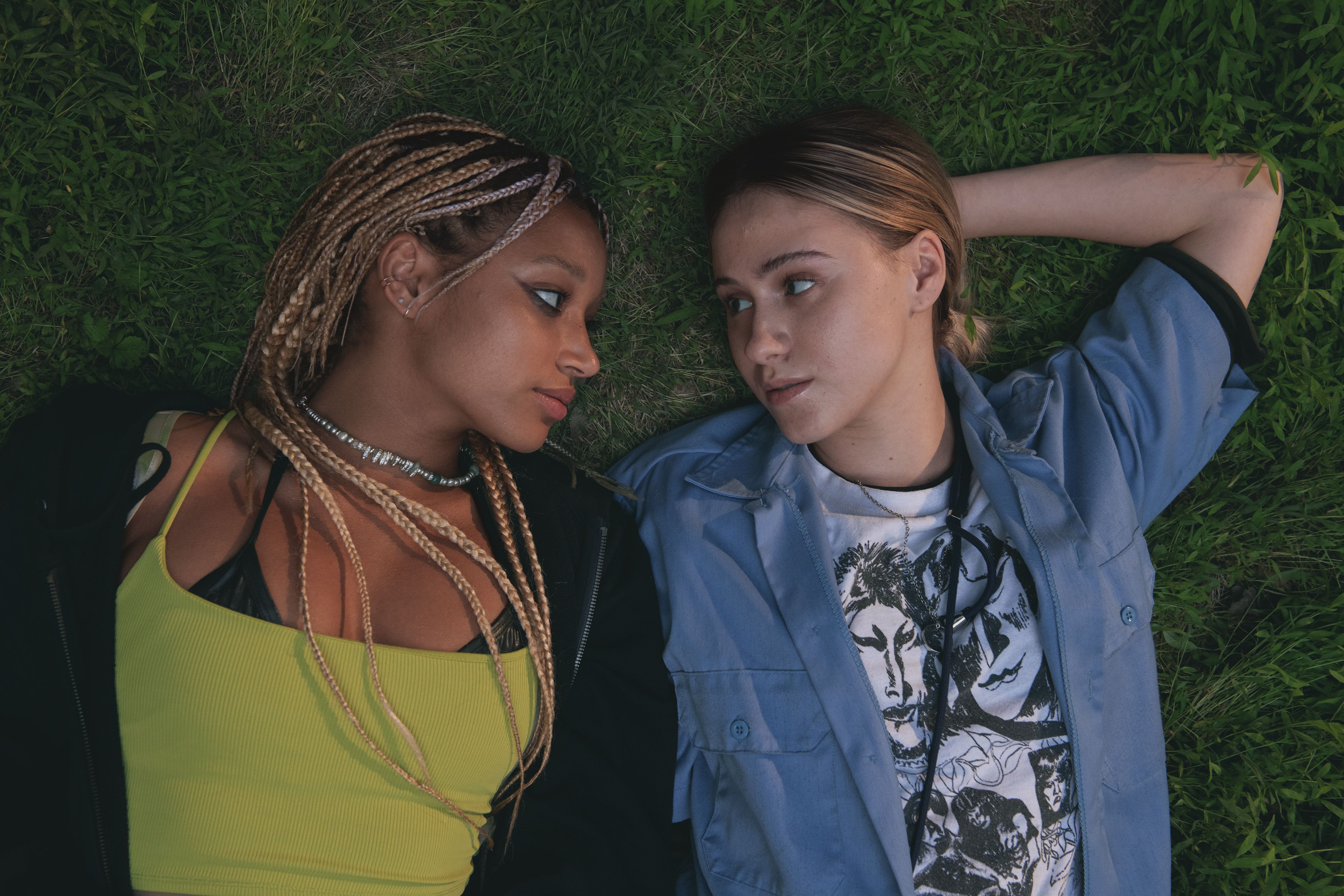
It’s that tension that makes A Mouthful of Air so devastating. Directing her adaptation of her own novel, Koppelman taps Amanda Seyfried to play Julie Davis, a children’s book author and struggling new mom.
Seyfried’s performance aches with tenderness and raw emotion, but she never caves in, never makes Julie more sympathetic than she should be. Once again, the tension in the film is the reality that your own personal demons demand as much from those who love you as they demand from you.
A Mouthful of Air is not entirely forgiving of all those who orbit Julie — the sister-in-law (Jennifer Carpenter) who’s protective of her brother, the mother (Amy Irving) whose love and lived-in dysfunction play such a role, the father (Michael Gaston). Neither does it condemn. Instead, Koppelman attempts to show the human complexities at work in relationships weighed down with trauma.
Finn Wittrock excels at finding a human center — tender, desperate, angry, compassionate – in an underwritten, heroic character. The great Paul Giamatti lends his considerable talent to a small but important role.
As was the case with I Smile Back, A Mouthful of Air prefers to hint at past trauma co-mingling with chronic depression without spelling anything out. The result is both appealing in the way it avoids easy answers and problematic in its vagueness.
That vagueness is part and parcel of a script that, even with its bravery in depicting an honest truth about motherhood that most films avoid or deny outright, still feels superficial.
There’s power here, especially in Seyfried’s raw performance. For all its flaws, A Mouthful of Air is a film you’ll be thinking about long after the credits roll.
Addiction is its own horror story, which may explain why so many filmmakers use monstrous imagery as metaphor for addiction. We count down the best horror films that use addiction to freak you out.
5. Enter the Void (2009)
Gaspar Noe films from the point of view of Oscar, an American who deals drugs in Tokyo. When Oscar is shot in a police raid, the camera follows his subconscious as Noe tries to illustrate a nightmarish link between drugs and death.
Noe’s trademarks – jarring opening credits, roller coaster camerawork, extended takes – are all here, and the result is a nearly two-and-a-half hour barrage of extreme violence, graphic sex, drug-fueled hallucinations and an often hypnotizing gloom that may leave you feeling physically beaten. It’s an experience. But like most of Noe’s work, it’s also hard to turn away from, even if you want to.
4. Habit (1995)
Writer/director/star Larry Fessenden explores alcoholism via vampire symbolism in this NY indie. Fessenden plays Sam, a longtime drunk bohemian type in the city. He’s recently lost his father, his longtime girlfriend finally cut bait, and he runs into a woman who is undoubtedly out of his league at a party.
And then he wakes up naked and bleeding in a park.
The whole film works beautifully as an analogy for alcoholism without crumbling under the weight of metaphor. Fessenden crafts a wise, sad vampiric tale here and also shines as its lead.
3. The Addiction (1995)
Like most of director Abel Ferrara’s work, the film is an overtly stylish, rhythmically urban tale of brutal violence, sin and redemption (maybe). Expect drug use, weighty speeches and blood in this tale of a doctoral candidate in philosophy (Lili Taylor) over-thinking her transformation from student to predator.
Taylor cuts an interesting figure as Kathleen, a very grunge-era vampire in her jeans, Doc Martens and oversized, thrift store blazer. She’s joined by an altogether awesome cast—Annabella Sciorra, Edie Falco and Christopher Walken among them.
Ferrara parallels Kathleen’s need for blood to drug addiction, but uses her philosophy jibberish to plumb humanity’s historical bloodlust.
2. Evil Dead (2013)
With the helpful pen of Oscar winner Diablo Cody (uncredited), Fede Alvarez turns all the particulars of the Evil Dead franchise on end. You can tick off so many familiar characters, moments and bits of dialog, but you can’t predict what will happen.
One of the best revisions is the character of Mia: the first to go and yet the sole survivor. An addict secluded in this cabin in the woods with her brother and friend specifically to detox, she’s the damaged one, and the female who’s there without a male counterpart, which means (by horror standards), she’s the one most likely to be a number in the body count, but because of what she has endured in her life she’s able to make seriously tough decisions to survive – like tearing off her own damn arm. Nice!
Plus, it rains blood! How awesome is that?!
1. Resolution (2012)
Michael (Chris Cilella) is lured to a remote cabin, hoping to save his friend Chris (Vinny Curan) from himself. Chris will detox whether he wants to or not, then Michael will wash his hands of this situation and start again with his wife and unborn baby.
But Michael is in for more than he bargained, and not only because Chris has no interest in detoxing. Directors Aaron Moorhead and Justin Benson (working from Benson’s screenplay) begin with a fascinating and bizarre group of characters and a solid story, layering on bizarre notions of time, horror and storytelling in ways that are simultaneously familiar and wildly unique. The result is funny, tense, and terrifying.
A quarter-century ago, horror master Wes Craven reinvented his genre of choice—again—with a savvy, funny, scary murder mystery. Scream was an inside-out spoof of the genre, a clever dissection of the tropes and cliches wrapped up in a celebration of those same elements.
It was not our first meta-movie, but it was the first movie to refer to itself as such.
Matt Bettinelli-Olpin and Tyler Gillett (Ready or Not) return to Woodsboro for the franchise’s fifth installment. This go-round comments blisteringly (and entertainingly) not just on horror, but on the post-internet realities of cinema in general.
They really have a good time with that.
Tara Carpenter (the first of maybe 300 horror name drops), played by a remarkable Jenna Ortega, is home alone when she receives a threatening phone call. She doesn’t want to talk about slashers, though. She’d rather discuss “elevated horror.”
That’s an in-joke, one of dozens, each landing but none taking away from the larger story. In that one, Tara’s older sister Sam (Melissa Barrera, In the Heights) returns to Woodsboro upon hearing of Tara’s attack. She follows advice from someone who would know and assembles Tara’s close-knit ring of friends to suss out suspects.
But to really anchor these newfangled reboot/sequels (or, in the parlance of another inside gag, “requels”), Gillett and Bettinelli-Olpin will need some familiar faces. Neve Campbell, Courteney Cox and David Arquette are three excellent reasons to see the new Scream, a film that is both a fan of the franchise and a cynic of fandom.
The young cast excels as well—Dylan Minnette and Jasmin Savoy Brown, in particular. In fact, Barrera in the central role is the only real weak spot. As was the case in In the Heights, she poses more than acts, a flaw that’s never more obvious than when she shares the screen with the noticeably more talented Ortega.
The filmmakers, along with writers James Vanderbilt and Guy Busick, fill scenes with nostalgia too cheeky to be simple fan service. Their clear affection for the franchise (a surprisingly strong set of films, as horror series go) is evident and infectious.
You do not have to know the 1996 original or any of its sequels to enjoy Scream. It’s a standalone blast. But if you grew up on these movies, this film is like a bloody message of love for you.
Woodlands Dark and Days Bewitched: A History of Folk Horror
by Hope Madden
Every so often you come across a movie and think it must have been made specifically for you. In my case, that film is Kier-La Janisse’s 3-hour documentary Woodlands Dark and Days Bewitched: A History of Folk Horror.
Yes, that does seem like a very big time commitment to folk horror, but Janisse’s film repays your undertaking with not only an incredibly informative documentary but an engaging, creepy and beautifully made film.
Dividing her topic into chapters, Janisse portions out information theme by theme. And while this essay-style documentation is driven by expert commentary, the filmmaker surrounds the scholarly material with beguiling imagery.
Every chapter has its own look and feel, each one opening with an appropriately bewitching bit of rhyme. Then it leads you through a clearly articulated and fairly comprehensive examination of certain moments in folk horror. Janisse opens on the big three, The Unholy Trinity–Blood on Satan’s Claw, Witchfinder General and The Wicker Man—as a way to ease us into the conversation by pinning major themes on well-known films.
She goes on to explore TV and written tales tangentially, though her focus is always primarily on film, taking us from The Wicker Man through Midsommar. In between, she introduces dozens of underseen films and traces not only the history of folk horror but the societal anxieties that these films represent.
And while many may think mainly of British films of the 1960s and 70s for this category, Janisse presents an intriguing global history that unveils universal primal preoccupations from England to Argentina, the US to Lapland and beyond.
Dry as that may sound, between the snippets of the movies themselves and the fluid, often creepy presentation, Woodlands Dark and Days Bewitched becomes as transfixing a film as those it dissects. And it digs deep, into obscure titles new and old. Border! White Reindeer! Onibaba! Viy! Prevenge!
Bonus: You can find a gorgeous array of folk horror streaming on Shudder this month, including The Wicker Man,Blood on Satan’s Claw and Witchfinder General.
There are so many, you can’t blame even a 3-hour film for leaving some out. Here are a few masterpieces glimpsed but not discussed and well worth your time:
How can three hours of folk horror discussion not be enough? It’s a question that points to what may be the greatest strength of Janisse’s film. Like any truly strong documentary, her film not only covers its topic comprehensively, it inspires you to dig deeper on your own time.
“Delightful” is a word I wouldn’t expect to use to describe a documentary about the rise and fall of a hip-hop empire. And yet, there you have it. Dawn Raid, Oscar Knightley’s doc about the seminal New Zealand rap label, is just that: delightful.
The main characters in the tale, Dawn Raid co-founders Danny “Brotha D” Leaosavai’i and Andy Murnane, are delights themselves. Humble, funny, self-deprecating and excellent storytellers, the duo tell their tale the way a buddy might over a few beers.
“Dude, listen to this — it’s crazy!”
The pair met taking a trade school business course that preached entrepreneurial spirit. Well, these two had that, so why finish the training? They wanted to start South Auckland’s first hip-hop label. To generate funds, they made and sold t-shirts.
The t-shirts, like their label’s own name, took ugly stereotypes about Polynesians and turned them on ear. (Dawn Raid itself refers to racist, government-sanctioned police action meant to rid NZ of unwanted Polynesian Islanders who’d outstayed their welcome.)
The joy and community pride that infects the pair’s actions inform not only their entire career but the film itself. While Murnane talks consistently of his desire to go bigger and get richer, it’s clear that both entrepreneurs wanted primarily to give South Auckland the chance to show the world its worth.
And it did. Beyond the charm of the film’s leads is the joy of the music itself. Knightly is wise to showcase each of Dawn Raid’s major artists—Deceptikonz, Adeaze, Aaradhna, Mareko and Savage. This not only provides a remarkable soundtrack, but it amplifies the impressive and unique style of music Dawn Raid recorded.
The typical ups and downs associated with this kind of music doc take on a freshness for the sheer energy Murnane brings to the film. Not a moment is wasted on regret, even though the digital age and the NZ government were not kind to Dawn Raid.
Still, Leaosavai’I and Murnane have little but joy to share when they remember the ups and the downs. Regardless of the fact that the outline is the same as many an entertainment doc, the soul is as jubilant as the music.
At some point during The Scary of Sixty-First you may ask yourself, “What in the hell am I watching?” Don’t feel alone. In fact, if you don’t ask that question, you may be the only one.
Director/co-writer/co-star Dasha Nekrasova mines the weak logic of many Satanic horror films to marvel at the subjective reality that’s so prevalent these days.
Noelle (co-writer Madeline Quinn) and Addie (Betsey Brown) move into an uptown NYC apartment. It’s furnished, simultaneously high end and sketchy, and they’re getting it for a song because the previous tenants had to leave so quickly.
Ripe horror context there. Who were they? Why did they have to leave so quickly? Why did they leave behind all this stuff? Why is there a mirror on the ceiling in one bedroom?
The cinematic style, stilted performances and uptown apartments blur together to form a kind of Seventies-style horror like The Sentinel or The Mephisto Waltz. The most important element: wild leaps in logic—anagrams, prime numbers, cryptic messages.
Conspiracies.
Did the girls’ apartment previously belong to Jeffrey Epstein? Some people say so, specifically the young woman who poses as a realtor’s agent and then as an investigative reporter before finally fessing up that she’s piecing together her own theories about Epstein.
Noelle is in! The sleuthing is on!
Addie, on the other hand, is having some kind of breakdown. Is something in the apartment haunting her? Possessing her?
Nekrasova and Quinn weave together real conspiracy theories about Epstein and other topics to create a fever dream of horror that points out how preposterous and salacious all these theories really are. How these theories speak more to the mind of the believer than to any kind of reality.
Nekrasova is actually pretty empathetic toward conspiracy theorists, even if she clearly thinks they are 1) wrong and 2) probably insane. The film offers bold, wet, pungent lunacy, vivid fantasies pulled from the collective unconscious of folks ready to believe—or imagine—the most effed up scenarios.
Chances are strong that, between the intentionally flat performances and the supremely WTF plotline, The Scary of Sixty-First will not land with most audiences. But it’s a wild vision and I’m not sorry I caught it.
So many movies come out each year, it’s impossible to keep up. Too many get forgotten, either because they underperformed theatrically, they didn’t get a wide release, they were rolled out poorly to streamers, or they simply had no budget of any kind to draw attention to themselves. So, to give these 20 films a little extra attention, here —in alphabetical order—are our favorite underseen films of 2021.
The Beta Test
If Eyes Wide Shut had been a brutal commentary on the film industry and Tom Cruise had been an unsympathetic, insecure, entitled white man…the point is, The Beta Test is a wild, insanely tense satire.
Co-writers/co-directors/co-stars Jim Cummings and PJ McCabe invite you into a world populated by people who miss the days before Harvey Weinstein’s ousting. The two play Jordan and PJ, respectively—Hollywood agents with no real purpose, no real value, a lot of spin, a lot of anxiety, and a chip on their collective shoulders about the stuff they can no longer get away with.
The Card Counter
The damaged man seeking redemption — it may be the most cinematic concept, or certainly among the most frequently conjured by filmmakers. When Paul Schrader is on his game, no one tells this story better.
Oscar Isaac and his enviable hair play William Tell, gambler. Isaac is a profound talent and essentially flawless in this role. He is the essential Schrader protagonist, a man desperate for relief from an inner torment through repression, redemption or obliteration.
Censor
It’s 1985, Thatcher’s England: an era when controversial films hoping to make their way to screens big and small found themselves more butchered than their characters. Writer/director Prano Bailey-Bond and co-writer Anthony Fletcher evoke such a timestamp with this film, not just in the look and style, but with the social preoccupation.
Censor is a descent into madness film, but its deep love and understanding of the genre play a central role in this madness. Niamh Algar’s performance as the video nasty censor in question is prim and sympathetic, deliberate and brittle. It’s clear from the opening frame that Enid will break. But between Algar’s skill and Bailey-Bond’s cinematic vision, the journey toward that break is a wild ride.
The Humans
Two of 2021’s most prominent film themes – impressive debuts and stellar ensembles – come together in rookie writer/director Stephen Karam’s The Humans.
Adapting his own stage play, Karam displays wonderful instincts for how his story of a family reunion could move from stage to screen with relevant new layers. Buoyed by a first-rate cast including Richard Jenkins, Steven Yeun, Amy Schumer, Beanie Feldstein and Jayne Houdyshell, The Humans slowly revels itself as a domestic horror show, with familiar tensions and deep-seeded fears becoming more frightful than anything going bump in the night.
Lamb
Among the many remarkable elements buoying the horror fable Lamb is filmmaker ValdimarJóhannsson’s ability to tell a complete and riveting tale without a single word of exposition. Rather than devoting dialog to explaining to us what it is we are seeing, Jóhannsson relies on impressive visual storytelling instincts.
His cast of three – well, four, I guess — sells the fairy tale. A childless couple working a sheep farm in Iceland find an unusual newborn lamb and take her in as their own child. As is always the way in old school fables, though, there is much magical happiness but a dire recompense soon to come. It is an absolutely gorgeous, entirely unusual and expertly crafted gem of a film. You should see it.
Language Lessons
Yes, Language Lessons is a “Zoom call” movie. But don’t let that keep you from dialing in, or you’ll miss a completely charming two-hander from Natalie Morales and Mark Duplass that has plenty to say, with and without subtitles.
And though Language Lessons may have all the markings of a pandemic production, it’s not a “pandemic” film. These two souls are worlds apart due to circumstance rather than quarantine. But they crave to enrich their own lives through sharing them with someone else, and end up giving us a poignant reminder to make more friends and fewer excuses.
The Last Duel
This is a brooding, brutal, violent and sexually violent film, one that utilizes a Rashomon-style narrative to frame an often debated moment in history around a centuries-old struggle that continues today.
Director Ridley Scott presents the tale with exceptional craftsmanship and spectacle, getting big assists from Dariusz Wolski’s gritty, expansive cinematography and Michael Fentum’s detailed sound design. Scott’s remarkable cast — Jodie Comer, Adam Driver, Matt Damon and Ben Affleck — digs in to these old ideas to find startling relevance.
The Last Duel aims for more than just a gripping history lesson. It’s ultimately able to use that history to remind us that the way society treats women generally – and women’s sexuality specifically – has changed little since the freaking Middle Ages.
Mass
An unthinkable tragedy has connected these four people (Jason Isaacs, Martha Plimpton, Ann Dowd, Reed Birney) for life, and veteran actor turned writer/director Fran Kranz explores their journey of healing with a gently assured filmmaking debut full of shattering emotion.
Yes, you will need some of those tissues, too. But Kranz’s touch is so perfect, and the characterizations so real, that you never feel preached to, even with a large crucifix dominating the room.
Mass is a spare chamber piece that makes sure nothing comes easy. You hang on every word, afraid to intrude on this intimate pain yet welcoming the invitation. With insightful writing, superb performances and unassuming direction, it’s a cathartic film that deconstructs an all too common tragedy with overdue honesty.
My Heart Can’t Beat Unless You Tell It To
Making an unnervingly assured feature film debut, writer/director Jonathan Cuartas commingles The Transfiguration’s image of lonely, awkward adolescence with Relic’s horror of familial obligation to create a heartbreaking new vampire tale.
Many things are left unsaid (including the word “vampire’), and My Heart Can’t Beat Unless You Tell It To confines itself to the daily drudgery of three siblings. Dwight (Patrick Fugit) longs to break these family chains, but sister Jessie (Ingrid Sophie Schram) holds him tight with shame, love, and obligation to little brother, the afflicted Thomas (Owen Campbell).
What could easily have become its own figurative image of the masculine longing for freedom mines far deeper concerns. Cuartas weaves loneliness into that freedom, tainting the concept of independence with a terrifying, even dangerous isolation that leaves you with no one to talk to and no way to get away from yourself.
Nine Days
In his feature debut, writer/director Edson Oda presents an impressively assured vision of transfixing beauty and gentle poignancy. While the current run on “appreciate every day” films is hardly surprising in today’s climate, Oda brings an organic originality to the mantra of seeing the world through someone else’s eyes.
Winston Duke (Us, Black Panther) is phenomenal as a “cog in the wheel” who becomes caught between the clinical completion of his duties and the emotional weight of his responsibilities.
Give Oda credit for being unafraid of the moment. He’s taking some big swings at mighty heavy concepts here, with an originality of voice and attention to craft that is welcome any day.
Riders of Justice
Men will single-handedly gun down an entire biker gang rather than go to therapy. That’s the premise from prolific writer-director Anders Thomas Jensen, as he reunites with Mads Mikkelsen in this dark comic revenge fantasy.
But Jensen isn’t nearly as interested in the physical mayhem as the emotional wreckage his oddball characters are all coping with. Riders of Justice treats its characters with such forgiving empathy that it’s easy to forget that the group is also almost certainly responsible for the most murders in Denmark since the Vikings.
Saint Maud
Maud (an astonishing Morfydd Clark) has some undefined blood and shame in her recent past. But she survived it, and she knows God saved her for a reason. She’s still working out what that reason is when she meets Amanda (Jennifer Ehle), a former choreographer now crumbling beneath lymphoma. Maud cannot save Amanda’s body, but because of just the right signs from Amanda, she is determined to save her soul.
As a horror film, Saint Maud is a slow burn. First-time writer/director Rose Glass and crew repay you for your patience, though, with a smart film that believes in its audience. Her film treads the earth between mental illness and religious fervor, but its sights are on the horror of the broken-hearted and lonesome.
Shiva Baby
Clearly, much of writer/director Emma Seligman’s sharp dialog comes from personal experience, and if it’s one you share this is a film that will feel like part of the family. But you didn’t have to be Greek to get caught up in that Big Fat Wedding, and you don’t have to be Jewish to see the joy in Shiva Baby.
Seligman flashes an insight that disarms you with sex and humor, keeping its hand at a subtle distance. But by the time we’re leaving the buffet, a breakout filmmaker and star (the irresistible Rachel Sennot) have delivered a fresh, funny and intimate take on the indignities of finding yourself.
Together Together
It takes a full two minutes to get a really good feeling about Together Together. Writer/director Nikole Beckwith delivers witty, engaging dialogue from the jump, defining characters and setting the stakes in a beautifully organic manner.
There’s love and family and funny stuff here, and though none of it is quite the kind we’re used to seeing, all of it is wonderfully real. Together Together is a delivery that somehow feels comfortable and unique, both overdue and right on time.
Wild Indian
As angry a movie as you’re likely to see, Wild Indian pushes you to hope compassion and tenderness come to the most unlikeable man onscreen.
Writer/director Lyle Mitchell Corbine Jr. refuses to lean on stereotypes that would make the central performance more comfortable viewing. Makwa (a stunning Michael Greyeyes) is neither victim nor noble wiseman. Not entirely a villain, he’s nonetheless ill-suited as antihero or, God forbid, hero. He’s a survivor bound up in his own guilt and shame, taking advantage of whatever he can and hating himself and everyone around him because of it.
It’s a desolate world Corbine Jr. creates, but no less remarkable for its bleakness. A character study unlike anything else on screen this year, Wild Indian gives longtime character actor Greyeyes the opportunity to command the screen and he more than rises to the occasion.