In a way, we’ve seen Bodies Bodies Bodies before. A group of good-looking, rich young people gathers in a remote home to imbibe and play stupid games that turn deadly. Think April Fool’s Day, Truth or Dare, Ouija.
A24’s latest horror film isn’t a straight reimagining or a satire of the sub-subgenre. It’s barely a part of the subgenre. Instead, B3 delivers an insider’s skewering of the sociology of a generation.
The result never condescends or patronizes. Not that it’s kind.
Director Halina Reijn’s clever (if slight) film roots its comedy and horror in Gen Z culture. Sophie (Amandla Stenberg, who also produces) brings her new girlfriend Bee (Maria Bakalova, Oscar nominee from Borat 2) to a rich buddy’s mansion for a hurricane party.
That buddy (Pete Davidson) and the rest of Sophie’s inner circle didn’t really expect her to show up, let alone bring a plus-one. And Bee’s more than a little out of her element with this group of spoiled rich kids.
When the weather finally hits, they decide to play a game with the lights off where one “killer” taps a player on the back, they play dead, and the one who finds them shouts “bodies bodies bodies.” Then you try to figure out the killer.
This is also the plot of the rest of the movie. Reijn and writers Sarah DeLappe and Kristen Roupenian are essentially predicting what happens when this generation finds themselves trapped without internet: Lord of the Flies.
A wicked script buoyed by smart visuals—particularly the use of lighting—emphasizes the social anxiety strangling these characters. Agatha Christie turns Agatha Bitchy as paranoia, self-absorption and toxic douchebaggery spoil the party games.
Reijn works the dark corners and vast emptiness of the estate setting for an effective undercurrent of tension as the beats and bodies keep dropping. And though the bloodletting is often offscreen, every new discovery becomes a chance to sharpen suspicions, reopen old wounds and hurl new accusations, with each partygoer struggling to navigate both offense and defense.
The compact cast sparkles with young talent, led by Stenberg and Bakalova. We essentially come to party with them, and it is the breakdown in their characters’ trust that keeps us off balance and fuels our anxieties. Davidson has fun riffing on his own bad boy image, and Shiva Baby‘s Rachel Sennot delivers the biggest smiles as the dim-witted Alice (“guys, doing a podcast is haaaaard!”).
The social commentary here is a bit tardy to be profound, and the 95-minute running time gets filled out via some repetition, but Bodies Bodies Bodies finds an entertaining sweet spot betweengore and guffaws.
There’s just enough humor and horror to make the whodunnit less vital, so even solving the mystery early won’t spoil the party. The fun comes from just riding out the storm, and the film’s deliciously deadpan final line reveals that was the plan all along.
Well-crafted memories of the mid-80s helped Top Gun Maverick blow up the box office this summer. And while Prey skips the big screens for a rollout on Hulu, the film is not shy about its plan for more crowd-pleasing nostalgia.
It’s also not shy about the carnage.
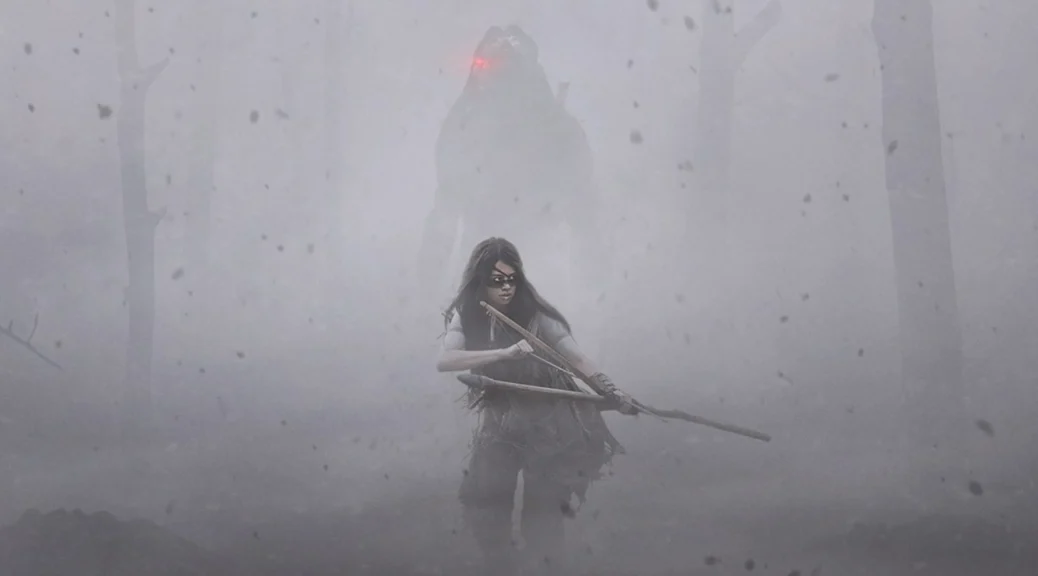
Director Dan Trachtenberg (10 Cloverfield Lane) takes the reins for installment number five in the Predator franchise, teaming with writer Patrick Aison to rewind 300 years, when a tribe of Comanche hunters suddenly found themselves among the hunted.
Naru (Amber Midthunder) thinks she has the skills to join the hunt and help provide for her tribe, but her brother Taabe (Dakota Beavers) isn’t so sure. And when Taabe has to come to Naru’s rescue in the wild, she’s urged to stand down.
But Naru has glimpsed something large and lethal in the woods, and when that something begins making bloody sport of Comanche nation, she’s eager to prove just how lethal she can be.
Midthunder (The Wheel, TV’s Legion) is a fine heroine, more than capable with the role’s physicality and Naru’s stubborn resolve. And she’s able to keep the character compelling when Aison’s character arcs and “the hunter is now the prey” themes seem hurried and obvious.
Trachtenberg compensates with a string of arresting visual set pieces. As his camera dives deep into the trees and then high above, Trachtenberg crafts the Predator’s first Earthly battlefield as a home suddenly and violently unknown to its natives, a metaphor for the Native American experience that lands with resonance.
Those well-known monster calls fuel the tension, the action is thrilling, and the blood is splattered with pride, complete with unmistakable callbacks to the original 1987 film through both movement and dialog.
And about that dialog…
Trachtenberg and producer Jhane Myers (of both Comanche and Blackfeet heritage) have clearly taken great care with the film’s cultural representation and depiction. In fact, you can choose a version of Prey that is dubbed by the cast in the Comanche language (becoming the first film to offer this option).
It’s a wise choice, because as distracting as dubbed audio can be, the English dialog in Prey is even more so. It’s not just that the Comanche characters speak English, but the phrasing and delivery is so very present day, it’s hard to stay grounded in the film’s otherwise impressive world-building.
Word is that before making the decision to dub, Trachtenberg and Myers considered filming exclusively in the Comanche language. Damn, that would have been a great action film.
It took us decades to embrace it, but Brad Pitt is really funny. We all saw those acceptance speeches, right? Burn After Reading? And he was easily the funniest thing about the Sandra Bullock/Channing Tatum romance adventure The Lost City.
But those were acceptance speeches and supporting turns. Pitt’s comedic stylings are front and center in David Leitch’s highly advertised Bullet Train.
He’s not alone. There are about 100 other people on this train, most of them for the same reason.
Hitman twins Lemon (Brian Tyree Henry) and Tangerine (Aaron Taylor-Johnson) are on a job for the mysterious Japanese gang lord known as White Death. Prince (Joey King) is a young woman with more plans for the trip than just finishing her book. Kimura (Andrew Koji) will do whatever it takes to keep his kidnapped son alive, and Wolf (Benito A Martínez Ocasio aka Bad Bunny) just wants to settle an old score with Ladybug.
Pitt would be Ladybug, an adorable code name given to him by his handler (Sandra Bullock). His first job back from sabbatical is a quick, easy one: grab a briefcase off a train and then get off that train. But there are so many other stories and bandits and snakes and whatnot, and that automatic door just keeps closing station after station before Ladybug can make his exit.
Leitch can stage action. You’ve seen Atomic Blonde, right? And since the director’s official 2017 feature debut (he gets an uncredited nod for the original John Wick), his focus has been on slight, action-heavy comedies: Deadpool 2 and Hobbs & Shaw.
His Bullet Train continues that tradition: it’s slight, action-packed, silly fun. He and screenwriter Zak Olkewicz adapt Kôtarô Isaka’s novel via a mishmash of styles, blending a spoonful of Edgar Wright with a heaping helping of Guy Ritchie and a smidge of Tarantino. It’s bloody and hyperactive with witty banter and surprise dot connecting, all trying their best to distract you from the lack of tension and bloated run time.
The cast sure seems to be having a blast with it, especially Pitt. He makes Ladybug an endearing mix of daily affirmations and lethal force (with an unusual interest in lavatory facilities).
Throw in a couple other big star cameos, and Bullet Train is a stylish concoction that never finds the right balance of hip action and self-aware absurdity. It’s clever but not really funny, full of high gloss stuck in economy class. The ride may seem fun while it lasts, just don’t expect anything memorable waiting at the destination.
For longtime fans of Leonard Cohen, the continued pop culture embrace of “Hallelujah” can sometimes feel bittersweet. Other times it just makes you want to scream.
Jeff Buckley didn’t write it! It’s not a Christmas song! And for God’s sake, stop messing with the lyrics!
And even though that’s satisfying to yell when another TV talent show contestant attacks Cohen’s masterpiece with more bluster than feeling, you can’t deny you’re guilty of an equally false claim of ownership. As singer/songwriter Brandi Carlile rightly points out, by now the song “Is its own person. It has a life of its own.”
So, how’d that happen? Back in the early 80s, “Hallelujah” was DOA, buried on a Cohen album that Columbia Records dismissed outright as unworthy to release.
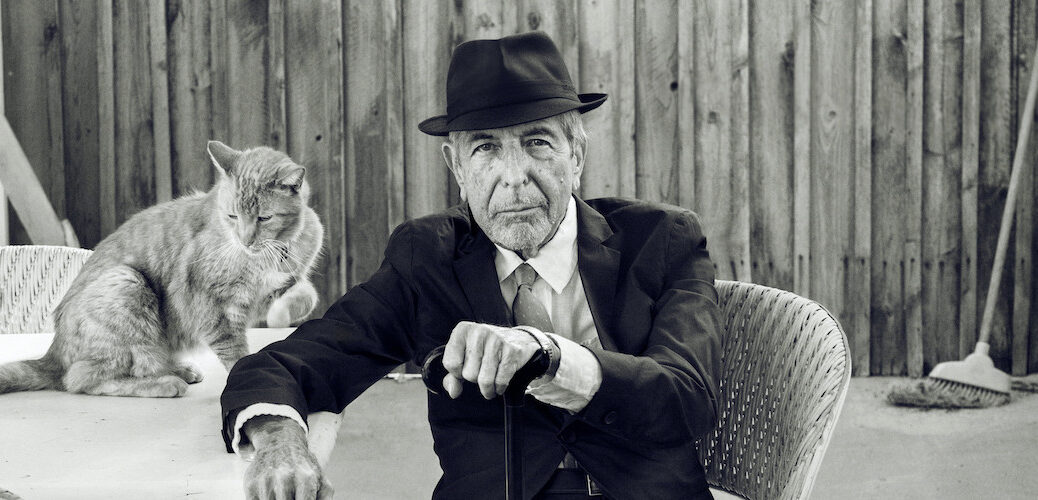
Alan Light first tracked the song’s ascent in his 2012 bestseller “The Holy or the Broken,” and Light serves as a consultant to co-directors Daniel Geller and Dayna Goldfine for their documentary examination. Straddling the line between biopic and expose, the film gives the uninitiated an overview of Cohen’s background while indulging veteran admirers with a deeper dive into his most acclaimed composition.
Geller and Goldfine interview fans, friends and journalists, tracking Cohen’s unique troubadour life alongside the gradual wave of “Hallelujah” cover versions. It seems only right that Bob Dylan was one of the first to recognize the song’s genius, and it’s a treat to hear his interpretation set the stage for the mainstream breakthrough that came via Jeff Buckley and Shrek (John Cale in the film, Rufus Wainwright on the soundtrack).
But the film’s strongest moments come through the intimacy of hearing from Cohen himself, and getting closer to his often tortured songwriting process (“If I knew where songs came from, I would go there more often”). We see notebook after notebook full of lyrics, while handwritten lines appear and disappear as guesses are made as to just how many verses (100? 180?) Cohen wrote for “Hallelujah” alone.
At times Geller and Goldfine lean back on biography just when the musical detective work is cooking, but A Journey, A Song ultimately connects the two with a resonant thread.
Leonard Cohen was a seeker, always striving to reconcile the primal with the spiritual. The process may have taken several years, but he wrote a song that lays that search bare with unparalleled eloquence. And though Cohen himself admitted before his death that “too many people sing it,” Geller and Goldfine are smart enough to include plenty of footage of Cohen performing the song himself, and to close with k.d. lang’s goosebump-time version that Cohen hinted was his favorite.
As you may have noticed, we’re living in extraordinary times. So when we’re looking back decades from now, what film commentaries will separate themselves as the most insightful of the day?
In the words of Sammy Hagar, only time will tell what stands the test of time. But there are two releasing just this week that seem like good bets to at least make the team picture.
Quinn Shephard’s Not Okay takes some satirical daggers to the social media age, while Vengeance broadens the focus for a lightly comical mystery with some hot button issues on its mind.
It’s the feature debut as writer and director for familiar face B. J. Novak, and it instantly marks him as a smart, sly, and entertaining storyteller.
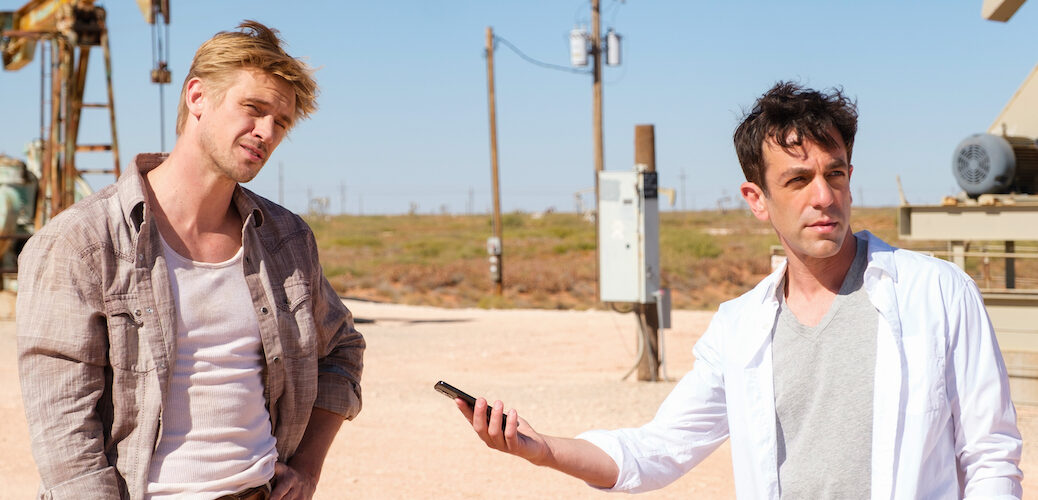
Novak (Saving Mr. Banks, Inglourious Basterds, TV’s The Office) also stars as Ben, a writer for the New Yorker who wants to be more. He wants to be a “voice.” Fate steps in when he’s lured to West Texas after the fatal opioid overdose of his occasional hookup Abilene (Crazy, Stupid, Love‘s Lio Tipton). Abi may have been little more than a fling, but Abi’s family thinks she and Ben were a longtime committed couple.
They also think Abi was murdered, and when her brother Ty (Boyd Holbrook, terrifically nutty) proposes a teamup to avenge Abi’s death, Ben seizes the chance to pitch a “Dead White Girl” true crime podcast to his editor Eloise (Issa Rae, always welcome).
Early on, Novak gets laughs from throwing a “hundred percent, hundred percent” New York hipster into the home of an eccentrically red state brood who will teach him many things about Texas, including what makes Whataburger so great.
“It’s right there!”
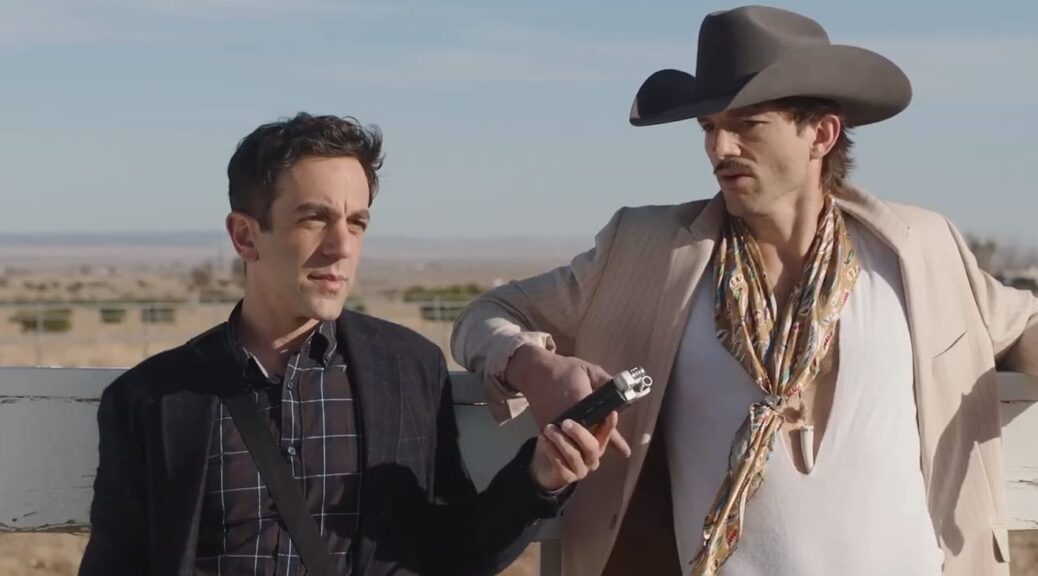
But as Ben starts piecing together Abi’s last days, and glimpsing her dreams of stardom with a local record producer (Ashton Kutcher, understated and better than he’s ever been), Novak begins weaving some impressive and resonant layers.
Speeches are made and then refuted. Stereotypes are outlined and defended, only to be punctured as Novak and Ben dig deeper, searching for the heart of a “new American reality” that took shape when truth became unacceptable.
From podcasts, conspiracy theories and hot takes to the ideological divide between coastal elites and country bumpkins, Vengeance sure feels like an authentic national portrait.
It’s also a funny and entertaining mystery caper, self-effacing but not afraid to wander into some dark places, with a social conscience that Novak reveals in organic and endearing ways. We are more just the record of ourselves in and around new media, and our evolving societal challenges deserve more than convenient cop-outs.
Sounds like a good start to Novak’s transition into filmmaking.
Wait, did that viewer discretion advisory before the opening credits just warn of “an unlikable female protagonist?”
Oh, Quinn Shephard, I wanna sit next to you.
Shephard, who at age 20 wrote, produced, directed, edited and starred in her 2017 feature debut Blame, returns with another sharply insightful look at young adults navigating expectations and judgement.
And this time, she brings along a wicked sense of humor tipped off by that early caveat.
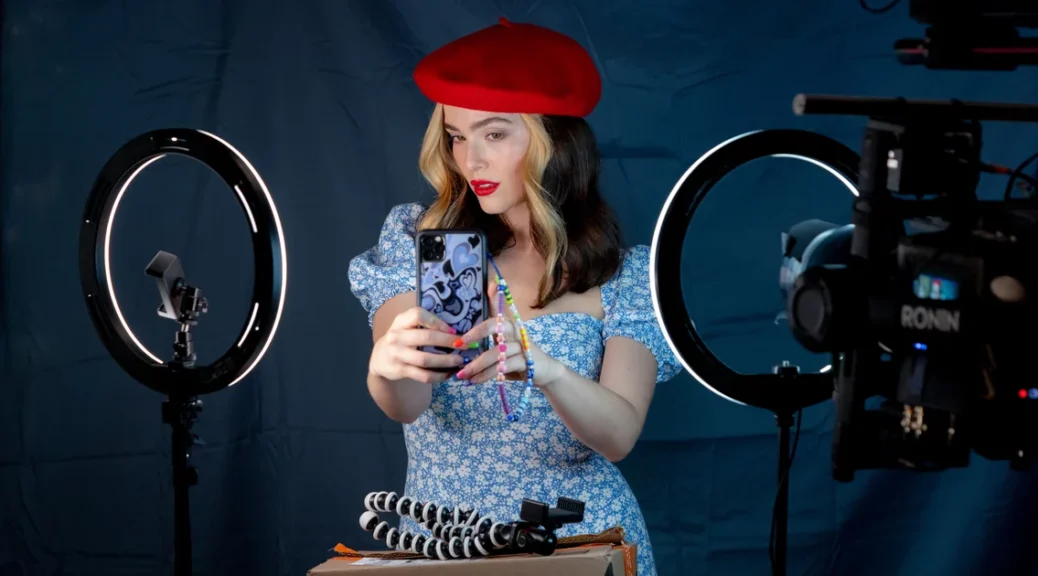
Zoey Deutch stars as Danni, a self-involved New York twentysomething who lets us know right away that she’s longing to be noticed – for any reason. If she’s not getting the likes and follows, I mean what is she even doing?
What she’s doing is using photoshop to fake a trip to a writer’s retreat in Paris. And it’s all berets and baguettes on the ‘gram until Paris falls prey to terrorist bombings. That’s bad for the world, but pretty great for Danni’s social profile!
So she runs with it, playing the traumatized victim, launching #iamnotokay and managing to become besties with Rowan (Mia Isaac, also currently in Hulu’s Don’t Make Me Go), a school shooting survivor who’s a leader in the movement to combat gun violence.
We know from the start that Danni’s facade blows up in her face, and Shephard makes sure the rise and fall is deliciously fun. Don’t expect any sacred cows, as Shephard skewers nearly every player in our social media culture, even casting herself in a priceless cameo that ups the volume on exasperation.
She has the perfect vessel in Deutch, who proves again she is an absolutely natural comedic talent. From the way Danni answers “I will!” when her boss suggests taking a mental health day, to her chipper attitude at a support group, Deutch embodies the oblivious self-absorption needed for all these daggers to land.
Dylan O’Brien gives standout support as a white bread boy from Maine wearing a hardcore rap persona, but it’s Isaac who nearly steals the movie as a scarred young girl struggling with actual trauma. When Danni’s lie is revealed, Rowan’s hurt is palpable and heartfelt, with Isaac delivering a blistering spoken-word declaration that’s reminiscent of Daveed Digg’s powerful performance in the finale of Blindspotting.
And while Shephard’s defiant attitude toward her protagonist’s unlikability is refreshing, it only increases the curiosity over whether Danni will be learning something today.
Not Okay doesn’t toe this narrative line as expertly as, say, Young Adult, but it doesn’t fold all its cards, either. Shephard is a filmmaker with vision and voice, and she’s able to address the social media revolution with a better handle than most on juggling the serious and the satirical.
In today’s episode, we celebrate Hope’s novel ROOST, plus the brand spanking new audiobook, recorded by George himself. ROOST is the story of twins in a small Midwestern town during the satanic panic of the 1980s.
To properly put us in the mood, we will run through the best smalltown horror. There is a lot! Partly because small towns come equipped with small police forces. So, in addition to this fuzzy math list, we recommend: The Mist, Children of the Corn, Tremors, Dead and Buried, The Fog, The Birds, The Blob, We Are Still Here, Something Wicked This Way Comes,The Wolf of Snow Hollow, and Brotherhood of Satan (which always makes Hope think of her hometown).
6. I Am Not a Serial Killer (2016)
Billy O’Brien (Isolation) finds a new vision for the tired serial killer formula with his wry, understated indie horror I Am Not a Serial Killer.
An outsider in a small Minnesota town, John (Max Records) works in his mom’s morgue, writes all his school papers on serial killers, and generally creeps out the whole of his high school. But when townsfolk start turning up in gory pieces, John turns his keen insights on the case.
Records, who melted me as young Max in Spike Jonze’s 2009 masterpiece Where the Wild Things Are, serves up an extraordinarily confident, restrained performance. His onscreen chemistry with the nice old man across the street – Back to the Future’s Christopher Lloyd – generates thrills enough to offset the movie’s slow pace.
For his part, Lloyd is in turns tender, heartbreaking and terrifying.
Bursts of driest humor keep the film engaging as the story cleverly inverts the age-old “catch a killer” cliché and toys with your expectations as it does.
5. 30 Days of Night (2007)
If vampires can only come out at night, wouldn’t it make sense for them to head to the parts of the globe that remain under cover of darkness for weeks on end? Like the Arctic circle?
The first potential downfall here is that Josh Hartnett plays our lead, the small town sheriff whose ‘burg goes haywire just after the last flight for a month leaves town. A drifter blows into town. Dogs die viciously. Vehicles are disabled. Power is disrupted. You know what that means…the hunt’s begun.
Much of the film’s success is due to the always spectacular Danny Huston as the leader of the bloodsuckers. His whole gang takes a novel, unwholesome approach to the idea of vampires, and it works marvelously.
4. It (2017)
The Derry, Maine “losers club” finds itself in 1988 in this adaptation, an era that not only brings the possibility of Part 2 much closer to present day, but it gives the pre-teen adventures a nostalgic and familiar quality.
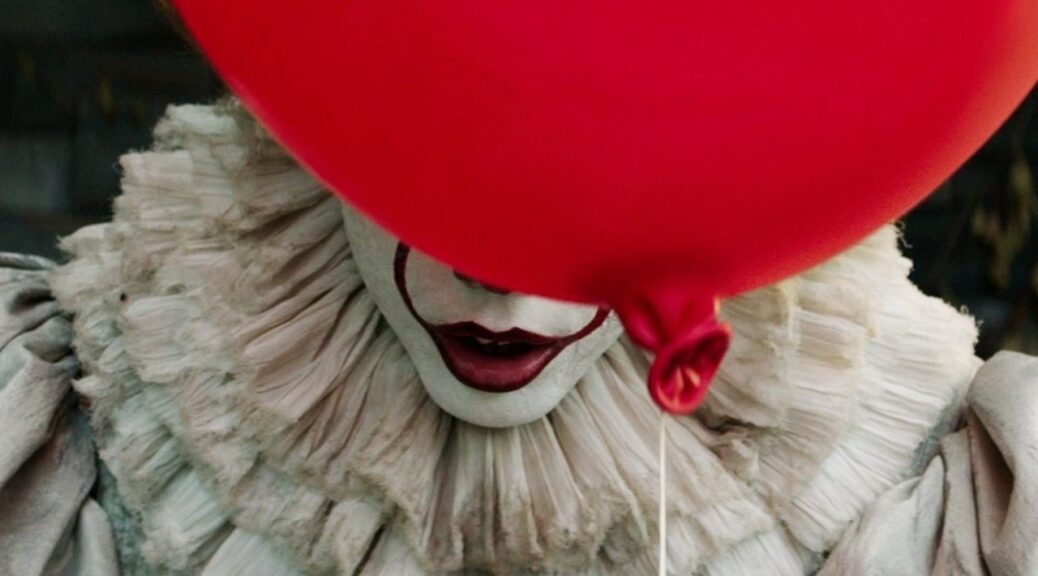
Bill Skarsgård has the unenviable task of following a letter-perfect Tim Curry in the role of Pennywise. Those are some big clown shoes to fill, but Skarsgård is up to the challenge. His Pennywise is more theatrical, more of an exploitation of all that’s inherently macabre and grotesque about clowns.
Director Andy Muschietti shows great instinct for taking advantage of foreground, background and sound. Yes, It relies heavily on jump scares, but Muschietti’s approach to plumbing your fear has more depth than that and he manages your rising terror expertly.
3. The Wailing (2016)
“Why are you troubled?” Jesus asked, “And why do doubts arise in your hearts? Look at my hands and my feet. It is I myself. Touch me and see — for a spirit does not have flesh and bones, as you see I have.”
Though the true meaning of this quote won’t take hold until the final act, it presents many questions. Is this film supernatural? Demonic? Or, given the corporeal nature of the quote, is it rooted in the human flesh?
Yes.
That’s what makes the quote so perfect. Writer/director Hong-jin Na meshes everything together in this small town horror where superstition and religion blend. The film echoes with misery, as the title suggests. The filmmaker throws every grisly thing at you – zombies, pustules, demonic possession, police procedural, multiple homicides – and yet keeps it all slippery with overt comedy.
2. Halloween (1978)
No film is more responsible for the explosion of teen slashers than John Carpenter’s babysitter butchering classic.
From the creepy opening piano notes to the disappearing body ending, this low budget surprise changed everything. Carpenter develops anxiety like nobody else, and plants it right in a wholesome Midwestern neighborhood. You don’t have to go camping or take a road trip or do anything at all – the boogeyman is right there at home.
Michael Myers – that hulking, unstoppable, blank menace – is scary. Pair that with the down-to-earth charm of lead Jamie Lee Curtis, who brought a little class and talent to the genre, and add the bellowing melodrama of horror veteran Donald Pleasance, and you’ve hit all the important notes. Just add John Carpenter’s spare score to ratchet up the anxiety. Perfect.
1. Jaws (1975)
A big city cop moves to tiny Amity, where one man can make a difference. Unfortunately, that one man is Mayor Vaughn.
Steven Spielberg cemented his legacy with this blockbuster masterpiece. The interplay among the grizzled and possibly insane sea captain Quint (Robert Shaw), the wealthy young upstart marine biologist Hooper (Richard Dreyfuss) and the decent lawman/endearing everyman Brody (Roy Scheider) helps the film transcend horror to become simply a great movie.
Spielberg achieved one of those rare cinematic feats: he bettered the source material. Though Peter Benchley’s nautical novel attracted droves of fans, Spielberg streamlined the text and surpassed its climax to craft a sleek terror tale.
It’s John Williams’s iconic score; it’s Bill Butler’s camera, capturing all the majesty and the terror, but never too much of the shark; it’s Spielberg’s cinematic eye. The film’s second pivotal threesome works, together with very fine performances, to mine for a primal terror of the unknown, of the natural order of predator and prey.