Tag Archives: film

Main Character Syndrome

Terrestrial

by George Wolf

You notice Steve Pink as the director, and then you glimpse both Craig Robinson and Rob Corddry in the opening minutes, and you’re thinking Terrestrial may be another raunchy comedy with a sci-fi catalyst on the order of Hot Tub Time Machine.

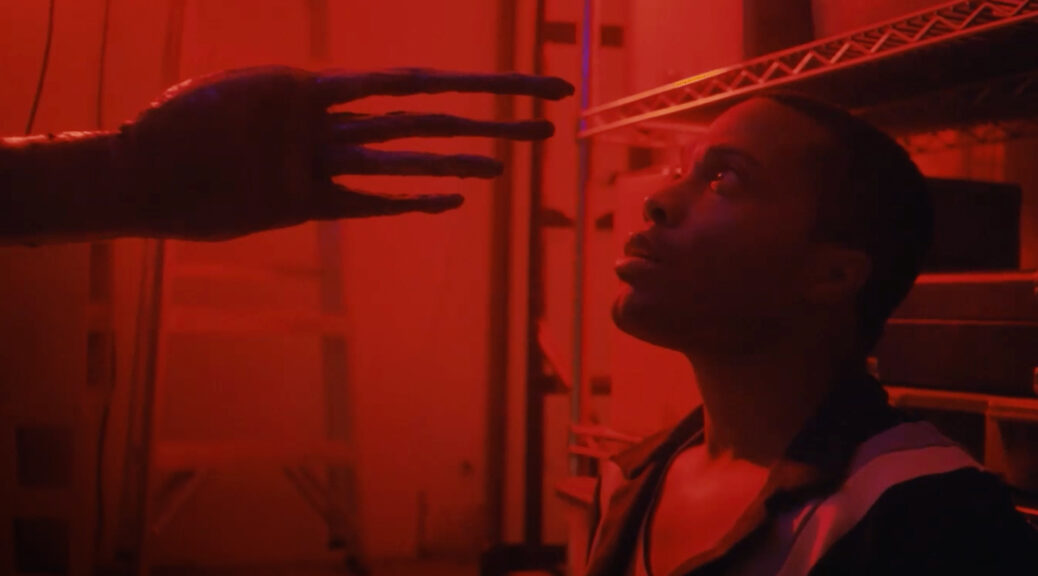
The raunch got left behind, but there’s a decent, darkly comic mystery here that’s rooted in science fiction, fandom, a pack of lies and some good ol’ writer’s block.

Allen (Jermaine Fowler) is a struggling science fiction writer who could be on the verge of something big. He fanboys the sci-fi novels of “The Neptune Files” series, and idolizes their author, SJ Purcell (Brendan Hunt from Ted Lasso). Allen’s devotion carries over to the cheesy Neptune Files TV show, and those fictionalized clips (starring Robinson and Corddry) are cheeky and charming.

The mystery begins when Allen’s college buds (James Morosini, Pauline Chalamet, Edy Modica) visit him at his new L.A. mansion. They’re happy for their old friend’s success, but start to wonder about Allen’s odd behavior and the big paydays that hit before his first book is even finished.

What’s really going on here?

To find out, Pink and screenwriters Connor Diedrich and Samuel Johnson take us back to three months earlier, and the film is instantly elevated by a captivating, self-aware thriller vibe. Fowler’s (Sorry to Bother You, Faces of Death, The Blackening) ability to transmit Allen’s refusal to let his slowly growing panic derail the bigger plan is a frantic delight, and it keeps your interest grounded when events get bloody and more than a little spacey.

Pink effectively juggles the story – and the story within the story – for a solid setup, but Act Three can’t quite deliver on the promise. Pink scripted both Grosse Point Blank and High Fidelity some years back, and this friend reunion could have used more of the cynical bite he brought to those interactions. Terrestrial seems satisfied to ramp up the body count, and crawl across the finish line out of breath.

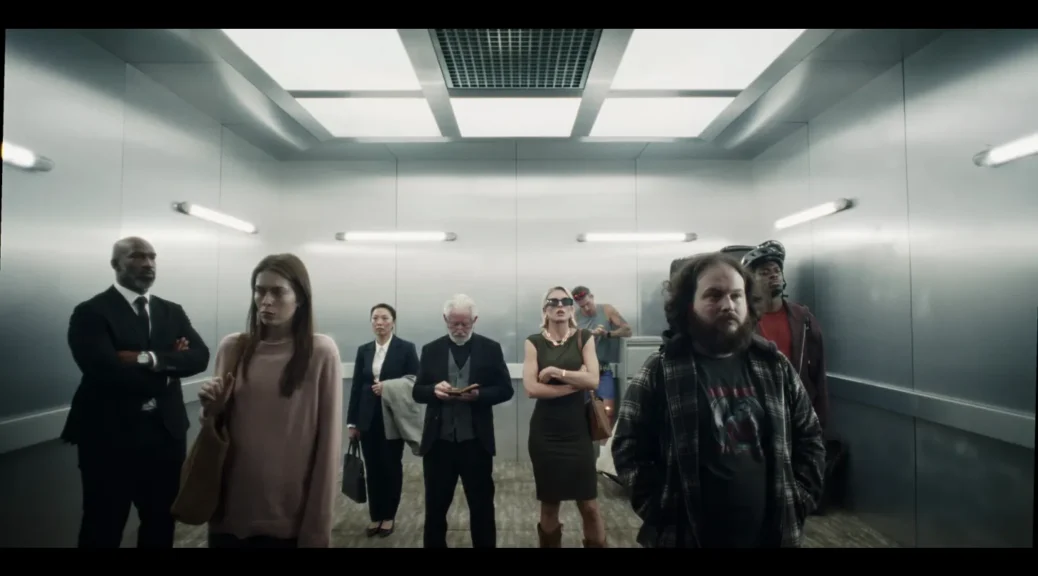
Going Down?

Dead Drop

Screening at 6pm on Saturday, Oct. 17 at Nightmares Film Festival.

by George Wolf

You like your thrillers with a good dose of blood splatter? Maybe even some deadly puzzle-solving and jabs of dark humor? Well, stand next to me for Dead Drop, a wickedly fun ride on a lethal freight elevator.

One hectic morning inside a large office building, the main elevator seems to be on the fritz. So eight strangers decide the large freight elevator down the hall will speed their busy day along, and they get in.

They push the buttons, the doors close, but the ride is a short one. The elevator stalls, and they are all trapped.

Writer/director Ned Crowley quickly sets an effective sense of people and place, getting us comfortable with the different personalities that will have to work together for a path to safety. The snappy dialog begins to reveal important connections between the “Teacher,” “Bike Messenger,” “Troll,” “Lawyer,” “Actress,” “Suit,” “Priest” and “Bro,” and that maybe this fateful meeting is not as happenstance as it seems.

There are engineering clues to decipher as well, and Crowley (Killing Faith) adopts a wonderfully mischievous tone for his frisky mashup of Cube, Saw, and even a dash of Da Vinci Code. The bloodshed can be sudden, and shocking, with Crowley making sure it all pops in the frame for maximum WTF? appeal.

The ensemble cast is locked in to the vibe that’s driven home by a couple well-played needle drops. And by the time the other narrative shoe drops as well, you’ll most likely be smiling at how skillfully Dead Drop pushes your buttons.

Pieces of Me

What I Remember

Screens at noon on Saturday, October 17 at Nightmares Film Festival.

by George Wolf

Equal parts mystery, found footage thriller and exploration of queer identity, writer director Alex Hera’s impressive first feature What I Remember casts a truly hypnotic spell .

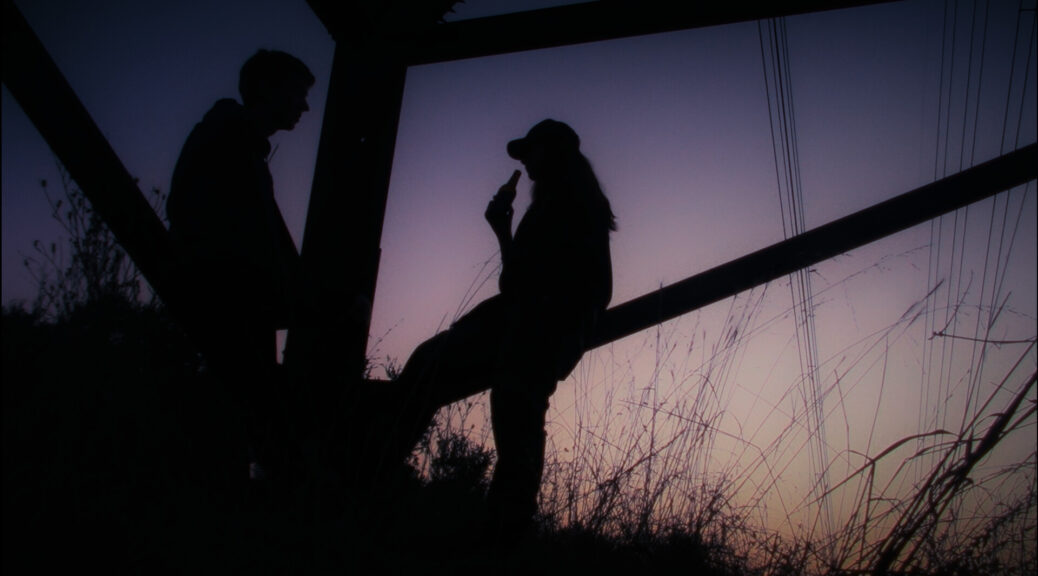
Ryan (Cabe Thompson) and Sam (Alexandra Boulas) have a fateful meeting one afternoon in the woods around their small town of Brookhaven. Ryan is constantly recording a video diary, and we see his POV as he stumbles upon Sam and her friend Drew (Taylor Morris) having a heated argument.

After breaking free of Drew, Ryan and Sam walk the trails together, sparking a tender and empathetic friendship that builds to something deeper, one that anchors Hera’s tale of shifting timelines, awakening identities and persistence of memory.

Ryan and Sam hatched a plan to leave town together, but Ryan’s disappearance left Sam grasping for answers. As Hera employs a data-moshing technique to blur the edges of time, place and vlog footage, another mystery from the past comes to light. The whereabouts of Hayden, a long-missing local gay man, have never been uncovered, sparking unmistakable questions about local threats to those in the queer community.

Boulas is terrific in a performance that only improves as the emotions of the narrative deepen. Hera mines those feelings with great care, leaving What I Remember as a collective of sketches that build to a mysterious meditation on finding the people and places that allow you to find yourself.

Middle School Fantasy

Matchbox: The Movie

by George Wolf

So, a toy movie? Like Barbie?

Well, that’s a stretch. And remember, Jaws is a shark movie, but so is Sharktopus.

Apple TV’s Matchbox isn’t sharkspoitation bad. In fact, if you just hang with its overlong runtime, the film finds an unabashed cornball groove that will bring both smiles and eye-rolls.

The title only refers to the fact that a group of middle school friends were Matchbox enthusiasts back in the day. Now, decades later, one of those friends is a secret agent while the rest stayed in small-town Ohio.

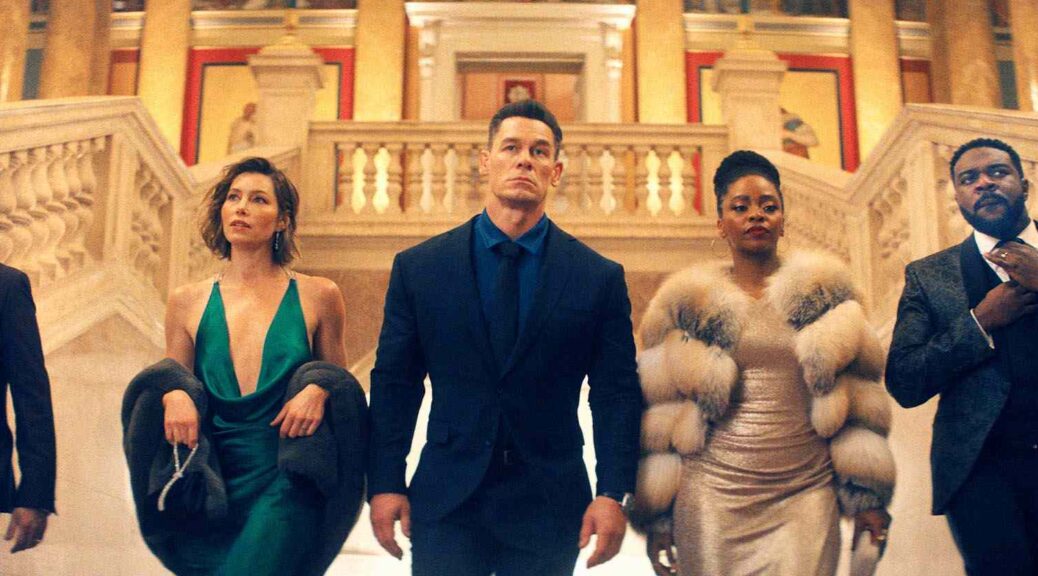
But after completing a dangerous spy mission for his boss (Danai Gurira), Sean (John Cena) goes back home to pay last respects to an old mentor. After sharing beers with the old Matchbox gang, they’re all drugged and pulled into a globe-trotting chase for a stolen bomb.

Good thing that Aimee (Jessica Biel), Ted (Arturo Castro), Crosby (Sam Richardson) and Charmaine (Teyonah Parris) all have skills that come in mighty handy in a save-the-world scenario. Director Sam Hargrave (the Extraction films) puts his action skills to work for a minor league True Lies that keeps a kid-friendly feel despite all the violence and explosions.

Why this is over two hours I don’t know, but everyone in this likable cast seems to be having a good bit of fun. Cue it up with a few cold ones after the kids go to bed, and Matchbox: The Movie should give you a bit of fun, too.

Expect some groans, as well, but that’s what the beer’s for.

Weak Thrills

Animals

by George Wolf

Director/co-writer/star Ben Affleck continues his Netflix partnership with a serviceable thriller that is curious in its timid approach to being thrilling.

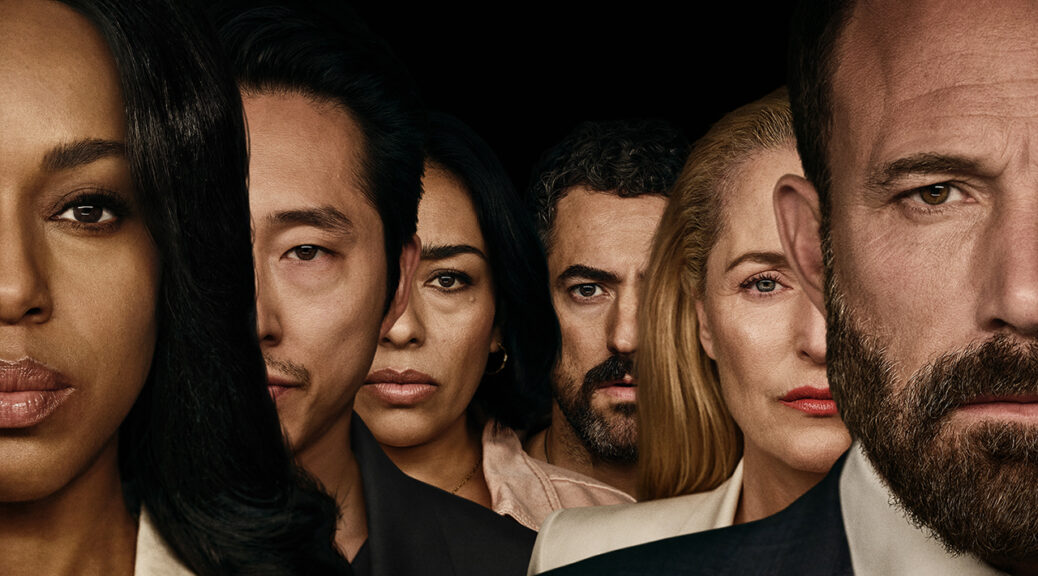
Affleck stars as a Los Angeles mayoral candidate who is mulling a big decision to get the funds for one last campaign push. Then his young son is kidnapped, throwing his candidacy and his sputtering relationship with his wife (Kerry Washington) into chaos.

With Steven Yeun as the campaign manager and Gillian Anderson popping in as a high-end fixer, the cast alone is enough to keep you watching. But after borrowing a twist from a similar classic, the film settles into a comfort zone that is just too comfortable.

The editing is choppy, and the narrative feels like it’s been re-shaped by too many producers and focus groups, leading to an unsatisfying final act more in line with a morality play.

There are moments of substance here, but just like too many campaign promises, Animals is a pretty smile without much behind it.

Amused to Death

Digger

by George Wolf

Don’t listen to me about Digger.

Don’t listen to anyone about Digger. I’d say the odds are 50/50 that you’ll love it or hate it. But if you appreciate a positive ratio of sheer ideas per moviegoing minute, you’ll be hard pressed to beat the latest opus from Oscar-winning Mexican auteur Alejandro G. Iñárritu.

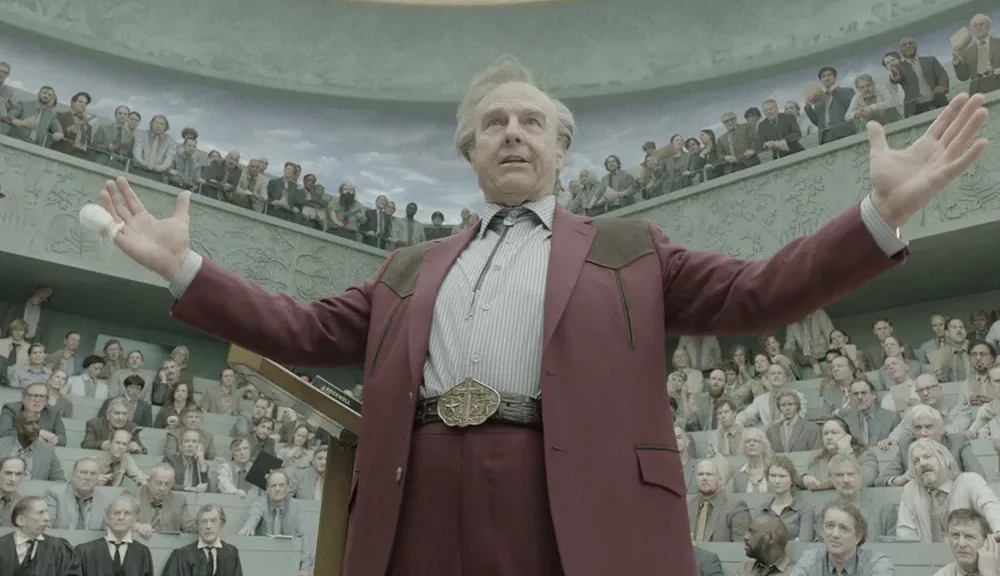
Speaking of awards, get used to seeing Tom Cruise in the upcoming nomination lists, and he most definitely earns the acclaim. Call it tour de force, over the top or whatever, but he absolutely commands the screen and this satirical epic as Digger Rockwell, a my-way-or-the-highway oil tycoon whose company has caused an environmental disaster that threatens life as we know it.

Can Digger dig us all out? And can director/co-writer Iñárritu climb out of the narrative hole he digs in the early going?

For my money, yes.

His impressive resume (including The Revenant, Birdman, Bardo, and Babel) is stacked with impeccable craftmansmanship, ambitious framing, boundary pushing visuals and increasing self-indulgence. You’ll find it all in Digger, and per usual, subtlety is not in the toolbox.

If you thought Don’t Look Up was too direct, buckle up. This message, and this coal black humor, is obvious and repetitive, layered through extreme POVs and garish sets that underscore Digger’s promise of damage control through performative storytelling. And just when the bombast threatens to bring the entire film down, Iñárritu makes a shocking pivot that is sure to make Digger one of the most divisive films in recent memory.

I’m not spoiling it, and shame on anyone that does.

Even with Cruise dominating the film, the incredibly stacked supporting cast carves out a steady stream of interesting and often larger-than-life characters. From John Goodman, Riz Ahmed, Sandra Hüller to Michael Stuhlbarg, Jesse Plemons and even a Burn Gorman sighting, there is excellence evident on nearly every corner of the screen.

And by the way, choose that screen wisely. Iñárritu shot this in VistaVision, so unless you want the pillarbox view, avoid the standard widescreens.

But if you appreciate the movie theater experience, do not avoid Digger. And don’t leave halfway through, even if you’re tempted. You’ve got to see this through — including a few minutes into the credits — before you can really start mulling over what you’ve seen.

Hell, a year from now I may wish I’d given this five stars, or two. But right now, I’m glad it’s given me this much to think about.

Now Pulp Free!

Verity

by George Wolf

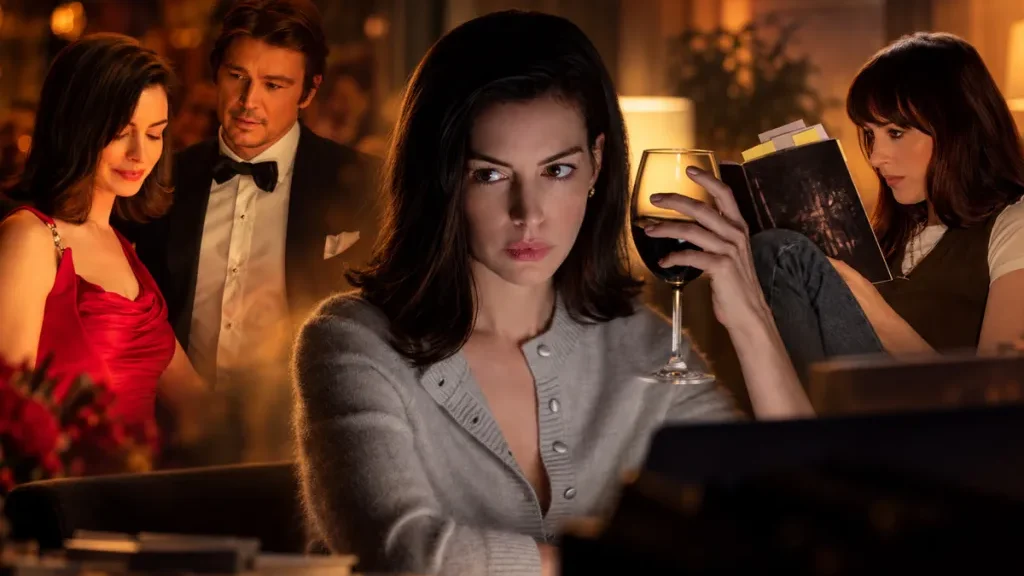
The most interesting thing about Verity is what a stupefying mess it turns out to be. Anne Hathaway and Dakota Johnson aren’t just stars, but producers as well. And though Michael Showalter might seem a surprising choice to direct an erotic thriller, his resume includes some big wins (The Big Sick, Wet Hot American Summer).

Where did it all go wrong? Pretty much everywhere.

Based on Colleen Hoover’s best seller, the film follows struggling novelist Lowen Ashleigh (Johnson) as she is hired to finish a book series by world renowned writer Verity Crawford (Hathaway). Crawford is incapacitated after a car accident, so her husband Jeremy (Josh Hartnett) invites Lowen to stay in their Vermont mansion, pour over Verity’s notes and deliver three much-anticipated books.

But Lowen finds more than notes. She finds a flash drive holding a secret manuscript that appears to be an autobiography where Verity makes some earth-shattering confessions.

Cue the thunder claps and lightning strikes, and hold any trace of a winking nod to how ridiculous this all is. Hoover’s story (adapted by Nick Antosca) seems heavily borrowed from a couple more well-plotted novels, and Showalter’s humorless tone never leans into the pulpy aspects that might have made this a fun, guilty popcorn pleasure.

Sexy moments aren’t sexy. Jump scares aren’t scary. Witty banter isn’t witty, and the three very talented stars just seem confused. That’s a bad combo, one that allows for plenty of time for us to wonder about those breakdowns in internal logic.

But honestly, there isn’t much concern with any one thinking too much. An over-reliance on voiceover narration drains the shock value from big reveals, and ends up negating those seeds of doubt the film seems to think it is planting.

This type of Neo-noir blurring of truth and fiction has resulted in some twisty fun in the theaters over the last several years. But what might have been a self-aware ride on the order of A Simple Favor or The Woman in the Window barely rises to the level of Hathaway’s own curious dud Serenity.

Too much talent, not enough pulp. Sad to say, that’s Verity.

Discontent

The Last First: Winter K2

by George Wolf

“Whoever climbs K2 in the winter will claim the last great prize in mountaineering.”

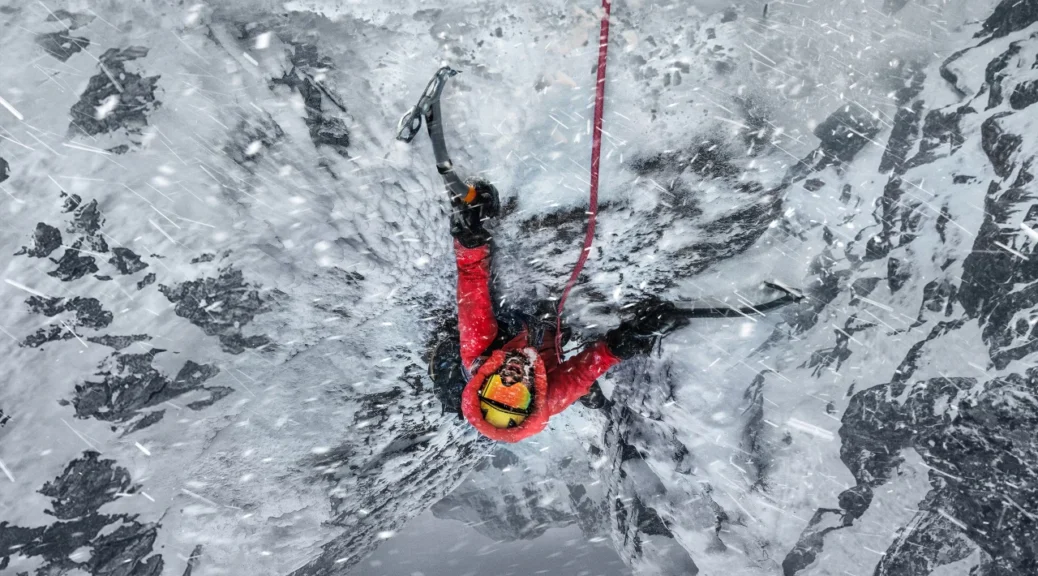
In 2021, that mission became a deadly competition. Businesses were reeling from COVID restrictions, social media likes became a new form of currency, and an unexpected crowd gathered to earn that last first: summiting the world’s second-highest peak amid the worst conditions imaginable.

K2 — aka “The Savage Mountain” — had proved too much for all previous winter attempts. But veteran climber John Snorri Sigurjónsson and local Pakistani hero Ali Sadparas thought they could be the first, only to be met with an unexpected crowd thinking the same thing.

There was filmmaker Elia Saikaly, Nepalese legend Nims Purja and his team, extreme athlete Colin O’Brady, Italian climber Tamara Lunger and a commercial group of climbers from Seven Summit Treks. The party atmosphere at base camp deteriorated into a brutal fight for survival, and director Amir Bar-Lev deconstructs the bad decisions with reverence and determination.

The visuals are often breath taking and the quest gets jaw-droppingly tense, which is not uncommon for this type of extreme documentary that we’ve seen over the last several years. What sets Bar-Lev’s approach apart is how he balances the multiple factors lurking behind the tragic deaths of five climbers.

When the over-commercialization of summitting meets an industry struggling to survive the pandemic, social media dopamine addiction and foolish hubris, common sense caution struggles for attention. The contrasts between tourist climbers and seasoned vets, layered into the already tense caste system of the region, creates an added atmosphere of suspicion and finger-pointing once the situation turns dire.

If the time of pioneers is truly gone, The Last First: Winter K2 bids them a stark, unforgettable farewell. At times thrilling, tragic, and exasperating, it is ultimately a sad reminder of how high human folly can climb.

Yes They Canada

You Had to Be There

by George Wolf

Don’t pretend you don’t want to hear a homemade recording of a 15 year-old Martin Short singing Frank Sinatra tunes in his bedroom.

You Had to Be There gives you that gem early on, and then rolls out a succession of beautifully human moments that live inside the story of one ridiculously talented 1972 Toronto production of Godspell. More than one thousand people auditioned, and an ever-growing tree of success began to take root.

Not just Short, but Gilda Radner, Eugene Levy, Andrea Martin, Victor Garber, Dave Thomas, Paul Shaffer and more. Household names, plus other veteran performers who have carved out long careers and influenced generations of popular culture. They were all here together for a magical time that “felt like Paris in the ’20s,” and director Nick Davis (with executive producer Judd Apatow) tells their tale with absolute joy and reverence.

There are no videos of the actual shows, but thanks to the always resourceful Short, there is audio from a small cassette recorder stashed on the stage. And some from that same recorder pulled out at cast parties. It’s great stuff, and Davis presents it with some fitting, SNL-style animation that makes sure you can identify each player. So fun, even without the archival footage.

Current interviews with living cast members are presented in front of colorful blank screens, illuminating each personality in a different glow before cutting away to animation or due praise from admirers such as Lin-Manuel Miranda, Janeane Garofalo, Mike Myers and more.

And as the film moves into the closing stages, it becomes undeniably touching. We feel the love these people have for other, and for the wonderful experience they shared. We also see the highs and lows of their respective lives, including Radner’s tragic passing and one cast member admitting — for the first time — about sexual assault she endured on the set of a network TV show.

Then we, and this cast, see something else. And it results in such a warm surprise I’m not going to spoil it. But it’s special. So is the film.

You Had to Be There not only supports the claim that this Godspell production was the ’27 Yankees of comedy, it reminds us to cherish the good friends, good times, and yes, good art that we are blessed enough to experience in our lives.

Curtain call!

Rocket Ride

The Stunt Driver

by George Wolf

If you’ve seen the underrated 2011 hockey comedy Goon, you’ll understand why I was stoked for The Stunt Driver. It reunites writer/director Michael Dowse with star Jay Baruchel for another based -on-true-events look at a rough and tumble lug fighting to stand out in the crowd.

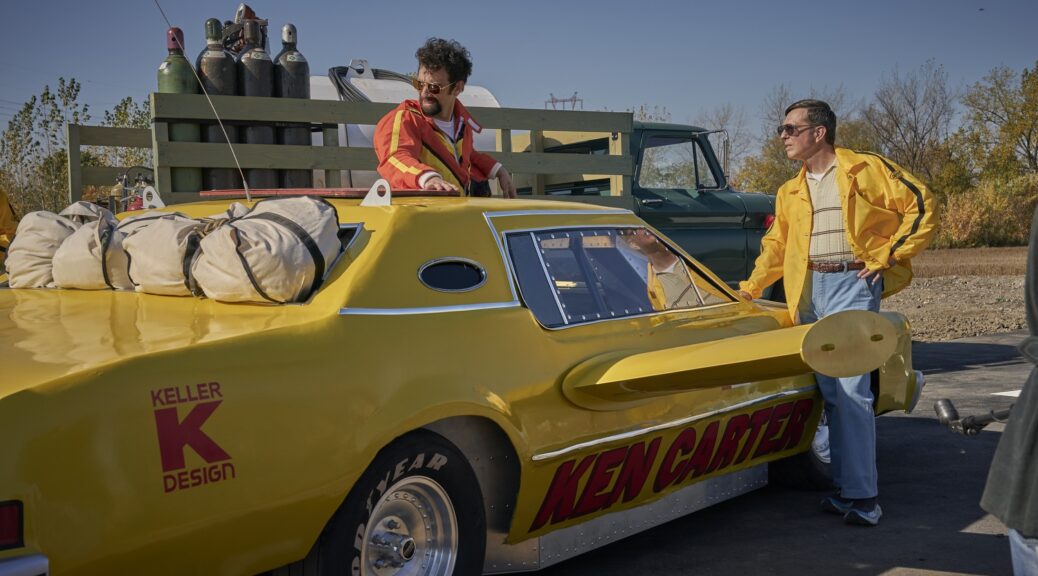
Back in the 1970s Ken Carter was known as “The Mad Canadian,” a cross-eyed, bushy-haired high school dropout who made his name through high-flying car stunts. So, when Evel Knievel’s Snake River Canyon jump fizzled out in ’74, Carter hatched a plan to show him up.

He would jump over the St. Lawrence river in a “rocket car,” taking off in Canada and landing a mile away in Ogden Island, New York. In Carter’s view, Evel was “a nerd and a coward,” and the St. Lawrence jump would put the stunt driver glory – don’t call him a “daredevil!” – where it belonged.

As Carter, Baruchel delivers a career-best performance. Stunt driving is all Carter knows and the passion to “leave his mark” is felt throughout the years-long journey toward the jump. When doubt and even fear creeps in, Baruchel makes sure both are just shades of a completely human character we want to succeed.

Much like Goon, the commitment to character drives the film. Dowse surrounds his Mad Canadian with interesting people on all sides. From Carter’s long-suffering wife (Laurence Leboeuf) to his engine designer (Ed Helms), his protege (Marc Beaupré) and his promoter (Dan Bakkedahl), we get a series of fleshed-out personalities to bring a perfectly 70s aesthetic to life.

And when producers on ABC’s Wide Wide of Sports insist on bringing Evel himself (Ben Foster) on as a tech consultant, the relationship between Knievel and Carter instantly becomes a deadpan delight.

Dowse takes inspiration from the 1981 doc The Devil at Your Heels. He juggles different film stocks and aspect ratios throughout the film’s 99 minutes, which makes the use of real jump footage feel seamless, and bolsters the hardscrabble appeal of Carter’s entire persona.

Even when the tonal path starts to wobble in the second act, The Stunt Driver again shows Dowse and Baruchel can find heart, soul and authenticity in the life of a true sports underdog. Maybe Ken never got as famous as Knievel, but it’s a good bit of absurd fun getting to know him.