Tag Archives: thriller

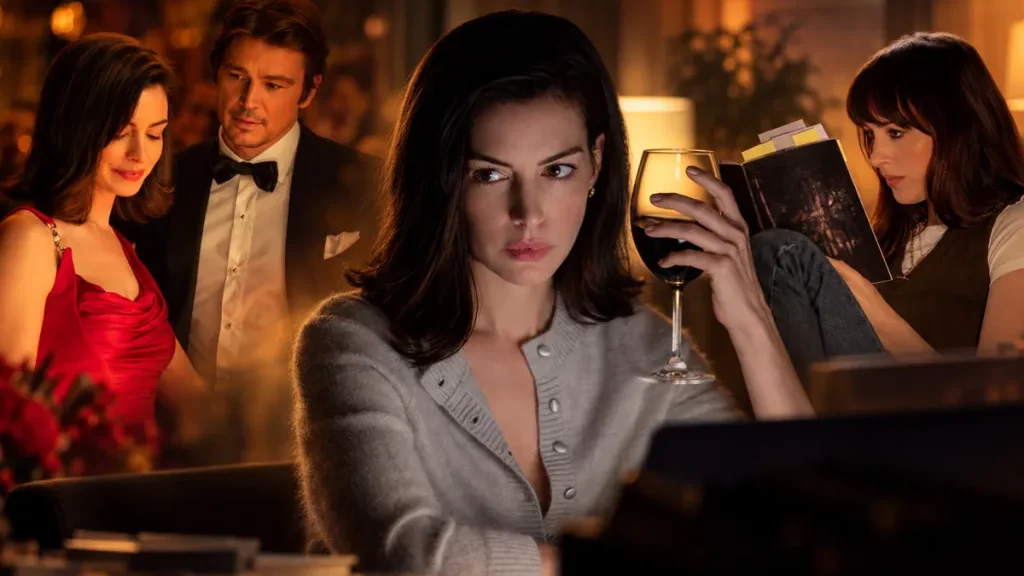
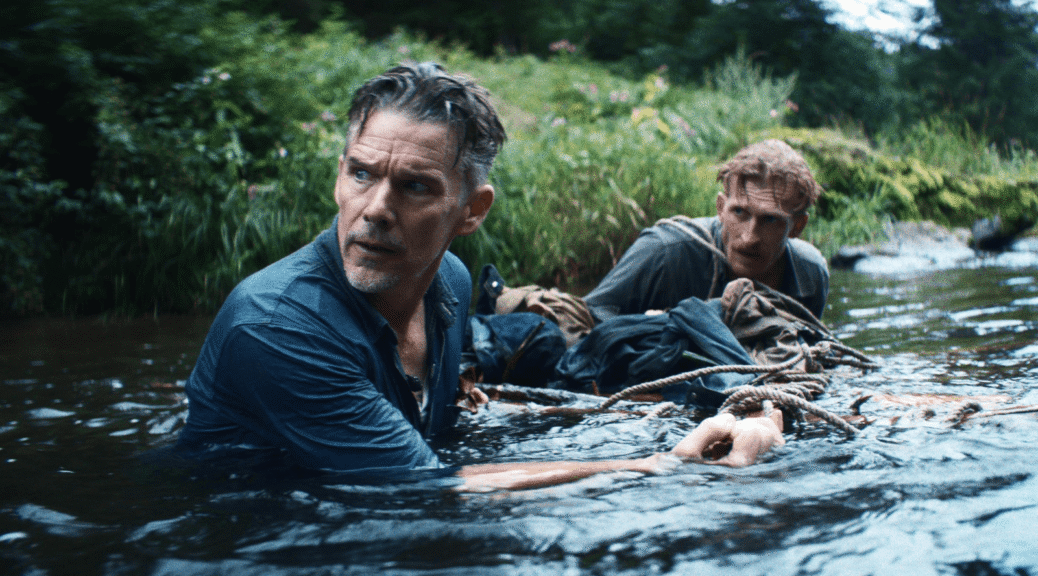
Safe Spaces

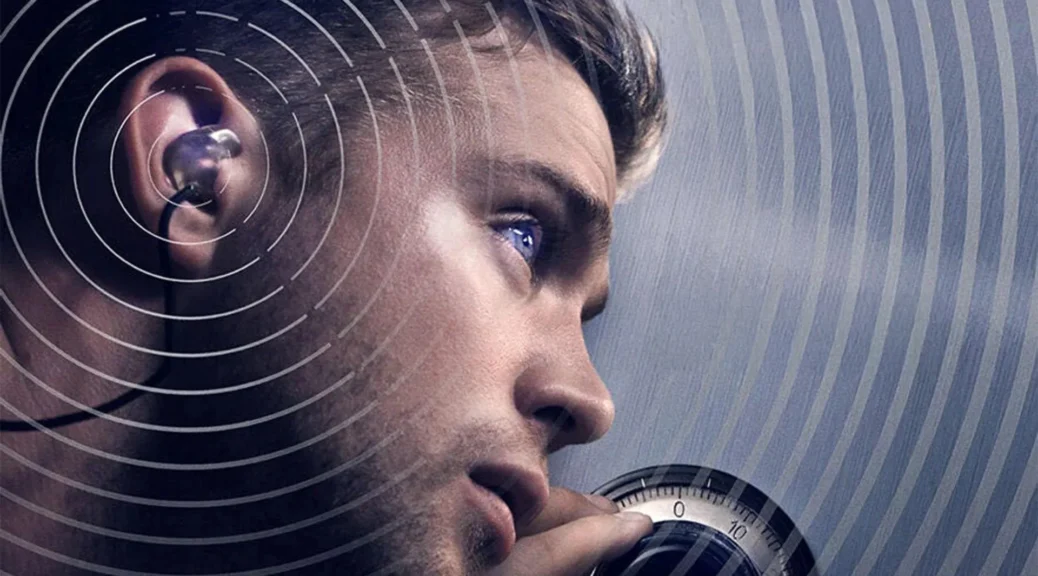
Tuner

by George Wolf

His first narrative feature may focus on busting into safes, but Oscar-winning documentation Daniel Roher shows some fine natural instincts for cracking the code that makes “romantic thriller” a crowd pleasing genre ride.

The thriller part comes when mild-mannered piano tuner Niki White (Leo Woodall from Nuremberg and The White Lotus) gets lured into a secret life of crime. Niki was a child prodigy on piano, but a diagnosis of hyperacusis (allergic to loud noises) derailed his performing career. Working with father figure Harry Horowitz (Dustin Hoffman) as a piano tuner blessed with perfect pitch, Niki wears noise canceling headphones all day and laments what might have been.

A chance encounter with a shady security team at a high-end mansion leads Niki to show how his hyper-sensitive hearing can be used to open combination locks. So the menacing Uri (Lior Raz) offers Niki the chance to make some big money, just when Harry’s medical bills have started piling up.

Romance blooms when music student Ruthie (Havana Rose Liu) needs her piano tuned (pause for laughter, but she really does). Ruthie is vying for a choice position as an assistant to maestro Marius Maissner (Jean Reno) and doesn’t really have time for a boyfriend…but she and Niki are such an irresistible match!

Woodall’s turn is understated and sympathetic, Liu (Bottoms, Lurker) has a natural presence that gives Ruthie some complex layers and Hoffman is clearly having a ball with some blatant (scene) stealing of his own. All three of their characters seem real from the opening minutes, allowing the film to pull you in with ease.

Roher (Navalny) launches Niki’s two lifelines on a consistently engaging collision course buoyed by the terrific performances, sharp editing (film and sound), effective tension, shocking twists and an unlikely couple we can’t help rooting for. And along the way, Roher and co-writer Robert Ramsey find time to toss in well-placed nods to the rot of “fuck you money,” America’s obscene health care system and the often under-appreciated nature of art.

Yes, Tuner packs a lot into its 109 minutes, so much so that it’s easy to stop wondering about security cams or why Niki paying bills with stacks of cash doesn’t arise any suspicions. You just shrug it off, and that speaks loudly about how well the rest of the film is constructed.

In fact, the slightly contrived, crowd-serviced turns that come in Act Three would elicit a few eyes rolls in lesser films. But by then, Tuner has carved out its own safe space, as a pitch-perfect example of how to make an audience want exactly what you’re going to deliver.

Death Do Us Part

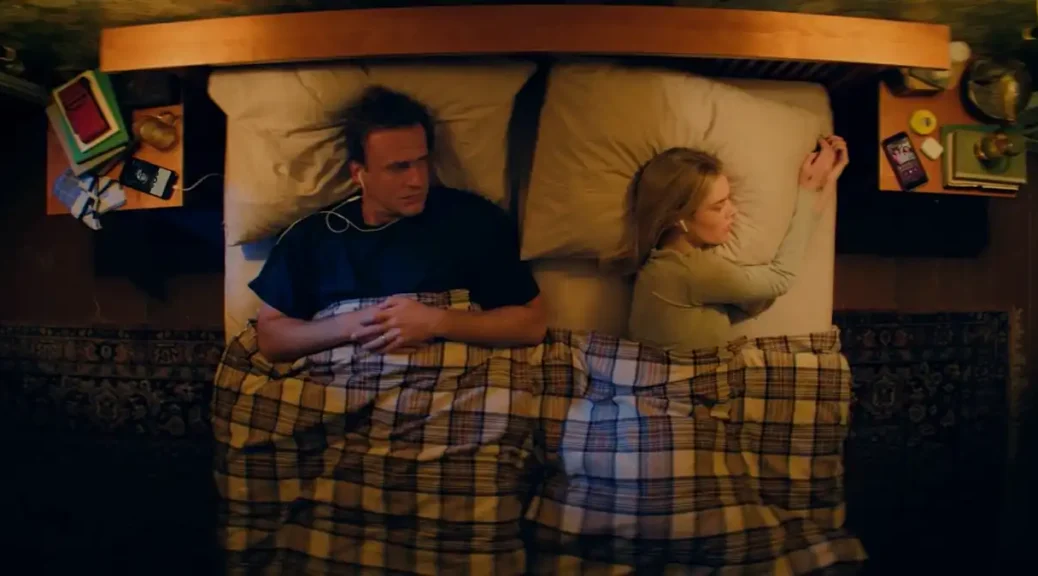
Over Your Dead Body

by George Wolf

Why would Jason Segel plot to kill Samara Weaving?

Has he not seen Ready or Not? Borderline? Azreal? Ready or Not 2?

Segel is surely smart enough to play nice, but Dan – his character in Over Your Dead Body – is not. Dan and Lisa (Weaving) are off on a secluded weekend in a cabin by the lake. After 7 years together, they can barely say a cordial word, but this time Dan is laying the sweetness on pretty thick.

He’s cooked up a great dinner, along with a great alibi. Because after a nice boat ride on the lake, Lisa will sleep with the fishes.

Or not. Because Lisa has a plan of her own. And so do some convicts on the run (Timothy Olyphant, Keith Jardine) and the corrections officer who helped bust them out (Juliette Lewis).

Power shifts, violence and blood splatter ensue!

Writers Nick Kocher and Brian McElhaney, fresh off the hilariously unhinged Pizza Movie, adapt the 2021 Norwegian film The Trip with a healthy scoop of witty cynicism atop one good ol’ American mean streak.

Segel and Weaving make an excellent pair of frassasins (friendly assassins), he of the emasculated man child and she of the exasperated younger wife wondering what she saw in this guy. Neither is blameless in the demise of the marriage, and the two actors make the deadly bobbing and weaving (pun intended) a surprising, squirm-inducing delight.

Those squirms only increase once the three fugitives enter the fray, and comic director Jorma Taccone (Popstar, MacGruber) forays into body horror with a respectable aversion to sparring the rum or the wisecracks. What starts out as an in-the-moment sendup of how couples avoid therapy takes a nasty turn in the second half. The threat of violence inherent in the premise makes for a smoother transition, but make no mistake: Taccone leans into that R-rating with some serious bloodshed.

If you’re fine with that, Over Your Dead Body is an entertaining genre blast that’s pretty hard to ignore. And by pretty, I mean pretty funny.

And pretty gross.

Diamond Life

Crime 101

by George Wolf

I saw the fairly generic title, I saw the February release date, I saw the two hour and twenty minute run time, and I was less than excited about Crime 101.

Let me tell you how quickly it proved me wrong.

Writer/director Bart Layton and a cracking ensemble put a stylish, character-driven sheen on some familiar crime thriller tropes. What results is a tense and twisty ride that taps into a healthy amount of world weary anxiety.

Chris Hemsworth is Mike, a controlled and elusive master thief, dealing in diamonds and jewelry along the California coast. Mark Ruffalo’s Lou is a disgruntled and disheveled L.A. cop out to prove his theory of a lone wolf criminal. And Halle Berry is Sharon, a high-end insurance broker who deals in plenty of bling.

And long before their lives intersect, Layton (adapting Don Winslow’s novella) brings authenticity to the disillusion the three characters share. Each feels they’re grasping at something just out of reach, trying to live with certain ideals that have lost value. Lou’s refusal to put arrest quotas first does not make him popular at work, while Sharon feels her chance at a big promotion may be slipping away with age. And Mike is the classic criminal with a haunted past and moral code. In lesser hands, these all become empty cliches. But three standout performances and a sharp script pay character development dividends from the film’s opening minutes.

The supporting cast (featuring Corey Hawkins, Nick Nolte and a quick cameo from Jennifer Jason Leigh) is exceptional as well. Barry Keoghan is electric as a tightly wound hotshot out to move up to big league heists and Monica Barbaro brings sweet tenderness to Maya, who navigates a possible relationship with Mike through caution and curiosity.

Layton’s camera is patient – obviously, with this run time – but never aimless. Everything fuels our understanding of these characters, the city canvas where they operate, and the tension that builds for the looming showdown. Layton’s narrative misdirections are sly and subtle, aided stylistically by some nifty scene transitions and a vibrant, mysterious score from Blanck Mass.

You may recognize other crime thrillers (especially Michael Mann’s Heat) embedded in the film’s DNA, but Crime 101 feels especially in the moment. Since moving from television to features, Layton has shown a persistent interest in exploring the psyche behind audacious crimes.

And so far, he’s batting a thousand.

Real Time Nightmare

The Desperate Hour

by George Wolf

With a main character spending most of the film alone, interacting with other characters only through a cell phone, The Desperate Hour (previously titled Lakewood) has the look of a production born out of quarantine.

But writer Chris Sparling is just returning to his framework for Buried from 12 twelve years ago, and tweaking the specifics with some sadly recognizable plot points.

Naomi Watts is Amy, a suburban mom who’s taken a personal day off from work as the anniversary of her husband’s fatal car accident approaches. Amy sets off on a long jog to clear her head, and as she winds deeper through the wooded area surrounding her neighborhood, multiple police sirens give the fist clue that another tragedy has occurred.

Veteran director Phillip Noyce (Rabbit Proof Fence, The Quiet American, The Bone Collector) sets a nice hook, layering disorienting camera movements and increasingly frantic cell phone calls to convey Amy’s growing panic as more details become available.

There’s a shooter at her son Noah’s (Colton Gobbo) high school, the area is on lockdown, and the police want to know if Amy keeps any guns in the house.

It’s difficult to overstate how quickly this premise would collapse with a lesser talent than Watts in the lead. She’s emoting with a smart phone and voice actors, but damned if she doesn’t make Amy’s desperation downright palpable, subtly conveying the chilling realization that a uniquely American epidemic is no longer happening somewhere else.

As the real time ticks by, though, the organic tension gives way to increased contrivance and emotional string pulling more befitting a TV movie-of-the-week. And with a mid-credits epilogue that is well-meaning but simplistic and preachy, the final minutes of The Desperate Hour comes dangerously close to undercutting the seriousness of the film’s intentions.

But there’s no doubting Watts. It is her commitment that won’t let us turn away from Amy, or completely give up on this film.

Caught in the Crosshairs

The Prey

by Brandon Thomas

Co-writer/director Jimmy Henderson’s The Prey doesn’t waste any time giving action fans what they want. Fight sequences that are plentiful and inventive. A hero who cuts through adversaries with brutal punches and kicks. Villains that chew the scenery with otherworldly malice. It’s everything we’ve seen dozens of times before, but that doesn’t stop The Prey from being a fun 90 minutes.

Xin (Gu Shangwei) is an undercover Interpol agent who finds himself arrested in a police raid. Thrown into a particularly dangerous prison, Xin catches the eye of a group of murderous hunters who use the jail to select their stock. Released into the nearby jungle, Xin has to rely on his training to evade the heavily armed pursuers. 

The “Humans Hunting Other Humans” genre is a well-worn path. From The Most Dangerous Game to Hard Target and The Hunt, the idea that we’re the deer is something that seems to never get old. With The Prey, Henderson delivers a film that doesn’t really offer anything new to the genre, but it does gleefully revel in it. 

The action sequences have a nimbleness that allows each fight to remain fresh. Along with exciting fight choreography, Henderson keeps the camera constantly moving during these scenes. While not reaching John Wick level heights of technical prowess, Henderson creates sequences infused with passion, wit and contagious energy.

The winking at the audience doesn’t stop with the action. The Prey’s villains are gloriously over the top. From the sadistic music-loving Warden to the compensating youngster who doesn’t quite have the stomach for killing, our bad guys check certain archetype boxes. Watching these characters ooze a kind of comic sadism helps solidify the film’s playful tone. 

Shangwei as Xin doesn’t fare as well as the villains. Like many action stars before him, Shangwei was obviously hired for his martial arts skills, not his acting skills. He delivers in the film’s long fight takes, but struggles to muster much charisma when focusing exclusively on dialogue. 

While not breaking any kind of cinematic new ground, The Prey celebrates a decades old genre through technical prowess and excitement. 

Flightless Bird

Bluebird in My Heart

by Brandon Thomas

“There’s a bluebird in my heart that wants to get out, but I’m too tough for him. I say, stay in there, I’m not going to let anybody see you.”

As I often do before starting to write a review, I went to Google and typed in the title of the movie. I’m typically looking for behind the scenes info about the film at hand, but this time something different stood out: the above opening to Charles Bukowski’s poem Bluebird

The connection between A Bluebird in My Heart and Bukowski’s poem is tenuous. One might be inclined to link the hard drinking, womaning poet with the film’s protagonist. 

That would be giving it more thought than the filmmakers did.

Danny (A Hijacking’s Roland Moeller) has recently been paroled from prison. A chance meeting affords Danny the opportunity to live in a small hotel in exchange for some carpentry work. Danny strikes up a somewhat reluctant friendship with Clara (Lola Le Lann), the hotel manager’s daughter. When a savage act of violence is carried out on his new friend, Danny is torn between enacting revenge or keeping his head down as a new parolee. 

A Bluebird in My Heart is the kind of basic revenge story that we’ve seen dozens of times before. Basic can be good when offering up memorable performances or a few plot twists and turns. Bluebird has none of that. This is a film that’s set on checking off all of the standard boxes that come with a revenge plot.

First time director Jeremie Guez struggles to make Danny and Clara’s relationship the heart of the film. The problem is that we’re never truly allowed to get to know these two people. Danny is defined by his past incarceration, while Clara’s story is characterized by a father who is currently behind bars. Their characters, and their relationship, is entirely superficial.

This pointed focus on Danny leaves the villains largely faceless. After whiffing the relationship between Danny and Clara, some outstanding villains might have freshened things up a bit. That doesn’t happen. What we get are the typical indistinguishable bad guys in black leather coats and sloppily shaved heads. These guys barely register as a threat.

Cinematographer Dimitri Karakatsanis does at least manage to make the film look outstanding. The urban setting forgoes the typical colorless drab and instead takes full advantage of early morning and evening light. Even the inside of the cheap hotel is bathed in shadow and warm blue light. The entire film has an inviting visual appeal.

Despite having some outstanding visuals, A Bluebird in My Heart still only offers a rehash of many of the same tired revenge flicks from the last decade.


Outlandos D’Amour

Border

by Hope Madden

Sometimes knowing yourself means embracing the beast within. Sometimes it means making peace with the beast without. For Tina—well, let’s just say Tina’s got a lot going on right now.

Eva Melander is Tina, a woman resigned to the solitary existence of an outsider. Her “chromosomal malady” has left her unbecoming to most of the people in her Danish border town, but it’s also gifted her with senses that allow her to notice criminals by the way they smell.

Those senses are thrown, though, by a stranger (Eero Milonoff) who makes her feel, for the first time in her life, that she’s not alone.

Border director/co-writer Ali Abbasi has more in mind than your typical Ugly Duckling tale, though. He mines John Ajvide Lindqvist’s (Let the Right One In) short story of outsider love and Nordic folklore for ideas of radicalization, empowerment, gender fluidity and feminine rage.

The result is both a sincere crime thriller and a magical fantasy. A perfect meshing of Michael Pearce’s 2017 indie Beast and Alex van Warmerdam’s dark 2013 folk tale Borgman, Border still manages to be entirely its own creature.

Melander is a force of nature under impressive prosthetics. Her fearless performance, one that requires an arc that feels simultaneously backward and progressive, guarantees that no matter the bracing images or ugly narrative, you will not look away. You won’t be able to.

Milonoff also impresses, as does a cast of support players blessed with an unusual and fittingly untidy storyline.

There are moments in Border that should have felt silly while others could easily have tipped into lurid territory, but they never do. Abbasi’s respect for his characters keeps even the most outlandish scenes on track. He boasts an impressive aptitude for blending a fantastical fairy tale nature with the realism of a thriller without ever losing one thread for the other.

The result is a film quite unlike anything else, one offering layer upon provocative, messy layer and Abbasi feels no compulsion to tidy up. Instead, he leaves you with a lot to think through thanks to one unyieldingly original film.


Dangerous Waters

Pioneer

by Hope Madden

Pioneer braids claustrophobia, conspiracy and political intrigue to create a compelling, often uncomfortable thriller. Set in 1980 Norway, the film follows a Norwegian/American collaboration to create an oil pipeline at then-unattempted depths.

Norway is eager to own the project and, by extension, the oil itself, but they need American “know how” to train divers to work at depths of up to 500 meters. Tragedy strikes, and one diver puzzles through layers of deception, cover up, greed and corporate shenanigans to uncover its cause.

Director Erik Skjoldbjaerg crafts a tight but rich thriller, thanks in part to the savvy work of cinematographer Jallo Faber. His camera heightens every sensation: the paranoia of being followed, the thrill of the chase, the lead character’s panic. More effective than anything is the way Skjoldbjaerg and Faber develop tension by exploiting the sinking, oppressive claustrophobic nightmare of the depths.

The look of the film is also spot-on for its time period, but without a compelling story, all the set decoration and camera tricks in the world couldn’t keep you interested. Co-scriptor Skjoldbjaerg – working with a team of writers – keeps you in the head of diver Petter (a wonderful Aksel Hennie). You feel his confusion, empathize with his desperation, and work out the details as he does.

It’s a cagey approach, one that works as well as it does because of Hennie’s keen performance. The solution to the mystery is always just out of reach, which can’t help but compel attention.

The supporting cast is very large, though it boasts a few standout performances. Wes Bentley is fun in a change of pace role as an American thug diver and Ane Dal Torp’s enigmatic performance is weirdly fascinating.

Ensemble mystery/thrillers can be hard to stay on top of, especially if they’re primarily foreign language efforts. While Pioneer is never impossible to follow, it can get slippery here and there. On the whole, though, it’s a suspenseful surprise.

Verdict-3-5-Stars