Tag Archives: Havana Rose Liu

Safe Spaces

Tuner

by George Wolf

His first narrative feature may focus on busting into safes, but Oscar-winning documentation Daniel Roher shows some fine natural instincts for cracking the code that makes “romantic thriller” a crowd pleasing genre ride.

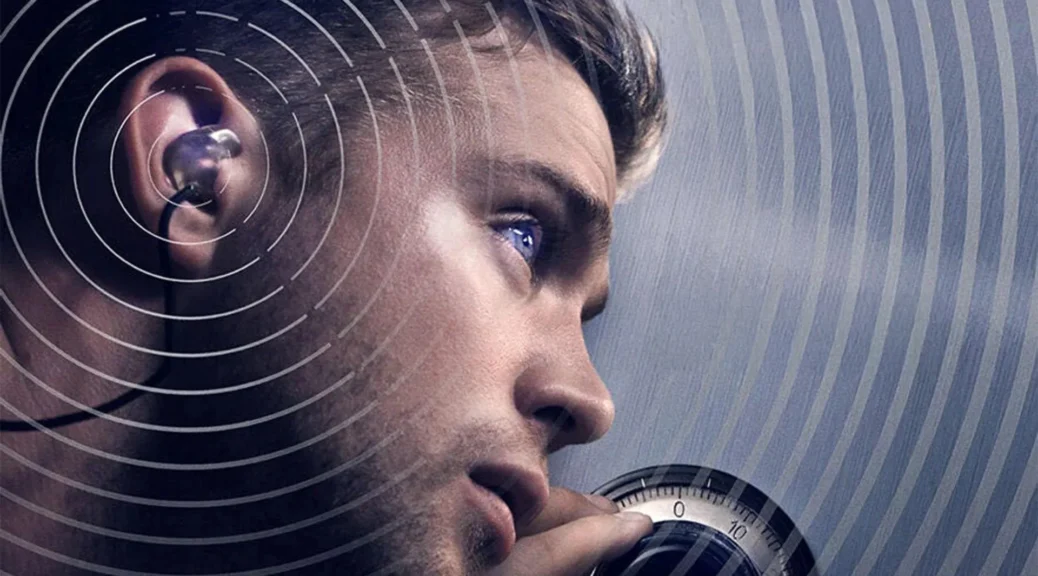
The thriller part comes when mild-mannered piano tuner Niki White (Leo Woodall from Nuremberg and The White Lotus) gets lured into a secret life of crime. Niki was a child prodigy on piano, but a diagnosis of hyperacusis (allergic to loud noises) derailed his performing career. Working with father figure Harry Horowitz (Dustin Hoffman) as a piano tuner blessed with perfect pitch, Niki wears noise canceling headphones all day and laments what might have been.

A chance encounter with a shady security team at a high-end mansion leads Niki to show how his hyper-sensitive hearing can be used to open combination locks. So the menacing Uri (Lior Raz) offers Niki the chance to make some big money, just when Harry’s medical bills have started piling up.

Romance blooms when music student Ruthie (Havana Rose Liu) needs her piano tuned (pause for laughter, but she really does). Ruthie is vying for a choice position as an assistant to maestro Marius Maissner (Jean Reno) and doesn’t really have time for a boyfriend…but she and Niki are such an irresistible match!

Woodall’s turn is understated and sympathetic, Liu (Bottoms, Lurker) has a natural presence that gives Ruthie some complex layers and Hoffman is clearly having a ball with some blatant (scene) stealing of his own. All three of their characters seem real from the opening minutes, allowing the film to pull you in with ease.

Roher (Navalny) launches Niki’s two lifelines on a consistently engaging collision course buoyed by the terrific performances, sharp editing (film and sound), effective tension, shocking twists and an unlikely couple we can’t help rooting for. And along the way, Roher and co-writer Robert Ramsey find time to toss in well-placed nods to the rot of “fuck you money,” America’s obscene health care system and the often under-appreciated nature of art.

Yes, Tuner packs a lot into its 109 minutes, so much so that it’s easy to stop wondering about security cams or why Niki paying bills with stacks of cash doesn’t arise any suspicions. You just shrug it off, and that speaks loudly about how well the rest of the film is constructed.

In fact, the slightly contrived, crowd-serviced turns that come in Act Three would elicit a few eyes rolls in lesser films. But by then, Tuner has carved out its own safe space, as a pitch-perfect example of how to make an audience want exactly what you’re going to deliver.

Girls Are Better Off Dead

Mayday

by Cat McAlpine

Life’s hard for Ana, who is sleeping in her car and doing her best serving under her abusive boss. Although the time and place aren’t specified and don’t matter, the dark and dated dance hall she caters in suggests that Ana’s gloomy life is somewhere in Eastern Europe. But she won’t stay there for long.

An act of violence shakes Ana (Grace Van Patten) from her stupor and in a dreamy mashup of Alice in Wonderland, Sucker Punch, and a hint of Sylvia Plath, Ana escapes her life by crawling through a glowing oven. On the other side, she discovers a ragtag group of girls – brutal and intoxicating Marsha (Mia Goth), hearty Gert (Soko), and sweet Bea (Havana Rose Liu). The girls play at war, picking off men from any side of an unknown eternal conflict to torture and kill. Instead of a magic tree house, they live inside the hull of an old U-Boat. Like coastal sirens, they hop on the airwaves and cry “Mayday,” leading men into storms and uncertain territory.

Nervous at the thought of killing, Ana warns, “I’ve never been in a war.”

“You’ve been in a war your whole life, you just don’t know it,” replies Marsha.

Writer/Director Karen Cinorre creates a beautiful and increasingly dark dreamscape for Ana to explore her trauma, but the dialogue is heavy-handed while the plot stays meandering and loose. The result is a contemplative romp through female rage, painted like a grim fairytale that isn’t quite sure where it’s going.

Aesthetically, the film is fantastic, and it is anchored by strong performances. Van Patten is enjoyable to watch as Ana comes into her own. Goth is terrifying and power-hungry, a believable cult leader. But Cinorre’s fever dream burns on too long and gets too caught up in its own rules of make-believe, casting off metaphor and leaving it for dead. War is a childlike fantasy playscape for the girls who feel powerless otherwise. But are they all dead? Is this a shared hallucination? Some of the players are characters from Ana’s own life while others are strangers.

One scene implies that Ana has gunned down a whole camp of men, but it shows her doing a choreographed dance with them instead. Is this an illusion inside of an illusion? Mayday doesn’t stand up to questioning, which suits the fantastical film just fine most of the time.

Ana must discover what measure of hope and rage suits her. Marsha is all rage. Bea all hope. And Gert doesn’t want to talk about it. As soon as Ana takes to killing men, she starts seeing all the ones who were kind to her before. And though their fairytale island is littered with ill-suited husbands and would-be rapists, Ana still struggles to condemn the whole kingdom of men.

Ultimately, Mayday is a fine telling of how to find our rage and how to tend to our sadness without letting go of the good the world still has to offer.
