Tag Archives: Sophie Okonedo

We’ll All Float On Anyway

Mouse

by Hope Madden

Kelly O’Sullivan is batting a thousand.

Her 2019 feature debut as a screenwriter, Saint Frances, was a raw, sloppy, honest treasure. By 2024’s critical darling Ghostlight, she was co-directing her screenplays with Saint Francis director Alex Thompson. The duo pair up behind the camera once again to bring O’Sullivan’s latest script, the bumpy and mournful coming-of-age drama Mouse, to the screen.

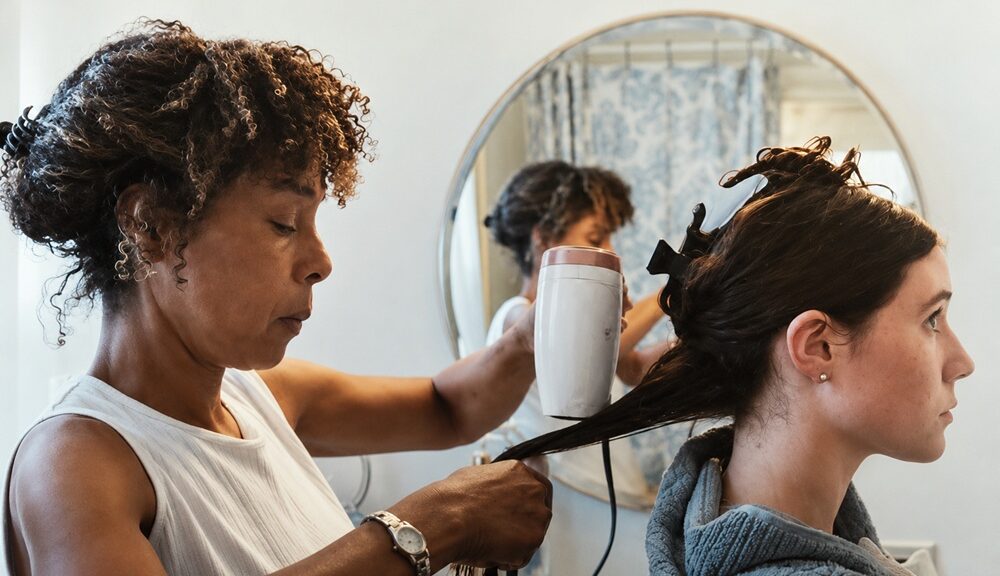
Mouse follows the grief cycle of two people: a mother (Sophie Okonedo) who lost her daughter, and a cripplingly introverted teen Minnie (Katherine Mallen Kupferer), the daughter’s best friend.

The film masquerades as a coming-of-age story. It follows its protagonist’s bumpy path out of the innocence of childhood toward adulthood, learning painful but vital lessons along with her. But there’s never anything so linear or obvious about O’Sullivan’s work.

Her writing is so beautifully messy, resembling life far more honestly than any streamlined feature could. The film sits with the rage and wonder, joy and guilt, hope and shame that complicate young life—often in the same scene, sometimes in the same moment.

O’Sullivan and Thompson’s quietly powerful ensembles is more than up to the task. Kupferer delivers not a single false note as a girl who didn’t realize how lost she was in her best friend’s shadow until the shadow disappeared. Minnie’s awkwardness never feels put on, giving her heartbreak and outbursts painful authenticity.

Okonedo’s never turned in a weak performance, and her work here is especially tender and prickly, as it should be. She, in particular, seems to feel the bruises of O’Sullivan’s writing, addressing a side of grief—the abandoned, unwelcomed, awkward-to-be-around side—we rarely see realistically portrayed.

A gorgeous supporting turn from Tara Mallen emphasizes the film’s real world feel and its terribly human humor. Iman Vellani likewise bursts with wit and humanity.

As is always the case with O’Sullivan and Thompson’s films, Mouse delivers an unpredictable, lived-in mess of a world brimming with pain, laughter, and above all, resilience. It may be their best work yet.

Gravitational Pull

Janet Planet

by Hope Madden

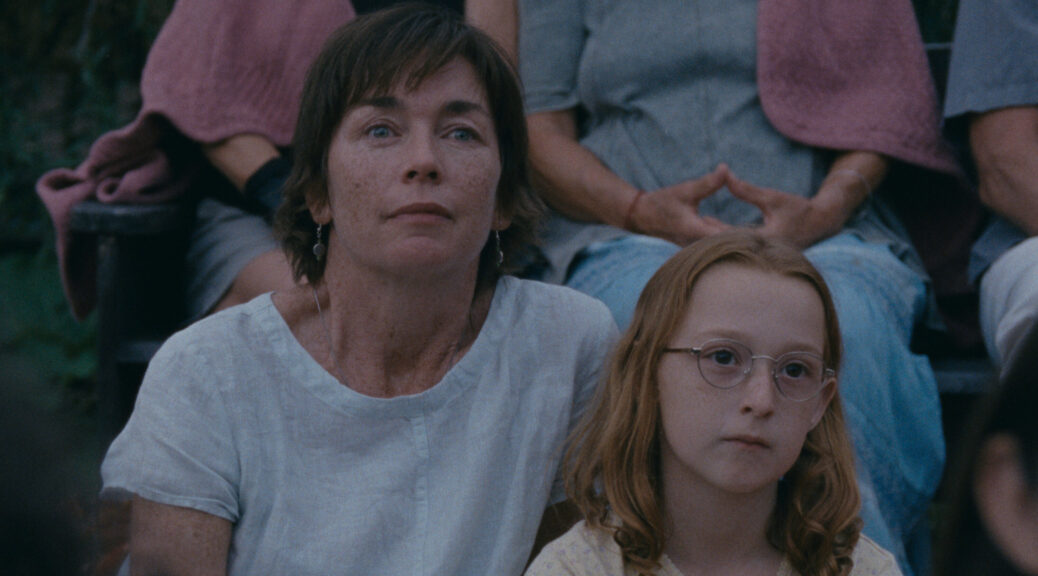
It’s a quietly eventful summer for 11-year-old Lacy (Zoe Ziegler, astonishing). Although writer/director Annie Baker’s languid slice of life may appear unremarkable, what she captures is a bittersweet awakening rarely caught so astutely on film.

What opens feeling touched by absurdity settles into a mood more influenced by the unique world view of an unusual child. Baker’s fascinating framing choices emphasize Lacy’s perspective—what she sees keenly and what does not command her attention.

Inside her idyllic home in rural Western Massachusetts with her mother, Janet (Julianne Nicholson, equally astonishing), Lacy is comfortable. It’s a dreamy place where she is observant, imaginative, accepted and protected. But something is knocking.

A Pulitzer-winning playwright making her feature debut behind the camera, Baker relies on silences and gestures to mark the dramatic architecture of her story and the arc of her characters. The film’s unhurried nature might make some impatient, but both Nicholson and Zeigler compel your interest.

Nicholson—as reliable an actor as you will ever find—conveys both affectionate acceptance and frustrated longing as the single mother of the precocious Lacy. But it’s newcomer Ziegler who truly impresses, carving out a unique, memorable character you hope time and society won’t change and conformity won’t touch.

Janet Planet is loosely structured around three characters who briefly occupy space with the duo—gruff boyfriend Wayne (Will Patton), friend Regina (Sophie Okonedo), and potential suitor Avi (Elias Koteas). Each is wonderful—Okonedo, in particular—contributing something lovely to this richly textured tale.

Though well established in the theater, Baker’s first foray into filmmaking feels effortlessly cinematic. She marks a specific moment in the relationship between a parent and child, a transition that often accompanies the time just this side of adolescence, still precariously clinging to childhood. Bittersweet, beautifully observed and honest, Janet Planet also marks an impressive transition for Baker from stage to screen.

Murder Was Again the Case

Death on the Nile

by George Wolf

“He accuses everyone of murder!”

“It is a problem, I admit.”

This playful admission by legendary detective Hercule Poirot (Kenneth Branagh) is one of the ways Death on the Nile has some winking fun with the often used, often parodied Agatha Christie formula.

And since Christie’s source novel is one of the works that perfected that formula, it’s smart to acknowledge some inherent campiness while you’re trying to honor the genius of the original construction.

After his successful revival of Murder on the Orient Express in 2017, Branagh is back to again star, direct, and team with screenwriter Michael Green for another star-studded, claustrophobic whodunit.

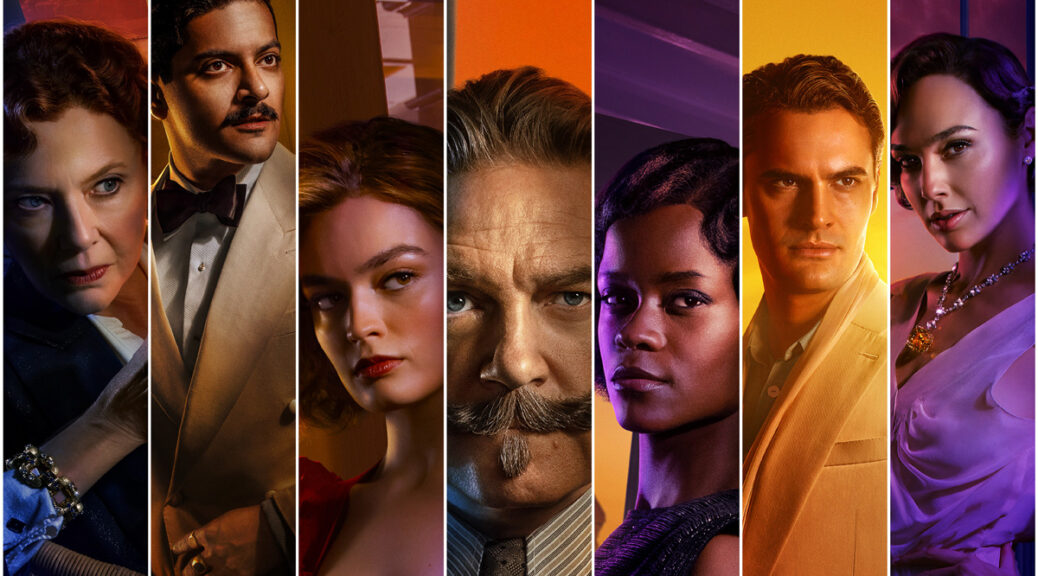
This time we’re aboard a lavish cruise down the Nile in the late 1930s. Wealthy heiress Linnet Ridgeway (Gal Gadot) has just married the dashing Simon Doyle (Armie Hammer), and they’ve invited a group of friends and family (including Annette Bening, Sophie Okonedo, Russell Brand, Jennifer Saunders, Letitia Wright and no-that’s-not-Margot- Robbie-it’s Emma Mackey) to help them celebrate.

Ah, but love and money bring “conflicting lies and jealousies,” and soon Linnet proves wise in putting the world’s greatest detective on the guest list. Murder is again the case!

And when Hercule Poirot is on it – which takes a while – Branagh and Green craft a capable reminder of what makes this formula so sturdy. From the discovery of clues to the requisite red-herring accusations, it’s just fun to feel part of Poirot’s deductive process.

But while Branagh and cinematographer Haris Zambarloukos expertly utilize the confines of the ship to their advantage, the surrounding locales smack of outdated CGI and land as a disappointing stand-in for the eye-popping wonder of Orient Express.

Branagh and Green also try valiantly to weave a layer of love through the mystery. Opening with a prologue that introduces a decades-old pining (along with Poirot’s keen eye for detail and a dubious inspiration for that mustache), the film’s ambitions for this added narrative weight are worthy, but ultimately add more running time than substance.

The epilogue that checks in with Poirot six months after the cruise lets us know Branagh may have more Christie mysteries on his itinerary, and that’s not a bad thing. Death on the Nile proves that a trusty return to glamour and intrigue can still overcome some excess baggage.

Sweeter Than Hunny

Christopher Robin

by George Wolf

Pooh! Who doesn’t love him?

Winnie T. Pooh and the gang from the Hundred Acre Wood have endured for decades, and now the second Pooh film is less than twelve months brings all the furry friends to live-action life.

Last year’s Goodbye, Christopher Robin was a bittersweet and uneven origin story, focusing on the inspirations for A.A. Milne’s Pooh tales.

Christopher Robin drops both the goodbye and the bitter in becoming a grown-up fantasyland with an easily digestible, greeting card-ready sentimentality.

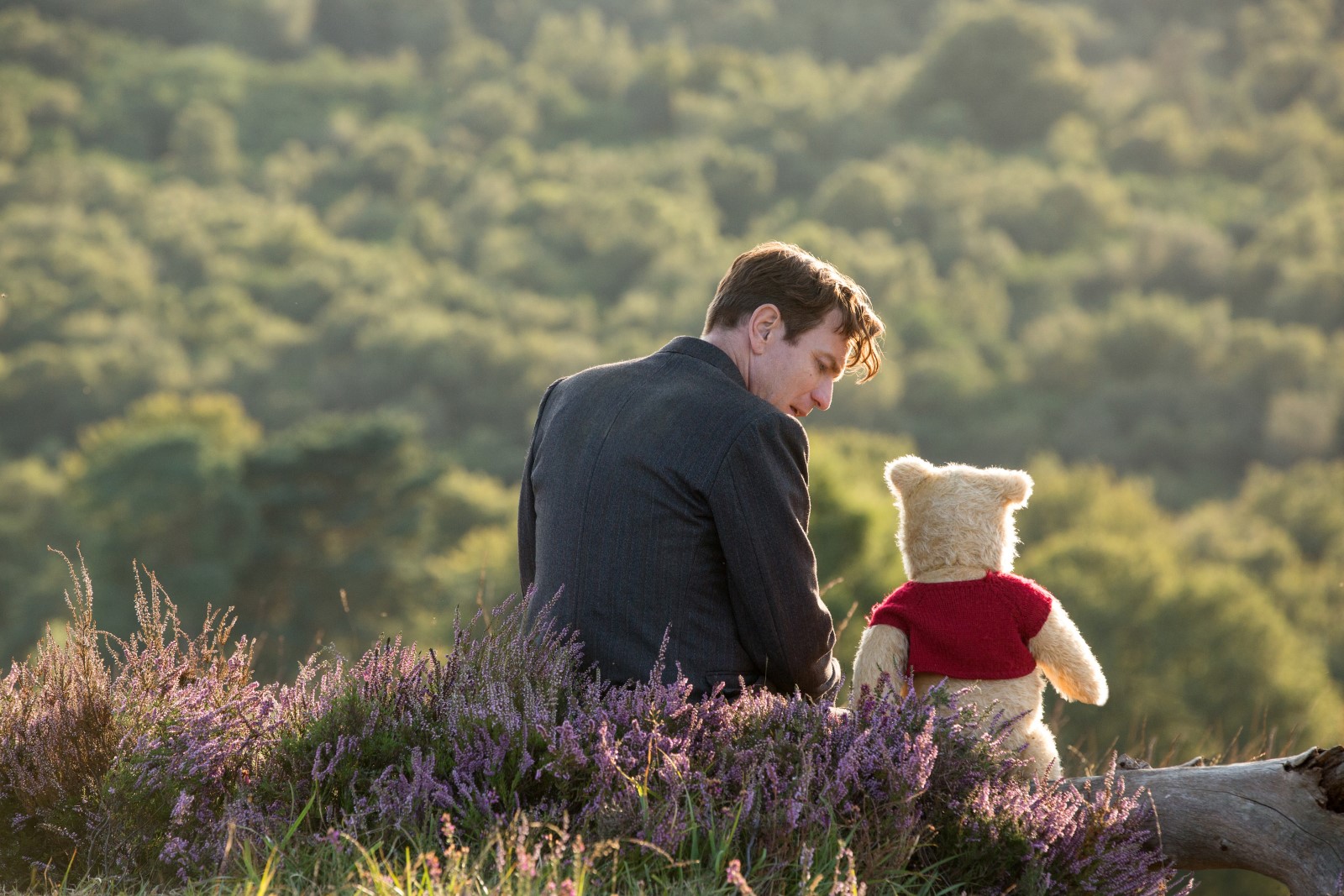
Mr. Robin (Ewan McGregor, charming as always) has put the Hundred Acre Wood long behind him, with a wife (Hayley Atwell), a young daughter (Bronte Carmichael – great name!) and a working-class job as an efficiency expert at a London luggage company.

He’s lost sight of the joy in life, and when a crisis at work means Christopher will miss another weekend family getaway, fate intervenes with a much-needed Pooh crew reunion.

The CGI effects that bring the animals to life are wonderful, the voice work  (including Brad Garrett, Toby Jones, Sophie Okonedo, Dr. Who‘s Peter Capaldi and voice acting veteran Jim Cummings) is spot on, the humor warm and the message fuzzy.

What’s missing is depth. There’s no real attempt to find any, and that’s a bit surprising with the filmmaking talent involved.

The director is Marc Forster, and the writing team includes Tom McCarthy and Alex Ross Perry. Between them, those three have some serious depth on their resumes, including Spotlight, Up, Listen Up Phillip, Queen of Earth, Monster’s Ball, Stranger Than Fiction, The Kite Runner and more.

The result is similar to David Lowery’s live-action take on Pete’s Dragon two years ago, where a filmmaker skilled at nuance within serious themes took on a children’s classic and struggled with when to stop simplifying.

Christopher Robin is sweeter than the “hunny” jars Pooh dives into, but nearly as empty as he leaves them. In trying to showcase the need for simple wonders, the film settles awkwardly between a child’s fable and wistful remembrances from grandparents.

There’s plenty to like, but little to love.

https://www.youtube.com/watch?v=0URpDxIjZrQ