Thrilled to be able to share this informative panel from the 2022 Nightmares Film Festival!
Movie-related whatnot
Thrilled to be able to share this informative panel from the 2022 Nightmares Film Festival!
by Hope Madden
You will not see this one coming.
A fascinating amalgamation of absurdism, visual storytelling, mystery and body horror, Matt Smith’s short The Altruist alarms and entertains in equal measure. Menacing images — metal hooks hanging from a ceiling, filthy cellar walls, a woman in a befouled metal framed bed — to set a mood he will puncture in the most remarkable, unexpected and weirdly humorous ways.
Sound design, too, keeps telling you that you know what is about to happen. And yet, with every passing scene, you are bound to wonder What the hell is going on?
There is a layer of wild absurdity just beneath the expertly crafted horror environment, but Smith has more in store than cheeky sleight of hand. The story of Daniel (Smith) and his lady love (Elizabeth Jackson) mines a revulsion that, though extreme in this case, hits a nerve. And even that doesn’t go where you expect it to go.
Both actors deliver peculiarly lived-in and rounded characters. Jackson, who essentially repeats one line in varying degrees of neediness, defies limitations. Smith, who benefits from more space and dialog to work with, creates a tight mix of anxiety, guilt and longing.
By the time the film turns playfully sexual, well, just try not to be disturbed.
Set design, shot choices and Cronenberg-level viscera demand your constant attention. But more than anything, the film is a masterpiece of imagination. Icky, glorious imagination.

The Altruist begins screening on Bloody Bites from Bloody Disgusting and Screambox on September 19.
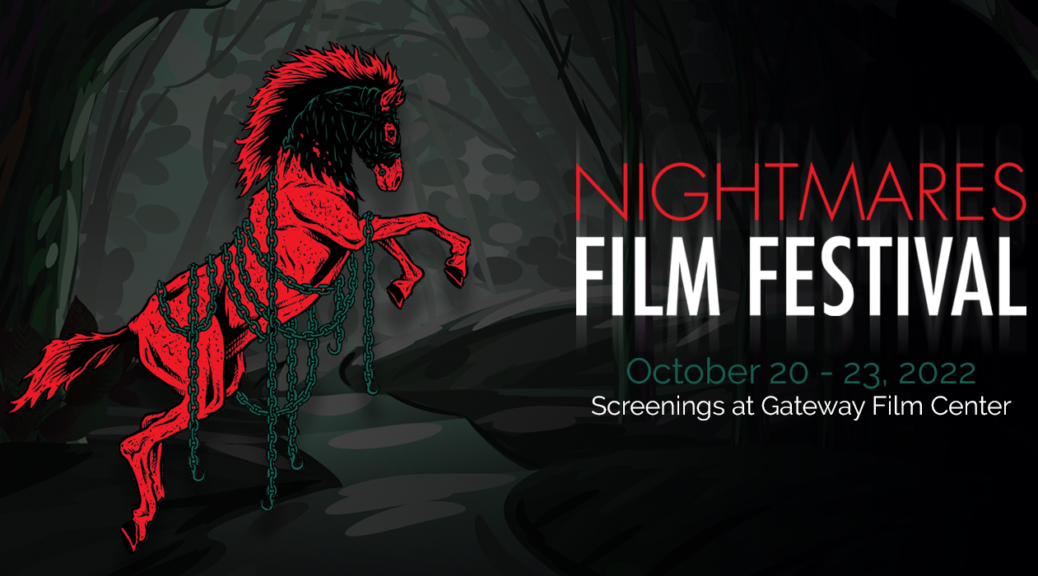
Nightmares Film Festival (Oct. 20 to 23) released its limited batch of VIP passes today, along with a teaser of what’s to come at the seventh annual fest – led by a special program called “Returning Terrors” that will premiere the next stories in several audience-favorite genre worlds, each with directors in attendance.
Though fest selections aren’t made until the submissions window closes on Sept. 6, “each year we like to reveal some of the special moments we’re known for early, so creators, fans and studios can get a sense of the spirit of this year’s celebration of genre,” said NFF co-founder and programmer Jason Tostevin.
This year’s special programming is headlined by a murderer’s row of indie genre feature follow-ups that continue the stories in their beloved nightmare worlds. The program, called “Returning Terrors,” brings together three hotly anticipated sequels to films that took the genre world by storm when they debuted: 2011’s The FP, 2013’s WNUF Halloween Special and 2016’s The Barn, with each filmmaker bringing the next tale in the series to NFF 2022:
In addition, the unique experiences teased by the fest’s announcement today included:
Planning a pilgrimage to the “Cannes of horror” (- iHorror)? It’s a good idea to jump on passes now, says NFF co-founder and Gateway Film Center president Chris Hamel.
“We have a limited number of 150 VIP passes, which offer a seat in every round of films, access to the VIP bar and lounge and in-and-out privileges throughout the fest,” said Hamel. “Because the program is always so in demand, and the in-person experience is so welcoming and unforgettable, our VIP passes always sell out.”
by Hope Madden
Joe Badon seems like an odd duck.
Or so his films would suggest. The director/co-writer’s latest absurdity, The Blood of the Dinosaurs —which appears to be related to an upcoming short The Wheel of Heaven—delivers oddball charm and horror in equal measure.
What’s it about? That’s an excellent question, and not a simple one to answer.
Kids’ TV host Uncle Bobbo (an eerily unblinking Vincent Stalba) wants to teach us where oil comes from. With assistance from his vampire puppet co-host Grampa Universe (voiced by John Davis) and his young helper Purity (Stella Creel), he seeks to enlighten and entertain. And misinform.
What else does Badon hit on? Birth. Death. Choice. 3D glasses. Kitch. Homage. Dinosaurs.
Badon, writing with regular collaborator Jason Kruppa, riffs on old school kids programming almost along the lines of Turbo Kid, Psycho Goreman, maybe even Strawberry Mansion and last year’s Linoleum. The Blood of the Dinosaurs, running a brisk 30 minutes, is far more confined and targeted than these. It feels a bit like an actual episode of something, but something terribly wrongheaded. Sort of a Pee-wee’s Playhouse for sociopaths.
If that does not seem like a ringing endorsement, you’re not reading it correctly.
The film throws a lot at you and not all of it hits, but Stalba’s central performance jibes perfectly with the weird concept to create a show that, quite honestly, I’m sorry I can’t watch every Saturday morning.

The halfway mark of 2022 is upon us. You know what that means! Well, maybe you don’t — it means a list! It’s at this point in the year that we look back and celebrate the best films we’ve seen so far. A Top 10, of sorts, except it’s really a Top Baker’s Dozen and it’s in alphabetical order.
On Apple TV
Dakota Johnson is the unquestioned star of indie darling coming-of-age drama Cha Cha Real Smooth, but it’s writer/director/co-star Cooper Raiff who’s shining bright enough to blind you.
Solid support from Leslie Mann and Brad Garrett offers Raiff opportunities to subvert tropes with surprising compassion. There are also more than enough laughs to balance the drama.
Johnson’s greatest strength as a performer is the almost preternatural chemistry she shares with everyone else on screen. That connection with Raiff aches with human tenderness, as does the entire film.
Cha Cha Real Smooth, which won Sundance’s dramatic competition this year, overflows with charm and warmth. More than that, it points to a remarkable cinematic voice that’s just getting started.
On Prime Video
In a dreary world where “surgery is the new sex,” two performance artists (Viggo Mortensen, Léa Seydoux) turn one’s mutant organs into art.
If that doesn’t sound like a David Cronenberg movie, nothing does.
The film references, directly or indirectly, The Brood, Dead Ringers, The Fly, Naked Lunch, Crash, and most frequently and obviously, Videodrome. Like his main character, Cronenberg has long been an “artist of the inner landscape.” And after several decades of excising that tendency from his work, Cronenberg has come full circle to accept what was inside him all along.
On VOD
It’s not often you watch a film about a fire starting, drug dealing, lying man on the run from police and his romance with a woman with special needs and think, this is delightful.
But it is. Dinner in America is a delight.
Writer/director Adam Rehmeier delivers an unexpected comedy, sometimes dark, sometimes broad, but never aimless. Simon (Kyle Gallner, remarkable) is a punk rocker hiding from the cops. Patty (Emily Skeggs) is a 20-year-old punk rock fan who lives at home and isn’t allowed to run appliances when she’s alone.
Rarely does a film feel as genuinely subversive and darling as Dinner in America, the punk rock rom-com you never knew you needed.
On Prime Video
Take two longtime friends on the verge of going their separate ways, and throw in one night of epic partying before they graduate. There will be hijinks, conflict, feelings expressed, and resolution.
We know this formula, right?
Not so fast. Expanding their Emergency short from 2018, director Carey Williams and writer K.D. Dávila run those familiar tropes through a tense, in-the-moment lens that upends convention while still delivering a consistent layer of laughter.
So we get the two friends ready to explore the future, searching for their place in the world. But this wild night of partying holds more sobering lessons than we’re used to seeing.
For these young men, it’s about how quickly their perception of the world can change forever, and the unrelenting weight of navigating how the world sees them.
In theaters and streaming
Directors Dan Kwan and Daniel Scheinert are back with their brand of sweet-natured lunacy for Everything Everywhere All at Once. The result is an endlessly engaging, funny, tender, surprising, touching maelstrom of activity and emotion.
This is a hard movie not to love.
At the heart of the insanity lurks Michelle Yeoh and a spot-on depiction of a midlife crisis. Yeoh’s Evelyn arcs as no character has arced before.
The real stars are the Daniels, though, who borrow and recast and repurpose without even once delivering something derivative.
On Hulu
If we’re boiling down film narratives to heroes and quests, it won’t take long to define Good Luck to You, Leo Grande.
Nancy (Emma Thompson, glorious as always) is our hero, and sex is her quest. So she hires handsome young Leo Grande (Daryl McCormack) for a tryst.
Nancy’s journey is, of course, an intimate one, and director Sophie Hyde doubles down on the intimacy, rarely leaving the privacy of the hotel room. Regardless, the film is never claustrophobic and always cinematic, framing even the most sexual moments with a refreshing honesty that the characters (and these two impeccable performances) deserve.
And you know what? We deserve it, too. Good Luck to You, Leo Grande is a simply wonderful look at embracing who you are and what you want.
On Shudder
Phil Tippett’s demons take center stage in his stop motion head trip 30 years in the making, Mad God. It’s like a Bosch painting and a Tool video accusing each other of being too lighthearted.
Mad God delivers a nightmare vision like little else, overwhelming in its detail and scope. Tippett plumbs cycles of mindless cruelty.
Mad World revels in Tippett’s vulgar, potent fantasy without belaboring a clear plotline. The world itself resembles hell itself. Tippett peoples this landscape with figures and images that also feel reminiscent: a doll’s befouled face, a fiendish surgeon, a cloaked figure.
Traveling theatrically
If you are in the mood for something decidedly different, let Apichatpong Weerasethakul’s meditative wonder Memoria beguile you. Or bewilder you. Or both.
The film becomes a mystery of sorts, but one that dredges up more questions than answers. On the filmmaker’s mind seems to be concepts of collective memory and isolation, sensory experience and existence.
Jessica’s (Tilda Swinton) travels through Colombia in search of answers to a confounding sound following her becomes an entrancing odyssey. Akritchalerm Kalayanamitr’s sound design heightens the experience, almost becoming a second character in the way that the sound supports Swinton’s performance.
And what a performance. Quiet and precise as if always listening and careful not to disturb, Swinton once again disappears wholly into a role.
On Prime Video
Jessie Buckley (flawless, as always) plays Harper, a woman in need of some time alone. She rents a gorgeous English manor from proper country gentleman Geoffrey (Rory Kinnear) and plans to recuperate from, well, a lot.
Filmmaker Alex Garland unveils Harper’s backstory little by little, each time slightly altering our perception of the film. The more about Harper we learn, the more village folk we meet: vicar, surly teen, pub owner, police officer, and a naked man in the woods. Each is played by Kinnear—or by actors sporting Kinnear’s CGI face—although Harper never mentions this, or even seems to notice.
Is she seeing what we’re seeing?
Garland’s bold visuals—so precise in Ex Machina, so surreal in Annihilation—create a sumptuous environment just bordering on overripe. The verdant greens and audacious reds cast a spell perfectly suited to the biblical and primal symbolism littering the picture.
Rather than clarifying or summing up, the film’s ending offers more questions than answers. But if you can make peace with ambiguity, Men is a film you will not likely forget.
On Peacock
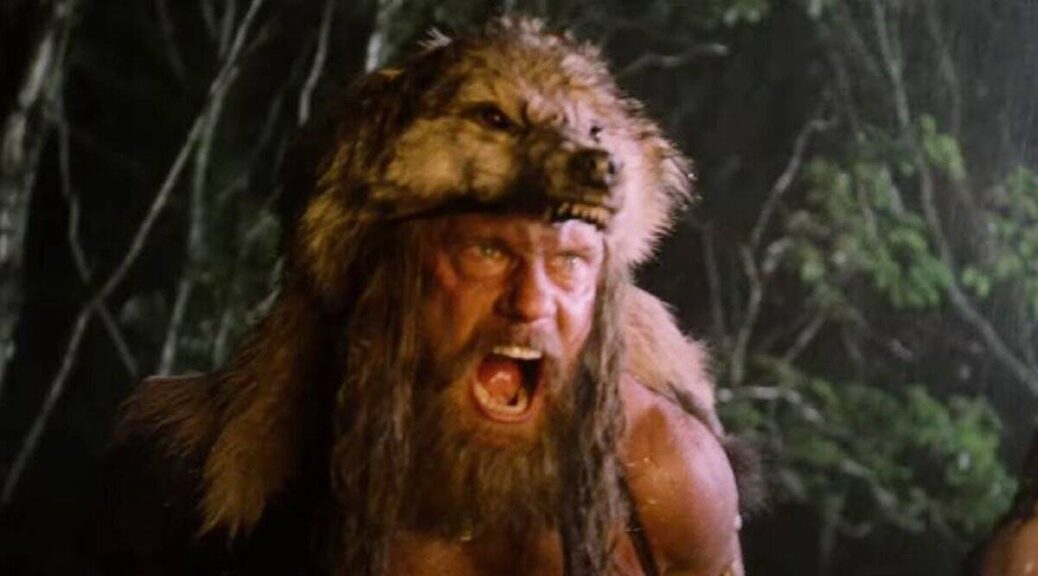
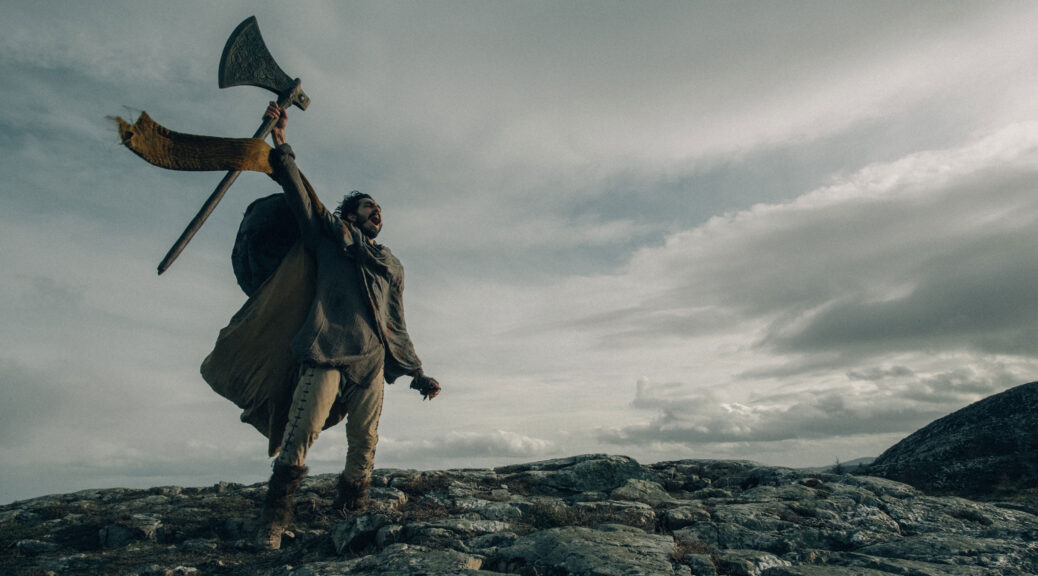
Robert Eggers released his third feature this year, a Viking adventure on an epic scale called The Northman.
What you have is a classic vengeance tale: prince witnesses royal betrayal and the murder of his father. He loses his mother and his crown and vows revenge.
Alexander Skarsgård is cut to play a Viking. His performance is primarily physical: blind rage looking for an outlet. He’s believably vicious, bloodthirsty, single-minded and, when necessary, vulnerable. The entire cast around him is equally convincing.
Classic is exactly how The Northman feels. The story is gritty and grand, the action brutal and the storytelling majestic. As is the case with Eggers, expect a fair amount of the supernatural and surreal to seep in here and there, but not enough to outweigh the meticulously crafted period realism.
At Gateway Film Center
Directors Noah Dixon and Ori Segev, working from Dixon’s script, drop you into the indie music scene you may never have realized existed in Columbus, Ohio. Lennon (Sylvie Mix) wants to change that with her podcast. She may not have a lot of listeners, but she promises those who do listen a deep dive into the scene, with interviews and performances from the best bands you’ve never heard of.
Mix’s open stare and stealthy movement — a technique she used to great effect in her haunted Christmas flick Double Walker — here feels slyly deceptive. Lennon’s an introvert, a fan, an artist herself. Or is she?
Like a cagey, pink-haired Jena Malone, Kitten commands the screen playing a version of herself. The singer from Columbus-based indie band Damn the Witch Siren, Kitten performs along with bandmate Z Wolf, whose presence adds a fascinating air of whimsy, danger and apathy.
On Disney+
Turning Red – Pixar’s twenty-fifth – keeps the winning streak alive with a frisky, meaningful and culturally rich update of a well worn message.
Director Domee Shi (who also co-writes with Julia Cho) has much to offer in her feature debut. Here, the often generic moral of “be true to yourself” plays out with stakes that will feel authentic to both kids and parents. Pixar has a long history of finding true poignancy amid big laughs, but Turning Red feels like a turning point.
Not only is it the first Pixar film with a female director, women are also in leadership roles throughout most areas of the production. The mission was clearly to begin speaking to a slightly older target, with a tender honesty that adolescents – girls especially – could appreciate.
Respect the past, but embrace the possibilities of the future. That future is going to include parts of your true self that are messy, and that’s okay. In fact, accepting those awkward, messy parts is the first step to being okay.
On VOD
It’s not just that it’s the role he was born to play. It’s also that it feels like precisely the right moment for him to be playing it, as if the cosmos themselves are aligning to deliver us some rockin’ good news.
How good? Well, for starters, The Unbearable Weight of Massive Talent gives him about a minute and a half just to name check himself as “Nic f’innnnnnnnnnggggggggow!WoahCage!”
And while we’re loving all manner of Cage, here comes Pedro! More natural and endearing than he’s ever been, Pascal starts by channeling the fan in all of us, and then deftly becomes the film’s surprising heart. Yes, there are nods to Hollywood pretension, but they’re never self-serving, and the film is more than content to lean all the way in to a madcap adventure buddy comedy spoof.
On VOD
The Texas Chain Saw Massacre meets Boogie Nights?
Yes, please!
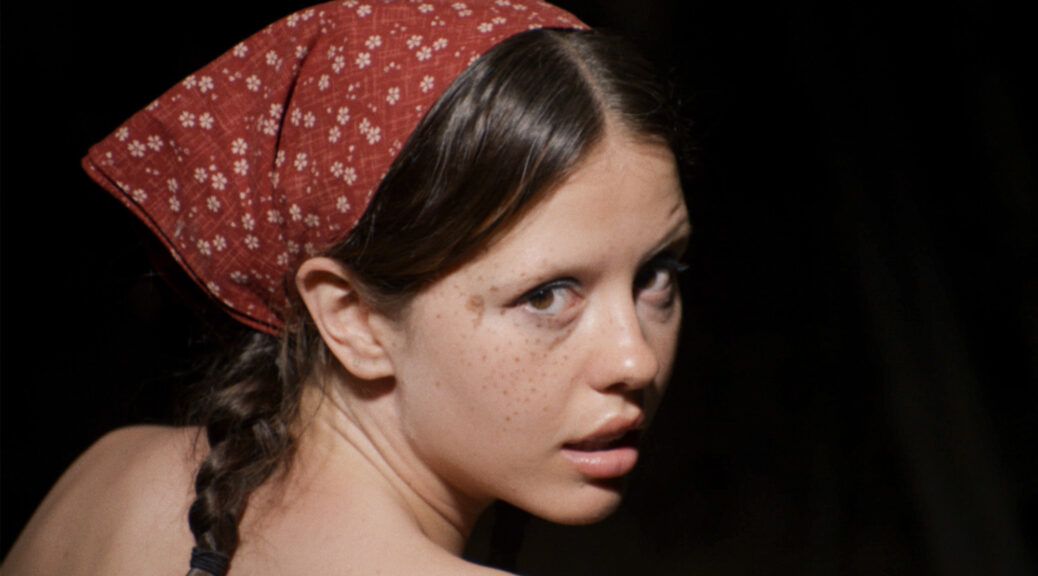
Filmmaker Ti West delivers an utterly unexpected and absolutely inspired horror show like nothing he’s made before. A group of good-natured pornographers descends upon an out-of-the-way ranch to shoot a movie, unbeknownst to the owners. Mia Goth leads a thoroughly entertaining cast, each actor making the most of the humor crackling throughout West’s script.
West explores some common themes, upending every one without ever betraying his clear love of this genre. Blending homages of plenty of Tobe Hooper films with a remarkable aesthetic instinct, West fills the screen with ghastly beauty.
No way the year’s half over! Just you shut up with that nonsense!
To cheer ourselves up we decided to walk back through the best this half of the year had to offer us in terms of horror movies. And you know what? It’s already been one hell of a year. Listed in alphabetical order, here are our 10 favorite horror flicks of the first half of 2022.
In theaters
Ethan Hawke plays the Grabber in Scott Derrikson’s take on the Joe Hill short story. With his top hat, black balloons and big black van, Grabber’s managed to lure and snatch a number of young boys from a small Colorado town. Finney (Mason Thames) is his latest victim, and for most of the film, Finney waits for his punishment down a locked cement basement.
Time period detail sets a spooky mood and Derrickson has fun with soundtrack choices. But the film’s success—its creepy, affecting success—is Hawke. The actor weaves in and out of different postures, tones of voice, movements. He’s about eight different kinds of creepy, every one of them aided immeasurably by its variation on that mask.
Derrickson hasn’t reinvented the genre. But, with solid source material and one inspired performance, he’s crafted a gem of a horror movie.
On Prime Video
In a dreary world where “surgery is the new sex,” two performance artists (Viggo Mortensen, Léa Seydoux) turn one’s mutant organs into art.
If that doesn’t sound like a David Cronenberg movie, nothing does.
The film references, directly or indirectly, The Brood, Dead Ringers, The Fly, Naked Lunch, Crash, and most frequently and obviously, Videodrome. Like his main character, Cronenberg has long been an “artist of the inner landscape.” And after several decades of excising that tendency from his work, Cronenberg has come full circle to accept what was inside him all along.
On Shudder
Phil Tippett’s demons take center stage in his stop motion head trip 30 years in the making, Mad God. It’s like a Bosch painting and a Tool video accusing each other of being too lighthearted.
Mad God delivers a nightmare vision like little else, overwhelming in its detail and scope. Tippett plumbs cycles of mindless cruelty.
Mad World revels in Tippett’s vulgar, potent fantasy without belaboring a clear plotline. The world itself resembles hell itself. Tippett peoples this landscape with figures and images that also feel reminiscent: a doll’s befouled face, a fiendish surgeon, a cloaked figure.
On Prime Video
Jessie Buckley (flawless, as always) plays Harper, a woman in need of some time alone. She rents a gorgeous English manor from proper country gentleman Geoffrey (Rory Kinnear) and plans to recuperate from, well, a lot.
Filmmaker Alex Garland unveils Harper’s backstory little by little, each time slightly altering our perception of the film. The more about Harper we learn, the more village folk we meet: vicar, surly teen, pub owner, police officer, and a naked man in the woods. Each is played by Kinnear—or by actors sporting Kinnear’s CGI face—although Harper never mentions this, or even seems to notice.
Is she seeing what we’re seeing?
Garland’s bold visuals—so precise in Ex Machina, so surreal in Annihilation—create a sumptuous environment just bordering on overripe. The verdant greens and audacious reds cast a spell perfectly suited to the biblical and primal symbolism littering the picture.
Rather than clarifying or summing up, the film’s ending offers more questions than answers. But if you can make peace with ambiguity, Men is a film you will not likely forget.
On VOD
In 1996, Martin Bryant murdered 35 people, injuring another 23 in Port Arthur, Tasmania. The horror led to immediate gun reform in the nation, but director Justin Kurtzel is more interested in what came before than after.
Playing the unnamed central figure (Nitram is Martin spelled backward), Caleb Landry Jones has never been better, and that’s saying something. He is one of the most versatile actors working today, effortlessly moving from comedy to drama, from terrifying to charming to awkward to ethereal. There is an aching tenderness central to every performance. (OK, maybe not Get Out, but that would have been weird.)
Nitram looks at how nature and nurture are to blame. Socialization plus parenting plus bad wiring is exacerbated by the isolation and loneliness they demand. Everyone is to blame. It’s a conundrum the film nails.
But it’s Landry Jones you’ll remember. He’s terrifying but endlessly sympathetic in a bleak film that’s a tough but rewarding watch.
On VOD
Matt Bettinelli-Olpin and Tyler Gillett (Ready or Not) return us to Woodsboro for the franchise’s fifth installment. This go-round comments blisteringly (and entertainingly) not just on horror, but on the post-internet realities of cinema in general.
They really have a good time with that.
The filmmakers, along with writers James Vanderbilt and Guy Busick, fill scenes with nostalgia too cheeky to be simple fan service. Their clear affection for the franchise (a surprisingly strong set of films, as horror series go) is evident and infectious.
You do not have to know the 1996 original or any of its sequels to enjoy Scream. It’s a standalone blast. But if you grew up on these movies, this film is like a bloody message of love for you.
In theaters and on VOD
If you’re a fan at all of genre films, chances are good Watcher will look plenty familiar. But in her feature debut, writer/director Chloe Okuno wields that familiarity with a cunning that leaves you feeling unnerved in urgent and important ways.
Maika Monroe is sensational as Julia, an actress who has left New York behind to follow husband Francis (Karl Glusman) and begin a new life in Bucharest.
Monroe emits an effectively fragile resolve. The absence of subtitles helps us relate to Julia immediately, and Monroe never squanders that sympathy, grounding the film at even the most questionably formulaic moments.
Mounting indignities create a subtle yet unmistakable nod to a culture that expects women to ignore their better judgment for the sake of being polite. Okuno envelopes Julia in male gazes that carry threats of varying degrees, all building to a bloody and damn satisfying crescendo.
On VOD
Every so often you come across a movie and think it must have been made specifically for you. In our case, that film is Kier-La Janisse’s 3-hour documentary Woodlands Dark and Days Bewitched: A History of Folk Horror.
Yes, that does seem like a very big time commitment to folk horror, but Janisse’s film repays your undertaking with not only an incredibly informative documentary but an engaging, creepy and beautifully made film.
Janisse presents an intriguing global history that unveils universal primal preoccupations from England to Argentina, the US to Lapland and beyond.
Dry as that may sound, between the snippets of the movies themselves and the fluid, often creepy presentation, Woodlands Dark and Days Bewitched becomes as transfixing a film as those it dissects. And it digs deep, into obscure titles new and old. Border! White Reindeer! Onibaba! Viy! Prevenge!
On VOD
The Texas Chain Saw Massacre meets Boogie Nights?
Yes, please!
Filmmaker Ti West delivers an utterly unexpected and absolutely inspired horror show like nothing he’s made before. A group of good-natured pornographers descends upon an out-of-the-way ranch to shoot a movie, unbeknownst to the owners. Mia Goth leads a thoroughly entertaining cast, each actor making the most of the humor crackling throughout West’s script.
West explores some common themes, upending every one without ever betraying his clear love of this genre. Blending homages of plenty of Tobe Hooper films with a remarkable aesthetic instinct, West fills the screen with ghastly beauty.
On VOD
To suppose that filmmaker Goran Stolevski is a fan of Terrence Malick seems fair. His tale of 19th century Macedonian witchery offers the same type of visual aesthetic, whispery voiceover and absence of dialog in much of Malick’s work, especially 2018’s A Hidden Life.
You Won’t Be Alone follows Neneva (Sara Klimoska), a teenager raised in isolation, hidden from the Wolf-eatress (Anamaria Marinca) who’s claimed her. Freed from hiding, the teen shapeshifter takes on different forms (Noomi Rapace, Felix Maritaud, Alice Englert) and learns of life.
Klimoska’s physical performance reflects the primal beginnings of Neneva’s explorations. Rapace brings an awkward adolescence feel to the character’s early interpretations of normal human behavior. Englert carries the character into adulthood with quiet curiosity, never losing that animalistic inquisitiveness carried throughout the earlier performances.
It was a short year. It didn’t feel short, but in Oscar terms, it was unusually brief. In 2020, the Academy extended the awards window to make up for the fact that so few films were distributed during the beginning of the pandemic. Fair enough, but that meant the window for 2021 films was only 9 months long.
Plus, because the industry still hasn’t fully recovered, fewer films were released than had been between the months of March and December in pre-pandemic years. However you count it, the Academy had far fewer films to choose from than normal.
Still, some great movies emerged, and they generated some great Oscar nominations. Here’s who we think will take home gold.
Nominees
Should Win
Hope: Licorice Pizza
George: West Side Story
Will Win
Hope: CODA
George: The Power of the Dog
Nominees
Should Win
Jane Campion
Will Win
Jane Campion
Nominees
Should Win
Jessica Chastain
Will Win
Jessica Chastain
Nominees
Should Win
Benedict Cumberbatch
Will Win
Will Smith
Nominees
Should Win
Kodi Smit-McFee
Will Win
Troy Kostur
Nominees
Should Win
Kirsten Dunst
Will Win
Ariana DeBose
Nominees
Should Win
Flee
Will Win
Encanto
Nominees
Should Win
Flee or Summer of Soul
Will Win
Summer of Soul
Nominees
Should Win
Drive My Car
Will Win
Drive My Car
Nominees
Should Win
The Power of the Dog
Will Win
The Power of the Dog
Nominees
Should Win
Licorice Pizza
Will Win
Licorice Pizza (although we wouldn’t count out Don’t Look Up)
Should Win
“Just Look Up” from Don’t Look Up (but it wasn’t even nominated, so seems pretty unlikely…)
Will Win
“Dos Oruguitas”
Catch the 94 Academy Awards March 27th on ABC.
by Hope Madden and George Wolf
Not a ton of surprises in this year’s Oscar nominations. Maybe we’re lucky there were so many good films to choose from, given the brief nominating window this year. Because of Covid, last year’s contenders had 14 months to find a release. To make up for that and get us back on track, the eligibility window for 2021 was just 10 months.
Still, the academy decided to go ahead and abandon their unpopular “there could be 10 best picture nominations, but probably not) to the more easily understandable “yep, 10.” And yet, still no blockbusters made the list.
But the really important question is this: what do we think?
Nominees:
Surprises and Snubs: The biggest surprise is Caitriona Balfe, who was the front runner (and reasonably so) to get recognized in this category for Belfast. We’d have swapped Balfe in and left Dench off. But for us, Ruth Negga’s turn in Passing is just as big an oversight and as much as we loved Buckley in The Lost Daughter, we’d have given her spot to Negga.
Nominees:
Surprises and Snubs: While this is a solid list, we’d leave out Simmons and Hinds in favor of Mike Faist in West Side Story, Ben Affleck in The Last Duel or Colman Domingo in Zola.
Nominees:
Surprises and Snubs: For us, this is the year Jonny Greenwood should have been nominated twice (maybe three times!). Great to see his deserving nod for The Power of the Dog, but we’d have bumped him in there for Spencer as well, perhaps in leu of Nicholas Britell’s work in Don’t Look Up.
Nominees:
Surprises and Snubs: We were surprised not to see Tony Kushner’s update of West Side Story get noticed, and we were sad that Rebecca Hall’s insightful reimagining of Ella Larson’s novel Passing was left off the list. Joel Coen’s streamlined The Tragedy of Macbeth also deserved a spot. We would have given them the spots filled by Dune and CODA and maybe The Lost Daughter.
Nominees:
Surprises and Snubs: We were surprised—delighted, really—to see The Worst Person in the World and Don’t Look Up recognized. We would have left King Richard off in favor of Michael Sarnoski’s Pig or Mike Mills’s C’mon C’mon, but that’s just us.
Nominees:
Surprises and Snubs: Oh, how we wanted Ariana Grande’s Just Look Up to make this list! Man that would have been fun to hear during the broadcast. We’d have given it Reba’s spot with Somehow You Do.
Nominees:
Surprises and Snubs: This had to have been the toughest category. There were so many unbelievable feats of cinematography this year. Belfast and Passing were both utterly glorious, but even we are not sure who we’d bump to fit them in.
Nominees:
Surprises and Snubs: Here is the other stacked category for 2022. The fact that three of these films —Worst Person in the World, Flee and Drive My Car—are all nominated in other categories makes predicting a winner here very tough. But the surprise has to be Bhutan’s Lunana: A Yak in the Classroom. Since we haven’t seen it, we wouldn’t suggest that it is not deserving. The surprise is that Parallel Mothers from Pedro Almodovar is missing.
Nominees:
Surprises and Snubs: Really surprised not the see The Rescue here, probably in place of Writing With Fire.
Nominees:
Surprises and Snubs: It would’ve been great to see Crytozoo, The Summit of the Gods or even Vivo sneak in, but this list will do.
Nominees:
Surprises and Snubs: No surprises here. We would have given Smith’s spot to Nicolas Cage for his crushing performance in Pig.
Nominees:
Surprises and Snubs: When Caitriona Balfe did not get a supporting actress nomination, we figured the Academy has deemed her role the lead. When she didn’t get a spot here—which we’d have given her over Kidman—we were saddened. But at least KStew made it. We were worried.
Nominees:
Surprises and Snubs: There are always reasons to complain, especially in this category. We have chosen not to this year. Well done.
Nominees:
Surprises and Snubs: They went the full 10, even in a year with fewer candidates, and still, not one moneymaker? No Spider-Man: No Way Home. No No Time to Die. More importantly, though, where is The Tragedy of Macbeth? That’s the one we’d have made room for, probably in place of Dune or King Richard.
See who takes home the hardware on Sunday, March 27 at the 94th Academy Awards on ABC and Hulu.
by Hope Madden and George Wolf
So many movies come out each year, it’s impossible to keep up. Too many get forgotten, either because they underperformed theatrically, they didn’t get a wide release, they were rolled out poorly to streamers, or they simply had no budget of any kind to draw attention to themselves. So, to give these 20 films a little extra attention, here —in alphabetical order—are our favorite underseen films of 2021.
If Eyes Wide Shut had been a brutal commentary on the film industry and Tom Cruise had been an unsympathetic, insecure, entitled white man…the point is, The Beta Test is a wild, insanely tense satire.
Co-writers/co-directors/co-stars Jim Cummings and PJ McCabe invite you into a world populated by people who miss the days before Harvey Weinstein’s ousting. The two play Jordan and PJ, respectively—Hollywood agents with no real purpose, no real value, a lot of spin, a lot of anxiety, and a chip on their collective shoulders about the stuff they can no longer get away with.
The damaged man seeking redemption — it may be the most cinematic concept, or certainly among the most frequently conjured by filmmakers. When Paul Schrader is on his game, no one tells this story better.
Oscar Isaac and his enviable hair play William Tell, gambler. Isaac is a profound talent and essentially flawless in this role. He is the essential Schrader protagonist, a man desperate for relief from an inner torment through repression, redemption or obliteration.
It’s 1985, Thatcher’s England: an era when controversial films hoping to make their way to screens big and small found themselves more butchered than their characters. Writer/director Prano Bailey-Bond and co-writer Anthony Fletcher evoke such a timestamp with this film, not just in the look and style, but with the social preoccupation.
Censor is a descent into madness film, but its deep love and understanding of the genre play a central role in this madness. Niamh Algar’s performance as the video nasty censor in question is prim and sympathetic, deliberate and brittle. It’s clear from the opening frame that Enid will break. But between Algar’s skill and Bailey-Bond’s cinematic vision, the journey toward that break is a wild ride.
Two of 2021’s most prominent film themes – impressive debuts and stellar ensembles – come together in rookie writer/director Stephen Karam’s The Humans.
Adapting his own stage play, Karam displays wonderful instincts for how his story of a family reunion could move from stage to screen with relevant new layers. Buoyed by a first-rate cast including Richard Jenkins, Steven Yeun, Amy Schumer, Beanie Feldstein and Jayne Houdyshell, The Humans slowly revels itself as a domestic horror show, with familiar tensions and deep-seeded fears becoming more frightful than anything going bump in the night.
Among the many remarkable elements buoying the horror fable Lamb is filmmaker Valdimar Jóhannsson’s ability to tell a complete and riveting tale without a single word of exposition. Rather than devoting dialog to explaining to us what it is we are seeing, Jóhannsson relies on impressive visual storytelling instincts.
His cast of three – well, four, I guess — sells the fairy tale. A childless couple working a sheep farm in Iceland find an unusual newborn lamb and take her in as their own child. As is always the way in old school fables, though, there is much magical happiness but a dire recompense soon to come. It is an absolutely gorgeous, entirely unusual and expertly crafted gem of a film. You should see it.
Yes, Language Lessons is a “Zoom call” movie. But don’t let that keep you from dialing in, or you’ll miss a completely charming two-hander from Natalie Morales and Mark Duplass that has plenty to say, with and without subtitles.
And though Language Lessons may have all the markings of a pandemic production, it’s not a “pandemic” film. These two souls are worlds apart due to circumstance rather than quarantine. But they crave to enrich their own lives through sharing them with someone else, and end up giving us a poignant reminder to make more friends and fewer excuses.
This is a brooding, brutal, violent and sexually violent film, one that utilizes a Rashomon-style narrative to frame an often debated moment in history around a centuries-old struggle that continues today.
Director Ridley Scott presents the tale with exceptional craftsmanship and spectacle, getting big assists from Dariusz Wolski’s gritty, expansive cinematography and Michael Fentum’s detailed sound design. Scott’s remarkable cast — Jodie Comer, Adam Driver, Matt Damon and Ben Affleck — digs in to these old ideas to find startling relevance.
The Last Duel aims for more than just a gripping history lesson. It’s ultimately able to use that history to remind us that the way society treats women generally – and women’s sexuality specifically – has changed little since the freaking Middle Ages.
An unthinkable tragedy has connected these four people (Jason Isaacs, Martha Plimpton, Ann Dowd, Reed Birney) for life, and veteran actor turned writer/director Fran Kranz explores their journey of healing with a gently assured filmmaking debut full of shattering emotion.
Yes, you will need some of those tissues, too. But Kranz’s touch is so perfect, and the characterizations so real, that you never feel preached to, even with a large crucifix dominating the room.
Mass is a spare chamber piece that makes sure nothing comes easy. You hang on every word, afraid to intrude on this intimate pain yet welcoming the invitation. With insightful writing, superb performances and unassuming direction, it’s a cathartic film that deconstructs an all too common tragedy with overdue honesty.
Making an unnervingly assured feature film debut, writer/director Jonathan Cuartas commingles The Transfiguration’s image of lonely, awkward adolescence with Relic’s horror of familial obligation to create a heartbreaking new vampire tale.
Many things are left unsaid (including the word “vampire’), and My Heart Can’t Beat Unless You Tell It To confines itself to the daily drudgery of three siblings. Dwight (Patrick Fugit) longs to break these family chains, but sister Jessie (Ingrid Sophie Schram) holds him tight with shame, love, and obligation to little brother, the afflicted Thomas (Owen Campbell).
What could easily have become its own figurative image of the masculine longing for freedom mines far deeper concerns. Cuartas weaves loneliness into that freedom, tainting the concept of independence with a terrifying, even dangerous isolation that leaves you with no one to talk to and no way to get away from yourself.
In his feature debut, writer/director Edson Oda presents an impressively assured vision of transfixing beauty and gentle poignancy. While the current run on “appreciate every day” films is hardly surprising in today’s climate, Oda brings an organic originality to the mantra of seeing the world through someone else’s eyes.
Winston Duke (Us, Black Panther) is phenomenal as a “cog in the wheel” who becomes caught between the clinical completion of his duties and the emotional weight of his responsibilities.
Give Oda credit for being unafraid of the moment. He’s taking some big swings at mighty heavy concepts here, with an originality of voice and attention to craft that is welcome any day.
Men will single-handedly gun down an entire biker gang rather than go to therapy. That’s the premise from prolific writer-director Anders Thomas Jensen, as he reunites with Mads Mikkelsen in this dark comic revenge fantasy.
But Jensen isn’t nearly as interested in the physical mayhem as the emotional wreckage his oddball characters are all coping with. Riders of Justice treats its characters with such forgiving empathy that it’s easy to forget that the group is also almost certainly responsible for the most murders in Denmark since the Vikings.
Maud (an astonishing Morfydd Clark) has some undefined blood and shame in her recent past. But she survived it, and she knows God saved her for a reason. She’s still working out what that reason is when she meets Amanda (Jennifer Ehle), a former choreographer now crumbling beneath lymphoma. Maud cannot save Amanda’s body, but because of just the right signs from Amanda, she is determined to save her soul.
As a horror film, Saint Maud is a slow burn. First-time writer/director Rose Glass and crew repay you for your patience, though, with a smart film that believes in its audience. Her film treads the earth between mental illness and religious fervor, but its sights are on the horror of the broken-hearted and lonesome.
Clearly, much of writer/director Emma Seligman’s sharp dialog comes from personal experience, and if it’s one you share this is a film that will feel like part of the family. But you didn’t have to be Greek to get caught up in that Big Fat Wedding, and you don’t have to be Jewish to see the joy in Shiva Baby.
Seligman flashes an insight that disarms you with sex and humor, keeping its hand at a subtle distance. But by the time we’re leaving the buffet, a breakout filmmaker and star (the irresistible Rachel Sennot) have delivered a fresh, funny and intimate take on the indignities of finding yourself.
It takes a full two minutes to get a really good feeling about Together Together. Writer/director Nikole Beckwith delivers witty, engaging dialogue from the jump, defining characters and setting the stakes in a beautifully organic manner.
There’s love and family and funny stuff here, and though none of it is quite the kind we’re used to seeing, all of it is wonderfully real. Together Together is a delivery that somehow feels comfortable and unique, both overdue and right on time.
As angry a movie as you’re likely to see, Wild Indian pushes you to hope compassion and tenderness come to the most unlikeable man onscreen.
Writer/director Lyle Mitchell Corbine Jr. refuses to lean on stereotypes that would make the central performance more comfortable viewing. Makwa (a stunning Michael Greyeyes) is neither victim nor noble wiseman. Not entirely a villain, he’s nonetheless ill-suited as antihero or, God forbid, hero. He’s a survivor bound up in his own guilt and shame, taking advantage of whatever he can and hating himself and everyone around him because of it.
It’s a desolate world Corbine Jr. creates, but no less remarkable for its bleakness. A character study unlike anything else on screen this year, Wild Indian gives longtime character actor Greyeyes the opportunity to command the screen and he more than rises to the occasion.
by Hope Madden and George Wolf
Looking back, what will we remember about the 2021 year in film? Musicals, black and white palettes, smoking, ensembles and impressive debuts are the trends we’ll think of first. But more specifically, we’ll remember these 25 favorites:
Paul Thomas Anderson’s latest is loose, forgiving, and along for the ride as 15-year-old entrepreneur Gary Valentine (Cooper Hoffman) woos life, Hollywood and, in particular, Alana Kane (Alana Haim), his much older paramour.
Danger edges but never fully punctures the sunshine of youth that brightens every scene of the movie. But that darkness is there, looming like the creepy guy staring at your office window, or the cops who arrest you mistakenly, or the volatile Hollywood producer who may or may not smash your window (or your head) in with a crowbar. (Thank you, Bradley Cooper, by the way, for that brief but unforgettable performance.)
It’s nostalgic. It’s uproarious, dangerous, just-this-side-of-innocent fun. It’s a near-masterpiece.
Even if you haven’t read the celebrated source novel by Thomas Savage, director Jane Campion’s adaptation unfolds with enough subtle poetry to convince you that it must be a wonderful read. Onscreen, the Oscar-winning Campion (The Piano) contrasts the vast majesty of the American West (kudos to cinematographer Ari Wegner) with delicate details that shift the nature of love, trust and strength within a family.
Kodi Smit-McFee, Jesse Plemmons, Kirstin Dunst and a particularly brilliant Benedict Cumberbatch bring her story to life. The Power of the Dog finds its own power in what it shows but never truly tells. It’s a film that is hauntingly lyrical and masterfully assembled, with a beauty that lingers like an echo in the Montana wilderness.
Coen brother Joel delivers a vision that’s both decidedly theatrical and profoundly cinematic with his solo directorial effort. Filmed in Bergman-esque black and white to glorious ends, Denzel Washington and Frances McDormand play the Lord and his Lady and this, friends, is a dream team. Two of the most celebrated and talented actors of modern cinema square off, and the veterans give an inconic relationship a depth that tinges the eventual madness with touching grief.
A uniformly brilliant ensemble (kudos in particular to Kathryn Hunter’s inspired turn as the witches) gives this dreamy take on the Bard its life.
Coen’s venture into Shakespeare, though it strips away the humor and quirk you may associate with Coen Brother filmmaking, stands as a strikingly Coen film. And that has never one time been a bad thing.
According to director Amir “Questlove” Thompson, the first time he saw some of the digitized footage from the 1969 Harlem Cultural Festival concerts, he nearly wept.
You might, too.
From the gospel of Mahalia Jackson to the blues of B.B. King, from the 5th Dimension’s smooth pop to Sly Stone’s psychedelic funk, the musical styles blend gloriously in the summer sun and the goosebump moments mount. But even more impressive than Thompson’s musical direction is the way he frames the entire festival through a deeply effective context of time, place, and population.
Right from the opening minutes, Steven Spielberg’s camera seamlessly ebbs and flows along with the street-roaming Sharks and Jets. From one musical set-piece to the next, Spielberg’s touch is smoothly precise, starting wide to capture the breadth of Justin Peck’s homage to Jerome Robbins’s iconic choreography, zooming in for intimacy, and then above the dancers and rumblers for gorgeous aerials set with pristine light and shadow.
It just looks freaking fantastic.
And in bringing his own vision to a classic story, Spielberg gently adds a perspective that makes Tony and Maria’s quest soar with a renewed, more universal vitality.
Just like most everything else in this West Side Story.
Christie Robb’s favorite film of 2021: Luca
Pixar/Disney’s Luca fosters self-acceptance and bravery in kids who were in the process of transitioning back to in-person school.
Like so many other headlines of numbing enormity that we regularly scroll past, stories of the worldwide refugee crisis rarely come with an intimacy that makes the stakes feel palpable. Flee brings an animated face to the discussion, using one man’s incredible story to re-frame the issue with soul-stirring humanity.
Using that man’s actual voice in the conversations with director Jonas Poher Rasmussen adds startling depth to the reenacted memories, and as our childlike comfort with animated scenes clashes with the uncomfortable scenes depicted, Flee‘s bracing resonance only intensifies.
What director Guillermo Del Toro brings to this remake of a 1947 noir classic, besides a breathtaking cast and an elegantly gruesome aesthetic, is his gift for humanizing the unseemly. As usual, Del Toro wears his feelings proudly on his sleeve, with unmistakable but organic foreshadowing that ups the ante on the stakes involved. Anchored by another sterling performance from Bradley Cooper as Stan, the journey rises to biblical proportions. An actor whose gifts are often deceptively subtle, Cooper makes sure Stan’s pride always arrives with a layer of charming sympathy, even as it blinds him to the pitfalls ahead.
For Del Toro fans, the most surprising aspect of Nightmare Alley might be the lack of hopeful wonder that has driven most of his films. As the title suggests, this is a trip to the dark corners of the soul, where hope is in damn short supply. As much as this looks like a Del Toro film, it feels like a flex just from taking his vision to the sordid part of town. But what a vision it turns out to be – one of the year’s best and one of his best.
Adapting a short story into a three-hour class on screenwriting, writer/director Ryûsuke Hamaguchi turns a seemingly simple premise – a visiting theater director begrudgingly accepts a chauffer from festival organizers – into a sprawling study of the human soul.
As secrets are revealed and burdens lifted, Drive My Car becomes a soaring testament to grief, forgiveness, moving on and the unending lure of a fine automobile.
Men will single-handedly gun down an entire biker gang rather than go to therapy. That’s the premise from prolific writer-director Anders Thomas Jensen, as he reunites with Mads Mikkelsen in this dark comic revenge fantasy.
But Jensen isn’t nearly as interested in the physical mayhem as the emotional wreckage his oddball characters are all coping with. Riders of Justice treats its characters with such forgiving empathy that it’s easy to forget that the group is also almost certainly responsible for the most murders in Denmark since the Vikings.
Matt Weiner’s favorite film of 2021: Riders of Justice
It’s the feel-good Christmas comedy that brings the whole family together with good cheer, redemption, philosophical detours on the meaning of life and a body count that puts Die Hard to shame.
As angry a movie as you’re likely to see, Wild Indian pushes you to hope compassion and tenderness come to the most unlikeable man onscreen.
Writer/director Lyle Mitchell Corbine Jr. refuses to lean on stereotypes that would make the central performance more comfortable viewing. Makwa (a stunning Michael Greyeyes) is neither victim nor noble wiseman. Not entirely a villain, he’s nonetheless ill-suited as antihero or, God forbid, hero. He’s a survivor bound up in his own guilt and shame, taking advantage of whatever he can and hating himself and everyone around him because of it.
It’s a desolate world Corbine Jr. creates, but no less remarkable for its bleakness. A character study unlike anything else on screen this year, Wild Indian gives longtime character actor Greyeyes the opportunity to command the screen and he more than rises to the occasion.
This touching film—a tale of love, loss, authenticity and a good meal— is essentially the anti-John Wick. And we are better for it.
Nicolas Cage is almost always the center of attention in every film he’s in. It’s tough to look away from him because you’re afraid you’ll miss some insane grimace or wild gesture, but also because filmmakers love him and never pull away. Here, co-writer/director Michael Sarnoski asks you to wait for it. He gives Cage time to pause, breathe, and deliver his most authentic performance in ages.
Brandon Thomas’s favorite film of 2021: Pig
Pig is a beautiful commentary on grief while also serving as a reminder that Nicolas Cage never stopped being one of our finest actors.
Making her feature debut behind the camera, Rebecca Hall adapts Nella Larsen’s 1929 novel about women unable to find a place to truly belong. Hall mines Larsen’s insight and longing to produce a visually stunning, melancholy period piece.
The languid beauty and comment on class play like a more delicate take on Gatsby, Hall subtly drawing attention not only to the racial divide but to the socioeconomic divide within Irene’s (Tessa Thompson) home and life. Never showy, never heavy-handed, the film’s themes prick at the audience just as they slowly, cumulatively wound Irene.
Thompson delivers an introspective performance unlike anything thus far in her impressive career. Likewise, Ruth Negga is superb as Irene’s friend/nemesis Clare, just incandescent and haunting as a damaged, elegant survivor.
Belfast is a man’s reminiscence of his own childhood, informed by the movies and songs that bleed together with memory and saturated in the wonder of youth.
Director Kenneth Branagh has yet to make a film with such precise visual purpose or style. Every black and white frame, every movement or lack of movement from the camera carries the vision of the film.
It is sentimental. It is nostalgic. It is unapologetically sincere. But by taking the perspective of a 9-year-old boy (a magnificent Jude Hill) trying to make sense of a suddenly and profoundly confusing and frightening world, the film gets away with it.
Lutes and mead, chainmail and sorcery—director David Lowery’s Camelot is just as rockin’ as ever in his trippy coming-of-age style The Green Knight. The story itself may be more than 700 years old, but credit Lowery, who adapted the old ballad for the screen, with finding fresh intrigue in the old bones. He’s slippery with symbolism and draws wonderful performances from the ensemble.
His visual storytelling has always been his greatest strength as a director and this tale encourages his most fanciful and hypnotic style to date. The Green Knight is gorgeous. The color and framing are pure visual poetry. Together with a never-better Dev Patel and an exceptional ensemble, Lowery’s created a magical realm where you believe anything could happen.
Cat McAlpine’s favorite film of 2021: The Green Knight
The Green Knight is a visual spectacle that matches the scale of journeying within oneself, masterfully portrayed by a wide-eyed and constantly wet Dev Patel.
A man’s changing relationship with his young nephew mirrors his deepening bond with his estranged sister. That man, Johnny, is played by Joaquin Phoenix, particularly endearing in this film. Nine-year-old Woody Norman soars as the nephew, his chemistry with Phoenix couldn’t be more charming or genuine. Gaby Hoffmann is wonderful as well as Norman’s mom, Johnny’s sister Viv.
C’mon C’mon wraps the messy, awkward, disappointing realities of being human in a blanket of hope. As cloying as that sounds, the film is so sincere it’s hard to deny its warmth.
Unnerving intimacy marks Maggie Gyllenhaal’s debut as a feature director. Luckily for all of us, Gyllenhaal’s uniformly subline cast meets the challenge.
Adapting Elena Ferrante’s novel, Gyllenhaal challenges romantic preconceptions about motherhood (sometimes quite bitingly, thanks to lines delivered with acidic precision by the remarkable Olivia Colman). The film acknowledges what is given up, what is lost, when you essentially transfer ownership of yourself—your time, your attention, your future—to someone else, to your children. The theme is deeply and honestly felt, and that, too, is unnerving.
Two of 2021’s most prominent film themes – impressive debuts and stellar ensembles – come together in rookie writer/director Stephen Karam’s The Humans.
Adapting his own stage play, Karam displays wonderful instincts for how his story of a family reunion could move from stage to screen with relevant new layers. Buoyed by a first-rate cast including Richard Jenkins, Steven Yeun, Amy Schumer, Beanie Feldstein and Jayne Houdyshell, The Humans slowly revels itself as a domestic horror show, with familiar tensions and deep-seeded fears becoming more frightful than anything going bump in the night.
Led by a revelatory performance from Renate Reinsve, the latest from Norwegian writer/director Joachim Trier effectively fuses coming-of-age sensibilities and romantic drama.
As one woman navigates what she wants in a career, in a relationship, and ultimately what she wants out of life, Trier crafts small, indelible moments that bind together for a refreshingly honest look at how, as John Lennon once said, life happens when you’re busy making other plans.
Is it surprising that movies are now born from Twitter threads? Maybe, for a minute. But you’ll find good stories on Twitter, and with Zola, director/co-writer Janicza Bravo tells a ferociously good story, even if some of it may not be exactly true.
Bravo, Taylor Paige and Riley Keough (with solid support from Colman Domingo, Nick Braun and Jason Mitchell) all bring indelible talent to Zola, and the sheer buzz of this wild ride becomes irresistible.
Is it truth? Fiction? A bit of both?
It matters only in that it doesn’t matter at all. Because whatever truth still exists in the digital age, Zola speaks it.
Rachel Willis’s favorite film of 2021: Adventures of a Mathematician
Adventures of a Mathematician offers devastating insight into why some of the world’s most brilliant scientists lent their skills to the creation of the deadliest weapons in history.
This third installment of Jon Watts’s Spidey franchise showcases the naïve optimism and youthful sweetness that has made his first two episodes such a great time, that are so perfectly embodied by star Tom Holland.
Rather than feeling like those Marvel overreaches in defining their own universe, No Way Home uses the opportunity of pulling in other movies to celebrate the hero, his roots, and what he stands for as an icon of comics, heroes, and childhoods the ‘verse over.
Oh, sure, it’s nostalgic. It panders. It also spills over with joy.
The opening credits of Spencer include a declaration that the film is “a fable from a true tragedy.” Indeed, this look at the final weekend in the marriage of Princess Diana and Prince Charles is draped in sadness and longing, but it’s one that uses what you already know about its subject to its advantage, completely enveloping you in an otherworldly existence.
If you haven’t been keeping up with Kristin Stewart’s string of fine performances since the Twilight films, don’t be surprised when she starts collecting the award nominations this performance richly deserves.
Filmmaker Pablo Larrain chooses the word “fable” at the start for a reason. This film is no fairy tale, but Larraín’s committed vision and an achingly poetic turn from Stewart make Spencer a completely fascinating two hours of story time.
Maud (an astonishing Morfydd Clark) has some undefined blood and shame in her recent past. But she survived it, and she knows God saved her for a reason. She’s still working out what that reason is when she meets Amanda (Jennifer Ehle), a former choreographer now crumbling beneath lymphoma. Maud cannot save Amanda’s body, but because of just the right signs from Amanda, she is determined to save her soul.
As a horror film, Saint Maud is a slow burn. First-time writer/director Rose Glass and crew repay you for your patience, though, with a smart film that believes in its audience. Her film treads the earth between mental illness and religious fervor, but its sights are on the horror of the broken-hearted and lonesome.
This new Candyman is the most delicious brand of horror sequel. Thanks to the startling vision of director/co-writer Nia DaCosta, it is a film that honors its roots but lives so vibrantly in the now that it makes you view the 1992 original from an urgent new angle.
DaCosta’s savvy storytelling is angry without being self-righteous. Great horror often holds a mirror to society, and DaCosta works mirrors into nearly every single scene in the film. Her grasp of the visual here is stunning—macabre, horrifying, and elegant. She takes cues from the art world her tale populates, unveiling truly artful bloodletting and framing sequences with grotesque but undeniable beauty. It’s hard to believe this is only her second feature.
By the time a brilliant coda of sadly familiar shadow puppet stories runs alongside the closing credits, there’s more than enough reason for horror fans to rejoice and…#telleveryone.
This is a brooding, brutal, violent and sexually violent film, one that utilizes a Rashomon-style narrative to frame an often debated moment in history around a centuries-old struggle that continues today.
Director Ridley Scott presents the tale with exceptional craftsmanship and spectacle, getting big assists from Dariusz Wolski’s gritty, expansive cinematography and Michael Fentum’s detailed sound design. Scott’s remarkable cast — Jodie Comer, Adam Driver, Matt Damon and Ben Affleck — digs in to these old ideas to find startling relevance.
The Last Duel aims for more than just a gripping history lesson. It’s ultimately able to use that history to remind us that the way society treats women generally – and women’s sexuality specifically – has changed little since the freaking Middle Ages.
Opening with a tense and expansive 26-minute prologue, Cary Joji Fukunaga unveils thrilling set-pieces and gorgeous visuals that beg for a big-screen experience. Aided mightily by a soaring, throwback score from Hans Zimmer, Fukunaga infuses Daniel Craig’s final Bond film with a respectful sense of history while it marches unafraid into the future.
The one-liners, callbacks and gags (like Q’s multi-piece tea set) are well-placed and restrained, never undercutting the nearly three-hour mission Fukunaga clearly approached with reverence.
Where does James Bond go from here? Hard to say, but this 007 doesn’t care. Five films in 15 years have changed the character and the franchise for the better, and No Time to Die closes this chapter with requisite spectacle and fitting emotion.
Daniel “Schlocketeer” Baldwin’s favorite film of 2021: No Time to Die
No Time to Die is a fantastic action adventure epic, a pitch-perfect ending to the Daniel Craig era of James Bond and a wonderful modern encapsulation of the writings of Ian Fleming.
Almost Made It:
Lamb
Beta Test
The Harder They Fall
Mass
Shiva Baby
CODA