Tag Archives: Nightmares Film Festival

Playing (Murder) House

American Dollhouse

Screens Friday, October 16 at 6:30pm at Nightmares Film Festival.

by Daniel Baldwin

Most slasher movies these days tend to harken back to either the “unstoppable killer” fare of the late ’80s popularized by Freddy and Jason or they set their sights on attempting to be the next Scream-style meta-slasher. While there’s nothing wrong with either pathway, it is nice when we are occasionally still handed one that falls more in line with the subgenre’s earlier efforts from the late ’70s and early ’80s.

John Valley’s American Dollhouse is such a film. There may be some DNA from the other two aforementioned classes of slasher present here, but this is way more a maniac psychodrama than it is a masked killer riff.

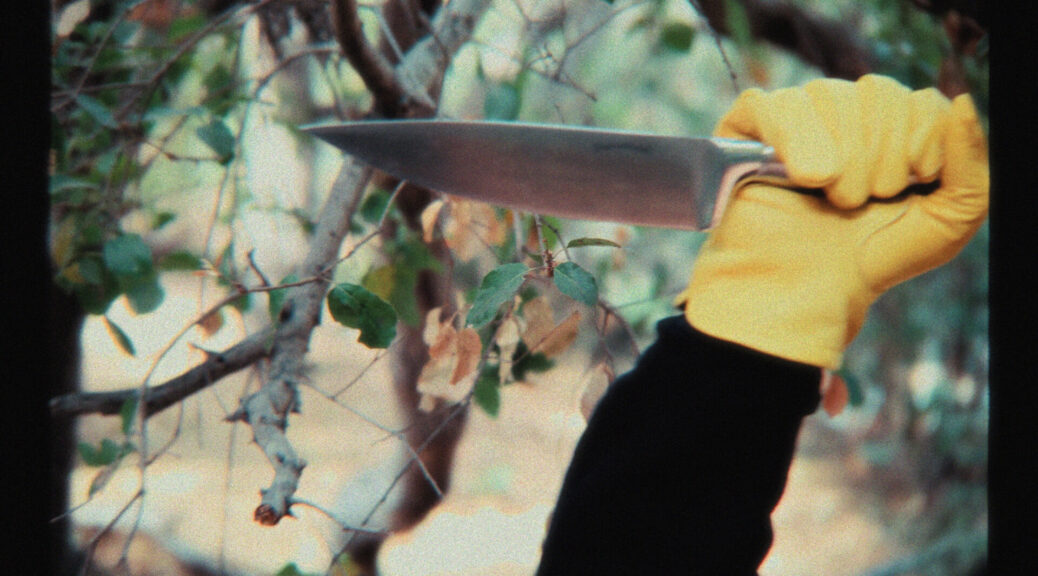
There is no mystery as to who is bringing the violence to suburbia here. Kelsey Pribilski’s Sandy is creepy terror on two legs and she makes an absolute meal out of her viciously weird villain.

Sandy inhabits a world that resides between the psycho slashers of old – think The Texas Chainsaw Massacre and When a Stranger Calls – and the modern horror masters of today. There are also shades of Hereditary and Weapons here, as well as some visual stylings akin to the work of Oz Perkins. The cinematography is just as standout an element as Pribilski’s performance, making American Dollhouse even more of a must-see for horror fans.

This is one to watch out for, folks.

Ride or Die

Liv’s Last Ride

Screens Friday, October 16 at 10:30 pm at Nightmares Film Festival.

by Brandon Thomas

A secluded cabin in the woods is a benchmark in the horror genre. From The Evil Dead to Cabin Fever and The Cabin in the Woods, few settings offer such a surprisingly rich canvas for horror filmmakers. Liv’s Last Ride might not find itself in the upper echelon of cabin-based fright flicks, but it makes a strong case to be in the conversation.

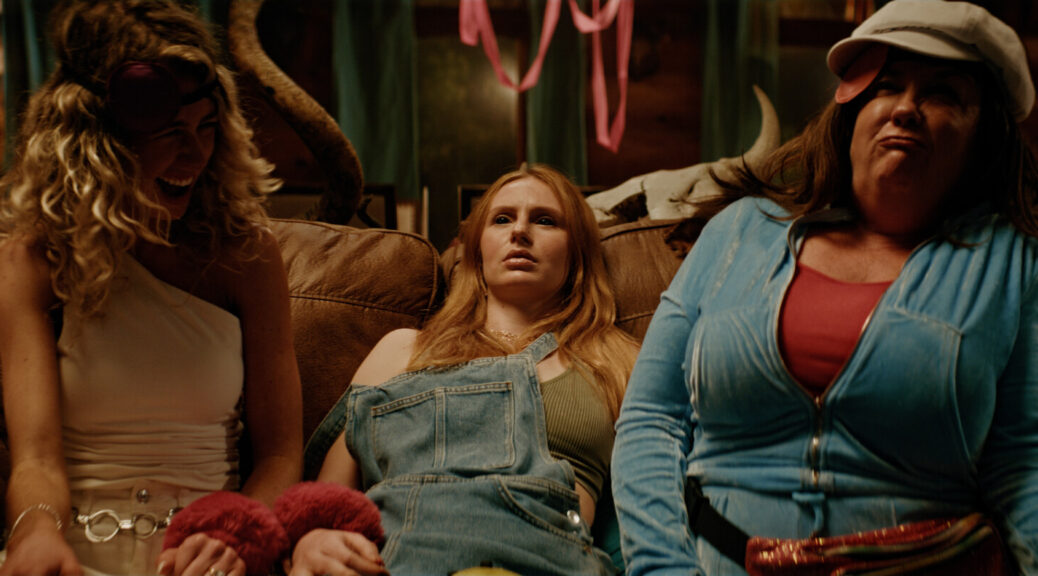
After renting a cabin to celebrate the upcoming marriage of the titular Liv (Sutter Nolan), a group of friends finds themselves wrestling with old resentments, bargain-basement strippers, and some very unwelcome masked party crashers. As the bodies stack up, so do the questions behind the killers’ motivations. 

Liv’s Last Ride is the kind of film I’d call a “kitchen sink” movie. Namely, there’s something in it for everyone. The acting is top-notch. The cinematography looks like it belongs in a movie from a studio. The characters are interesting and well cast. And maybe most importantly: the movie doesn’t skimp on the kills. Director Thaddeus Armstrong (who also acts in the film!) has crafted a crowd-pleaser that manages to check a lot of boxes while not feeling like it’s trying to check boxes. 

The cast deserves special notice as so much of the film involves them bouncing off one another in a single setting. It’s an especially talky film, but enjoyably so given how much of the humor is character based and comes from their interactions. The black humor in Liv’s Last Ride isn’t necessarily from the violence, but more so from how easily—and without much thought—these characters drag each other down or end up turning on one another. 

Liv’s Last Ride is the kind of fun horror comedy that could easily become a sleepover classic. Even with the darkness at the film’s periphery, that ornery sense of fun stays front and center for the entire running time. 

Cutting Up

Friday the 69th

Screening Thursday, October 15 at 10pm at Nightmares Film Festival.

by Brandon Thomas

With a novel approach to a movie-within-a-movie, Friday the 69th scares up plenty of laughs with this comedic slasher.

A couple of down-on-their-luck adult filmmakers attempt to jump on the profitable slasher bandwagon by using their already established cast and crew. As they work their way through the first table read of the script, the filmmakers slowly realize that they might be in over their heads. 

Mimicry of the 70s & 80s film aesthetic reached a fever pitch after the release of Grindhouse in 2007. Although the film wasn’t a massive success, horror fans and filmmakers alike latched onto the deliberately beat-up look that defined so many exploitation horror flicks. While those original films had this look because of age, poor projection, and limited budgets, many homage films deliberately aimed for it, but they didn’t always hit the mark. Friday the 69th is one of those films that successfully manages to match that vintage aesthetic while also having a personality of its own. As someone who’s watched a lot of those early grindhouse-era films, Friday the 69th has all of the hallmarks: scratches and dirt, missing reels, overlit scenes, and very questionable acting.

Many of the jokes within Friday the 69th require a certain understanding of the horror genre, but the film doesn’t feel the need to constantly go “Get it?! Get it?!” You either get the joke, or you don’t. The jokes come so furiously that you’re liable to miss at least a handful each scene. And they’re good jokes too! Writer/Director Alex Montilla’s knack for infusing humor with his love and knowledge of horror cinema is on full display.

Despite covering a lot of the same well-trodden cinematic ground, Friday the 69th still offers up 91 minutes of solid gags and laughs.

Uh Oh, You Saw It!

When You See It

Screens Saturday, October 17 at 8pm at Nightmares Film Festival.

by Daniel Baldwin

Found footage is a tricky subgenre. Its very appeal – the gimmick of being shown first-hand footage of some sort of horrifying incident – can also be its prison. One is bound tightly by the format. Deviating from it too much can break an audience’s suspension of disbelief. On the other hand, if one doesn’t deviate enough, their film won’t stand out from an ever-increasing pool of titles.

When You See It manages to deftly walk that line, delivering an increasingly tense experience akin to the subgenres titans, The Blair Witch Project and Paranormal Activity. While it does opt for the stock “paranormal investigators actually may have finally encountered the paranormal” narrative that most films of this type have these days, it does do it better than most.  

Without giving anything away, director John Abbott’s When You See It manages to play around in that sandbox in some interesting ways. This is aided in a major way by the performances, which are a lot more natural than in most similar films. The editing is also on point, ratcheting up the tension at a steady pace from start to finish.

Found footage fans will find a lot to love here. If this is your subgenre of choice, you’re going to want to seek it out, be it on the festival circuit or when it arrives in wider release on down the road. Those with an aversion to the subgenre are unlikely to be converted, but if you’re open to this kind of tale, When You See It will deliver the goods.

Serious Baggage

The Curse of Tahu’a

Screens at 4pm Friday, October 16 at Nightmares Film Festival.

by Hope Madden

Thanks to a script full of surprises and one very committed performance, Benjamin Busnel’s The Curse of Tahu’a provides gripping, unpredictable thrills.

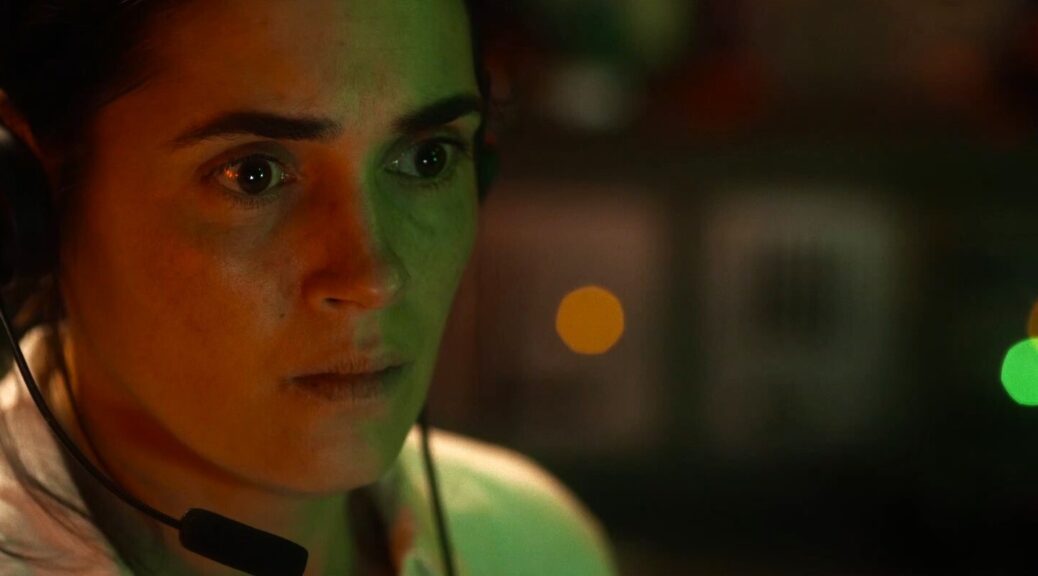
Moea (Marie Kauffmann) works in an air traffic control tower on a small Pacific island. The little airport is closing due to a massive incoming tropical storm, but before Moea can lock up, she gets a distress signal. A tiny plane that should not have been allowed to take off from a neighboring island is now in danger and the pilot needs Moea to help her land.

Kauffman gets two opportunities—two scenes—to act alongside other flesh-and-blood performers. The rest of the film’s 90 minutes, she spends alone in that glassed-in tower talking on the radio or a phone. That’s a tall order for an actor, but Kauffman impresses.

Moea is not your standard heroine, and neither Kauffmann nor Busnel go out of their way to warm you to her. She’s unpleasant, disliked, a bit harried, and deeply damaged, all of which Kauffmann—thanks in large part to a clever script light on exposition—conveys authentically.

Scripting with Myriam Dupuis, Busnel leads you to believe that you know where things are going early with the distressed airplane, but then he zigs when you expect a zag and suddenly things get supernatural.

It’s again mainly due to Kauffmann that the turn works without feeling silly. She navigates a script that upends one common trope or genre cliché after another to deliver a tense nightmare.

This is efficiency in filmmaking: barely more than a single set, barely more than one face on the screen, streamlined storytelling, effective sound and set design, and anxiety that increases with the storm. Busnel’s feature debut announces him as a filmmaker worth seeking out.

Don’t Answer

Death Came Knocking

Screens at 3pm on Sunday, October 18 at Nightmares Film Festival.

by Hope Madden

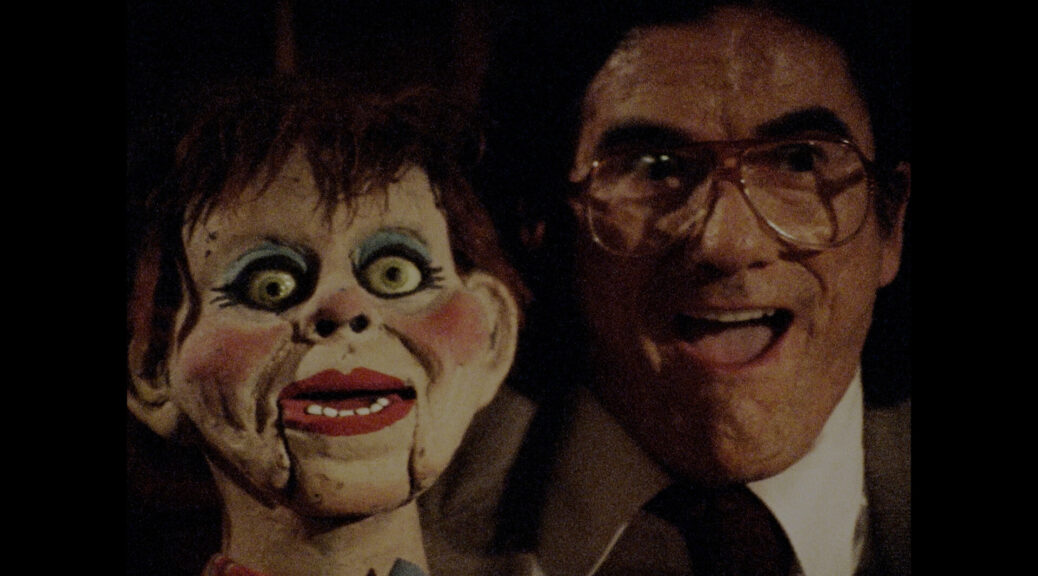
A slow build, a single location, and 16mm camerawork combine to craft an intense, uncomfortable throwback horror in writer/director Eric Yoder’s Death Came Knocking.

The film opens with hard drinking, tough talking Aunt Carolyn (Texas Chainsaw Massacre 2’s Caroline Williams) stopping by her sister’s old house to pick up the car. The LA house is being demolished in favor of a new mall, and while cousins Julie (Jacqueline Barone) and Aaron (Mario Silva) pack up, Aunt Carolyn will drive the car cross country to her sister’s new home.

It’s an organic way to deliver backstory, and then we’re alone with the two young adults who do a little packing and a bit of dancing while they snap Polaroids and smoke indoors (because it’s the 1970s, and that happened then).

Then the doorbell rings. Aaron wisely sends the man at the door away, but Julie lets him in because women in 1970s movies always do the dumbest things. But Yoder makes the most of his aesthetic, drawing clear comparisons to the Savage Cinema of American 1970s independent horror, most explicitly, Wes Craven’s Last House on the Left.

Slowly, Yoder tightens tensions as the film moves from a horror of manners toward a home invasion flick. First, it’s Daniel (Rey Marz), then his pregnant wife Marlene (Bix Krieger), and soon enough, Daniel opens his case, and we meet Jasper, the ventriloquist dummy.

And nobody wants that.

Marz delivers an expert performance, aw-shucks good guy one minute, amused sadist the next. The period aesthetic and practical effects help the film overcome some plotting and pacing issues, and the unapologetic violence certainly shocks, but also feels fitting in a film so entirely influenced by Seventies horror.

Life’s Only Gettin’ Greater

Flytrapper

Screens 2pm Saturday, October 17 at Nightmares Film Festival.

by Hope Madden

Forty-five seconds into director Drew Britton’s Flytrapper and I was hooked. Co-writer/co-star Georgia Lee King cuts the most fascinating figure as Crystal, a psychopath who is defiantly, delightfully, dorkishly certain of herself.

Crystal’s days of marauding and cutting sick rap beats are interrupted by an unannounced visit from her BFF, Melonie (Leah Piescinski).

Britton’s approach is naturalistic. Nothing feels staged, takes linger, and a very lived-in relationship emerges between the two leads. But this is not your average scary movie. Flytrapper is like if Ken Loach made Napoleon Dynamite as a grisly, female led horror.

The humor is so natural and delightful that the sudden bursts of violence really startle. King’s performance is ferocious and funny with surprising depth and vulnerability. Piescinski’s quiet turn never steals the spotlight, but offers something authentic and tender. The pair’s chemistry and delivery are the secrets to the levity.

You never feel as if Flytrapper is mocking these two characters in the way that other films centered on social misfits sometimes do. King and Piescinski understand Crystal and Malonie so well that, while you can never predict where the story is leading, the surprises land as natural—albeit misguided—choices they would make.

The movie looks great, too. Set in a small, lakeside town with no air conditioning in a sweaty summer, Flytrapper immerses you in an environment that suits its tale. You feel dropped into a town where most shops are still cash only, where WIFI is hard to come by and the surveillance state is still miles and miles away.

It’s a gorgeous, low-fi environment where friendship, murder, and musical creativity flourish. But Britton does lean into absurdity now and again with gloriously weird dream sequences.

It’s an odd combination, but it works wonderfully to deliver a genuinely unique cinematic experience.

Blame Canada

Hunting Matthew Nichols

by George Wolf

Is this a faux documentary? A true crime thriller? Found footage horror? It’s all of that, at least some of the time.

You know what, just don’t worry about it and enjoy the clever way Hunting Matthew Nichols tips its hat to a variety of genre influences.

Director and co-writer Markian Tarasiuk plays himself as a documentary filmmaker out to solve an over-two-decades-old missing persons case. Canadian teens Matthew and Jordan went missing on Halloween night of 2001, and now Matthew’s sister Tara (Miranda MacDougall) is teaming with Markian to get to the bottom of what really happened.

Early on, we come along on an engaging hunt for clues. A succession of solid supporting performances bring welcome authenticity to Tara’s fact-finding interviews, until a surprise discovery turns the film on its found footage ear.

The missing kids were big fans of the Blair Witch Project, and took a camcorder into Black Bear Forest to uncover the local legend of Roy McKenzie. This turns out to be a slyly organic way of acknowledging the big comparisons that will follow, and to setup the type of in-your-face finale that more than a few BWP naysayers may have preferred.

The ride is well-paced and impressively assembled, and the payoff is satisfying enough to make you forget about who’s manning the camera or why we’re watching reactions to a shocking videotape instead of the tape itself.

But this Hunt is a fun one, and it comes complete with a mid-credits stinger that flirts with the possibility of another chapter.

If so, count me in.

A Hill to Die On

Pig Hill

by Brandon Thomas

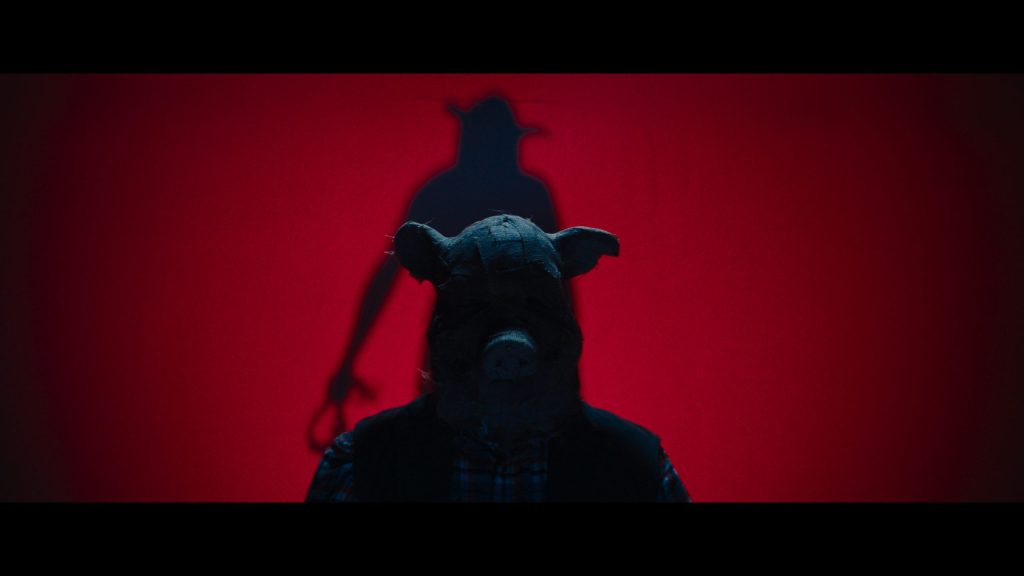
Using the word “Pig” in the title of your film automatically conjures up a disgusting mix of imagery before you’ve seen even one frame of film. As Sam Jackson’s Jules says in Pulp Fiction, “Pigs are filthy animals.” That they may be, but director Kevin Lewis sets up a nice curveball with Pig Hill, one that delivers a more psychologically disgusting film than a visual one. 

Like most small towns in America, Meadville, Pennsylvania has its own local legend: that of the pig people of Pig Hill. Everyone has their own theory about the pig people, but the one true throughline from all is that they are some ghastly mix of human beings and pigs. Carrie (Rainey Qualley) and her brother Chris (Shiloh Fernandez, Evil Dead) have lived in Meadville their entire lives, and the pig people story has always loomed large. As recent personal struggles bring both siblings to emotional low points, the prospect of writing a book about Pig Hill gives Carrie a potential ticket out of Meadville. As Carrie’s investigation into pig hill deepens, so does the mystery surrounding a growing number of women who have been going missing. 

Pig Hill is a cornucopia of a film. There’s a dash of Texas Chain Saw Massacre mixed with a pinch of The Silence of The Lambs, and finally a bit of The Hills Have Eyes for taste. Story and tone aren’t a problem as Lewis (Willy’s Wonderland) weaves his influences together into a satisfying and cohesive whole. As someone who clearly knows the horror genre inside and out, Lewis wickedly plays with audience expectations until the very end.

Outside of a pretty standard open, Pig Hill isn’t the stalk n’ slash fest you might expect. When the film gets down and dirty – it does so with gusto and never forgets that there are characters experiencing the horror around them. The cast ends up doing the bulk of the heavy lifting as it’s a surprisingly dialogue-heavy film that takes the time to flesh out characters. While the cast may not rival that latest P.T. Anderson flick, they all work well for the film. Qualley and Fernandez bounce off one another well, and former teen heartthrob Shane West (A Walk to Remember, League of Extraordinary Gentlemen) brings some name recognition as the film’s romantic lead and pseudo-hero. 

Lewis takes a big swing toward the end of the film that might seem too telegraphed, but it still doesn’t lessen the impact once the layers get pulled back more and more. It lets Pig Hill end on  a horrific emotionally charged note instead of one covered in blood and guts.

Can You Hear Me Now?

Interaction

Screens Sunday, October 19 at 4pm

by Hope Madden

Dallas Richard Hallam’s mesmerizing, beautifully shot, and quietly audacious feature Interaction lulls you, then hypnotizes you. But you have no idea what you’re in for.

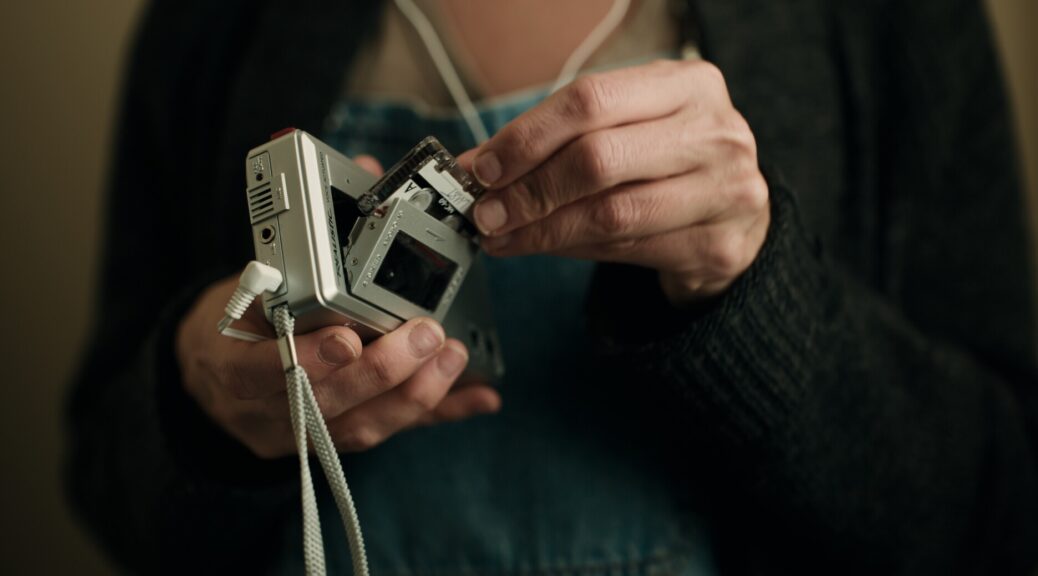
House cleaner Rebecca (Suziey Block) hides little recording devices in all the homes she cleans. Never without her headphones, and right under the noses of clients with the means to pay for housekeeping, she listens to their most banal and most intimate moments.

But she listens all the time—in the car, in bed at night. The keepers are even labeled, for when she needs to relax, when she needs to laugh, when she needs a good cry. And for quite a while, this unapologetic invasion of privacy plays like a poetic reflection of modern social isolation.

The quietly beautiful image of loneliness and disconnect is a sleight of hand, though, and the film slowly – with zero exposition – turns more and more sinister.

Nearly the only dialog in the entire film comes from these recordings. When someone does speak, it feels like an invasion. This, too, suggests a director in absolute command of his medium. Though we may believe we have nothing in common with Rebecca, we come to connect with her. We worry when she seems too at home in someone else’s living space, fear that she should remove the headphones before she commits to certain acts, in case someone is around the corner, or returns home unexpectedly.

Hallam tightens tensions minute by minute, so quietly and efficiently you may not even recognize your own anxiety. He’s helped immeasurably by a masterpiece of understatement from Block, whose performance is unnervingly authentic and, for that reason, shocking when it needs to be.

Filmmaker Claire Denis has built an immaculate career making movies about the moments in the story other directors ignore or leave out. The same story is told, she just uses different beats within the same tale to tell it. Hallam, who co-wrote the script with A.P. Boland, approaches the film in much the same way.

At no point does his choice feel like a gimmick, which is success in itself. But when the film begins to veer toward true thriller, when it turns genuinely mean, it’s unsettling in the way a Denis or even a Michael Haneke film might be. Interaction is hard to forget.