Some good stuff to watch at home this week. There’s one racing biopic that’s so much better than it has any right to be, and also two super weird flicks.
Ford v Ferrari

Greener Grass (DVD)
In Fabric (DVD)
Some good stuff to watch at home this week. There’s one racing biopic that’s so much better than it has any right to be, and also two super weird flicks.
by Hope Madden and George Wolf
First on the Harley Quinn playlist: Breaking Up Is Hard to Do
Harley (Margot Robbie, positively electric) tells us she and the Joker are done, and she didn’t take it well. What’s worse, Harley’s new relationship status means anyone in Gotham who’d like her dead (and there’s plenty) doesn’t have to worry about payback from “Mr. J.”
Shuffle: It’s a Man’s Man’s Man’s Man’s World
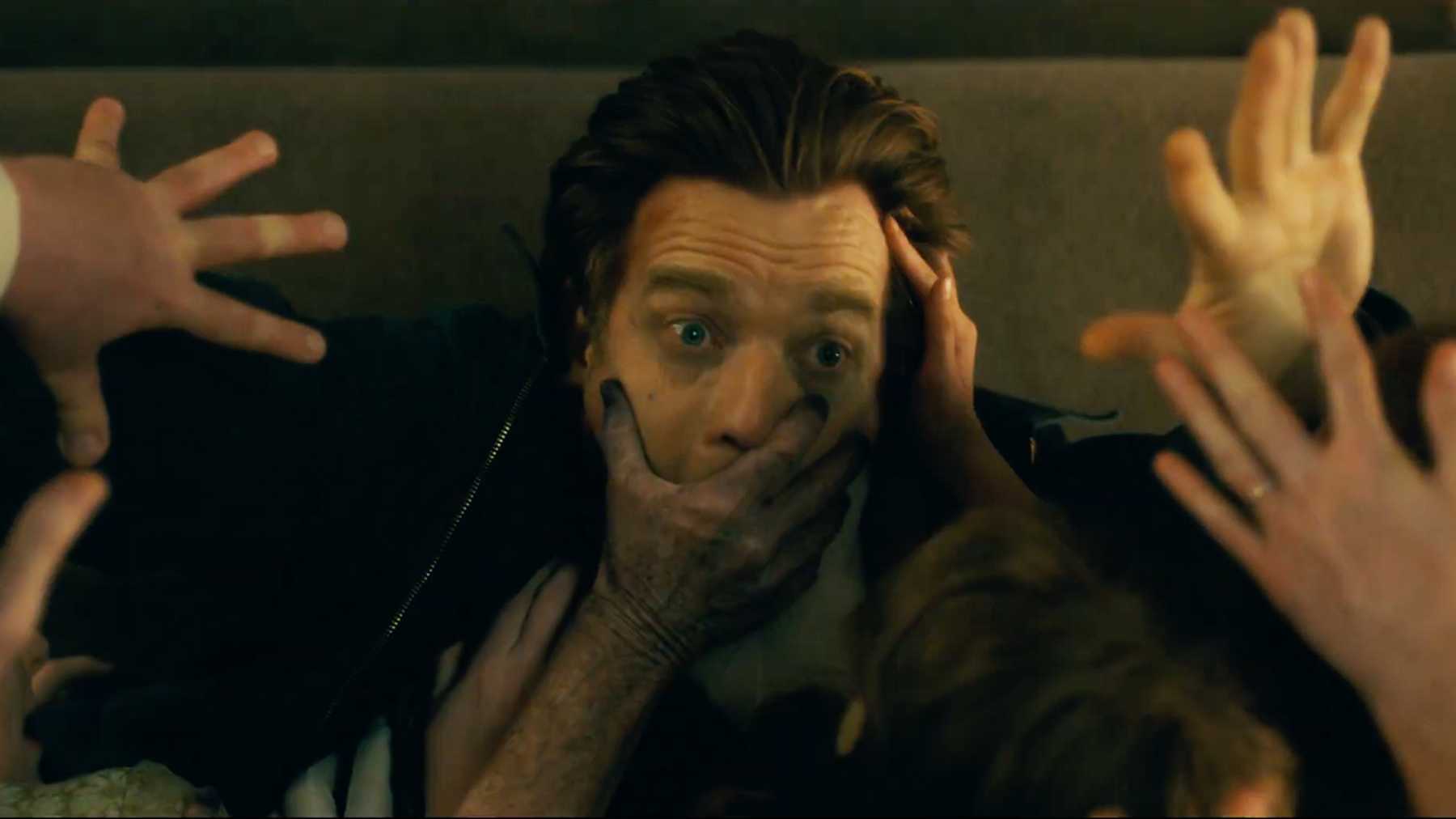
At the top, there’s Roman Sionis aka Black Mask (Ewan McGregor, hamming it up to glorious effect) who likes the faces peeled off of his enemies. He wants a priceless diamond that’s been lifted by teenage pickpocket Cassandra Cain (Ella Jay Basco), and Harley, forced to bargain for her life, promises to get it.
But Gotham has no shortage of talented women fed up with being kept down, and Harley tends to attract them. The vocally gifted Black Canary (June Smollett-Bell), the deadly mysterious Huntress (Mary Elizabeth Winstead, scene-stealingly deadpan) and the conveniently suspended Detective Montoya (Rosie Perez, nice to see you) all find themselves on the wrong end of a sizable bounty, and things get messy.
Shuffle: Sisters Are Doin’ It For Themselves
The badass girl power isn’t limited to the cast. Director Cathy Yan (Dead Pigs) serves up an irresistible cocktail of Scott Pilgrim visual flair and Tarantino continuity clash. Yan seems to relish the freedom of an R-rating (see “face-peeling” above), crafting memorable set pieces bursting with slick fight choreography, cartoonishly satisfying violence and wonderfully stylish pandemonium.
Shuffle: Respect
As Hope’s dad told the many Madden girls growing up: eyes, nose, throat, groin, knees are all equally vulnerable no matter the size of the attacker. Yan appears to be the sister we didn’t know about, but she certainly knows how to hurt a guy.
Writer Christina Hodson has become the go-to for ridiculous franchises that need more than we dare hope (she’s the one who wrote the only Transformers movie that didn’t suck). She teams well with Yan and her badasses, offering backstories and traumas that toe the line between superhero/supervillain legend and shit women deal with every day.
If you saw the stale trailer, noted the deadly release date, remembered the limp Suicide Squad and feared the worse, we hear ya. And maybe Birds of Prey benefits slightly from low expectations. But there’s no denying the raucous, foul mouthed, glitter-bomb fun.
Shuffle: Free Bird (live version).
by Hope Madden and George Wolf
It fills us with glee to look back on a year brimming with so many great movies. Original movies, even! Jojo Rabbit—that was unique. The Farewell, Marriage Story, Knives Out, The Lighthouse, Parasite, The Souvenir, Uncut Gems, Us, Portrait of a Lady on Fire, The Last Black Man in San Francisco—it’s a long list, and not all of the entries made it as far as an Oscar nomination (unfortunate!). But they did make for a fascinating year.
We have only a handful of complaints about this year’s batch of nominees, but we really want to point out how impressed we are with the animation nominees: two excellent blockbusters (Toy Story 4 and How To Train Your Dragon: The Hidden World) plus three outstanding and entirely underseen animated gems (Missing Link, I Lost My Body, Klaus). Whenever the Academy leads people to find great films they might have missed, they’re doing their job.
On the whole we expect the 2020 awards to be somewhat predictable. Luckily, on the whole, we also think the awards will go where they should.
Best Adapted Screenplay
We begin with the one category that feels undecided. While we are semi-confident in our picks, we also think Jojo Rabbit could hop away with gold.
Should Win: Greta Gerwig, Little Women
Will Win: Greta Gerwig, Little Women
Best Original Screenplay
Should Win: Bong Joon Ho, Parasite
Will Win: Bong Joon Ho, Parasite
Best Supporting Actress
Although it would not break our hearts to see Scarlett Johansson win this one for her tender, lovely turn as mom to the cutest little Nazi ever…
Should Win: Laura Dern, Marriage Story
Will Win: Laura Dern, Marriage Story
Should Win: Joe Pesci, playing against type and delivering a quietly powerful turn that’s the heartbeat of Scorsese’s film.
Will Win: Brad Pitt, Once Upon a Time…in Hollywood. Good news – another top-notch acceptance speech!
Because we want to make you wait for it, and because you might need some help with other buckets in your poll…
Best Documentary
Here’s a fantastic category. Make it your mission to see each one of these films.
Should Win: Honeyland
Will Win: In a rare split decision, Hope predicts Honeyland; George predicts American Factory.
Best International Feature
Should Win: Parasite
Will Win: Parasite
Best Animated Feature
Should Win: Toy Story 4
Will Win: Toy Story 4, but really, we all win with this group of movies. But Toy Story 4 better win.
Best Cinematography
Should Win: Jarin Blaschke, The Lighthouse
Will Win: Roger Deakins, 1917
Best Original Song
Should Win: Elton & Bernie
Will Win: John & Taupin
OK, on to what you’re here for.
Best Actress
Should Win: Renee Zellweger, Judy
Will Win: Renee Zellweger, Judy
Best Actor
Should Win: We would not weep to see Adam Driver take this one home, but he won’t and we’re not that upset because Joaquin Phoenix was astonishing.
Will Win: Joaquin Phoenix
Best Director
Should Win: Bong Joon Ho makes a great case with his nearly perfect film.
Will Win: Sam Mendes, 1917
Best Picture
Should: Parasite
Will: 1917
The 92 annual Academy Awards will be held this Sunday, February 9th, and aired live on ABC.
by Rachel Willis
Inspired by Russia’s involvement in the 2016 U.S. presidential election, Oscar-winning documentarian Alex Gibney turns his focus to a tangled Russian web with his latest film, Citizen K.
And “K” is the crux of his film: one Mikhail Khordokovsky. Once known as perhaps the richest man in Russia, Khordokovsky spent ten years in a Siberian prison as a political prisoner.
To understand the situation, it helps to understand modern Russian history. Cramming thirty years of that history, from the fall of the Soviet Union to the present, into one two-hour documentary is no easy feat. Many times, it’s hard to keep track of the people and names who appear on screen. Gibney does his best to help us keep up, but he isn’t unnecessarily focused on it.
If you’re not already well-versed in Russian history and politics, trying to follow everything may at times be distracting, but Gibney (Taxi to the Dark Side, Enron: the Smartest Guys in the Room) always manages to keep the film engaging. It moves at a brisk pace, covering the thirty plus years of history and Khordokovsky’s rise as one of Russia’s oligarchs, in the first hour.
Though “Citizen K” is the film’s core, it’s impossible to tell Russia’s story, and Khordokovsky’s story, without taking a hard look at Vladimir Putin.
Putin’s rise was meteoric, a virtual unknown when an ailing Boris Yeltsin resigned and Putin succeeded him as president. Detailing Khordokovsky’s role in that succession is one of the film’s greatest strengths.
Gibney portrays the many grey areas when talking about individual involvement in black and white historical events. Is Khordokovsky a “real-life gangster” as many claim? Or is he a “hero for the cause of human rights?” Perhaps a bit of both.
Wisely, Gibney never absolves Khordokovsky of his past. Though many of the crimes for which he was accused and convicted were possibly exaggerated or even fabricated, his hands are not clean. His involvement in Russia’s economy, and in its history, is a mixed bag. Were his business decisions in the best interest of the country or did they serve his own greed?
Though there are questions left unanswered, the documentary shows Khordokovsky trying to make amends. His focus on transparency, and on an open Russia, is commendable. His attempts to bring to light the layers of conspiracy and violence surrounding Putin is dangerous, and he knows it.
Will Khordokovsky succeed? Only time will tell, but with the 2020 vote fast approaching, Gibney hopes his audience is paying attention.

A lot of horror available this week, plus one indie drama that will leave you broken in side and one horrible Christmas movie – does that count?
Let us help you through the decision process. Click the film title to link to the full review.


by Hope Madden
It’s still early, but 2020 has not been great in terms of horror.
First came Nicolas Pesce’s pointless reboot of The Grudge.
Yikes. And I do not mean that in a good way.
And then last week we had Floria Sigismondi’s boldly wrong-headed reimagining, The Turning.
In keeping with a trend, this week Oz Perkins revisits an existing story. Gretel & Hansel pick on the bones of that old fairly-tale—the one that actually did scare the shit out of me as a kid. Two kids are turned out into the woods because their parents can’t feed them. Things go from bad to worse once they’re left to fend for themselves and soon cannibalism comes into play, as I assume it always does when you get lost in the woods.
Perkins, working from a script by Rob Hayes (East Meets Barry West), abandons much of the original bits (fewer breadcrumbs). His spookier imagination is more interested in Gretel’s burgeoning womanhood.
Sophia Lillis (IT) narrates and stars as Gretel, the center of this coming of age story—reasonable, given the change of billing suggested by the film’s title. The witch may still have a tasty meal on her mind, but this is less a cautionary tale than it is a metaphor for agency over obligation.
Alice Krige and her cheekbones strike the perfect mixture of menace and mentorship, while Sammy Leakey’s little Hansel manages to be both adorable and tiresome, as is required for the story to work.
Perkins continues to impress with his talent for visual storytelling and Galo Olivares’s cinematography heightens the film’s folkloric atmosphere.
It’s unfortunate, though, that Perkins doesn’t also write. The two films he both writes and directs, I Am the Pretty Thing that Lives in the House and, in particular, The Blackcoat’s Daughter, sidestepped predictability while mining primal anxieties to produce excellent, memorable horror.
The writing here doesn’t quite reach the heights of the storyline told through imagery. Gretel & Hansel loses itself too often in a dreamscape horror without rectifying or clarifying, which leaves the metaphor foggy and the horror muted.
But there’s no escaping this spell. The whole affair feels like an intriguing dream.
by George Wolf
The sexy assassin. The beautiful killing machine.
The Rhythm Section plays a tune that’s lately been as popular as Taylor Swift at the high school talent show. But hey, there’s still a ways to go before it catches up to the macho men, so have at it ladies, the right arrangement can always find some swing in the mustiest of standards.
Blake Lively is Stephanie, a top student at Oxford who falls hard after losing her family to an airplane bomber. How hard? She’s an addict and a prostitute, but her destructive spiral finds a new avenue when an investigative reporter seeks her out.
He’s on the trail of the terrorist responsible for the bombing, and Stephanie’s cooperation sets a chain of events in motion that quickly lead to an ex MI-6 operative (Jude Law) training her to be a killer.
And why would he do that, exactly?
Keep that question at bay and you’ll find a serviceable thriller that hits plenty of familiar beats, but is always kept watchable through Lively’s committed performance.
Screenwriter Mark Burnell adapts his own novel as a globe-trotting exercise in exorcising your demons. And while multiple character motivations can get murky, the relationship between Stephanie and her mysterious mentor is always engaging.
Director Reed Morano (I Think We’re Alone Now, TV projects such as The Handmaid’s Tale and Halt and Catch Fire) can stage a nifty fight scene and breathless car chase, but she too often seems desperately in search of a definitive style that never finds a groove.
While soundtrack choices and soft focus flashbacks feel forced, Morano’s detached treatment of Lively’s physical appearance may be the most original pillar in the film. Though her role is plenty physical and Lively never shrinks from it, even the obligatory “red sparrow” sequence offers an overdue counterpoint to the usual leering camera served up by Morano’s male counterparts.
Expect the usual questions of “who can I trust” and the usual fine performance from Sterling K. Brown (that guy’s busy), who shows up as an ex-CIA agent with valuable contacts.
But most of all, expect Lively to keep The Rhythm Section humming, even when it’s set on repeat.
by George Wolf
Documentaries can often be judged by how successful they are at showing us unfamiliar worlds.
But for the Oscar-nominated The Edge of Democracy, it is the familiarity of the story it tells that makes it so heartbreakingly urgent, as it wraps a personal memoir around a first hand account of Brazil’s fragile hold on democracy.
Veteran documentarian Petra Costa (Omar & the Seagull, Undertow Eyes), whose own parents risked their lives protesting Brazil’s military dictatorship, narrates the film with much personal insight, starting with her feeling that she and Brazilian democracy “have grown up together.”
Taking power through a U.S.-backed coup in 1964, a succession of generals ruled Brazil until 1985, when the Workers Party began to take hold, thanks in large part to union leader Luiz Inácio “Lula” da Silva, who was finally elected president in 2002.
Costa, backed up by a string of working class Brazilians, speaks in glowing terms of the economic progress made under Lula, and we see no less than Barack Obama dub him “the most popular politician on Earth.”
Indeed, Lula left office in 2010 with an 87 percent approval rating, when his hand-picked successor, former militant Dilma Rousseff, won the presidency. Three years later the economy stumbled, Dilma announced a crackdown on corruption, and the knives came out.
Even then, not many would have thought it possible for the democracy Brazilians long fought for to succumb so easily to primal populism, or for Jair Bolsonaro, a bigoted, hostile, “fake news” decrying candidate who began as a joke, to be elected president in 2018.
But here we are.
Costa’s passion for her cause is weary but evident, and her earnest narration often asks us to assume much without pausing to consider any contrasting evaluations of what she dubs “the coup of 2016.”
That’s not to say Dilma’s ouster doesn’t stink to high Heaven – it does – but it also isn’t hard to find accusations against the Workers Party that don’t seem that flimsy, and while the one-sided approach is in line with the film’s personal journey, it leaves the documentary side wanting.
But Costa’s ultimate success comes from weaving her family’s story into the political tumult of her homeland, and in turn mirroring a more global struggle. We get a stark illustration of the rising tides of authoritarianism, leaving the Edge of Democracy a film that should be pretty damn personal to all of us.
by Hope Madden
Be honest, when you saw the list of Oscar nominated animated films, did you wonder whether Klaus was somehow the international title for Frozen 2?
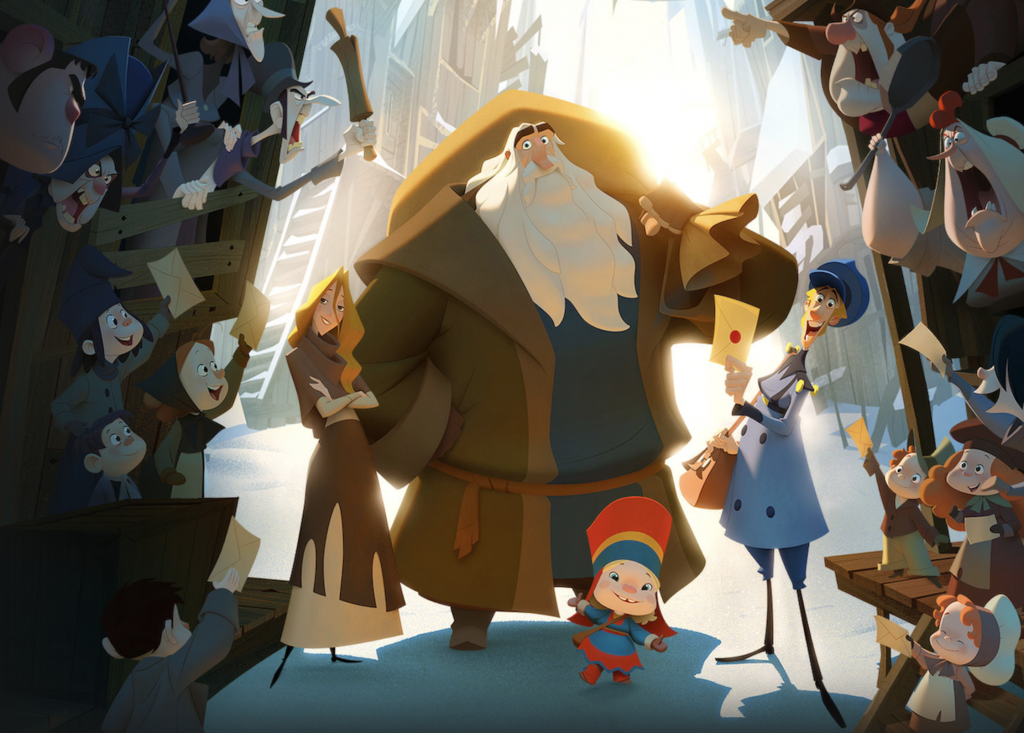
I have excellent news! It is not. Instead, it’s a clever, not-too-sentimental Hatfields v McCoys take on the legend of Santa Claus.
Co-directors Sergio Pablos and Carlos Martinez Lopez develop the story of a coddled would-be mailman named Jesper (Jason Schwartzman, perfect). His Postmaster General father tires of Jesper’s spoiled ways and sends him on a make-or-break assignment to the nether reaches of the north, Smeerensburg.
All Jesper has to do is collect and deliver 6000 parcels this year and he can go back to his warm, self-indulgent, cushy little home.
Naturally, there are obstacles. There’s a decades-long feud, for one. It’s so bad the school teacher has turned her school house into a fish market (parents won’t send their kids anywhere they might have to fraternize with the other clan). And then there’s that creepy, disproportionately large, old woodsman.
At times, the twisty tale threatens to collapse under its own weight, but it does not. Instead, it takes risks you don’t often see in family films and those risks mainly pay off. For a Christmas film, the movie manages to mainly avoid schmaltz. It offers clever explanations as to how many of the Santa Claus myths are born, affects just enough of a sense of wonder, and entertains from start to finish.
The vocal talent certainly helps. Flanking Schwartzman are the always welcome JK Simmons as the big guy himself, as well as Rashida Jones, Joan Cusack and Norm MacDonald as a smarmy boatman.
The animation itself is beautiful, but not especially showy. The images won’t disappoint, but they won’t make your jaw drop, either. Instead, Klaus relies on the perfect blend of sentimentality and wit to delight children and entertain their parents.