Screening Room: Skinamarink, House Party, EO, Saint Omer and More
by George Wolf
“I am not the responsible party.”
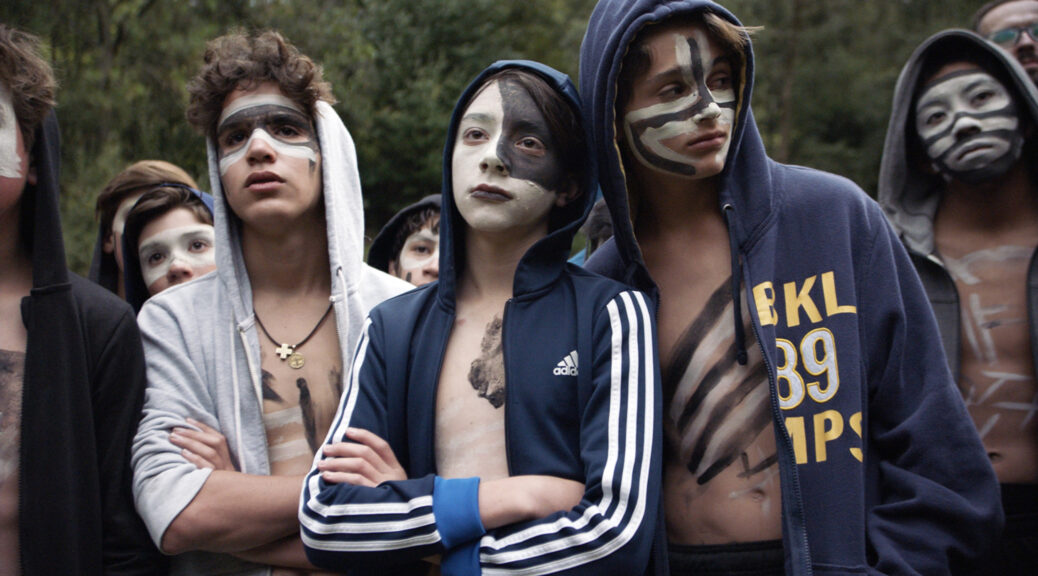
Laurence Coly (Guslagie Malanda) admits that she deliberately left her 15-month old daughter on the water’s edge to die, alone at the mercy of the tide. But Mlle. Coly tells a court in Saint Omer, France that she is not to blame.
Rama (Kayije Kagame), a literature professor and novelist, has made the trip from Paris to attend Coly’s trial. Rama’s plan is to adapt the case into an updated version of the ancient myth of Medea (calculated revenge against an unfaithful husband). But Rama is now four months pregnant, and like Coly, she is a woman of Senegalese descent in a mixed-race relationship. And the more Coly defends herself, the more Rama feels a deepening kinship.
After a string of documentaries, writer/director Alice Diop moves into narrative features for the first time with her eye for authenticity intact. Coly’s case is based on an actual trial that Diop felt moved to attend in person, and she wrote Rama’s character to reflect her own experience.
Diop’s approach is strictly observational, and mostly anchored in the courtroom where Coly’s story is told, rebutted and debated. And though films with more tell and less show often suffer with emotional connection, Diop mines two impressive lead performances for resonance that comes from the things that are not being said.
Perspectives shift frequently, and an emotionally complex conversation emerges that begs for humanity in the midst of an unthinkable act. But no matter who may be speaking, or what side they may be on, we feel the bond growing between Rama and Coly, which makes Diop’s one overt camera move in the finale all the more worthy.
There is a judge in this French courtroom, but Saint Omer invites us to sit on the jury. It is a thoughtful and sensitive discussion that may surprise you. And it is one worth having.
by George Wolf
(Tom Hanks SNL voice) “My name is Kyle Edward Ball…and I’m going to scare the HELL out of YOU!”
And you know what? He just might do it.
Be extra prepared if the title Skinamarink reminds you of those fun singalongs from Sharon, Lois & Bram. Because Ball’s brand of nightmare fuel taps into the very essence of childhood fears, exploiting those exposed nerves with a committed resolve we haven’t seen since Laurence Olivier in Marathon Man.
Is it safe? It is not.
Ball’s premise is brilliant simplicity. It’s 1995, and two young children, Kaylee (Dali Rose Tetreault) and Kevin (Lucas Paul), wake in the night to find they are alone, with the windows and doors in their house suddenly gone. In an instant, the stakes are familiar – but not because you’ve seen this before.
It’s because there’s probably some version of this nightmare in your past. You were just a kid, separated from your parents and trying in vain to reach them or call out for help, or maybe just escape.
Remember how scared you were? Ball and cinematographer Jamie McRae do, and they twist that knife again and again for 100 slightly bloated minutes of dark, disorienting dread.
Cinematography and sound design are intertwined in an analog, cathode-ray aesthetic that recalls vintage, grainy VHS. The children whisper to each other (“Where do you think Dad is? I don’t know.”) as they wander from room to room, with Ball’s camera never allowing you one second of relief.
All through this fright night, familiar sources of comfort such as toys and cartoons turn eerily sinister, accentuating the feeling that it’s not just these kids that are in peril, it is childhood itself. POV is often at floor level, and then tight into a corner of the ceiling or high above the room and rising. You squint in the direction of the children’s flashlight, trying in vain to decipher anything about the house that will give you some sense of its layout, and you strain to separate the cracks of white noise from that deeper voice speaking to the children.
Come upstairs. Look under the bed. Close your eyes.
Ball started down this harrowing hallway by filming 3-4 minute short films of the actual dreams described by viewers of his YouTube channel. Some two years ago, his 29-minute short Heck emerged as the wonder of primal fear that inspired Skinamarink. And though it is a bit disappointing that the single most bone-chilling (and to be fair, most explanatory) moment of the short didn’t make it in the feature, Ball’s $15,000 budget buys much more killer than filler.
More than just nightmarish, this is a literal nightmare onscreen. And the intimate nature of nightmares means that the film’s patient, psychological assault is likely to bring out the “nothing happens!” barbs from those seeking more universally visceral thrills. But for others, the whispers of Skinamarink will hit like a sonic boom.
And they will be hard to shake.
by George Wolf
Nic Cage brings a Brimley-approved mustache and an itchy trigger finger to the The Old Way as Colton Briggs, meanest lowdown killer the Wild West ever saw.
But after an opening standoff that leaves plenty men dead and one young eyewitness without a father, director Brett Donowho jumps ahead twenty years, when the ‘stache is gone and…
…And a good woman has tamed this outlaw into a family man?
That’s right. Colton and his wife Ruth (Kerry Knuppe) run the Briggs Mercantile, while their pensive daughter Brooke (Ryan Kiera Armstrong from American Horror Story and last year’s Firestarter) looks for ways to challenge her smarts and curiosity.
So while Carl W. Lucas’s script scrapes together just enough reason for Colton to take a turn walking Brooke to school…
…Some gunslingers with an old score to settle pay a call to Mrs. Briggs, giving Mr. Briggs a mighty good reason to get out his guns and seek vengeance?
Right again. And though Ruth tells James McAllister (Noah Le Gros) and his crew that “you boys have woke up the devil!”, a face-to-face showdown is just what McAllister is after.
Obviously, nothing here is breaking any ground in the genre, as the real draw is Cage playing a grizzled killer in the Old West. He’s fine, just don’t expect any unhinged Caginess. Briggs is an always-restrained coil of intensity, as Donowho and Lucas instead try to craft some emotional heft from a father teaching his daughter the way of the gun.
Armstrong is clearly a talent, but both she and Cage are up against a script that leans too heavily on stilted, explanatory dialog and cliched exclamations (“You’re bringin’ Hell down on us, Jimmy!”). We’re told too much about who these people are without seeing enough to really care about them.
And by the time that showdown in the middle of a dusty trail finally plays out, what we do see doesn’t make for a memorable payoff.
It’s Nic Cage in a Western, so there are possibilities here. But The Old Way is too content to fall back on the old tropes to blaze anything at all.
What a treat we have for this episode! Producer Alok Mishra and actor Naomi Grossman join us to talk about the ghost of Peter Lawford, grand theft auto, Jessica Lange, the obstacles facing independent filming and the best apartment-based horror movies. Let’s hit it!
Written and directed by David Marmor and clearly inspired by Polanski’s “Apartment Trilogy,” this film is an unnerving experiment in neighborliness. And that’s even without post-lockdown trauma.
Sarah (Nicole Brydon Bloom) just wants to strike out on her own. Yes, she’s nervous, but maybe that’s why this new apartment building feels so right. It’s a real community where people look out for each other.
But they are not keen on pets.
Marmor and a sharp cast move through one surprising door after another. Shifting tones never throw the film off-kilter. Rather, each widens the ripple effect of horror.
[Rec] shares one cameraman’s footage of the night he and a reporter tagged along with a local fire department. The small news crew and two firefighters respond to a call from an urban apartment building. An elderly woman, locked inside her flat, has been screaming. Two officers are already on the scene. Bad, bad things will happen.
Just about the time the first responders realize they’re screwed, the building is completely sealed off from the outside by government forces. Power to the building is cut, leaving everyone without cell reception, cable, and finally, light. Suddenly we’re trapped inside the building with about fifteen people, some of them ill, some of them bleeding, some of them biting.
Filmmakers Jaume Balaguero and Paco Plaza make excellent use of their found footage approach, first by way of the news report, then because of the need to use the camera to see once power’s been cut. They play the claustrophobic nature of the quarantine to excellent effect, creating a kind of funhouse of horror that refuses to let you relax. The American reboot Quarantine is another excellent choice, but our vote has to go with the original.
We return to Chicago’s now-gentrified Cabrini Green housing project with up-and-coming artist Anthony McCoy (Yahya Abdul-Mateen II), whose works have taken a very dark turn since he learned of the Candyman legend from laundromat manager William Burke (Colman Domingo).
DaCosta’s savvy storytelling is angry without being self-righteous. Great horror often holds a mirror to society, and DaCosta works mirrors into nearly every single scene in the film. Her grasp of the visual here is stunning—macabre, horrifying, and elegant. She takes cues from the art world her tale populates, unveiling truly artful bloodletting and framing sequences with grotesque but undeniable beauty.
Rosemary’s Baby remains a disturbing, elegant, and fascinating tale, and Mia Farrow’s embodiment of defenselessness joins forces with William Fraker’s skillful camerawork to cast a spell. Along with Repulsion (1965) and The Tenant (1976), Rosemary’s Baby is part of Polanski’s “apartment trilogy” – disturbing films of tension and horror in which metropolitan life and nosey neighbors conspire to drive a person mad.
Working from Ira Levin’s novel, Polanski takes all the glamour out of Satanism – with a huge assist from Ruth Gordon, who won an Oscar for her turn as the highly rouged busybody Minnie Castevet. By now we all know what happens to poor Rosemary Woodhouse, but back in’69, thanks much to Mia Farrow’s vulnerable performance, the film boiled over with paranoid tension. Was Rosemary losing it, or was she utterly helpless and in evil hands?
First-time feature filmmaker, Iranian Babak Anvari, treads familiar ground yet manages to shift focus entirely and create the profound and unsettling Under the Shadow.
The tale is set in Tehran circa 1988, at the height of the Iran/Iraq war and just a few years into the “Cultural Revolution” that enforced fundamentalist ideologies. Shideh (Narges Rashidi) and her young daughter Dorsa (Avin Manshadi) shelter in their apartment as missiles rain on Tehran.
Frazzled, impatient, judged and constrained from all sides, Shideh’s nerve is hit with this threat. And as external and internal anxieties build, she’s no longer sure what she’s seeing, what she’s thinking, or what the hell to do about it. The fact that this menacing presence – a djinn, or wind spirit – takes the shape of a flapping, floating burka is no random choice. Shideh’s failure in this moment will determine her daughter’s entire future.
Good lord, 2022 is over. How on earth…? Well, we guess that means it’s time to think back on all the many big, small, emotional, hilarious, terrifying, gorgeous, honest, bleak, hopeful, remarkable movies of the year and winnow down a list of our favorites. Here goes…
At Gateway Film Center or premium Prime rental
It took writer/director Todd Field 16 years to bounce back from his experience with Miramax, but it was worth the wait. Tár, a searing character study of art, arrogance, obsession and power that’s propelled by the towering presence of (surprised face) Cate Blanchett. And, as is her way, Blanchett needs mere moments to define Lydia with sharp, unforgettable edges.
It’s when Lydia dismisses ideas of gender inequality or coyly celebrates the history of patriarchy in her own profession that Field and Blanchett best expose the insidious nature of power. The storytelling is striking in its intimacy, gripping in its universal scope. Tár is a showcase for two maestros working at the top of their game.
All the severity of Beckett with the dark comedy lightened just a few shades, Banshees asks: What if the erosive accrual of daily life is the only way for us to find grace—and what if the dumbest person you know accidentally figured that out? You’d probably have a spiritual crisis too.
-Matt Weiner
On HBO Max and VOD
Existential dread picks up a brogue and a fiddle full of longing at JJ Devine’s Public House on an island off the West coast of Ireland in 1923. It’s a microcosm, simultaneously intimate and universal. It’s also the single finest ensemble you will find onscreen in 2022. More than that, it’s a breathing example of the mournful humor and heritage of the Irish.
The Banshees of Inisherin mines a kind of pain uncommon on a big screen. In Martin McDonaugh fashion, the mining is done with wit, insight, humanity and absolutely world-class acting. It must not be missed.
At times both brutally funny and heartbreakingly sad, The Banshees of Inisherin is a profound look at how even the best relationships in life reach their eventual end.
Brandon Thomas
On Peacock and VOD
There are some truly frightening moments in Nope. Some revolve around things you may think you know based on the trailer. Others feature a bloody monkey in a party hat. And writer/director/producer Jordan Peele’s third feature has plenty to say about Black cowboys, the arrogance of spectacle, and getting that elusive perfect shot.
Peele’s direction and writing effortlessly mine comedic moments, but Nope is no comedy. He unravels a mystery before your eyes, and his shot-making has never been so on point. Peele’s direction and writing effortlessly mine comedic moments, but Nope is no comedy. He unravels a mystery before your eyes, and his shot-making has never been so on point.
Prime Rental
Longtime David Bowie fans know of his early fondness for the “cut up” method to writing songs – literally cutting up lines of written lyrics and then shifting them around in search of more enigmatic creations. Director Brett Morgen takes a similar approach to telling Bowie’s story in Moonage Daydream, a completely intoxicating documentary that immerses you in the legendary artist’s iconic mystique and ambitious creative process.
Moonage Daydream is like no music biography that you’ve ever seen. It’s a risky, daring and defiant experience, which is exactly the kind of film David Bowie deserves. Expect two hours and fifteen minutes of head-spinning fascination, and a sense that you’ve gotten closer to one Starman than you ever felt possible.
On Netflix
Guillermo del Toro’s script film establishes itself immediately as a very different story than Disney’s. The 1940 film – and, to a degree, the live-action remake Disney launched earlier this year – offers a cautionary tale about obedience. So does del Toro’s, although, in true GDT fashion, he’s warning against it.
Co-director Mark Gustafson’s animation itself is breathtaking, and perfectly suited to the content, as if we’ve caught an artist in the act of giving his all to bring his creation to life. Everything about the film is so tenderly del Toro, whose work mingles wonder with melancholy, historical insight with childlike playfulness as no other’s does.
BEST ANIMATED FILMS
1. Guillermo del Toro’s Pinocchio
2. Turning Red
3. Marcel the Shell with Shoes On
4. Mad God
5. Puss In Boots: The Last Wish
On Showtime and Prime
Directors Dan Kwan and Daniel Scheinert are back with their brand of sweet-natured lunacy for Everything Everywhere All at Once. The result is an endlessly engaging, funny, tender, surprising, touching maelstrom of activity and emotion. This is a hard movie not to love.
Never have I been so richly rewarded by going in to see a movie knowing absolutely nothing about it.
Christie Robb
At Drexel Theatre or premium Prime rental
For 2+ hours, Steven Spielberg uses all the tools of his trade to beguile you with his own origin story. In those moments, you will find everything Spielbergian – tech wizardry, cinematic wonder, artistry, sentimentality, family, loss – dance to life across the screen. The Fabelmans is no Jaws, no Raiders of the Lost Ark or E.T. Instead, it’s an exceptional movie about how those other movies could have ever happened.
In theaters January 6
With nuanced writing and one of 2022’s finest ensemble, Women Talking, the latest from filmmaker Sarah Polley, delivers quiet, necessary insight. Polley shows respect for the women in this tale – not just for their bodies, their agency, their humanity. She shows uncommon respect for their faith. This is what every faith-based film should look like.
MOVIES THAT UNDERSTOOD THE ASSIGNMENT
1. Top Gun: Maverick
2. RRR
3. Top Gun: Maverick
4. RRR
5. Top Gun: Maverick
On MUBI and Prime
Decision to Leave (Heojil kyolshim) unveils a playful, seductive mystery of longing and obsession, masterfully layered and gorgeously framed by acclaimed director and co-writer Park Chan-wook (Oldboy, The Handmaiden, Thirst).
Premium Prime rental
Writer/director Charlotte Wells’s first feature film moves at a languid pace, but she repays your patience with a rich and melancholy experience. Like Sophia Coppola with her similar Somewhere, Wells and cinematographer Gregory Oke capture palpable longing, nostalgia and heartbreak. And while the loose narrative may frustrate some, as a work of remembrance, Aftersun film delivers something powerful and powerfully impressive.
BEST DOCUMENTARIES
1. Moonage Daydream
2. Fire of Love
3. All the Beauty and the Bloodshed
4. The Territory
5. Gabby Giffords Won’t Back Down
In theaters
Darkly hilarious, bold, insightful, and an absolute fantasy come to life for anyone who’s ever worked in food service.
On Prime
Absolutely the most charming film since Paddington 2.
On Showtime or premium Prime rental
The Texas Chain Saw Massacre meets Boogie Nights. Yes, please.
On Disney+
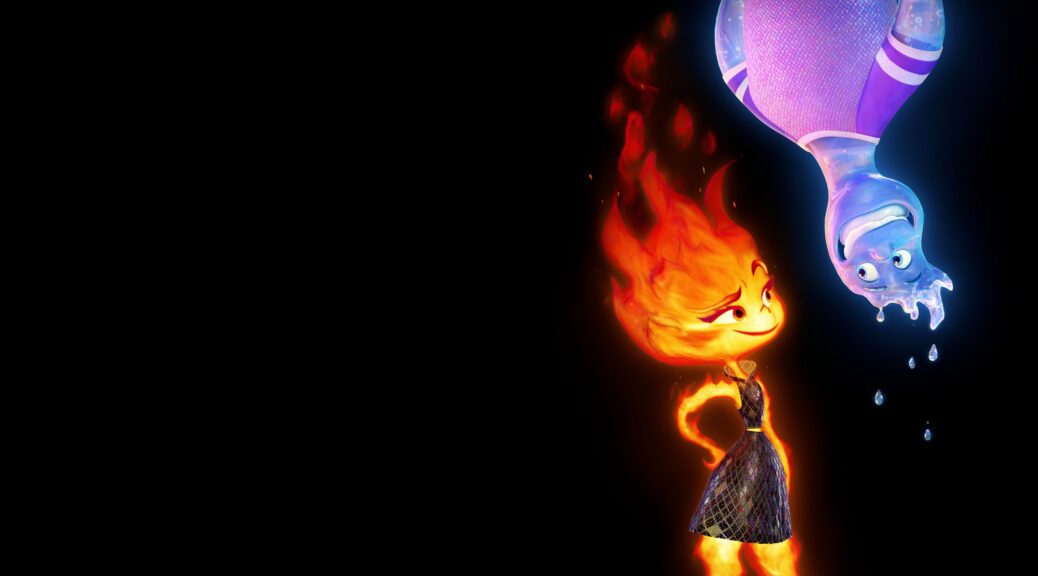
Pixar filmmaker Domee Shi navigates the world of female adolescence with an allegorical tale as charming and adorable as a red panda.
BEST INTERNATIONAL FILMS
1. Decision to Leave
2. All Quiet on the Western Front
3. Holy Spider
4. Piggy
5. Both Sides of the Blade
On Prime
Classic is exactly how The Northman feels. The story is gritty and grand, the action brutal and the storytelling majestic.
On Prime
In many ways, the film is an exceptionally well-made, old-fashioned historical epic. But as soon as you try to string together a list of similar films, you realize that there are none.
Premium rental on Prime
Frustrating, powerful and intelligently told – another highlight in cinema’s esteemed tradition of investigative journalism films.
On Prime
Measured and often visual storytelling is at work here, in a compelling look at what divides us that’s carried on the shoulders of a sensational lead performance from Thandiwe Newton.
BEST UNDERSEEN FILMS
1. God’s Country
2. A Love Song
3. Breaking
4. The Inspection
5. Dinner in America
On Netflix
Rian Johnson’s script is funny, smart and intricate, always staying one step ahead of your questions while he builds the layers of whos and dunnits, only to tear them down and build anew.
On Shudder
Thirty years in the making, Phil Tippet’s stop-motion nightmare is like a Bosch painting and a Tool video accusing each other of being too lighthearted.
In theaters
Luca Guadagnino embraces the strength of the solid YA theme that you have to be who you are, no matter how ugly the world may tell you that is.
Like a warped Stephen King riff on Terrence Malick’s Badlands, Luca Guadagnino’s Bones and All is a hauntingly beautiful and achingly savage slice of arthouse horror filmmaking.
Daniel Baldwin
On Netflix
Grim, powerful reimagining of the timeless truth: war is hell.
Best of luck to you. More info HERE
Quiet and precise as if always listening and careful not to disturb, Tilda Swinton once again disappears wholly into a role in Apichatpong Weerasethakul’s meditative wonder of a film.
On Peacock and VOD
Writer/director B.J. Novak’s feature debut delivers a funny and entertaining mystery caper, self-effacing but not afraid to wander into some dark places, with a social conscience revealed in organic and endearing ways.
On Showtime and Prime
A mysterious trip inside a local music scene, Poser never fails to surprise.
Villains and heroes, pigs and wolves, Aik Karapetian’s Latvian fairy tale
Squeal is populated with many things strange and unusual, and it’s all the better for it.
Rachel Willis
What a great year! So many horror films were both wonderful and huge box office successes, including Scream, Smile, The Black Phone and Barbarian.
Shudder hit another year out of the park with Good Madam, The Innocents, Speak No Evil, Slapface, Satan‘s Slaves: Communion, Mandrake, A Wounded Fawn and more. Plus the underseen and magnificent indies Men, You Won’t Be Alone, and Soft and Quiet still demand to be seen.
But we had to narrow down, so here are the 10 best horror movies of 2022.
On Shudder
If you’re a fan at all of genre films, chances are good Watcher will look plenty familiar. But in her feature debut, writer/director Chloe Okuno wields that familiarity with a cunning that leaves you feeling unnerved in urgent and important ways.
Maika Monroe is sensational as Julia, an actress who has left New York behind to follow husband Francis (Karl Glusman) and begin a new life in Bucharest.
Monroe emits an effectively fragile resolve. The absence of subtitles helps us relate to Julia immediately, and Monroe never squanders that sympathy, grounding the film at even the most questionably formulaic moments.
Mounting indignities create a subtle yet unmistakable nod to a culture that expects women to ignore their better judgment for the sake of being polite. Okuno envelopes Julia in male gazes that carry threats of varying degrees, all building to a bloody and damn satisfying crescendo.
On Shudder
Phil Tippett’s demons take center stage in his stop-motion head trip 30 years in the making, Mad God. It’s like a Bosch painting and a Tool video accusing each other of being too lighthearted.
Mad God delivers a nightmare vision like little else, overwhelming in its detail and scope. Tippett plumbs cycles of mindless cruelty.
Mad World revels in Tippett’s vulgar, potent fantasy without belaboring a clear plotline. The world itself resembles hell itself. Tippett peoples this landscape with figures and images that also feel reminiscent: a doll’s befouled face, a fiendish surgeon, a cloaked figure.
Streaming
In 1996, Martin Bryant murdered 35 people, injuring another 23 in Port Arthur, Tasmania. The horror led to immediate gun reform in the nation, but director Justin Kurtzel is more interested in what came before than after.
Playing the unnamed central figure (Nitram is Martin spelled backward), Caleb Landry Jones has never been better, and that’s saying something. He is one of the most versatile actors working today, effortlessly moving from comedy to drama, from terrifying to charming to awkward to ethereal. There is an aching tenderness central to every performance. (OK, maybe not Get Out, but that would have been weird.)
Nitram looks at how nature and nurture are to blame. Socialization plus parenting plus bad wiring is exacerbated by the isolation and loneliness they demand. Everyone is to blame. It’s a conundrum the film nails.
But it’s Landry Jones you’ll remember. He’s terrifying but endlessly sympathetic in a bleak film that’s a tough but rewarding watch.
Streaming
In a dreary world where “surgery is the new sex,” two performance artists (Viggo Mortensen, Léa Seydoux) turn one’s mutant organs into art.
If that doesn’t sound like a David Cronenberg movie, nothing does.
The film references, directly or indirectly, The Brood, Dead Ringers, The Fly, Naked Lunch, Crash, and most frequently and obviously, Videodrome. Like his main character, Cronenberg has long been an “artist of the inner landscape.” And after several decades of excising that tendency from his work, Cronenberg has come full circle to accept what was inside him all along.
In theaters and on VOD
The film follows Maren (an absorbing Taylor Russell, Waves), coming of age on the fringes of Reagan-era America. She meets and slowly falls for another outcast with similar tastes, Lee (Timothée Chalamet), and the two take to the road.
Given what the handsome young lovers have in common, you might expect a sort of meat lovers’ Badlands to follow. But Bones and All is less concerned with the carnage left in a wake than in what’s awakening in these characters themselves.
Bones and All is a tough one to categorize. I suppose it’s a horror film, a romance, and a road picture – not three labels you often find on the same movie. In Guadagnino’s hands, it’s more than that, though. He embraces the strength of the solid YA theme that you have to be who you are, no matter how ugly the world may tell you that is. You have to be you, bones and all. Finding Maren’s way to that epiphany is heartbreaking and bloody but heroic, too.
On VOD
Mia Goth has been impressive in every film she’s graced. But nothing prepared us for Pearl.
With her first writing credit and her first no-question-about-it lead performance, Goth delivers an unerring combination of innocence and psychosis that is as captivating as it is terrifying.
The writing is sly and the direction a magically macabre take on classic American cinema, like the most wrong-headed Judy Garland movie you can imagine. But it comes together seamlessly to deliver a concoction spellbinding concoction.
Goth’s 8-minute monologue and that truly insane frozen smile over the end credits will stay with you forever.
On Hulu
Did you know that this is the 11th film in the Hellraiser franchise? There are 10 others, most of them terrible, a couple unwatchable. Why? How could it be so hard to create fresh horror from Clive Barker’s kinky treasure trove? David Bruckner had no trouble peeling the flesh from this franchise and exposing something raw and pulsing.
Jamie Clayton, with a massive thanks to makeup and costume, offers a glorious new image of pain. In fact, the creature design in this film surpasses anything we’ve seen in the previous ten installments, including Barker’s original. Each is a malevolent vision of elegance, gore and suffering, their attire seemingly made of their own flayed flesh.
Bruckner’s core themes replace the S&M leanings with trauma and addiction, following a young addict named Riley (Odessa A’zion) as she ruins everyone and everything she touches. The kinks may be gone, but the chains are still chilling, in a darkly beautiful world full of sensual, bloody delights to show you.
On VOD
Mean girls are a fixture in cinema, from Mean Girls to Carrie, Heathers to Jawbreaker to Napoleon Dynamite and countless others. Why is that? It’s because we like to see mean girls taken down.
Writer/director Carlota Pereda wants to challenge that base instinct. But first, she is going to make you hate Maca (Claudia Salas), Roci (Camille Aguilar) and Claudia (Irene Ferreiro). In one tiny Spanish town, the three girls make Sara’s (Laura Galán, remarkable) life utterly miserable. Like worse than Carrie White’s.
The filmmaker complicates every trope, all the one-dimensional victim/hero/villain ideas this genre and others feast on. Redemption doesn’t come easily to anyone. Pereda also seamlessly blends themes and ideas from across the genre, upending expectations but never skimping on brutal, visceral horror.
Streaming
The Texas Chain Saw Massacre meets Boogie Nights?
Yes, please!
Filmmaker Ti West delivers an utterly unexpected and absolutely inspired horror show like nothing he’s made before. A group of good-natured pornographers descends upon an out-of-the-way ranch to shoot a movie, unbeknownst to the owners. Mia Goth leads a thoroughly entertaining cast, each actor making the most of the humor crackling throughout West’s script.
West explores some common themes, upending every one without ever betraying his clear love of this genre. Blending homages of plenty of Tobe Hooper films with a remarkable aesthetic instinct, West fills the screen with ghastly beauty.
Streaming
Nope has plenty to say about Black cowboys, the arrogance of spectacle, and getting that elusive perfect shot. There are some truly frightening moments. Some revolve around things you may think you know based on the trailer. Others feature a bloody monkey in a party hat.
Peele’s direction and writing effortlessly mine comedic moments, but Nope is no comedy. He unravels a mystery before your eyes, and his shot-making has never been so on point. The way he splashes color and motion across this arid landscape is stunning. His visual cues—often executed with macabre humor and panache—amplify the film’s themes while inducing anxiety.
It feels a bit like Peele is saying that making a movie will kill you, if you’re lucky. But opening a film with a Biblical passage is no accident, and on a grander scale, Peele has crafted a genre-loving ode to a comeuppance tempted by grandiose delusions.