And from Megs to ‘Nados to super sharks eating Samuel L. Jackson in the middle of a Samuel L. Jackson speech, we clearly cannot get enough shark movies.
Shudder’s Sharksploitation takes a…wait for it…deep dive into the titular subgenre, building a scattershot timeline for how sharks have been depicted in cinema, both BJ (before Jaws) and AJ (after Jaws.)
First-time director Stephen Scarlata rolls out a respectable array of film historians and pop culture commentators, interspersing the requisite film clips, and sometimes bunching several together via split screens.
Scarlata doesn’t always follow a strict chronology, which can be a bit distracting as the approach sometimes groups the shark films by era, and other times by a similar theme.
Still, there is some solid info here, such as the progression of sharks being held as Gods in the 1931 Murnau film Tabu, to being held by evil geniuses in Bond films, to being hunted for harassing a small New England town over 4th of July weekend.
And, of course, once Jaws practically invented the “blockbuster” as we know it, shark mania was cranked up to eleven while stoking a fear that wasn’t exactly based on fact. Jaws author Peter Benchley came to regret this, and the film is careful to show how he later would devote his time and energy to ocean conservation.
But in the decades since, the laws of shark physics (“shar-sics”!) have been willingly ignored by shark films, and Scarlata achieves a fun sense of mischief by often following a film synopsis with a quick cut to an increasingly exasperated marine biologist.
There’s also an enlightening and funny look behind that infamous line from Shark Attack 3: Megalodon, a revisit to the influx of sharks on 70s TV (lookin’ at you, Fonzie), and a nod to the relative “cooling off” period before an eventual rebirth via 1999’s Deep Blue Sea and the emergence of SyFy channel originals
But along with the low-budget “mockbusters” of The Asylum and the intentional ridiculousness of the Sharknado franchise, Scarlata reminds us that there are more recent entries (Open Water, TheShallows) that found ways to thrill with new rules for an old game.
The film’s a little rough around the edges, and it suffers from a wandering nature that can seem like treading water, but Sharksploitation is an entertaining trip through the history of a beloved subgenre. And ultimately, it feels both welcome and overdue.
Now if you’ll excuse me, I have to shop for Mom’s Shark Week gift.
I love that “Barbenheimer” has become a thing. Why are people so excited that two films open in theaters on the same weekend? The polar contrast of tones is certainly a fun mashup, but it’s also the confidence we have in two uniquely visionary filmmakers.
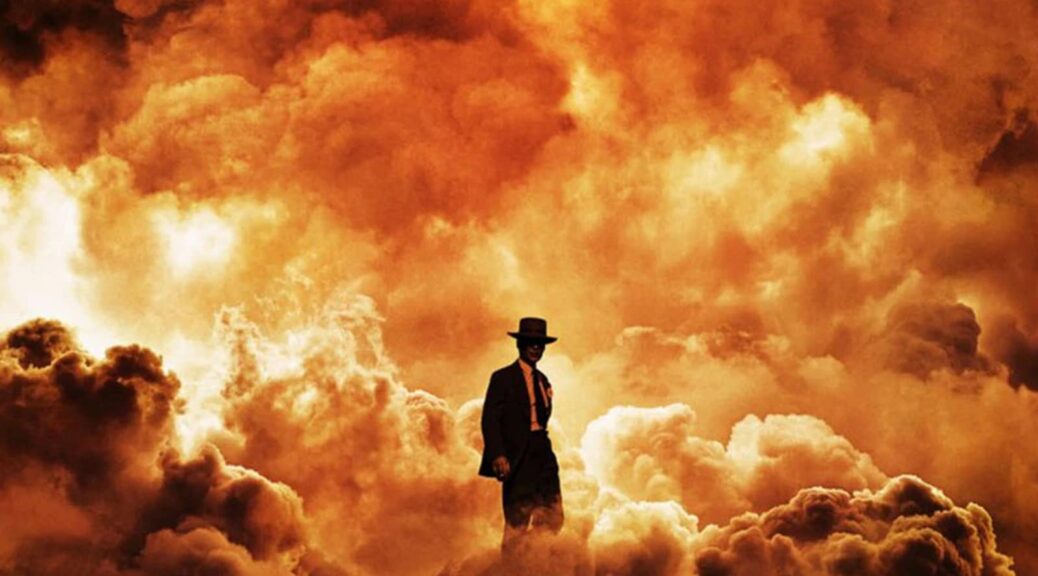
Christopher Nolan reportedly became invested in making a film about “the father of the atomic bomb” when Robert Pattinson gave Nolan a collection of J. Robert Oppenheimer’s speeches. In adapting two source books, writer/director Nolan gives Oppenheimer an engrossing IMAX treatment that serves up history lesson, character study and mystery thriller during three unforgettable hours.
Cillian Murphy is simply mesmerizing and absolutely award-worthy as Oppenheimer, who – years after his Manhattan Project delivered the bomb that ended WWII – is facing the possible loss of his security clearance and thus, career. With his wife Kitty (Emily Blunt) seated nearby, Oppenheimer endures grueling interrogation on his past associates and activities from an Atomic Energy Commission security board led by Roger Robb (Jason Clarke) and Gordon Gray (Tony Goldwyn).
In the film’s first two acts, Nolan uses this questioning as the anchor to chart Oppenheimer’s rise through academia to become not “just self important, but actually important.” On the campus of Berkeley, he embraces revolution in both physics and the world, enthralling his students, supporting “left wing causes” and carrying on an intense affair with avowed communist Jean Tatlock (Florence Pugh) before being hand-picked by no-nonsense General Leslie Groves (Matt Damon) to lead the team tasked with inventing a nuclear weapon before the Nazis do.
From the outset, Nolan and Murphy craft Oppenheimer as an endlessly fascinating creature, a man unable to turn off his mind from constantly questioning beyond this world. Murphy never shrinks from the close-ups that pierce Oppenheimer’s soul, and his body language and manner are often awkward and brusk, revealing an intellectually tireless man with little regard for alienating those not on his level, including AEC Chairman Lewis Strauss (Robert Downey, Jr., never better).
But Oppenheimer’s commitment is total, as is Nolan’s. With strategic use of black and white (an IMAX film stock developed exclusively for the film) to contrast cinematographer Hoyt Van Hoytema’s eye-popping detail, Nolan utilizes impeccable visual storytelling that enhances his script’s ambition without overshadowing it. Ludwig Göransson’s score dances beautifully with production design from Ruth De Jong, totally immersing us in the manufactured town of Los Alamos, where three years of development finally led to a successful bomb test (a breathless sequence that alone should land sound designer Randy Torres an Oscar nod).
For two hours, the historical tale is assembled through precision and care by a master craftsman with the finest tools at his disposal (including a spotless ensemble that also includes Kenneth Branagh, Rami Malek, Casey Affleck, Tom Conti, Matthew Modine, Olivia Thirlby, David Dastmalchian, James Remar and Benny Safdie), and then Nolan digs into the human failings, moral ambiguities and philosophical grappling that surround a man and his mission.
As Oppenheimer realizes that “genius is no guarantee of wisdom,” and his superiors only want to expand America’s nuclear arsenal, the film’s final act becomes a dizzying mix of JFK, Amadeus and The Tell Tale Heart.
Haunted by the devastation the bomb brought to both the “just and unjust,” Oppenheimer ignores his wife’s pleas to fight back as his character is assassinated, and a naive senate aide (Alden Ehrenreich) starts to piece together the puzzle about who is pulling the strings.
As the film races toward a tense and satisfying reveal, some of the dialogue does flirt with needless explanation, but these sensational actors never let a word of it land as completely false.
Much like any film of this nature, Oppenheimer takes its liberties and leaves room for further study. But Nolan takes you inside the personal journey of one of the most important men in history, with resonant and challenging lessons on hubris, envy, blind faith and the search for redemption. And by the end of hour three, he leaves you drained but thankful for the experience
There’s no Barbie here, but you will find a cinematic dream world with so very much to offer.
Sure, the Losers Club leaps to mind. But the truth is that horror films are littered with lovable losers – often their corpses. Why? It’s easy to root for an underdog, and nothing packs an emotional wallop like watching that bumbling, vulnerable sweetheart meet a grim end.
We love them all: Sean & Ed, Viago & Vladislav, Melvin Juno and 100 Bloody Acres‘s Reg & Angus Sampson. But these are our favorites.
5. Oskar, Let the Right One In (2008)
In 2008, Sweden’s Let the Right One In emerged as an original, stylish thriller – and the best vampire flicks in years. A spooky coming-of-age tale populated by outcasts in the bleakest, coldest imaginable environment, the film breaks hearts and bleeds victims in equal measure.
Kare Hedebrant‘s Oskar with a blond Prince Valiant cut needs a friend. He finds one in the odd new girl (an outstanding Lina Leandersson) in his shabby apartment complex. She, as it turns out, needs him even more.
This is a coming-of-age film full of life lessons and adult choices, told with a tremendous atmosphere of melancholy, tainted innocence, and isolation. Plus the best swimming pool carnage scene ever.
The unsettling scene is so uniquely handled, not just for horrifying effect (which it certainly achieves), but to reinforce the two main characters, their bond, and their roles. It’s beautiful, like the strangely lovely film itself.
4. Lionel Cosgrove, Dead Alive (1992)
Rated R for “an abundance of outrageous gore,” Dead Alive is everything the early Peter Jackson did well. It’s a bright, silly, outrageously gory bloodbath.
Lionel Cosgrove (Timothy Balme) secretly loves shopkeeper Paquita Maria Sanchez (Diana Penalver), but she has eyes for someone less milquetoast. Until, that is, she’s convinced by psychic forces that Lionel is her destiny. Unfortunately, Lionel’s milquetoast-iness comes by way of decades of oppression via his overbearing sadist of a mother, who does not take well to her son’s new outside-the-home interests. Mum follows the lovebirds to a date at the zoo, where she’s bitten (pretty hilariously) by a Sumatran rat-monkey (do not mistake this dangerous creature for a rabid Muppet or misshapen lump of clay).
Braindead is so gloriously over-the-top that nearly anything can be forgiven it. Jackson includes truly memorable images, takes zombies in fresh directions, and crafts characters you can root for. But more than anything, he knows where to point his hoseful of gore, and he has a keen imagination when it comes to just how much damage a lawnmower can do.
3. Katakuri Family, The Happiness of the Katakuris (2001)
Takashi Miike is an extremely prolific director. He makes a lot of musical films, a lot of kids’ movies, a lot of horror movies, and then this – a mashup of all of those things. Like Sound of Music with a tremendous body count.
The Katakuris just want to run a rustic mountain inn. They’re not murderers. They’re lovely – well, they’re losers, but they’re not bad people. Buying this piece of property did nothing to correct their luck, either because, my God, their guests do die.
You might call this a dark comedy if it weren’t so very brightly lit. It’s absurd, farcical, gruesome but sweet. There’s a lot of singing, some animation, a volcano, a bit of mystery, more singing, one death by sumo smothering, and love. It sounds weird, truly, but when it comes to weird, Miike is just getting started.
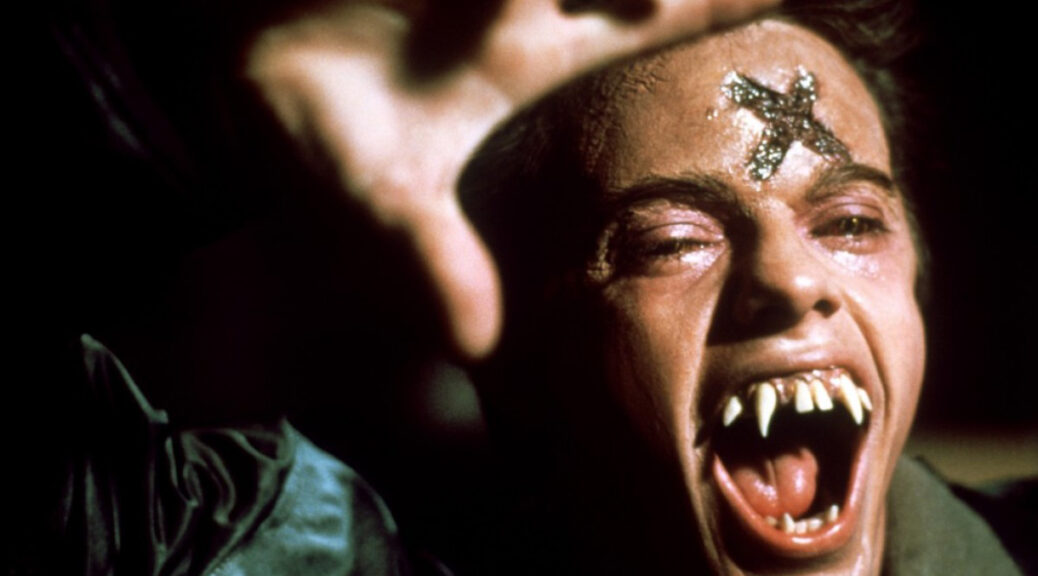
2. Evil Ed, Fright Night (1985)
Fright Night takes that Eighties, Goonies-style adventure (kids on an adult-free quest of life and death) and uses the conceit to create something tense and scary, and a bit giddy as well. The feature debut as both writer and director for Tom Holland, the film has some sly fun with the vampire legend.
Roddy McDowall got much deserved love at the time for his turn as a washed-up actor from horror’s nostalgic past, and Chris Sarandon put his rich baritone to campy, sinister use.
Still, everyone’s favorite character was Evil Ed, the manic, pitiful loser turned bloodsucking minion. Credit Stephen Geoffreys for an electric and, at least in one scene, heartbreaking performance.
1. Tucker& Dale, Tucker and Dave vs. Evil (2010)
Horror cinema’s most common and terrifying villain may not be the vampire or even the zombie, but the hillbilly. The generous, giddy Tucker and Dale vs. Evil lampoons that dread with good-natured humor and a couple of rubes you can root for.
In the tradition of Shaun of the Dead, T&DVE lovingly sends up a familiar subgenre with insightful, self-referential humor, upending expectations by taking the point of view of the presumably villainous hicks. And it happens to be hilarious.
Two backwoods best buds (an endearing Tyler Labine and Alan Tudyk) head to their mountain cabin for a weekend of fishing. En route, they meet some college kids on their own camping adventure. A comedy of errors, misunderstandings and subsequent, escalating violence follows as the kids misinterpret every move Tucker and Dale make.
T&DVE offers enough spirit and charm to overcome most weaknesses. Inspired performances and sharp writing make it certainly the most fun participant in the You Got a Purty Mouth class of film.
As James Earl Jones so eloquently told us in Field of Dreams., you can’t tell the story of America without baseball. And in The League, acclaimed documentarian Sam Pollard builds a gracefully powerful reminder about how important the Negro Leagues were to both game and country.
Pollard (Mr. Soul!, MLK/FBI, Oscar nominee for 4 Little Girls) weaves together the interviews, archival footage and re-enactments with the care of a master craftsman. He builds a timeline that informs and inspires, introducing us to professional players – such as Moses Fleetwood Walker – who came before Jackie Robinson but were left behind once the Supreme Court endorsed “separate but equal” in 1896.
And when the Black community “only had themselves to rely on,” we see how a new path to success was forged, thanks to the visionaries such as Rube Foster and a litany of players who got the attention of white sports writers with their athletic, fast-paced style of play.
Of course, all of this is a baseball fan’s dream, but Pollard (with Executive Producer Ahmir “Questlove” Thompson) also achieves compelling resonance through socioeconomic lessons. The film illustrates how symbiotic relationships developed between the Negro Leagues and the social, political and geographical movements of the day, creating a fascinating push and pull that continued through the integration of Major League Baseball.
And speaking of integration, the story doesn’t end once Robinson and Larry Doby debuted in the National and American Leagues, respectively. In fact, the film is ready with some lesser known receipts from a less-than-admirable side of Branch Rickey’s decision to add Robinson to the Brooklyn Dodgers.
Certainly, the story of the Negro Leagues is worthy of a multi-part mini series, but The League lands as both a satisfying overview and an enticing invitation to dig deeper. There is a wonderful sense of joy here. It’s a feeling born from a community that loved the game, players that lived to make it their own, and a movement that never backed down from the challenge of “finding other ways to succeed.”
As the pandemic raged a few years back, all of us had to adapt. For filmmakers, that meant getting creative to remain creative: small casts, limited settings and remote locations.
One of the better films to meet these challenges was Language Lessons, a two-hander co-written by Mark Duplass and Natalie Morales that also served as one of Morales’s first projects as a feature director.
Biosphere follows a similar blueprint, but with a much higher concept that ultimately hampers its chance at real poignancy.
This time out, Duplass co-writes with first-time feature director Mel Eslyn, and also co-stars as Billy, one of the two men left on Earth. The other survivor is Billy’s old friend Ray (Sterling K. Brown), and the pair spends the days inside a self-sustaining biosphere of Ray’s design.
The two actors share a wonderful and warm rapport, and through their conversations we learn that Billy was President and Ray his lead advisor when the unthinkable went down.
Was Billy to blame? Well, Ray has superior intellect and Billy’s middle initial might as well be “dubya,” so maybe. But that was then and this is now, and now “Diane,” the last female fish in their pond is dead, leaving “Sam” and “Woody” behind.
Ray knows that could mean the end of the “self-sustaining” part of their setup, so the conversations start to get a lot heavier.
To say any more would be saying too much, but the “once upon a time…” message that opens the film readies us for the attempted parable on hope and human evolution.
And this is an extremely talky parable. That might be hard to avoid in a two-character, one-room setting, but the hour and forty-five minute run time becomes excessive despite the mixing of wry humor with Duplass and Brown’s commitment to the exercise.
The bigger problem is that once the film goes where it goes, it feels like the end of a great short film that never was. The main point then becomes the pitch, and not so much about where it ends up. Give Duplass and Eslyn credit for the ambition, and Eslyn some props for making the treatment more cinema than sit-com, but the end is satisfying only if the mean was to be a conversation-starter.
And Biosphere should indeed start some, just not about the big issues it has in mind. Those end up getting caught in a narrative corner that’s covered in too much paint.
One of our favorite parts of the trauma of accepting that half the year is behind us is our therapy of celebrating so much great horror cinema! Did you forget these treasures? Already?! Well, here are (in alphabetical order) the ten best horror flicks so far this year.
The Angry Black Girl and Her Monster
An awful lot of people have reimagined Mary Shelley’s Frankenstein in an awful lot of ways. What makes writer/director Bomani J. Story’s take, The Angry Black Girl and Her Monster, so effective is that it tackles a lot in very little time and handles all of it heartbreakingly well.
To say that Story situates Shelley’s tale in the context of drug violence would be to sell his film short. He’s moved the story from European castles and laboratories to the projects, where Vicaria’s (Laya DeLeon Hayes, stunning) mother fell victim to a drive-by shooting, her brother was shot to death on a drug deal gone wrong, and her father deals with his grief by using. But drugs are just part of the larger problem, the almost escapable, systemic and cyclical nature of violence and poverty.
Story’s chosen genre may feel slight, even campy, but the tropes belie some densely packed ideas, and there’s a current of empathy running through the film that not only separates this from other Frankenstein tales, but deepens the film’s genuine sense of tragedy.
The Blackening
Several friends from college (including Jay Pharaoh, Yvonne Orji, Sinqua Walls, Antoinette Robertson, and the film’s co-writer Dewayne Perkins) are reuniting at a remote cabin for a Juneteenth celebration. It isn’t long before they discover a talking blackface at the center of a board game called The Blackening (“probably runs on racism!”) and fall into a sadistic killer’s plan to pick them off one by one.
The game will test their knowledge of Black history and culture, and demand they sacrifice the friend they deem “the Blackest.” It’s a clever device that Perkins, co-writer Tracy Oliver and director Tim Story use to skewer both well-known horror tropes and well-worn identity politicking.
The old joke about Black people being the first to die in horror films is pretty well-worn, too, but don’t let that poster tagline convince you that the film has nothing new to say. The less “Blacker” these characters seem, the greater chance they have of surviving. That’s some fertile ground for social commentary, and what began as a viral comedy sketch lands on the screen as a refreshing new angle for a horror comedy.
Evil Dead Rise
Deadites hit the big city in Lee Cronin’s Evil Dead Rise, the latest instalment in the old Sam Raimi demon possession franchise. As was true with its predecessors, blood will rain, viscera will spew, chainsaws will bite, and the dead will most definitely rise.
We open, as usual, on a cabin. Despite the top-notch title sequence, though, this episode will not be a cabin-in-the-woods horror. Cronin, who’s credited with the script as well, takes the Necronomicon and all its secrets into an urban high rise to see what hell he can raise.
Cronin uses disorienting angels and shots throughout the film to beautifully bewildering effect. A fisheye-of-death through a peephole is just one of the film’s many horrifying highlights.
Huesera: The Bone Woman
Michelle Garza Cervera’s maternal nightmare is bright and decisive, pulling in common genre tropes only long enough to grant entrance to the territory of a central metaphor before casting them aside for something sinister, honest and honestly terrifying.
While it toes certain familiar ground – the gaslighting of Rosemary’s Baby, for instance – what sets Huesera apart from other maternal horror is its deliberate untidiness. Cervera refuses to embrace the good mother/bad mother dichotomy and disregards the common cinematic journey of convincing a woman that all she really wants is to be a mom.
Huesera’s metaphor is brave and timely. Brave not only because of its LGBTQ themes but because of its motherhood themes. It’s a melancholy and necessary look at what you give up, what you kill.
Infinity Pool
Brandon Cronenberg + Mia Goth + Alexander Skarsgård … for a very specific set of people, the sum there is hell yes.
Riding our favorite wave in horror – that rich people are unspeakably diabolical – writer/director Cronenberg takes us on a strange journey through privilege, debauchery, entitlement, boredom, narcissism, psychotropic drugs and more in his trippy new flick, Infinity Pool.
Cronenberg’s ultimate concept is clearly, wildly his own, but moments sometimes call to mind ideas from last year’s Speak No Evil, as well as Society, Kill List, Hour of the Wolf, and A Serbian Film (no, not that part). Still, the film never feels borrowed. Uncomfortable, yes. Borrowed? No.
Influencer
Kurtis David Harder’s approach to influencer horror leans Neo-noir thriller as the cold and calculating CW (Cassandra Naud – outstanding) spins a dangerous web for an unsuspecting social butterfly.
Harder and cinematographer David Schuurman create an absolutely gorgeous pot for boiling this mystery. From atop deserted island beaches to below crystal clear waters and inside lavish vacation homes, Harder’s nimble camera and visual aesthetics reinforce the notion that pretty pictures don’t always tell the whole story.
With sharp dialogue, skillful plotting and simmering dread, Influencer is plenty worthy of that “Like” button.
Malum
Equal parts Assault on Precinct 13 and The Shining by way of Charles Manson, Anthony DiBlasi’s Malum is a quick, mean, mad look into the abyss.
DiBlasi is reimagining his own 2014 flick Last Shift, although it feels more like a riff on Carpenter’s 1976 Precinct 13 than anything. Regardless, what the filmmaker does is confine the audience along with our hero in a diabolical funhouse.
Malum gets nuts, exactly as it should. Though it never feels genuinely unique, it manages to avoid feeling derivative because of DiBlasi’s commitment to the grisly madness afoot. The result is a solid, blood soaked bit of genre entertainment fully worthy of your 92 minutes.
M3GAN
Hilarious. Gerard Johnstone – whose 2014 horror gem Housebound is a must see – displays a sly instinct for humor in a film that understands what’s creepy about dolls and toxic relationships.
Allison Williams is solid as the workaholic who just wasn’t cut out to be a parent. That would be fine, except her orphaned niece could really use a parent, not an AI caregiver whose rushed-to-production programming and unseemly backstory make her dangerous in, let’s be honest, a pretty fun way.
You remember that trailer. We could have used more dancing, but when M3GAN plays “Toy Soldiers” on the piano, we were already hooked.
Renfield
They totally made a movie with a very saucy Nic Cage as Dracula. And a saucy Nic Cage is the best Nic Cage.
There’s at least one bloody toe in waters that send up rom-coms, satirize narcissistic relationships and homage a classic horror character while it’s also modernizing the themes that built him.
But experiencing Count Nicula alone is worth it. Plus, Nicholas Hoult is perfect as the put-upon sad boy with access to anti-hero superpowers and Awkwafina can wring plenty of humor from simply telling a guy named Kyle to F-off.
Renfield might be bloodier than you expect, but it’s just as much fun as you’re hoping for. Call it bloody good fun.
Skinamarink
There’s probably some version of this nightmare in your past. You were just a kid, separated from your parents and trying in vain to reach them or call out for help, or maybe just escape.
Remember how scared you were? Director Kyle Edward Ball and cinematographer Jamie McRae do, and they twist that knife again and again for 100 minutes of dark, disorienting dread.
Cinematography and sound design are intertwined in an analog, cathode-ray aesthetic that recalls vintage, grainy VHS. Two children whisper to each other (“Where do you think Dad is? I don’t know.”) as they wander from room to room, with Ball’s camera never allowing you one second of relief.
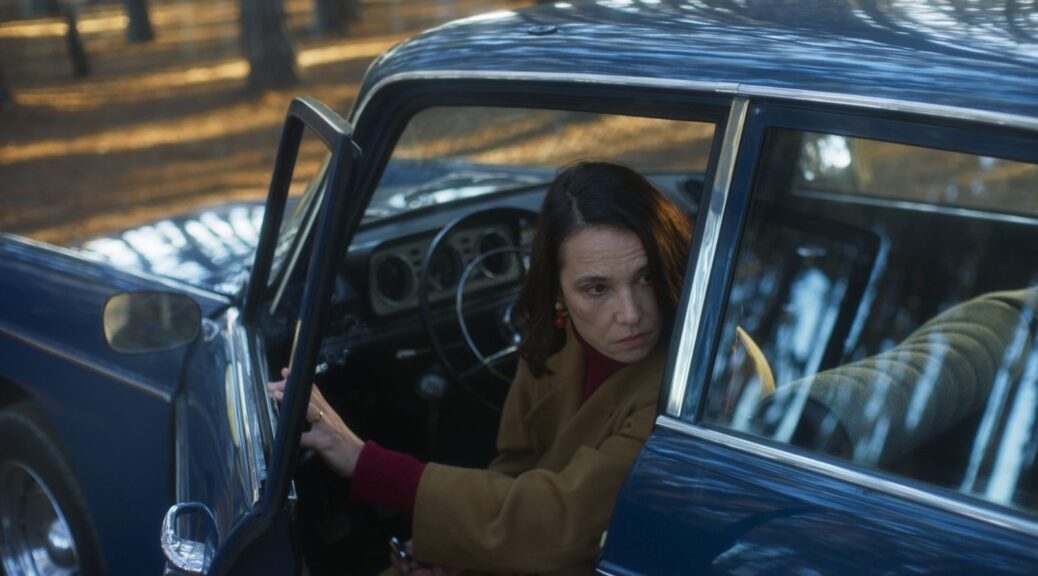
Chile ’76 is a stellar feature debut for director and co-writer Manuela Martelli. It’s assembled with the measured pace of a storyteller committed to her vision and confident in her approach.
And, as a native of Santiago who was a teenager in the mid-seventies, Martelli is clearly passionate about this very tumultuous slice of her homeland’s history.
The film is set less than three years into the dictatorship of Pinochet, when a constant layer of fear hung heavy in the air. Carmen (Aline Küppenheim) is buying a can of paint for some home redecorating when she overhears a woman crying for help as local authorities take her away.
We don’t see the abduction, either, and Martelli’s focus on Carmen’s silent reaction is the first of many instances where the film gains heft from Martelli’s elegant restraint.
As the wife of a respected doctor (Alejandro Goic), Carmen enjoys a life of means and free time. She volunteers reading to the blind, and it is precisely Carmen’s standing, schedule and conscience that spur Father Sanchez (Hugo Medina) to entrust her with a sensitive task.
The twenty-something Elias (Nicolás Sepúlveda) was badly wounded by Pinochet’s forces, but escaped. Could Carmen nurse him back to health, in secret, at her family’s beach house?
Martelli builds a solid foundation to support this intimate political thriller, leaning on meaningful visuals and Küppenheim’s terrific performance to consistently elevate the stakes. While Carmen’s rich friends cling to familiar accusations of “lazy traitors” who only “want to get things for free,” Carmen’s life becomes a series of hushed meetings, secret passwords, and aroused suspicions.
It may only run 95 minutes, but Chile ’76 fills all of them with an impressive ability to change colors. Hints of a standard melodrama fall away to reveal tense political intrigue, becoming the centerpiece of a talented filmmaker’s somber salute to the spirt of revolution.