Tag Archives: movie reviews

Killer Queen

Maleficent: Mistress of Evil

by Hope Madden

I’m not going to lie to you, I hated Maleficent. Not because it was a mediocre CGI mess, although it certainly was that. I hated that film because Disney turned one of its absolutely most magnificent villains—one of cinema’s most magnificent villains—into a heartbroken, misunderstood victim.

Screw that.

But five years after Maleficent’s (Angelina Jolie) maternal love saves Aurora (Elle Fanning) and several kingdoms in the process, humans are back to whispering evil stories about the guardian of the Moors. Meanwhile, Aurora and Prince Philip (Harris Dickinson) have decided to marry.

That first family dinner doesn’t go super well.

Stuffed to the antlers with sidetracks and subplots, characters and ideas, Maleficent: Mistress of Evil shows you everything and articulates nothing.

Flashes of social commentary stand out. In the name of greed, evil leadership whips up fear amongst the population to justify racism, jingoism, colonialism and even genocide.

Despite Maleficent’s fangs, the fact that the film clearly leans toward giving the colonizers one more chance as opposed to siding with indigenous rebellion renders the film biteless.

But who could resist Chiwetel Ejiofor? He calls for peace and languishes in some kind of Disney side character purgatory as wizened and wearied Conall, one of the winged Fey who look to Maleficent to lead their kind.

Dear Hollywood: please give Chiwetel Ejiofor better parts in better movies.

Ejiofor is hardly the only talent wasted in this slog. Littered amid the carnage of so, so many side plots are Imelda Staunton, Lesley Manville and Juno Temple, again bothersome at best as three pixies. Sam Riley and Ed Skrein are allowed to smirk and grunt, respectively. Only Jenn Murray stands out, weirdly sadistic playing the queen’s very small enforcer.

Even Fanning once again comes up lame, asked only to beam and blush, though Dickinson has it worse. Be quietly noble, his direction seems to insist. Noble, but never rude.

The film should be Jolie’s show, but she does little more than pose. Robbed of her imposing wickedness by the end of the first movie, she now just seems bored and is more often than not upstaged by Michelle Pfeiffer’s Queen Ingrith.

Ingrith is written with no more depth than any of the other few dozen speaking characters to grace the screen in this overpopulated mess, but it’s always fun to see Pfeiffer chew scenery up and spit it out.

Director Joachim Ronning shows moments of visual inspiration, splashing color across the screen one moment, forbiddingly grim grey tones the next, but the little magical creatures rarely suggest the CGI budget was spent very wisely.

What was the point again?

Oh, right. Maleficent made $758 million.

I Was Promised a Treat

Trick

by Hope Madden

Always choose treat.

That’s a great horror movie tagline. It’s also just good advice. Two for two before the credits even roll, Patrick Lussier. Onward!

Lussier co-writes and directs Trick, a new horror show about an unstoppable, maybe even supernatural serial killer who comes back to Smalltown, America on Halloween to kill teens.

Hang on, isn’t that the basic plot of the Halloween franchise?

It is! But wait, there’s more! This loner wearing face paint appeals to the disenfranchised of the world, creating an online following that’s almost dangerous in its obsessive behavior. Who knows what his influence might make them do…

Well, now that’s just Joker.

Correct! But this guy has a cool knife that says TRICK on one side and TREAT on the other side.

Yeah…that’s kind of cool…So if the knife comes up TRICK, he kills you, right? What if it comes up TREAT?

He still kills you. There’s no additional purpose to the knife. But stay with me, here! A beautiful, studious young woman who’s devoted to her invalid dad survived the first attack and now “Trick” Weaver may be coming back to claim her for his next victim!

Oh, come on! That’s every single slasher sequel. Ever! And this isn’t even a sequel—that’s just lazy. Does Trick bring anything new to the table? Offer anything provocative? Are the kills at least interesting?

Did I tell you about his cool knife?

Sigh.

Lussier (Drive Angry, My Bloody Valentine) cobbles a movie together from pieces of at least four different Halloween films plus a Scream vibe (even poaching two franchise actors, Omar Epps and Jamie Kennedy). His film would feel desperate to be socially relevant if it were not so incredibly lazy in just every conceivable way.

I was looking forward to a treat. Trick is like that time my babysitter said she was giving me a Tootsie Roll and it was really beef jerky.

That totally happened, by the way. I’m still mad.

Say My Name

Dolemite Is My Name

by George Wolf

Can’t you just hear Dolemite now?

“I’m so m*&^@f#$@!^*’ bad they got that m*&^@f#$@! Eddie Murphy to play me in a m*&^@f#$@!^’ movie!”

They did, and Murphy could very well ride it to an Oscar nomination in this brash, funny, and often wildly entertaining look at the birth of a cultural icon.

“Dolemite” was the brainchild of Rudy Ray Moore, who created the character for his standup comedy act in the early 70s. Moore’s raw material was much too adult for record companies at the time, but the success of his early underground comedy albums (sample title: “Eat Out More Often”) finally gave Moore the cheering crowds he longed for – and the urge to take Dolemite to the big screen.

Moore’s string of so-bad-their-good blaxploitation classics not only became important influences in the expanding independent film market, but also for rappers and young comics like Murphy himself.

Screenwriters Scott Alexander and Larry Karaszewski, who penned the scripts for The People vs. Larry Flynt, Ed Wood and Man on the Moon among others, are certainly at home fleshing out the stories behind creative legends, and their script fills Dolemite Is My Name with heart, joy and raunchy laughs.

Director Craig Brewer (Hustle & Flow, Black Snake Moan) keeps the pace quick and energetic, crafting a bustling salute to the creative process that never forgets how to be fun.

Two pivotal and very funny scenes bookend the film’s biggest strengths.

Early on, Moore and his crew leave a movie theater dumbfounded by the white audience’s love for a popular feature that had “no titties, no funny and no kung fu!”

Then, during filming of the original Dolemite, Moore doesn’t feel right about his big sex scene until his character’s prowess is pushed to ridiculous levels. We’re laughing, but there’s no doubt we’re laughing with Moore, not at him. And while we’re laughing, we’re learning how Moore took inspiration from the world he lived in, and why he wouldn’t rest until his audience was served.

At the Toronto International Film Festival last month, Murphy said he wanted this film to remind people why they liked him.

Done.

Leading a terrific ensemble that includes Craig Robinson, Keegan-Michael Key, Kodi Smit-McPhee and a priceless Wesley Snipes as the “real” actor among these amateurs, Murphy owns every frame. This film wouldn’t work unless we see a separation between Moore and his character. Murphy toes this line with electric charisma, setting up the feels when Moore’s dogged belief in himself is finally rewarded.

Dolemite Is My Name tells a personal story, but it’s one that’s universal to dreamers everywhere.

And it’s also m*&^@f#$@!^* funny, suckas!

Misty Mountain Hop

Gwen

by Hope Madden

“Steal a sheep and they’ll take your hand. Steal a mountain and they’ll make you a lord.”

Writer/director William McGregor clarifies the source of real horror in his period chiller Gwen, premiering this week on Shudder.

The Witch, Hagazussa, The Wind – something in the air has horror filmmakers examining the choices facing women throughout our brutal, unforgiving history. McGregor’s addition to the collective reflection is as slow a boil as any of them – slower, maybe. And though his film casts a spell, the scary part is how well it tells the truth.

Gwen (Eleanor Worthington-Cox) is a teenaged farmer’s daughter in 19th century north Wales, where the value of real estate is quite a bit higher than the value of three female lives. Her father’s away at war and her mother (Maxine Peake, extraordinary) seems harder and more frantic by the day.

With her cherubic cheeks and school marm’s stare, Worthington-Cox does an excellent job of oscillating between taking on the maternal role and behaving like a child.

Peake, as ailing matriarch Elen, pits herself against everyone—often even her own daughter—in an attempt to protect her family and stand up for herself. The performance is bone chilling as well as heartbreaking. There is palpable longing in the relationship between Gwen and Elen, both of them desperate for an existence other than this, one where maternal love and nurturing were more than luxuries.

McGregor’s wisest instinct is in confining the story to Gwen’s point of view, her immediate perspective. Outside of two brief scenes, we see only what Gwen sees, hear only what Gwen hears. Even as she readies herself for adulthood, the world is a mystery to Gwen, and so it is a mystery to us. Very little makes sense as she sees it, and that perspective gives the entire film a menacing quality, a spookiness that shapes the narrative.

Certainly if you thought The Witch lacked action, or Hagazussa explained too little, Gwen may be frustrating. Which does not make it any less exceptional as a film.

Though the filmmaker builds atmospheric dread that leads to a stunning climax, it’s a stretch to call Gwen horror. McGregor’s direction calls to mind gothic thrillers—ghosts and isolation, women slowly going mad—all elements he eerily amplifies sonically with whispering winds, crackling lightning, and a distant howl or shriek. The way he lenses Gwen’s surroundings, smoke and mist giving way to mine-ravaged hillsides, conjures similar bleakness.

But the story itself is a socially conscious drama brimming with despair and outrage.

I Don’t Want to Go Out – Week of October October 14

Not a bad week in home releases. One absolute gem that you likely missed is our strongest suggestion, although there is a toothy grin waiting for your Halloween enjoyment. Plus Stuber, which has at least two funny jokes.

Click the film title for the full review.

The Art of Self Defense

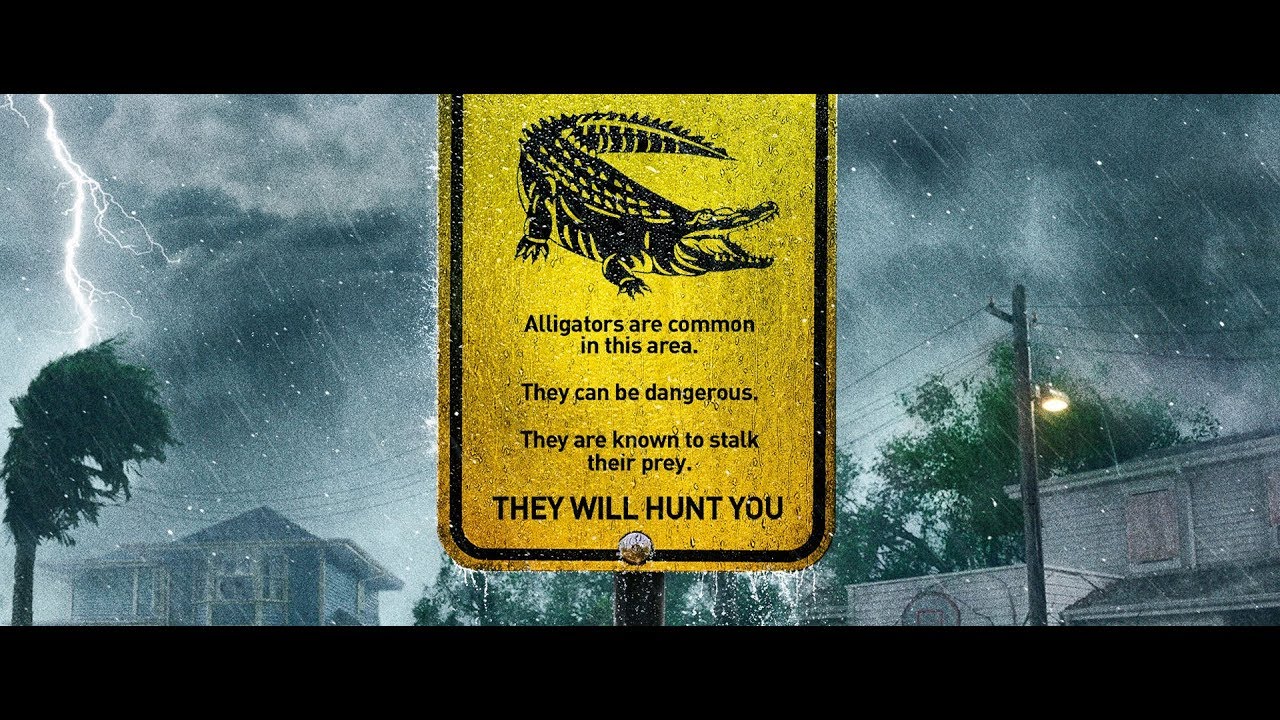
Crawl

Stuber

Hello, It’s Me

Gemini Man

by George Wolf

In 2013, a little-seen flick called The Congress glimpsed a future world where Robin Wright (as Robin Wright) didn’t have to act anymore, she just sold the rights to her likeness.

Barely six years later, Gemini Man shows us that day is coming more sooner than later. Trouble is, it shows us little else.

Will Smith is Henry Brogan, a master government assassin who wants to retire. He apparently hasn’t seen movies like the one he’s in, or he’d know that won’t sit well with villainous villain Clay Verris (Clive Owen).

Henry has barely taken that first fishing trip before he and Danny (Mary Elizabeth Winstead), the younger agent assigned to watch him, are globe-trotting for their lives.

Who wants them dead? And why?

Both those questions, though, have to get in line behind the big one: why does that hot new assassin look just like a young Henry?

So it’s Will vs. Will, as Oscar-winning director Ang Lee employs the latest de-aging CGI (somewhat impressive-but the mouth is still the final frontier) for a completely pedestrian black ops yarn overrun with standard issue spy game dialog, heavy-handed daddy issues and soggy sentiments on mortality.

There’s obvious talent involved here, and the film is certainly a showcase for the latest in tech wizardry. Much beyond that, though, and this Gemini Man’s biggest mystery is the very meaning of existence.

Welcome to the Jungle

Monos

by George Wolf

On a mountaintop that rests among the clouds, eight child soldiers guard an American hostage and a conscripted milk cow.

They play what games they can manufacture and train for battle under the exacting eye of The Messenger (Wilson Salazar), whose visits bring supplies, decisions on permitted sexual “partnerships” among the group, and orders from the commanding Organization on how to carry out an ambiguous mission.

While The Messenger is away, one bad decision creates a crisis with no easy solution, becoming the catalyst for Alejandro Landes’s unconventional and often gut-wrenching Spanish-language thriller.

Yes, you’ll find parallels to Lord of the Flies, even Apocalypse Now, but Landes continually upends your assumptions by tossing aside any common rulebooks on storytelling.

Just whose story is this, anyway?

The Doctora (Julianne Nicholson)? She’s the hostage with plenty of clever plans for a jungle escape, and a sympathy for some of her captors which may be used against her.

What about Bigfoot (Moises Arias, impressive as usual)? He’s got plenty of ideas on what’s best for the group, but without Messenger’s blessing as squad leader, limited power.

Wolfie, the “old man” of 15? Shy, baby-faced Rambo? Lady? Boom Boom?

Landes never gives us the chance to feel confident about anything we think we know, as the powerful score from Mica Levi (Under the Skin, Jackie) and an impeccable sound design totally immerse us in an atmosphere of often breathless tension and wanton violence.

While Monos has plenty to say about how survival instincts can affect the lines of morality, it favors spectacle over speeches. Even the gripping final shot, containing some of the film’s most direct dialog, conveys its message with minimal force, which almost always hits the hardest.

It does here. Landes, in just his second narrative feature, crafts a primal experience of alienation and survival, with a strange and savage beauty that may shake you.

Punk History

Desolation Center

by Rachel Willis

Director Stuart Swezey has a personal interest in telling the story of Desolation Center and the five truly unique events they coordinated in the mid-1980s. As one of the primary figures involved in the organization of these events, he has a lot of information on the subject.

And we’re lucky that Swezey decided to delve into his catalog of archival footage because there is a lot of amazing material presented in his documentary, Desolation Center. Through primary source material, interviews with the musicians and artists who performed, and event attendees, the documentary is an engaging historical look at a definitive moment in punk music history.

A brief history of the Los Angeles punk scene in the 1980s opens the film. The police department in Los Angeles was quick to break up punk shows, storming into venues and raiding the scene, interrupting shows and arresting concert goers. It was this perpetual harassment that led Swezey to the idea that they hold a show in the desert.

From the archival material, you get a sense of the intimacy of the first show. There are fewer than one hundred people in attendance, but a truly unique and awesome experience is conveyed through the existing video. From footage of the ragtag group of punk fans traveling on buses to the desert concert (which featured Minutemen and Savage Republic), the audience gets a glimpse at how monumental this was for the people who attended, performed, and organized the event.

The best part of Desolation Center is the archival photos and videos from the shows. Though the first show is small, word of mouth spreads, and the second desert show is bigger as evidenced by the footage from the second event. The second show’s line up included Berlin’s industrial band, Einstrüzende Neubauten and performing artist Mark Pauline, whose shows were astonishing if not entirely safe (at one point he attempts to blow a boulder from the side of a mountain during the show, but thankfully for those in attendance, it’s an unsuccessful endeavor).

Footage from the next three shows – which take place on a boat, back in the desert, and in a warehouse, and include bands like Sonic Youth and Meat Puppets – help the audience understand the experience. The shows are extraordinary events, and while watching the documentary, one feels lucky to be given the chance to see the astounding performances.

The interviews, at times, help the audience understand what it felt like to be a part of Desolation Center. Other times, they overinflate the experience. Swezey’s best course of action would have been to let the footage speak for itself, but his choice to include so many interviews may have been due to the film disintegrating over the years – some of the vintage film has clearly seen better days.

However, Desolation Center is a fascinating documentary and a great addition to the illustrious – and infamous – history of punk rock.

Snitches Get Stitches

Low Tide

by George Wolf

If you’ve been waiting for the perfect time to pitch your idea of re-making The Town as a coming of age drama, too late.

Writer/director Kevin McMullin beat ya to it with his first feature Low Tide, a nifty debut that leans on plenty of heist tropes cleverly downsized for teenage conspirators.

Alan (Keean Johnson) and Peter (IT‘s Jaeden Martell) are New Jersey brothers with roots in the fishing district. Mom has passed on so while Dad’s away working a boat, Alan breaks into houses with his goofy friend Smitty (Daniel Zolghadri from Eighth Grade) and scary pal Red (Alex Neustaedter).

The gang ropes young Peter in for his first job as lookout, but somebody snitched. Sergeant Kent (the always reliable Shea Wigham) gives chase just as they’re leaving the latest B&E, and not everyone gets away.

Not everyone knows about the very valuable score some of the boys found in that house, either, which leads to plenty of suspicion among thieves.

Plus, one honest to goodness buried treasure.

McMullin blends his genres well, creating an ambiguous time stamp that can resonate with various demographics, and indulging in some noir fun without collapsing into full Bugsy Malone territory.

We’ve been watching the talented Martell grow up since his St.Vincent breakout five years ago, and his thoughtful turn as the smart, cautious Peter shows his transition into adult roles should be a smooth one. The kid’s just a natural.

And it’s not just Martell. There’s not a weak link in this ensemble, giving McMullin plenty of room to pursue his vision with inspired confidence.

If you’ve seen even a few heist dramas, the only things that may surprise you are the age of these bandits and how little you fault the film for its familiarity.

Attempting to define the moment when a young life chooses the path it will follow is not exactly a new idea. By wrapping his teen characters in recognizably adult archetypes, McMullin keeps the drama just a hair off-kilter, rewarding our continued investment.

As Sergeant Kent tells one of the boys, “This is your origin story. You gonna be the good guy, or the bad guy?”

Low Tide makes it fun finding out.

Posse of One

Wrinkles the Clown

by Hope Madden

It’s fun to scare kids.

Oh, wait, is that illegal?

Documentarian Michael Beach Nichols (Welcome to Leith) looks at just about every side of that unusual argument with his sly documentary Wrinkles the Clown.

Ostensibly, Beach Nichols digs into the story of the man behind Wrinkles, a shady older gentleman living in a van in Fort Myers who failed as a traditional clown, so he improvised. Placing stickers around town with his masked face, clown name and phone number, Wrinkles offered to frighten your misbehaving children for a fee.

Yes, it is sort of genius.

As we ride around the beach town for the aged in a lived-in conversion van, we’re privy to the voice mails recorded at the Wrinkles number. Reprobate that he seems to be, Wrinkles is still considerably less frightening than the parents hoping to take advantage of his behavioral services.

Says one father, his child wailing in the background, “I want you to eat her.”

Wrinkles’s response? “My favorite kind of scares are the ones that pay the most.”

This kind of dry, deadpan humor fuels a film that explores the most peculiar sociological experiment.

Who would call? How will their children react? Why are clowns so effing scary in the first place? A solid documentarian, Beach Nichols understands that these are the deeper questions to be addressed. Admittedly, continually flashing the image of a grampa-faced clown holding balloons and peeking into your sliding glass door late at night is his excellent way to keep your interest as he digs into these concerns.

We hear from folklorists (with still-packaged action figures mounted to their office walls, so  you know they’re legit), child psychologists, pro-Wrinkles parents, anti-Wrinkles parents and one traditional clown.

Poor Funky. “There’s a whole generation growing up with no positive image of a clown whatsoever,” he laments, happy face in place.

It’s a fascinating look at the function clowns have served since their medieval beginnings, as well as the internet’s way of amplifying folk tales.

And while Beach Nichols, like the great showmen, performs his own sleight of hand, the film itself is more interested in the primal, collective unconscious tapped by those Wrinkles wrinkles.