Tag Archives: movie reviews

Hello, Old Friends

Terminator: Dark Fate

by George Wolf

I know it’s sounds about as insightful as “feel good movie of the year,” but Dark Fate really is the Terminator sequel we’ve been waiting for. Its fast- paced and thrilling, surprisingly funny, and manages to honor our investment in two classic characters while it carves out a damn fine blueprint for updating a warhorse.

After re-connecting us with T2: Judgment Day via some crazy good de-aging technology that apparently wasn’t shared with Gemini Man, Dark Fate gives us a future savior that must be protected.

She’s Dani (Natalia Reyes from Birds of Passage), a Mexico City factory worker being hunted by the latest and greatest Terminator, the Rev 9 (Gabriel Luna). But Dani has Grace (Tully‘s Mackenzie Davis, terrific), an “augmented” human from the year 2042 to protect her, plus a new friend with a long history of battling Terminators.

With the most badass entrance since Ripley wore the loader, Linda Hamilton is back as Sarah Connor, instantly giving Dark Fate enough juice to send all the sequels without her to a time of wind and ghosts.

But director Tim Miller is just getting started. The action-filled set pieces keep coming, each one surpassing the last and bursting with the stylized energy he brought to Deadpool.

Need to catch your breath? Oh, look it’s Arnold.

We knew he’d be back, but we didn’t expect him as a T-800 model living a quiet family life as “Carl,” and selling high quality draperies at rock-bottom prices. He’s a stone-faced hoot, and when Carl and Sarah get back in their guns blazing, side by side saddles, just try to keep the nostalgic smile off your face.

But even with all this surface level fun, the film’s secret weapon is a script from David S. Goyer, Justin Rhodes and Billy Ray that’s heady enough to wonder if they got an early look at Rambo: Last Blood and thought a 2019 franchise revival that wasn’t offensively tone deaf might be nice. Each character has an arc to anchor it, and while the film is always mindful of how the future can be rewritten, the topical nods to border security and valuing women as more than birthing vessels are unmistakable.

OK, fine, there are a few clunky spots, some lower-grade CGI on the hyper-jumps and an (understandable) overconfidence in how much we want this to work.

But we do, and damn near all of it does, enough to make you hope they won’t be back.

Many Mansions

Parasite

by Hope Madden and George Wolf

We’ve said it many times, but since there may still be people who haven’t heard, we’ll say it again. If Joon-ho Bong makes a film, you should see it.

Today, make it Parasite.

The film’s opening act introduces the Kim family, folding pizza boxes in a squalid basement apartment in Seoul and scrambling from room to room in search of free WiFi after the neighboring business locked theirs down with a password.

In a single scene the film appears to articulate its title and define its central characters, but the Kims are not who you think they are. In fact, every time you think you’ve pinned this film down—who’s doing what to whom, who is or is not a parasite—you learn it was an impeccably executed sleight of hand.

Longtime Bong collaborator Kang-ho Song (Memory of a Murder, The Host, Snowpiercer) anchors the film with an endearing and slippery performance. Kim patriarch, he is simultaneously beloved head of the household and family stooge. Watching Song manipulate his character’s slide from bottom to top to bottom again without ever losing his humanity—or the flaws that go along with humanity—is amazing. It’s a stunningly subtle and powerful performance.

He’s nearly matched by Yeo-jeong Jo as the righteously oblivious Mrs. Park, who spends her days in constant search for an empty validation that comes from every new indulgence for her children.

When young Kim Ki-woo ( Woo-sik Choi from Train to Busan and Bong’s last film, Okja) is able to convince Mrs. Park he’s a suitable English tutor for her daughter Da-hye (Ji-so Jung), the Kim and Park families become connected in one of the few ways afforded by the social order: master and servant.

Methodically, the rest of the Kim clan gains employment from Mr. Park (Sun-kyun Lee) through the systematic feeding of the Parks’ ego and privilege. And then just when you think Bong’s metaphoric title is merely surface deep, a succession of delicious power shifts begins to emerge.

Think the simmering rage of Joker with a completely new set of face paint.

As the Kims insinuate themselves into the daily lives of the very wealthy Parks, Bong expands and deepens a story full of surprising tenderness, consistent laughter and wise commentary on not only the capitalist economy, but the infecting nature of money.

Bong, as both director and co-writer, dangles multiple narrative threads, weaving them so skillfully throughout the film’s various layers that even when you can guess where they’ll intersect, the effect is no less enlightening.

Filming in an ultra-wide aspect ratio allows Bong to give his characters and themes a solid visual anchor. In single frames, he’s able to embrace the complexities of a large family dynamic while also articulating the detailed contrasts evident in the worlds of the haves and have nots.

Parasite tells us to make no plans, as a plan can only go wrong.

Ignore that, and make plans to see this brilliantly mischievous, head-swimmingly satisfying dive down the rabbit hole of space between the classes.

Insidious

Where’s My Roy Cohn?

by Hope Madden

There’s a tendency in horror cinema, after a villain has established his evil nature in a film or two, to turn the story around and find out what made him a monster. In that vein, Matt Tyrnauer’s documentary Where’s My Roy Cohn? is the madman’s origin story.

Horror fan that I am, I’ve still never been intrigued by what made Jason Jason, why Michael Myers was driven to murder, what caused Leatherface to don the mask. But it turns out, this horror story is more about the sequel, Son of Cohn.

“Where’s my Roy Cohn?” is a tantrum yelped by Donald Trump, unhappy about his attorney general at the time. And the title speaks volumes, about the kind of attack dog Cohn had been as a lawyer, and about the toxic legacy he’s left behind, right down to the oval office.

A fastidious student of the unlikely individual and his or her cultural impact, Tyrnauer made fascinating docs for years about little known citizens with big stories (Scotty and the Secret History of Hollywood and Citizen Jane among them). And though his latest certainly bears some of the markings of Tyrnauer’s previous films, the only person who saw Roy Cohn as a little guy with big ideas was Roy Cohn.

 It’s tough to overstate the ruthless, amoral impact Cohn has had on American politics and culture. Though Tyrnauer shows traces of compassion when underlining Cohn’s self-hating behaviors (whether as a Jew or a homosexual), the filmmaker’s assessment of his cancerous affect is evident.

Cohn was the prosecuting attorney who pushed the Rosenbergs toward the electric chair before he became McCarthy’s advisor, mouth piece and thug. Then on to New York, where his mafia entanglements (he represented John Gotti, Tony Salerno and Carmine Galante) only aided in his close professional and personal relationship with Donald Trump.

A bizarre connector between the worlds of Studio 54, the mafia and the Archdiocese of New York, Cohn’s party photos articulate some kind of bacchanal populated by members of each of these affluent, influential and decadent groups. It would be impressive it weren’t so ominous and seedy.

He also owned the news, dictating stories to the New York Post from his kitchen table and bringing Rupert Murdoch to the oval office with his own dear friend, Ronald Reagan.

Roy Cohn is dead, but as Where’s My Roy Cohn? makes dismayingly clear is that his ghost still haunts us.

It’s Not Your Phone That’s Dead

Countdown

by George Wolf

Who takes the time to read all those terms and conditions, amirite?

Countdown knows we just agree without reading, and has a little fun with the notion that some of us could pay for that….WITH OUR LIVES!!

Smartphones have become such a crutch in everyday life that “our phones want to kill us” is an inevitable – and perfectly understandable – horror premise. For his first big screen feature, writer/director Justin Dec uses it as the basis for a rewrite of The Ring with an unexpected side trip into Conjuring territory.

TV vet Elizabeth Lail takes the Naomi Watts lead as Quinn, a rookie RN who’s still mourning her mother and trying to be a supportive big sis to the teenaged Jordan (Talitha Eliana Bateman).

The mysterious death of one of her patients leads Quinn to download the urban legendary Countdown app. The verdict? Less than three days to live, which means Quinn and the similarly-fated handsome dude she met at the phone store (Jordan Calloway) have to learn the origin of the video tape I mean phone app so they can figure out how to opt out without penalty.

Look, The Ring was great PG-13 horror (in fact, one of the best). While Countdown isn’t nearly as effective, it gives today’s high school horror crowd their own version, and some decent creeps and jump scares to spur date-clinging.

For the rest of us, the film benefits from the comic relief of one smug phone guy (Tom Segura) and a priest (P.J. Byrne) who’s eager to battle demons. And it’s when those demons are conjured that Countdown finds a fun groove to call its own, with Dec ultimately managing to write himself a clever enough way out of these deadly terms and conditions.

So read before signing, or you never know what’s next.

Timeshare: sign up…and your time’s up!

Cool Running

The Great Alaskan Race

by Rachel Willis

If you’re looking for a movie to watch with your extended family this holiday season, you likely won’t go wrong with director Brian Presley’s film, The Great Alaskan Race. 

Based on a true story, Presley’s film, in which he also stars, is a touching dedication to the mushers and sled dogs who saved the children of Nome, Alaska from a deadly diphtheria outbreak in 1925.

The film opens in 1917 with a voiceover narration introducing the audience to Leonhard Seppala (Presley), a man who has embraced the Alaskan wilderness and its people. We jump ahead one year and learn a flu epidemic has killed half of the native population, including Seppala’s wife, leaving him to care for their infant daughter, Sigrid. 

The opening feels like an unnecessary prologue to a film that addresses this past through dialogue, but its intention is to help us understand Seppala’s motivation to participate in the treacherous run to deliver the diphtheria antitoxin. Once the disease begins to affect the children of Nome, Seppala is terrified his daughter will fall victim to the deadly illness.

Much of the film’s first act is devoted to understanding the tight-knit community in Nome. Through Sigrid (portrayed by Presley’s daughter, Emma), we see that she is beloved by both her indigenous relatives and the settlers to the region, as they share in raising Sigrid while her father works in the area’s gold mines. 

The movie does a good job of letting us know who the characters are, but when it comes to portraying the epic 674-mile run to deliver the lifesaving medicine, it falls short. There are too few scenes of the mushers and their sled dogs fighting the elements and too many scenes of Dr. Welch (Treat Williams) and his nurses tending to the sick kids. For a historical event known as the Great Race of Mercy, we never truly feel the danger and daring involved in such a momentous undertaking.

That’s not to say there aren’t any scenes in which Seppala and some of the other mushers contend with blizzards and subzero temperatures, there just aren’t enough. The scenes they do include are the movie’s most interesting moments. 

For those who already know the story (or have seen the animated Balto from 1995), there may not be many surprises. But for audiences who don’t know this history, or the reason the Iditarod is run yearly, or why there is a statue of Balto the dog in Central Park, they’re likely to learn a few interesting facts. Either way, The Great Alaskan Race is a movie that celebrates community and the great things people can achieve when they work together to help those in need.

Beyond the Sea

The Lighthouse

by Hope Madden and George Wolf

It’s easy to fall into the trap of believing that there are no new ideas in modern film, that everything coming out is a sequel, reboot, adaptation or biopic. And then you spend an hour and 49 minutes with two men and a lighthouse.

What did we just watch?

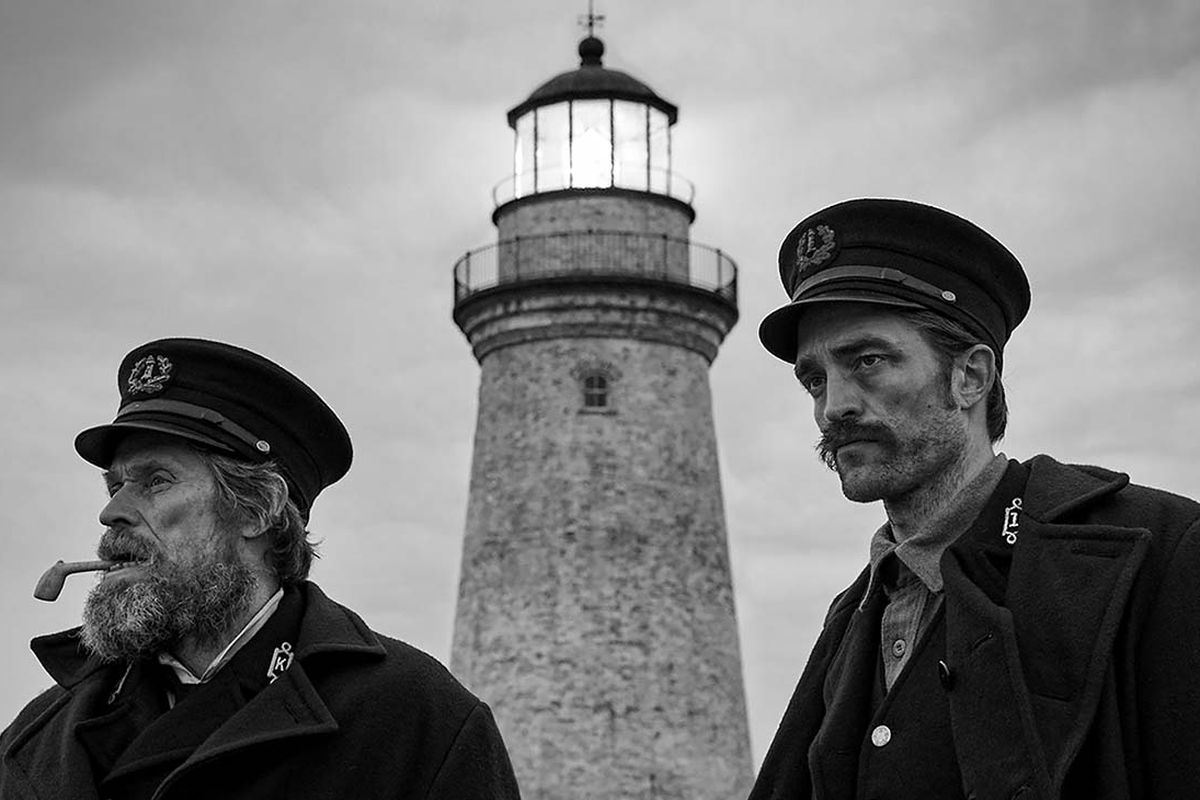
Director/co-writer Robert Eggers follows The Witch, his incandescent 2015 feature debut, with another painstakingly crafted, moody period piece. The Lighthouse strands you, along with two wickies, on the unforgiving island home of one lonely 1890s New England lighthouse.

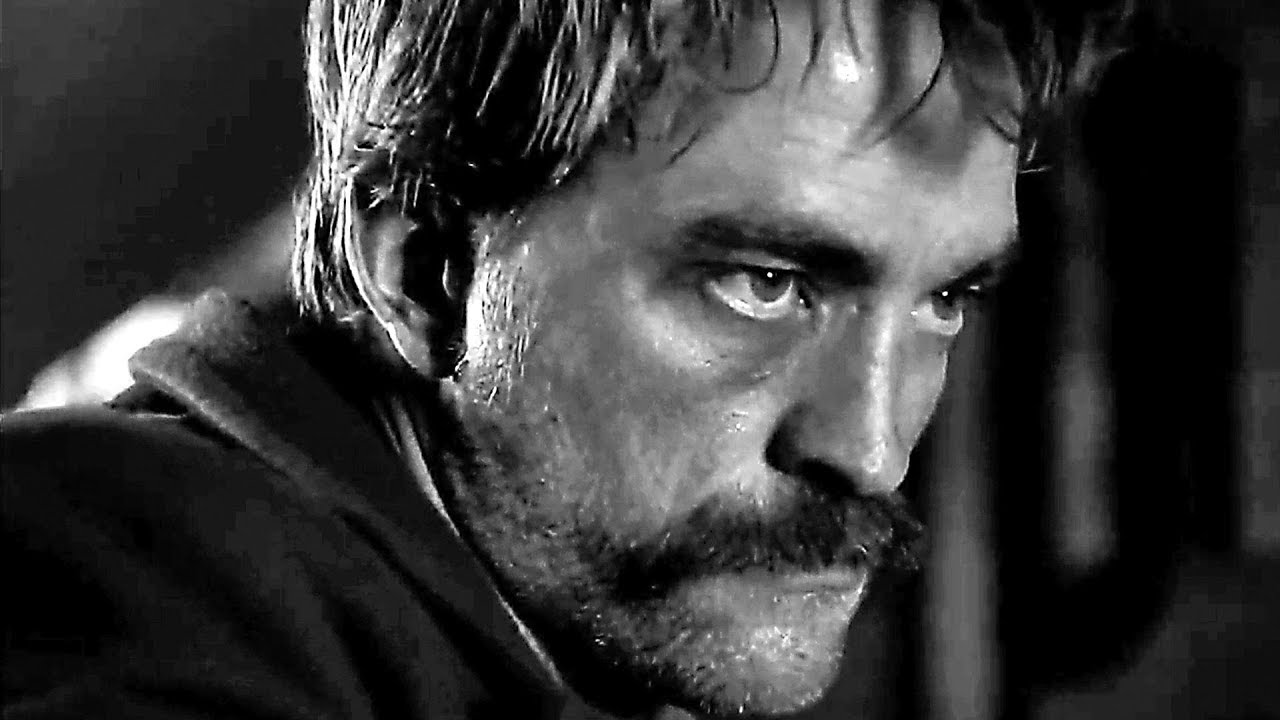
Salty sea dog Thomas Wake (Willem Dafoe) keeps the light, mind ye. He also handles among the most impressive briny soliloquies delivered on screen in a lifetime. Joining him as second is one Ephraim Winslow (Robert Pattinson)—aimless, prone to self-abuse, disinclined to appreciate a man’s cooking.

Eggers’s film is a two-man show, a dizzying, sometimes absurd and often flatulent descent into madness.

The atmosphere is thick and brisk as sea fog, immersing you early with Jarin Blasche’s chilly black and white cinematography and a Damian Volpe sound design echoing of loss and one persistent, ominous foghorn.

For everything Eggers brings to bear, from the Bergmanesque lighting and spiritual undertones to the haunting score to the scrupulous set design to images suitable for framing in a maritime museum – not to mention the script itself – The Lighthouse works because of two breathtaking performances.

Dafoe may be one of the few actors alive who can take this manic-eyed, gimpy-legged version of the Simpson’s sea captain and force us to absorb his every eccentricity. When Winslow finally screams “You’re a parody!” it both wounds and reassures, as by then we’re eager to accept any bit of confirmation that we can trust anything we’re seeing.

As our vessel into this waterlogged nightmare, Pattinson impresses with yet another fiercely committed performance. Winslow comes to “the rock” full of quiet dignity, only to become a soul increasingly tempted by mysterious new demons while running from old ones.

Winslow’s psychological spiral has so many WTF moments, it would crumble without the sympathetic anchor Pattinson provides from the film’s opening moments. Twilight seems like a lifetime ago, and in case you’ve missed any of the impressive indie credits he’s racked up the last few years, we’ll say it again: Pattinson is the real deal.

So is Eggers. His mastery of tone and atmosphere carries a weight that’s damn near palpable. The Lighthouse will leave you feeling cold, wet and woozy, as Eggers trades the literal payoff from The Witch for a series of reveals you’ll be struggling to connect.

This is thrilling cinema. Let it in, and it will consume you to the point of nearly missing the deft gothic storytelling at work. The film is other-worldly, surreal, meticulous and consistently creepy.

And we’ll tell you what The Lighthouse is not. It is not a film ye will soon forget.

The Long Way Home

Midnight Traveler

by George Wolf

“How do you say ‘help’ in English?”

A harrowing first person account of one family’s flight from a death sentence, Midnight Traveler frames the refugee debate with honest, heartbreaking intimacy.

In 2015, the work of Afghan filmmaker Hassan Fazili earned him a call for death from the ruling Taliban. Fazili and his family sought asylum in neighboring Tajikistan, only to be denied after 14 months.

Midnight Traveler joins Fazili, his wife Nargis and two young daughters the night before their scheduled deportation back to Afghanistan. Filmed only on three iPhones, the movie documents the family’s years and thousands of miles-long journey in search of a safe place to call home.

In last year’s Oscar-winning doc Free Solo, the filmmakers expressed angst over the effect their cameras might have on the decisions of free climber Alex Honnold. As the dangers mount for Fazili and family, we begin to feel the same, worrying our intrusion might somehow cloud their judgement.

As the Fazili family deals with smugglers, broken promises and spur of the moment evacuations, we also see smaller moments of daily life. The daughters manage to laugh and play, and there is tenderness between Hassan and Nargis, as they smile over past memories of a much simpler and safer time.

Even with a verite nature that is often frantic and understandably desperate, Hassan’s footage reveals an unmistakable eye for form and structure.

This is a family literally crying for help in real time, and a human rights issue that can suffer from anonymous enormity transforms before our eyes, consistently adding strength to the touching impact of Midnight Traveler.

Refugees are more than statistics and political footballs. They are human beings with families, dreams and dwindling options. Within the reams of names on a waiting list are urgent, personal stories of survival.

This is one.