Tag Archives: movie reviews

M&A

Emma

by Cat McAlpine

Emma Woodhouse, handsome, clever, and rich, with a comfortable home and happy disposition…had lived nearly twenty-one years in the world with very little to distress or vex her.”

So begins Jane Austen’s final novel, and so too starts Emma., with text across the screen that almost seems to smirk. We find Emma as she is described: beautiful, put together, and just mischievous enough. She is also vain, childish, and compulsive in a way that mysteriously endears you to her. Anya Taylor-Joy (The VVitch, Thoroughbreds) delivers a masterful performance that is always on the verge of a laugh or a tear, depending on which way the day goes.

Well matched in chemistry and in his ability to show an astonishing depth beneath the veneer of decorum is Johnny Flynn as George Knightley. I have loved Flynn since Lovesick was titled Scrotal Recall (yes, really), and his performance in Emma. is earnest and authentic as always.

The character growth, across the cast but most importantly for Emma and Knightley, is masterfully done by both and makes this one of my most favorite period pieces. There are no nonsensical professions of love, you can see every spark light and burn – even in the slightest nods and prolonged bits of eye contact. Josh O’Connor so well telegraphs his nervous and misplaced intentions as Mr. Elton, that it’s even funnier that Emma is in the dark ’til the end.

Supporting the hilarious, heartfelt journey is a cast of wild and weird characters with impeccable timing, namely Bill Nighy as Mr. Woodhouse, Mia Goth as Harriet Smith, and Miranda Hart as the unfathomably lovable Miss Bates. In fact, it is the background of Emma.’s tapestry that makes the story so vibrant. So rarely do the wealthy find themselves truly alone, and director Autumn de Wilde capitalizes on the presence of society members and household staff alike—often out of focus but still on screen—to mine even more comedic opportunities.

In her first full length feature, de Wilde deftly uses the camera to double down on subtext and deepen the most important moments. Her use of camera emphasizes the screen as its own type of narration and honors the story’s origin as a novel. Eleanor Catton’s debut screenplay expertly weaves the multitude of characters and circumstances. Neither de Wilde nor Catton is afraid to slow down and strike a vignette, but the pacing is only occasionally labored, as the gorgeous cinematography and costume design alike provide plenty to gawk at.

Finally, I would be remiss to leave out the score, which has its own humor and cagey attitude to support the litany of other masterful elements. The entire production has a beautiful, rhythmic choreography to which all things, movement, people, and intentions, inevitably adhere.

I often both benefit and suffer from being sporadically read. As George Knightly muses, “Emma has been meaning to read more ever since she was twelve years old.” Me too, bud. I’ve never read Emma, or seen an adaptation, so I can’t tell you how well this holds up to the source material. Based on the reactions of the mostly middle-aged female audience in my showing, it holds up marvelously. Based on my own viewing, this is a charming, funny, and soon-to-be-classic viewing experience for anyone.

I Don’t Want to Go Out—Week of March 2

If you missed the exceptional Queen & Slim during its theatrical run, now is your opportunity to rectify that situation. And that’s not the only solid choice you have facing you and your comfy couch time. We are here to guide you.

Click the title to link to the full review.

Queen & Slim

Dark Waters

Disappearance at Clifton Hill

The Furies

Good Intentions

Blood on Her Name

by Hope Madden

Good intentions are very mortal and perishable things.

So are people.

Leigh Tiller lets good intentions muck up what should have been an easy crime to get away with. No one would have known. No one would have suspected. Not that there wouldn’t be complications, but she’d deal with those later.

While co-writer/director Matthew Pope doesn’t reinvent the wheel with his Rust Belt noir Blood on Her Name, it is actually the refreshing simplicity of the storytelling that compels you to pay attention. That and Bethany Anne Lind’s performance.

As Tiller, Lind weaves a dotted line between upstanding and sketchy. Her compass doesn’t always point due North, or maybe it does, or at least maybe it could. Right? It could. It’s this struggle, most of it internal, that Lind characterizes with subtle anguish to give the film an aching, remorseful tenderness, a longing for what should be but what is always just out of reach.

Pope populates his low rent neighborhoods with an intriguing mix of characters, none of whom are rendered with broad strokes. Dani Wilson is especially strong as a fading white trash hottie, while Will Patton finds dimension as an old man who believes he deserves a second chance but probably does not.

Blood on Her Name is a film that should feel bleak but it rebels against its own grim fate. This is a film that knows Leigh Tiller deserved better choices, stronger options. It’s a film that doesn’t want to give up on small town, low rent, hard work. But it’s also a film that’s bracingly clear-eyed about the reality that balances that optimism.

The result is a memorably quiet eulogy.

https://www.youtube.com/watch?v=z2-rIloYMP0

Just Another Tricky Day

Disappearance at Clifton Hill

by Hope Madden

A seedy motel, a low-rent Sigfreid & Roy, the sketchy side of a tourist town during low season—Albert Shin’s Disappearance at Clifton Hill is a neo-noir told mainly in nostalgic colors, smoke and mirrors.

The setting for the mystery is the Rainbow Inn Motel, a dump just off the Niagara River gorge that’s seen better days, though it’s tough to imagine when those days might have been.

Abby (Tuppence Middleton – British much?) is home to complicate the fulfillment of her mother’s will, because that will involves selling the old Rainbow Inn to the town mogul who looks to raze Abby’s memories in favor of day-glo paint ball.

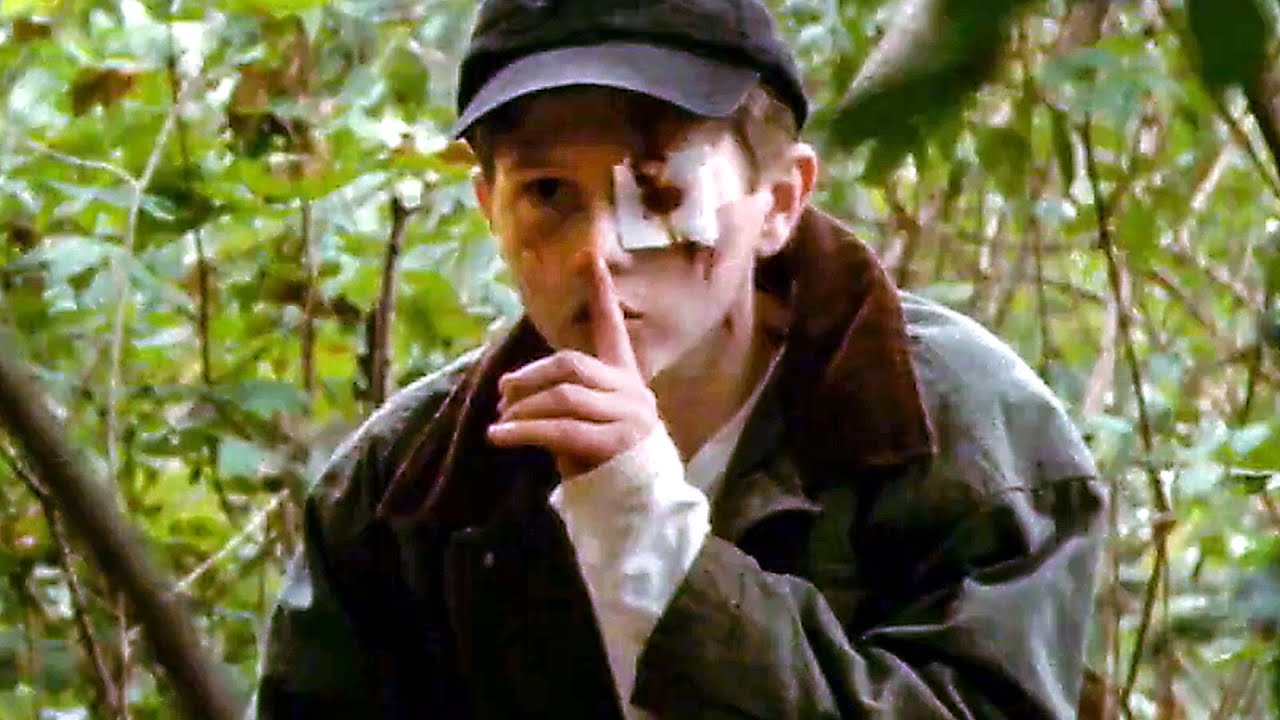
What is it she remembers, exactly? A fishing trip down in that gorge. A one-eyed boy. A kidnapping.

Shin mines all those wistful ideas about going home again as Abby begins sifting through sordid secrets, wealthy families, and the decay of the once wondrous world of her youth. Where will her sleuthing lead?

Aah, the untapped resources of your local public library. Is that a microfiche machine?!

Shin excels at nailing atmospherics. Tourist trap towns do feel seedier off-season, their sparsely populated amusements somehow sad. In Shin’s hands, the town, its near vacant fun house and caged tigers all conjure the notion of childhood perverted.

Magician’s trickery. Sleight of hand.

The delightfully dodgy Abby is the epitome of an unreliable narrator, although to Shin’s endless credit, we’re not asked to believe something she’s telling us. We are with her, step by step, as she convinces herself of something, which allows us—like Abby herself—to really hope she might actually be on to something.

There’s a fluidity to the way Shin and co-writer James Schultz unveil Abby’s own sketchiness, beginning with a barroom conversation/seduction. This is also where he begins to introduce a delicious stew of supporting characters, each one a little quirkier than the last.

Hannah Gross particularly impresses as Abby’s far more grounded sister Laure, but I was probably most excited about Walter.

When you think of David Cronenberg—and I think of him often—you don’t always consider his acting. But he does add a little something something to films. Here he charms as Walter, area historian and podcaster: “Remember, rate and review.”

Disappearance at Clifton Hill is not a flawless film, but it is deceptively competent. It’s fun and clever. Middleton’s clear eyed yet delusional Nancy Drew never ceases to be appealing.

And just when you think Shin and company have tidied up a little too quickly…smoke and mirrors, my friend.

Attention Getter

Seberg

by George Wolf

Another film on the blonde 60s starlet who died far too young, and under mysterious circumstances? Yes, a starlet, but not Monroe.

She may not have been the icon Marilyn was, but Jean Seberg’s celebrity life and tragic death had its own “Candle in the Wind” comparisons, all embodied with beguiling grace by Kristen Stewart even when Seberg falls back on superficiality.

Seberg’s breakout in 1960’s Breathless made her a darling of the French New Wave, but Jean was an Iowa native. As the winds of change in her homeland began raging, Seberg took an interest in the counter-culture that was strong enough to make her a target of the FBI.

Director Benedict Andrews anchors the film in Seberg’s involvement with the civil rights movement, and her relationship with activist Hakim Jamal (Anthony Mackie). Two FBI agents (Vince Vaughn and Jack O’Connell) report Seberg’s status as a “sympathizer,” and the increasing surveillance throws her life into turmoil.

Andrews, a veteran stage director, seems most at ease recreating Seberg’s glamorous life, enveloping the film in an effective old Hollywood gloss and Stewart in consistently loving framing. She responds with what may be her finest performance to date.

We meet Seberg when she is already a star, and Stewart conveys a mix of restlessness, conviction, selfishness and naivete that is never less than compelling. In just over an hour and a half, Stewart takes Seberg from confident fame to paranoid breakdown, and the arc always feels true.

O’Connell leads the strong supporting cast (also including Stephen Root, Margaret Qualley and Zazie Beets) with a nuanced performance as the young agent with a nagging conscience. But while the script from Joe Shrapnel and Anna Waterhouse (The Aftermath, Race) wants to draw comparisons with more recent government overreach, Andrews has trouble meshing the FBI thriller with the introspective biography.

Too much of the spying agenda (“This comes from above!”) seems paint by numbers, but it never sinks the film thanks to Stewart’s command of character. Much like her Twilight co-star Robert Pattinson, Stewart has followed her blockbuster fame with a string of challenging projects and impressive performances.

In case you’ve missed any, Seberg is a good place to start catching up.

Weaponizing Anxiety

Viral: Antisemitism in Four Mutations

by Christie Robb

“Those who cannot remember the past are condemned to repeat it[1].”

In the documentary Viral, director Andrew Goldberg explores the recent rise of antisemitism in the United States and Europe. In a painterly black and white introductory sequence he gives the subject matter the feeling of a fairy tale. The film begins, “It started long ago with a lie about the Jew…”

If only the rest of the film was fiction.

Goldberg compares antisemitism to a virus (topical) which evolves and spreads, empowered by its ability to adapt to the people and circumstances in different locations. The virus began thousands of years ago. Now, one of the interview subjects suggests, we are nearing the “end of a Jewish golden age of feeling comfortable.” The virus is ending a period of dormancy and becoming active once again.

In this film, we are introduced to four “mutations” of the antisemitism virus: the Far Right, USA; Blaming the Jew, Hungary; The Far Left, The United Kingdom; and Islamic Radicalism, France.

 Although tweaked in each mutation to suit the individual circumstances, the “virus” involves getting people to turn off their ability to think critically and giving them a embodied focus on which to place the blame for their fears or anxieties. (See Germany in the 1930s.)

In the US it’s the Jew as orchestrator of the Civil Rights movement and subsequent supposed lessening of accustomed white privileges. In Hungary it’s a campaign to brand George Soros as a puppet master apparently forcing Muslim refugees into the nation to destabilize national culture. In the United Kingdom it’s Jewish colonial capitalists evidently conspiring against the working class. In France, it’s Muslim former-colonial subjects violently murdering random French Jews because they ostensibly back the Palestinians against the Israelis.

Individual Jews are conflated with “the Jew,” which is associated with the threat, the change, the loss of power. Concepts that take years of study to unpack are simplified and reduced again and again until the result is a caricature of a hook-nosed grinning villain with a neon arrow pointing to it and letters spelling out, “B-A-D G-U-Y.”

The whole simplification process is only made more efficient by the availability of the Internet. Once the conspiracy theory is tailored for a local audience it can be repurposed by anyone with a cell phone and/or social media account and replicated over and over.

It’s a scary documentary Goldberg has put together. It’s scary because of the real-life examples of abuse, vandalism, and murder, and because the film itself can be a bit simplistic. This could easily be a miniseries or several individual films, rather than Viral‘s quick summaries of really complicated issues. (Just unpacking everything around the creation of the state of Israel could be its own series – or academic career.)

Still, it’s useful to be aware of when, how, and where a virus is surging. Those of us who are willing to think must keep an eye on the present so we are not doomed to repeat the past.


[1] A quote by George Santayana which is itself frequently misremembered.

Put the Load Right On Me

Once Were Brothers: Robbie Robertson and The Band

by George Wolf

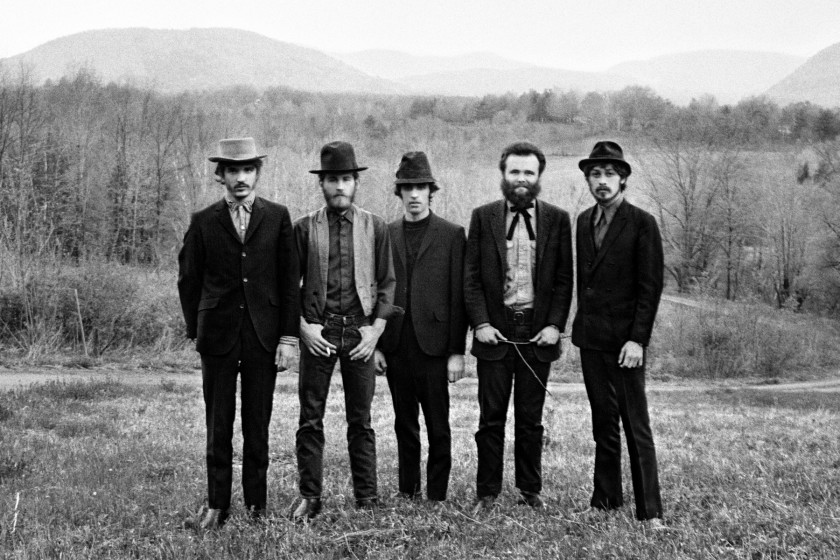
How big of a music geek are you if you can name all five members of The Band?

They were the rare musical breed whose biggest personality was not the lead singer. Still, even charismatic guitarist Robbie Robertson remained largely anonymous next to the very rock stars his work was influencing.

Writer/director Daniel Roher makes Robertson and his memoir the anchor of Once Were Brothers, and while that does limit the film’s scope, Robertson is such an enthusiastic and engaging storyteller – and his access is so valuable – you come to understand the choice pretty quickly.

Robertson met his future Band-mates while he was still a teenager, playing guitar and writing songs for Ronnie Hawkins and the Hawks. The Hawks’ talent soon outgrew Hawkins rockabilly style, as Robertson and the boys moved on to a legendary Hawks collaboration with Bob Dylan, before cementing their legacy as The Band.

Roher and executive producer Martin Scorsese surround Robertson (looking fantastic at age 76) with praise from of a succession of legendary fans (Eric Clapton exclaims “Big Pink changed my life,”) and, of course, plenty of priceless archival footage.

Music docs are always going to be most interesting to the subject’s core following, but even casual Band fans will get bracing reminders of Robertson’s guitar virtuosity and drummer Levon Helm’s passionately soulful vocal power.

Plus, getting a peek at Dylan telling folk fans “Don’t boo me anymore!” and hearing Scorsese deconstruct his own filmmaking on the iconic concert film The Last Waltz fosters an engaging intimacy. At times, the reach extends beyond Robertson’s music history to touch on the creative process itself.

As a rock doc, Once Were Brothers blazes few trails, but the ones it travels are well worth revisiting. And though the lack of any counterpoint from surviving member Garth Hudson is noticeable, tour guide Robertson is the kind you’re ready to tip when the day is done.

Rick Danko, Richard Manuel, Hudson, Helm and Robertson, by the way, but you knew that.

Geek.

I Don’t Want to Go Out—Week of February 24

It’s here! The one movie of 2019 that everybody loved, and why not? Plus, you know what? The rest of this week’s crop ain’t half bad.

Knives Out

Brainiac: Transmissions After Zero

Scandalous: The True Story of the National Enquirer

Frozen 2

Color Out of Space

Lukewarm Runnings

Olympic Dreams

by Matt Weiner

You have to admire the chutzpah when the first feature film ever to shoot on location at the Olympics has the star athlete’s event be over immediately after the opening ceremony.

But it’s an anticlimax that sets the tone for the rest of Olympic Dreams. Cross-country skier Penelope (real-life Olympian Alexi Pappas) is at a crossroads in her life. Young in years but already worn out in a world that measures time in all-consuming four-year spans, she spends the rest of her time at the Olympic Village wandering around, talking to fellow athletes and delaying the inevitable return to reality when she has to go back home.

She meets volunteer dentist Ezra (Nick Kroll, foreshadowing an effective mid-career transition to these reined in dramedy roles), an outgoing Olympics nerd who’s just happy to be there.

The two hit it off, united by a vague sense of longing for… well, something. It’s a movie with modest aims, which are often dwarfed by the impressive settings. The story (by Pappas and Kroll along with Jeremy Teicher, who also directs) feels like it came long after securing the PyeongChang Olympic Village as the setting.

There’s the barest of plots, a sort of fish-out-of-water romcom that plays like a mumblecore Lost In Translation. As endearing as the two leads are, there’s not a lot of scaffolding to help them out. The film relies less on subtle characterization and more on a safe bet that you’ve seen these particulars enough to fill in the blanks yourself.

It’s a shame because Kroll and Pappas excel in their elements. Between Kroll’s deadpan improv with the various athletes and Pappas’ sincere empathy for the sacrifice and emotional highs and lows constantly unfolding in the background, it’s a wonder the filmmakers didn’t play it straight as a documentary.

The film has plenty of warm moments, with Pappas especially managing to balance a range of heartbreak, uncertainty and charm in a way that doesn’t get to come through in the official behind-the-scenes featurettes during the Olympics.

There’s just not enough there to back her up. The film might take us to the finish line, but just barely.