Tag Archives: movie reviews

Devotion

The Altruist

by Hope Madden

You will not see this one coming.

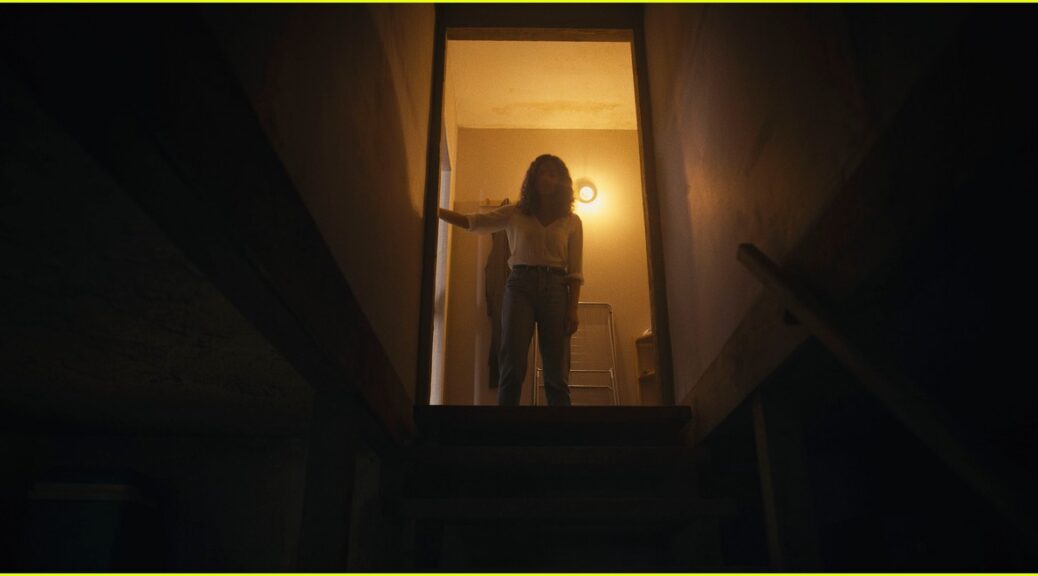
A fascinating amalgamation of absurdism, visual storytelling, mystery and body horror, Matt Smith’s short The Altruist alarms and entertains in equal measure. Menacing images — metal hooks hanging from a ceiling, filthy cellar walls, a woman in a befouled metal framed bed — to set a mood he will puncture in the most remarkable, unexpected and weirdly humorous ways.  

Sound design, too, keeps telling you that you know what is about to happen. And yet, with every passing scene, you are bound to wonder What the hell is going on?

There is a layer of wild absurdity just beneath the expertly crafted horror environment, but Smith has more in store than cheeky sleight of hand. The story of Daniel (Smith) and his lady love (Elizabeth Jackson) mines a revulsion that, though extreme in this case, hits a nerve. And even that doesn’t go where you expect it to go.

Both actors deliver peculiarly lived-in and rounded characters. Jackson, who essentially repeats one line in varying degrees of neediness, defies limitations. Smith, who benefits from more space and dialog to work with, creates a tight mix of anxiety, guilt and longing.

By the time the film turns playfully sexual, well, just try not to be disturbed.

Set design, shot choices and Cronenberg-level viscera demand your constant attention. But more than anything, the film is a masterpiece of imagination. Icky, glorious imagination.

https://vimeo.com/469109438

The Altruist begins screening on Bloody Bites from Bloody Disgusting and Screambox on September 19.

Sound + Vision

Moonage Daydream

by George Wolf

Longtime David Bowie fans know of his early fondness for the “cut up” method to writing songs – literally cutting up lines of written lyrics and then shifting them around in search of more enigmatic creations.

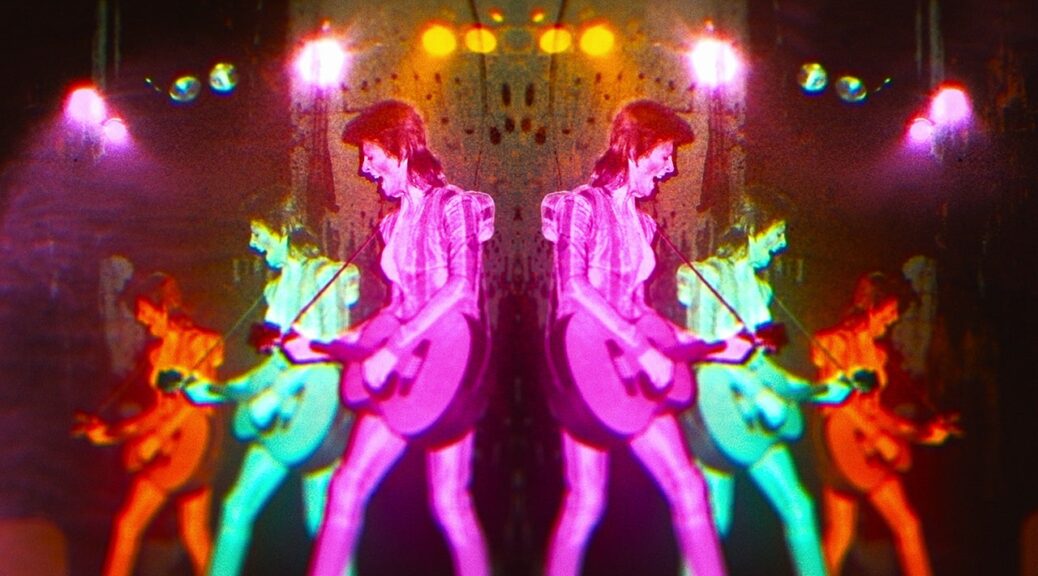
Director Brett Morgen takes a similar approach to telling Bowie’s story in Moonage Daydream, a completely intoxicating documentary that immerses you in the legendary artist’s iconic mystique and ambitious creative process.

Bowie’s estate gifted Morgen with the key to the archives, and the celebrated documentarian (The Kid Stays in the Picture, Jane, Cobain: Montage of Heck) pored through the thousands of hours of footage for moments that could stand on their own while serving a greater narrative. The result is a glorious explosion of sound and vision, revealing Morgen’s choice to trust himself as film editor was also a damn good one.

Anchored by atmospheric bookends that evoke Bowie’s image as the ethereal “man who fell to Earth,” Morgen unleashes a barrage of concert sequences, still photos and interviews clips, interspersed with bits of old movies, news reports and pop culture references. It’s a luscious and cinematic (especially in IMAX) mashup, and one that slowly unveils a subtle but purposeful roadmap.

The music is thrilling and visceral, of course, but the interview footage reveals Bowie to be tremendously inquisitive and philosophical. We see him as a truly gifted artist who felt satisfaction when he “worked well,” but apprehension with new projects (such as painting) that didn’t yet meet his standards.

At first, Morgen’s approach may seem scattershot, as he appears more concerned with blowing our minds than chronological purity. But what becomes clear is that Morgen’s commitment leans toward grouping slices of Bowie’s life that speak to who he was (i.e. juxtaposing a “Rock and Roll Suicide” performance from the 70s with comments about his “sellout” 80s period). And by the time Bowie’s looking back fondly on his first meeting with wife Iman, an appropriate and touching timeline has emerged.

Though the last years of Bowie’s life are skirted just a bit, Moonage Daydream is like no music biography that you’ve ever seen. It’s a risky, daring and defiant experience, which is exactly the kind of film David Bowie deserves. Expect two hours and fifteen minutes of head-spinning fascination, and a sense that you’ve gotten closer to one Starman than you ever felt possible.

Watching the Detectives

Confess, Fletch

by George Wolf

Casting Jon Hamm as the new Fletch seems like a bullseye. He has leading man charm, sharp comic timing and plenty of skill handling a one-liner.

Really, the only minus is that he might be too handsome. He doesn’t really seem like a hat guy, so that Lakers cap on his head in Confess, Fletch feels like a forced homage to the Chevy Chase original. But Hamm is wise enough to avoid imitating Chase outright, teaming with director/co-writer Greg Mottola for an Irwin M. Fletcher that’s closer to the star of Gregory McDonald’s source novels.

We catch up with Fletch as he’s left the newspaper game behind, disenchanted with the effects of the digital age. But his rep as an L.A. investigative reporter “of some repute” lands him freelance sleuthing gigs, like searching for a stolen Picasso that his Italian girlfriend Angela (Lorenza Izzo) needs as ransom for her kidnapped father.

But then a dead girl turns up in Fletch’s rented Boston townhouse and the local detectives (Roy Wood, Jr. and Ayden Mayeri) just want him to confess already. And they’d also like him to stop taking his shoes and socks off.

Of course, Fletch remains sarcastically cool throughout their surveillance, investigating on his own and uncovering a few other suspects: his stoner neighbor (Annie Mumolo), a germaphobe art dealer (Kyle MacLachlan), Angela’s mother aka “The Countess” (Oscar winner Marcia Gay Harden, hamming it up) and even Angela herself.

Mottola’s (Adventureland, Superbad) story building doesn’t stray far from the structure of Michael Richie’s 1985 original, which may not be ambitious but is at least understandable, considering the same novelist assembled both mysteries. The major difference is the lack of inspired silliness, which brings us back to the casting of Hamm.

The fake names Fletch gives out aren’t so outlandish, and you won’t find any SNL-ready skits about playing for the Lakers or going undercover at Dr. Jellyfinger’s office.

But all that was catered to what Chevy Chase did best, which was playing Chevy Chase. Hamm is actually acting. The irony here is that while the character of Fletch is now more fully formed, the movie itself just isn’t as consistently funny.

There are plenty of smiles, though. The cast of unusual suspects can be a hoot (especially Mumolo) and running gags about Fletch’s fluency in Italian, his bare feet and his attempts at charming the detectives bring some chuckles. A Mad Men reunion with John Slattery as Fletch’s salty old newspaper editor is a nice touch, as well.

Years from now, you won’t be quoting any lines from Confess, Fletch. But the hour and a half you spend with this breezy whodunit isn’t a waste, and might leave you feeling like you just met the real I.M. Fletcher.

Your Friends and Neighbors

Speak No Evil

by Hope Madden

There’s little as uncomfortable as a good horror of manners—like a comedy of manners, but the social discomfort makes way for grim, horrifying death. Michael Haneke did it best with Funny Games (either version). Just last month, Shudder released the lighter but no less bloody Who Invited Them.

Denmark comes knocking with co-writer/director Christian Tafdrup’s Speak No Evil, a terribly polite tale of Danes and Dutchmen that veers slowly but relentlessly toward something sinister.

Bjørn (Morten Burian) is facing a crisis of masculinity. He’s too polite to articulate it, which only exacerbates that strangling sensation.

It’s a testament to Burian’s performance that he remains sympathetic throughout the film, however selfish and weak his actions. Playing his wife, Sidsel Siem Koch easily embodies the proper but awkward and easily cowed Louise.

Their adversaries? The good-looking, fun-loving, demonstrative Dutch couple Patrick (Fedja van Huêt) and Karin (Karina Smulders). The two families — each with a youngster in tow — run into each other on holiday and become pals. Sometime later, when Bjørn & Louise receive a postcard inviting their family to visit, Bjørn is anxious to go.

It takes some quiet, polite maneuvering, but before long, he, Louise and little Agnes (Liva Forsberg) are face to face with their hosts and the escalating tension grows almost unendurable. Speak No Evil quickly becomes a sociological experiment that questions our tendency to act against our own instincts, side with the cool kids, and lose who we are.

Van Huêt ably maneuvers Patrick’s manipulations, his about-faces, and his indefatigable charisma.

Sune Kølster’s score works deliriously against cinematographer Erik Molberg Hansen’s beautiful images to create dissonance (again, in much the same way Haneke did, but if you’re going to copy someone, he’s as good a place to start as any).

Tafdrup’s script, co-written with Mads Tafdrup, is sneaky in the way it treads on social anxiety, etiquette, politeness. You see how easily gaslighting alters the trajectory of a conversation, the course of action.

There is a resignation that feels unearned, even contemptuous. But actions throughout are believable enough, each couple’s interactions authentic enough, and the tensions palpable enough to forgive slight lapses. Speak No Evil is a grim trip, but there is no question that it’s well made.

Divided We Fall

God’s Country

by George Wolf

It’s only September, but I’m taking out my Oscar scorecard, and writing in Thandiwe Newton. With a pen.

Because if she doesn’t get noticed for her astounding performance in God’s Country, there’s somerthing wrong with all of us.

The film is also an incredibly assured sophomore effort from director and co-writer Julian Higgins, expanding on the themes and insight hinted at nearly twenty years ago in his feature debut Mending Wall.

Newton stars as Cassandra Guidry, a professor at a small college near the mountain wilderness. The grief from her mother’s recent death is deep, but she’s committed to teaching her students the importance of persistence in the strive for change.

“Sandra” hopes that leaving a note on the truck windshield will change the behavior of two hunters (Joris Jarsky, Jefferson White), who trespass on her property. It does not, and a battle of wills slowly escalates into a powder keg that Higgins uses to comment on the divides in this country that often seem impossible to navigate.

While Sandra struggles with the reaction from the local sheriff (Jeremy Bobb), we learn more about her past, and about things that make her keenly aware of where this situation could he headed. And as Higgins advances the narrative with onscreen text marking off the days, Sandra’s belief that “we all gotta play by the same rules if this is gonna work” can also apply to her push for diversity in the university’s search for a new Dean.

Higgins’s camerawork is barren and cold, buoyed by starkly beautiful cinematography from Andrew Wheeler. His script treads with care and precision. Nothing feels like a cliche, even though God’s Country lives in areas where cliches often roam freely. These characters and their flaws feel familiar, but Higgins finds intimate ways to offer hope for redemption, if only for the briefest of exchanges.

And why won’t Sandra let the parking thing go? Newton makes it achingly personal, carrying the weariness of swimming against the current in her every steely glare. Her final scene, though nearly dialog-free, is exquisitely devastating and sure to follow you home.

Just how many “no big deals” are allowed before there is indeed a big deal? And who decides?

God’s Country is full of the persistent ugliness that plagues ours. Yet none of its issues are raised with a heavy hand. Measured and often visual storytelling is at work here, carried on the shoulders of a sensational lead performance.

Scare BnB

Barbarian

by Hope Madden and George Wolf

When you see as many movies as we do – especially horror flicks – taking us places we did not see coming is much appreciated.

Barbarian certainly does that, mashing horror, dark comedy and social commentary to wild and mostly satisfying ends.

Tess (TV vet Georgina Campbell) is in Detroit for a job interview. She books an Airbnb in an unsavory part of town, only to find out Kieth (Bill Skarsgård) booked the same place on HomeAway. What to do?

They talk, flirt a little, and Tess agrees to stay in the bedroom while Keith takes the couch. They’ll sort it out in the morning.

In his feature debut, writer/director Zach Cregger (The Whitest Kids You Know) lulls us with a competent but familiar hook. What’s really going on? Can Keith be trusted? Creeger throws in some creepy camera angles, terrific lighting maneuvers and jump scare fake-outs to build tension.

Then Tess makes her way down to the basement. Yikes.

But even after Tess’s startling discoveries, we’re still feeling like we have a grip on what’s ahead.

And then Cregger takes us to Hollywood, where producer AJ Gilbride (Justin Long) is sacked from his latest project due to allegations of sexual misconduct.

Um…what?

AJ’s story suddenly crosses paths with a tale set in the same house in 1982, this one starring Richard Brake. While that’s often great news for viewers, it is rarely good news for other characters.

What could start to feel disjointed and episodic instead congeals into a bizarre and brutal minefield of surprises. There are times when these surprises hang together with unrealistic decision-making, but Cregger’s sly script overcomes most of its conveniences and missteps.

Not every moment works. Certain choices feel ridiculous and breaks of levity keep the film from being as disturbing as maybe it should be, given the content. But most of that is forgivable, mainly because of the surprises Cregger has for us, and the nimble way he brings them out of hiding.

Hard to Portmanteau

Tiny Cinema

by Daniel Baldwin

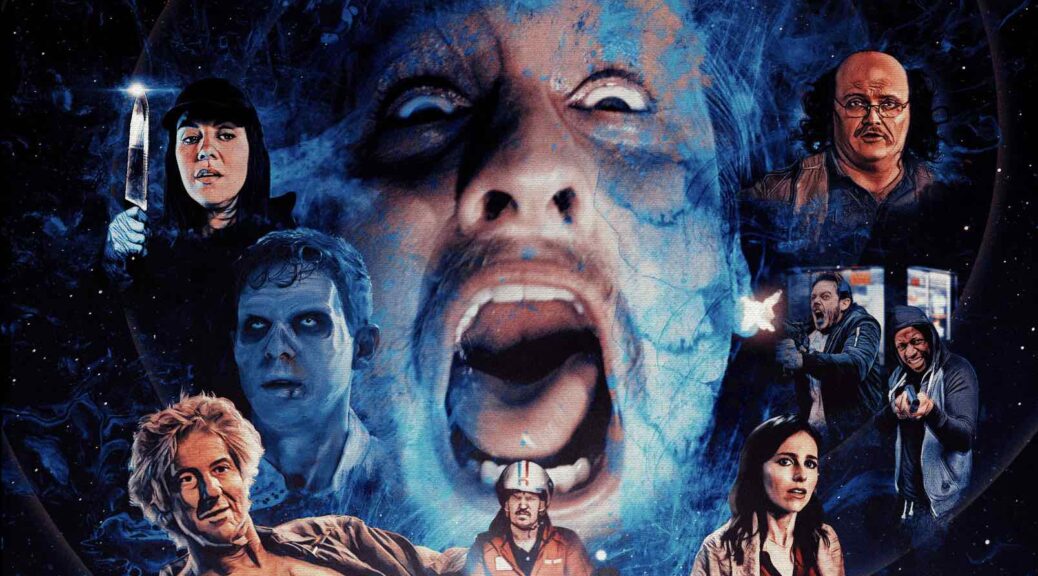
Colloquialisms being taken to their absolute extremes. A woman struggling to find happiness in solitude. A pleasure-deprived man seeking help from his friends. Body horror ending not in goo and grue, but in dad jokes?!? Tiny Cinema is a comedic genre anthology film that wants to make you laugh and gasp in equal measure with the outrageous storytelling that it contains within. Does it succeed? Mostly.

Tiny Cinema is the latest cinematic endeavor of director/writer/actor extraordinaire Tyler Cornack and his motley crew of performers. If you’ve seen their previous effort, Butt Boy, you’re going to spot a lot of familiar faces across all six segments here. This film largely lacks that one’s Henenlotter-esque weirdness, however. It instead opts for a modern Twilight Zone vibe; offering up situations where ordinary people find their lives turned upside down by strange occurrences that are either tied to everyday problems (i.e. loneliness, sexual dysfunction, dating) or become twisted takes on everyday sayings (i.e. “That’s what she said!” and “Yo momma!”).

The results are mixed. On the positive side of things, there is a great host in the form of the quirky and deeply charismatic Paul Ford. The first three segments are also really entertaining (particularly “Bust!”). Furthermore, what really helps Tiny Cinema along is its cast. The troupe that Cornack has pooled together are all beyond game for whatever delirious nonsense he asks of them and that helps smooth over even the segments that don’t really work. They help to drive his best ideas home and make his films worth seeking out.

It’s in the back half where things begin to wobble, as the other three segments aren’t nearly as strong. Almost all anthology films have weak spots. Unevenness is par for the course with episodic storytelling. The weaker segments here are the slighter ones that just aim for shock value. Unfortunately, with them all filling out the second half of the feature, it means that it starts with a bang and ends with a bit of a whimper.

Tiny Cinema might be a step down from Butt Boy, but it’s a solid indie slice of portmanteau moviemaking. If you’re game for some weird fun, this might just be up your alley.

In the Company of Women

House of Darkness

by Hope Madden

Who hurt Neil LaBute?

Would it surprise you to find that the latest from the writer/director behind In the Company of Men and Your Friends and Neighbors (as well as the less impressive Wicker Man reboot and others) is a meditation on sexual dynamics, power and agency? That it’s brimming with psychosexual wordplay? That it’s bitter and a bit misguided?

How many times can we disassemble the mating ritual to judge and shame those involved?  

Sometimes LaBute does it well—so well that it’s tough not to look forward to whatever he releases. House of Darkness sees the filmmaker again exploring his favorite topic, this time within a horror context.

Justin Long riffs on his nice guy persona, his character Hap actually referring to himself at one point as “one of the good ones.” (Had Hap seen Promising Young Women, he might have had sense enough not to make such a claim.)

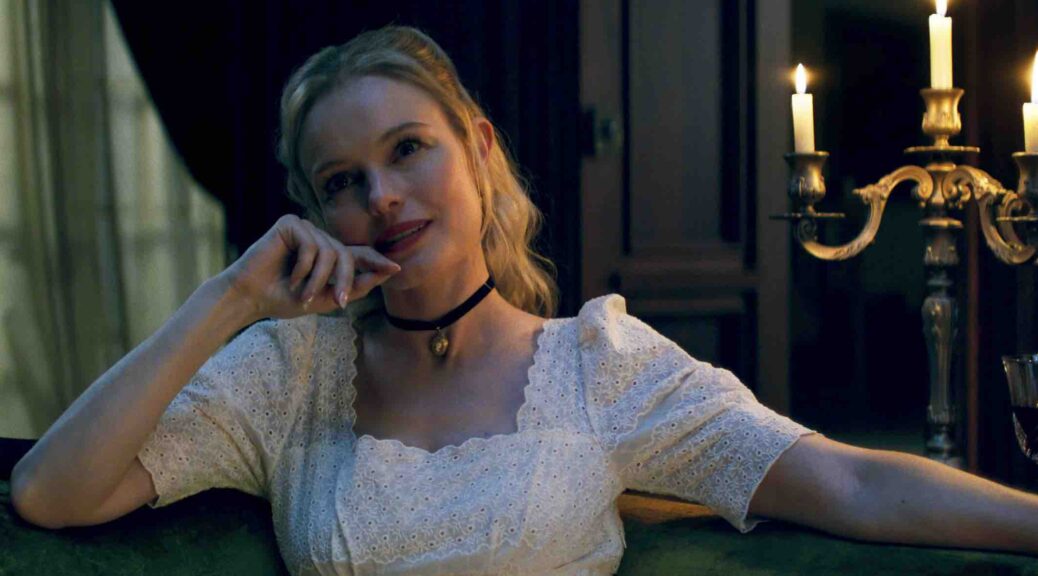
Hap’s been lured into the stately gothic manor of the lovely Mina, played with controlled ferocity by Kate Bosworth. Bosworth seems to relish the directness of her character. Mina’s disinterest in accommodating Hap’s insecurities is glorious—a reminder of how casually brutal LaBute’s work can be.

Perhaps because he started his career as a playwright, each of LaBute’s films rise or fall on dialog. House of Darkness is a chamber piece – it could easily be a stage play (though it’s likely a Covid production). Limited performers pepper scenes with double entendres in an awkward dance of “will we or won’t we” sexual politics.

The difference this time around is the genre trapping, a first for the filmmaker. The look is lush and effective, particularly the more fantastical sequences. Long — a genre veteran — delivers a bit of nuance, his Hap never entirely sympathetic but definitely hard to hate.

The story builds effectively enough. It’s just that nothing is ever in question. The genre tropes are more threadbare from use than LaBute’s banter-driven power game. Worse, the point rings hollow, like a disingenuous, cash-grab reversal of In the Company of Men.

Once Upon a Time in Africa

Saloum

by Hope Madden

There is no denying the stylistic mastery of Jean Luc Herbulot’s Senegalese horror Saloum. An opening voice-over describes revenge as a river that eventually drowns you, but a wise viewer will follow Herbulot’s current because this film knows where it’s going even when you don’t.

We open during the 2003 coups in Guinea-Bissau. In an incredible shot down an alley of endless bodies, we first meet three hooded men. These men are mercenaries, Bangui’s Hyenas, and they’ve come to extract a drug dealer from the dangerous city. But his escape goes south and soon Chaka (Yann Gael), Minuit (Mentor Ba) and Rafa (Roger Sallah) find themselves hiking across deserts, boating through winding waters, and laying low in an unusual little hideaway near the delta in Senegal.

Already we’ve gone from war movie to crime thriller to Western, and we’ve barely exited Act 1. Act 2 will float between mystery and revenge thriller before Herbulot finally embraces the supernatural horror we realize has been bubbling just beneath the surface all along.

A trio of fascinating performances keeps your eyes fixed on the Hyenas. Gael’s unreadable, unbreakable smile hides true intentions, charms and terrifies depending on the scene. Ba’s mystic/elder statesman helps the film transition from one subgenre to the next and gives the trio a center. Meanwhile, Sallah’s explosive Rafa is a constant surprise.

Gregory Corandi’s cinematography conjures each new genre beautifully without creating abrupt leaps from one to the next. Colors are amazing, vistas are both beautiful and dangerous, and there’s always movement just beyond where you look. Western slides into thriller, which bends toward horror, the popping action the one constant through the entire running time.

Herbulot splashes his cinematic influences across the screen: Leone, Woo, Peckinpah, Tarantino (whose own style amounts to a concoction of the previous three). It’s a heady mix. It’s not style over substance, although the style does draw attention away from the film’s weaker elements. Instead, it’s the calling card of a filmmaker leaving his mark on genre filmmaking.

Not Even Supposed to Be Here

Clerks III

by Hope Madden

In 2017, Danny Boyle returned to Scotland with T2 Trainspotting. You know, to see how Mark, Sick Boy, Spud and Begbie were dealing with middle age. The result was poignant, funny and self-aware.

Writer/director Kevin Smith likewise revisits Leonardo, New Jersey to see how Dante and Randall are faring with their own midlife crises. Again, the result is poignant, funny and self-aware.

I swear to God.

For Clerks IIII, Smith delivers a wild mix of amateurish moments, inspired soundtrack choices (that’s the first time I ever enjoyed My Chemical Romance’s Welcome to the Black Parade), sentiment, callbacks, social commentary, and genuine fondness. The end of the filmmaker’s slacker trilogy delivers an ode to independent filmmaking and his own journey as a filmmaker.

Dante (Brian O’Halloran) reenacts the worst days of his youth every day, wasting his life at the convenience store he now co-owns with bestie Randall (Jeff Anderson). The long-shuttered video store next door is now a cannabis shop run by Silent Bob (Smith) and Jay (Jason Mewes), naturally.

After Randall has a heart attack behind the counter, he decides the only way to give his life meaning is to film a movie of his antics at the convenience store.

Essentially, Clerks.

Smith’s style remains a weird mix of sincerity and irreverence. For that reason—and because his leads are the least talented actors onscreen—Clerks III sometimes lands as cloying. But both Anderson and O’Halloran also offer surprising emotional depth here, especially Anderson.

Smith brings back nearly every “actor” who populated his ’94 breakout, and a few of the main players from its 2006 sequel. There’s also a lengthy montage of auditions for Randall’s movie, which allows Smith to fill the screen with other recognizable faces.

The whole movie’s an inside joke, but if you’re on the inside, it’s bound to draw a smile. More than that, if you’re a Kevin Smith fan, Clerks III is a sincere mash note to you.

https://www.youtube.com/watch?v=XMspLXUjjBk