Tag Archives: MaddWolf

Fright Club: Zealots

Horror films have long told the story of religious zealots, usually of the Black Mass variety – The Mephisto Waltz (1971), Sheitan (2006), Starry Eyes (2014), Rosemary’s Baby (1968). We decided not to look to the cloaked, horned Satanists and instead, examine religious zealots of a different flavor. Here are our favorites.

5. Red State (2011)

Kevin Smith’s first foray into horror is perhaps his very strongest and least seen film. Red State is an underrated gem. Deceptively straightforward, Smith’s tale of a small, violently devout cult taken to using the internet to trap “homos and fornicators” for ritualistic murder cuts deeper than you might expect. Not simply satisfied with liberal finger wagging, Smith’s film leaves no character burdened by innocence.

The usually stellar Melissa Leo chews more scenery than need be as a devoted apostle, but pastor Abin Cooper spellbinds as delivered to us by Tarantino favorite Michael Parks. Never a false note, never a clichéd moment, Parks’s performance fuels the entire picture.

There’s enough creepiness involved to call this a horror film, but truth be told, by about the midway point it turns to corrupt government action flick, with slightly lesser results. Still, the dialogue is surprisingly smart, and the cast brims with rock solid character actors, including John Goodman, Stephen Root, and Kevin Pollak.

Smith said at the time: “I think we have something. It’s creepy and very finger-on-the-pulse and very much about America.”

We agree.

4. The Wicker Man (1973)

In the early Seventies, Robin Hardy created a film that fed on the period’s hippie versus straight hysteria.

Uptight Brit constable Sgt. Howie (Edward Woodward) flies to the private island Summerisle investigating charges of a missing child. His sleuthing leads him into a pagan world incompatible with his sternly Christian point of view.

The deftly crafted moral ambiguity of the picture keeps the audience off kilter. Surely we aren’t to root for these heathens, with their nudey business right out in the open? But how can we side with the self-righteous prig Howie?

Hardy and his cast have wicked fun with Anthony Shaffer’s sly screenplay, no one more so than the ever glorious Christopher Lee. Oh, that saucy baritone!

The film is hardly a horror movie at all – more of a subversive comedy of sorts – until the final reel or so. Starting with the creepy animal masks (that would become pretty popular in the genre a few decades later), then the parade, and then the finale, things take quite a creepy turn leading to what is still a very powerful climax.

https://www.youtube.com/watch?v=21gb49H-Uo4

3. Kill List (2011)

Never has the line “thank you” had a weirder effect than in the genre bending adventure Kill List.

Hitman Jay (a volcanic Neil Maskell) is wary to take another job after the botched Kiev assignment, but his bank account is empty and his wife Shel (an also eruptive MyAnna Buring) has become vocally impatient about carrying the financial load. But this new gig proves to be seriously weird.

Without ever losing that gritty, indie sensibility, Ben Wheatley’s fascinating film begins a slide in Act 2 from crime drama toward macabre thriller. You spend the balance of the film’s brisk 95 minutes actively puzzling out clues, ambiguities and oddities. (The often impenetrable accents don’t exactly help with this sleuthing). The “What the hell is happening?” response to a film is rarely this satisfying.

For those looking for blood and guts and bullets, Kill List will only partially satisfy and may bewilder by the end. But audiences seeking a finely crafted, unusual horror film may find themselves saying thank you.

https://www.youtube.com/watch?v=bQDPp5hxFZQ

2. Martyrs (2008)

This import plays like three separate films: orphanage ghost story, suburban revenge fantasy, and medical experimentation horror flick. The whole is a brutal tale that is hard to watch, hard to turn away from, and worth the effort.

Mining the heartbreaking loneliness of abandoned, damaged children, the film follows the profound relationship between torture survivor Lucie (Mylene Jampanoi) and the only friend she will ever have, an undeterrably loving Anna (Morjana Alaoui).

Constantly subverting expectations, including those immediately felt for Anna’s love, writer/director Pascal Laugier makes a series of sharp turns, but he throws unforgettable images at you periodically, and your affection for the leads keeps you breathlessly engaged.

The proceedings are tough to stomach, but well-conceived and skillfully executed. It holds some gruesome imagery, and though the climax may not be pleasing, it certainly doesn’t disappoint.

https://www.youtube.com/watch?v=-7Qx2dT-lUw

1. Frailty (2001)

Director Bill Paxton stars as a widowed, country dad awakened one night by an angel – or a bright light shining off the angel on top of a trophy on his ramshackle bedroom bookcase. Whichever – he understands now that he and his sons have been called by God to kill demons.

Flash forward and we’re led through the saga of the serial killer God’s Hand by a troubled young man (Matthew McConaughey), who, with eerie quiet and reflection, recounts his childhood with Paxton’s character as a father.

Dread mounts as Paxton drags out the ambiguity of whether this man is insane, and his therefore good hearted but wrong-headed behavior profoundly damaging his boys, or is he really chosen, and his sons likewise marked by God? The film upends everything – repeatedly – until it’s as if it’s challenged your expectations, biases, and your own childhood to boot.

Paxton crafts a morbidly compelling tale free from irony, sarcasm, or judgment and full of darkly sympathetic characters. It’s a surprisingly strong feature directorial debut from a guy who once played a giant talking turd.

https://www.youtube.com/watch?v=89u-uKDNrfU

Listen to the whole conversation on our FRIGHT CLUB podcast.

So Bad It’s Criminal

Hot Pursuit

by Hope Madden

Remember Election – Alexander Payne’s 1999 movie about high school student body electoral process? Reese Witherspoon was funny. She was also truly funny in Legally Blonde, a film that had no business working at all and yet did, miraculously, because of Witherspoon.

While Sofia Vergara isn’t quite as proven on the big screen, four Emmy nominations suggest she has some comic talent as well. So, if we can’t blame them, why in the world is Hot Pursuit so, so awful?

Better yet, why in the hell did they sign up to do it?

Witherspoon plays Cooper, an uptight cop assigned to transport duty. She needs to get a recently widowed drug lord’s wife to Dallas to testify against her late husband’s boss.

Things go terribly wrong, obviously, and soon Hot Pursuit clarifies itself as a fish out of water buddy cop cliché of a road trip movie.

They have nothing in common, you see. Cooper’s uptight, small, intense, while Vergara’s Daniella is a steaming pile of racial stereotypes. Daniella has big boobs, but Cooper dresses like a boy. How can they ever make it to Dallas?

Anne Fletcher, who also helmed the abysmal road trip cliché The Guilt Trip, outdoes herself with this one. Not one joke lands, not one gag goes over, not a frame of the film feels anything other than stale and beneath the talent involved.

David Feeney and John Quaintance took a break from anemic TV sitcoms to pen this. Dan Fogelman wrote The Guilt Trip, which means that Fletcher intentionally chose two separate, awful road trip movies to bring to the screen. Why? Does she hate us?

Witherspoon and Vergara work hard to keep this thing afloat, and Witherspoon fares a little better because at least her character is not outright offensive. There’s almost chemistry between the two – something that might have translated into a fun onscreen bond if either one of them had a single funny line to deliver. Banter is really too much to hope for.

Verdict-1-0-Star

A Tenacious D

The D Train

by George Wolf

Funny thing about The D Train…it’s not really funny.

In fact, if Jack Black wasn’t the lead, you’d be hard pressed to describe it as a comedy in the first place. It’s awkward, uncomfortable in spots, slightly amusing in others and carries exactly one big laugh out loud moment. But it also has a big heart, an unexpected social conscience, thoughtful writing and fine performances that make it worth a look.

Black stars as Dan, a socially challenged guy in Pittsburgh who keeps inventing nicknames for himself in hopes that one of them will stick. Think George Costanza and his quest to be called T-Bone, but less abrasive.

Dan remains stoic and upbeat, taking his position as chairman of his 20th high school class reunion committee very seriously…even if none of the other members will include him in their after meeting get-togethers. The RSVPs for the reunion are pretty sparse, but then Dan sees old classmate Oliver Lawless (James Marsden) in a TV commercial for sunscreen and has an epiphany.

He’ll come up with a bogus reason for an L.A. business trip, track Oliver down and convince the homegrown Hollywood star to come back for the reunion. With that, attendance will skyrocket and Dan will finally be the BMOC of his dreams!

It will come as no surprise that things don’t quite go as planned. What is surprising is how the film turns away from comedic high jinks to embrace a little introspection in today’s complicated times. Writers Andrew Mogul and Jarrad Paul (Yes Man) also make their directing debut with The D Train, displaying a commendable, if not completely successful ambition to bring a classic genre some fresh perspective.

While they cast the always funny Kathryn Hahn as Dan’s wife Stacey, she is asked to do nothing at all comedic. Talent wasted? Maybe. Or maybe her sympathetic turn is another way the film keeps you guessing and consistently entertained despite the lack of hilarity.

Both Black and Marsden are perfect, crafting a nice chemistry as they gradually give Dan and Oliver some layers of insecurity and misconception that may look pretty familiar.

You won’t be quoting many lines from The D Train at your next party, but you won’t be regretting the trip either.

Verdict-3-0-Stars


Don’t Cry, Sad Clown

Misery Loves Comedy

by Hope Madden

Is every clown really a sad clown? In his debut as a documentarian, actor Kevin Pollak seeks to find the answer to that question by asking it (or variations of it) to 50 or so of the brightest comic minds of the day.

Who? Tom Hanks, Amy Schumer, Martin Short, Jimmy Fallon, Janeane Garofalo, Judd Apatow and dozens of other stand-up comics and comedic writers and performers. What Pollak wants in return is a glimpse into the shared psyche of the funnyman.

Who were their influences? When did they realize they were funny? What’s it like to bomb onstage? To kill? They’re interesting enough questions and sometimes the answers are fun to watch, but the sheer volume of responses almost requires that the film remain superficial.

His doc would have benefitted had Pollak narrowed down the interviewees, perhaps focusing solely on stand-up comics. We also hear from film directors, sit-com actors and one radio morning show. The breadth only draws attention to the lack of depth.

And yet, there are ways in which the cast feels very narrow. The group is – whether inadvertently or not – pretty white and male. Pollak may simply have raided his own personal phone book, calling in favors from friends for the film, but the result is breathtakingly one sided. He talks with 5 or 6 women, one of whom (Whoopi Goldberg) is not white. He also talks to one male (Kumail Nanjani) who isn’t white.

So, 40+ white guys tell us about the context of being funny. Presumably this is not because of some deeply held belief of Pollak’s, but that doesn’t excuse it. Forget that whatever thesis he may be trying to put forward is irredeemably skewed by this, the fact that anyone could direct a documentary about stand-up comedy without including the point of view of one African American male – no Chris Rock, Eddie Murphy, Kevin Hart, Dave Chappelle, Tracy Morgan – is astonishing.

Plus, honestly, the film itself is almost never actually funny. He talks to fifty funny people about being funny yet catches almost no comedy on film. What?

In the end the film is dedicated to the memory of Robin Williams, and I’m sure Pollak’s heart was in the right place. It’s just that nothing else was.

Verdict-2-0-Stars

She’ll Be Back

Maggie

by Hope Madden

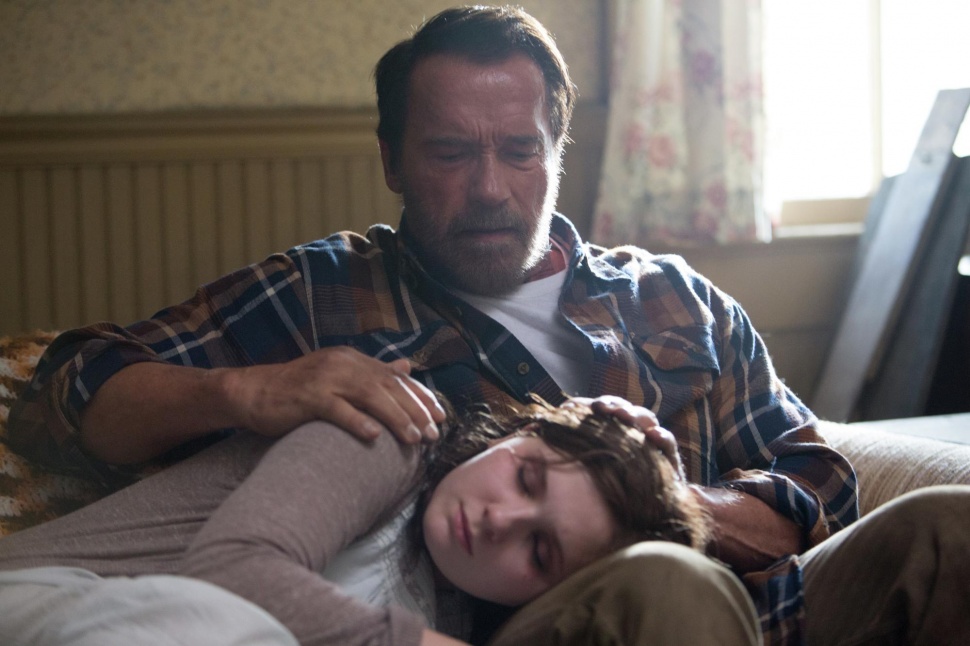
Arnold Schwarzenegger stars in the zombie flick Maggie, but Conan the Zombarian it is not.

Forget the set pieces, explosions, pacing and quips generally associated with the big Austrian. Here he plays an anxious Midwestern father in a time shortly after the zombipocalypse. His teenage daughter (Abigail Breslin) is a member of the infected and he is more interested in protecting her from the outside world than in protecting the outside world from her.

Director Henry Hobson’s feature debut upends expectations no matter what they may be. By blending genres and placing stars in very different situations than their norm he’s opened the audience up to accepting some odd turns. The film itself does not always deliver on this intriguing promise, but despite the slow pace and quiet tones, it keeps your attention because you can never be sure what will happen next.

Breslin, already the star of one of the best zombie comedies of all time (Zombieland), proves a nuanced performer with this pensive turn as a teen awaiting the inevitable. Schwarzenegger has never offered as dialed-down and somber a performance, and while the film is absolutely Breslin’s show, his support is tender and unexpected.

Maggie is a character study, and a gamey twist on the coming of age film as father and daughter wait – not for that impending dawning of womanhood, but for her imminent death, and what comes after. Hobson and screenwriter John Scott 3 are not in it for exploitation. Although the film inevitably gives over to sentimentality, the filmmakers’ restraint throughout allow the proceedings a little dignity.

The film may have a tough time finding a niche. Schwarzenegger’s fans may hope for something a little flashier while genre fans may be left unsatisfied. But Maggie has something to offer. It’s a small film that explores something relatable and intimate, even if it chooses an unusual setting to do it.

Verdict-3-0-Stars

Doin’ It For Themselves

Girlhood

by Hope Madden

Moments after Girlhood’s perfectly disconcerting opening, you settle into the world of its protagonist, Marieme, but writer/director Celine Sciamma has already told you something very important. You shouldn’t assume anything.

Few, if any, films have been able to do justice to coming of age the way Sciamma’s does. Girlhood is a character study, following Marieme (Karidja Toure) through her days as an adolescent in a deprived Paris project, struggling against each of her equally unappealing life options.

Good girl Marieme sees one important door toward opportunity close. On the same day, she catches the eye of a trio of wilder girls and slowly she finds the joy in extending her adolescence and the power in solidarity and sisterhood.

Sciamma, thanks to a quietly powerful performance from Toure, represents more than just the bittersweet romance and nostalgia generally associated with the coming of age film. Saying goodbye to childhood is rarely as simple and lovely as movies make it out to be, and Sciamma’s interest is in seeing the same transition from an under represented point of view. The fact that this feels so fresh is itself an indictment. For Marieme, her choices are limited along racial, sexual and socioeconomic lines, but Sciamma’s perceptive film is too honest and understated to feel preachy.

Wisely, Sciamma disregards every filmmaking technique we’ve come to expect in a movie about a girl blossoming into womanhood. Her observant style, cast of amateur actors, and her own penetrating storytelling give the proceedings a quiet authenticity.

Like Sciamma’s previous films Tomboy and Water Lillies, Girlhood explores youth in crisis. She never judges her characters, and Toure’s ability to showcase her character’s humility and strength simultaneously ensure the audience’s empathy.

The storyline is necessarily untidy as Marieme takes on and casts off wildly different personas, illuminating the almost heartbreaking courage of youth. Regardless of the choices she makes from among the options limited by discrimination on almost every front, we must root for her fight for a life she can accept.

Verdict-4-0-Stars

Brilliant Biopics For Your Queue

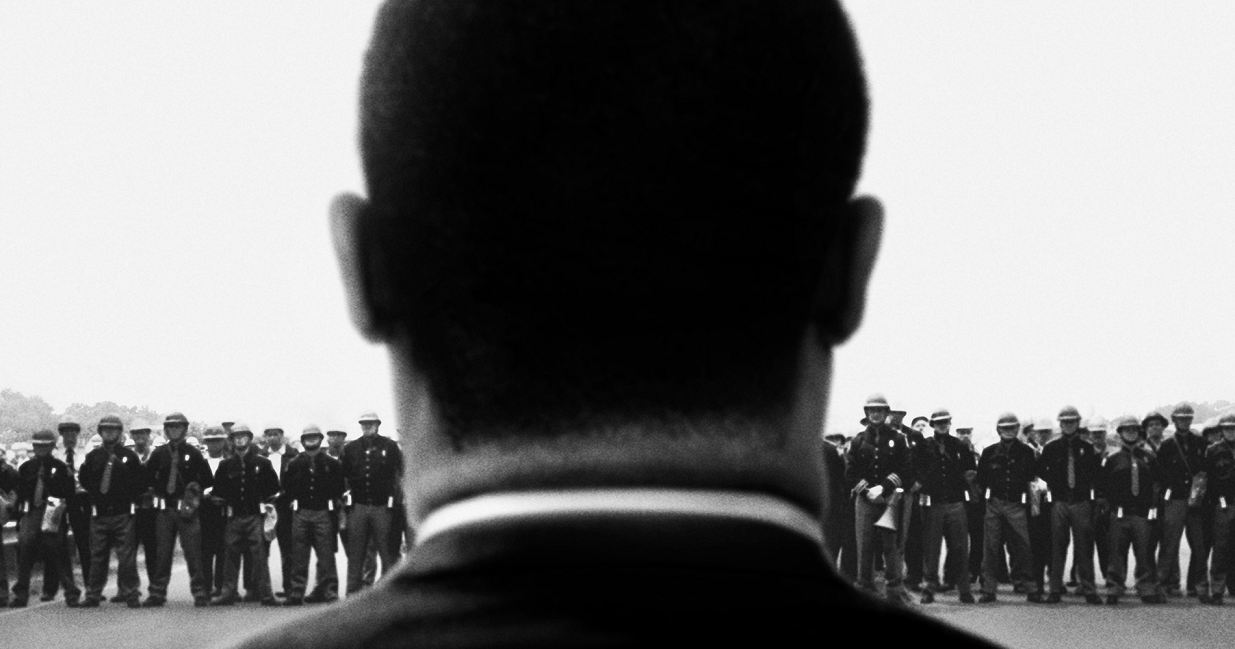
Ave DuVernay’s unflincing account of civil rights marches in Selma, Alabama is the most painfully relevant film of 2014. Sure, Oscar decided to ignore the director’s brilliant work as well as David Oyelowo’s stunning, wearied performance, but that doesn’t mean you should. DuVernay is a master storyteller at the top of her game and with her stewardship, Selma is a well crafted, straightforward punch to the gut.

Another underappreciates 2014 gem, Mike Leigh’s biopic Mr. Turner, releases to home entertainment today as well. While the films are markedly different, they do share some wonderful elements in common. Leigh’s approach suits the material beautifully as his painterly camera and fluid direction give the story room to breathe, while a magnificent lead performance from Timothy Spall keeps you spellbound. Both boast wonderfully nuanced turns from a large, capable ensemble and both were woefully underappreciated by the Academy. You should give them a chance.

Fright Club: Best Horror Movies You May Have Missed

We’ve spent more than a month celebrating the best horror movies of each decade, and what that made us want to do is to throw a little party for those under-the-radar gems you may not have caught. This list could go on for days, but we narrowed our recommendations down to a half dozen of our very favorite, woefully underseen horror flicks. Have a look, and if you’ve missed any of these, take our word for it: you need to see these.

6. Eden Lake (2008)

The always outstanding Michael Fassbender takes his girl Jenny (Kelly Reilly) to his childhood stomping grounds – a flooded quarry and soon-to-be centerpiece for a grand housing development. He intends to propose, but he’s routinely disrupted, eventually in quite a bloody manner, by a roving band of teenaged thugs.

European horror tends to do a nice job with the upwardly mobile middle class’s terror of untamed young things. Kids today! The best of these films mix a contempt for proper manners and liberal guilt with a genuine terror of the lower classes.

The acting, particularly from the youngsters, is outstanding. Sure, the “angry parents raise angry children” cycle may be overstated, but Jack O’Connell’s performance as the rage-saturated offspring turned absolute psychopath is chilling.

https://www.youtube.com/watch?v=4g1wYEAWOrs

5. The Woman (2011)

There’s something not quite right about Chris Cleese (an unsettlingly cherubic Sean Bridgers), and his family’s uber-wholesomeness is clearly suspect. This becomes evident once Chris hunts down a feral woman (an awesome Pollyanna McIntosh), chains her, and invites the family to help him “civilize” her.

The film rethinks family – well, patriarchy, anyway. Writer Jack Ketchum may say things you don’t want to hear, but he says them well. And director Lucky McKee, in hi smost sure-footed effort, has no qualms about showing you things you don’t want to see. Like most of Ketchum’s work, The Woman is lurid and more than a bit disturbing.

Nothing happens in this film by accident – not even the innocent seeming baking of cookies – nor does it ever happen solely to titillate. Deeply disturbing and absolutely not for the timid, this is a movie that will stay with you.

https://www.youtube.com/watch?v=RaXjkMtyhmI

4. The Snowtown Murders (2011)

John Bunting tortured and killed eleven people during his spree in South Australia in the Nineties. We only watch it happen once on film, but that’s more than enough.

Director Justin Kurtzel seems less interested in the lurid details of Bunting’s brutal violence than he is in the complicated and alarming nature of complicity. An unflinching examination of a predator swimming among prey, Snowtown succeeds where many true crime films fail because of its understatement, its casual observational style, and its unsettling authenticity. More than anything, though, the film excels due to one astounding performance.

Daniel Henshall cuts an unimpressive figure on screen – a round faced, smiling schlub. But he brings Bunting an amiability and confrontational fearlessness that provides insight into what draws people to a sadistic madman.

There’s not a false note in his chilling turn, nor in the atmosphere Kurzel creates of a population aching for a man – any adult male to care for them, protect them and tell them what to do.

The Snowtown Murders is a slow boil, and painfully tense. It’s hard to watch and harder to believe, but as a film, it offers a powerful image of everyday evil that will be hard to shake.

https://www.youtube.com/watch?v=VJlVmJQPwxo

3. Them (Ils) (2006)

Brisk, effective and terrifying, Them is among the most impressive horror flicks to rely on the savagery of adolescent boredom as its central conceit. Writers/directors/Frenchmen David Moreau and Xavier Palud offer a lean, unapologetic, tightly conceived thriller that never lets up.

A French film set in Romania, Them follows Lucas (Michael Cohen) and Clementine (Olivia Bonamy), a young couple still moving into the big rattling old house where they’ll stay while they’re working abroad.

It will be a shorter trip than they’d originally planned.

What the film offers in 77 minutes is relentless suspense. Creepy noises, hooded figures, sadistic children and the chaos that entails – Them sets up a fresh and mean cat and mouse game that pulls you in immediately and leaves you unsettled.

Watch it. Do it.

2. We Are What We Are (Somos le que hay) (2010)

In a quiet opening sequence, a man dies in a mall. It happens that this is a family patriarch and his passing leaves the desperately poor family in shambles. While their particular quandary veers spectacularly from expectations, there is something primal and authentic about it.

It’s as if a simple relic from a hunter-gatherer population evolved separately but within the larger urban population, and now this little tribe is left without a leader. An internal power struggle begins to determine the member most suited to take over as the head of the household, and therefore, there is some conflict and competition – however reluctant – over who will handle the principal task of the patriarch: that of putting meat on the table.

Writer/director Jorge Michel Grau’s approach is so subtle, so honest, that it’s easy to forget you’re watching a horror film. Grau draws eerie, powerful performances across the board, and forever veers in unexpected directions.

We Are What We Are is among the finest family dramas or social commentaries of 2010. Blend into that drama some deep perversity, spooky ambiguities and mysteries, deftly handled acting, and a lot of freaky shit and you have hardly the goriest film on this list, but perhaps the most relevant.

https://www.youtube.com/watch?v=nQ4-UOB3Y-U

1. The Ordeal (Calvaire) (2004)

A paranoid fantasy about the link between progress and emasculation, the film sees a timid singer stuck in the wilds of Belgium after his van breaks down.

Writer/director Fabrice Du Welz’s script scares up the darkest imaginable humor. If David Lynch had directed Deliverance in French, the concoction might have resembled The Ordeal. As sweet, shy singer Marc (a pitch perfect Laurent Lucas) awaits aid, he begins to recognize the hell he’s stumbled into. Unfortunately for Marc, salvation’s even worse.

The whole film boasts an uneasy, “What next?” quality. It also provides a European image of a terror that’s plagued American filmmakers for generations: the more we embrace progress, the further we get from that primal hunter/gatherer who knew how to survive.

Du Welz animates more ably than most our collective revulsion over the idea that we’ve evolved into something incapable of unaided survival; the weaker species, so to speak. Certainly John Boorman’s Deliverance (the Uncle Daddy of all backwoods survival pics) understood the fear of emasculation that fuels this particular dread, but Du Welz picks that scab more effectively than any filmmaker since.

His film is a profoundly uncomfortable, deeply disturbing, unsettlingly humorous freakshow that must be seen to be believed.

https://www.youtube.com/watch?v=Hn3oba5HmH8

To hear the whole conversation, tune into our FIGHT CLUB podcast.

A Maria Full of Grace

Clouds of Sils Maria

by George Wolf

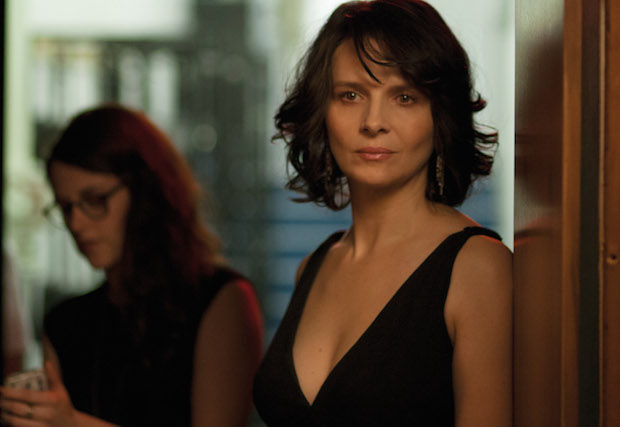
Somewhere between Twilight and the tabloids, Kristen Stewart began doing some real acting. She’s better than ever in Clouds of Sils Maria, and though hers is a supporting role alongside one of the screen’s major talents, Stewart pulls plenty of weight in a terrific drama with much to say.

Juliette Binoche is customarily excellent as Maria, a famous actress returning to the stage in a revival of the play that launched her career twenty years earlier. This time, though, she’s playing the older female lead, while a Lindsay Lohan clone named Jo-Ann (Chloe Grace Moretz, striking just the right tone of clueless entitlement) is taking the role Maria originated.

Stewart is Maria’s ever-present personal assistant Valentine, who not only runs both errands and lines for Maria, but serves as her bridge to a younger generation.

Writer/director Olivier Assayas (Summer Hours) takes the intimate psychological playground of Polanski’s Venus in Fur, and laces it with the pop culture commentary of Cronenberg’s Maps to the Stars. Binoche and Stewart swim gracefully inside the play within a play setup, slowly moving Maria and Valentine in directions that mirror the script both characters are reading.

The actresses display an easy chemistry, never more apparent than when Valentine is trying to sell Maria on the merits of young Hollywood. In the film’s most deliciously meta moment, Stewart might just as well be telling all of us Twilight haters to get over it already.

Assayas’s script is sharp and his camera is fluid, effectively blurring the line between onstage and off. Revisiting the play forces Maria to confront her past and question her present, and Binoche reveals the various layers with a gentle, masterful touch.

The beauty of Clouds of Sils Maria lies in its subtle complexity. It offers sly insights that sneak up on you, and an exceptional cast to make them stick.


Verdict-4-0-Stars


Fright Club: Best Horror 2010 – 2015

It’s official. Our flux capacitor is running out of power, our time travels are coming to a close. We’ve highlighted the best horror films of the 60s, 70s, 80s, 90s and the first decade of the 2000s, and now it’s time to bring things up to the present with the best in horror from 2010 – 2015. Who would have thought that list would be so hard to put together?

What do we wish we didn’t have to leave off? Indies like The Woman, Kill List, The Snowtown Murders; major releases like Evil Dead and The Woman in Black; foreign language gems like Big Bad Wolves, The Last Circus, We Are What We Are and A Girl Walks Home Alone at Night. All of this convinces us that we are in the midst of a horror movie rennaissance – hooray!

So what did make the cut? Here you go:

5. The Cabin in the Woods (2012)

You know the drill: 5 college kids head into the woods for a wild weekend of doobage, cocktails and hookups but find, instead, dismemberment, terror and pain. You can probably already picture the kids, too: a couple of hottie Alphas, the nice girl, the guy she may or may not be into, and the comic relief tag along. In fact, if you tried, you could almost predict who gets picked off when.

But that’s just the point, of course. Making his directorial debut, Drew Goddard, along with his co-scribe Joss Whedon, uses that preexisting knowledge to entertain holy hell out of you.

Goddard and Whedon’s nimble screenplay offers a spot-on deconstruction of horror tropes as well as a joyous celebration of the genre. Aided by exquisite casting – particularly the gloriously deadpan Richard Jenkins and Bradley Whitford – the filmmakers create something truly special.

Cabin is not a spoof. It’s not a satire. It’s sort of a celebratory homage, but not entirely. What you get with this film is a very different kind of horror comedy.

4. The Conjuring (2013)

Yes, this is an old fashioned ghost story, built from the ground up to push buttons of childhood terror. But don’t expect a long, slow burn. Director James Wan expertly balances suspense with quick, satisfying bursts of visual terror.

Wan cut his teeth – and Cary Elwes’s bones – with 2004’s corporeal horror Saw. He’s since turned his attention to something more spectral, and his skill with supernatural cinema only strengthens with each film.

Ghost stories are hard to pull off, though, especially in the age of instant gratification. Few modern moviegoers have the patience for atmospheric dread, so filmmakers now turn to CGI to ramp up thrills. The results range from the visceral fun of The Woman in Black to the needless disappointment of Mama.

But Wan understands the power of a flesh and blood villain in a way that other directors don’t seem to. He proved this with the creepy fun of Insidious, and surpasses those scares with his newest effort.

Wan’s expert timing and clear joy when wielding spectral menace help him and his impressive cast overcome the handful of weaknesses in the script by brothers Chad and Carey Hayes. Claustrophobic when it needs to be and full of fun house moments, The Conjuring will scare you while you’re in the theater and stick with you after. At the very least, you’ll keep your feet tucked safely under the covers.

http://www.youtube.com/watch?v=Vjk2So3KvSQ

3. Let Me In (2010)

With Hollywood’s 2010 reboot of the near-perfect 2008 Swedish film, director Matt Reeves (Cloverfield) managed to retain the spirit of the source material, while finding ways to leave his own mark on the compelling story of an unlikely friendship.

Twelve year old Owen (Kodi Smit-McPhee) is a lonely boy who’s being bullied at school. When young Abby (Chloe Moretz) and her “dad” (Richard Jenkins) move in next door, Owen thinks he’s found a friend. As sudden acts of violence mar the snowy landscape, Owen and Abby grow closer, providing each other a comfort no one else can.

Moretz (Kick-Ass) and Smit-McPhee (The Road) are both terrific, and give the film a touching, vulnerable soul.

Reeves, also adapting the screenplay, ups the ante on the gore, and provides more action, scares and overall shock value. Incredibly, he even manages to build on the climactic “revenge” scene that was damn-near flawless the first time.

https://www.youtube.com/watch?v=8h39ikMdei4

2. The Babadook (2014)

Like a fairy tale or nursery rhyme, simplicity and a child’s logic can be all you need for terror.

You’re exhausted – just bone-deep tired – and for the umpteenth night in a row your son refuses to sleep. He’s terrified, inconsolable. You check under the bed, you check in the closet, you read a book together – no luck. You let him choose the next book to read, and he hands you a pop-up you don’t recognize: The Babadook. Pretty soon, your son isn’t the only one afraid of what’s in the shadows.

It’s a simple premise, and writer/director Jennifer Kent spins her tale with straightforward efficiency. There is no need for cheap theatrics, camera tricks or convoluted backstories, because Kent is drilling down into something deeply, frighteningly human.

Kent’s film is expertly written and beautifully acted, boasting unnerving performances from not only a stellar lead in Essie Davis, but also the alarmingly spot-on young Noah Wiseman. Davis’s lovely, loving Amelia is so recognizably wearied by her only child’s erratic, sometimes violent behavior that you cannot help but pity her, and sometimes fear for her, and other times fear her.

1. It Follows (2015)

David Robert Mitchell invites you to the best American horror film in years. He’s crafted a coming of age tale that mines for primal terror. Moments after a sexual encounter with a new boyfriend, Jay discovers that she is cursed. He has passed on some kind of entity – a demonic menace that will follow her until it either kills her or she passes it on to someone else the same way she got it.

Yes, it’s the STD or horror movies, but don’t let that dissuade you. Mitchell understands the anxiety of adolescence and he has not simply crafted another cautionary tale about premarital sex. Mitchell has captured that fleeting yet dragging moment between childhood and adulthood and given the lurking dread of that time of life a powerful image. There is something that lies just beyond the innocence of youth. You feel it in every frame and begin to look out for it, walking toward you at a consistent pace, long before the characters have begun to check the periphery themselves.

Mitchell borrows from a number of coming of age horror shows, but his film is confident enough to pull it off without feeling derivative in any way. The writer/director takes familiar tropes and uses them with skill to lull you with familiarity, and then terrify you with it.

Mitchell’s provocatively murky subtext is rich with symbolism but never overwhelmed by it. His capacity to draw an audience into this environment, this horror, is impeccable and the result is a lingering sense of unease that will have you checking the perimeter for a while to come.

Listen to the whole conversation on our FRIGHT CLUB podcast.