Tag Archives: MaddWolf

Welcome to the Neighborhood

The Overnight

by Hope Madden

When handled properly, even the slightest premise or most ridiculous behavior can turn into an insightful and moving observation. Such is the case with the frank and uncomfortable sex comedy The Overnight.

Emily and Alex (Taylor Schilling and Adam Scott, respectively) recently relocated from Seattle to LA, and while their youngster RJ has a birthday party to attend that will help him make friends, they are still feeling a little isolated and friendless. That is, until uber-hipster Kurt (Jason Schwartzman) approaches them at the park after his son befriends theirs.

The kids hit it off, the parents hit it off, and Kurt invites the whole gang back to his place for an impromptu pizza party. What could be better? Go spend 24 hours with your neighbors and see how weird it gets.

Schwartzman is spot on perfection, as is often the case, with the smarmy but likeable but maybe creepy but kind of awesome Kurt. Few if any can hit these notes of self-parody caricature and earnest vulnerability quite this well.

Scott, as the tightly wound, trying-too-hard straight man to Schwartzman’s nut is equally impressive. Luckily, it’s not just odd couple schtick the two are after, though. They, as well as Schilling and Judith Godreche, as Kurt’s wife Charlotte, toggle nicely between broad comedy and precise, insightful characterization.

Like a less precious, more contemporary Bob & Carol & Ted & Alice, The Overnight flirts with the idea of partner swapping as a way to explore more: personal insecurities, relationships, love, commitment, boredom, and breast pump fetishists.

Although you always have the sense of where things are going, there’s a surprise in nearly every scene. Not every one pays off, but most of them land with a laugh and maybe an awkward shudder. Though writer/director Patrick Brice mines the embarrassing situation on a near-Noah Baumbach level, his film is compassionate. He gives his four performers room to breathe, sometimes hold their breath, but they’re able to be mortified and vulnerable simultaneously.

The Overnight is a perceptive if bawdy comedy directed with nuance for laughs and resonance. Brice can’t nail the tone consistently enough, the overarching tale leans too heavily on giddy expectation, and the female characters are not given enough chance to evolve, but that hardly sinks this ship. Schwartzman and Scott are an inspired pairing and the film is a nice, adult minded comedy to offset the summer’s blockbuster glut.

Verdict-3-5-Stars

Some Bonds are Stronger than Others

Bound to Vengeance

by Hope Madden

Revenge fantasies have been theatrical staples since writers first put quill to parchment. Even the rape-revenge fantasy has been a mainstay of genre filmmaking for generations. Somehow director Jose Manuel Cravioto mixes the classic theatricality with both common exploitation and an unsettling contemporary relevance in his first English language effort, Bound to Vengeance.

Combining present tense narrative with flashback footage, the film unveils the predicament that has befallen Eve (a believably intense Tina Ivlev). Chained in filth in the basement of an isolated old house, Eve finally makes her escape but chooses to risk herself further by keeping her captor alive long enough to fulfill an obligation.

The filmmaker thankfully skirts unseemly titillation. Though his film uses sex trafficking as its basis for horror, Cravioto does not rely on the shock value lechery that has driven other films of the sort. Because the film is told from Eve’s perspective, we’re given the opportunity to find humanity and compassion.

But don’t write the film off to political correctness. Craviotio makes some provocative decisions that won’t thrill every viewer, although they do seem to serve the unsettling reality of the film itself.

Ivlev tinges her character’s tenacity with just enough PTSD flourishes to make the character both realistic and unpredictable, while Richard Tyson is creepy perfection as her foil. Is he the sympathetic simpleton he makes himself out to be, or the conniving psychopathic predator you’d imagine could be capable of this inhuman behavior?

Give writers Rock Shaink Jr. and Keith Kjornes credit – every time a character makes a careless or stupid decision, it isn’t simply convenient writing. There’s a reason for most everything that happens here.

This is a small film, visually grimy and difficult to watch, but it’s Cravioto’s restraint that makes it worth the effort. Very little here feels exploitative, and he never gives over to sentimentality. He invests in characters and reminds us why the revenge fantasy has remained as compelling as it has for as long as people have told stories.

Verdict-3-0-Stars

A Different Kind of Avenger

Felt

by Hope Madden

Few among us have even heard of the film Felt, and those who have are misled. Packaged as a feminist superhero movie about rape culture, this film has less in common with rape/revenge fantasies like I Spit on Your Grave and American Mary and more in common with mumblecore.

This is a peculiar, intimate, meandering meditation on a single person’s struggle with trauma. The fact that Amy (co-writer Amy Everson) works through her problems by creating hyper-masculine costumes that she wears in the woods, accompanied only by her anger and her wooden sword, is really what sets Felt apart from other art films.

Director/co-writer Jason Banker’s camera is intimate and awkward, an ideal combination that mirrors Amy’s state of mind. There’s something uneasy in the quick edits, extreme close ups, and wandering visuals that suggests Amy’s perspective.

Recovering from an unspecified but clearly sexual trauma, Amy slowly deserts the socially accepted course of healing – those steps her friends keep urging her to take – instead filling her room with art that’s equally childish and grotesque, most of it phallic.

But it’s the costumes that seem to help Amy regain some measure of personal power, and the film’s strongest scenes are those in which she explores this empowerment. Whether she and her penis suit are scaling trees, or she wears her exaggerated vagina and breast outfit to upend a sexy photo session, the behavior is unpredictable, fascinating, and sometimes weirdly funny.

The scene with the photographer and new friend Roxanne (Roxanne Lauren Knouse) is a scream, and something truly unlike anything else in film. Roxanne immediately embraces what it is Amy is trying to do, which is why she’s disappointed when Amy does what her other friends see as healthy – gets a new boyfriend.

Kenny (Kentucker Audley) represents a gentle, patient soul willing to wait for Amy, but with trust comes vulnerability. There’s a circuitous nature to the sparse narrative. Traditional relationships find an echo later in the film, the second time with Amy in a position of power, but she is ill prepared to handle the shift.

The film boasts very little dialog, and as a curious onscreen presence, Everson is a master. At times, though, the lines delivered feel too obvious for the film itself, and in the end Everson and Banker fall back on behavior too predictable for the fractured fairy tale they’ve crafted. They do leave you unsettled, though. There’s no big hurrah, no sense of accomplishment, just more of the same maddening nightmare.

Verdict-3-5-Stars

Still a Magic Man

Magic Mike XXL

by Hope Madden

Rarely is a sequel superior to the original film – Bride of Frankenstein, The Empire Strikes Back, maybe The Godfather, Part 2. That’s heady company for Magic Mike XXL – in fact, the movie should never really be mentioned in the same sentence as those particular films – but let’s give it its due. It is a better movie than the original.

It’s been three years since Mike (Channing Tatum) left male entertainment behind him for the settled life. But he’s bored, basically, and he misses it, so he joins the old Tampa Kings for one last trip to the national stripper convention in Myrtle Beach.

There is a huge, gaping hole in this film shaped like Matthew McConaughey, who was the only reason to watch the original. McConaughey was Dallas, the leader and emcee for the Tampa Kings, and the performance was positively unhinged. This was just at the beginning of what anthropologists will call the McConaissance – that period of unbelievable performances that led to his first Oscar. He does not return for the sequel, and his inspired lunacy is dearly missed.

On the other hand, both Alex Pettyfer and Cody Horn are blessedly missing. I’m sure they’re nice people, but Lord they cannot act.

Another positive change, weirdly enough, is a switch in director. Steven Soderbergh directed the original to be a gritty expose on the dangerous world of Florida stripper life, while the film owes its irrational success to one thing: beefcake.

Director Gregory Jacobs embraces this. Welcome aboard a road trip of muscle and thong, spray tans and gyration as Tatum and his buds hope to pull off one last, big dance. They want to go out in a tsunami of dollar bills and they hope you brought your singles.

Tatum is effortlessly charming, as always, but his posse gets more of an opportunity to show off personality as well as pecs this time around. Joe Manganiello, in particular, gets more screen time in a film that’s far more bromance than romantic comedy.

There are also cameos aplenty, some glitter, some baby oil, and at least as much screaming inside the theater as on the screen. Ladies, calm down.

Magic Mike XXL is not a great movie by any stretch, but it knows what it is and it runs with it. Well, dances with it. And that’s fine.

Verdict-3-0-Stars

You, Me and Everyone

Me and Earl and the Dying Girl

by Hope Madden

Whatever its flaws and familiarities, Me and Earl and the Dying Girl delivers a heartfelt, understated but affecting punch.

The “Me” of the title is Greg (the ageless Thomas Mann), who describes himself as “terminally awkward, with a face like a little groundhog.” Greg treasures the anonymity he’s carved out by being superficially accepted and forgotten by every clique in his school. He and his best friend Earl (RJ Cyler), whom he considers more of a co-worker, hide out at lunch in the history teacher’s office, and make movie parodies (A Sockwork Orange, Pooping Tom) in their spare time.

Then Greg’s mom (Connie Britton) insists that he befriend Rachel (Olivia Cooke), who’s been diagnosed with leukemia.

Yep, it’s a quirky coming-of-age dramedy with cancer overtones. Who’d have thought this would become such a popular concept?

Regardless of the well-worn terrain, the film offers a bright, often unpredictable charm mixed with a wonderfully morbid sense of humor. All performances are solid, especially that of Molly Shannon as the bubbly yet grieving and usually drunk mother.

Director Alfonso Gomez-Rejon cuts a new career path with this indie dramedy, but he and screenwriter Jesse Andrews (adapting his own novel) miss a pretty important point.

No matter who you are or how many friends you had or how many parties you went to, you probably remember your high school self as socially awkward. Nothing fuels a coming-of-age film quite like this idea, when usually the protagonist (and maybe the writer, and nearly every teen in history) is just burdened by narcissism and self-loathing. It’s a small but important distinction, and one that very few coming-of-age tales get right. Getting that tiny point right is the difference between a work of genius like Napoleon Dynamite and a self-congratulatory confection like The Perks of Being a Wallflower.

Me and Earl and the Dying Girl is considerably better than most films that miss that point, but it still misses it. The perfectly likeable protagonist believes himself to be terminally awkward and what he needs is for the one-dimensional (if truly likeable) characters around him to show him he’s actually pretty great. That is, to placate his narcissism while soothing his self-loathing as they gain nothing themselves.

Most of us remember some coming-of-age film from our own adolescence with needless but genuine nostalgia and affection. Me and Earl and the Dying Girl can be that movie – The Breakfast Club or Grease or Mean Girls for this generation. But, like most teens, it can’t quite get past itself to become great.

Verdict-3-0-Stars

Fright Club: Best Australian Horror

Thank you to Senior Aussie Correspondent Cory Metcalf for co-hosting our salute to Australian horror (and forgive our stupid jokes about Vegamite and Men at Work)! In the last decade his native land has become a powerhouse in the genre, boasting inspired, wicked, twisted efforts that range from unsettlingly authentic to weirdly, darkly comical. Here are our favorites.

5. Wyrmwood: Road of the Dead (2014)

It is hard to do something fresh and interesting with a zombie film, but director Kiah Roache-Turner has done it. Writing with brother Tristan, Roache-Turner takes pieces and parts of the basic zombie myth as it’s evolved over countless films, shows, comics and video games, and woven it together with an audaciously Aussie sensibility.

Barry (Jay Gallagher) gets a call in the middle of the night from his artist/badass sister Brooke (Bianca Bradey). The zombies are here.

Barry ends up on the road with an assortment of survivors and begins the search for his sister, who’s having one hell of an adventure on her own.

Like the best in the business, Roache-Turner follows Romero’s lead when it comes to trusting the government. Zombies are more principled. But Wyrmwood mixes interesting new ideas with some of the stronger genre tropes to create a novel, often funny, action-packed film that gets creepy as hell.

https://www.youtube.com/watch?v=Mgo0ZWlK4pk

4. Snowtown (The Snowtown Murders) (2011)

John Bunting tortured and killed eleven people during his spree in South Australia in the Nineties. We only watch it happen once on film, but that’s more than enough.

Director Justin Kurzel seems less interested in the lurid details of Bunting’s brutal violence than he is in the complicated and alarming nature of complicity. Ironically, this less-is-more approach may be why the movie leaves you so shaken.

An unflinching examination of a predator swimming among prey, Snowtown succeeds where many true crime films fail because of its understatement, its casual observational style, and its unsettling authenticity. More than anything, though, the film excels due to one astounding performance.

Daniel Henshall (also in Babadook) cuts an unimpressive figure on screen – a round faced, smiling schlub. But he brings Bunting an amiability and confrontational fearlessness that provides insight into what draws people to a sadistic madman.

https://www.youtube.com/watch?v=qcoCTA2IZ7c

3. Wolf Creek (2005)

There have long been filmmakers whose ultimate goal is not to entertain an audience; the idea being that art is meant to affect, not entertain. These filmmakers, from Sam Peckinpah to Lars von Trier, generally develop impenetrable indie credibility and a line of devoted, bawling fans. No one in recent memory has applied this ideology to horror cinema as effectively as writer/director Greg McLean with his Outback opus Wolf Creek.

Some of the best scares in film have come as the reaction to urbanites’ fear of losing our tentative grasp on our own link in the food chain once we find ourselves in the middle of nowhere. With Wolf Creek, it’s as if McLean looked at American filmmakers’ preoccupation with backwoods thrillers and scoffed, in his best Mick Dundee, “That’s not the middle of nowhere. This is the middle of nowhere.”

Using only digital cameras to enhance an ultra-naturalistic style, McLean follows happy backpackers who find themselves immobile outside Wolf Creek National Park when their car stops running. As luck would have it, friendly bushman Mick Taylor (John Jarratt) drives up offering a tow back to his camp, where he promises to fix the vehicle.

A horror film this realistic is not only hard to watch, but a bit hard to justify. What makes an audience interested in observing human suffering so meticulously recreated? This is where, like a true artist, McLean finally succeeds. What is as unsettling as the film itself is that its content is somehow satisfying.

2. The Loved Ones (2009)

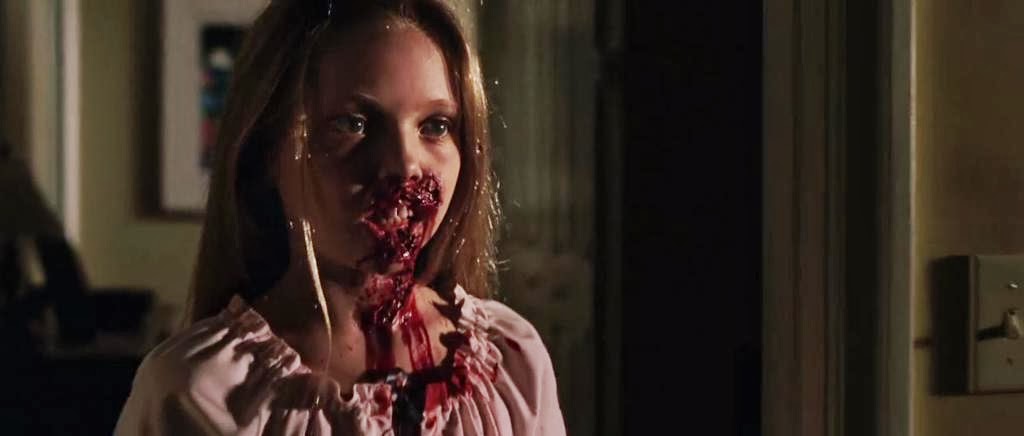
Writer/director/Tasmanian Sean Byrne upends high school clichés and deftly maneuvers between angsty, gritty drama and neon colored, glittery carnage in a story that borrows from other horror flicks but absolutely tells its own story.

Brent (Xavier Samuel) is dealing with guilt and tragedy in his own way, and his girlfriend Holly tries to be patient with him. Oblivious to all this, Lola (a gloriously wrong-minded Robin McLeavy) asks Brent to the end of school dance. He politely declines, which proves to be probably a poor decision.

Byrne quietly crafts an atmosphere of loss and depression in and around the school without painting the troubles cleanly. This slow reveal pulls the tale together and elevates it above a simple work of outrageous violence.

Inside Lola’s house, the mood is decidedly different. Here, we’re privy to the weirdest, darkest image of a spoiled princess and her daddy. The daddy/daughter bonding over power tool related tasks is – well – I’m not sure touching is the right word for it.

The Loved Ones is a cleverly written, unique piece of filmmaking that benefits from McLeavy’s inspired performance as much as it does its filmmaker’s sly handling of subject matter.

https://www.youtube.com/watch?v=olB5Wrg8Sxc

1. The Babadook (2014)

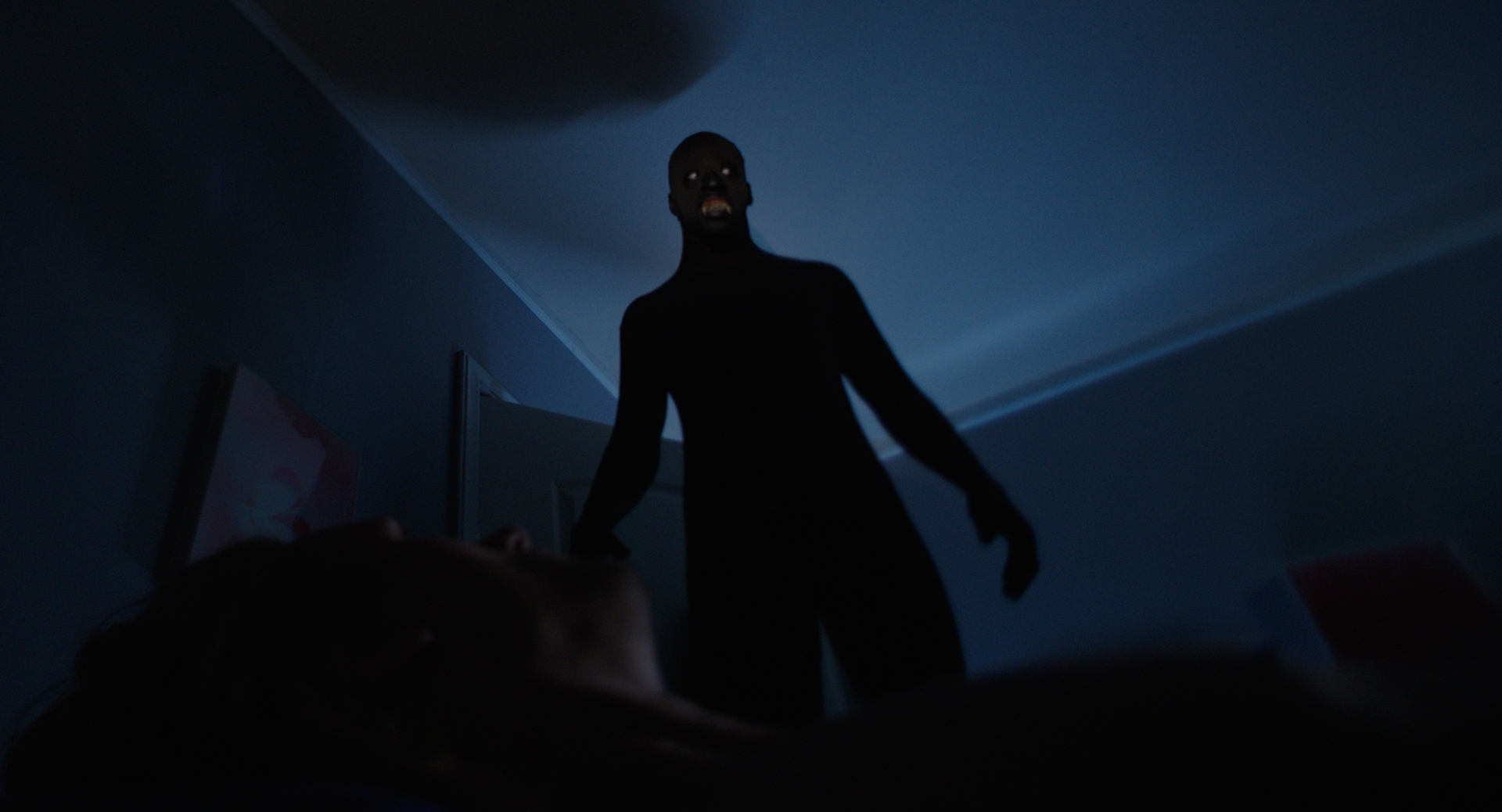
Like a fairy tale or nursery rhyme, simplicity and a child’s logic can be all you need for terror.

You’re exhausted – just bone-deep tired – and for the umpteenth night in a row your son refuses to sleep. He’s terrified, inconsolable. You check under the bed, you check in the closet, you read a book together – no luck. You let him choose the next book to read, and he hands you a pop-up you don’t recognize: The Babadook. Pretty soon, your son isn’t the only one afraid of what’s in the shadows.

It’s a simple premise, and writer/director Jennifer Kent spins her tale with straightforward efficiency. There is no need for cheap theatrics, camera tricks or convoluted backstories, because Kent is drilling down into something deeply, frighteningly human.

Kent’s film is expertly written and beautifully acted, boasting unnerving performances from not only a stellar lead in Essie Davis, but also the alarmingly spot-on young Noah Wiseman. Davis’s lovely, loving Amelia is so recognizably wearied by her only child’s erratic, sometimes violent behavior that you cannot help but pity her, and sometimes fear for her, and other times fear her.

Listen to the whole conversation on the Fright Club Podcast.

The Jackasses of Activism

The Yes Men Are Revolting

By Christie Robb

As you take shelter from yet another downpour and check in on the interwebs, have you seen that thing Pope Francis said about humanity ruining the planet? Or Jeb Bush’s command for him to shut his pointy-hat wearing trap? Or the latest on California drying up like a raisin?

Well, there’s a documentary out on that theme, The Yes Men Are Revolting.

The Yes Men, activists Andy Bichlbaum and Mike Bonanno (not their real names) have been together since the 90s egging each other on to ever escalating heights of ridiculousness in an attempt to prank corporations and climate change deniers.

In order to draw public attention to issues, they stage phony press events and impersonate lobbyists, employees of corporations, and/or governmental agencies and announce dramatic shifts in policy, like Canada agreeing to pay 1% of its GDP to help poor countries adapt to climate change. (Imagine the guys from Jackass, but with a political agenda.)

Often, the stunts get picked up as legitimate stories by mainstream media, before the folks they’ve been impersonating scramble to set the record straight and do damage control.

This, the Yes Men’s third film, covers their attempts to draw the public’s attention to climate change while simultaneously dealing with transformation in the duo’s own lives. They’ve been doing this gig for a while. Now, Bonanno’s married with two kids and one on the way. Bichlbaum finally finds a man he wants to settle down with. Both men have other jobs that put demands on them. They’re asking questions: How much time can they devote to their stunts and each other anymore? Is activism even worth it? What difference are they actually making? Isn’t the world in worse shape now than when they started?

Despite these questions and the gloom generated by any discussion of climate change, The Yes Men Are Revolting will not result in you wanting to slit your wrists.

Bichlbaum and Bonanno’s enjoyment of each other and their vocation, the silliness of their fake names and awful disguises, the quality of the ideas at the heart of their pranks, and a final act that involves getting defense contractors to awkwardly dance, make this film fun and even potentially inspirational.

Verdict-3-0-Stars

Everybody’s Got One

Hungry Hearts

by Hope Madden

New parents can easily panic at the counterintuitive, conflicting, hyperbolic, self-righteous nonsense that purports to be parenting advice. At no time in your life do you feel more of a need to be strong and reliable, and at no time do you see yourself as more of an underprepared moron. It can be terrifying.

Hungry Hearts mines that terror in provocative and insightful ways as it invites us into the crumbling relationship between Mina (Alba Rohrwacher) and Jude (Adam Driver).

Jude and Mina’s tale is told in terms of proximity rather than intimacy. From their remarkable meeting throughout their courtship and marriage, their story is articulated by its confinement, the fragile power struggle almost always shown in corporeal terms: Inside this small space, whose body is controlling whose?

From this perspective, the casting is impeccable, with Driver’s unintimidating lankiness at odds with, and often physically overwhelming, the petite Rohrwacher.

Driver is a master at walking the line between vulnerability and believable insincerity, a skill he puts to impressive use here. Jude seems so harmless, sees himself as harmless, and he certainly doesn’t intend to do anything other than love and respect his family. That’s why he’s so confounded when it all goes south.

It’s a provocative story where Jude’s seemingly small acts of power lead to the need for more concrete acts, although it is Mina’s helplessness in the face of all those small but profound betrayals that created her paranoia in the first place.

Director Severio Costanzo traps you in this insulated world. What looks and feels like an indie drama gives way to the distorted camerawork and intentional score of horror. The tonal shift doesn’t always work, and the third act feels too tidy and conventional for the film itself, but you never lose interest.

What Costanzo has created, and what his small but game cast has almost perfectly animated, is a nuanced, delicate nightmare of helplessness, control and madness with the fate of a 7-month-old in the balance.

Verdict-3-5-Stars

Head Games

Inside Out

by George Wolf

Sometimes I think Pixar’s only goal is to make me a pile of emotional mush. The old man in Up was a dead ringer for my old man, and the Toy Story films were in perfect sync with my son’s childhood, right down to part 3 when Andy (voiced by the original, now grown up kid) was leaving home the same time our Riley was packing for Ohio State. Sniff.

Now, with Inside Out, Pixar builds their latest delightful adventure around the growing pains of a young girl whose name just happens to be…Riley.

Honey! We’re going to need more tissues!

I doubt we’re alone, and that’s one of the many wonderful things about Pixar films. At their best, they resonate with both infectious fun and relatable emotion. Make no mistake, Inside Out is one of their best, landing perhaps just a half notch below Up and the Toy Story trilogy.

It’s a tumultuous time in young Riley’s life. Her family has just moved from Minnesota to San Francisco, and her emotions are working overtime. Inside her mind, five particular feelings are running the show at Riley “headquarters.” There’s Joy (Amy Poehler), Sadness (Phyllis Smith), Fear (Bill Hader), Anger (Lewis Black) and Disgust (Mindy Kaling). Joy is usually able to keep the rest in check (“I’m detecting high levels of sass!”), but when she and Sadness get lost in the outer regions of Riley’s psyche, the race is on to get back to base before the young girl’s personality is forever changed.

So, yes, Pixar returns to the “secret world” theme they know well, but there’s no denying this is just a brilliant premise and perfect execution by a veteran Pixar team, From rides on the “train of thought” to commercial jingles that get stuck in your head to a clever gag about mixing facts and opinions, co- directors/co-writers Pete Docter and Ronaldo Del Carmen keep things fresh and funny while maintaining a simple conflict that easily gets younger viewers invested.

The voice talent is stellar, particularly Black (Angry? Who’d have thought?) and Smith, who makes Sadness a lovable unlikely hero by reminding us that sometimes, it’s okay to be sad.

And that’s the real beauty of Inside Out. While you’re laughing at those silly emotions, the film is gently tugging at yours. Once again, Pixar examines the changing phases of life with charm, humor and a subtle intelligence that can’t help but give you a fresh appreciation for all the jumbled feelings that make life worth living.

Verdict-4-0-Stars

Fright Club: Road Trip Horror

It’s summer time! Maybe you’ve gotten it into your head to pack up the family truckster and set off on an adventure, take a road trip? Well, we’re here to talk you out of it. Whether it’s Joy Ride or Wrong Turn, Brotherhood of Satan or Race with the Devil, or any one of the films on this list, if there is one thing our research has shown us, it’s that we’re staying safe at home this summer.

5. The Hitcher (1986)

Baby faced C. Thomas Howell – still a star in 1986 – finds himself falling asleep behind the wheel as he drives a car from Chicago to San Diego. In a torrential downpour, he picks up a hitchhiker – the effortlessly terrifying Rutger Hauer.

Hauer’s John Ryder immediately creeps you out, and his peculiarly sinister nature bounces beautifully off Howell’s slack jawed innocence. Hauer goes on to do very bad things, especially to truck stop heroine Jennifer Jason Leigh. Yikes.

First time director Robert Harmon does a nice job of ratcheting up tension by exploring the calm surrounding Howell’s shaken character: the roadside, the townies, the slumbering mountains on the horizon, and in particular, Hauer’s serene psychopath. The discrepancy fosters an anxiety in the audience, and though Howell’s crybaby driver Jim Halsey makes consistently idiotic decisions, he’s so convincingly innocent that we forgive him.

4. Duel (1971)

Steven Spielberg was just 25 years old when he directed this taut thriller about mysterious road rage.

Dennis Weaver stars as a salesman on a business road trip who finds himself terrorized by the driver of a big rig. Based on Richard Matheson’s short story that sprang from a real-life incident, the film shows young Spielberg’s filmmaking instincts were already razor sharp. He rachets the tension early and often, knowing that our fear for the life of the salesman becomes even greater when mixed with the frustration of not knowing why he is being targeted.

Originally produced as a TV movie of the week, Duel eventually received a limited theatrical run, and it is flush with all the elements of a winning big screen pulse-pounder.

3. The Hills Have Eyes (1977)

Wes Craven’s original Hills – cheaply made and poorly acted – is a surprisingly memorable, and even more surprisingly alarming flick. Craven’s early career is marked by a contempt for both characters and audience, and his first two horror films ignored taboos, mistreating everyone on screen and in the theater. In the style of Deliverance meets Mad Max, Hills was an exercise in pushing the envelope, and it owes what lasting popularity it has to its shocking violence and Michael Berryman’s nightmarish mug.

A suburban American family on a road trip takes an ill-advised “short cut” through this New Mexican desert to find themselves the targets of a family of inbred mutants’ blood lust.

The Hills Have Eyes – Craven’s original or Alexandre Aja’s 2006 reboot – is not for the squeamish. People are raped, burned alive, eaten alive, eaten dead, and generally ill-treated.

In fact, Craven’s greatest triumph is in creating tension via a plot device so unreasonably gruesome no audience would believe a film could go through with it. The freaks kidnap a baby with plans to eat her. But by systematically crushing taboo after taboo, the unthinkable becomes plausible, and the audience grows to fear that the baby will actually be eaten. It’s not the kind of accomplishment you’d want to share with your mom, but in terms of genre control, it is pretty good.

2. Wolf Creek (2005)

Some of the best scares in film have come as the reaction to urbanites’ fear of losing our tentative grasp on our own link in the food chain once we find ourselves in the middle of nowhere. With Wolf Creek, it’s as if writer/director Greg McLean looked at American filmmakers’ preoccupation with backwoods thrillers and scoffed, in his best Mick Dundee, “That’s not the middle of nowhere. This is the middle of nowhere.” McLean explores the isolated beauty of this vast, empty Australian middle with spectacularly creepy results.

Using only digital cameras to enhance an ultra-naturalistic style, McLean’s happy backpackers find themselves immobile outside Wolf Creek National Park when their car stops running. As luck would have it, friendly bushman Mick Taylor (a startlingly horrifying, utterly perfect John Jarratt) drives up offering a tow back to his camp, where he promises to fix the vehicle.

A horror film this realistic is not only hard to watch, but a bit hard to justify. What makes an audience interested in observing human suffering so meticulously recreated? This is where, like a true artist, McLean finally succeeds. What is as unsettling as the film itself is that its content is somehow satisfying.

1. The Texas Chainsaw Massacre (1974)

Not everyone considers Tobe Hooper’s 1974 original The Texas Chainsaw Massacre a classic. Those people are wrong. Perhaps even stupid.

Franklin Hardesty, his pretty sister Sally, and a few other friends head out to Grampa Hardesty’s final resting place after hearing the news of some Texas cemeteries being grave robbed. They pick up a hitchhiker, played with glorious insanity by Edwin Neal. The Hitchhiker is part of a family of cannibals, and the youths will eventually stumble upon their digs.

It is classic because Hooper masterfully enlisted a low rent verite for this bizarre story to do something utterly new. The camera work, so home-movie like, worked with the “based on a true story” tag line like nothing before it, and the result seriously disturbed the folks of 1974. It has been ripped off and copied dozens of times since its release, but in the context of its time, it was so absolutely original it was terrifying.

Hooper sidestepped all the horror gimmicks audiences had grown accustomed to – a spooky score that let you know when to grow tense, shadowy interiors that predicted oncoming scares – and instead shot guerilla-style in broad daylight, outdoors, with no score at all. You just couldn’t predict what was coming. He was after an entirely different kind of tension. He dashes your expectations, making you uncomfortable, as if you have no idea what you could be in for. As if, in watching this film, you yourself are in more danger than you’d predicted.

But not more danger than Franklin is in, because Franklin is not in for a good time.

https://www.youtube.com/watch?v=Vs3981DoINw