It’s hard to tell a new story. People have been telling
stories since the beginning of people, and eventually – probably millennia ago –
we realized we were just recycling the same dozen or so tales.
This week’s Shudder premiere, director Vincent Paronnaud’s Hunted,
feels especially familiar. He knows that, presumably, or the woman being chased
through a massive forest wouldn’t be wearing a red hooded coat.
It’s clear in every aspect of the telling of this story that the filmmaker (and a team of writers including Paronnaud, Lea Pernollet and David H. Pickering) want you to understand how familiar this is.
Indeed, Paronnaud’s tale of a man chasing a woman is so
ordinary that no matter how outlandish the circumstances, onlookers barely
register it as more than a moment’s blip in their day.
Hunted opens with a fairy tale, spun by fireside in a
deep, dark woods, of a group of men who turn on a woman. In this ancient lore,
things don’t turn out so well for the men, not because a savior steps in but
because of something more primal.
And so, eons later, the aptly named Eve (Lucie Debay) is
dealing with a boss who underestimates her and a husband who can’t stop
calling. She goes out for a drink. That might have been the last we ever heard
from Eve.
Instead, after a series of events that escalate beyond the point
of realism to something bordering on the absurd, the whole damn forest hears
her.
Debay’s transformation is also marked very obviously and very visually, underscoring the cartoonish nature of this particular enactment. She does a wonderful job of evolving from something in Act 1 that feels garden variety for horror into something surprising and fierce.
Arieh Worthalter equals her as the psychopath, often lensed
to give him the look of an animated wolf charming villagers.
Paronnaud’s background is in animation—he co-directed
Marjane Satrapi’s sublime black and white wonder Persepolis. His move to
horror benefits from his visual flair. While the red coat stands out as an
obvious nod (not to mention terrible camouflage), a later splash of blue feels
simultaneously insane and warrior-like.
The room where it really happened was in Miami’s Hampton House. After a young Cassius Clay won the Heavyweight title from Sonny Liston on Feb. 25, 1964, he joined his long time mentor Malcolm X, NFL legend Jim Brown and soul sensation Sam Cooke at the South Florida hotel.
Writer Kemp Powers first imagined how that meeting of legendary minds might have played out, and now Regina King – who already has an acting Oscar – jumps into the race for Best Director with a wise and wonderful adaptation of Powers’s stage play. Propelled by a bold, vital script from Powers himself, King invites us into a frank discussion about the steps in the civil rights movement of the 1960s, and about each man’s role in the struggle.
Though existing mainly inside that single hotel room, One Night in Miami is in a constant state of motion, as four talented actors serve and volley through a ballet of insight and intellect.
Portraying a bigger-than life-personality such as Clay without a hint of caricature is no easy feat, but Eli Goree handles it with smooth charisma.
Clay’s braggadocio is as playful and charming as you remember, but Goree also finds authentic shades of apprehension about the societal role Clay (who would publicly join the Nation of Islam and announce his name change to Muhammed Ali just weeks after the meeting) was about to accept.
Kingsley Ben-Adir’s Malcom X is a measured voice of wisdom, but the film finds its gravitational pull in the forces of Aldis Hodge and Leslie Odom, Jr.
As Brown, Hodge is beautifully restrained power, a man of incredible strength still able to be staggered by sudden blows of racism. Brown’s path as a leader of the civil rights movement contrasts sharply with Cooke’s, and Odom, Jr. gives the singer surprising and resonant layers that include anger at the thought that he’s not all in for the cause.
The characters continually challenge each other, as King and Powers challenge us with a profundity that comes from their refusal to settle for easy answers. Each question the film raises connects past to present with committed grace, and One Night in Miami finds a beautiful dignity that shines in the face of bigotry.
No one looks forward to the consequences of their actions.
If you believe in God, they’re coming for you one way or the other.
Robert Cuffley’s latest economically made horror Bright
Hill Road shadows no-longer-functioning alcoholic Marcy (Siobhan Williams)
through a pretty bad stretch. It would be hard to imagine things getting any
worse, really. So, Marcy decides to drive across country to spend some time
with her sister Mia in California.
She doesn’t drive straight through, though. She wakes up in
her car in front of a pretty dodgy looking hotel in some forgotten little town
and finds herself checking in. The place is super weird, though, and Marcy’s
never sure if she’s hallucinating, drying out, or seeing and hearing ghosts.
Most of the time Bright Hill Road works—playing on
your guesswork without giving away all its secrets. Sometimes it does not work.
But the film lives and dies with Siobhan Williams’s performance.
Slight but scrappy, she takes on the image of Angela Bettis
or Elliot Page. You worry for her, believe in both her vulnerability and the
chip on her shoulder that might get her through it. She’s weary but spirited
and more than anything, she’s in denial.
Cuffley’s direction takes on a hallucinatory quality that
suits Susie Maloney’s trippy script. Both Act 1 and Act 3 feel rushed—the
opening bit of violence shocks you out of complaining, but the final moments
border on being unearned. Still, the meat of the film meanders at a creepy pace,
one that conjures the feeling of a bad dream.
Bright Hill Road has an intentional, low rent
Overlook quality to it—something both supernatural and seedy. It carries its own
internal logic, and while the toughest eruptions of violence hit us in the film’s
opening moments, it has some grim images to share as the hotel takes on
additional guests.
Cuffley doesn’t break a lot of new ground, but his is an appealing riff on a familiar tune. Most of our demons are within. Trauma takes on an even more sinister form when it’s mixed up with shame. Addiction is its own monster. No one likes a shared bathroom.
The opening minutes of Go/Don’t Go hint at a burgeoning relationship drama. Shy boy meets an outgoing girl. Girl draws the boy out of his shell. Hints of electricity crackle as they find themselves engrossed in conversation. The parts are all there, but as the scene comes to a close, Go/Don’t Go crosses into something a little more…sinister.
Set in a not-so-distant future, Adam (writer/director Alex Knapp) spends his days completing routine tasks. He cleans, prepares meals and works on repairing a car. When not doing his day-to-day, Adam wanders the countryside, checks homes and marks areas on a map as “Go/Don’t Go.” Adam appears to be the only person left.
Isolation and loneliness exist in the periphery of every post-apocalyptic type movie. In Go/Don’t Go, the isolation is front and center. Adam doesn’t spend the entire running time evading cannibalistic marauders or dispatching shuffling zombies. No, Adam’s conflict exists in the haunted memories of a past love, K (Olivia Luccardi, It Follows).
Looked at as a typical horror/thriller, Go/Don’t Go could be a frustrating watch for many. There’s a purposeful aloofness to the narrative that builds a lot of mystery, but also never shows much interest in resolving said mysteries. Adam’s flashbacks fill in interesting character gaps instead of explaining how Adam found himself in his current situation.
The film’s most interesting angle is how it plays with metaphor. Is the landscape in which Adam lives even real? Every house he enters has running water and electricity. The market he goes to is always stocked full of fresh products. Maybe Adam’s shyness, hinted at in those opening minutes, has consumed him after the ending of a relationship. Of course, nothing is definitive and most of this is left to the viewer to decide.
Knapp’s handling of familiar territory is a breath of fresh air. Despite the lack of momentum in the narrative, Knapp taps into a sense of urgency through clever editing. This allows layers of character to be peeled back piece by piece. It’s enough to keep us interested and invested in a story that moves at more of a sporadic pace.
By focusing on character and theme, Go/Don’t Go manages to stand out in a sea of post-apocalyptic tales.
The title made me think I was in for droll English humor. Not the case.
Bloody Hell, the latest from filmmaker Alister
Grierson, is a kind of American/Finnish hybrid about tourism and how it’s often
a terrible decision.
Rex (Ben O’Toole, Detroit) made one mistake. Well, it was sort of a series of mistakes all at one time, but they’re only mistakes if you think of them that way, and he doesn’t. Not really. Yes, one person died as a result, but Rex’s debt is paid now and he’s ready to rebuild his life.
Just not in the US, where the video of his “mistake” made
him wildly, oppressively famous. Nope, somewhere else. Somewhere far away.
Somewhere calm.
Finland! It’s the happiest country in the world! (It’s true.
Look it up.) What could go wrong? There’s even reindeer.
There’s also this one sadistic and insane family, and Rex is
about to get to know them and learn that unwanted fame is not, in the grander
scheme, that bad when the grander scheme includes Finnish cannibals.
Bloody Hell is funny. It’s mean funny, sometimes
tone-deaf mean and not so funny, but the often joyously dark humor almost makes
up for that. The film’s success is mainly thanks to O’Toole, who manages to be
sympathetic and sort of awful.
A string of lunatic supporting turns moves the story forward. Caroline Craig and Matthew Sunderland, in particular, are creepy fun as the heads of the household.
Credit screenwriter Robert Benjamin for much of the film’s frenetic pace. He has a knack for understanding what details we really do not need to possess to be able to follow along. Benjamin has basically strung together a series of carnage-strewn set pieces, and Grierson relies on O’Toole’s charisma to elevate these for messy, bloody laughs.
With self-deprecating charm to burn, O’Toole creates a
wrong-headed but hilarious and almost sweet tone that helps Grierson hold
together a plot that throws a lot at you. But at its heart, Bloody Hell is
the tale of a lonely guy—endearingly but borderline psychotically lonely—and what
it takes for him to find someone to love.
It takes a trip to Finland. No wonder they’re so happy over there!
Ten years ago, a Japanese teenager wrote a book that quickly became regarded as “an envoy from another world.”
With The Reason I Jump, 13 year-old Naoki Higashida expressed in poetic detail how a nonverbal autistic child sees the world.
In short, it’s “details first…then the whole thing.”
For the film adaptation, veteran documentarian Jerry Rothwell gently weaves narrated passages from the book around visits with a handful of other mostly nonverbal autistic teens from around the globe.
The wonderful cinematography from Ruben Woodin Deschamps is a perfect vessel to unveil the beautifully undiscovered country the film explores. These teens are talented, intelligent and expressive, longing for friendships that only require “peace from the world.”
And more than anything, they want to change the perception of autism by joining the conversations they’ve long been the subject of. The Reason I Jump is a touching introduction into how much we can learn by listening to them.
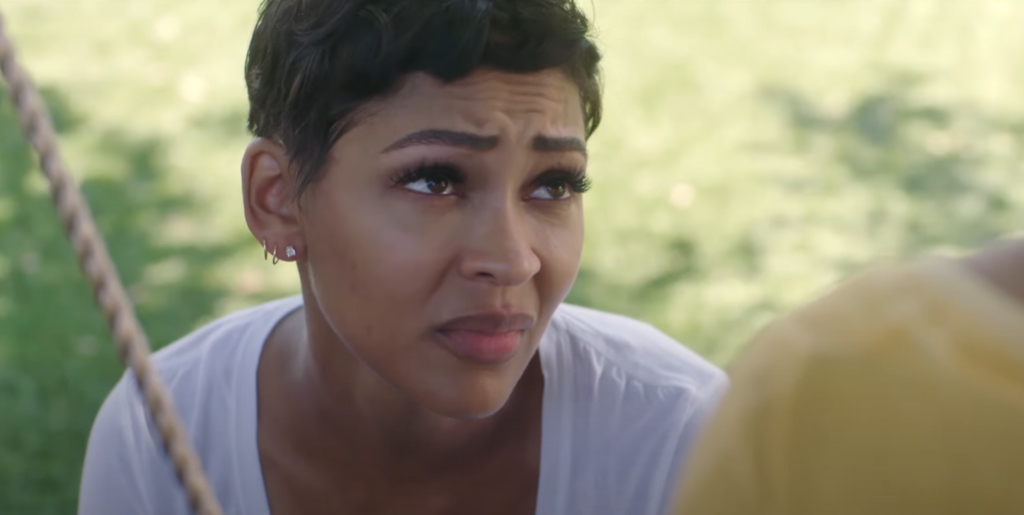
Meagan Good and Tamara Bass have essentially grown up before
our eyes. Mainly taking supporting roles in films and TV, the veterans have
been fairly consistent presences since the Nineties.
For their latest, they create their own roles and their own
stories. If Not Now, When?—written by Bass and co-directed by the
duo—chronicles the lives of four high school besties facing their thirties and
wondering what went wrong.
Good and Bass co-star as, respectively, a professional
facing her addiction problem and a nurse unwilling to hope for a family of her
own. They’re joined by Mekia Cox as a football star’s unhappily pregnant wife,
and, most impressively, Meagan Holder as a mother torn between family and ambition.
The four have a fairly solid chemistry, with Holder bringing a mellow, peacemaker vibe that diffuses much of the melodrama the film flirts with. A solid supporting cast—Edwin Hodge is especially strong as a love interest—help give each character’s personal story some needed depth and interest.
Bass’s script is too often superficial, creating moments for each star to shine, but those moments invariably feel unearned. Without weightier or more believable interior lives and conflicts, flashes of heartbreak or breakthrough come off as little more than fodder for an acting reel. They rarely feel like honest moments in a character’s life.
If Not Now, When? does a lot right, too. The pacing
of each character’s arc is different, so the excitement and poignant moments are
staggered—more like real life. We don’t all hit our own personal highs and lows
simultaneously (thank God), and neither should these characters. The cadence
not only lends some needed authenticity, but it gives the film a slight irregularity
in its structure, which keeps it from feeling formulaic or predictable.
In keeping with that thread of authenticity, Bass wisely avoids closing each individual story with tidy precision. Will she or won’t she? And how will that turn out for her? The questions are rarely answered with any real finality, and that emphasizes the film’s point, which is not how each one is doing individually. Bass and Good are more interested in exploring how they do together.
Sometimes, you’re just in the mood for a B movie, especially
if it’s a creature feature.
Extra points if it’s a feminist take on a misogynist’s
story.
Shadow in the Clouds co-writer Max Landis has been
accused of sexual misconduct and/or outright assault by eight different women. And
while it’s tough to stomach any ticket purchase benefitting him, the truth is
that co-writer/director Roseanne Liang’s film has stylized fun in depantsing
exactly the kind of weak, entitled, insecure crybaby that makes you think of
Max Landis.
If you’ve seen the New Zealander’s 2017 horror short Do No Harm, you’ll recognize Liang’s writing here.
The film tags along on a non-combat WWII military flight out
of New Zealand. With seconds to spare, an unexpected female flight officer
named Maude Garrett (Chloe Grace Moretz) boards the flight carrying a duffel
bag with confidential contents.
The rowdy, boorish, some would say violently sexist crew
quickly stashes Maude – sans duffel – in the gun turret until take off.
This is a brilliant move, cinematically. It creates
immediate, palpable tension because she is locked into a tiny cell dangling
from a moving airplane and dependent upon the good nature of the mainly bad
natured men above.
It also allows Moretz and Liang the opportunity to introduce
any number of terrifying elements out there in the clouds.
But mainly, it gives Moretz the chance to own the film for a while, and she does. Together filmmaker and lead slyly reveal more about Maude, ratcheting tensions and thrills as they do. Liang leans into budgetary constraints, developing a cheesy retro vibe while finding appealing ways to introduce different characters.
In many respects, the writing is the weakness. Too often
scenes devolve into obvious but inauthentic ways to further the plot. Still, a
lot tends to be forgivable in an openly, charmingly B movie.
If the style doesn’t engage you immediately, abandon all
hope. The film builds on style, repaying your attention with increasingly
insane action ending in a climax where one fight, one monster stands in for
every belittling, dangerous, violent, controlling obstacle Maude has ever
faced.
You can picture Max Landis if you like.
Shadow in the Cloud is a ludicrous, over-the-top action horror. It knows what it is and it delivers on its promises.
And please, if you have not sought it out yet, a film that made our Best of 2019 list—Devil to Pay—is finally available. So, while we won’t add it to this year’s list, please do watch it!
In the meantime, here are our picks for the ten best horror films of 2020.
10. His House
A remarkable braiding of human tragedy, global political peril and traditional ghost story, co-writer/director Remi Weekes’s His House was one of 2020’s great surprises. Two powerful lead performances from Sope Dirisu and Lovecraft Country’s Wumni Mosaku pull you into the story of South Sudanese refugees Vol (Dirisu) and Rial (Mosaku). You ache for them as they try to find a way to fit into their new life in London—a life where so many other refugees have failed.
Tension builds quietly but steadily as the two navigate
their new community and the rules good refugees must follow, but worry for them
and their security leaps to new heights as certain horrors bring about risky
behavior. You never know whether you’re more worried that they’ll be sent back
or they’ll have to stay.
Mosaku’s stare is weightier and more powerful than anything else
you’ll encounter in this film, but it’s balanced by the vulnerability Dirisu
brings to Bol. The two deliver an urgent and profound message about guilt,
tragedy and forgiveness.
9. She Dies Tomorrow
She Dies Tomorrow is a horror film that’s one part Coherence, one part The Beach House, one part The Signal (2007, not 2014) and yet somehow entirely its own. It helps that so few people have seen any of those other movies, but the truth is that writer/director Amy Seimetz (creator of The Girlfriend Experience) is simply braiding together themes that have quietly influenced SciFi horror hybrids of late. What she does with these themes is pretty remarkable.
Her film weaves in and out of the current moment, delivering a dreamlike structure that suits its trippy premise. Amy (Kate Lyn Sheil) believes she is going to die tomorrow. She knows it. She’s sure.
She calls her friend Jane (the always amazing Jane Adams), who senses that Amy is not OK but has this obligation to go to her sister-in-law’s party…whatever, she’ll stop over on her way.
By the time Jane gets to the party, she’s also quite certain she will die tomorrow. It isn’t long before the partygoers sense their own imminent deaths; meanwhile, Amy is spreading her perception contagion elsewhere.
8. Gretel & Hansel
Sophia Lillis (IT) narrates and stars as Gretel, the center of this coming of age story—reasonable, given the change of billing suggested by the film’s title. The witch may still have a tasty meal on her mind, but this is less a cautionary tale than it is a metaphor for agency over obligation.
Alice Krige and her cheekbones strike the perfect mixture of menace and mentorship, while Sammy Leakey’s little Hansel manages to be both adorable and tiresome, as is required for the story to work.
Perkins continues to impress with his talent for visual storytelling and Galo Olivares’s cinematography heightens the film’s folkloric atmosphere.
There’s no escaping this spell. The whole affair feels like an intriguing dream.
7. The Other Lamb
The first step toward freedom is telling your own story.
Writer C.S. McMullen and director Malgorzata Szumowska tell this one really well. Between McMullen’s outrage and the macabre lyricism of Szumowska’s camera, The Other Lamb offers a dark, angry and satisfying coming-of-age tale.
Selah’s (Raffey Cassity) first period and her commune’s migration to a new and more isolated Eden offer the tale some structure. Like many a horror film, The Other Lamb occupies itself with burgeoning womanhood, the end of innocence. Unlike most others in the genre, Szumowska’s film depicts this as a time of finding your own power.
The Other Lamb does not simply suggest you question authority. It demands that you do far more than that, and do it for your own good.
6. The Lodge
Several Fiala and Veronika Franz follow up their creepy Goodnight Mommy with this “white death” horror that sees a future stepmom having a tough time getting to know the kids during a weeklong, snowbound cabin retreat. Riley Keough is riding an impressive run of performances and her work here is slippery and wonderful. As the unwanted new member in the family, she’s sympathetic but also brittle.
Jaeden Martell, a kid who has yet to deliver a less than impressive turn, is the human heartbeat at the center of the mystery in the cabin. His tenderness gives the film a quiet, pleading tragedy. Whether he’s comforting his grieving little sister or begging Grace (Keough) to come in from the snow, his performance aches and you ache with him.
There’s no denying the mounting dread the filmmakers create, and the three central performances are uniquely effective. Thanks to the actors’ commitment and the filmmakers’ skill in atmospheric horror, the movie grips you, makes you cold and uncomfortable, and ends with a memorable slap.
5. The Dark and the Wicked
Bryan Bertino is not a filmmaker to let his audience off the hook—if you’ve seen The Strangers, you know that. Like that effort, TD&TW is a slow burn with nerves fraying inside an isolated farmhouse as noises, shadows, and menacing figures lurk outside.
Bertino and cinematographer Tom Schraeder work the darkness in and around a goat farm to create a lingering, roaming dread. But where Bertino, who also writes, scores extra points is in crafting believable characters.
Too often in horror you find wildly dramatic behavior in the face of the supernatural. One character adamantly denies and defies what is clearly happening while another desperately tries to communicate with “it.” No one would do either, but this is the best way to serve the needed action to come in lesser films.
4. The Wolf of Snow Hollow
Two years ago. Thunder Road was a pretty fantastic breakout for writer/director/star Jim Cummings. A visionary character study with alternating moments of heart and hilarity, it felt like recognizable pieces molded into something bracingly original.
Now, Cummings feels it’s time to throw in some werewolves.
Cummings is officer John Marshall of the Snow Hollow sheriff’s department. John’s father (Robert Forster, in his final role) is the longtime sheriff of the small ski resort town, but Dad’s reached the age and condition where John feels he’s really the one in charge.
John’s also a recovering alcoholic with a hot temper, a bitter ex-wife and a teen daughter who doesn’t like him much. But when a young ski bunny gets slaughtered near the hot tub under a full moon, suddenly John’s got a much bigger, much bloodier problem.
At its core, The Wold of Snow Hollow is a super deluxe re-write of Thunder Road with werewolves. I call that a bloody good time.
https://www.youtube.com/watch?v=OP2m2pG6Qn4
3. Werewolf
Liberation isn’t always the good time it’s cracked up to be. In his strangely hopeful tale Werewolf, writer/director Adrian Panek offers a different image of social rebuilding.
Werewolf is beautifully shot, inside the crumbling castle, out in the woods, even in the early, jarring nonchalance of the concentration camp’s brutality. Panek hints at supernatural elements afoot, but the magic in his film is less metaphorical than that.
The film is creepy and tense. It speaks of the unspeakable – the level of evil that can only really be understood through images of Nazi horror—but it sees a path back to something unspoiled.
2. Swallow
Putting a relevant twist on the classic “horrific mother” trope, writer/director Carlo Mirabella-Davis uses the rare eating disorder pica to anchor his exploration of gender dynamics and, in particular, control.
Where Mirabella-Davis’s talent for building tension and framing scenes drive the narrative, it’s Bennett’s performance that elevates the film. Serving as executive producer as well as star, Haley Bennett transforms over the course of the film.
When things finally burst, director and star shake off the traditional storytelling, the Yellow Wallpaper or Awakening or even Safe. The filmmaker’s vision and imagery come full circle with a bold conclusion worthy of Bennett’s performance.
1. Possessor
Brandon Cronenberg’s created a gorgeous techno world, its lulling disorientation punctuated by some of the most visceral horror to make it to the screen this year. There is something admirably confident about showing your influences this brazenly.
Credit Cronenberg, too, for the forethought to cast the two leads as females (Jennifer Jason Leigh playing the remarkable Andrea Riseborough’s boss). The theme of the film, if driven by males, would have been passe and obvious. With females, though, it’s not only more relevant and vital, but more of a gut punch when the time comes to cash the check.
Possessor is a meditation on identity, sometimes very obviously so, but the underlying message takes that concept and stabs you in your still-beating heart with it.