Filmmaker Kimo Stamboel resurrects 70s exploitation horror
with The Queen of Black Magic. Not a remake or really a sequel or reboot
of the Indonesian cult classic, Stamboel’s film is more inspired by its namesake.
Fun throwbacks to Liliek Sudjio’s original over the end
credits do more to remind you how comparably tame this one is.
Not that it is without merit. Or gore.
Hanif (Ario Bayu) returns to the orphanage where he grew up. The man who raised him is dying, and now Hanif and his two childhood friends reunite, families in tow, having come home to pay their respects.
But bad things haunt the old orphanage.
Of course they do! What are you, new?!
Stamboel and writer Joko Anwar can’t come up with anything
particularly new when deciding what, exactly, is the problem with this orphanage.
But they populate their scenes of carnage with actors who generate some
empathy, and put those actors into scenes that are pretty compelling.
Especially if you have a thing about crawly creatures. Or a sensitive gag
reflex.
Anwar is a master of conjuring nightmarish environments,
complete with nightmare logic. His 2017 remake Satan’s Slave and his
2019 original Impetigore
throw narrative logic aside in favor of a denseness of dread punctuated with
unseemly carnage.
The Queen of Black Magic makes more narrative sense,
but somehow that seems to flatten it out a little. It feels less magically
horrific and unsettling as the films Anwar directs. But strong, dimensional
performances elevate every scene.
And both filmmakers know gore. They know what sounds make you wince, what sights make you look away. Between that, the performances, and a tight enough screenplay to keep your interest, they’ve pieced together a tough little horror flick worth a genre fan’s time.
Rarely do we root for the social climber. Certainly not the
social climber who intentionally harms others of his station, unabashedly sucks
up to his masters, and disregards the family he left in poverty. But Ramin
Bahrani’s sly thriller The White Tiger does a lot of things you might
not expect.
His own adaptation of Aravind Agida’s prized novel, the film
shadows a cunning young Indian man as he fights to rise from the abject poverty
of his caste.
A deeply impressive Adarsh Gourav is Balram, entrepreneur. Bahrani opens the film as a mustachioed, suave-looking Bahrani tells us his “glorious tale” of overcoming poverty and becoming his own master. And as much as that story takes some unexpected turns, it’s the tone Bahrani develops that is especially audacious.
The White Tiger offers a blistering class
consciousness that makes the filmmaker’s 2014 film 99 Homes feel
positively cozy with the effects of capitalism.
Bahrani eviscerates India’s caste system along with a
cinematic history of romanticizing the adoration and martyrdom of the Indian servant.
He takes a not-so-subtle jab as well at dreamy redemption tales like Slumdog
Millionaire.
Balram worms his way into the service of his master’s
youngest son Ashok (Rajkummar Rao) and his wife Pinky (Priyanka Chopra), both
back after years in America. Rao and Chopra represent a different and
altogether more insidious look at class warfare—insidious because of its self-righteous
and superficial beliefs in equality. Their performances are stellar and altogether
slap-worthy.
Balram’s social climbing gets him only so far, and a sudden and
violent shift in perspective leaves him fully aware of his own vulnerability.
Bahrani’s masterful direction makes the most of background to establish and reestablish Balram’s position and his thinking. And as utterly contemptuous as this film is concerning the wealthy and powerful, director and lead make you feel the depth and history involved in a servant’s culture of devotion.
It can be tough to find a fresh way to tell a mob story. Brothers
by Blood doesn’t bother.
Director Jeremie Guez’s film, based on his own adaptation of Peter Dexter’s novel Brotherly Love, offers an intimate look at masculinity, loyalty, faith and redemption through the eyes of two men who are as close as brothers. They’re part of the criminal underground, and one (the brooding, quiet, good one) is worried that the other (the loose cannon) may have gone too far.
Like Mean Streets. Like The Drop.Eastern
Promises, Casino, Legend.
Like a lot of movies.
Luckily, Guez has a strong cast with the potential of finding
something uniquely human in these characters.
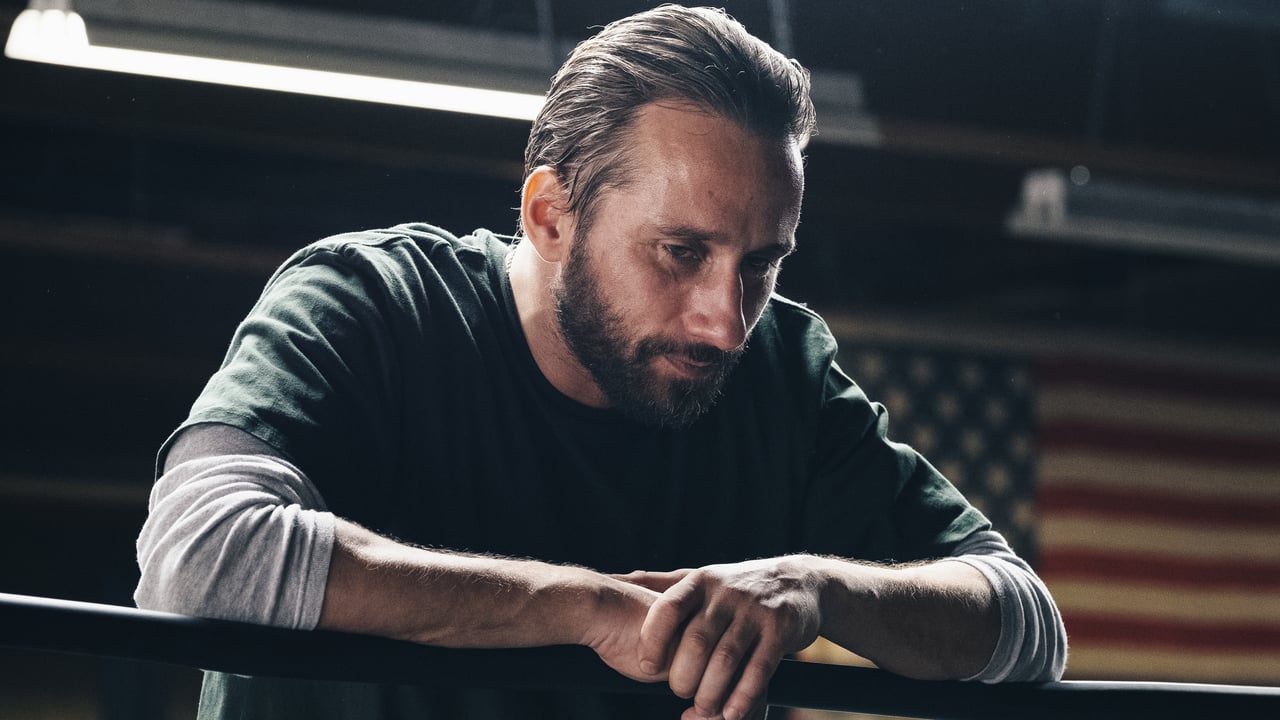
Matthias Schoenaerts is the quietly observant Peter, a
reasonable man who isn’t proud of what he does but he keeps his head down, his
mouth shut, and does the work. Michael (Joel Kinnaman), on the other hand,
likes attention. He likes power and respect, and he’s quite sure he isn’t
getting enough of either.
Kinnaman brings a weaselly quality to Michael that suits him. His best scenes showcase a level of insincere congeniality that really is sometimes chilling. Meanwhile Schoenaerts—a truly talented actor able to disappear into characters—is hamstrung by a role that requires little more than disappointed headshakes, askew glances and sighs.
The surrounding ensemble offers opportunities as well. Paul Schneider (nice to see you!) carves out a little authenticity as Jimmy, a restauranteur in over his head. Maika Monroe plays Jimmy’s kid sister Grace. They all grew up together—Jimmy, Michael, Peter and Grace—and now Grace has come back home.
Monroe, by the way, is fully twenty years younger than her co-stars, which makes the prospect of a love scene the single creepiest aspect of this film.
Talent be damned, Guez can’t find an original thought to
explore. Everything about Brothers by Blood feels absolutely garden
variety, although competently made. Except for the obligatory flashbacks, which
are wedged in so poorly you almost overlook the fairly decent acting going on
in them.
Mean Streets is $2.99 on Prime right now, by the way.
Author Hailey Piper joins the club this week to tear through about 25 different cosmic horror movies, eventually landing on some fuzzy math favorites. Join us, won’t you?
6. Hellraiser
“The box…you opened it. We came.”
Man, those cenobites were scary cool, weren’t they?
Hellraiser, Clive Barker’s feature directing debut, worked not only as a grisly splatterfest suited to the Eighties horror landscape. It’s easy to see the film as an occult or supernatural horror, but it’s just as likely a cosmic tale of a dimension you could open without even trying, another reality on the other side of an afternoon’s puzzle past time.
5. Spiral (Uzumaki) (2000)
Higuchinsky’s mind bending 2000 Japanese horror went underappreciated upon release – likely because of the interest in ghosts and digital horror during that period. That’s too bad, because his adaptation of the not-yet-released Manga Uzumaki is a delight.
It starts with a snail shell. It ends with a town in chaos. If you missed it, you should remedy that now.
4. In the Mouth of Madness
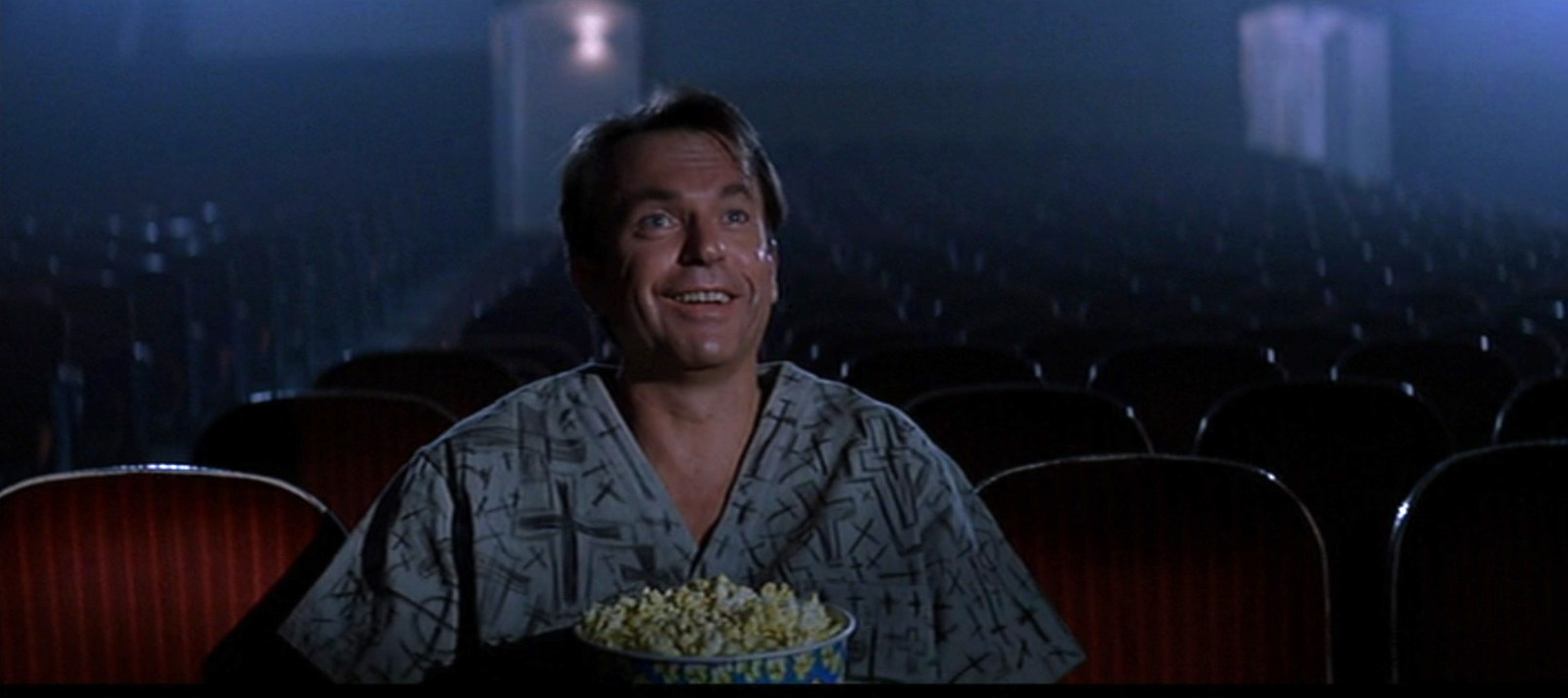
Sutter Cane may be awfully close to Stephen King, but John Carpenter’s cosmic horror is even more preoccupied by Lovecraft. The great Sam Neill leads a fun cast in a tale of madness as created by the written world.
What if those horror novels you read became reality? What if that sketchy writer with the maybe-too-vivid imagination was not just got to his own page, but god for real? This movie tackles that ripe premise while ladling love for both of the horror novelists who made New England the creepiest section of America.
3. The Endless
There is something very clever about the way Justin Benson and Aaron Moorehead’s movies sneak up on you. Always creepy, still they defy genre expectations even as they play with them.
Camp Arcadia offers the rustic backdrop for their latest, The Endless. A clever bit of SciFi misdirection, the film follows two brothers as they return to the cult they’d escaped a decade earlier.
It is this story and the pair’s storytelling skill that continues to impress. Their looping timelines provide fertile ground for clever turns that fans of the filmmakers will find delightful, but the uninitiated will appreciate as well.
2. Annihilation
Alex Garland’s work as both a writer (28 Days Later…, Sunshine, Never Let Me Go) and a writer/director (Ex Machina) has shown a visionary talent for molding the other-worldly and the familiar. Annihilation unveils Garland at his most existential, becoming an utterly absorbing sci-fi thriller where each answer begs more questions.
Taking root as a strange mystery, it offers satisfying surprises amid an ambitious narrative flow full of intermittent tension, scares, and blood—and a constant sense of wonder.
Just his second feature as a director, Annihilation proves Ex Machina was no fluke. Garland is pondering similar themes—creation, self-destruction, extinction—on an even deeper level, streamlining the source material into an Earthbound cousin to 2001.
1. The Mist
David Drayton (Thomas Jane) and his young son head to town for some groceries. Meanwhile, a tear in the space/time continuum opens a doorway to alien monsters. So he, his boy, and a dozen or so other shoppers are all trapped inside this glass-fronted store just waiting for rescue or death.
Marcia Gay Harden is characteristically brilliant as the religious zealot who turns survival inside the store into something less likely than survival out with the monsters, but the whole cast offers surprisingly restrained but emotional turns.
The FX look amazing, too, but it’s the provocative ending that guarantees this one will sear itself into your memory.
In a riotous and incredibly assured feature debut as writer
and director, she twists both knife and expectations in a rape-revenge riff
that’s relevant, smart and surprisingly hilarious.
If you like your humor dark.
Carey Mulligan is flawless—when is she not?—as Cassandra. By
day the one-time med student ignores customers from behind a coffee house
counter. By night, she pretends to be obliterated in local clubs and dive bars.
Why would she do that? Well honestly, it’s because
Cassandra’s life has lost its purpose and this is to a great degree the drug
that numbs her. These opportunities to puncture the moral delusions of
self-proclaimed “nice guys” who take her home provide catharsis. It’s like her
own version of purgatory, as she forever tries to make amends for that one
night back in med school.
And these moments are priceless as, one by one, Fennell
exposes the hideous reality of gender norms and how little it takes for a man
to be considered a good dude.
Mulligan is marvelous, giving Cassie the courage that comes from an utter disinterest in the opinions or well-being of others. And then a good guy from med school (Bo Burnham) stops in for coffee (in one of Mulligan’s finest, funniest scenes) and the stakes get higher.
Maybe she has a shot at turning the tables on those she considers
responsible for this pain. Or maybe she’s found her one chance to put this pain
behind her.
It’s a tightly wound script populated by spot on performances. Fennell has a gift for casting small roles with actors who can find the absurd humor and realistic horror of every situation: Jennifer Coolidge, Clancy Brown, Adam Brody, Laverne Cox, Alison Brie, Christopher Mintz-Plasse. But the cherry on this sundae is Burnham, who is quietly magnificent.
A pessimism runs through Fennell’s film that’s hard to ignore
and even harder to criticize. But the film is true to the character of Cassie—a
woman who’s profoundly dark and unforgiving but not wrong.
Fennell’s film is not a nuanced drama concerning rape culture.
It’s not telling us anything we don’t honestly know already. It’s not a scalpel
to the brain, it’s a sledge hammer to the testicles.
There is something absurd and mesmerizing about Lance
Oppenheim’s documentary Some Kind of Heaven. The greens of the golf
courses are insanely green, the aquas of the pools are blindingly blue/green,
the synchrony of limbs or golf carts in the choreographed dances is hypnotic.
They have synchronized golf cart dances.
The Villages is nuts!
Sort of the Disneyland of retirement communities, Florida’s The Villages is a 100,000 strong city, gated and catering exclusively to elderly residents. Their town square is painted and constructed to look like a real town square – it even has a fake history that city tour guides will spin with a smile and a deep, savage tan.
This is a community of affluence ripe for satire in an era of catastrophic generational income inequality. Instead, Oppenheim finds a more melancholy and poignant inspiration. Rather than lampoon the wretched excess, the filmmaker develops character studies, unveiling something more bitter than sweet in this dessert topping of a town.
Anne and Reggie, married 47 years, began falling apart
before they moved to The Villages, but his recreational drug use and attempts
at spiritual awakening are taking a toll. A poignant look at loneliness inside
the happiest place in old age, the recently widowed Barbara works all day and
finds herself an outsider in a world full of vacant, smiling eyes.
But the true outsider is the seediest and most fascinating character of the bunch. Eighty-one-year-old Dennis cannot afford The Villages, but he’s not ashamed to scam his way in. Living in his van and preying on lonely women with money, he reminded me of the sublime Senior Love Trianglefrom 2020.
That comparison, though, only draws attention to the fairly
superficial treatment Oppenheim gives the subjects. Dennis seemed to be an opportunity
to comment on an unseemly reality seeping into this community, itself a
perversion of reality.
Oppenheim’s framing and David Bolen’s cinematography create
an unforgettable visual experience, preparing you for a Wes Anderson meets John
Waters documentary about rich old people synchronized swimming.
Well, that’s just too high a bar. Who could live up to that? Instead, Oppenheim settles for a little razzle dazzle, a little character intrigue, and enough footage to make you wonder what the hell goes on in The Villages.
No one looks forward to the consequences of their actions.
If you believe in God, they’re coming for you one way or the other.
Robert Cuffley’s latest economically made horror Bright
Hill Road shadows no-longer-functioning alcoholic Marcy (Siobhan Williams)
through a pretty bad stretch. It would be hard to imagine things getting any
worse, really. So, Marcy decides to drive across country to spend some time
with her sister Mia in California.
She doesn’t drive straight through, though. She wakes up in
her car in front of a pretty dodgy looking hotel in some forgotten little town
and finds herself checking in. The place is super weird, though, and Marcy’s
never sure if she’s hallucinating, drying out, or seeing and hearing ghosts.
Most of the time Bright Hill Road works—playing on
your guesswork without giving away all its secrets. Sometimes it does not work.
But the film lives and dies with Siobhan Williams’s performance.
Slight but scrappy, she takes on the image of Angela Bettis
or Elliot Page. You worry for her, believe in both her vulnerability and the
chip on her shoulder that might get her through it. She’s weary but spirited
and more than anything, she’s in denial.
Cuffley’s direction takes on a hallucinatory quality that
suits Susie Maloney’s trippy script. Both Act 1 and Act 3 feel rushed—the
opening bit of violence shocks you out of complaining, but the final moments
border on being unearned. Still, the meat of the film meanders at a creepy pace,
one that conjures the feeling of a bad dream.
Bright Hill Road has an intentional, low rent
Overlook quality to it—something both supernatural and seedy. It carries its own
internal logic, and while the toughest eruptions of violence hit us in the film’s
opening moments, it has some grim images to share as the hotel takes on
additional guests.
Cuffley doesn’t break a lot of new ground, but his is an appealing riff on a familiar tune. Most of our demons are within. Trauma takes on an even more sinister form when it’s mixed up with shame. Addiction is its own monster. No one likes a shared bathroom.
The title made me think I was in for droll English humor. Not the case.
Bloody Hell, the latest from filmmaker Alister
Grierson, is a kind of American/Finnish hybrid about tourism and how it’s often
a terrible decision.
Rex (Ben O’Toole, Detroit) made one mistake. Well, it was sort of a series of mistakes all at one time, but they’re only mistakes if you think of them that way, and he doesn’t. Not really. Yes, one person died as a result, but Rex’s debt is paid now and he’s ready to rebuild his life.
Just not in the US, where the video of his “mistake” made
him wildly, oppressively famous. Nope, somewhere else. Somewhere far away.
Somewhere calm.
Finland! It’s the happiest country in the world! (It’s true.
Look it up.) What could go wrong? There’s even reindeer.
There’s also this one sadistic and insane family, and Rex is
about to get to know them and learn that unwanted fame is not, in the grander
scheme, that bad when the grander scheme includes Finnish cannibals.
Bloody Hell is funny. It’s mean funny, sometimes
tone-deaf mean and not so funny, but the often joyously dark humor almost makes
up for that. The film’s success is mainly thanks to O’Toole, who manages to be
sympathetic and sort of awful.
A string of lunatic supporting turns moves the story forward. Caroline Craig and Matthew Sunderland, in particular, are creepy fun as the heads of the household.
Credit screenwriter Robert Benjamin for much of the film’s frenetic pace. He has a knack for understanding what details we really do not need to possess to be able to follow along. Benjamin has basically strung together a series of carnage-strewn set pieces, and Grierson relies on O’Toole’s charisma to elevate these for messy, bloody laughs.
With self-deprecating charm to burn, O’Toole creates a
wrong-headed but hilarious and almost sweet tone that helps Grierson hold
together a plot that throws a lot at you. But at its heart, Bloody Hell is
the tale of a lonely guy—endearingly but borderline psychotically lonely—and what
it takes for him to find someone to love.
It takes a trip to Finland. No wonder they’re so happy over there!
And please, if you have not sought it out yet, a film that made our Best of 2019 list—Devil to Pay—is finally available. So, while we won’t add it to this year’s list, please do watch it!
In the meantime, here are our picks for the ten best horror films of 2020.
10. His House
A remarkable braiding of human tragedy, global political peril and traditional ghost story, co-writer/director Remi Weekes’s His House was one of 2020’s great surprises. Two powerful lead performances from Sope Dirisu and Lovecraft Country’s Wumni Mosaku pull you into the story of South Sudanese refugees Vol (Dirisu) and Rial (Mosaku). You ache for them as they try to find a way to fit into their new life in London—a life where so many other refugees have failed.
Tension builds quietly but steadily as the two navigate
their new community and the rules good refugees must follow, but worry for them
and their security leaps to new heights as certain horrors bring about risky
behavior. You never know whether you’re more worried that they’ll be sent back
or they’ll have to stay.
Mosaku’s stare is weightier and more powerful than anything else
you’ll encounter in this film, but it’s balanced by the vulnerability Dirisu
brings to Bol. The two deliver an urgent and profound message about guilt,
tragedy and forgiveness.
9. She Dies Tomorrow
She Dies Tomorrow is a horror film that’s one part Coherence, one part The Beach House, one part The Signal (2007, not 2014) and yet somehow entirely its own. It helps that so few people have seen any of those other movies, but the truth is that writer/director Amy Seimetz (creator of The Girlfriend Experience) is simply braiding together themes that have quietly influenced SciFi horror hybrids of late. What she does with these themes is pretty remarkable.
Her film weaves in and out of the current moment, delivering a dreamlike structure that suits its trippy premise. Amy (Kate Lyn Sheil) believes she is going to die tomorrow. She knows it. She’s sure.
She calls her friend Jane (the always amazing Jane Adams), who senses that Amy is not OK but has this obligation to go to her sister-in-law’s party…whatever, she’ll stop over on her way.
By the time Jane gets to the party, she’s also quite certain she will die tomorrow. It isn’t long before the partygoers sense their own imminent deaths; meanwhile, Amy is spreading her perception contagion elsewhere.
8. Gretel & Hansel
Sophia Lillis (IT) narrates and stars as Gretel, the center of this coming of age story—reasonable, given the change of billing suggested by the film’s title. The witch may still have a tasty meal on her mind, but this is less a cautionary tale than it is a metaphor for agency over obligation.
Alice Krige and her cheekbones strike the perfect mixture of menace and mentorship, while Sammy Leakey’s little Hansel manages to be both adorable and tiresome, as is required for the story to work.
Perkins continues to impress with his talent for visual storytelling and Galo Olivares’s cinematography heightens the film’s folkloric atmosphere.
There’s no escaping this spell. The whole affair feels like an intriguing dream.
7. The Other Lamb
The first step toward freedom is telling your own story.
Writer C.S. McMullen and director Malgorzata Szumowska tell this one really well. Between McMullen’s outrage and the macabre lyricism of Szumowska’s camera, The Other Lamb offers a dark, angry and satisfying coming-of-age tale.
Selah’s (Raffey Cassity) first period and her commune’s migration to a new and more isolated Eden offer the tale some structure. Like many a horror film, The Other Lamb occupies itself with burgeoning womanhood, the end of innocence. Unlike most others in the genre, Szumowska’s film depicts this as a time of finding your own power.
The Other Lamb does not simply suggest you question authority. It demands that you do far more than that, and do it for your own good.
6. The Lodge
Several Fiala and Veronika Franz follow up their creepy Goodnight Mommy with this “white death” horror that sees a future stepmom having a tough time getting to know the kids during a weeklong, snowbound cabin retreat. Riley Keough is riding an impressive run of performances and her work here is slippery and wonderful. As the unwanted new member in the family, she’s sympathetic but also brittle.
Jaeden Martell, a kid who has yet to deliver a less than impressive turn, is the human heartbeat at the center of the mystery in the cabin. His tenderness gives the film a quiet, pleading tragedy. Whether he’s comforting his grieving little sister or begging Grace (Keough) to come in from the snow, his performance aches and you ache with him.
There’s no denying the mounting dread the filmmakers create, and the three central performances are uniquely effective. Thanks to the actors’ commitment and the filmmakers’ skill in atmospheric horror, the movie grips you, makes you cold and uncomfortable, and ends with a memorable slap.
5. The Dark and the Wicked
Bryan Bertino is not a filmmaker to let his audience off the hook—if you’ve seen The Strangers, you know that. Like that effort, TD&TW is a slow burn with nerves fraying inside an isolated farmhouse as noises, shadows, and menacing figures lurk outside.
Bertino and cinematographer Tom Schraeder work the darkness in and around a goat farm to create a lingering, roaming dread. But where Bertino, who also writes, scores extra points is in crafting believable characters.
Too often in horror you find wildly dramatic behavior in the face of the supernatural. One character adamantly denies and defies what is clearly happening while another desperately tries to communicate with “it.” No one would do either, but this is the best way to serve the needed action to come in lesser films.
4. The Wolf of Snow Hollow
Two years ago. Thunder Road was a pretty fantastic breakout for writer/director/star Jim Cummings. A visionary character study with alternating moments of heart and hilarity, it felt like recognizable pieces molded into something bracingly original.
Now, Cummings feels it’s time to throw in some werewolves.
Cummings is officer John Marshall of the Snow Hollow sheriff’s department. John’s father (Robert Forster, in his final role) is the longtime sheriff of the small ski resort town, but Dad’s reached the age and condition where John feels he’s really the one in charge.
John’s also a recovering alcoholic with a hot temper, a bitter ex-wife and a teen daughter who doesn’t like him much. But when a young ski bunny gets slaughtered near the hot tub under a full moon, suddenly John’s got a much bigger, much bloodier problem.
At its core, The Wold of Snow Hollow is a super deluxe re-write of Thunder Road with werewolves. I call that a bloody good time.
https://www.youtube.com/watch?v=OP2m2pG6Qn4
3. Werewolf
Liberation isn’t always the good time it’s cracked up to be. In his strangely hopeful tale Werewolf, writer/director Adrian Panek offers a different image of social rebuilding.
Werewolf is beautifully shot, inside the crumbling castle, out in the woods, even in the early, jarring nonchalance of the concentration camp’s brutality. Panek hints at supernatural elements afoot, but the magic in his film is less metaphorical than that.
The film is creepy and tense. It speaks of the unspeakable – the level of evil that can only really be understood through images of Nazi horror—but it sees a path back to something unspoiled.
2. Swallow
Putting a relevant twist on the classic “horrific mother” trope, writer/director Carlo Mirabella-Davis uses the rare eating disorder pica to anchor his exploration of gender dynamics and, in particular, control.
Where Mirabella-Davis’s talent for building tension and framing scenes drive the narrative, it’s Bennett’s performance that elevates the film. Serving as executive producer as well as star, Haley Bennett transforms over the course of the film.
When things finally burst, director and star shake off the traditional storytelling, the Yellow Wallpaper or Awakening or even Safe. The filmmaker’s vision and imagery come full circle with a bold conclusion worthy of Bennett’s performance.
1. Possessor
Brandon Cronenberg’s created a gorgeous techno world, its lulling disorientation punctuated by some of the most visceral horror to make it to the screen this year. There is something admirably confident about showing your influences this brazenly.
Credit Cronenberg, too, for the forethought to cast the two leads as females (Jennifer Jason Leigh playing the remarkable Andrea Riseborough’s boss). The theme of the film, if driven by males, would have been passe and obvious. With females, though, it’s not only more relevant and vital, but more of a gut punch when the time comes to cash the check.
Possessor is a meditation on identity, sometimes very obviously so, but the underlying message takes that concept and stabs you in your still-beating heart with it.