That Faulkner quote gets a lot of action in writers/directors Gerard Bush and Christopher Renz’s social nightmare Antebellum.
The titular term describes the period in American history just prior to the Civil War. That’s where this thriller finds its horror, and where a prominent, present day African American sociologist/activist/author wakes up to find herself trapped.
Janelle Monáe crafts an impressive lead as Veronica, a PhD beaten, branded and forced to accept a slave name in a film that plays out like a disturbingly relevant Twilight Zone episode.
Enslaved on a reformer plantation, “Eden” works to stay alive long enough to plan an escape and outsmart two Confederate officers (Eric Lange, Jack Huston) and the mysterious mansion mistress (Jena Malone).
The hideous rise of white nationalism is the true nightmare here – fertile and bloody ground for horror. From Godzilla to Get Out, horror has always brimmed with social commentary and anxiety, so it should come as no surprise that a genre film tackles America’s racist shame this directly.
And while this approach certainly grabs your attention with its boldness, Bush and Renz can get too caught up in obviousness and speech-making. The second act suffers most from these heavy hands. The modern day shenanigans with Veronica and two friends (Gabourey Sidibe, Lily Cowles) push too hard, last too long and say very little.
But as much as Spike Lee has recently connected the past and present of racism with layered nuance, Bush and Renz go right upside our heads. Pulpy exploitation? It goes there. It’s a horror movie.
Horror movies exist so we can look at the nightmare, examine it from a distance, and come out the other side, unscathed ourselves. Antebellum is acknowledgment and catharsis, and not only because all those Black people being terrorized on the screen are fictional, instead of real victims in another cell phone crime scene. The film’s true catharsis – a highly charged and emotional payoff – lies in Act 3: comeuppance.
And it is glorious.
There are stumbles getting to the fireworks, but for sheer heroic tit for tat, Antebellum delivers the goods.
As colorful as a dream, Juan Diego Escobar Alzate’s feature
film debut Luz: The Flower of Evil looks like magic and brims with the
casual brutality of faith.
Set inside a religious community in the mountains of
Colombia, the film drops us into ongoing struggles with the group’s religious
leader, El Señor (Conrad Osorio). No one knows the devil as he does, he reminds
his daughter Laila (Andrea Esquivel).
She lives contentedly, devoutly, along with her two adopted
sisters. El Señor and the villagers consider the trio angels—just as they believe
the little boy chained up out back is the Messiah who will deliver the community
from its recent calamities.
Though never entirely detailed, the internal logic of the
film and the community is clear enough to feel simultaneously familiar and
horrifying. The way the filmmaker wrestles with what is and is not real, with
forgiveness and the morally ambiguous nature of man, and with our tendency to
blame God or the devil for our own shortcomings is frustrating and
intoxicating.
Alzate gets maximum impact for minimum budget thanks in
large part to Nicolas Caballero Arenas’s cinematography. His breathtaking visuals
add spooky richness, turning this Western of sorts into a beautiful, lyrical,
macabre Columbian folktale.
Lovely as it is, the film echoes of loss. The title itself conjures what is absent. As time wears on and the “angels” lose confidence in their father figure, remembered stories of the late mother figure Luz (Spanish for light) take the space for them that El Señor’s tales of God take for the rest of the community.
Luz: The Flower of Evil surprises as often as it relies on expectations to deliver its message. The film is more atmospheric than cautionary, its resolution a fitting end for characters’ whose own logic doesn’t likely reflect that of the audience. It is a vision, from its opening musical notes to its closing image, though, that marks a filmmaker worth discovering.
How many films, horror or otherwise, open as a moving van
leaves a fresh faced family unpacking in their new dream home? Kurtis David
Harder and his new Shudder thriller Spiral welcome you to the
neighborhood.
What feels like your typical suburban paranoia film, this
time given a fresh coat of paint with the introduction of a same-sex couple at
its center, turns out to be something else entirely.
Even as Malik (Jeffrey Bowyer-Chapman) and Aaron (Ari Cohen)
try to convince Aaron’s teenaged daughter Kayla (Jennifer Laporte) that she really
won’t miss the big city, Malik is seeing some things around the cul-de-sac that
worry him.
But Aaron isn’t ready to believe the neighbors are
homophobes (or racists, for that matter, even if Tiffany across the street
assumed Malik was the gardener).
Spiral quickly falls into a very familiar pattern.
Malik, who works at home as a writer, begins to let his research get the better
of him. Writer’s block has him paranoid—or maybe there’s a trauma in his past
that’s to blame? Is he really seeing something strange in his neighbors’
windows? Is Aaron right, did he go overboard with that new home security
system?
It sounds familiar—so much so that the film sometimes just figures your brain will fill in blanks left open. And while Spiral’s internal logic is never air tight, screenwriters Colin Minihan (It Stains the Sands Red, What Keeps You Alive) and John Poliquin are more interested in bigger patterns. Their social allegory doesn’t achieve the breathless thrills of Get Out, but Spiral swims similar waters.
The filmmakers see patterns in political hatred and the continuing reaffirmation of the status quo, and those patterns are horrifying. While horror has always been an opportunity for the collective unconscious to deal with social anxiety in a safely distant way, Spiral is less interested in creating that comforting fictional buffer. It’s as if the filmmakers want you to see the holes in their plot so you’re more able to see the nonfiction it’s based on.
We haven’t been able to leave home in months, which means that home has kind of turned into its own horror show. For us, that’s Ohio, so we figured, why not celebrate?! In honor of our own home grown horror show, we dug into the best horror movies set right here in OH-IO!
5. Scream 2 (1997): Windsor College, OH
Updating his celebratory meta-analysis of genre clichés, Craven checked back in on Sydney Prescott (Neve Campell) and crew a couple years later, as the surviving members of the Woodsboro murders settled into a new semester in the little Ohio liberal arts school of Windsor College. The movie Stab, based on the horrors Sydney and posse survived (well, some didn’t survive) just two years ago is already out and screening on campus, but has it inspired copycat killers?
Craven, working again from a screenplay by Kevin Williamson, goes even more meta, using the film-within-a-film technique while simultaneously poking fun at horror sequel clichés in his own horror sequel.
And in the same way Scream subverted horror tropes while employing them to joyous results, the sequel – funny, tense, scary, smart, and fun – manages to find freshness by digging through what should be stale.
https://www.youtube.com/watch?v=WG0oUO4mK4A&t=29s
4. Tragedy Girls (2017): Rosedale, OH
Heathers meets Scream in the savvy horror comedy that mines social media culture to truly entertaining effect.
Sadie (Brianna Hildebrand) and McKayla (Alexandra Shipp) are looking for more followers to improve their brand, and they have been doing a lot of research to make their content more compelling. The Tragedy Girls plumb their small Ohio town’s surprising death toll with more insight than the local police seem to have. Where do they get their knowledge?
Provocative.
Hildebrand and Shipp (both X-Men; Hildebrand was the moody Negasonic in Deadpool while Shipp plays young Storm in the franchise proper) nail their characters’ natural narcissism. Is it just the expectedly shallow, self-centeredness of the teenage years, or are they sociopaths? Who can tell these days?
3. The Faculty (1998): Herrington, OH
The film exaggerates (one hopes) the social order of a typical
Ohio high school to propose that it wouldn’t be so terrible if all the teachers
and most of the students died violently, or at least underwent such a horrific
trauma that a revision of the social order became appealing.
Indeed, in this film, conformity equals a communicable disease.
Adults aren’t to be trusted; high school is a sadistic machine grinding us into
sausage; outcasts are the only true individuals and, therefore, the only people
worth saving. Director Robert Rodriguez pulls the thing off with panache, all
the while exploring the terrifying truth that we subject our children to a very
real and reinforced helplessness every school day.
Interestingly, the infected teachers and students don’t turn into
superficial, Stepford-style versions of themselves. For the most part, they
indeed become better, stronger, more self-actualized (ironically enough)
versions, which is interestingly creepy. It’s as if humanity – at least the
version of it we find in a typical American high school – really isn’t worth
saving.
2. Trick ‘r Treat (2007): Warren Valley, OH
Columbus, Ohio native Michael Dougherty outdid himself as writer/director of this anthology of interconnected Halloween shorts. Every brief tale set in sleepy Warren Valley, Ohio compels attention with sinister storytelling, the occasional wicked bit of humor and great performances, but it’s the look of the film that sets it far above the others of its ilk.
Dougherty takes the “scary” comic approach to the film—the kind you find in Creepshow and other Tales from the Crypt types—but nothing looks as macabrely gorgeous as this movie. The lighting, the color, the costumes and the way live action bleeds into the perfectly placed and articulated moments of graphic artwork—all of it creates a giddy holiday mood that benefits the film immeasurably.
Dylan Baker (returning to the uptight and evil bastard he perfected for his fearless performance in Happiness) leads a whip-smart cast that includes impressive turns from Brian Cox, Anna Pacquin, Leslie Bibb and Brett Kelly (Thurman Merman, everybody!).
And it’s all connected with that adorable menace, Sam. Perfect.
1. A Nightmare on Elm Street (1984): Springwood, OH
Teens in suburban Ohio share nightmares, and one by one, these teens are not waking up. Not that their disbelieving parents care. When Tina woke one night, her nightgown shredded by Freddie’s razor fingers, her super-classy mother admonished, “Tina, hon, you gotta cut your fingernails or you gotta stop that kind of dreamin’. One or the other.”
Depositing a boogieman in your dreams to create nightmares that will truly kill you was a genius concept by writer/director/Clevelander Craven because you can only stay awake for so long. It took everyone’s fear of nightmares to a more concrete level.
The film was sequeled to death, it suffers slightly from a low budget and even more from weak FX that date it, but it’s still an effective shocker. That face that stretches through the wall is cool, the stretched out arms behind Tina are still scary. The nightmare images are apt, and the hopscotch chant and the vision of Freddie himself were not only refreshingly original but wildly creepy.
The first thing you’ll likely notice in writer/director Henk
Pretorius’s supernatural thriller The Unfamiliar is that the distant
hero— the one who comes home from war only to shut down emotional or
psychological answers to problems, instead relying on power tools and car
repair to soothe a wounded mind—is a woman.
Izzy (Jemima West) returns from a tour in Afghanistan and
immediately feels out of sorts at home. It’s as if she doesn’t even know her
husband or oldest daughter, her son’s turned into some kind of lurking weirdo,
and she’s weighed down by guilt for leaving home while her youngest was just an
infant.
So, when the hallucinations start, PTSD seems a likely
culprit.
The truth is, the gender swap draws attention to some of the
laziest horror clichés that we’ve come to simply accept without dissection.
It is absolutely fascinating to watch a man carry a baby around, no real purpose but to stare with furrow-browed concern as his wife struggles to come to terms with the situation. By enlisting a female character to behave so erratically in service of a weak story, Pretorious seems to be intentionally pointing out the idiotic leaps in logic audiences are willing to make.
You cannot miss every hackneyed beat, it’s brilliant. If
only that were really the purpose.
If it’s ironic that Pretorious’s fresh approach to casting only
draws attention to his clichés, wait until you see what he does with cultural
appropriation.
Why is Izzy’s family having supernatural problems? It seems her husband may have disturbed something sinister by researching native Hawaiian culture. You see, his family must pay for the fact that he steals their stories to make a buck. (Note: This is where Pretorius makes up a bunch of disconnected “native” stories, abandoning the logic of PTSD in favor of a woefully underdeveloped and racially insensitive subplot, all with the hope of making a buck. It’s like rain on your wedding day, people.)
If there is one movie trope that we simply must retire—and
there is clearly more than one—but if we can retire only one, please can it be
that of the magical brown person who sacrifices themselves for the benefit of
the whiteys?
Please, Jesus, please? Can we just let whitey figure it out for herself or die trying?
Not today, it seems. But if no one spends money on films like The Unfamiliar, maybe, slowly, the cliché will die on its own.
The horror Western is an under-explored subgenre. There have
been some great
ones. In fact, just two years ago filmmaker Emma Tammi took a look at isolation
and outlaws from a female perspective with her effective nightmare The
Wind.
Co-writer/director Aaron B. Koontz (Scare
Package) pits a bunch of women against some scurrilous train robbers in
a Wild West ghost town for his latest, The Pale Door.
The title is a Poe reference, a line from his poem The Haunted Palace. Poe wasn’t much of a gun slinger, but that doesn’t matter because the title has nothing to do with anything. Just go with it. You’ll enjoy Koontz’s odd concoction more if you do.
Little brother Jake (Devin Druid) and big brother Duncan (Zachary Knighton) grew up on opposite sides of the law. Duncan runs the Dalton Gang, a bunch of quick shootin’ and hard drinkin’ outlaws. But that’s not the life Duncan ever wanted for his bro, who sweeps up at a saloon and saves his nickels to buy back the old farm.
Until the gang is one man down with a big payday coming on the next train. Jake steps in, the gang robs the train, but this score is not what they expected and next thing they know, wouldn’t ya figure it? Witches.
I am all in for a ghost town full of witches—it’s like a
Scooby Doo episode gone wonderfully off track. Production values do not evoke a
period and the props are hardly authentic, but the atmosphere is fun and the
cast has a good time.
Pat Healey is the wrong-headed good choice he always is.
Noah Segan (who directed one of the shorts in Koontz’s Scare Package) is
basically playing Noah Segan, but luckily that character is always so
entertaining.
Veteran character actor Stan Shaw is mainly saddled with
exasperated entrances and hypermasculine melodrama (because this is, after all,
a Western). Meanwhile, Bill Sage (We Are What We Are) charms as a kind
of poor man’s Bruce Campbell. (That’s not an insult. We can’t all be Bruce
Campbell.)
So the gang finds themselves in a sort of Wild West Titty
Twister (let’s assume you’ve seen From Dusk Till Dawn), and young,
wholesome Jake may be their only hope for survival.
Does the leap from Salem to Western ghost town make sense? It does not. How about the basic internal mythology, the blood ritual, the sex, the ending? Not really. And no one will accuse The Pale Door of taking a female perspective.
But for a witchtastic Western, is it fun?
Edgar Allen Poe couldn’t have made it any more fun.
The last time I saw Jesse Williams get into a car on a road trip to horror, the journey delivered one of the most fun flicks of 2011, Cabin in the Woods.
He’s back on the road in co-writer/director/co-star Jay
Baruchel’s graphic novel adaptation, Random Acts of Violence. Williams
plays Todd, creator of the adult comic series Slasherman.
Though writer’s block is keeping him from finishing the
final installment, Todd hits the road with his publisher Ezra (Baruchel),
assistant Aurora (Niahm Wilson), and girlfriend Kathy, played by Jordana
Brewster. (Brewster also starred in a road trip to hell—for character and
viewer—with the 2006’s Texas Chainsaw Massacre: The Beginning.)
Their goal is to visit the landmarks associated with the comic’s inspiration, the gruesome serial killer dubbed the I-90 killer who terrorized a stretch of highway from 1987 – 1991. Todd and Ezra hope to drum up some publicity for their comic con appearances. Kathy is researching her own related project, a nonfiction and victim-centric book about the same killer.
The film lands on ground fertile for horror examination. Most
interesting and timely is the conversation around perspective. Are we beyond the
point as a society where we make the serial killer our protagonist when we can
instead take the point of view of the victim? (The popularity of the book and
series I’ll Be Gone in the Dark suggests that we may be.)
Too bad the film relegates this conversation to a single argument: men create horror and women hate that; meanwhile, women create something more wholesome. (Counterpoint: much of the best horror of the last decade was made by women, and if it’s gruesome you want, please see Julia Ducournau’s fantastic 2016 rumination on adolescence and meat, Raw.)
The film does boast moments of provocative carnage, plus flashes of intriguing content. Rather than the traditional creepiness inspired by the Midwest rural route gas station—the isolated community somehow suggesting incest and cannibalism without every directly saying so—Baruchel conjures the far more realistic and modern blight of meth to achieve the same unhealthy atmosphere.
Never a particularly compelling presence, Williams lacks the
gravitas to shoulder the suffering artist schtick and Brewster’s presence doesn’t
elevate the tensions. Both Baruchel (an outstanding purveyor of nerdy support
in any cast) and the tenderly engaging Wilson offset this lack of chemistry in
their brief screen time, but it’s not enough.
Random Acts of Violence could have been an interesting indictment of the true crime phenomenon. It might have been an intriguing entry into the Writer’s Block Turns Horrific family (of which The Shining is patriarch). Instead, it’s a mainly competent but frequently lazy flick with gore to spare and some fun animations, but it could have been a lot more.
We Die Alone—writer/director Marc Cartwight’s award-winning short horror/thriller—prizes both character and story. It benefits from committed performances that develop textured characters you feel for.
Baker Chase Powell is effective as Aidan. Cripplingly
anxious about women, Aidan is also far too handsome to believe his issues are
insurmountable. Surely someone will fall for this dangerously isolated young
man if given the chance, right?
Likewise, the tenderness and insecurity shining from Ashley
Jones’s performance—along with just a handful of ostensibly throwaway lines
from her co-stars—cement her as a believable lonely heart you hope can turn
things around.
And of course, there is the catalyst for their developing storyline,
Chelsea (a perfectly cynical Samantha Boscarino). The filmmaker brings together
characters, makes you root for them, makes you anxious for their emotional
wellbeing, and then delivers on a promise you didn’t realize he made.
Cartwright understands how story develops and uses this expertise to subvert expectations. His film plays with your preconceptions but never substitutes clever gimmick for story. The result is a sly, entirely satisfying journey into love, loneliness and how little we understand each other.
I am about as unplugged as one can be in this
hyper-connected world. I have zero social media profiles and visit around five
websites regularly (this one included). Considering my lack of presence online,
I may as well not exist.
At least, according to Kurt Kunkle (Joe Keery, Stranger
Things).
Kurt is the wannabe viral sensation at the center of
director Eugene Kotlyarenko’s latest film, Spree. Deciding to live
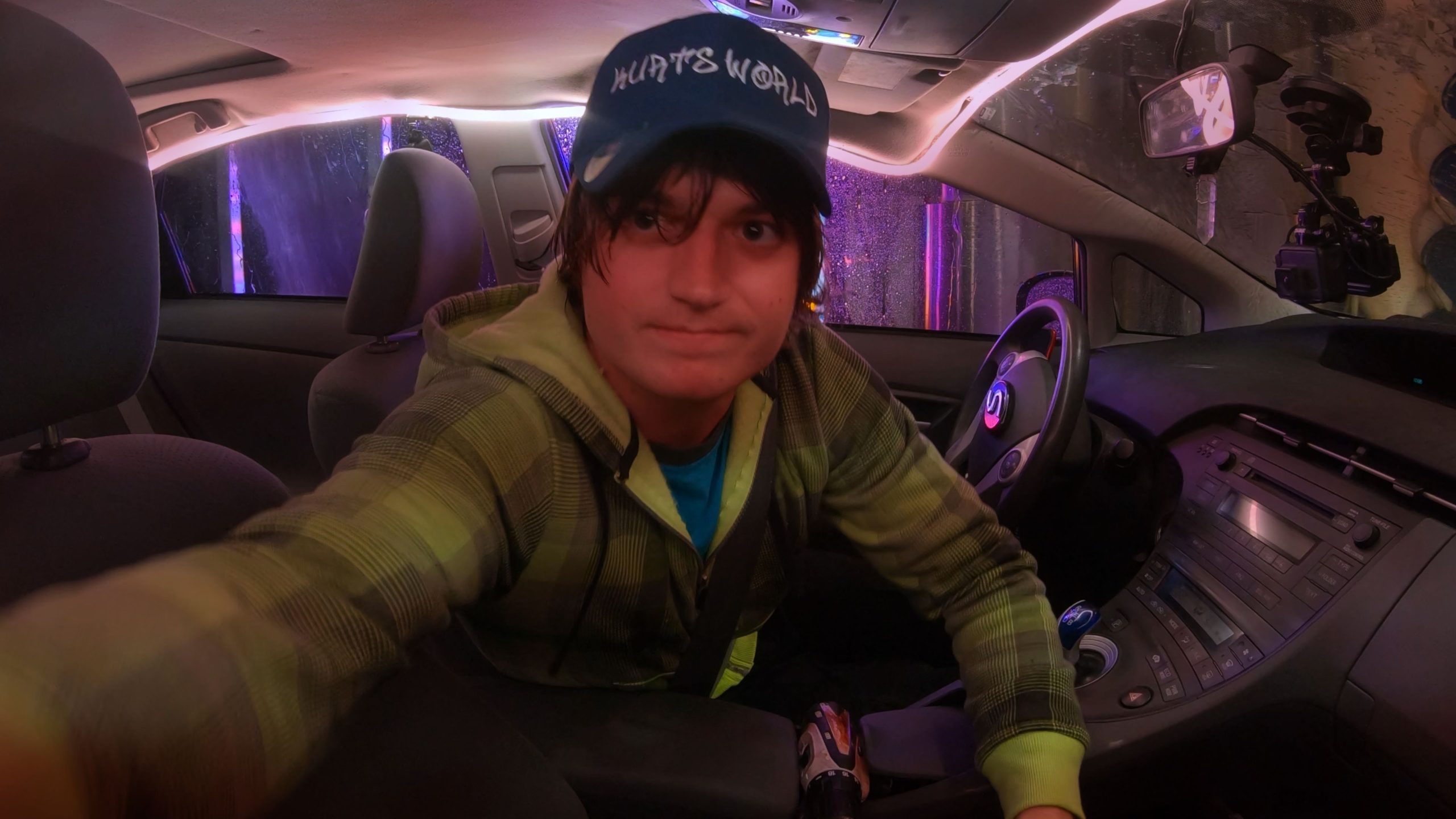
stream his evening as a driver for the ride-share company, Spree, Kurt – star of
@KurtsWorld96 – has a lesson to share and knows this is his ticket to fame in
the digital world.
Kotlyarenko, co-writing with Gene McHugh, wants to deliver a
comedic observation of the effects of the digital world on the real one. It’s
not a bad idea. It’s too bad the movie isn’t funny nor especially profound.
There are multiple cameras on Kurt throughout the movie –
phone camera, dash cam, window cam, security cam, body cam – at times, the
cinematography piles on the footage, using split screens to show us multiple
views. A running commentary is sometimes seen at the bottom of one or two of
the screens. This lets us know that everyone in cyberspace viewing Kurt’s night
– which involves several crimes – thinks it’s staged. Occasionally, someone
chimes in wondering if it’s real, but for the most part, they can’t discern
fact from fiction.
It’s exhausting. Aside from one, blink-and-you’ll-miss-it
shot that I couldn’t account for, every scene is delivered through a handheld
or portable device. Watching the movie, it’s hard to imagine anyone consumes
anything this way. If this is the way of the world, our attention spans will
surely dwindle closer and closer to that of a goldfish (if they haven’t
already).
The movie’s only plus is Sasheer Zamata (The Last O.G.,
Saturday Night Live). Her character, Jessie Adams, runs across Kurt early
in his night and is everything he wants to be. Zameer delivers the right amount
of comedy in a few spots that, had the movie matched her efforts, might have
helped its appeal.
While the attempt at commentary on the larger culture does
not go unnoticed, as one of Kurt’s followers says to him of his attempts to go
viral, it’s “boring and awkward.”
It was bound to happen, and no doubt the inanely titled Host
is the first in a succession of films to tap into quarantine and pandemic
frustrations to fuel horror. The fact that co-writer/director Rob Savage
employs found footage for his of-the-moment horror show seems even more
obvious.
Sometimes, though, it’s the most obvious choices that work
out. Savage taps into the real emotional gap between face-to-face and virtual
relationships as a handful of mates jump on a Zoom meeting for a bit if fun.
Separated because of lockdown, the buddies decide to create an event: an online séance. Haley (Haley Bishop) is hoping her friends will be respectful of the medium Seylan (Seylan Baxter), but those hopes are dashed when Teddy (Edward Linard) convinces the group to do a shot every time Seylan says “astro plane.”
“It’s astral plane,” Haley sighs.
Naturally, their irreverence is repaid.
Savage treads the same aesthetic as The Den or Unfriended:
Dark Web, but in many ways his effort is even more successful—perhaps
because it speaks so articulately to our immediate condition. Host is
incredibly simple and spooky in the way that it exploits our isolation and the
vulnerability that comes with that.
And while the medium itself is hardly groundbreaking and is
sometimes irritating, Savage takes advantage of the limitations of found
footage horror. The likability of the characters help you suspend disbelief during
the portions where they’d clearly have put down the damn computer, and because the
film manages to keep your interest, you get to enjoy the spook house effects. A
lot of these jump scares are old school fun.
Lean and mean, running a brisk 56 minutes, the film doesn’t busy itself too much with why or how or really even what. Instead it quickly upends our new normal with old fashioned scares.