Did anyone think to themselves this Christmas season, I wonder what those acapella singers from Pitch Perfect are doing now?
Me, either. And yet, Pitch Perfect 3 hits theaters this weekend.
The Bellas have mostly graduated from college by now, dealing with careers, the daily grind and wishing they were still singing in an all-girl, no-instrument band. So they take their talents to the USO to compete with a country group, a rock band and a hip hop duo to land the opening slot for DJ Khaled.
I know that almost sounds like a plot, and there is this side bit about an international criminal and a kidnapping, but honest to God, this is the most disposable, pointless movie of the season. (Full disclosure—I haven’t seen Father Figures yet.)
Director Trish Sie can’t find a pace or visual style to suit the project, which only emphasizes the weakness in any shadow of a storyline.
Anna Kendrick and Rebel Wilson, along with most of the Bellas, return to vocal action. There’s nothing fresh or appealing about the music, but if that’s your bag, there you go.
Wilson’s Fat Amy still says amusingly inappropriate things, as do the always welcome John Michael Higgins (“We’ll stick to you like mom jeans to a camel toe,”) and Elizabeth Banks. Why are the announcers of the college acapella championships involved in a USO gig?
Writers Key Cannon and Mike White realize this makes little sense, so they devise a knowingly ludicrous excuse for it. In fact, it’s this self-referential tendency that provides the film’s only clever laughs.
Well, “laugh” is a strong word, but there are passably enjoyable moments. The rest of it is mainly insufferable: catty, meandering and needless.
Back in the day—before the mustachioed Commissioner Gordon or the bewitching Sirius Black—back in the way back of the 80s and 90s, Gary Oldman was known for disappearing into real-life characters. Whether it was his Sid Vicious or Lee Harvey Oswald or Ludwig Van Beethoven, Oldman could cease to be, leaving nothing behind but the most amazing reimagining of true life.
So the fact that he’s magnificent in Darkest Hour should come as no surprise.
Besides his physical transformation, thanks to what may be the single greatest achievement in fat suits in all of moviedom, Oldman convinces by capturing the spirit of Winston Churchill.
In retrospect we know Churchill’s fighting spirit was desperately necessary— his nation was facing unfathomable odds and dealing with an establishment’s inclination toward surrender. But it’s Oldman’s performance that makes us understand why so very few were able to trust not just Churchill’s vision, but Churchill.
With the aid of an excellent turn by Kristin Scott Thomas as Churchill’s wife Clementine, Oldman makes the Prime Minister knowable: driven, insecure, passionate, drunk, uncertain, romantic and somehow lovable. The performance is effortlessly layered and authentic and honestly the best work the veteran actor has done in decades.
Credit a crisp screenplay by Anthony McCarten for providing context by way of illuminating points of view, each one deftly animated by an understated ensemble delivering nuanced performances. Ben Mendelsohn’s King George and Stephen Dillane’s Viscount Halifax, in particular, quietly but assuredly manifest the uneasy but shifting perspective of a nation on the brink of possible annihilation.
Joe Wright’s direction sometimes feels fanciful given the seriousness of the story, but he works mightily with his poetic camera to enliven what could otherwise have been a claustrophobic chamber piece.
Instead, he’s crafted a fine bookend to Christopher Nolan’s Dunkirk. Darkest Hour glimpses the backroom politics that led to the ingenious and breathless rescue of England’s armed forces the summer of 1940. It lacks the gut-punch or cinematic mastery of Nolan’s film, but it does boast one hell of a performance.
Get excited, people. What may turn out to be the best film of 2017 is available this week on DVD, as is undoubtedly the most polarizing and discussed flick of the year, mother! Get you some!
Action packed week in The Screening Room. We run down the spoiler-free pros and cons of Star Wars: The Last Jedi, The Shape of Water, Wonder Wheel and Ferdinand and have a look at what’s new in home entertainment.
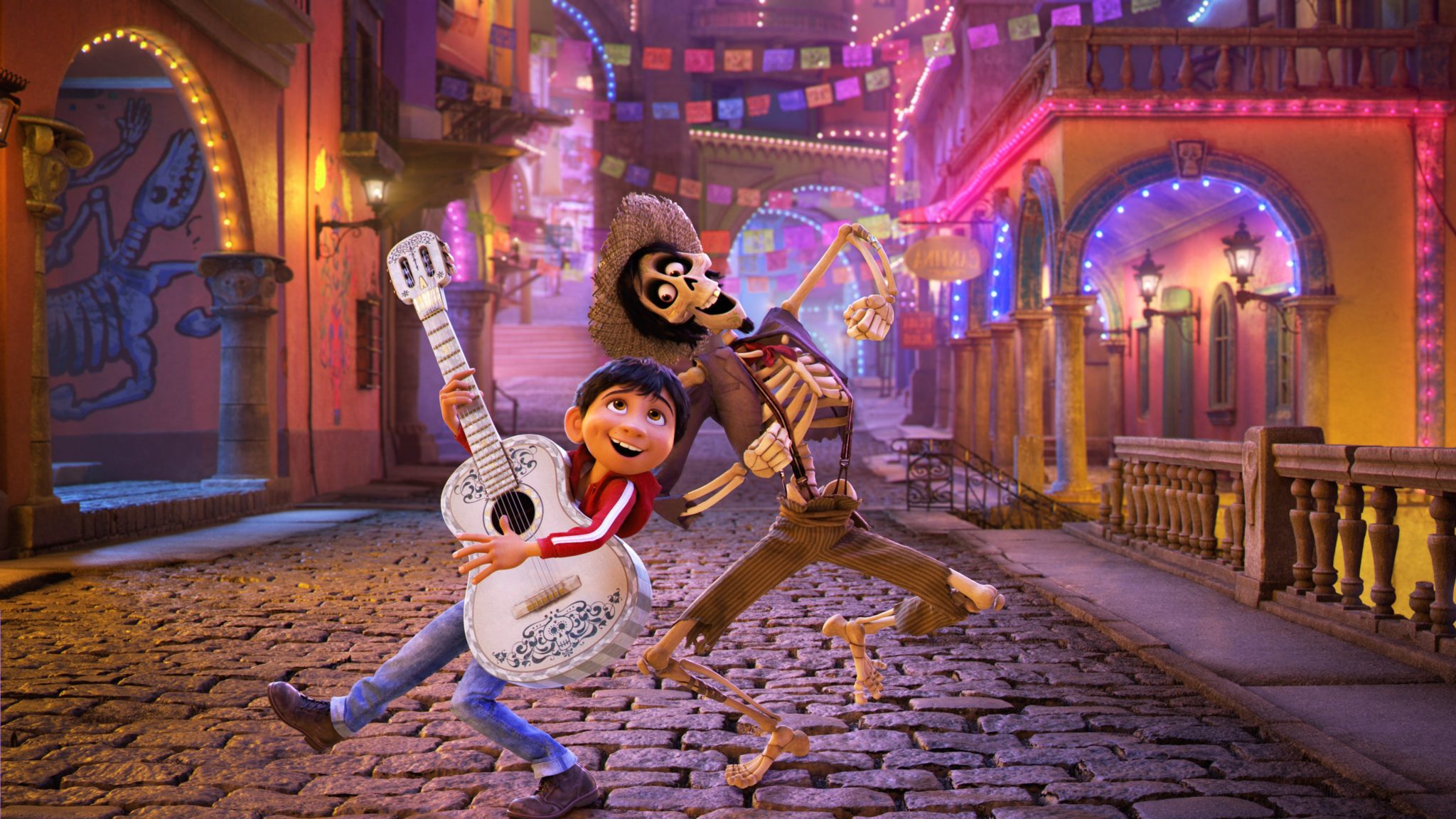
I’m thrilled to announce that Ferdinand, the new animated feature from Carlos Saldanha (Ice Age, Rio), did not ruin my childhood.
Whew!
The story of a peaceful if enormous bull who’d far rather sniff flowers than fight matadors was my favorite book as a little kid, but to stretch these 32 or so sentences into a 90-minute feature-length film, there would have to be padding.
I worried about the padding.
Credit a team of six screenwriters for finding—for the most part—organic ways to develop the story. We meet Ferdinand as a young bull being raised with a handful of other bulls specifically to fight in the ring. Then we follow him on his adventure to freedom from the ring and back into the sights of the matador.
That doesn’t mean the film never feels padded. It definitely does. But a slew of vocal talents including John Cena, Bobby Cannavale and Kate McKinnon helps to keep the film afloat.
Rarely laugh-out-loud funny, a bit bloated and a tad dark at times, Ferdinand still manages to entertain. It looks good, bears a social conscience and remains more or less true to the simple “be who you are” core that made Munro Leaf and Robert Lawson’s picture book so lovely.
In its own way, The Creature from the Black Lagoon is a tragic romance. But what if it weren’t? Tragic, I mean. What if beauty loved the beast?
It seems like a trend this year.
An unforgettable Sally Hawkins—an actor who has never hit a false note in her long and underappreciated career—gets her chance to lead a big, big show. She plays Elisa, a mute woman on the janitorial team for a research institute in Cold War era Baltimore.
Enter one night a malevolent man (Michael Shannon), and a mysterious container. Color Elisa intrigued.
Writer/director Guillermo del Toro is an overt romantic. So many of his films—Cronos, The Devil’s Backbone, Crimson Peak—swim in romance, but he’s never made as dreamily romantic or hypnotically sensual a film as The Shape of Water. And he hasn’t made a film this glorious since his 2006 masterpiece, Pan’s Labyrinth.
Del Toro favorite Doug Jones—Pan’s Pale Man and Hellboy’s Abe Sapien—gets back into a big, impressive suit, this time to play Amphibian Man. His presence is once again the perfect combination of the enigmatic and the familiar.
The supporting cast—Shannon, Octavia Spencer, Richard Jenkins and Michael Stuhlbarg—are among the strongest character actors Hollywood has to offer and del Toro ensures that they have material worthy of their talent. Each character is afforded not only his or her own personality but peculiarity, which is what makes us all both human and unique—important themes in keeping with the story. With Hawkins and Jones, they populate a darkly whimsical, stylish and retro world.
Characteristic of del Toro’s work, Shape of Water looks amazing. Its color scheme of appropriate greens and blues also creates the impossible truth of sameness within otherness, or the familiar with the alien.
The aesthetic is echoed in Alexandre Desplat’s otherworldly score and mirrored by Dan Laustsen’s dancing camera.
The end result is a beautiful ode to outsiders, love and doing what you must.
Did The Force Awakens simply recycle our Star Wars memories and sell them back to us? It did, but not simply, damn near brilliantly.
Then we got the sneak attack from the surprisingly deep Rogue One, a highly effective prequel that only strengthened our bond with the original Star Wars trilogy, and our confidence in the filmmakers now at the helm of this historic franchise.
The Last Jedi makes any letdowns seem light years away. With a deft mix of character-driven emotion, high stakes action and mischievous fun, it waves a proud flag for the legacy of this cinematic universe while confidently taking big strides toward crafting a new one.
Visionary talent Rian Johnson (Looper, Brick) now has the con as both director and sole screenwriter. His affection for the franchise, coupled with an innovative sense of character arc and storyline, combine for a freshness that respects nostalgia even while priming you to move beyond it.
Like J.J. Abrams, Johnson revisits iconic images and bits from the predecessors, but even with much more screen time for Mark Hamill’s Luke, Last Jedi feels less indebted to the original trilogy than did Force Awakens. You’ll find more humor (an opening “on hold” bit is a riot), more action and more Kylo Ren.
As Rey, Leia (Carrie Fisher in a bittersweet appearance), Poe (Oscar Isaac) and Finn (John Bodega) gather their scrappy troops to resist the First Order’s plan for pasty-faced, black-clad tyranny, the yin and yang of the film pits Adam Driver’s dark Ren against the spunky light of Daisy Ridley’s Rey.
Force Awakens gave Ridley plenty of opportunity to claim her spot at the center of the franchise, but Last Jedi allows Driver the chance to fully expand into the role of series villain. A true talent, Driver delivers a Ren who is emotionally manipulative and yet sincere (so emo!), needy and conflicted as he struggles to prove himself more than the “child in a mask” derided by Supreme Leader Snoke (Andy Serkis – aided by improved CGI).
Last Jedi also completes the transition of Poe into the courageous, never-tell-me-the-odds “flyboy” we knew was his destiny since the fist moments of Force Awakens. Isaac never disappoints, and it’s a joy to see him buckle this swash so Han-dily (sorry).
While we meet some great new characters, too, there is little exposition and a near constant barrage of action which renders the extended running time meaningless. It might get a little too cute once or twice, but there’s enough social commentary here to be relevant, enough visual glory to look wondrous, and more than enough spirit to be confident in its vision.
Things happen to characters we care about and to others we just met, and nearly all of those things carry the emotional heft of torches being passed.
And The Last Jedi makes it feel not only right but necessary, and all the more satisfying.
Some exceptional films coming home this week, so if you like true life, brutally devastating historical dramas, this is your week! No, seriously, watch them.
Westerns share a lot in common with horror. Both deal in black and white, good and evil, blood. There’s not a lot of true cross over. Sure, you’ve got some brilliant horror that pulls ideas from the Western: Sam Peckinpah’s Straw Dogs, Wes Craven’s The Hills Have Eyes. But that’s not what we’re looking for. We want horses and cowboy hats and shit. And we found them.
Here are the five best Western/horror crossovers.
5. The Burrowers (2008)
Here’s one that bears a resemblance to Bone Tomahawk: someone’s love goes missing, Indians are blamed, a posse heads out in search but finds something more sinister than expected.
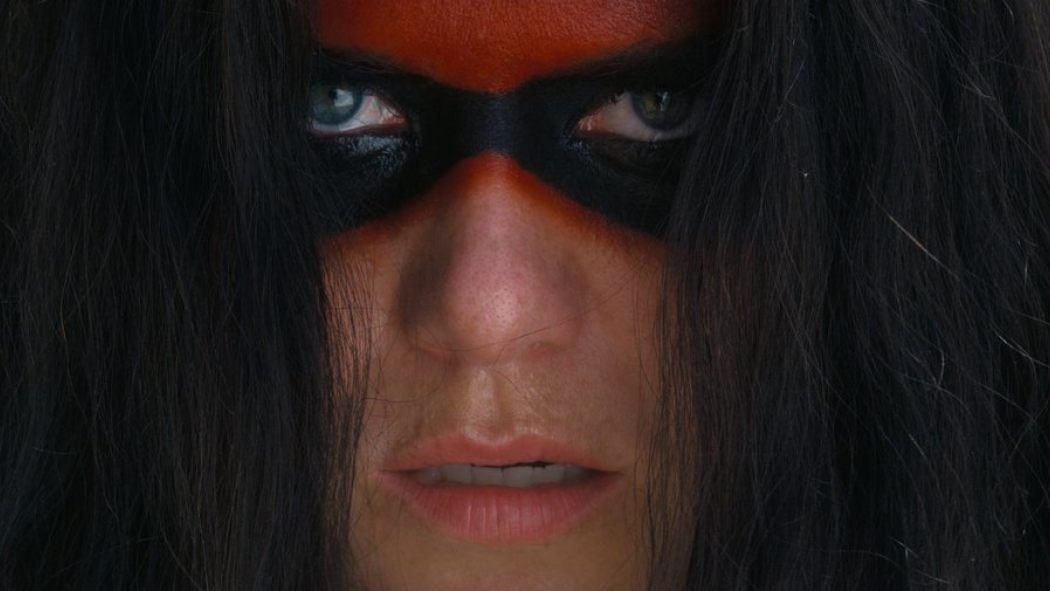
Writer/director J.T. Petty laments the barbarism of the white settler and its Cavalry with a bleak and subconsciously gruesome image of the consequences of “progress”.
Burrowers, though, asserts itself as a horror film early and often. It certainly borrows from both genres, balancing themes well by exploring what’s ugliest in Western lore. Horror films tend toward social commentary in a way that Westerns rarely do—indeed, classic Westerns tend to revel in the exact elements of human nature that horror likes to exploit for its blood-curdling nastiness.
Solid performances, especially from veteran character actors Clancy Brown and William Mapother, elevate the film above its monster movie trappings.
4. Ginger Snaps Back: The Beginning (2004)
In 2004, director Grant Harvey offered an origin story for the lycanthropic Fitzgerald sisters (Katharine Isabelle and Emily Perkins reprising their roles). It’s 1815 and Ginger and Bridget find themselves lost in the Canadian wilderness, seeking assistance from a Native American woman and then shelter from a creepy pastor and his flock at a fur trading post.
What’s got the traders so spooked? Werewolves!
They bring the sisters in because they are nicer than the people at The Slaughtered Lamb, but it turns out they’d have been better off leaving G&B to die in the woods.
The movie has a fun, self-consciously anachronistic style to it that allows the Fitzgerald sisters to seem even more like us and like outsiders than they did in the original high school horror show. Dream sequences, practical effects, creepy kids, sisterly love and old fashioned carnage make this one a decent throwback.
3. Dead Birds (2004)
First, we get to liking the rag tag bunch of misfits—deserters from the Confederate army: two brothers (Henry Thomas and Patrick Fugit), two buddies (Michael Shannon and Mark Boone Junior – hell yes!), an escaped slave (Isaiah Washington) and a nurse (Nicki Aycox).
Next, we’re freaked out by the mutant boar and grisly scarecrow in the abandoned plantation where they will hole up with their ill-gotten loot.
What director Alex Turner does best with his supernatural Western is to draw you in with sympathetic characters played well by talented actors. Though the pace is slow—as is often the case with supernatural horror—and the FX are not spectacular, the film has a hypnotic quality and it fills you with dread.
Turner benefits from an empathetic script penned by Simon Barrett, who’d go on to a fruitful partnership with director Adam Wingard (You’re Next, The Guest, Blair Witch). Together with haunting performances, the mind-bender of a story leaves you troubled.
2. Ravenous (1999)
The blackest of comedies, the film travels back to the time of the Mexican/American War to throw us in with a cowardly soldier (Guy Pearce) reassigned to a mountainous California outpost where a weary soul wanders into camp with a tale of the unthinkable – his wagon train fell to bad directions, worse weather, and a guide with a taste for human flesh.
Pearce is great as the protagonist struggling against his own demons, trying to achieve some kind of peace with himself and his own shortcomings, but Robert Carlyle steals this movie.
As the wraithlike Colonel Ives, he makes the perfect devil stand-in. Smooth, compelling and wicked, he offsets Pearce’s tortured soul perfectly. The pair heighten the tensions with some almost-sexual tension, which director Antonia Bird capitalizes on brilliantly.
1. Bone Tomahawk (2015)
In a year rife with exceptional Westerns (Slow West, The Hateful Eight, The Revenant), this film sets itself apart. S. Craig Zahler’s directorial debut embraces the mythos of the Wild West, populating a familiar frontier town with weathered characters, but casting those archetypes perfectly.
Kurt Russell and Richard Jenkins, in particular, easily inhabit the upright sheriff and eccentric side kick roles, while Patrick Wilson’s committed turn as battered heroic lead offers an emotional center.
Zahler effortlessly blends the horror and Western genres, remaining true to both and crafting a film that’s a stellar entry into either category. Bone Tomahawk looks gorgeous and boasts exceptional writing, but more than anything, it offers characters worthy of exploration. There are no one-note victims waiting to be picked off, but instead an assortment of fascinating people and complex relationships all wandering into mystical, bloody danger.
Because the true horror is a long time coming and you’re genuinely invested in the participants in this quest, the payoff is deeply felt. This is a truly satisfying effort, and one that marks a new filmmaker to keep an eye on.
We have one full week to wait until the new Star Wars. What will we do? Well, there are a couple of great movies you can see in the meantime. We talk through The Disaster Artist and Thelma, plus hip you to what’s new in home entertainment.