When I think about ballet and film, I drift
toward the easy ones: The Nutcracker,
Billy Elliot and The Red Shoes. Of course it’s also fun to throw Black Swan and Suspiria into that mix as well. The visual lullaby of those films
is present in The White Crow, but
with a dash of political intrigue.
Rudolf “Rudy” Nureyev (Oleg Ivenko) has poured hours of blood, sweat and tears into crafting himself as one of Russia’s premier ballet dancers. A prestigious tour of France gives Rudy his first glimpse of life in the mysterious “West.” All at once, this arrogant, naive and inquisitive dancer is thrust into a culture that opens his eyes and reinforces his already rebellious nature. Despite having no concern for his home country’s politics, Rudy is forced to make a contentious choice when those same politics threaten to destroy his career and his life.
On paper, The
White Crow sounds like pure, unadulterated Oscar bait. It has all of the
trappings: a scrappy young protagonist, a period setting, an actor as director
and, most importantly, it’s set in Paris! Thankfully director Ralph Fiennes
(yes THAT Ralph Fiennes – Voldemort himself!) has more on his mind than that
short golden statue.
On a character level, The White Crow succeeds at diving right into Rudy’s laser-focused psyche. Dance is Rudy’s life and everything else – including people – exist only on the periphery. He claims to not care what people think, yet he fishes for praise from his renowned dance instructor (Fiennes himself). Rudy’s drive and the enormous chip on his shoulder are born out of his ultra-humble beginnings in rural Russia, and the sense of inadequacy this has instilled in him.
Casting Ivenko, an already famous Ukrainian
dancer, adds a level of authenticity that would be missing had Fiennes gone
another route. The long shots of Rudy dancing allow the audience to buy into
the character’s self-proclaimed skill. The passion and emotion behind his
movement pour off the screen.
Fiennes shows a sure and steady hand behind the camera. The movie jumps back and forth in time, and the filmmaker uses this to present each period in a different aspect ratio and style. The scenes depicting Rudy’s youth are shot in “scope” widescreen and use a more classical, static approach. The cold, stark landscape of his youth is brought to life with minimal emotion, but heightened visuals. This is contrasted with Rudy’s story as it moves into adulthood and his travel to France. Fiennes isn’t afraid to let the camera get close – or allow it to become more intimate.
The balance of visually impressive and focused filmmaking, along with deep character analysis, makes The White Crow one of the most interesting dramas of the year thus far.
The year’s first real candidate for the best animation Oscar is available to watch at home, so do yourself a favor and take advantage! Couple of others, too – we’re here to help you make tough choices.
Why fear the sea? The same reason to see menace in the deep, dark unknown of space or the dense and dizzying claustrophobia of the forest: because it’s really hard to see what’s in there.
That leaves us to our imagination, and when is that ever a good idea? Here, then, are some of the most imaginative ways horror filmmakers terrorized us with tales of what lies beneath.
5. Godzilla (Gojira) (1954)
Up from the depths, 30 stories high, breathing fire…you know the rest. Surely we had to have a Fifties science run amok beastie on this list, and while there was some stiff competition, nothing really bests Godzilla.
As Japan struggled to re-emerge from the 1945 bombings of Hiroshima and Nagasaki, director Ishiro Honda unleashed that dreaded kaiju—followed quickly by a tidal wave of creature features focused on scientists whose ungodly work creates global cataclysm.
Far more pointed and insightful than its American bastardization or any of the sequels or reboots to follow, the 1954 Japanese original mirrored the desperate, helpless impotence of a global population in the face of very real, apocalyptic danger. Sure, that danger breathed fire and came in a rubber suit, but history shows again and again how nature points out the folly of man.
4. Open Water (2003)
Jaws wasn’t cinema’s only powerful shark horror. In 2003, young filmmaker Chris Kentis’s first foray into terror is unerringly realistic and, therefore, deeply disturbing.
From the true events that inspired it to one unreasonably recognizable married couple, from superbly accurate dialog to actual sharks, Open Water’s greatest strength is its unsettling authenticity. Every element benefits from Chris Kentis’s control of the project. Writer, director, cinematographer and editor, Kentis clarifies his conception for this relentless film, and it is devastating.
A couple on vacation (Blanchard Ryan and Daniel Travis) books a trip on a crowded, touristy scuba boat. Once in the water, they swim off on their own – they’re really a little too accomplished to hang with the tourists. And then, when they emerge from the depths, they realize the boat is gone. It’s just empty water in every direction.
Now, sharks aren’t an immediate threat, right? I mean, tourist scuba boats don’t just drop you off in shark infested waters. But the longer you drift, the later it gets, who knows what will happen?
https://www.youtube.com/watch?v=F4fxtHQtt4Y
3. The Lure (2015)
Here’s a great Eastern European take on reimagined Eastern European fairy tales, like Norway’s Thale (2012) and Czech Republic’s Little Otik (2000).
Gold (Michalina Olszanska) and Silver (Marta Mazurek) are not your typical movie mermaids, and director Agnieszka Smoczynska’s feature debut The Lure is not your typical – well, anything.
The musical fable offers a vivid mix of fairy tale, socio-political commentary, whimsy and throat tearing. But it’s not as ill-fitting a combination as you might think.
The Little Mermaid is actually a heartbreaking story. Not Disney’s crustacean song-stravaganza, but Hans Christian Andersen’s bleak meditation on the catastrophic consequences of sacrificing who you are for someone undeserving. It’s a cautionary tale for young girls, really, and Lure writer Robert Bolesto remains true to that theme.
The biggest differences between Bolesto’s story and Andersen’s: 80s synth pop, striptease and teeth. At its heart, The Lure is a story about Poland – its self-determination and identity in the Eighties. That’s where Andersen’s work is so poignantly fitting.
https://www.youtube.com/watch?v=vxhi_3hDUPE
2. The Host (2006)
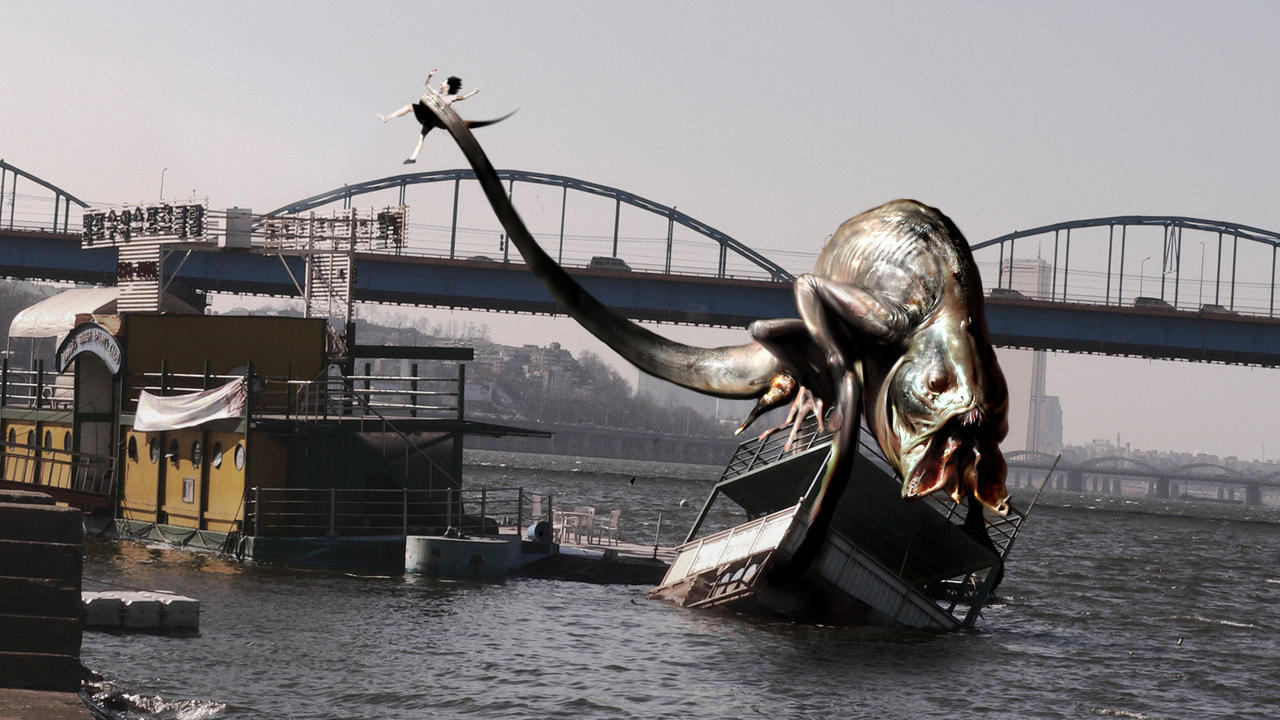
Visionary director Joon-ho Bong’s film opens in a military lab hospital in 2000. A clearly insane American doctor, repulsed by the dust coating formaldehyde bottles, orders a Korean subordinate to empty it all into the sink. Soon the contents of hundreds of bottles of formaldehyde find its way through the Korean sewer system and into the Han River. This event – allegedly based on fact – eventually leads, not surprisingly, to some pretty gamey drinking water. And also a 25 foot cross between Alien and a giant squid.
Said monster – let’s call him Steve Buscemi (the beast’s actual on-set nickname) – exits the river one bright afternoon in 2006 to run amuck in a very impressive outdoor-chaos-and-bloodshed scene. A dimwitted foodstand clerk witnesses his daughter’s abduction by the beast, and the stage is set.
What follows, rather than a military attack on a marauding Steve Buscemi, is actually one small, unhappy, bickering family’s quest to find and save the little girl. Their journey takes them to poorly organized quarantines, botched security check points, misguided military/Red Cross posts, and through Seoul’s sewer system, all leading to a climactic battle even more impressive than the earlier scene of afternoon chaos.
1. Jaws (1975)
What else – honestly?
Twentysomething Steven Spielberg’s game-changer boasts many things, among them one of the greatest threesomes in cinematic history. The interplay among the grizzled and possibly insane sea captain Quint (Robert Shaw), the wealthy young upstart marine biologist Hooper (Richard Dreyfuss) and the decent lawman/endearing everyman Brody (Roy Scheider) helps the film transcend horror to become simply a great movie.
Perhaps the first summer blockbuster, Jaws inspired the desire to be scared silly. And in doing so it outgrossed all other movies of its time. You couldn’t deny you were seeing something amazing – no clichés, all adventure and thrills and shocking confidence from a young director announcing himself as a presence.
Spielberg achieved one of those rare cinematic feats: he bettered the source material. Though Peter Benchley’s nautical novel attracted droves of fans, Spielberg streamlined the text and surpassed its climax to craft a sleek terror tale.
It’s John Williams’s iconic score; it’s Bill Butler’s camera, capturing all the majesty and the terror, but never too much of the shark; it’s Spielberg’s cinematic eye. The film’s second pivotal threesome works, together with very fine performances, to mine for a primal terror of the unknown, of the natural order of predator and prey.
Jaws is the high water mark for animal terror. Likely it always will be.
An alcoholic single mother (Glow’s Betty Gilpin) falls out with her dead husband’s family and
struggles to juggle her floundering music career and responsibilities with her
precocious young daughter (Abby Ryder Fortson, and later Kathryn Prescott). Is
this a harrowing tale about the resilience of women and the litany of roles
they must play?
Nope. This is A Dog’s
Journey, sequel to the controversial 2017 hit A Dog’s Purpose. And the single mother is the bad guy – for many
reasons, but largely because she doesn’t like dogs.
The film is based on the book sequel of the same name by W.
Bruce Cameron. Cameron also penned the adaptation for film, with the help of
three other writers. It took four people to write this movie.
I’m a strong believer that you should judge a movie within the genre it exists. A dog movie, for example, probably shouldn’t be judged against the same standards as, say Mad Max: Fury Road.
And yet, I can’t work A
Dog’s Journey into a sphere where it achieves any kind of quality. This
script reads like the bullet points from a rejected Hallmark channel feature.
This film has less compelling dialogue and character development than Netflix’s
notoriously bad A Christmas Prince. The human action only exists to serve up easy
hits for a dog’s inner monologue about butts and bacon, but the action somehow
also needs to be compelling enough that a dog’s spirit continually
reincarnates.
To trick you into thinking this film is emotionally
developed, they kill the dog at least four times, because anyone will cry at a
dying dog. That’s the schtick in this series. If a dog loves you enough, it
never truly dies, it simply returns as another dog.
What is this world, where it’s always golden hour and the
river bank is littered with perfect clusters of sunflowers? Do these characters
actually exist in a purgatory – where despite a perfect pastoral backdrop,
nothing can truly die, and all living creatures remember their last violent
death?
There’s an opportunity for a third movie which takes a sharp
left into existential sci-fi horror, but I doubt that script would resonate
with the crowd at my showing who repeatedly chuckled at Bailey (voiced by Josh
Gad) rooting for romance with his catch phrase “Just lick faces already.” Maybe the existential sci-fi horror was
that I had to watch this film in a room full of people who enjoyed it.
The reality is, people did and will enjoy this movie. It’s
filled with easy to identify archetypes. It’s clear who the bad guys and the
good guys are. There’s a bad mom, childhood hijinks, an abusive boyfriend arc,
a car chase, a move to New York to “make it”, and a cancer scare and recovery
all in 108 minutes. This movie requires
zero brain power to consume because it’s a bland amalgam of all the
unremarkable scripts that came before it – but with Gad’s sickeningly sweet
puppy voiceover throughout.
I don’t know if dogs go to heaven, but I do know I’ll be seeing this film in hell.
Every time I see the latest Young Adult romance fantasy on the big screen, I end up thinking about Barton Fink getting reprimanded for not sticking to the formula.
“Wallace Beery! Wrestling picture!”
Credit The Sun Is Also a Star for trying to stray outside the usual lines, even as it hits those same formulaic goalposts.
Natasha (Yara Shahidi) and Daniel (Charles Melton) are great-looking (and somehow, single) teens in New York City. Hers is a family of Jamaican immigrants facing deportation in 24 hours, while his Korean family runs a black hair care store in the neighborhood.
‘Tasha “doesn’t believe in love,” but meeting Daniel gives him the chance to win her over while she explores a last option to stay in the U.S.
Yes, there’s voiceover essay reading, yes he realizes her specialness after one faraway glimpse, and yes they both have to break free from the lives their parents have planned for them. Yes, in a city of millions they keep stumbling into idyllic situations where they’re all alone. Yes, it’s based on a YA novel and yes, some of the dialog is downright cringeworthy.
You knew much of that already (because “wrestling picture!”), but the film does mange to score some little victories.
Best of those is the assured direction from Ry Russo-Young (Nobody Walks, Before I Fall) , who keeps NYC’s melting pot as an ever-present supporting player. Paired with the diversity of the cast, the undercurrent of real lives upended by immigration policies comes in surprisingly deft waves.
But as Daniel waxes on about fate and the need for chemistry, it eventually becomes clear that Shahidi and Melton – both promising talents – don’t have enough of it.
That’s a problem, and it stands at the top of the list of things this film is selling that you just can’t buy.
Another death row drama with a clear agenda, probing one questionable conviction to build a righteously angry condemnation of our entire justice system?
Yes, Trail by Fire is certainly that, but the familiarity of its gripping narrative actually serves to strengthen the argument. How many dubious death sentences will it take to shake our comfortable faith in fair trials?
In 1992, Texan Cameron Todd Willingham (Jack O’Connell) was sent to death row for setting the house fire that killed his three young children.
After years in prison, concerned citizen Elizabeth Gilbert (Laura Dern) took an interest in the case. Along with lawyers from the Innocence Project, Gilbert worked to poke enough holes in the conviction to get Willingham a new trial.
Adapted from a New Yorker magazine article and Willingham’s own letters from prison, the committed script from Geoffrey Fletcher (Precious) suffers only in the rushed introduction of Gilbert’s character. But though any organic motivation for Liz’s commitment may be thin, it’s overcome by the sterling performances from the two leads.
O’Connell – a vastly underrated talent- is heartbreakingly effective as Willingham, a man happy to have a regular visitor but wary of the hope Liz brings with her.
His journey from slacker defiance to jailhouse wisdom is grounded in the authenticity of McConnell’s touching performance. This man was no altar boy, but our sympathy for him is well-earned.
The chemistry with Dern is evident from the start. While these plexiglass encounters are a necessary staple of this genre, Dern and McConnell make them simmer with an intensity that is often riveting.
Kudos, too, to Emily Meade as Willingham’s wife Stacy. The Willingham marriage was challenging, to say the least, and Meade (Nerve, Boardwalk Empire, The Deuce) is good enough to make the conflicted relationship recall the bare emotions of Manchester by the Sea.
Director Edward Zwick (Glory, Blood Diamond, Pawn Sacrifice) takes some narrative risks that ultimately pay off, keeping the pace vital through some effective visual storytelling that feeds the sense of a ticking clock.
Zwick also builds layers of indelible support characters (Willingham’s first jail cell neighbor, the lead prison guard, an independent arson investigator) that leave engaging marks, often at junctures critical to avoiding an overly rote structure.
Crushing in its familiarity, gut wrenching in its specifics, Trial by Fire is a tough but worthy reminder of the illusion of fairness.
When Írisz Leiter (an intense and captivating Juli Jakab)
returns to Budapest after a long absence, she seeks employment as a milliner in
a hat store bearing her name. We learn quickly the store was her parents’, who
died when she was two. The current owner, Oszkár Brill, refuses to give her a
job and is evasive as to his reasons why. He tells her she can stay in town the
night but then must leave.
From there, the tension quickly builds. Family secrets are
revealed, and determined to learn more, Írisz refuses to depart as commanded.
With a combination of fearlessness and stupidity, Írisz throws herself into more and more dangerous situations seeking answers to questions we’re never quite sure of. Everyone Írisz meets evades her inquiries. She’s met with increasing resistance and resentment as she digs into her family’s history. As she follows sketchy leads, we’re taken deeper and deeper into the tumultuous world of Budapest in 1913.
There is much happening in director László Nemes historical drama, an ambitious follow up to his Oscar-winning debut, Son of Saul. There is a great deal to absorb as we follow Írisz. She’s our eyes in this world, and much of the time, she’s as off balance as the audience. Keeping the focus tightly bound to one character isn’t a bad way to orient an audience, but it can be problematic when we’re given too much information. It forces you to keep up, but not everyone will be up to the challenge of unraveling the mystery while puzzling over the surrounding details.
Visually, the audience is treated to a stunning film. The
cinematography keeps us close to Írisz. Chaotic scenes lose focus,
genuine terror is fed through her character’s reactions and facial expressions,
crowded streets become oppressive. Darkness envelops much of the most horrific
action, and it feeds the growing unease as Írisz’s journey follows
unpredictable paths.
We’re never quite sure where the film will take us, but it’s a compelling journey. We’re kept on our toes, answers aren’t easily found, and it’s not always clear what we’re learning as each new answer appears. When we think we’ve unraveled the mystery, new information comes to unmoor us.
You have to tip your hat to a filmmaker who understands his
strengths and plays to them. For Chad Stahelski, I think you just have to take
the hat off entirely.
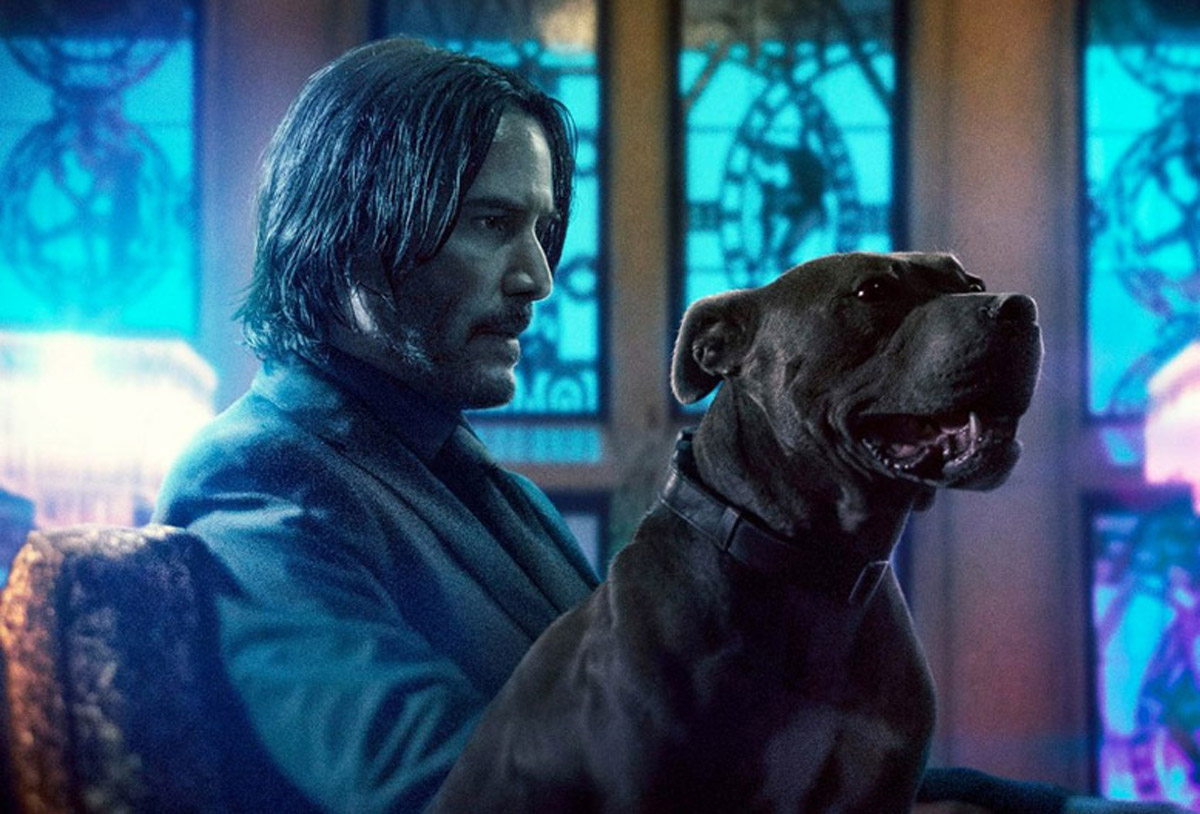
Kickboxer turned stunt man turned stunt coordinator turned helmsman of a phenomenon, Stahelski returns for his third tour with Keanu Reeves as dog-loving assassin widower John Wick for Chapter 3—Parabellum.
The great thing about chapters is that no one expects them
to tell a whole story, and since storytelling and acting are not the strongest
suits in this franchise, Stahelski wisely sharpens his focus on what is:
action.
A breathless Act 1 (with a truly inspired use of the New York Public Library) picks up the moment John Wick 2 ends, mercifully dispensing with the need for exposition. In its stead, balletic mayhem.
The plot of sorts: Wick is in trouble with the guardians of the world’s assassin guild, approximately every third human in NYC is a hired killer, and there is a $14 million bounty on his head. Where can he go? What can he do?
These are questions Stahelski and his army of writers have fun
answering with ludicrous, violent, exhausting, carnage-strewn glee.
Inside of 10 minutes it was clear that this is the best film of the trilogy.
Welcome new faces Anjelica Huston and Asia Kate Dillon cut impressive figures, though Halle Berry feels out of her depth and a clear sound stage representation of Morocco is the only clunky set piece in the movie.
Ian McShane, Lance Reddick and Laurence Fishburne return. Wisely, Stahelski lets these guys mete out most of the dialog. I’d wager Reeves utters fewer than 30 lines total.
Again, play to your strengths.
Dan Lausten’s camera ensures that you know when Reeves does
his own action, most of which is choreographed and captured in long, fluid,
serpentine shots with a lot of broken glass. Man, their easy-shatter glass
budget must have been through the roof!
The Fast and Furious franchise didn’t become tolerable until it embraced the fact that it was a superhero series, abandoning all reason and logic and just jumping cars from the 100th floor of one building to the 100th floor of another. Luckily, it didn’t take John Wick six films to take flight.