Tag Archives: Screen Wolf

Fearless Oscar Predictions: 2022

It was a short year. It didn’t feel short, but in Oscar terms, it was unusually brief. In 2020, the Academy extended the awards window to make up for the fact that so few films were distributed during the beginning of the pandemic. Fair enough, but that meant the window for 2021 films was only 9 months long.

Plus, because the industry still hasn’t fully recovered, fewer films were released than had been between the months of March and December in pre-pandemic years. However you count it, the Academy had far fewer films to choose from than normal.

Still, some great movies emerged, and they generated some great Oscar nominations. Here’s who we think will take home gold.

Best Film

Nominees

  • Belfast
  • CODA
  • Don’t Look Up
  • Drive My Car
  • Dune
  • King Richard
  • Licorice Pizza
  • Nightmare Alley
  • The Power of the Dog
  • West Side Story

Should Win

Hope: Licorice Pizza

George: West Side Story

Will Win

Hope: CODA

George: The Power of the Dog

Best Director

Nominees

  • Kenneth Branagh, Belfast
  • Ryûsuke Hamaguchi, Drive My Car
  • Paul Thomas Anderson, Licorice Pizza
  • Jane Campion, The Power of the Dog
  • Steven Spielberg, West Side Story

Should Win

Jane Campion

Will Win

Jane Campion

Best Actress

Nominees

  • Jessica Chastain, The Eyes of Tammy Faye
  • Olivia Colman, The Lost Daughter
  • Penelope Cruz, Parallel Mothers
  • Nicole Kidman, Being the Ricardos
  • Kristen Stewart, Spencer

Should Win

Jessica Chastain

Will Win

Jessica Chastain

Best Actor

Nominees

  • Javier Bardem, Being the Ricardos
  • Benedict Cumberbatch, The Power of the Dog
  • Andrew Garfield, Tick…Tick…Boom!
  • Will Smith, King Richard
  • Denzel Washington, The Tragedy of Macbeth

Should Win

Benedict Cumberbatch

Will Win

Will Smith

Best Supporting Actor

Nominees

  • Ciarán Hinds, Belfast
  • Troy Kotsur, CODA
  • Jesse Plemons, The Power of the Dog
  • J.K. Simmons, Being the Ricardos
  • Kodi Smit-McPhee, The Power of the Dog

Should Win

Kodi Smit-McFee

Will Win

Troy Kostur

Best Supporting Actress

Nominees

  • Jessie Buckley, The Lost Daughter
  • Ariana DeBose, West Side Story
  • Judi Dench, Belfast
  • Kirsten Dunst, The Power of the Dog
  • Aunjanue Ellis, King Richard

Should Win

Kirsten Dunst

Will Win

Ariana DeBose

Best Animated Feature

Nominees

  • Encanto
  • Flee
  • Luca
  • The Mitchells vs. The Machines
  • Raya and the Last Dragon

Should Win

Flee

Will Win

Encanto

Best Documentary

Nominees

  • Ascension
  • Attica
  • Flee
  • Summer of Soul (…or, When the Revolution Could Not Be Televised)
  • Writing with Fire

Should Win

Flee or Summer of Soul

Will Win

Summer of Soul

Best International Film

Nominees

  • Drive My Car, Japan
  • Flee, Denmark
  • Hand of God, Italy
  • Lunana: A Yak in the Classroom, Bhutan
  • The Worst Person in the World, Norway

Should Win

Drive My Car

Will Win

Drive My Car

Best Adapted Screenplay

Nominees

  • CODA
  • Drive My Car
  • Dune
  • The Lost Daughter
  • The Power of the Dog

Should Win

The Power of the Dog

Will Win

The Power of the Dog

Best Original Screenplay

Nominees

  • Belfast
  • Don’t Look Up
  • King Richard
  • Licorice Pizza
  • The Worst Person in the World

Should Win

Licorice Pizza

Will Win

Licorice Pizza (although we wouldn’t count out Don’t Look Up)

Best Original Song

  • “No Time to Die” from No Time to Die
  • “Dos Oruguitas” from Encanto
  • “Down to Joy” from Belfast
  • “Somehow You Do” from Four Good Days
  • “Be Alive” from King Richard

Should Win

“Just Look Up” from Don’t Look Up (but it wasn’t even nominated, so seems pretty unlikely…)

Will Win

“Dos Oruguitas”

Catch the 94 Academy Awards March 27th on ABC.

The Baker Bunch

Cheaper by the Dozen

by George Wolf

By now, you’re probably pretty familiar with the premise of Cheaper by the Dozen. But really, the best way for adults to enjoy this new Disney version is by using it as a way to gently introduce small children to more grown up issues.

Otherwise, it’s pretty insufferable.

This time, the heads of the blended brood are Zoey and Paul Baker (Gabrielle Union and Zach Braff), who first meet cute at the L.A. breakfast joint he owns. Their marriage and eventual offspring create a blended family full of diverse and seriously precocious siblings, step-siblings, and later a wayward cousin in need of some guidance. Throw in two ex-spouses (Erika Christensen and Timon Kyle Durrett) who are never far from the shenanigans, and that’s the way they become the Baker bunch.

Director Gail Lerner and the writing team of Kenya Barris, Jenifer Rice-Genzuk and Craig Titley all have extensive credits in series television, which would be a good reason why everything about this film screams “TV sitcom.”

Plot points are hastily introduced and heavily contrived, while any conflicts are soft-peddled and quickly worked through with barely a bad mood or sass mouth in sight. One thing you will see is some surprisingly modest set design (especially for those high school basketball games, yikes) that too often seems fit for an afterschool special.

The Bakers get a corporate offer to franchise the diner and market Paul’s special cooking sauce, so the gang moves on up to a sprawling house in Calabasas that requires just one afternoon to completely move into.

But settling into a new home brings some challenges for everyone. There’s bullying, peer pressure, and dating drama for the kids, while the parents face bless-your-heart prejudices and questions about mixed-race parenting.

Union and Braff are both likable actors, and that’s all they are asked to be, because no one in the film comes anywhere close to resembling a real person. And much like these characters, all the worthy issues raised are treated with a “we got 23 minutes minus commercials” mindset and wedged in between telegraphed attempts at humor and constant mugging.

The PG rating is a bit surprising, because despite the warning of “thematic elements, suggestive material, and language,” everything here is as sanitized as a freshly minted urinal cake.

Cheaper by the Dozen, yes. And you get what you pay for.

Clothes Make the Man

The Outfit

by George Wolf

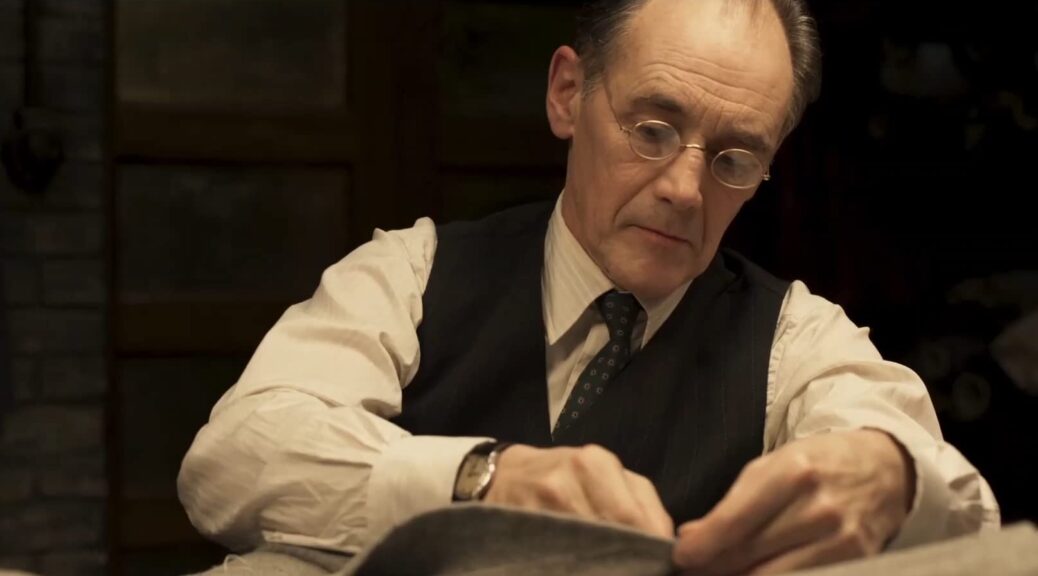
The opening minutes of The Outfit give us a master tailor named Leonard (Mark Rylance) describing his process. We see him measuring fabric, cutting and sewing while he outlines his skill in sizing up customers to give them what they most deserve.

Wait..is he still talking about suits?

Maybe, maybe not.

The setting is Chicago in 1956, where Leonard and his dreaming-of-a-better-life secretary Mable (Zoey Deutch) conduct business while local mobsters use Leonard’s shop to retrieve messages from a nationwide crime syndicate known as the Outfit.

One night after a shootout with a rival mob, gangsters Richie (Dylan O’Brien) and Francis (Johnny Flynn) barge into the shop in need of help and refuge. Richie, the son of local boss Roy (Simon Russel Beale) has been shot, and soon most everyone involved will have to fight to survive the long night.

Oscar-winning screenwriter Graham Moore (The Imitation Game) adds directing duties this time as well, for a nifty big screen debut that often homages early Kubrick and classic Hitchcock.

Essentially a two-room chamber piece, the film leans on a terrific ensemble to roll out a steady stream of delicious twists, relishing the nimble noir wordplay and skillfully keeping Moore’s sleight-of-hand from tipping its hand too early.

Fellow Oscar-winner Rylance (Bridge of Spies) is the perfect choice to bring Leonard to life, displaying a seemingly casual excellence right in line with who Leonard seems to be. Will underestimating the quiet shopkeeper prove to be a deadly mistake? Or is it Leonard who will learn a painful lesson tonight?

Rylance peels back the layers slowly, and Moore has good instincts for the pacing that allows for maximum fun. Deutch proves again that she’s a natural, making the most of a more limited role that still boasts an impressive ratio of secrets-to-screen time.

Despite getting a little too cute for the room come finale time, The Outfit is a solid directing debut for an acclaimed screenwriter. And while you can’t help feeling that this salute to the brainy introvert may be a personal one for Moore, it’s artful and engaging enough to rope in anyone who loves untangling a well-fitted suit of clues.

Love Is a Battlefield

Deep Water

by George Wolf

Adrian Lyne hasn’t directed a movie in twenty years. It’s been twice that long since the 1957 source novel by Patricia Highsmith (Strangers on a Train, The Talented Mr. Ripley) has been adapted for the big screen.

They’re both back with a new vision for Deep Water, a sometimes frustrating erotic thriller that can never fully capitalize on all of its possibilities to be either erotic or thrilling.

Vic and Melinda Van Allen (Ben Affleck and Ana de Armas) are living a life of luxury in New Orleans with their young daughter Trixie (the incredibly cute Grace Jenkins). Vic developed a computer chip used for drone warfare, so his days of early retirement are mainly filled with watching Melinda openly flaunt her affairs at parties.

When one of Melinda’s past lovers turns up dead, Vic lets her latest boy toy (Brendan Miller) know that he’s the murderer. But Vic is only trying to scare the kid away, right? Neighbor Don (Tracy Letts with another standout supporting turn) is suspicious early on, and when another of Melinda’s lovers (Euphoria‘s Jacob Elordi) drowns at a pool party, plenty of others are looking at Vic as the prime suspect.

Screenwriters Zach Helm and Sam Levinson provide Lyne with undercurrents of subtext that are never fully explored. We assume Vic doesn’t want to subject Trixie or his finances to a messy divorce, but the deeper we dig, it’s clear this marital arrangement is feeding some need for both parties and fostering a concerning worldview for their child. Lyne showcases the aimless privilege of their daily lives to hint at a lesson on the rot of wealth, then pivots, often to Vic’s creepy but uneventful hobby of raising snails.

And though Lyne has made his name on the steamy sexual politics of 9 1/2 Weeks, Fatal Attraction and Unfaithful, there’s more smoke here than fire. And water, water everywhere.

You won’t notice grand chemistry between Affleck and de Armas, which is a credit to both. This is a marriage of psychological warfare, and it is Vic and Melinda’s contrasting plans of attack that keep us invested, especially in the early going. De Armas embodies the cruelly uninhibited as well as Affleck brings the condescending and calculated, which is a major reason the major twist to Highsmith’s original ending works as well as it does.

For these two, it feels right.

But only for a moment, because strangely, Lyne doesn’t let it linger. Instead, he quickly cuts from the credits to a performance from the adorable Jenkins singing along to a cheery pop ditty from the 1970s.

If it’s an attempt at chilling humor, it falls hard, becoming another anchor weighing down Deep Water just when it starts cruising.

Fright Club: Best Foreign Language Folk Horror

We were so inspired by Kier-La Janisse’s documentary Woodlands Dark and Days Bewitched that we decided to dive into some of the best films her 3+ hour documentary couldn’t spend much time on. In particular, we wanted to highlight some of the greatest folk horror films not in the English language.

We highly recommend Roh (2019, Malaysia), La Llorona (2019, Guatemala), and Luz, The Flower of Evil (2019, Colombia). But here are our five favorites:

5. Viy (Russia) (1967)

Drunken seminarians, farmhouses, witches – Viy sets you up from its opening moments for a classic folk tale. Three seminarians turned out for break get lost in the woods. They ask an old lady to let them sleep in her barn for the night. She’s not an ordinary old lady.

Konstantin Ershov and Georgiy Kropachyov’s silly, spooky yarn tells of class struggle and superstition. Poor Khoma, our bumbling, drunk hero, is screwed no matter what he does. State/religious authority will beat him, the wealthy will beat him, or supernatural evil will harm him in ways he can’t quite picture.

Even though there’s a clear element of silliness in this film, the core image of a man in over his head gives this Russian folk horror a punch.

4. November (Poland) (2017)

Imagine a world in which Bergman’s Seventh Seal made it with Burton’s Edward Scissorhands and you kinda get a sense of Rainer Sarnet’s November.

At the center of the film lies the unrequited love of two peasants. Liina (Rea Lest) is hopelessly in love with Hans (Jörgen Liik). Hans has the hots for the daughter of the local German baron. Lina and Hans each try to capture the attention of their beloved while communing with ghosts, employing the services of kratts and witches, managing lycanthropy, evading the plague, circumventing arranged marriages, and avoiding starvation during the impending long winter.

The movie is a mishmash of comedy, romance, fantasy, political theory, and philosophy all shot in exquisite black and white. Somehow it comes together, like the kratts, in a way that seems fresh, bizarre, and interesting.

3. Hagazussa (Germany) (2017)

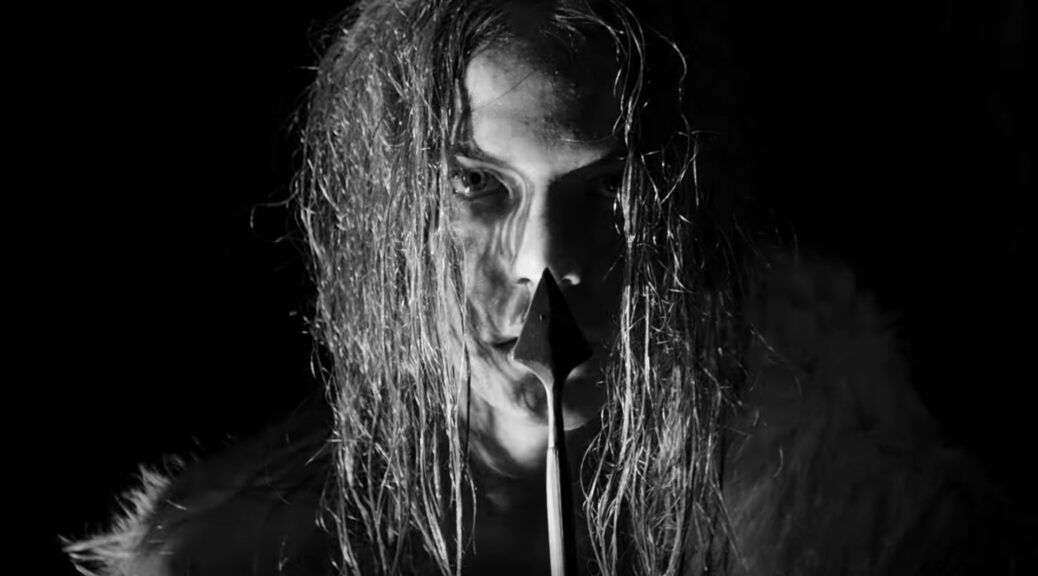
Making a remarkably assured feature debut as director, Lukas Feigelfeld mesmerizes with his German Gothic poetry, Hagazussa: A Heathen’s Curse.

Settled somewhere in the 15th Century Alps, the film shadows lonely, ostracized women struggling against a period where plague, paranoia and superstition reigned.

It would be easy to mistake the story Feigelfeld (who also writes) develops as a take on horror’s common “is she crazy or is there malevolence afoot?” theme. But the filmmaker’s hallucinatory tone and Aleksandra Cwen’s grounded performance allow Hagazussa to straddle that line and perhaps introduce a third option—maybe both are true.

The film lends itself to a reading more lyrical than literal. Feigelfeld’s influences from Murnau to Lynch show themselves in his deliberate pacing and the sheer beauty of his delusional segments. He’s captured this moment in time, this draining and ugly paranoia that caused women such misery, with imagery that is perplexingly beautiful.

2. The Wailing (South Korea) (2016)

“Why are you troubled?” Jesus asked, “And why do doubts arise in your hearts? Look at my hands and my feet. It is I myself. Touch me and see — for a spirit does not have flesh and bones, as you see I have.”

Though the true meaning of this quote won’t take hold until the final act, it presents many questions. Is this film supernatural? Demonic? Or, given the corporeal nature of the quote, is it rooted in the human flesh?

Yes.

That’s what makes the quote so perfect. Writer/director Hong-jin Na meshes everything together in this bucolic horror where superstition and religion blend. The film echoes with misery, as the title suggests. The filmmaker throws every grisly thing at you – zombies, pustules, demonic possession, police procedural, multiple homicides – and yet keeps it all slippery with overt comedy.

1. Lamb (Iceland) (2021)

Among the many remarkable elements buoying the horror fable Lamb is filmmaker Valdimar Jóhannsson’s ability to tell a complete and riveting tale without a single word of exposition. Rather than devoting dialog to explaining to us what it is we are seeing, Jóhannsson relies on impressive visual storytelling instincts.

His cast of three – well, four, I guess — sells the fairy tale. A childless couple working a sheep farm in Iceland find an unusual newborn lamb and take her in as their own child. As is always the way in old school fables, though, there is much magical happiness but a dire recompense soon to come. It is an absolutely gorgeous, entirely unusual and expertly crafted gem of a film. You should see it.

Screening Room: Turning Red, The Adam Project, Fear, The Seed & More

New Kid in Town

Fear (Strah)

by George Wolf

Okay, Fear. So what are we afraid of?

Writer/director Ivaylo Hristov takes a measured, confident approach in attacking the question at its roots, ultimately arriving at answers that are as universal as they are intimate, as tragic as they are timely.

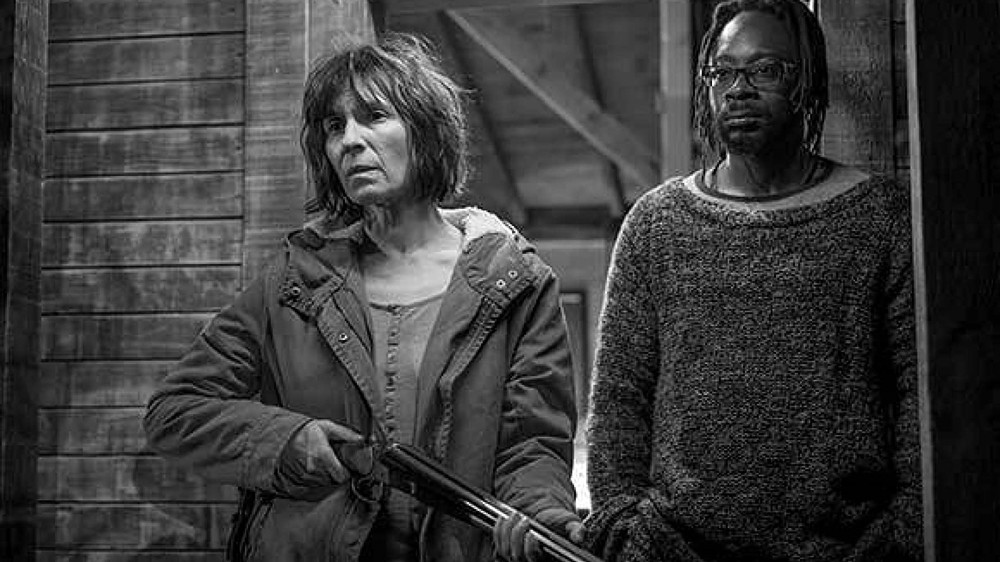
Svetla (Svetlana Yancheva, terrific) is a widow who lives alone in Bulgaria, very close to the Turkish border. Her sour mood is not improved by the loss of her job at the local school, or by the threat of refugees arriving in her village.

Armed with her hunting rifle when she crosses paths with Bamba (Michael Flemming, warm and wonderful), Svetla takes him prisoner. Bamba is a refugee from Africa, traveling on foot to Germany in search of a peaceful life. Svetla’s plan is to turn Bamba over to the border police, but a recent roundup of several Afghan refugees means they have no room in their modest quarters .

So Svetla takes him home.

The language barrier between them leads to some sweetly humorous moments, and of course Svetla comes to find Bamba is a gentle, intelligent soul who is fleeing a horrific situation, and who poses a threat to no one.

The village full of white faces feels differently.

“We are a hospitable people, but Bulgaria belongs to the Bulgarians.”

And what the village folk fear is more than just people who aren’t like them. Anyone who doesn’t share in their fear is also not to be trusted, and also deserving of whatever provocation it takes to make the villagers feel justified in their bigotry.

You’ll recognize early some of the places Hristov is taking you, but his touch is understated, which always makes the punches land that much harder. And while Fear is a film that doesn’t pretend to have the answers to the global issues on its mind, it does seem to have a firm grip on the basic question at the heart of these matters.

And that’s a start.

Love Story

Lucy and Desi

by George Wolf

You’ll see famous faces expressing some well deserved admiration for the legendary subjects of Lucy and Desi, but none come close to eclipsing the voice of the face you never see: director Amy Poehler.

The love and respect Poehler has for Lucille Ball and Desi Arnaz is evident in every frame, as she leans on a goldmine of archival footage to inform, entertain, and giddily geek out.

And the key to the family vault comes from daughter Lucie Arnaz Luckinbill, interviewed poolside while explaining her parents’ fondness for filling countless audio tapes with thoughts and recollections.

What a gift for Poehler and veteran documentary writer Mark Monroe, who weave Lucy and Desi’s own voices around home movie footage, news reports, both classic and rarely seen TV clips, and those raves from admirers to cast a spell that nearly glows with warmth.

Poehler, in her debut doc, shows a fine instinct for knowing killer from filler. She’s able to remind us of Lucy and Desi’s trailblazing show biz greatness, teach us some things we may not know (they aired the first “re-runs”), and take us behind the scenes of both their work and home life, without wasting even one of the film’s ninety some-odd minutes.

And yet, whether or not you’ve seen Aaron Sorkin’s Being the Ricardos (and if you have, this is a necessary companion), it’s hard not to feel like Poehler is pulling one big punch. Here, the end of Lucy and Desi’s marriage is attributed to the pressures of running their iconic DesiLu studios. Desi may admit to late nights “at the track” and a general lack of moderation in life, but the rumors of his affairs are never addressed.

But it’s clear that to Arnaz Luckibill, her parents’ journey together (one that ends with a very touching phone call) is only about “unconditional love.” So it may be that getting her on board (Desi, Jr. is heard from briefly, and seen only in old clips) came with a stipulation.

If so, that’s a deal Poehler had to take. Much like Linda Ronstadt’s first person storytelling made The Sound of My Voice so compelling despite a refusal to discuss her relationships, seeing and hearing Lucille Ball and Desi Arnaz narrate their own lives is what gives the film the intimacy that enables it to soar.

Two people loved each other deeply, ’til the end. Those two people are legends for some damn good reasons. That’s the point of Lucy and Desi, and it’s one well taken.