Screening Room: Till, Prey for the Devil, Wendell & Wild, Decision to Leave & More
by Hope Madden and George Wolf
Get to know Danielle Deadwyler.
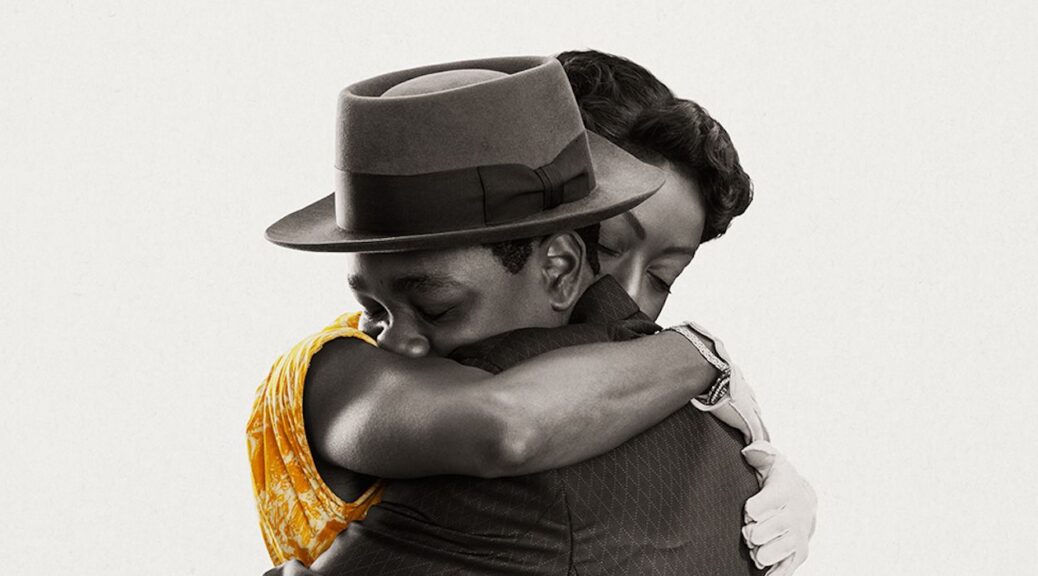
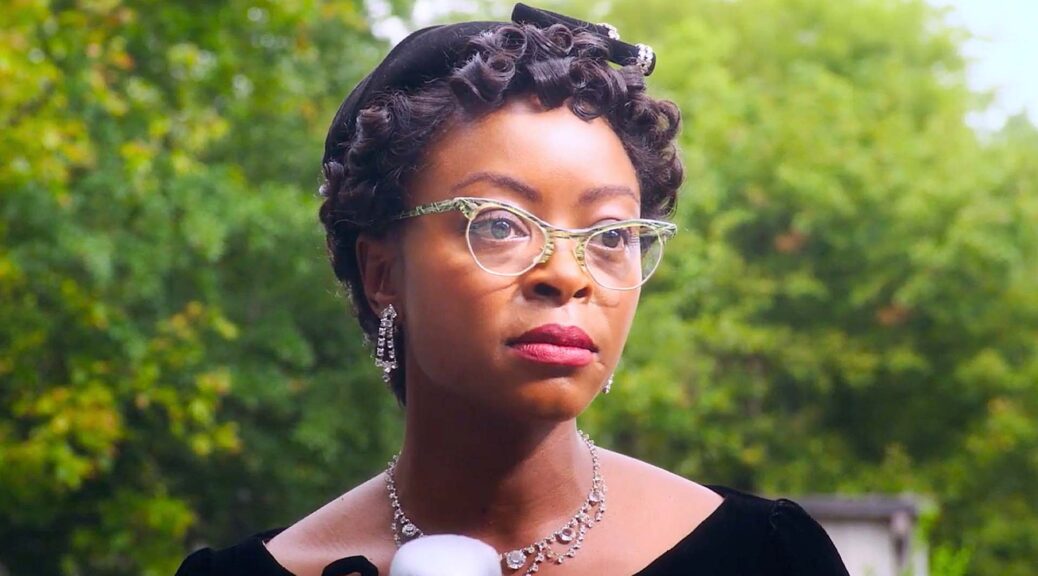
Last year she stole scenes in the super-star-studded Western spectacle The Harder They Fall. In 2019, she seared through the screen in Lane and Ruckus Skye’s woefully underseen (See it! Do it!) Devil to Pay. And now she carries the weight of the world with grace as Mamie Till-Mobley in Chinonye Chukwu’s remarkable Till.
Deadwyler is hypnotic, a formidable presence as a woman who endures the unendurable and then alters history.
And Chukwu wastes no time making this history come alive.
For decades, we’ve mostly been shown the same faded, B&W snapshot of Emmett Till. Chukwu, as director and co-writer, bathes us in color and warmth from the opening minutes.
Mamie and her teenage son Emmett aka “Bo” (Jalyn Hall, charming and heartbreaking) share loving and tender moments as he prepares to leave Chicago and visit family in Mississippi. Deadwyler delivers Mamie’s apprehension with tense stoicism, and her eventual grief with gut-wrenching waves of pain.
Chukwu’s overall approach to the period piece offers hits and misses. The vibrant palette brings urgency to the past while fluid camerawork puts you in the parlors, courtrooms, streets and churches, making you part of the history you’re watching. It’s a beautiful film.
At the same time, much of the plotting, score and script fall back on tropes of the period drama. This comes as a particular disappointment given the filmmaker’s fresh and resonant approach to her 2019 drama, Clemency.
And yet, Chukwu mines these familiar beats for organic moments that create bridges to today. Victim blaming, character assassination, trial acquittals and the intimate helplessness of systemic oppression are all integral parts of this story, and ours. Those are ugly truths, but Till never loses its sense of beauty. There’s a remarkable grace to the film, even as it is reminding us that this American history is far from ancient.
There’s no denying Deadwyler, whose aching, breathtaking turn is certain to be remembered this awards season. In her hands, Mamie’s hesitant move to activism is genuine and inspiring, but it is always grounded in loss.
That loss is the soul of Till, a film that paints history with intelligence and anger as it honors one mother’s grief-stricken journey of commitment.

by George Wolf
“Congrats, it’s a murder case!”
Or maybe more than one. But does detective Jang Hae-joon (Park Hae-il, Memories of Murder and The Host) really want to bring the killer to justice?
Decision to Leave (Heojil kyolshim) unveils a playful, seductive mystery of longing and obsession, masterfully layered and gorgeously framed by acclaimed director and co-writer Park Chan-wook (Oldboy, The Handmaiden, Thirst).
Jang is an insomniac, often plagued by memories of unsolved cases and so driven by his work that he keeps a separate residence closer to the precinct, only seeing his wife on weekends.
The distance between them becomes greater once Jang meets the mysterious Song Seo-rae (Tang Wei from Lust, Caution), a smoldering beauty who doesn’t seem very sorry that her husband is dead. His fall from a mountaintop appears to be a suicide, but Jang is compelled to dig deeper.
Song is quick to point out that she is Chinese, and conversing in Korean can leave her confused in translation. But is this just a ploy so Jang will underestimate her, or is she truly the sympathetic victim she claims to be?
Both Wei and Hae-il are wonderful, wrapping themselves around the delicious dialog and intertwining threads of murder and romance in totally engaging fashion. We hang on the hushed potential of the relationship along with each character, and their choices often alternate between compelling, confounding, and darkly funny.
As the time setting shifts ahead to when Song has remarried and yet another twist is introduced, the narrative air becomes even thicker with neo-noir style. Park (Best Director at Cannes this year) and cinematographer Kim Ji-young create a sumptuous visual palette, full of modern innovation and classic homages in equal measure.
It is a truly intoxicating atmosphere that rarely lets up, and a perfect compliment to the yearning that erodes boundaries between detective and suspect. Decision to Leave attack those barriers with tantalizing precision, leaving a breathless trail of crime and passion that is guaranteed to linger.

Join us for a great panel discussion, recorded live at this year’s Nightmares Film Festival!
by Hope Madden and George Wolf
During production of writer/director Todd Field’s terrific 2001 feature debut In the Bedroom, Harvey Weinstein reportedly made life so miserable, Field considered leaving the movie business altogether. He did return in 2006 with the equally impressive Little Children, but Field has been quiet since then.
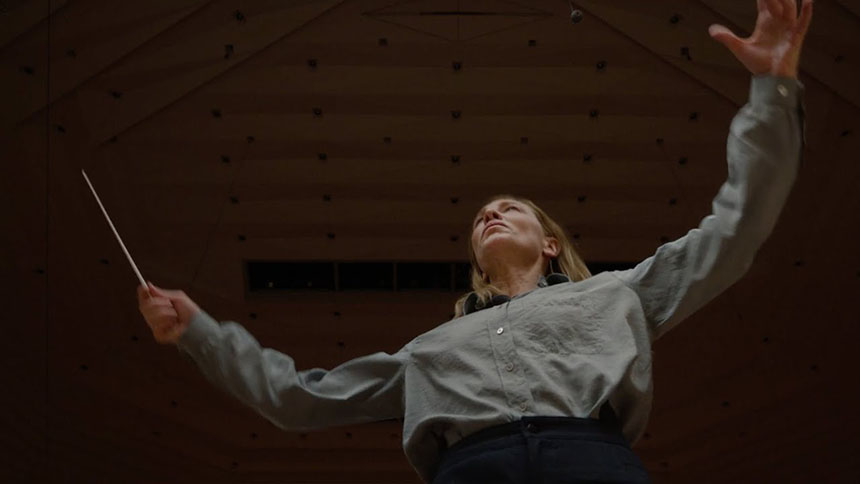
All these years later, it’s not hard to imagine the Weinstein experience as an inspiration for Tár, a searing character study of art, arrogance, obsession and power that’s propelled by the towering presence of (surprised face) Cate Blanchett.
She is Lydia Tár, the first female music director of the Berlin orchestra. A nicely organic interview introduction runs down Lydia’s impressive resume, immediately cementing the character as one of the greatest living composer-conductors in the world.
And, as is her way, Blanchett (who prepped by learning several instruments and studying conducting) needs mere moments to define Lydia with sharp, unforgettable edges.
Tár is a control master who will converse and condescend with excess pleasantries, all the while keeping antenna up for anyone in her orbit who might contradict her careful plotting. And Field’s use of precise sound design and only diagetic music is a brilliant way to reinforce the maestro’s level of influence on everything around her.
Lydia is in rehearsals for a triumphant performance of Mahler’s 5th symphony, and also has a new book prepping for release. So while there’s much going on professionally, it’s the detailed, yet unassuming way Field narrows his focus to Lydia’s personal cruelty that brings the film to such a resonant point.
She humiliates a young student for daring to question a status quo power structure, takes advantage of her dutiful assistant’s (Noémie Merlant from the exquisite Portrait of a Lady on Fire) ambitions, works to remove an Assistant Conductor (Julian Glover) who dares to criticize, and is routinely dismissive of her wife (Nina Hoss).
The way Lydia handles a child bullying her young daughter is our first glimpse at true sociopathic tendencies, but Field – with moments of both sly humor and biting sarcasm – gradually unveils a familiar culture of predatory behavior.
To say the portrayal is perfection feels almost dismissive or perfunctory considering Blanchett’s mastery of her own art, but maybe that’s why this role stands apart. Maybe it’s her own experience, so unlike nearly anyone else’s, that shapes the organic and human performance. You want to feel for Lydia, or at least recognize how a genius with power begins to believe they are entitled to something. Or someone.
It’s in moments when Lydia dismisses ideas of gender inequality or coyly celebrates the history of patriarchy in her own profession that Field and Blanchett best expose the insidious nature of power. The storytelling is striking in its intimacy, gripping in its universal scope.
Tár is a showcase for two maestros working at the top of their game.
Bravo.

by Hope Madden and George Wolf
In 2018, director David Gordon Green and writer Danny McBride did the almost unthinkable, something often tried but rarely accomplished. They made a good Halloween movie. Three years later they did what a lot of people have done. They made a bad sequel.
But the second film in a trilogy is tricky business. The origin story is out of the way and you can’t kill the villain – everyone already knows a third installment is coming. Some filmmakers thrive in that middle space, but most tread water until the big climax.
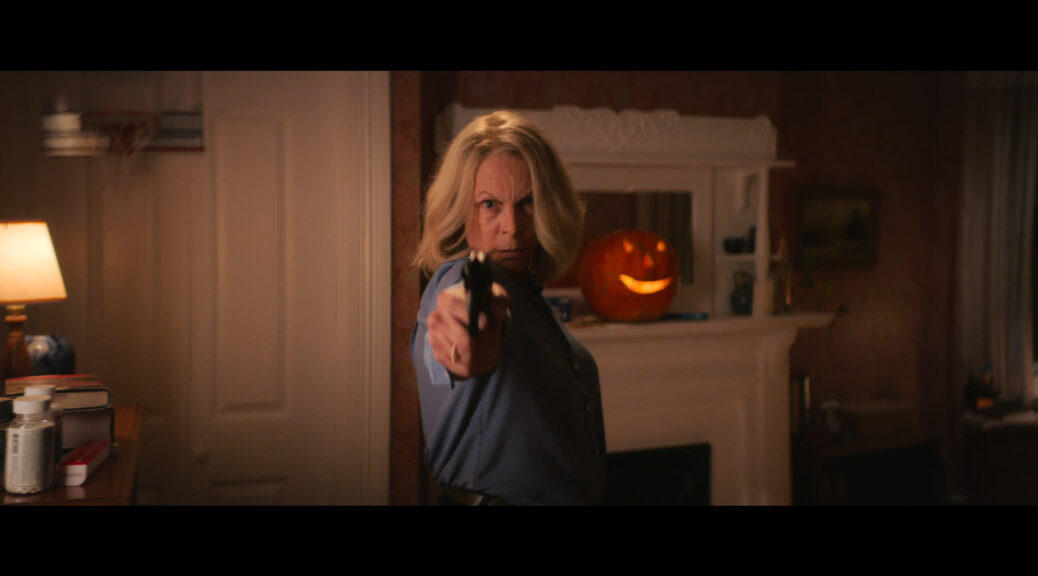
Well, that big climax is here. Laurie Strode (Jamie Lee Curtis) and Michael Myers (James Jude Courtney) face off in the final piece of Greene’s trilogy, Halloween Ends.
The bad second installment was better.
Rohan Campbell is Corey, a misunderstood outcast with tousled hair, bee stung lips and a motorcycle. The Strode women take a shine to him, Laure introducing him to granddaughter Allyson (Andi Matichak). But Haddonfield is pretty tough on Autumn romance, and this story is too rushed to resonate, too dull to be truly angsty.
Green has made some really good movies: George Washington, All the Real Girls, Undertow, Snow Angels, Pineapple Express, Joe, Halloween. One of the most impressive things about that list is the way it crosses genres like there is no border from one to the next. His first episode in the series was a mash note to the original. He wisely ignored all the other sequels and reboots and just brought us a clear vision for an Act 2.
Then, in lieu of a cohesive story, Green caves to some desire to pepper a sequel with odes and easter eggs in honor of all the franchise installments. He and co-writers McBride, Chris Bernier and Paul Brad Logan pick up an idea hinted at in two earlier episodes across the full constellation of films. An honest to god original thought would have been better.
It’s a sidetrack that some longtime fans might embrace, but the execution is littered with missteps. The new relationships do not feel authentic, much of the internal logic is questionable, and forget about scary, the film is too tired to even develop effective tension. There aren’t even any good kills.
We do get the final Laurie v Michael showdown that the title promises, which is a welcome return to giving the legendary Curtis some opportunity for badassery. But while Green & company manage a couple late-stage surprises, this is ultimately a disappointing end, with the highest of hopes limping to the finish for only lukewarm satisfaction.

by George Wolf
Just this past summer, Claire Denis explored psychosexual politics with the moving Both Sides of the Blade. Now, she has sex, lies and global politics on her mind, as Stars at Noon examines sweaty intimacies and slippery alliances.
Adapting Denis Johnson’s novel with co-writers Andrew Litvack and Léa Mysius, Denis keeps the Central American setting but shifts the timeline from 1984 to nearly present day. The threat of COVID-19 adds a relatable layer of suspicion to every interaction, in a part of the world where suspicious minds are easy to find.
Margaret Qualley is sensational as Trish, a young woman staying in a low-rent Nicaraguan hotel while working plenty of angles. There isn’t much to back up her claim to be a journalist (despite a late night call to magazine editor John C. Reilly in a wild cameo), and other details about her life are kept brief and ambiguous.
Trish seems to benefit from at least a couple friends in high places, while new friend Daniel (Joe Alwyn delivering some perfectly smoldering mysteriousness) could benefit from at least one person he can trust.
Daniel says he’s in town from London as an oil company consultant, but Trish is quick to let him know he’s become “a person of interest” with some powerful locals.
But how can this silly American girl know what’s what?
Qualley crafts Trish’s disarming persona beautifully, with a performance that shows a new depth to her talent. While the film’s dialog is often precise and enticing, Qualley makes sure Trish’s non-verbal ques do plenty of talking as well. That gives authenticity to Daniel’s seduction, and the dangerous complications that arise when another mysterious stranger (Benny Safdie) makes Trish a tempting offer.
The humidity of the region feels palpable, laying down a subtle air of oppression that pairs nicely with the more surface level dirty dealings while another wonderful score from Denis favorite Tindersticks works its magic.
Denis is in no rush here, and the narrative can meander through some awkward juggling of tones. But the journey of these characters and their moral posturing is always engaging, and Stars at Noon serves a hypnotic cocktail of intrigue mixed with lust, feminine power and cutthroat colonialism.
Horror is about power versus vulnerability. That’s why bullies and mean girls fit so well into the genre. You always hope the vulnerable will overcome. In this genre, there’s always the real worry that evil will overcome. But somehow, bullies and mean girls never stand a chance.
There are so many great ways to spend time with these high school baddies, but here are our five favorites:
Meg (Katherine Kamhi) was no picnic, but side-ponytail Judy (Karen Fields) is an all-timer when it comes to onscreen bullies. She hates everyone, is mean to everyone, but she really detests poor Angela (Felissa Rose).
“She’s a carpenter’s dream! She’s flat as a board and needs a screw!”
Like all mean girls in horror, Judy gets what’s coming to her. Still, you have to respect that ponytail.
Man, the kids of Derry have it rough long before the circus comes to Derry. Between Henry Bowers (Nicholas Hamilton) and his powerful mullet and the girls dumping wet garbage on Beverly, nobody’s safe. The Losers Club really brings them out of the woodwork.
In fact, they save Mike Hanlon’s life, which bonds the group through the real clown show. Maybe this is what made each of these kids tough enough to withstand he real clown show.
Sure, we know Conny learned to be a bully from his older brother, Martin. Maybe Martin learned it from his dad or something. But Oskar’s had just about enough of it.
Unfortunately, Oskar’s not as good at defending himself as he’d like to think he is once big brother shows up. Not that he really needs to defend himself anymore. In one of the greatest bully comeuppance sequences in all horror, Eli shows Oskar what friends are for.
Carlota Pereda complicates the mean girl trope in this brutal, moving, amazing Spanish horror film. Sarah is targeted by town mean girl Maca (Clauda Salas). Roci (Camille Aguilar) is almost as bad, but it’s Claudia (Irene Ferreiro) who really breaks Sarah’s heart. It wasn’t long ago, they were friends. Now Claudia is willing to taunt, humiliate, and in one instance, nearly drown “Piggy”.
Maybe that’s why Sarah does what she does when the three girls are taken. That is to say, maybe that’s why Sarah doesn’t do what she doesn’t do.
What else? Is there a more tragic scene? Is there a scene that better establishes a character, a context, or horror?
De Palma films the scene in question, appropriately enough, like a tampon commercial, all cheesecloth and beautific music. And then Carrie White (Oscar-nominated Sissy Spacek) desperately claws at her classmates, believing she is dying. It’s the most authentic image of vulnerability and terror you can imagine, matched in its horror by the reaction she receives from those she seeks: laughter, mockery and contempt.
The result is the ultimate in mean girl cinema and an introduction to a nearly perfect horror film.