Screening Room: Where the Crawdads Sing, Mrs. Harris Goes to Paris, Paws of Fury, Landis: Just Watch Me & More
by George Wolf
“I had to do life alone. People don’t stay.”
Well-placed within a novel, those words could have major impact. But when you tell it to a movie audience, the power of your visual medium is wasted. You’re not showing us anything, you’re reading to us.
And like so many of these stories of a special girl who hides in plain sight, the big screen version of the Delia Owens bestseller Where the Crawdads Sing employs voiceover narration too early and too often. That’s disappointing, because the film does have its moments.
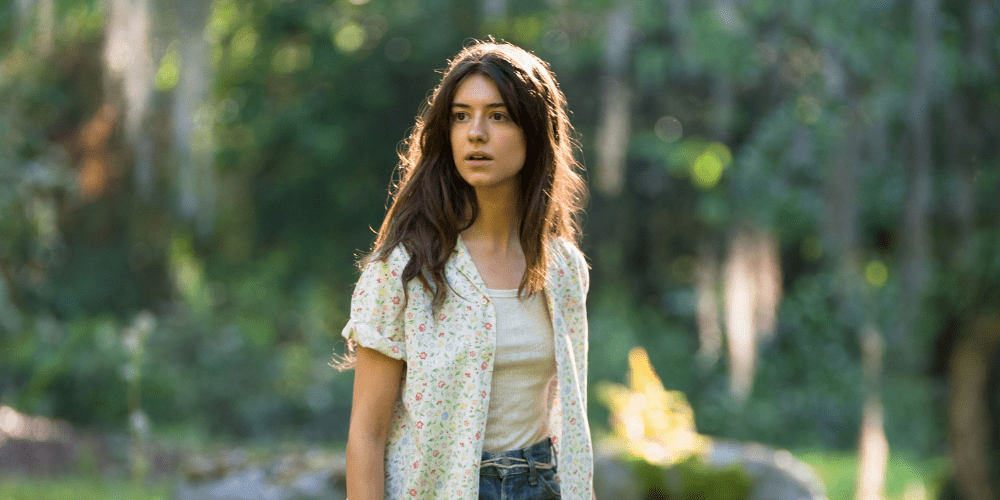
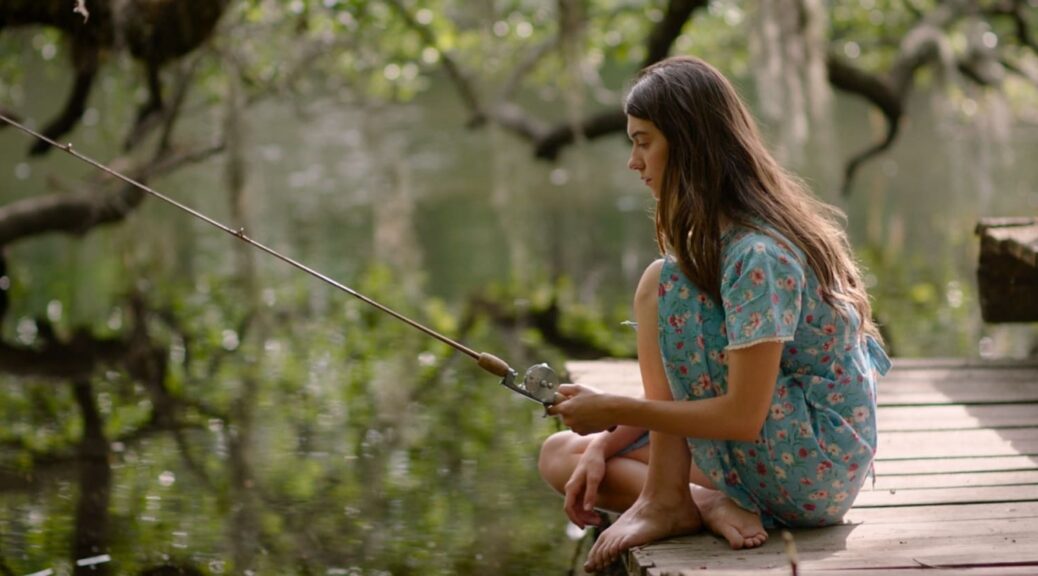
Most of those moments come from Daisy Edgar-Jones, who stars as Kya Clark, the “Marsh Girl” of Barkley Cove, NC who’s on trial in the late 1960s for the murder of local rich boy Chase Andrews (Harris Dickinson).
Kya won’t agree to a plea deal, and throughout her defense from kindly lawyer Tom Milton (the always reliable David Strathairn), director Olivia Newman weaves in flashbacks of a reclusive young girl who grows up alone in the marshes, somehow emerging closer to Miss Carolina than Nell.
Overthinking it? Maybe, but seeing Beast of the Southern Wild screenwriter Lucy Alibar’s writing credit brings more attention to how often this self-reliance tale leans into fantasy. She and Newman sanitize the southern swamp song for convenience, replacing realistic grit with a makeover-in-waiting.
But if you haven’t read the book, there is a surprise or two in store, and a nuanced turn from Edgar-Jones (Fresh, TV’s Normal People and War of the Worlds) that stands out in a parade of broadly-brushed role players.
The lessons about classism and misogyny may be admirable, but they’re as obvious and as soft-peddled as the quick glimpses of racism and the idyllic marsh environment that’s somehow free of thunderstorms or bug bites.
Where the Crawdads Sing does Southern Gothic like Justin Beiber doing Delta blues. You’ll recognize the words and music, but any true feeling is bogged down by all the polish.

by George Wolf
Claire Denis is an endlessly fascinating filmmaker. She might be working in horror (Trouble Every Day), sci-fi (High Life), documentaries (Toward Mathilde, Venice 70) or shorts (various), but Denis is always mining ways to subvert your expectations and probe her characters’ motives.
With Both Side of the Blade (originally titled Fire), Denis digs into the erotic drama landscape via the same game plan, crafting an abstract and often challenging narrative that’s built around a good ol’ love triangle.
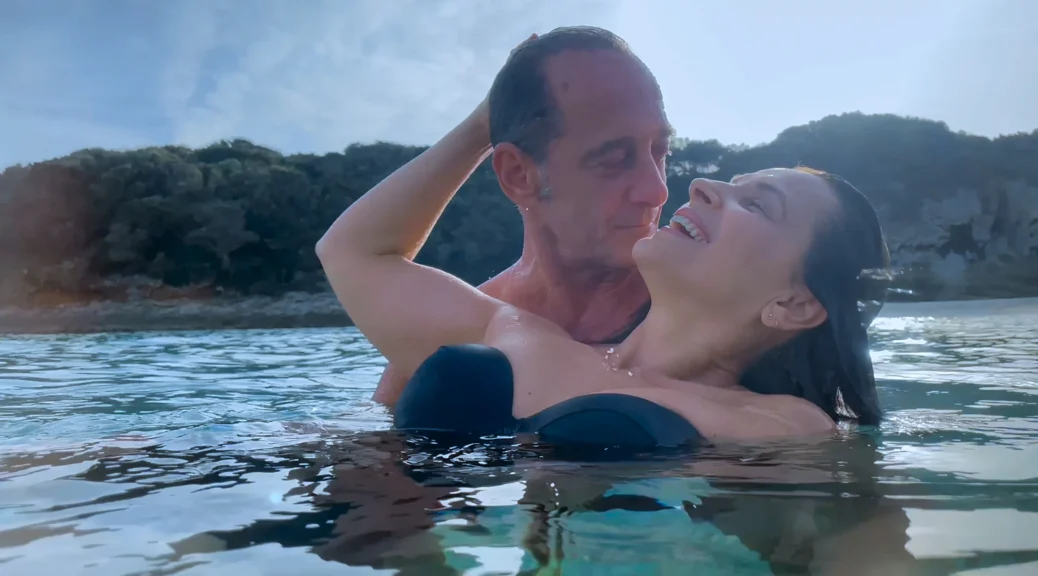
Sara (Denis favorite Juliette Binoche) and Jean (Titane‘s Vincent Lindon) are longtime partners, and when the film opens they are wrapping up a vacation that seems to have been a wonderfully affectionate and often orgasmic time.
But back home, Sara catches a glimpse of her former lover Francois (Grégoire Colin) and is left shaken. Feelings are stirred even more by Jean’s new plan to start a business with Francois. The two men are also old friends, and Sara’s nearly decade-old decision to leave Francois for Jean seems like a wound long healed.
Well, that depends.
And as the past begins to fracture the couple’s present, Jean is also working to mend the relationship with his teenage son (Issa Perica) that was strained from Jean’s stint in prison years earlier.
But while all of the stakes may be easy enough to grasp, Denis and co-writer Christine Angot twist the personal interactions in intriguing ways. Denis doesn’t do sentimentality, but the film’s first two acts present character choices and dramatic histrionics that just don’t ring true unless we allow for some intimacies that will not be divulged.
Binoche and Lindon are astounding together, locking Sara and Jean into a conflict fueled by a battle with their own identities, as Colin provides the mysterious temptation always lurking on the periphery.
Why does Jean seem to be pushing his wife toward her former lover, only to burn with jealousy? Does Sara truly love either man, or only a version of herself that always seems out of reach?
It’s only in the final act that Denis moves away from pulling at the seams of this genre to let her actors deliver a finale rich with emotional honesty. Peace is finally made, and not only with the choices from Sara and Jean’s respective pasts. Challenges and complexities from the film’s earlier moments melt away, and Both Sides of the Blade becomes a moving and rewarding psychological study.

by George Wolf
If the title Gabby Giffords Won’t Back Down immediately has you humming a certain Tom Petty tune, that’s fine. In fact, the way the film incorporates that and other hits, and music in general, is one of its many charms.
Giffords was an Arizona Congresswoman and a rising star in the Democratic party when she was shot in the head while meeting constituents in Jan. of 2011. Music therapy was pivotal to Giffords’s quest to regain her speech, and directors Julie Cohen and Betsy West are gifted with intimate home video footage that conveys the magnitude of her comeback story.
Giffords chances of surviving the gunshot were less than ten percent, and in fact her husband, astronaut Mark Kelly, was at one point informed that his wife had died. But when Gabby fought back, Kelly was convinced she would one day want to look back on her journey, so he picked up a video camera.
There’s little doubt that Cohen and West (the Oscar-nominated RBG) have a healthy admiration for Giffords, but they make a pretty compelling case why the rest of us should be “Gab-ified,” too. Her courage, strength and determination cannot be denied.
Archival footage and interviews with fans (including former President Obama) outline Gabby’s transition from manager of the family’s Arizona tire store to fresh-faced Washington centrist. She’s nearly impossible to dislike, while her partnership with the space-traveling Kelly sends the all-American appeal into the stratosphere.
And when Cohen and West line up footage of Gabby’s brain surgery alongside her husband’s intricate space station docking maneuver, it’s game over and the feels have won.
So when the film transitions to the horrors of America’s gun violence epidemic, it seems at first like too much of a tonal clash. But as Kelly is elected to the Senate and Giffords focuses on her Gun Owners For Safety movement, it’s clear that the issue is just as much a part of Gabby as is the music she loves. Avoiding her current advocacy would result in an incomplete picture.
Don’t be fooled by the relentless positivity here. Gabby Giffords Won’t Back Down isn’t simply a greatest hits mixtape made by fans for more fans. It’s a gritty story of survival, and of making a commitment to making a difference.
And the joy of jamming to the 80s. Can’t forget that one.
Generally speaking, when a horror filmmaker inserts a dog into their film, it’s because they know you don’t want anything bad to happen to that sweet pooch. They raise the stakes.
That or they expect the dog to tear a throat out and terrify an audience.
But that’s not really why they put cats into their films. Cats plot and menace. You can’t figure them out. They seem innocent, but then they dart between your feet just as you reach the top of the stairs. Plus you know they’ll eat your carcass, and they probably won’t even wait that long.
Here is our salute to cats in horror movies.
Adrian is a Romanian filmmaker who likes girls and cats. He does not like dogs or boys. His favorite thing? Anne Hathaway as Cat Woman.
He was so inspired by her performance that he knew he had to make a film with her. To convince her, he’s lured three actresses to shoot a film with him. That film is really just to convince Anne, his beloved, that she should star in the real movie.
She’s not going to want to.
This movie works on the sheer, weird charisma of writer/director/star Adrian Tofei. He is pathetic and charming and terrifying as he documents his direction as a kind of “behind the scenes” for Anne, so she can understand how truly perfect she is for his film and he is for her artistic future. The result is unsettling, unique and wildly entertaining.
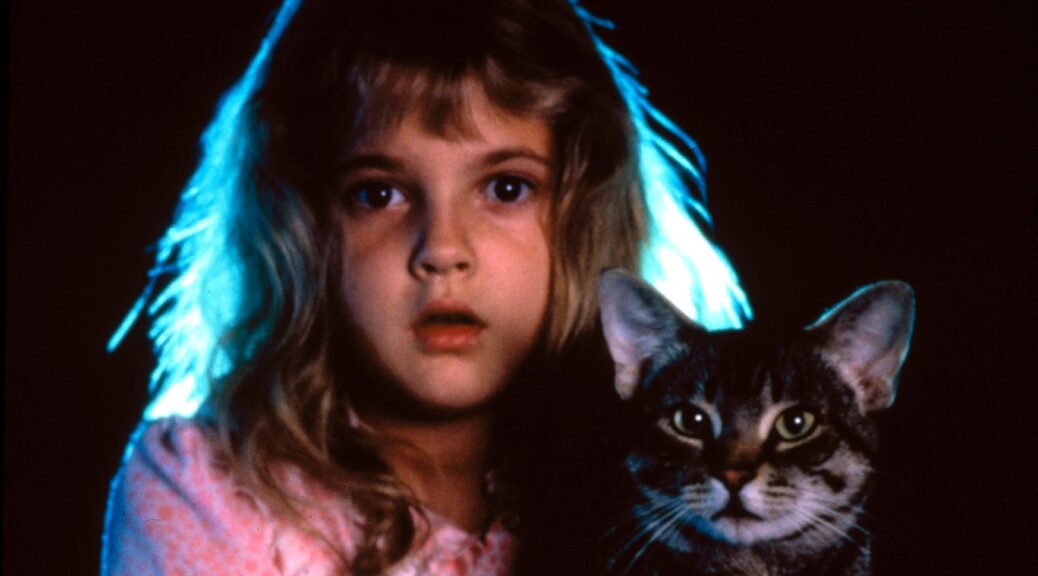
Stephen King wrote the screenplay for this anthology. Two of the shorts come from King’s published work, the third he scripted directly for the screen. A cat named General travels among the three tales.
General gets the most screentime in an episode with Drew Barrymore, who wants the cat to protect her from a little troll living in her bedroom walls. But the best of the tales follows Dick Morrison (James Woods) follows a 100% effective way to quit smoking.
It’s an effective set of tales and one of the better screen adaptations of King’s work.
Rocky Horror owes a tremendous debt to Edgar G. Ulmer’s bizarre horror show. The film – clearly precode – boasts torture, tales of cannibalism, and more than the hint of necromancy.
Plus Bela Lugosi and Boris Karloff?! What is not to love? It looks great, as does Karloff, whose lisp is put to the most glorious use.
Loosely based on Poe’s The Black Cat – so loose in fact that it bears not a single moment’s resemblance to the short – the film introduces Lugosi’s Dr. Vitus Werdegast. He’s come to seek vengeance on Karloff’s mysterious Hjalmar Poelzig, if only Werdegast can overcome his all-consuming terror of cats!
The cat thing has almost nothing whatever to do with the actual plot of this movie, but who cares? What a weird, weird movie. So good!
Jacques Tourneur’s 1942 original explores that oh-so-common horror trope: women’s sexual hysteria. Beautiful Irena is afraid that if she has sex she will become a monster. And we know she’s evil because the tiny kitten her new beau brings her hisses at her.
It’s an often silly film and very dated, but there’s something unnerving in the shifts of power, the perversion the film finds in power. You see it in the way big cats are menaced by small cats.
Director Marjane Satrapi’s follow-up to her brilliant animated Persepolis is a sweet, moving, very black comedy about why medicine is not always the best medicine.
Ryan Reynolds is Jerry. As Jerry sees it, his house is a cool pad above a nifty bowling alley, his job is the best, his co-workers really like him, and his positive disposition makes it easy for him to get along. Jerry’s kindly dog Bosco (also Ryan Reynolds) agrees.
But Mr. Whiskers (evil cat, also Reynolds) thinks Jerry is a cold-blooded killer. And though Mr. Whiskers is OK with that, Jerry doesn’t want to believe it. So he should definitely not take his pills.
by George Wolf
Apples opens with the thump-thump-thump of Aris (Aris Servetalis) slowly and deliberately hitting his head against a wall. We won’t know why for about 90 minutes, as director/co-writer Christos Nikou reveals the layers of his debut feature as carefully as Aris peels his favorite fruit.
Later, on a city bus, a confused Aris becomes the latest victim of a worldwide pandemic that causes sudden amnesia. When his condition does not improve and no relatives can be located, Aris is enrolled as “14843” in a recovery program designed to help “unclaimed” patients build entirely new identities.
Armed with a Polaroid camera and a list of assignments from his doctors, Aris must document the completion of each directive with photos to be displayed on separate pages of an album.
Even if you didn’t know Nikou got his start as second unit director for Yorgos Lanthimos on Dogtooth, you would instantly notice the similarities in detached mood and deliberate pacing. And while it may be unfair to expect anyone to rival Lanthimos’s skill with deadpan irony, Nikou favors a dour, awkward brand of humor (Aris dances the twist!), and a more clear-eyed and gentle resolution to an opaque turn of events.
Nikou’s beautifully realized world resembles the present day, but it is consistently quiet, slow paced and free of digital tech (hence the Polaroid). The film’s comment on disassociation is a compelling surface layer, but Apples has a more haunting goal in mind.
How much of who we are do we owe to our memories? And how far might we be willing to go to put painful memories out of reach? Nikou’s approach to these questions is finely textured, displaying a blend of craftsmanship and vision that bears attention, both now and for whatever he takes a bite of next.

The halfway mark of 2022 is upon us. You know what that means! Well, maybe you don’t — it means a list! It’s at this point in the year that we look back and celebrate the best films we’ve seen so far. A Top 10, of sorts, except it’s really a Top Baker’s Dozen and it’s in alphabetical order.
On Apple TV
Dakota Johnson is the unquestioned star of indie darling coming-of-age drama Cha Cha Real Smooth, but it’s writer/director/co-star Cooper Raiff who’s shining bright enough to blind you.
Solid support from Leslie Mann and Brad Garrett offers Raiff opportunities to subvert tropes with surprising compassion. There are also more than enough laughs to balance the drama.
Johnson’s greatest strength as a performer is the almost preternatural chemistry she shares with everyone else on screen. That connection with Raiff aches with human tenderness, as does the entire film.
Cha Cha Real Smooth, which won Sundance’s dramatic competition this year, overflows with charm and warmth. More than that, it points to a remarkable cinematic voice that’s just getting started.
On Prime Video
In a dreary world where “surgery is the new sex,” two performance artists (Viggo Mortensen, Léa Seydoux) turn one’s mutant organs into art.
If that doesn’t sound like a David Cronenberg movie, nothing does.
The film references, directly or indirectly, The Brood, Dead Ringers, The Fly, Naked Lunch, Crash, and most frequently and obviously, Videodrome. Like his main character, Cronenberg has long been an “artist of the inner landscape.” And after several decades of excising that tendency from his work, Cronenberg has come full circle to accept what was inside him all along.
On VOD
It’s not often you watch a film about a fire starting, drug dealing, lying man on the run from police and his romance with a woman with special needs and think, this is delightful.
But it is. Dinner in America is a delight.
Writer/director Adam Rehmeier delivers an unexpected comedy, sometimes dark, sometimes broad, but never aimless. Simon (Kyle Gallner, remarkable) is a punk rocker hiding from the cops. Patty (Emily Skeggs) is a 20-year-old punk rock fan who lives at home and isn’t allowed to run appliances when she’s alone.
Rarely does a film feel as genuinely subversive and darling as Dinner in America, the punk rock rom-com you never knew you needed.
On Prime Video
Take two longtime friends on the verge of going their separate ways, and throw in one night of epic partying before they graduate. There will be hijinks, conflict, feelings expressed, and resolution.
We know this formula, right?
Not so fast. Expanding their Emergency short from 2018, director Carey Williams and writer K.D. Dávila run those familiar tropes through a tense, in-the-moment lens that upends convention while still delivering a consistent layer of laughter.
So we get the two friends ready to explore the future, searching for their place in the world. But this wild night of partying holds more sobering lessons than we’re used to seeing.
For these young men, it’s about how quickly their perception of the world can change forever, and the unrelenting weight of navigating how the world sees them.
In theaters and streaming
Directors Dan Kwan and Daniel Scheinert are back with their brand of sweet-natured lunacy for Everything Everywhere All at Once. The result is an endlessly engaging, funny, tender, surprising, touching maelstrom of activity and emotion.
This is a hard movie not to love.
At the heart of the insanity lurks Michelle Yeoh and a spot-on depiction of a midlife crisis. Yeoh’s Evelyn arcs as no character has arced before.
The real stars are the Daniels, though, who borrow and recast and repurpose without even once delivering something derivative.
On Hulu
If we’re boiling down film narratives to heroes and quests, it won’t take long to define Good Luck to You, Leo Grande.
Nancy (Emma Thompson, glorious as always) is our hero, and sex is her quest. So she hires handsome young Leo Grande (Daryl McCormack) for a tryst.
Nancy’s journey is, of course, an intimate one, and director Sophie Hyde doubles down on the intimacy, rarely leaving the privacy of the hotel room. Regardless, the film is never claustrophobic and always cinematic, framing even the most sexual moments with a refreshing honesty that the characters (and these two impeccable performances) deserve.
And you know what? We deserve it, too. Good Luck to You, Leo Grande is a simply wonderful look at embracing who you are and what you want.
On Shudder
Phil Tippett’s demons take center stage in his stop motion head trip 30 years in the making, Mad God. It’s like a Bosch painting and a Tool video accusing each other of being too lighthearted.
Mad God delivers a nightmare vision like little else, overwhelming in its detail and scope. Tippett plumbs cycles of mindless cruelty.
Mad World revels in Tippett’s vulgar, potent fantasy without belaboring a clear plotline. The world itself resembles hell itself. Tippett peoples this landscape with figures and images that also feel reminiscent: a doll’s befouled face, a fiendish surgeon, a cloaked figure.
Traveling theatrically
If you are in the mood for something decidedly different, let Apichatpong Weerasethakul’s meditative wonder Memoria beguile you. Or bewilder you. Or both.
The film becomes a mystery of sorts, but one that dredges up more questions than answers. On the filmmaker’s mind seems to be concepts of collective memory and isolation, sensory experience and existence.
Jessica’s (Tilda Swinton) travels through Colombia in search of answers to a confounding sound following her becomes an entrancing odyssey. Akritchalerm Kalayanamitr’s sound design heightens the experience, almost becoming a second character in the way that the sound supports Swinton’s performance.
And what a performance. Quiet and precise as if always listening and careful not to disturb, Swinton once again disappears wholly into a role.
On Prime Video
Jessie Buckley (flawless, as always) plays Harper, a woman in need of some time alone. She rents a gorgeous English manor from proper country gentleman Geoffrey (Rory Kinnear) and plans to recuperate from, well, a lot.
Filmmaker Alex Garland unveils Harper’s backstory little by little, each time slightly altering our perception of the film. The more about Harper we learn, the more village folk we meet: vicar, surly teen, pub owner, police officer, and a naked man in the woods. Each is played by Kinnear—or by actors sporting Kinnear’s CGI face—although Harper never mentions this, or even seems to notice.
Is she seeing what we’re seeing?
Garland’s bold visuals—so precise in Ex Machina, so surreal in Annihilation—create a sumptuous environment just bordering on overripe. The verdant greens and audacious reds cast a spell perfectly suited to the biblical and primal symbolism littering the picture.
Rather than clarifying or summing up, the film’s ending offers more questions than answers. But if you can make peace with ambiguity, Men is a film you will not likely forget.
On Peacock
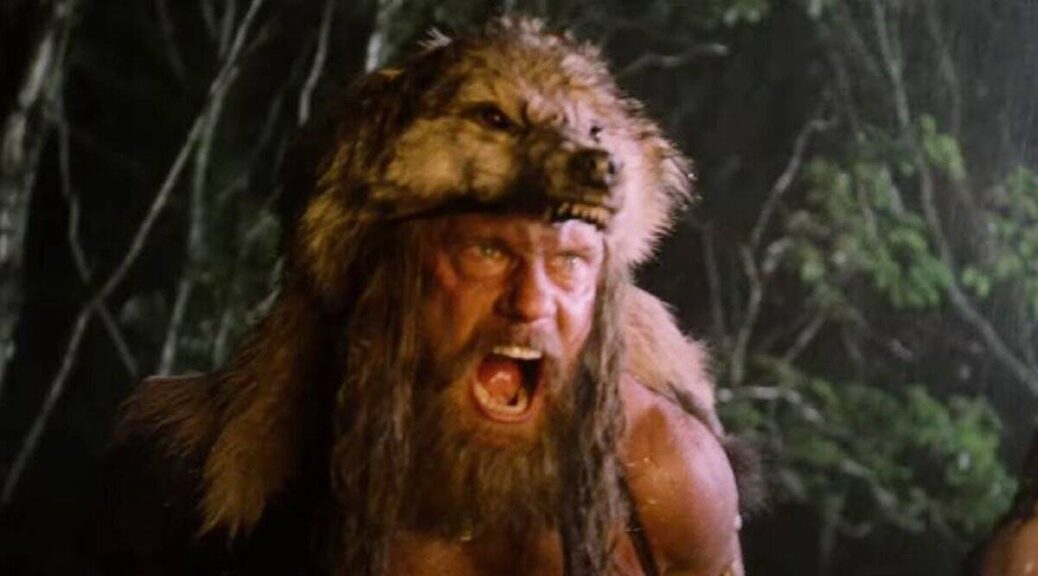
Robert Eggers released his third feature this year, a Viking adventure on an epic scale called The Northman.
What you have is a classic vengeance tale: prince witnesses royal betrayal and the murder of his father. He loses his mother and his crown and vows revenge.
Alexander Skarsgård is cut to play a Viking. His performance is primarily physical: blind rage looking for an outlet. He’s believably vicious, bloodthirsty, single-minded and, when necessary, vulnerable. The entire cast around him is equally convincing.
Classic is exactly how The Northman feels. The story is gritty and grand, the action brutal and the storytelling majestic. As is the case with Eggers, expect a fair amount of the supernatural and surreal to seep in here and there, but not enough to outweigh the meticulously crafted period realism.
At Gateway Film Center
Directors Noah Dixon and Ori Segev, working from Dixon’s script, drop you into the indie music scene you may never have realized existed in Columbus, Ohio. Lennon (Sylvie Mix) wants to change that with her podcast. She may not have a lot of listeners, but she promises those who do listen a deep dive into the scene, with interviews and performances from the best bands you’ve never heard of.
Mix’s open stare and stealthy movement — a technique she used to great effect in her haunted Christmas flick Double Walker — here feels slyly deceptive. Lennon’s an introvert, a fan, an artist herself. Or is she?
Like a cagey, pink-haired Jena Malone, Kitten commands the screen playing a version of herself. The singer from Columbus-based indie band Damn the Witch Siren, Kitten performs along with bandmate Z Wolf, whose presence adds a fascinating air of whimsy, danger and apathy.
On Disney+
Turning Red – Pixar’s twenty-fifth – keeps the winning streak alive with a frisky, meaningful and culturally rich update of a well worn message.
Director Domee Shi (who also co-writes with Julia Cho) has much to offer in her feature debut. Here, the often generic moral of “be true to yourself” plays out with stakes that will feel authentic to both kids and parents. Pixar has a long history of finding true poignancy amid big laughs, but Turning Red feels like a turning point.
Not only is it the first Pixar film with a female director, women are also in leadership roles throughout most areas of the production. The mission was clearly to begin speaking to a slightly older target, with a tender honesty that adolescents – girls especially – could appreciate.
Respect the past, but embrace the possibilities of the future. That future is going to include parts of your true self that are messy, and that’s okay. In fact, accepting those awkward, messy parts is the first step to being okay.
On VOD
It’s not just that it’s the role he was born to play. It’s also that it feels like precisely the right moment for him to be playing it, as if the cosmos themselves are aligning to deliver us some rockin’ good news.
How good? Well, for starters, The Unbearable Weight of Massive Talent gives him about a minute and a half just to name check himself as “Nic f’innnnnnnnnnggggggggow!WoahCage!”
And while we’re loving all manner of Cage, here comes Pedro! More natural and endearing than he’s ever been, Pascal starts by channeling the fan in all of us, and then deftly becomes the film’s surprising heart. Yes, there are nods to Hollywood pretension, but they’re never self-serving, and the film is more than content to lean all the way in to a madcap adventure buddy comedy spoof.
On VOD
The Texas Chain Saw Massacre meets Boogie Nights?
Yes, please!
Filmmaker Ti West delivers an utterly unexpected and absolutely inspired horror show like nothing he’s made before. A group of good-natured pornographers descends upon an out-of-the-way ranch to shoot a movie, unbeknownst to the owners. Mia Goth leads a thoroughly entertaining cast, each actor making the most of the humor crackling throughout West’s script.
West explores some common themes, upending every one without ever betraying his clear love of this genre. Blending homages of plenty of Tobe Hooper films with a remarkable aesthetic instinct, West fills the screen with ghastly beauty.
No way the year’s half over! Just you shut up with that nonsense!
To cheer ourselves up we decided to walk back through the best this half of the year had to offer us in terms of horror movies. And you know what? It’s already been one hell of a year. Listed in alphabetical order, here are our 10 favorite horror flicks of the first half of 2022.
In theaters
Ethan Hawke plays the Grabber in Scott Derrikson’s take on the Joe Hill short story. With his top hat, black balloons and big black van, Grabber’s managed to lure and snatch a number of young boys from a small Colorado town. Finney (Mason Thames) is his latest victim, and for most of the film, Finney waits for his punishment down a locked cement basement.
Time period detail sets a spooky mood and Derrickson has fun with soundtrack choices. But the film’s success—its creepy, affecting success—is Hawke. The actor weaves in and out of different postures, tones of voice, movements. He’s about eight different kinds of creepy, every one of them aided immeasurably by its variation on that mask.
Derrickson hasn’t reinvented the genre. But, with solid source material and one inspired performance, he’s crafted a gem of a horror movie.
On Prime Video
In a dreary world where “surgery is the new sex,” two performance artists (Viggo Mortensen, Léa Seydoux) turn one’s mutant organs into art.
If that doesn’t sound like a David Cronenberg movie, nothing does.
The film references, directly or indirectly, The Brood, Dead Ringers, The Fly, Naked Lunch, Crash, and most frequently and obviously, Videodrome. Like his main character, Cronenberg has long been an “artist of the inner landscape.” And after several decades of excising that tendency from his work, Cronenberg has come full circle to accept what was inside him all along.
On Shudder
Phil Tippett’s demons take center stage in his stop motion head trip 30 years in the making, Mad God. It’s like a Bosch painting and a Tool video accusing each other of being too lighthearted.
Mad God delivers a nightmare vision like little else, overwhelming in its detail and scope. Tippett plumbs cycles of mindless cruelty.
Mad World revels in Tippett’s vulgar, potent fantasy without belaboring a clear plotline. The world itself resembles hell itself. Tippett peoples this landscape with figures and images that also feel reminiscent: a doll’s befouled face, a fiendish surgeon, a cloaked figure.
On Prime Video
Jessie Buckley (flawless, as always) plays Harper, a woman in need of some time alone. She rents a gorgeous English manor from proper country gentleman Geoffrey (Rory Kinnear) and plans to recuperate from, well, a lot.
Filmmaker Alex Garland unveils Harper’s backstory little by little, each time slightly altering our perception of the film. The more about Harper we learn, the more village folk we meet: vicar, surly teen, pub owner, police officer, and a naked man in the woods. Each is played by Kinnear—or by actors sporting Kinnear’s CGI face—although Harper never mentions this, or even seems to notice.
Is she seeing what we’re seeing?
Garland’s bold visuals—so precise in Ex Machina, so surreal in Annihilation—create a sumptuous environment just bordering on overripe. The verdant greens and audacious reds cast a spell perfectly suited to the biblical and primal symbolism littering the picture.
Rather than clarifying or summing up, the film’s ending offers more questions than answers. But if you can make peace with ambiguity, Men is a film you will not likely forget.
On VOD
In 1996, Martin Bryant murdered 35 people, injuring another 23 in Port Arthur, Tasmania. The horror led to immediate gun reform in the nation, but director Justin Kurtzel is more interested in what came before than after.
Playing the unnamed central figure (Nitram is Martin spelled backward), Caleb Landry Jones has never been better, and that’s saying something. He is one of the most versatile actors working today, effortlessly moving from comedy to drama, from terrifying to charming to awkward to ethereal. There is an aching tenderness central to every performance. (OK, maybe not Get Out, but that would have been weird.)
Nitram looks at how nature and nurture are to blame. Socialization plus parenting plus bad wiring is exacerbated by the isolation and loneliness they demand. Everyone is to blame. It’s a conundrum the film nails.
But it’s Landry Jones you’ll remember. He’s terrifying but endlessly sympathetic in a bleak film that’s a tough but rewarding watch.
On VOD
Matt Bettinelli-Olpin and Tyler Gillett (Ready or Not) return us to Woodsboro for the franchise’s fifth installment. This go-round comments blisteringly (and entertainingly) not just on horror, but on the post-internet realities of cinema in general.
They really have a good time with that.
The filmmakers, along with writers James Vanderbilt and Guy Busick, fill scenes with nostalgia too cheeky to be simple fan service. Their clear affection for the franchise (a surprisingly strong set of films, as horror series go) is evident and infectious.
You do not have to know the 1996 original or any of its sequels to enjoy Scream. It’s a standalone blast. But if you grew up on these movies, this film is like a bloody message of love for you.
In theaters and on VOD
If you’re a fan at all of genre films, chances are good Watcher will look plenty familiar. But in her feature debut, writer/director Chloe Okuno wields that familiarity with a cunning that leaves you feeling unnerved in urgent and important ways.
Maika Monroe is sensational as Julia, an actress who has left New York behind to follow husband Francis (Karl Glusman) and begin a new life in Bucharest.
Monroe emits an effectively fragile resolve. The absence of subtitles helps us relate to Julia immediately, and Monroe never squanders that sympathy, grounding the film at even the most questionably formulaic moments.
Mounting indignities create a subtle yet unmistakable nod to a culture that expects women to ignore their better judgment for the sake of being polite. Okuno envelopes Julia in male gazes that carry threats of varying degrees, all building to a bloody and damn satisfying crescendo.
On VOD
Every so often you come across a movie and think it must have been made specifically for you. In our case, that film is Kier-La Janisse’s 3-hour documentary Woodlands Dark and Days Bewitched: A History of Folk Horror.
Yes, that does seem like a very big time commitment to folk horror, but Janisse’s film repays your undertaking with not only an incredibly informative documentary but an engaging, creepy and beautifully made film.
Janisse presents an intriguing global history that unveils universal primal preoccupations from England to Argentina, the US to Lapland and beyond.
Dry as that may sound, between the snippets of the movies themselves and the fluid, often creepy presentation, Woodlands Dark and Days Bewitched becomes as transfixing a film as those it dissects. And it digs deep, into obscure titles new and old. Border! White Reindeer! Onibaba! Viy! Prevenge!
On VOD
The Texas Chain Saw Massacre meets Boogie Nights?
Yes, please!
Filmmaker Ti West delivers an utterly unexpected and absolutely inspired horror show like nothing he’s made before. A group of good-natured pornographers descends upon an out-of-the-way ranch to shoot a movie, unbeknownst to the owners. Mia Goth leads a thoroughly entertaining cast, each actor making the most of the humor crackling throughout West’s script.
West explores some common themes, upending every one without ever betraying his clear love of this genre. Blending homages of plenty of Tobe Hooper films with a remarkable aesthetic instinct, West fills the screen with ghastly beauty.
On VOD
To suppose that filmmaker Goran Stolevski is a fan of Terrence Malick seems fair. His tale of 19th century Macedonian witchery offers the same type of visual aesthetic, whispery voiceover and absence of dialog in much of Malick’s work, especially 2018’s A Hidden Life.
You Won’t Be Alone follows Neneva (Sara Klimoska), a teenager raised in isolation, hidden from the Wolf-eatress (Anamaria Marinca) who’s claimed her. Freed from hiding, the teen shapeshifter takes on different forms (Noomi Rapace, Felix Maritaud, Alice Englert) and learns of life.
Klimoska’s physical performance reflects the primal beginnings of Neneva’s explorations. Rapace brings an awkward adolescence feel to the character’s early interpretations of normal human behavior. Englert carries the character into adulthood with quiet curiosity, never losing that animalistic inquisitiveness carried throughout the earlier performances.