Tag Archives: movie reviews

Pretty McFly (For a White Guy)

Fastest Delorean Part II

by George Wolf

When we last saw Adam Kontras and his record-setting Delorean, one of them was on the side of an L.A. freeway engulfed in flames.

Fastest DeLorean in the World ended with that fiery cliffhanger, and now Kontras is back to finish the story with his second documentary feature, Fastest Delorean Part II.

Kontras, a Columbus native who bought the Delorean and turned it into a stunning replica of Marty McFly’s Back to the Future time machine, has for years been making his living in L.A. by renting out the vehicle for a variety of gigs.

That led to a desire for setting the Delorean speed record, which Kontras chronicled to stirring effect in Part I. But aside from all the cool car stuff, what really drove the first film is the human drama that developed between Adam and his gearhead brother Kenny.

The status of their relationship was as much an unanswered question as the car fire, and Kontras readily admits his sequel won’t mean much to anyone who hasn’t seen the first film.

“It’s the rightful conclusion to everything,” Kontras said.

Plus, from the Universal Studios backlot to Paris and beyond, we get first person accounts of the often amazing places the car has taken Kontras and his good friend Don Fullilove, who played Mayor Goldie Wilson in the Back to the Future films.

“Just like the first one, I’m very happy as a storyteller to have somehow pieced it all together,” Kontras said. “The scope of everything is pretty intense…but holy fuck, I wish I wasn’t in it.”

“I am so done with the drama, I did everything humanly possible to make Fastest DeLorean a nice redemption story.”

“There will not be a part III.”

There will be more documentaries, though. Kontras is set to announce his next project in January, one he describes as “a love fest that has nothing to do with family.”

Okay, but what about time travel?

Fastest DeLorean Part II is streaming now on Amazon.

Stranger than Fiction

Honey Boy

by Hope Madden

“The only thing my father gave me that was of any value was pain, and you want to take that away?”

In other hands, that line could be the beginning and end of a movie, a maudlin attempt to summarize a life of abuse.

In other hands, Honey Boy could have gone really, really wrong.

It did not.

Ostensibly the strung together memories of a damaged movie star committed to rehab, the script tells of the insidious relationship between child star Otis (Noah Jupe as the semi-autobiographical avatar for Shia LaBeouf) and his ne’er do well father (LaBeouf, basically playing his own father).

Are we watching LaBeouf work through his own issues with this remarkable act of empathy, or is this, too, just an act? Or is Honey Boy itself a blurring of the line between sincerity and performance? To director Alma Har’el’s credit, Honey Boy does not shy away from that question. In fact, at every turn it embraces it. Just don’t expect an answer.

Har’el weaves between past and present. Modern day (2005) Otis (Lucas Hedges) stomps, blusters and bullies his way through court-appointed confinement where certain triggers send the film back to 1995. There, mainly in a dodgy motel with prostitutes for neighbors, young Otis and his dad struggle.

Hedges and Jupe make for eerily strong choices to play the two younger versions of LaBeouf, each an actor of such remarkable range and talent that super stardom seems inevitable. Hedges’s turn brims with contempt and vulnerability, while Jupe seems to recognize the limits of his own character’s understanding. His performance is heartbreaking.

The showier work comes from LaBeouf, who delivers a truly compassionate if not entirely forgiving performance. Your dad can be a hard guy to understand. If this entire film is simply LaBeouf’s attempt to do that, we’re lucky we get to participate.

LaBeouf’s work as a child actor—his turn as Stanley Yelnats in the utterly charming Holes, for instance—solidified his standing as a talent. His mainly mediocre choices and flat performances in his young adulthood made his off-screen antics more worthy of comment. And though his personal life may not have steadied much (his last arrest was just two years ago), his 2019 cinematic output (including the endlessly delightful The Peanut Butter Falcon) is easily the most impressive of his career.

The feat here is not just the performance, but the script.

In other hands, Honey Boy is another look at the ugly familial dysfunction that both propels and destroys young actors. Instead, through mundane details, we’re offered an unsettling and candid character study and a finely written family tragedy.

I Don’t Want to Go Out – Week of November 25

Well, a lot of options for your time off this holiday. Too bad none of these movies are very good.

Click the film title to link to the full review.

Official Secrets

Where’d You Go, Bernadette


Don’t Let Go

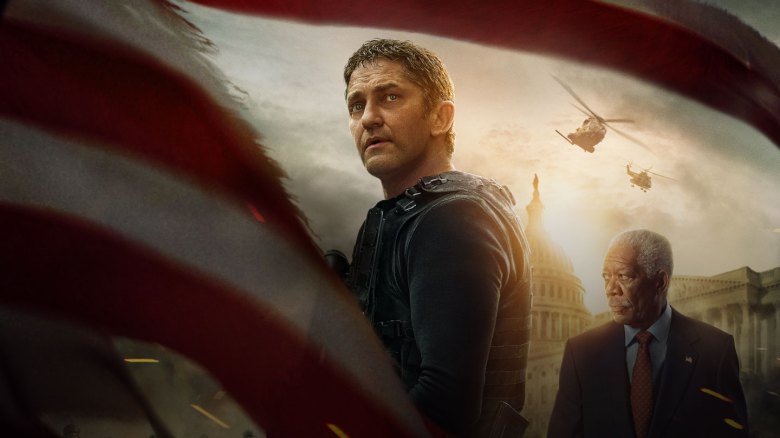
Angel Has Fallen

Mary

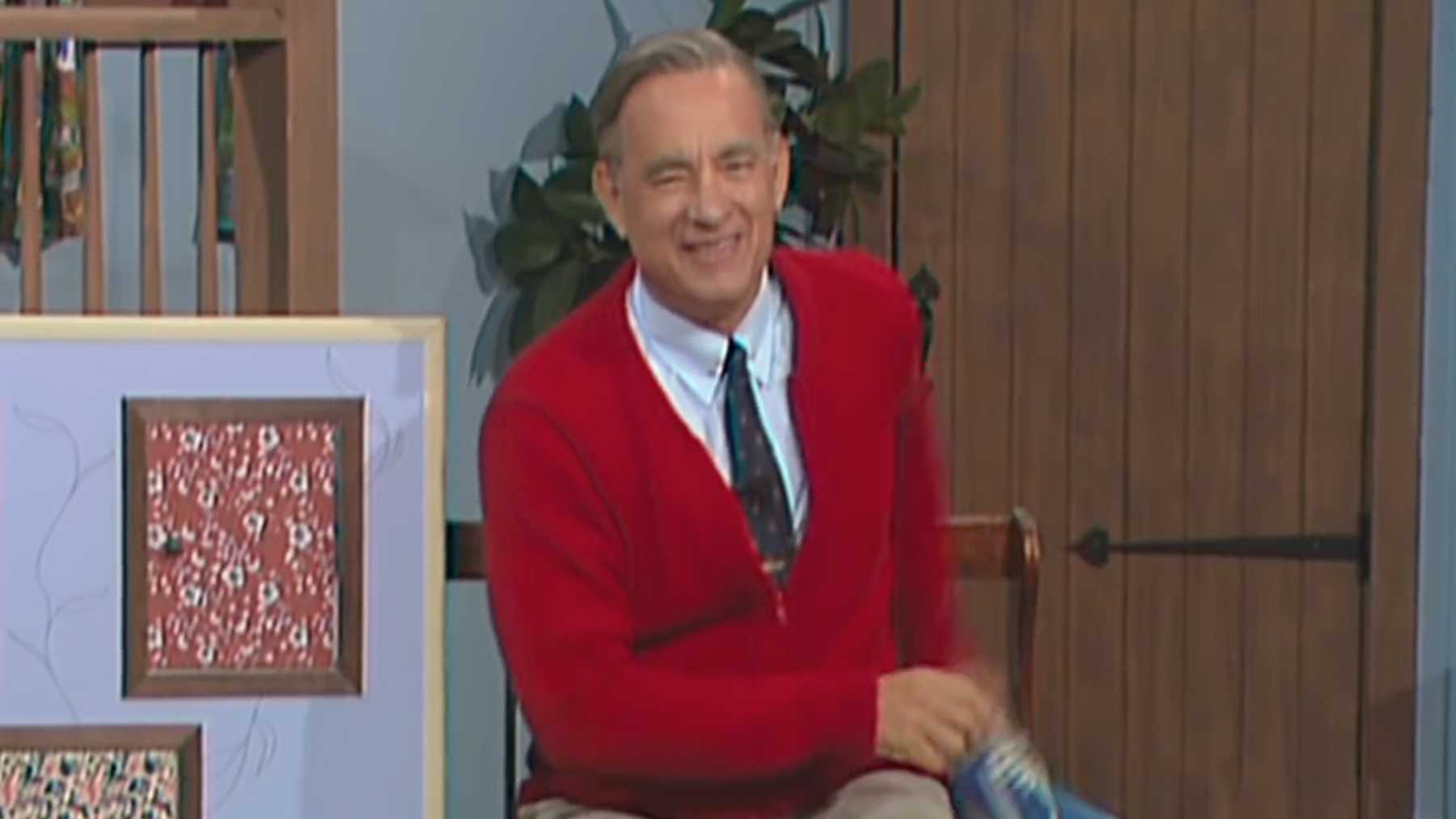
Screening Room: Beautiful Day in the Neighborhood, Frozen 2, 21 Bridges & More

Read All About It

Scandalous: The True Story of the National Enquirer

by George Wolf

About 94 minutes into Scandalous, Mark Landsman’s completely engrossing documentary about tabloid journalism, you realize he’s buried the lede.

“How did a tabloid subject get to be President of the United States?”

In telling the tale of the birth, rise and fall of the National Enquirer, Landsman is also drawing a fairly persuasive roadmap to America’s current standing as a place where, in the view of no less than Carl Bernstein, no fact-based debate is even possible.

Born to original owner Generoso “Gene” Pope from a no-interest mafia loan, the Enquirer had a simple goal: sell the most papers, period. Taking inspiration from roadside gawkers at a grisly accident, Pope printed the crime scene photos others didn’t.

But when the rise of suburbia meant less lines at the newsstand, Pope made a genius move to the supermarket checkout line. And since blood and guts don’t mix too well with the bread and milk, the Enquirer went all in on celebrity gossip.

Using press badges for nifty introductions, Landsman rolls out a succession of former Enquirer reporters and editors, none of whom can hide their fondness for the memories. It was an intoxicating working environment of bottomless expense accounts, cutthroat competition and a ruthless dedication to getting the story.

It wasn’t about facts, it was about eyeballs. Start with some sliver of truth, and then cater to the core (“Missy Smith in Kansas City” the staff called her) with unapologetic sensationalism.

Let the public decide, right? They have a right to know. Except when they don’t, because “catch and kill” protection deals started decades before Donald Trump. Landsman scores with those details, but curiously omits any mention of successful legal pushback from celebrities such as Carol Burnett.

The paper’s backstory is informative and intriguing, but the red meat of Scandalous comes fittingly from scandals. The coverage of both Gary Hart and O.J. Simpson not only brought new journalistic respect to the Enquirer, but ushered in a new approach to journalism itself that is still being debated.

“That’s not my problem,” says a former editor. “It sold papers.”

It did that. But Landsman argues it also blurred lines that became ripe for exploitation by a new owner with a political agenda, something – according to all former staffers interviewed – the Enquirer had always avoided. After that, greasing the political rails of longtime Enquirer darling Trump became almost inevitable.

But above all, Scandalous resets the folly in underestimating the Enquirer’s legacy. When we listen to a reporter’s recording of a much younger Trump calling to plant favorable stories by posing as a “Trump insider,” it feels like a visit from the Ghost of Christmas Past.

So how did the checkout aisles evolve from promising dirt on the latest celebrity divorce to serving up blatant political propaganda? In the words of one former reporter, the Enquirer simply got “out-Enquired.”

Scandalous, indeed.

Can You Hear Me Now?

Making Waves: The Art of Cinematic Sound

by George Wolf

Okay, reel talk: I’m a sound nerd, so I probably geeked out over Making Waves: The Art of Cinematic Sound a bit more seriously than your average bear.

But if you’re even a little bit at home in the foam-padded clubhouse with us audiophiles, rejoice! Director Midge Costin has given us our overdue salute to the history and pioneers of big screen sound design.

Costin, a veteran sound editor making her directorial debut, does seem mindful of avoiding an approach only digestible by techies. Her straightforward timeline of sound design history may lack style points, but it’s layered with plenty of movie clips and director interviews to rein in the average movie buff.

The sincerity of Steven Speilberg’s statement that “the ears lead the eyes to where the story lands” is echoed by other film greats who seem genuinely pleased to discuss a side of the craft they’re rarely asked about.

And we see that – like so many aspects of cinema – modern sound design took root in the 1970s, as mavericks such as Spielberg, Coppola, Lucas, Lynch, Streisand and Scorsese began to re-shape Hollywood.

It’s through these legends that that we’re introduced to sound design legends Ben Burtt, Walter Murch and Gary Rydstrom. Their names may not be as familiar, but Costin wants to make sure you understand that their contributions are just as monumental.

Showcasing a wealth of information with an engaging pace, Costin finds an easily enjoyed sweet spot between the tech geek and casual movie fan. Ultimately it’s a film that can satisfy as both an intro to further research or a complete quick-study course, making Making Waves sound like a winner.

I Don’t Want to Go Out – Week of November 18

Not bad little week in home entertainment whether you’re looking for some joyfully earnest Bruce, some joyously earnest Dora, or a gorgeous and strangely seductive Polish romance. You’re not looking for one of those things? Oh, we think you are.

Click the movie title to link to the full review.

Blinded by the Light

Dora and the Lost City of Gold

Cold War (DVD)

Pokémon? No.

Nekrotronic  

by Christie Robb

It’s a truth universally acknowledged that a cute accent will make even the silliest sentiment 20 percent more charming. So, it’s fortunate that the dialogue in Kiah Roache-Turner’s action/comedy/horror is mostly delivered in appealing Australian accents. Otherwise it’s a bit of a mess.

A take on cell phone addiction, Nekrotronic asks the question, “What if demons got online and created a knock-off of Pokémon Go to steal our souls?”

Thankfully, Howard, a sanitation engineer/orphan, discovers he’s the descendant of generations of necromancers (nekromancers?) with demon-fighting superpowers, now upgraded with what look like coaxial cable ports in the backs of their heads. Years ago, his necromancer parents split up when mom, Finnegan, was turned to the dark side. Howard’s dad hid him with muggles before being murdered by his ex.

Ben O’Toole delivers a decent performance in Howard. He’s equally able to pull off his silly X-Men-style superhero suit and deliver the occasional bit of banter that reminds us that the movie is supposed to be part comedy. His chemistry with his tragically underused sidekick Rangi (Epine Bob Savea) is probably the best part of the film. Too bad it’s mostly in the first 18 minutes.

After the initial setup, Nekrotronic often seems to forget the comedic slant and leans heavily into the action. The special effects and fight sequences are acceptable. But there are no stakes. What is Finnegan going to do with the power of the souls she devours through the cell phone game? Use the power to get more souls. Why? To what purpose? Unclear. What does Howard stand to lose? Little. He already seems to hate his foster family and his job. He’s not invested in random strangers. His BF Rangi might take a hit, but Howard’s powers can sorta mitigate that.

The movie mashes up Matrix, Tron and Ghostbusters and sets it to a half-hearted attempt at a Tarantino soundtrack. But there’s no focus or originality in the result.

The weakest part of the movie is probably Monica Bellucci’s Finnegan. Possessing a gorgeous Italian accent, her delivery proves the exception to the accent-makes-it-better maxim. She struggles to enunciate the juvenile, expletive-laden dialogue that comes much more naturally from the other characters. It feels like when your manager researches slang on Urban Dictionary and pulls the results out in the conference room to seem relevant. It’s cringy and off-putting.

In the end, Nekrotronic delivers a little bit of everything, but it not enough of the right things.

She Is the Warrior

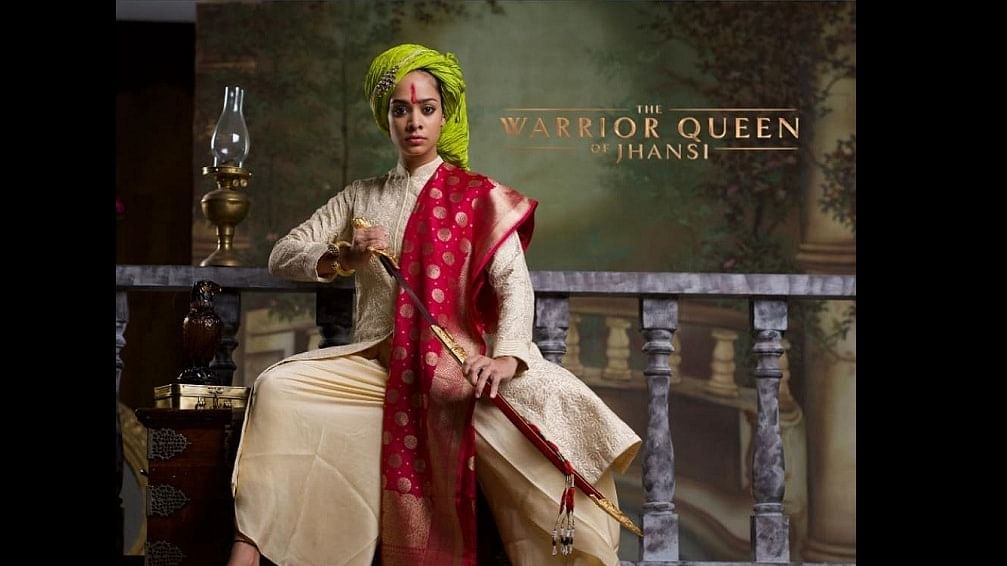
The Warrior Queen of Jhansi

by Hope Madden

My genuine thanks to first time writer/director Swati Bhise for bringing to my attention the Indian freedom fighter and queen, Rani Lakshmibai. The woman was an absolute badass.

Lakshmibai (Devika Bhise, Swati’s daughter) reigned over the Indian state of Jhansi during the mid 1850s, a time of British rule. In 1857, she took part in a rebellion aimed at freedom from the colonial oppressors.

When I say took part, I mean she wielded swords on horseback, united an otherwise divided smattering of armies and generally kicked all manner of ass.

She was most impressive.

She deserved a better movie.

Bhise’s approach to this wildly untraditional tale is far too traditional, too restrained, and too afraid to dig into any of the characters, including the lead. More cripplingly, the film is basically a chamber piece until the third act.

That could work if what we saw was the backbiting and usurping that may have gone on behind closed doors—British or Indian—as a woman took charge. Or if it was strategy and brainstorming that we observed, or if stirring speeches bore witness to the ruler’s inner conflict and motivational charisma.

Instead we get a blandly sanitized soap opera, the warrior queen discussing hair care with her female soldiers as frequently as military tactics. Throughout, Bhise’s direction feels amateurish, every scene stagnating as it drowns in costumes and unconvincing sets.

Dialog fills in for character development, but we also see a lot of the queen sitting silently and thinking. The Warrior Queen of Jhansi depicts lot of pondering, a lot of costumes, very little action.

“I am no stranger to battle,” Rani Lakshmibai tells whoever might listen, but it’s news to us because we haven’t seen her do anything besides think, talk and change her clothes. Worse still is the single scene of battle practice, where she readies her female forces, not one of whom can convincingly handle a sword.

The British side of things fares little better, although a smug Rupert Everett  as Sir Hugh Rose and Nathaniel Parker as blowhard Sir Robert Hamilton do inject some life into the proceedings. Everett is the only actor in the entire cast asked to find multiple layers in his character. It’s just two layers, really, but they are a welcome change.

It is a magnificent feat, no doubt, that the story of a 1850s Indian warrior queen has made its way to the American big screen (there are two Indian films, one classic and a second released this year). I wish it was a better movie.