Screening Room: Tomorrow War, Zola, Boss Baby 2, Forever Purge & More
by Rachel Willis
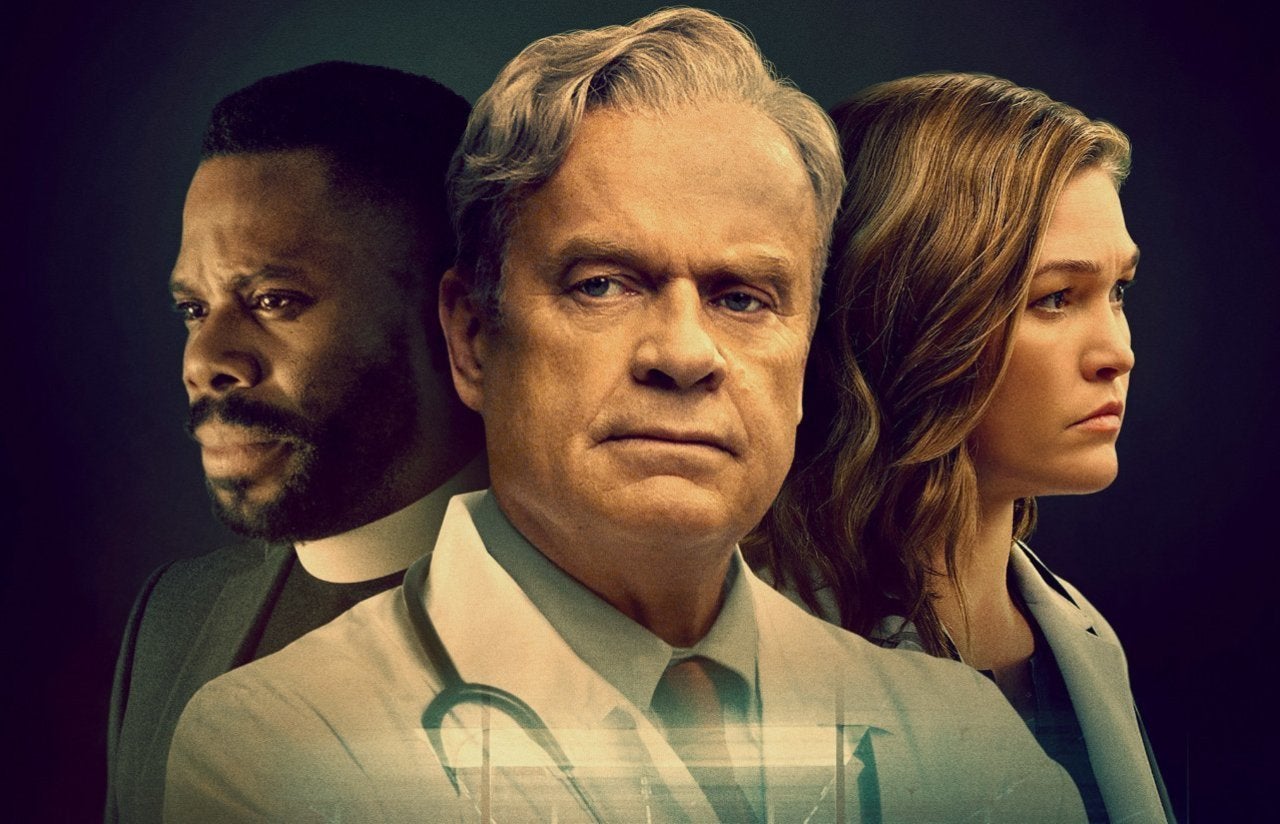
Based on the play by Mark St. Germain and adapted for the screen by writer/director Austin Stark, The God Committee seeks to provide insight into the fraught decisions behind who lives and who dies when it comes to organ transplants.
A new heart is recently available for the St. Augustine Hospital, a building in disrepair and under renovation, and the transplant committee convenes to decide who among three matches is the worthiest to receive the heart. The committee has a paltry 90 minutes to make their decision or else the heart will be useless.
The initial set-up alone is worthy of an entire film, but the movie isn’t satisfied to stay within the confines of a sterile boardroom. The timeline jumps forward seven years to check-in on our committee, primarily Dr. Andre Boxer (Kelsey Grammer), and how the implications of their decision on that fateful day have affected them.
By moving back and forth between the past and present, the tension of those crucial 90 minutes is often interrupted. However, by weaving the present into the past, we get to know the people behind these decisions.
Grammer excels on screen as the pragmatic Boxer, basing his judgments on the medical data rather than emotion. As his foil, Dr. Jordan Taylor (Julia Styles) relies on her heart to guide her decision-making. Unfortunately, Styles can’t quite match the passion of Grammer. The other members of the committee, which include Janeane Garofalo and Colman Domingo, aren’t given as much to work with and don’t resonate on screen in the same way.
The play lends itself well to film, and Stark handily adapts the source material. There are a few moments that remind us this is an adaption of a play – mainly, characters who talk to the screen. This might have worked better had it been transitioned from audience-directed monologue into character-driven dialogue, as it would have heightened the conflict inside the boardroom.
The film touches on numerous thematic issues: the ethics of deciding who is worthy of a transplant, the conjunction of corporatism and life-saving medical research, the inequity of medical care across racial and class lines, black market trade in organs, etc. Unfortunately, The God Committee never settles on any of them, careening across multiple threads without any direction.
If the movie had stuck to a theme and a timeline, it might have been more impactful.

by Brandon Thomas
In February 1983, Corpus Christi, Texas, gas station employee Wanda Lopez was murdered by a knife-wielding assailant during a robbery. Witnesses saw a man flee the scene, and police eventually caught Carlos DeLuna – shirtless and holding a wad of cash – hiding under a car. After a whirlwind trial, DeLuna, who always claimed his innocence, was convicted of murder and sentenced to death. The execution itself was carried out on December 7, 1989.
During his trial and subsequent incarceration, Deluna maintained that a Carlos Hernandez was the man responsible for Wanda Lopez’s murder. Local police and prosecutors looked into DeLuna’s allegations but claimed to have never found any existence of the Carlos Hernandez described. Nearly a decade later, a private investigator was able to prove that Carlos Hernandez did exist and that he bore a striking resemblance to Carlos DeLuna. What happened next convinced many in the Corpus Christi region that a severe miscarriage of justice had taken place.
With The Phantom, director Patrick Forbes (The Widowmaker) doesn’t waste any time digging into the particulars of Wanda Lopez’s murder, and its seemingly neat resolution. Like any good true crime doc worth its weight in gold, The Phantom is chock full of interviews with the investigators involved, and the family members impacted most. The approach is clinical in nature, with nearly everyone involved getting a chance to speak their piece about what happened.
The second half of the film is where things get really interesting, and the focus of the movie shifts. Miscarriages of justice aren’t new topics in crime docs – and especially crime docs set in Texas (The Thin Blue Line anyone?). More questions are presented than are answered, but answers don’t seem to be Forbes’s objective anyhow. There are more than enough questions surrounding DeLuna’s guilt, but The Phantom’s ultimate goal seems to be to comment on the morality surrounding capital punishment.
As the end credits start to roll, the lasting feeling from The Phantom is that of freshness. So many modern-day crime docs editorialize to the point of denying the audience a chance to think for themselves. Sometimes it’s nice to spend 80 minutes with a fascinating story and walk away with a lingering “What if…?”

by Hope Madden
Now, I’m not suggesting any of the Purge films were subtle. Creator James DeMonaco wielded a blunt political instrument from the start.
Quick recap: In the near future, a far-right government, the New Founding Fathers, establishes a single night of lawlessness to encourage Americans to purge themselves of all their hate and anger. And, you know, take their frustrations out on the homeless, the poor, and the otherwise generally oppressed.
So, a pretty easy metaphor to figure out, although most installments contained an interesting idea here, some memorable imagery there. Gerard McMurray’s 2018 The First Purge was impressively topical and prescient, and genuinely angry. In it, the filmmakers essentially looked at Trump’s America and asked: How did we get here?
In a way, all of these films have led organically to The Forever Purge, a film with a premonition of what would have happened if Trump’s America had been allowed to – or would ever again – continue on its natural course.
It’s hard to blame filmmakers for losing optimism in the face of the national shame of January 6. In this installment, entitled, angry white people have decided that one night is not enough, so they organize online and just take over the country.
DaMonaco returns as writer, while Everardo Gout directs. Gout’s sensibilities lean heavily toward action. The Forever Purge is essentially an action thriller with a social conscience (and about as much subtlety as you’ve come to expect from the franchise).
There is no forgiveness in this installment, and maybe there shouldn’t be. But The Forever Purge loses the humanity of the better episodes in the series. At its worst, it’s a political outcry by way of a predictable horror film that’s pretty light on horror. At its best, it’s a poignant upending of this country’s fundamental, foundational racism.

by Hope Madden
Even serial killers need someone to talk to. Just hope it’s not you.
That, in a nutshell, is the premise of Cody Callahan’s latest, Vicious Fun.
In this 80s-era horror-comedy, sad sack Joel (Evan Marsh in kind of a Jon Cryer role) is a nice guy. He’s just kind of an idiot who can’t take a hint.
One evening he drowns his sorrows, passes out, and sobers up to find himself in a late-night support group for serial killers. He’s not a member—a fact the others sniff out pretty quickly—and shit goes south post haste.
Callahan’s script winks with a kind of embarrassed affection toward the horror nerd. Joel’s a screenwriter wannabe and is perhaps too proud of his position as horror journalist for a fan magazine.
The serial killers here are not so much your garden variety psychos as they are typical horror movie monsters. Vicious Fun shows no end of self-deprecating charm, and Callahan’s solid cast is in on the joke.
Earlier this year, Callahan impressed with the boozy Canadian hillbilly noir The Oak Room, where he took advantage of Ari Millen’s versatility and peculiarity. Here Millen dives more fully into his peculiar side, throwing shades of McConaughey at his most unhinged for a character who’s never quite what he seems but is always attention-getting.
The enormous Robert Maillet (Becky) fits his character, physically and emotionally, to a tee, while Julian Richings (Anything for Jackson) surprises in a dual role. Amber Goldfarb cuts an impressive presence as the film’s badass, and David Koechner is David Koechner, but when isn’t that fun?
There aren’t enough nice guys in horror movies. Hats off to Callahan for not only finding a unique and fun premise in an overcrowded genre but for appreciating the precious jewel that is the nice guy.
by Rachel Willis
You might not be familiar with the name Meyer Lansky, but chances are you’re familiar with some of his known associates: Bugsy Siegel and Lucky Luciano. Writer/director Etyan Rockaway decided the time was right to focus on one of the Mafia’s most infamous but un-famous gangsters.
There are quite a few gangster movies, both good (Goodfellas, The Godfather) and bad (Gotti, The Family). Lansky falls somewhere in the center. Never overly imaginative, Rockaway plays it safe with a middling film about a narcissistic mob figure who wants to control the narrative. To do this, an aging Lansky (Harvey Keitel) hires a broke writer, David Stone (Sam Worthington), to pen his tale.
Told in flashbacks within a 1980s framing story, Lansky regales Stone with stories from his childhood, learning to hustle on the streets of – where else? – New York City. However, as Lansky enters adulthood, the tales become violent.
Portraying the Lansky of the past is John Magaro, who makes the character his own while still embracing the inflections and mannerisms of Keitel’s older wise guy. Magaro brings a sinister element, while Keitel embraces the role of a man mellowed by age. It’s a dynamic casting job, and the film’s standout element.
Rockaway’s script glosses over much of Lansky’s past, with large jumps in time, allowing the film to devote equal time to the framing story. Here is where the film tries to carve some new ground. Stone’s story is, in some ways, the more interesting of the two. There’s a moral line Stone must cross to listen to the brutalities in Lansky’s past – especially as he’s bound to secrecy until Lansky has died.
Unfortunately, rather than centering the focus on the ambiguous morality of Stone’s situation, Rockaway’s film instead tries to convince you Lansky is an ‘angel with a dirty face.’
It’s not unheard of to root for the bad guy – Scarface is one of the ultimate examples of this in the genre – but Lansky is not a fictional character. His history is bloody, and his few good deeds hardly outweigh the bad. It’s an odd choice when the true moral crux lies with Stone.
Lansky runs itself ragged trying to cover as many bases as possible, and we’re left with a messy film about one of the most notorious men in Mafia history.

by Brandon Thomas
Horror comedy is the cinematic equivalent of chocolate and peanut butter. It makes so much sense that they go together. And every subgenre of horror has been touched. The slasher? Multiple times! Zombies? Oh yeah. Podcasters turned into sea creatures? Umm…that too. With Too Late, director D.W. Thomas adds bad bosses to the mix, and also the world of stand-up comedy.
Aspiring comedian Violet (Alyssa Limperis) has what seems to be a great gig as the assistant to comedy great Bob Devore (Ron Lynch). Devore’s weekly variety act Too Late is legendary, and Violet’s job makes her the envy of her comic friends. The problem? Bob is a literal monster, and Violet is in charge of bringing young, fresh-faced comics to satisfy his hunger.
Thomas leans harder into the comedy than she does the horror. The tone is kept quite light throughout, and Bob’s more ghoulish moments are hidden off-screen (probably due to budget concerns). The make-up effects used on Lynch are quite good, but never come across as too grotesque. It’s just enough to get the point across and let Lynch’s performance shine through.
Too Late draws a lot from the real world in constructing its story. For years, Lynch hosted a variety show of his own in L.A. called Tomorrow! The film also peppers in real-life comedians who help with authenticity. And authenticity is key here. The strength of Too Late is how natural everything feels. Some of the more elaborate digs at the stand-up world might be a little too “inside baseball” for most of the audience, but it’s still relatable enough to be more of a winking satire.
The cast is universally good. Limperis is fantastic as the long-suffering Violet. It’s the kind of role that could’ve easily gotten bogged down with “woe is me” speeches and attitude, but Limperis, like the film itself, keeps things light and snappy. You can see the burgeoning comic underneath the stressed-out and overworked assistant. Likewise, Lynch is an absolute delight as Bob Devore. He never hams it up during Bob’s transformation. Bob is as much of a monstrous asshole when he’s a regular person as he is when he’s in his creature form.
SNL alum Fred Armisen and notable stand-up Mary Lynn Rajskub show up in small parts as the “names” of the film. Rajskub’s appearance is more of a glorified cameo with Armisen having a more significant role. Neither makes much of an impact on the overall film, but it’s nice to see them, both adding value to an already wonderful film.
Through charming performances and a look at a more niche part of the entertainment industry, Too Late stands out as one of the better horror comedies in recent memory. It’s not a gut buster, but you’ll have a smile on your face the entire time.

by Hope Madden
Horror films are often—perhaps even always—metaphorical. Classic monster myths seem to be endlessly malleable in this way, one generation’s personification of xenophobia becomes the next generation’s malevolent elite becomes the following era’s image of addiction.
Making an unnervingly assured feature film debut, writer/director Jonathan Cuartas commingles The Transfiguration’s image of lonely, awkward adolescence with Relic’s horror of familial obligation to create a heartbreaking new vampire tale.
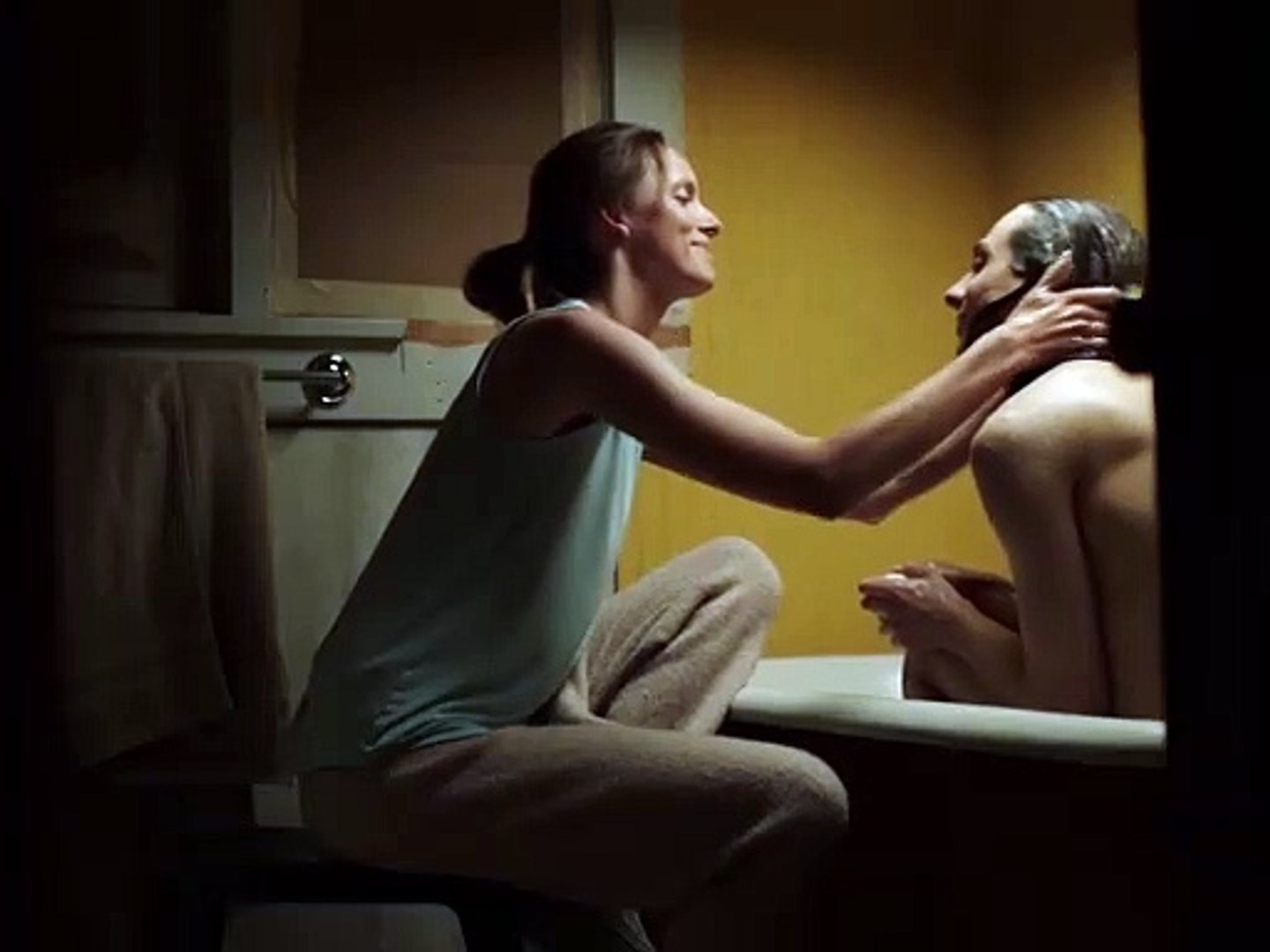
Many things are left unsaid (including the word “vampire’), and My Heart Can’t Beat Unless You Tell It To confines itself to the daily drudgery of three siblings. Dwight (Patrick Fugit) longs to break these family chains, but sister Jessie (Ingrid Sophie Schram) holds him tight with shame, love, and obligation to little brother, the afflicted Thomas (Owen Campbell).
What could easily have become its own figurative image of the masculine longing for freedom mines far deeper concerns. Cuartas weaves loneliness into that freedom, tainting the concept of independence with a terrifying, even dangerous isolation that leaves you with no one to talk to and no way to get away from yourself.
The film exemplifies this best as Dwight’s repulsion and reluctance to fulfill his task of bringing home the blood his brother needs to survive. Dwight and a homeless man named Eduardo (Moises Tovar) talk to each other, neither understanding the other’s words, both misinterpreting the conversation. And yet both, unbeknownst to the other, bare their own hopelessly lonesome situation in just one of a dozen or more nearly perfect scenes.
Fugit, who always excels as the conflicted good guy, displays a light touch with the leading role. The result is heartbreaking, which wouldn’t be possible without Schram’s delicate and nuanced turn as the authoritative sister. Both siblings show cracks from the strain of this love and obligation, and their lashing out feels deeply realistic regardless of the supernatural dilemma.
Campbell fills Thomas with wide-eyed naivete that, again, deepens the film’s ache. You want better for these characters, however hopeless that desire is.
As meticulous as Jonathan Cuartas’s direction is brother Michael’s cinematography. They frame the internals in a spooky, claustrophobic beauty and the exteriors with a bleakness that underscores not only this family’s plight, but the toll poverty takes on a community.
Dwight and his family shop at thrift stores, work at diners, and waste nothing. Unlike so many genre filmmakers, Cuartas ensures that their victims — those on the lowest rungs of society, those who no one would miss —are treated with empathy.
My Heart Can’t Beat Unless You Tell It To is not high on horror, but it succeeds in telling a beautiful, heartbreaking story.
by Hope Madden
I have seen a lot of horror movies. A lot. You have no idea. Do you know what I have never seen before? A horror movie that opens with a quote from Fred Rogers.
Well done, Werewolves Within.
Mr. Rogers is a hero of sorts for Finn (Sam Richardson), new park ranger for a very small, isolated, snowy mountain town. The townsfolk are divided on a deal to run a pipeline through their little hamlet. But they will have to work together despite their differences when it appears that a werewolf has begun to prey on their town.
Because if left and right cannot work together in the face of a common oppressor, the oppressor will win. It doesn’t matter what that is: fascists, greedy capitalists, werewolves. Still, it can be tough to get the two sides to come together, even for their own good, so Finn channels his hero and does what he can to inspire the townspeople to look out for each other. He just wants them to become good neighbors.
It is adorable.
Horror has its share of nice guys, but these are almost invariably tragic victims, either the first to go because they don’t have the inner meanness to overcome villainy, or eventual victims because the movie is so much more emotionally relevant if they sacrifice themselves. The nice guy is almost never a horror film’s hero, and this is where Werewolves Within really does depart from standard fare.
Director Josh Ruben—fresh off Scare Me, a clever horror-comedy he wrote, directed and starred in—delivers a forgiving, even sweet tone. There’s cynicism here, and characters are not drawn with a lot of dimension, but the performances are fun and the comedy is good-natured.
Richardson makes an ideal Rogers-esque central figure, his new hometown populated by a talented comedy ensemble: Michaela Watkins, Michael Chernus, Wayne Duvall, Harvey Guillen (TV’s What We Do In the Shadows), and fan-favorite, Milana Vayntrub. (You know, Lily from the AT&T ads.)
Werewolves Within is loosely based on the video game of the same name, which may be why the plot feels so very slight. Still, writer Mishna Wolff displays a flair for whodunnit fun that elevates the film high above 90% of the video game movies that have been made.
A lot of that success lies in Wolff and Ruben’s investment in the nice guy.
Fred Rogers once said: “When I was a boy and I would see a scary thing in the news, my mother would say to me, ‘Look for the helpers.’”
Finn would have made him proud.