Tag Archives: movie reviews

Maybe Pass on this Additional Helping of Oliver Twist

Twist

by Christie Robb

Have you ever found yourself reading a classic Victorian novel and wondering, “What if this was more like Ocean’s Eleven as directed by Guy Ritchie, but with parkour?”

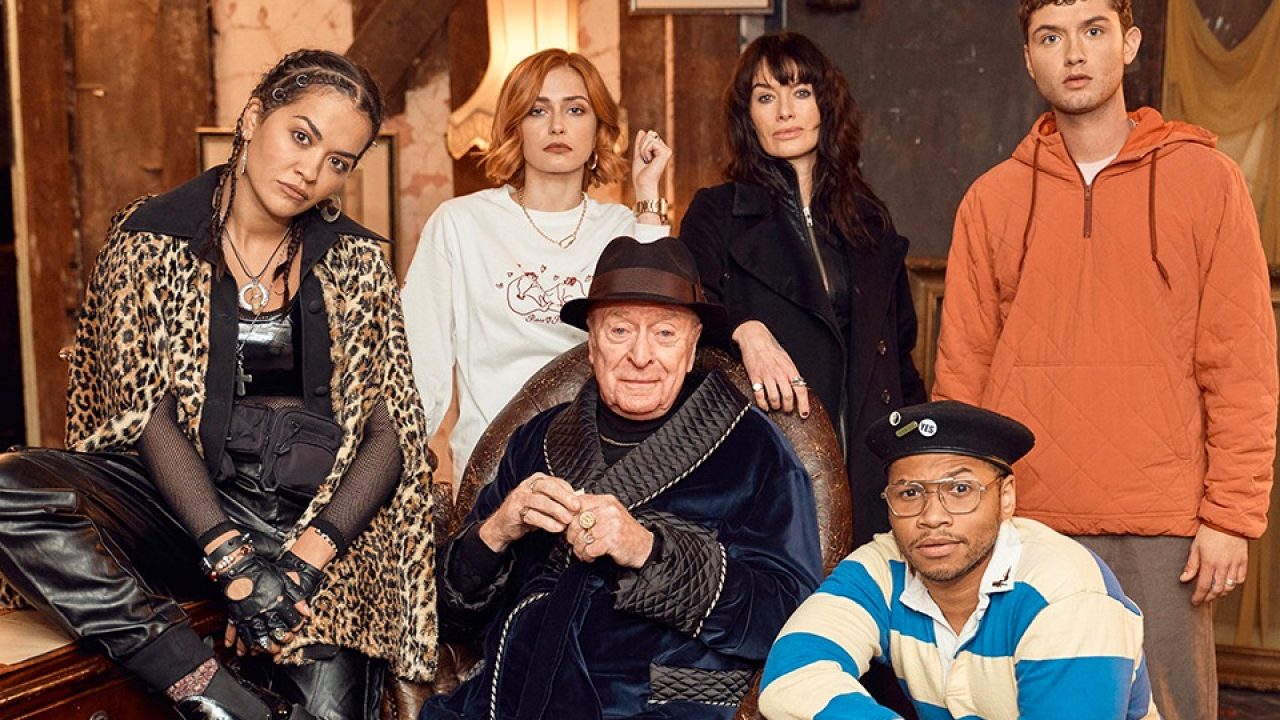
A modern-day update of the Charles Dickens classic Oliver Twist, Martin Owen’s Twist imagines Oliver as an orphaned parkour enthusiast and Banksy-esque street artist. Oliver is swiftly recruited into a gang of art thieves and tasked with stealing a previously stolen Hogarth painting to salvage the reputation of Fagin (Michael Caine), who was a legitimate art dealer back in the day until his partner stole the Hogarth and pinned it on him.

The movie’s strength is in its depiction of parkour. The practitioners make the London cityscape into their playground, skipping across rooftops like stones on a still pond.

The plot and character development are handled with less dexterity. The teenage thieves are given highly specialized technical skills with no attempt at an explanation of how, for example, a minor might know how to clone a cell phone or fake the credentials of a fine art gallery. The characters are very thinly portraited, with each seeming to get about one emotion to embody.  Raff Law (song of Jude) as Twist is unflappably earnest with no undertone of the emotional baggage that a kid who was orphaned at 10 or 11 and lived alone on the streets of London would have accrued.

Even Lena Headey, who gives a very convincing depiction of rage, can’t overcome the script’s lack of an explanation of why she’s there and what exactly she has to do with everything except being an obstacle because the plot demands it.

Headey and Caine lend the film a certain gravitas it otherwise doesn’t really deserve. There’s certainly none of the concern with crushing, systemic poverty and the social class disparities contained in the source material. Oliver and the other young thieves are dressed stylishly, are glowing with good health, and get to hang out in a clubhouse furnished with classic arcade games, jukeboxes, and foosball tables. The morality of their lifestyle isn’t questioned as much as it is explained away as a romantic Robin Hood kind of thing where Fagin plays Hood and the kiddos are his Merry Men.  

Overall, the film is a rather lackluster adaptation of a classic that misses much of the original’s point. If you want to see young people executing artful feats of athleticism, dodge this flick and put on the Olympics.

No Dice

Snake Eyes

by Hope Madden

Stay with me. Remember how bad Mortal Kombat was? Like, bad, but kind of so stick-to-your-guns bad, so full of head-bursting ridiculousness and terrible acting that it somehow felt right?

Take that, neuter it completely so you don’t even see any blood regardless of the wall-to-wall swordplay, invest in great-looking scenery and one A-list actor, and you essentially have the new G.I. Joe movie, Snake Eyes.

Henry Golding is that A-lister, an American with a questionable accent and some barely hidden rage issues. A dice game gone bad left him emotionally scarred (thought it did lend him that cool moniker) and now he fistfights his way from one town to the next.

That is, until a shady Yakuza man offers him a chance at vengeance in return for some labor. The next thing you know, Snake Eyes is mixed up in ninja training, clan warfare and global domination, or some such nonsense.

Director Robert Schwentke is pretty hamstrung with the PG-13 rating. His film is based on a children’s cartoon, after all. Sure, that cartoon promotes armed conflict in every single episode—as does this film—but you can’t show the result of any of that violence.

How cool would this movie be if Takashi Miike directed it? And how NC-17?

A girl can dream. But the reality is that Schwentke does about as well as he can within the limitations. The clanging swords are shiny, the motorcycles zip around like the ninjas they carry, and the hand-to-hand bouts stand out.

The acting, well, you know. And writing. Yeesh. Indeed, the writing is weak enough that both Golding and the proven Samara Weaving nearly choke on it. Andrew Koki as clan heir apparent Tommy struggles mightily, his character at war with what is expected of him. It calls for a lot of inner conflict.

It calls for a better script.

Haruka Abe likewise wrestles to find a character within this loyal security chief who’s unemotional and yet so very emotional. And wearing really high heels for someone called on to run this often.

Weaving at least seems to recognize that she is playing a cartoon character, and her performance is therefore reasonably cartoonish. Koki mopes, Abe whines. And Golding, well, he is very handsome.

The sets look great—from a super cool-looking Tokyo to the secret Arashikage compound to the cement pits for bare-knuckle brawling. That’s not really reason enough to watch it, though.

Road to Nowhere

Joe Bell

by Hope Madden

In April of 2013, Joe Bell explained his walking trek from Le Grand, Oregon to New York City. He was doing something. Those who watch bullying and do nothing about it are as guilty as the bullies themselves.

It makes sense, then, that Reinaldo Marcus Green’s film Joe Bell is more interested in what Joe did and did not do when confronted with his son’s bullying than it is in the bullying and victimization themselves. Because the truth is, this walk is as much a penance as anything.

Mark Wahlberg plays Joe, volatile but loving husband and father just trying to fly under the radar and still accept, as best he can, his oldest son Jadin’s (Reid Miller) sexual orientation. Joe’s a blue-collar guy in a blue-collar town, and neither Wahlberg nor writers Diana Ossana and Larry McMurtry (both of Brokeback Mountain) let him completely off the hook for the misery Jadin faces.

Wahlberg performs admirably as a man who’s trying and failing, but the breakout here is Miller. Warm, bright and brimming with life, Miller’s work the highlight of the film, although Green puts together a solid ensemble including a heartbreakingly understated Connie Britton.

Though an early film contrivance threatens to sink things before they can even really swim, the film eventually finds its lonesome way, more or less. The examination here is culpability, and it’s uncomfortable, messy terrain.

Wahlberg’s performance is raw and emotional. He lets the character struggle, sometimes sinking under the weight of loss and culpability, sometimes accepting the easy balm of celebrity in lieu of real change. His interactions with Britton offer the most complex and satisfying suggestions that Green and team recognize the wide and shattering reach of this kind of trauma.

The film Green builds around Wahlberg never stoops toward easy epiphanies or patronizing catharsis. There is a simmering anger and barely checked pain beneath the surface of this narrative, and no cliched structure or manipulative storytelling gimmicks can entirely cage that.

In the end, Joe Bell does break through the contrivance of familiar storytelling because this story doesn’t fit neatly or cheerily into that package.

Kilmer Forever

Val

by Hope Madden

Raise your hand if you’ve ever had a crush on Val Kilmer.

I can’t be the only one.

Eighties heartthrob turned Hollywood prick turned reliable character actor turned working actor turned Mark Twain, Kilmer has seen his ups and downs. The thing is, he recorded all of them, too. And now directors Ting Poo and Leo Scott—both primarily known as editors—piece together material from the thousands of hours of video Kilmer has compiled in his 40-odd years in the industry.

The result oscillates between self-indulgence and raw nerve, but it’s never less than intriguing.

Yes, there are behind-the-scenes moments from Top Gun, pieces from the contentious Island of Dr. Moreau set, Batman Forever clips and bits of Doors footage. But the film is most relevant when Kilmer interacts with his son Jack, who also narrates from pages written by his dad.

Kilmer can’t do his own voiceover because of his fight with throat cancer, which left him with a tracheostomy that makes speech difficult. The battle has taken a lot out of him physically in much the way different battles throughout his career has taken a lot out of him financially. Poo, Scott and Kilmer never hide those battle scars, and yet their film never feels exploitative or reality TV-esque.

Much of that has to do with Kilmer’s indominable spirit and generous nature. Though a costly divorce and what amounts to fraud perpetrated by his own father left Kilmer strapped for cash, his outlook on both his ex-wife and his dad are entirely positive. And what he has to say about selling autographs to pay his bills becomes perhaps the most moving moment in a fairly emotional film.

At just under two hours the film seems a tad long. There are times when Val feels self-indulgent, but how could it not? We’re here to watch the actor come back then come back again then, dressed as Mark Twain for his shockingly successful one-man show Citizen Twain, make yet another comeback.

In Val, Jack Kilmer quotes his father quoting Twain: Don’t part with your illusions. When they are gone you may still exist, but you have ceased to live. It’s an apt metaphor for a documentary about life and acting, and a springboard for another surprising comeback.

Dan Bites Dog

Danny. Legend. God.

by Rachel Willis

With a title like Danny. Legend. God. you might expect a movie that’s, well, legendary. Unfortunately, writer/director Yavor Petkov delivers something far more banal with his first feature film.

A film crew follows city councilor, Danny (Dimo Alexiev), for a documentary series about money laundering. However, Danny lets them know they won’t be following any kind of script; they’re making “big cinema.” The three-person team gets more than they bargained for as Danny takes them deeper into his shady world.

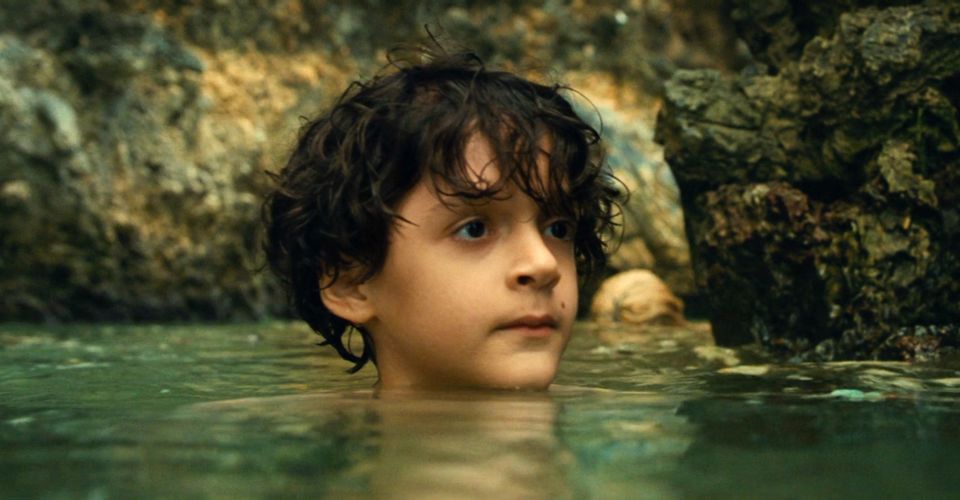
Danny is a big fish in a little pond, and along with his heavy, Tanko (Emil Kamenov), spends a lot of his time finding ways to impress his importance upon the film crew. Danny’s godson (Borislav Markovski) tags along for a few of his exploits, and it’s a credit to young Markovski that he’s one of the most interesting characters to watch despite having zero lines of dialogue.

But this points to the film’s biggest problem – the lead. For Danny, you need a character who is both repulsive, yet irresistible. Alexiev’s Danny is repulsive, but there is nothing about him – or the film – that compels you to watch. Too much here feels like we’re waiting for something to happen.

There are several scenes in the car that attempt to heighten the tension of being trapped with someone like Danny, but it doesn’t work. No one wants to be in the car with Danny – not the film crew nor the audience. We’re not watching a car crash, but a traffic jam.

There are a few side characters who turn up for a scene or two that help move the film along. Danny’s irritated wife, the documentary producer, and an old flame play off Alexiev with conviction. Seeing Danny from their points of view help sell him as someone dangerous.

As Danny’s more sinister nature begins to reveal itself, the documentary soundman (James Ryan Babson) becomes more uncomfortable with the things they record. He insists “we’re complicit!” but within the context of the film, it’s either an overreaction or a heavy-handed commentary on our societal tendency to sit back and watch while our politicians play fast and loose with the rules.

The movie wants us to wake up and find ourselves uncomfortable with those we put into office, but in the context of the real world, Danny isn’t nearly as disturbing as some of the actual people holding power right now.

Barking Up the Right Tree

The Hidden Life of Trees

by Brandon Thomas

Based on the 2015 book of the same name, The Hidden Life of Trees is a fascinating documentary that explores the complexity of how trees live, and how human beings have learned – and sometimes failed – to understand their slow-moving life cycles. 

Jörg Adolph and Jan Haft’s film follows self-described “guardian of the forest,” forester Peter Wohlleben (also the book’s author) through a series of interviews and tours as he describes the complicated lives of trees – from their reproduction, their slow defense from bugs, and how certain trees have a social system. Wohlleben’s approach isn’t off-putting in a dry, clinical way – it’s full of passion and even protectiveness.

The Hidden Life of Trees uses stunning time-lapse footage of the German forests to get into the “meat and potatoes” of how trees work. It’s incredibly helpful in making the subject matter easily digestible for viewers who don’t have knowledge of the inner workings of forests.

This “dual personality” approach to telling its story helps The Hidden Life of Trees maintain a level of nimbleness. The sections focusing on Wohlleben teeter back and forth between the forester espousing scientific facts then suddenly switching to a more philosophical approach in regard to his overall impact on forestry. Wohlleben’s activism doesn’t feel born out of desperation. His activism is born out of pure love of the forests. 

The time-lapse scenes feel much like a traditional nature documentary, and I half expected Sir David Attenborough to provide narration. The photography is so well done that it’s easy to gloss over the information being provided because of the film’s beauty. 

Much of what makes the film work is in how it approaches what we might normally think of as mundane. Trees are a constant. They are found in every country and on nearly every continent. Most of us don’t give too much thought to the trees that line our street or populate our yards. But Adolph and Haft showcase that these living beings have agency even if we can’t see it with the naked eye.

The Hidden Life of Trees isn’t a preachy film. No, for a film so steeped in the plight of nature and conservation, it’s much more interested in educating and guiding the audience along.

Great Is Relative

Great White

by Hope Madden

It’s Shark Week! What’s the best way to celebrate?

Watching Jaws, obviously. But maybe you just did that because of the mandatory 4th of July weekend viewing. Then what?

Well, there’s a new movie for you to consider: Martin Wilson’s Great White.

There are so many shark movies. So, so many. It becomes tough to find something new to say.

Some are better than expected (The Shallows), some so bad they are almost worth watching (Sharknado), some masterpieces (Jaws, Open Water). Great White is none of those.

Michael Boughen’s script follows an Australian charter boat into unfriendly water. Cruisers include a rich coward, a haunted hero, a woman with history, a cook, a girlfriend, and, of course, a great white.

Wilson serves up a beautiful movie, beautiful people, gorgeous scenery, Hallmark-channel writing, and a Hallmark-channel score. The actual undersea footage is very borrowed from stock, although there are some cool looking aerial shots. Plus, a dude rides a shark, which is never not fun.

Katrina Bowden, as captain’s girlfriend and brains of the operation Kaz, poses. She exclusively poses and her emoting is so bereft of emotion that her big crying scene is shot from high above with voiceover wailing. It doesn’t help that so very much of her emoting has to be done underwater.

So much underwater emoting. So much.

Woman with a past Michelle (Kimie Tsukakoshi) fares better. Most—though not all—of her emoting happens above the waterline and she proves to be as competent an actor as this script will allow.

Great White spends most of its time on a life raft with five characters and impending doom. Lifeboat did something similar in 1944—of course that was Alfred Hitchcock directing a script by John Steinbeck, a big vessel to fill.

Wilson fills it with lazy writing, superficial performances, contrivance and conveniences that descend into idiocy, and not the fun Sharknado kind. Just the plain old idiotic kind.

https://www.youtube.com/watch?v=wq0aok0pEDw

This Looks Familiar

Dachra

by Hope Madden

Any break from Judeo Christian supernatural horror is always welcome. That’s not to say that your traditional Western religious zealotry can’t make for a fine scare, but it has certainly been done. From The Exorcist to The Omen to the entire Conjuring universe to the best horror of 2021 so far, St. Maud, cinema is forever teeming with the biblical unholy.

Why not try something else?

Tunisian filmmaker Abdelhamid Bouchnak does what he can with a tale of North African witchcraft in Dachra.

The grim story follows three journalism students trailing the origins of a wild urban legend about a witch found on the highway decades ago. They track the source of the legend to Dachra, a tiny, backward village unlocatable via Google.

Yassmine Dimassi plays Yassmine, headstrong and clearly the leader of the trio of investigators. Still, once they find the village, Yassmine and her bickering sidekicks Walid (Aziz Jebali) and Bilel (Bilel Slatnia) are hard-pressed to find their way back out.

Dimassi’s angry, unyielding performance drives the film, giving it a blind urgency that can’t help but push things onward. Jebali and Slatnia counterbalance, their dunderheaded sibling-esque rivalry creating sweet but organic opportunities for Bouchnak to get in the way of that forward momentum.

This is how filmmaker and crew generate tension, but it’s always upended by contrivance. Like so many films that rely on characters’ inability to leave someplace, unexplained lapses in time and delays that strain believability puncture whatever dread the film has built.

Perhaps what’s most disappointing about Dachra—Tunisia’s first official horror movie—is how uninspired it is. Unlike Baskin, for example—one of the very few horror films to ever come out of Turkey. Can Evrenol’s meat-loving mindbender positively reeks of originality. Bouchnak, on the other hand, pieces together every cliché he can think of, winding up with a film both clumsily familiar and unpleasant.

Run Like Hell

Marathon

by Hope Madden

“Runners are a stupid breed.”

That is a direct quote from my doctor after I re-injured myself for the 11th or 12th time from running. He may have consulted on Anthony Guidubaldi and Keith Strausbaugh’s screenplay for their new mockumentary, Marathon.

Amateur documentarians follow five runners as they train for an off-brand marathon organized by Ed Clap (Jimmy Slonina), the owner of a shoe store, equally off-brand.

In much the way the master of the genre Christopher Guest used dog shows and community theater to explore particular personality types, so do Guidubaldi and Straugsbaugh set a group of oddballs loose inside the idiocy of marathon training.

For Shareef Washington (Tavius Cortez), this is about sibling rivalry. Unfortunately, he has to do all his training on a treadmill because whenever he runs outside, he gets arrested by white cops. Jenna (Natalie Sullivan), on the other hand, wants to break the world record for marathon runners dressed as fruit.

Crews also tail a woman (Anais Thomassian) trying to remember life before motherhood and an insecure man (Andrew Hansen) hoping to prove himself to his ex-wife by qualifying for the Boston Marathon.

So, the runners range from desperate to lunatic, sometimes in insightful and often in amusing ways. Hansen’s quickly deteriorating relationship with Jeff, the cameraman we never see, delivers the film’s funniest moments.

The keenest insights may come by way of Emilou (Kimia Behpoornia), who drops out the moment she realizes marathons are 26 miles long. Her crew stays with her through race day, though, just to prove how much better life is when you’re not training for a marathon.

Though Hansen is clearly the film’s brightest spot, the filmmakers pieced together an entirely solid ensemble. Droll performances suit the script and keep your attention, but the story itself lacks much real punch. Worse, the police oppression subplot feels tone-deaf at best.

Still, Guidubaldi and Strausbaugh understand something my doctor saw perhaps too well, and that’s why their affectionate ribbing rings so true.


