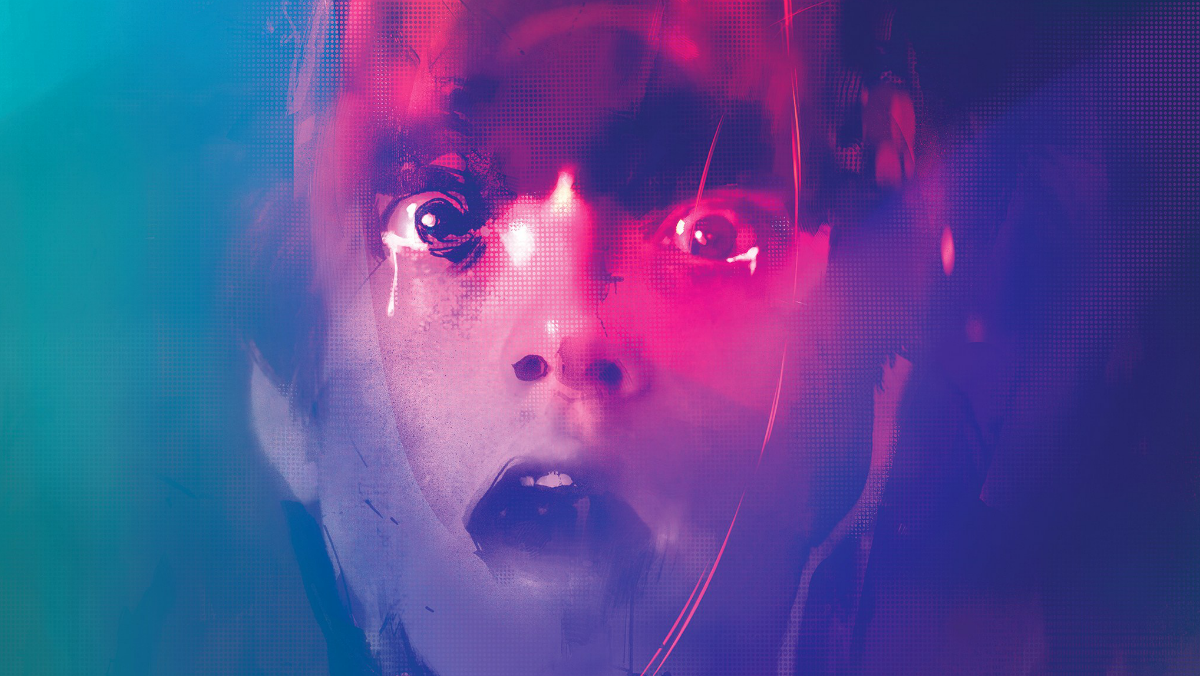
Director Adam Egypt Mortimer’s stylish image of mental illness takes a kind of demonic Fight Club angle, hits some mildly homoerotic notes (like Fight Club didn’t?), and offers a quick and absorbing- if hardly new- horror show.
Co-writing with Brian DeLeeuw an adaptation of DeLeeuw’s
novel In This Way I Was Saved, Mortimer drops us mid-mom scream into an
average afternoon in the life of poor little Luke (Griffin Robert Faulkner,
painfully adorable).
As Luke wanders away from home to avoid his mother’s
psychotic episode, he witnesses the aftermath of a gruesome murder, but finds a
new friend: Daniel.
Quickly enough, Daniel is helping Luke cope with his
personal trauma, taking his mind off his problems, and maybe encouraging some
truly evil behavior.
From here Mortimer directs us to an effectively creepy doll
house (such a great prop in nearly any terrifying film or terrifying child’s
bedroom), which will become (as it does in Hereditary and The Lodge)
a fine symbol for the madness of the mind.
Mortimer’s film looks great and benefits from a trio of
strong performances.
Mary Stuart Masterson, playing Luke’s paranoid schizophrenic
mother, gives a brave and believable performance in a role that can easily be
overdone.
More importantly, Mortimer’s besties/worsties Luke and
Daniel (Miles Robbins and Patrick Schwarzenegger, respectively) create complete
characters and offer an uneasy chemistry that keeps the film intriguing.
As Luke’s life spins inevitably out of control, Daniel’s
clothing takes on a more and more Tyler Durden style, and I can get behind
that. And a certain point near Act 3, Daniel Isn’t Real takes a weird
and welcome Clive Barker turn, which is when elements stop being so stylishly
predictable and become sloppily fascinating.
The unfortunate Magical Negro trope that will not die
surfaces here. It doesn’t entirely sink the film, but it does its damndest to do
just that.
Even so, Daniel Isn’t Real is an Olympic-sized leap forward from Mortimer’s previous feature, Some Kind of Hate, the director here showcasing an unpredicted visual flair and storytelling finesse. Though his film treads some well-worn ground, the way Mortimer and team balance the supernatural and psychological push and pull creates an unnerving atmosphere.
People like to make lists. For some people, it’s a bucket list. Some like to keep track of the celebrities they are allowed to sleep with if the opportunity arises. Not me.
Years ago I put together my zombie survival team. And though I know plenty of people with varied and worthy skills, making my team mainly came down to two things. Are you smart? Are you quiet? Because it is the introverts of the world who will survive the zombie apocalypse.
Director Dominique Rocher’s unusually titled The Night Eats the World understands this.
Sam (Anders Danielsen Lie) reluctantly stops by his ex’s party to collect his things. It is a loud, raucous event and Sam is in no mood. He stands moping alone until finally he wanders into a quiet back office, locks the door to the partygoers and waits.
By morning, Sam may be the only living human left in Paris.
The majority of the film quietly follows Sam through the apartment building as he fortifies his position, spends his time, survives. It’s a pleasantly pragmatic approach to the zombie film, although it asks many of the same questions Romero asked in Dawn of the Dead.
In fact, TNETW sometimes bears an amazing resemblance to the underseen German zombie flick Rammbock: Berlin Undead. (It’s great. You should see it.)
There’s a lot going on here that’s fresh, though. Rarely is a zombie film this introspective or a horror hero this thoughtful. More than that, though, Rocher’s horror is a meditation on loneliness.
Not only is that an unusual topic for horror, it’s delivered with the kind of touching restraint that’s almost inconceivable in this genre.
Danielsen Lie, in what nearly amounts to a one-man-show, never lets you down and never feels showy. Sam is a man who is maybe too at home with the situation in a film that quietly asks, just what has to happen before a true introvert longs for human companionship?
That’s why they’ll outlast us. It’ll just be a few dozen socially uncomfortable loners skilled at closing themselves off from the chaos around them. Plus Keith Richards.
Okay, so we can’t go out to get our Irish on this year. Here are some great ideas for celebrating at home!
Song of the Sea (2014)
This Academy Award nominated watercolored dream mixes modern day with Irish
folklore to spin the yarn of a wee selkie and the brother who begrudgingly
loves her. Magical, sweet, charming and funny, it’s a treat parents will enjoy
at least as much as their kids. It should have won the Oscar.
The Secret of the Kells (2009)
Pair it with director Tomm Moore’s first Oscar nominee, the gorgeous Celtic
poem The Secret of Kells. Moore’s talent for blending everyday
challenges with ancient magic is again at work as we shadow young Brendan
through the riotous color and animated details of the enchanted forest outside
the medieval abby where he lives. It’s another visually stunning bit of
animation that’s as compelling to adults as it is to children.
Knuckle (2011)
James
Quinn McDonagh cuts an enigmatic presence through the bloody world of Irish
Traveler bare knuckle “fairfights” in Ian Palmer’s documentary Knuckle.
The unbeaten pride of the Quinn McDonaghs, James takes on challengers from the
feuding Joyce clan. Unfortunately, each win quells the action only briefly, as
family members’ chest thumping and boasting reignite the feud, and another
challenge is made. Palmer aims to illustrate the culture that fuels rather than
overcomes its grudges, due in equal measure to unchecked bravado and finance
(wagers bring in fast money for the winning clan). Filming for more than a
decade, Palmer uncovers something insightful about the Traveler culture, and
perhaps about masculinity or warmongering at its most basic.
The Guard (2011)
Then
to a lighthearted look at drugs and crime on the Emerald Isle. Writer/director
John Michael McDonagh assembles a dream cast anchored by the ever-reliable
Brendan Gleeson to wryly articulate a tale of underestimation and police
corruption in this very Irish take on the buddy cop movie. Through Gleeson,
McDonagh shares a dark, philosophical yet silly humor, crafts almost slapstick
action, and offers a view of hired guns as workaday folk. The Guard is a
celebration of tart Irish humor and character; the actual plot merely provides
the playground for the fun.
https://www.youtube.com/watch?v=tKU_9PlNomk
Calvary (2014)
McDonagh
and Gleeson return three years later in Calvary.
The endlessly wonderful Gleeson plays Fr. Michael, a dry-witted but deeply
decent priest who has a week to get his affairs in order while a parishoner
plans to kill him. Sumptuously filmed and gorgeously written, boasting as much
world-weary humor as genuine insight, it’s an amazing film and a performance
that should not be missed.
Once (2006)
You
can’t celebrate St. Pat’s without some music. In Once, an Irish street
musician fixes vacuums by day and dreams of heading to London in search of a
recording contract. His unpredictable relationship with a Czech immigrant
becomes the needed catalyst. Writer/director John Carney creates a lovely
working man’s Dublin in a film blessed with sparkling performances from
heretofore unknown leads Glen Hansard and Marketa Irglova. Their chemistry and
their music are the heart of the film. This immensely charming slice of life
picture, superbly crafted with tender realism, also boasts an honest,
understated screenplay, and undoubtedly the best soundtrack of 2006.
https://www.youtube.com/watch?v=FWJIylZ8VyM
The Commitments (1991)
Jimmy
Rabbitte intends to manage the greatest soul band in the world, so he hand
crafts The Commitments, a Dublin-based, all white, blue collar soul band the
likes of which Ireland has never seen. (The band includes Hansard again, much
younger and with a magnificent ‘fro.) Alan Parker’s “behind the music” style tale
of the rise and fall of a band is as charming, energetic and great sounding a
way to spend St. Patrick’s Day as you will find.
As we salute the tireless work of our great doctors and health care workers during this uneasy time, Fright Club looks at our favorite “bad doctors” in horror!
5. Herbert West, Re-Animator (1985)
Stuart Gordon’s Re-Animator reinvigorated the Frankenstein
storyline in a decade glutted with vampire films. Based, as so many
fantasy/horror films are, on the work of H. P. Lovecraft, Re-Animator
boasts a good mix of comedy and horror, some highly subversive ideas, and one
really outstanding villain.
Jeffrey Combs, with his intense gaze and pout, his ability to mix comic
timing with epic self righteousness without turning to caricature, carries the
film beginning to end. His Dr. Herbert West has developed a day-glo serum that
reanimates dead tissue, but a minor foul up with his experimentations – some
might call it murder – sees him taking his studies to the New England medical
school Miskatonic University. There he rents a room and basement laboratory
from handsome med student Dan Caine (Bruce Abbott).
They’re not just evil scientists. They’re also really bad doctors.
Re-Animator is fresh. It’s funny and shocking, and though most
performances are flat at best, those that are strong more than make up for it.
First-time director Gordon’s effort is superb. He glories in the macabre fun of
his scenes, pushing envelopes and dumping gallons of blood and gore. He
balances anxiety with comedy, mines scenes for all they have to give, and takes
you places you haven’t been.
4. Beverly and Elliot Mantle, Dead Ringers, (1988)
This film is about separation anxiety, with the effortlessly melancholy
Jeremy Irons playing a set of gynecologist twins on a downward spiral.
Writer/director David Cronenberg doesn’t consider this a horror film at all.
Truth is, because the twin brothers facing emotional and mental collapse are
gynecologists, Cronenberg is wrong.
Take, for instance, the scene with the middle aged woman in stirrups, camera
on her face, which is distorted with discomfort. Irons’s back is to the screen,
her bare foot to his left side. Clicking noises distract you as the doctor
works away. We pan right to a tray displaying the now-clearly-unstable doctor’s
set of hand-fashioned medical instruments. Yikes.
Irons is brilliant, bringing such flair and, eventually, childlike charm to
the performances you feel almost grateful. The film’s pace is slow and its
horror subtle, but the uncomfortable moments are peculiarly, artfully
Cronenberg.
https://www.youtube.com/watch?v=zhPeVnz0NvI
2. Dr. Heiter, The Human Centipede (First Sequence) (2009)
After a handful of middling Dutch comedies, Tom Six stumbled upon inspiration – 100% medically accurate inspiration. Yes, we mean the Human Centipede. Just the First Sequence makes the list, though.
For a lot of viewers, the Human Centipede films are needlessly gory and over-the-top with no real merit. But for some, Six is onto something. His first effort uses a very traditional horror storyline – two pretty American girls have a vehicular break down and find peril – and takes that plot in an unusual direction. But where most horror filmmakers would finish their work as the victims wake up and find themselves sewn together, mouth to anus, this is actually where Six almost begins.
Although the film mines something primal about being helpless in the hands of surgeons and doctors, it’s Dieter Laser and his committed, insane performance that elevates this film. That and your own unholy desire to see what happens to the newly conjoined tourists.
https://www.youtube.com/watch?v=tPBdEa5tjR4
2. Dr. Genessier, Eyes Without a Face (1960)
The formula behind this film has been stolen and reformulated for dozens of
lurid, low-brow exploitation films since 1960. In each, there is a mad doctor
who sees his experiments as being of a higher order than the lowly lives they
ruin; the doctor is assisted by a loyal, often non-traditionally attractive
(some might say handsome) nurse; there are nubile young women who will soon be
victimized, as well as a cellar full of the already victimized. But somehow, in
this originator of that particular line of horror, the plot works seamlessly.
An awful lot of that success lies in the remarkable performances. Pierre Brasseur, as the stoic surgeon torn by guilt and weighed down by insecurities about his particular genius, brings a believable, subtle egomania to the part seldom seen in a mad scientist role.
Still, the power in the film is in the striking visuals that are the trademark of giant French filmmaker Georges Franju. His particular genius in this film gave us the elegantly haunting image of Dr. Genessier’s daughter Christiane (Edith Scob). Her graceful, waiflike presence haunts the entire film and elevates those final scenes to something wickedly sublime.
1. Hannibal Lecter, The Silence of the Lambs (1991)
Who else but Hannibal the Cannibal?
Anthony Hopkins’s eerie calm, his measured speaking, his
superior grin give Lecter power. Everything about his performance reminds the
viewer that this man is smarter than you and he’ll use that for dangerous ends.
He’s toying with you. You’re a fly in his web – and what he will do to you hits
at our most primal fear, because we are, after all, all part of a food chain.
If you think Scorsese set the bar for three and a half hour mob epics, well, you may have a point.
But, although it clocks in at one hour south of The Irishman, Marco Bellocchio’s The Traitor also uses one man’s true-life experience to frame an expansive reflection on a life in the mob.
Tommaso Buscetta, the youngest of 17 children in a poverty-stricken Sicilian family, found his ticket out through organized crime. Rising to the rank of “Don Masino” in Sicily’s Costa Nostra, he eventually lost many family members and allies to the mafia wars. Disillusioned, Buscetta became one of the very first to break the mob’s strict code of silence and turn “pentito,” or informant.
Pierfrancisco Favino, who probably gets women pregnant just from introducing himself, is tremendous as the “Boss of Two Worlds.” Unlike DeNiro’s Frank Sheeran, Buscetta is looking back with defiance, secure in his standing as the only man “honorable” enough to call out the less honorable. Favino brings a quiet intensity to this inner strength that comes to define Buscetta after personal loss drives him to the depths of despair.
The moral complexities of honor among killers is Bellocchio’s strongest play. Early in the film, he sets the stakes effectively through sustained tension and stylish violence (a set piece inside a window factory is especially impressive) offset with familiar loyalties. Bellocchio invites our sympathies for a career criminal, and Favino rewards them.
But once Buscetta starts singing to anti-Mafia judge Giovanni Falcone (Fausto Russo Alesi), the film gets bogged down in the minutiae of courtroom testimony. Though American audiences may be intrigued by some of the differences in Italian trial procedure, Bellocchio’s prolonged attention to these details makes us long for the pace of the film’s first two acts.
The scope of Buscetta’s story is grand and Bellocchio’s ambitions noteworthy, but even at 145 minutes the film ultimately feels like a finely-crafted overview. Favino has the goods to give us the The Traitor‘s soul, but not the freedom.
About a year ago, Universal Studios pulled the release of The
Hunt because of the amount of gun violence. Commendable.
Later that year, other studios released Ready
or Not—critical darling, but didn’t do great box office. Then Knives
Out, which was both a critical darling and box office giant. And, of
course, Parasite
would go on to win all the Oscars. Even documentary short.
While The Hunt does contain a goodly amount of
violence—guns, knives, hand grenades, pens, stilettos, kitchen appliances—it
also boasts the one thing that appears to be the universal key to
entertainment. It hates rich people.
Who doesn’t?!
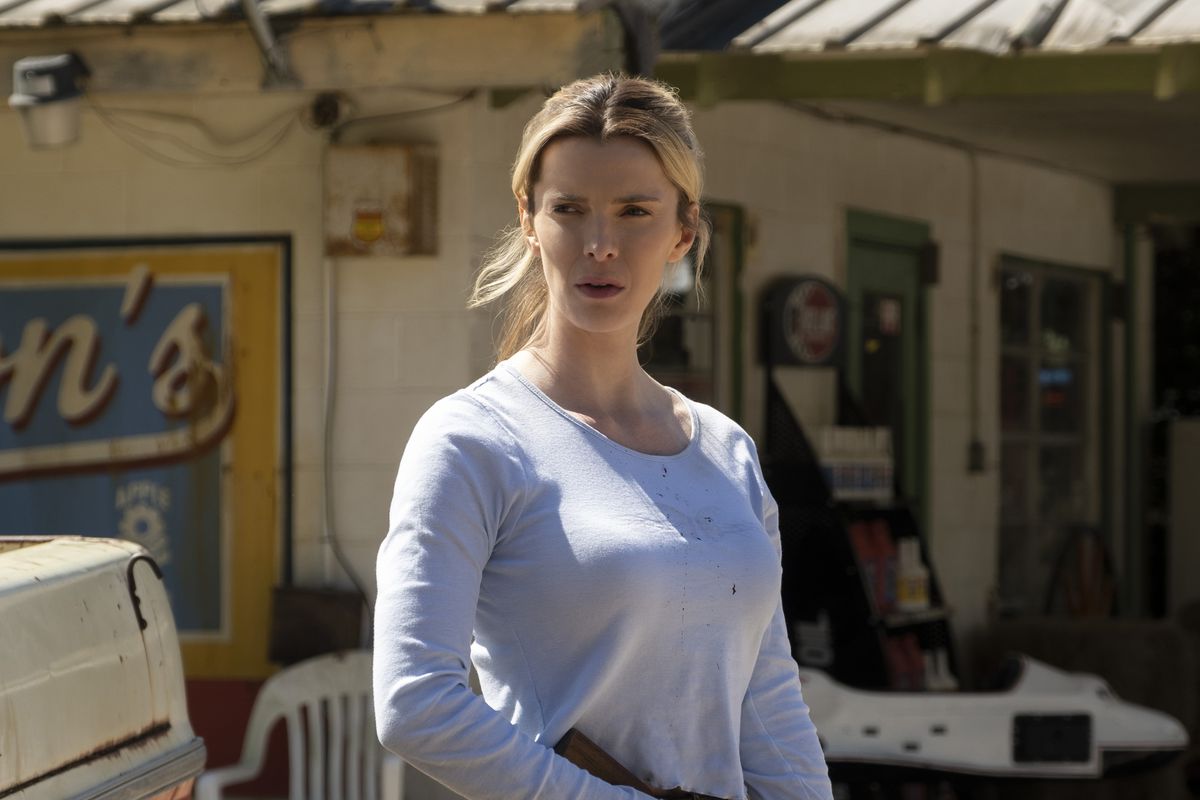
Director Craig Zobel (Compliance), along with writers Nick Cuse and Damon Lindelof (both of TV’s Watchmen and The Leftovers), takes no prisoners as characters take a bunch of prisoners, drop them in a field somewhere and, you know, hunt them down for sport. The film gleefully skewers both the left and the right, often in ways you wouldn’t expect but should.
This is a meticulously structured horror film, the tidy
beats allowing the writers to insert surprises that play on your preconceived
notions in clever ways. Like Jordan Peele, Zobel proves a nimble manipulator of
both horror tropes and social commentary.
And casting.
I have to think Betty Gilpin was the most disappointed when
this film was shelved last year because it is her break out. No more support
work as the hot mean chick, Gilpin’s Crystal is the wrong badass to
underestimate. The performance is never showy but quirky and genuine, which
goes a long way toward increasing believability.
Zobel populates the herd with familiar faces (Emma Roberts,
Ike Barinholtz, Hilary Swank, Amy Madigan), mainly for sleight of hand. Though
most get little screen time, and each is handed a fairly one-dimensional
character, both the writing and the performances mine that gimmick for a lot.
Positioned to infuriate everyone in one scene or another, the film is brash and bracingly level headed. It’s violent AF, no doubt, but what it reflects back at us is far smarter than what you might expect. The Hunt is a darkly comedic, socially savvy, equal opportunity skewering and it is a blast.
It’s a classic hero’s journey, isn’t it? Our protagonist, damaged
from a past misadventure, shuns a true talent. Years into a contented but
shallow existence free from that talent, reality comes to call. The hero must
rediscover that talent to find love, save a town and fulfill a destiny.
It’s every Western, most action films, a lot of vampire
flicks, and the supernatural driving instructor love story Extra Ordinary.
Mike Ahern and Edna Loughman’s latest—a film that follows
this groove beat by beat—charms you into accepting that familiarity. Then it
rewards you with the most delightfully motley group of characters. And, thanks
to those quirky characters, nothing ever goes exactly as you expected.
Rose Dooley (Maeve Higgins) is our reluctant hero. A driving
instructor in rural Ireland, Rose has stopped chatting with the ghosts that
seek her attention as she drives through town, and she is only returning phone
calls about driving school. None of that other stuff. She’s done with that.
Which is why Martin Martin (Barry Ward) has to pretend he
needs a lesson. Martin Martin doesn’t really want help ridding himself of his
wife’s fairly abusive ghost, he just wants his teenage daughter Sarah (Emma
Coleman) to think he’s looking into it so she doesn’t leave home.
But Martin Martin’s ghost is the least of his worries, what
with that Satan worshipping one-hit-wonder Christian Winter (Will Forte) over
in that castle conjuring up virgin-hungry demons to help him relaunch his musical
career.
That’s a lot to pack into 94 minutes, although the plot is
hardly the point. Higgins is the point. This no fuss comedy remains adorably
indifferent to the supernatural, every new development just an opportunity for
Higgins, in particular, to charm with her sharp comic timing and infectious
good nature.
The film’s affable absurdity suits Forte and Ward makes a sweetly ideal foil for Higgins. Extra Ordinary casts a silly spell that leaves you smiling.
Like Todd Haynes’s 1995 film Safe, Swallow shadows
a lovely homemaker with little of merit to occupy her time who eventually falls
prey to an unusual malady.
Dressed like something out of a 1950s pantyhose ad, Hunter (a transfixing Haley Bennett) fluffs pillows, prepares dinner, and waits for her husband Richie (Austin Stowell) to come home from work. She’s so grateful. Just really thankful, she nods in a hushed, respectful, humble tone.
You might think that pregnancy would give Hunter something meaningful to do with her time: prepare the nursery, read up on parenting, that sort of thing. But the only thing she really wants to do now is to swallow things she shouldn’t.
Putting a relevant twist on the classic “horrific mother” trope, writer/director Carlo Mirabella-Davis uses the rare eating disorder pica to anchor his exploration of gender dynamics and, in particular, control.
At times almost Hitchcockian in its suspense, anxiety and balance of gender hysterics, Swallow feels urgently present but simultaneously old-fashioned. The costume choices, the vacant expression Hunter wears like a mask, the way she smooths and tucks her hair—all of it rings with the tone of the dementedly June Cleaver-esque.
Where Mirabella-Davis’s talent for building tension and framing
scenes drive the narrative, it’s Bennett’s performance that elevates the film.
Serving as executive producer as well as star, Bennett transforms over the
course of the film.
The path Swallow takes is eerily, sometimes
frustratingly similar to Haynes’s Safe. Both films cover similar themes,
both take on a meticulously crafted visual aesthetic, and both boast
incandescent lead performances. Indeed, Bennett here is every ounce as
believable and touching and transfixing as the great Julianne Moore as Haynes’s
brittle heroine.
But where Haynes played things a little too ambiguously to
satisfy an audience, Mirabella-Davis embraces clarity—although first he flirts
and then dances with it before the full bear hug. The first half of this film
is almost sleight of hand, the filmmaker telegraphing imagery too meticulous
and obvious.
When things finally burst, though, director and star shake
off the traditional storytelling, the Yellow Wallpaper or Awakening
or even Safe. The filmmaker’s vision and imagery come full circle with a
bold conclusion worthy of Bennett’s performance.
Hot damn, look at these rocks! If you can’t find a movie to entertain you this week as you hide away from the germs outside your door, we can’t help you.