Tag Archives: MaddWolf

Saturday Screamer: The Mist

The Mist (2007)

Frank Darabont really loves him some Stephen King, having adapted and directed the writer’s work almost exclusively for the duration of his career. While The Shawshank Redemption may be Darabont’s most fondly remembered effort, The Mist, an under-appreciated creature feature, is our vote for his best.

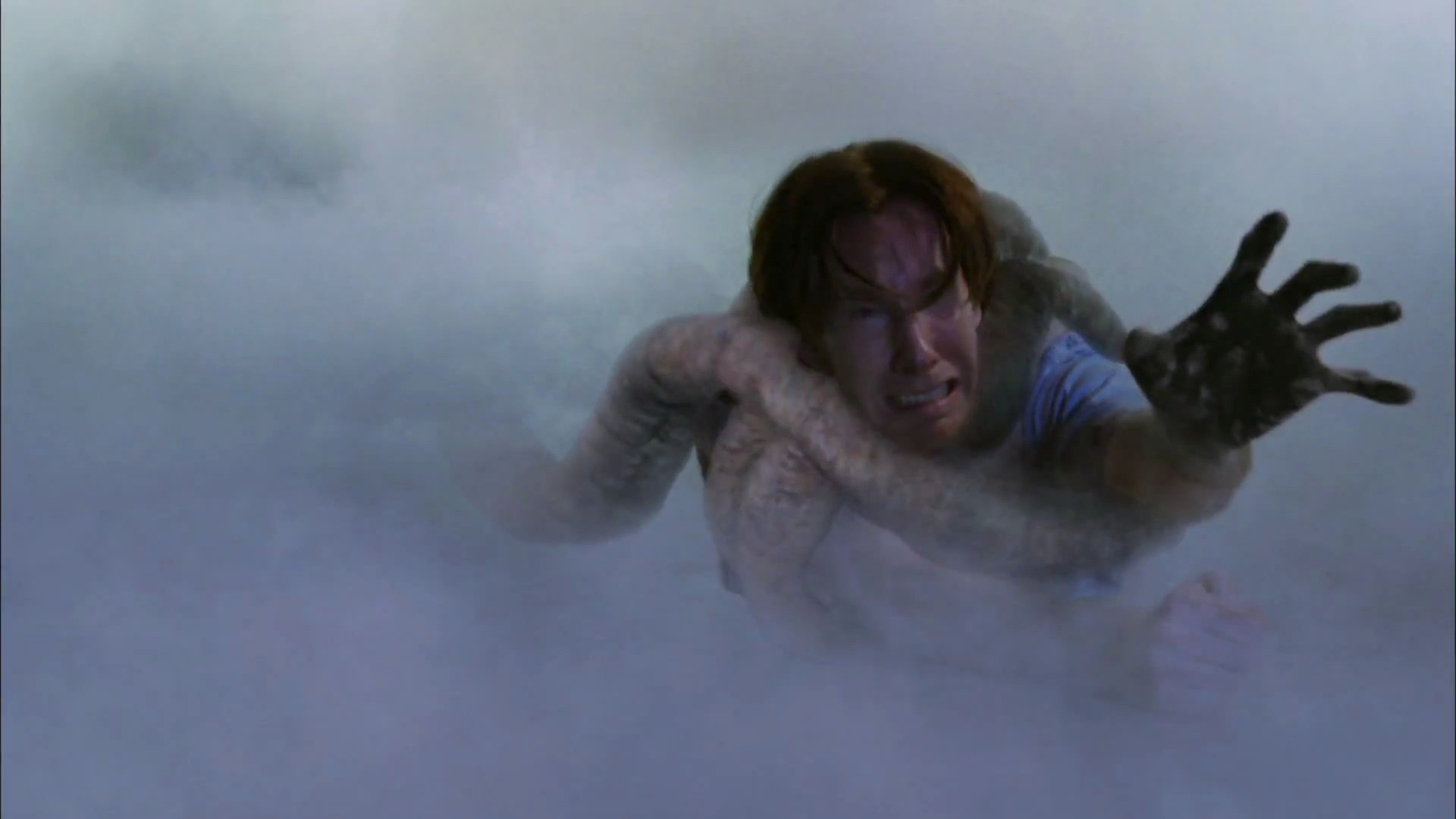
David Drayton (Thomas Jane) and his young son head to town for some groceries. Meanwhile, a tear in the space/time continuum (who’s to blame?!) opens a doorway to alien monsters. So Drayton, his boy, and a dozen or so other shoppers all find themselves trapped inside this glass-fronted store just waiting for rescue or death.

Marcia Gay Harden is characteristically brilliant. As the religious zealot who turns survival inside the store into something less likely than survival out with the monsters, she brings a little George Romero to this Stephen King.

In a Romero film, no matter how great the threat from the supernatural, the real monsters tend to be the rest of the humans. King does not generally go there, but he does so with The Mist and it’s what makes this one of his most effective films.

While Harden excels in a way that eclipses all other performances, the whole cast offers surprisingly restrained and emotional turns – Toby Jones is especially effective.

The FX look good, too, and let’s be honest, a full-on monster movie with weak FX is the lamest. The way Darabont frames the giants, in particular, gives the film a throw-back quality to the old matinee creature features. But he never gives into cheekiness or camp. The Mist is a genuinely scary film – best seen in the black and white version if you can find it.

Regardless, it’s the provocative ending that guarantees this one will sear itself into your memory. Though this is likely what kept The Mist from gaining an audience in theaters, it is a brilliant and utterly devastating scene that elevates the film from great creature feature to great film.


Strings Attached

Trolls World Tour

by George Wolf

They may sing songs we already know in a sequel that’s often thematically simple, but to quarantined families longing for an escape from re-runs, these new Trolls will feel like a cool blast of freedom.

Just as Branch (Justin Timberlake) is working up the courage to break out of the friend zone with Queen Poppy (Anna Kendrick), trouble invades the Pop Troll world of endless singing, dancing and regular hug appointments.

Queen Barb (Rachel Bloom) of the Rock Trolls, daughter of King Thrash (Ozzy Osbourne!), has set out on a Mad Max-style rampage through Troll Kingdom, collecting the magic strings from each of 6 different musical villages in a quest to make everyone bow to power chords and devil horns.

Poppy makes a pinky promise (a pinky promise!) not to let that happen, so she heads out with Branch and Biggie (James Corden) on a shuffle through the Troll playlist.

Like the first film, World Tour brings exuberant splashes of sound, color and enthusiasm. But while this latest adventure salutes more types of music, it somehow makes all them feel more bland on the way to its evergreen moral of appreciating differences.

What elevates these Trolls, though, is their funny bone. One of the directors and two of the writers return from part one, but this film is much funnier, especially for the parents sitting down for movie night.

From the struggle to grasp “Hammer time” to the deviousness of yodeling and the futility of fighting smooth jazz, this script-by-committee lands several solid gags. A new group of all star voices (especially a scene-stealing Sam Rockwell as Hickory the cowboy) helps, too.

And really, where else are you gonna hear Ozzy mumble through “Girls Just Wanna Have Fun?”

See Me, Feel Me

Invisible Life

by George Wolf

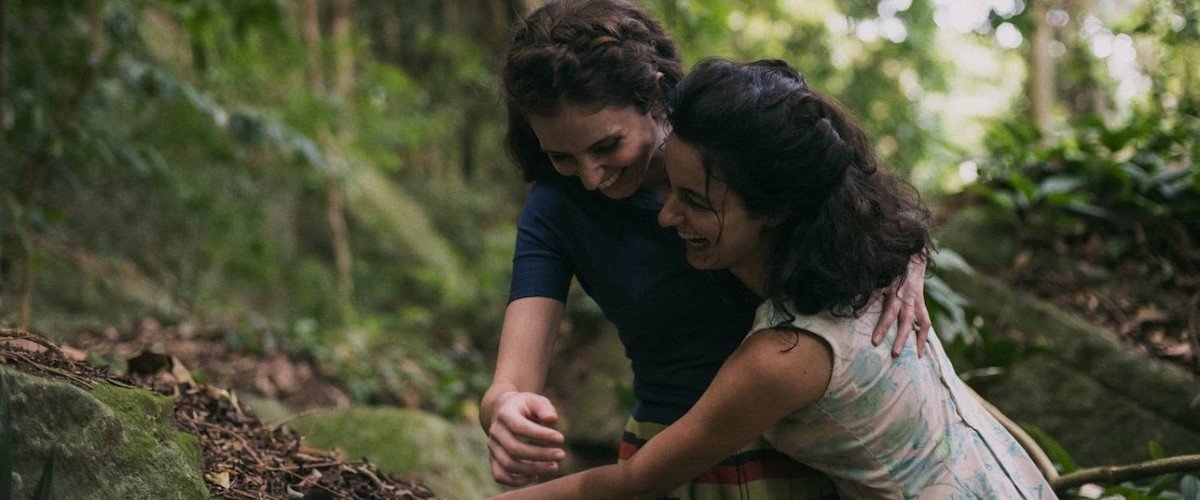
Invisible Life (A Vida Invisvel) is one of the few films that earns its melodrama status in only positive ways. Director/co-writer Karim Ainouz attacks our sentimentality in such a loving, dreamlike manner you easily fall under his spell of family strife in 1950s Brazil.

Sisters Euridice and Guida (Carol Duarte and Julia Stockler, both exceptional) grew up inseparable but have begun to follow different paths. While Guida dreams of finding love, Euridice has aspirations as a classical pianist.

A dramatic turn leads to one of the women being disowned by their father, and the two sisters begin living disconnected lives, each believing the other’s circumstances are very different than reality.

The “invisibility” of the sisters to each other, and of the lives of all women in a patriarchal society, is a thread Ainouz weaves skillfully and repeatedly throughout. The result is a lush and emotional period piece that dives into its genre with no apologies, tugging at your heart with broken dreams and familial bonds until you’re nothing but thankful for it.

Sunday Screamer: The Woman

The Woman (2011)

It’s time to get real. And by that, we mean real nasty.

There’s something not quite right about Chris Cleese (an unsettlingly cherubic Sean Bridgers), and his family’s uber-wholesomeness is clearly suspect. This becomes evident once Chris hunts down a feral woman (an awesome Pollyanna McIntosh), chains her, and invites the family to help him “civilize” her.

The film rethinks family – well, patriarchy, anyway. Notorious horror novelist and co-scripter Jack Ketchum may say things you don’t want to hear, but he says them well. And director Lucky McKee – in his most surefooted film to date – has no qualms about showing you things you don’t want to see. Like most of Ketchum’s work, The Woman is lurid and more than a bit disturbing. (Indeed, the advanced screener I watched back when the film was first released came in a vomit bag.)

Aside from an epically awful performance by Carlee Baker as the nosey teacher, the performances are not just good for the genre, but disturbingly solid. McIntosh never veers from being intimidating, terrifying even when she’s chained. Bridgers has a weird way of taking a Will Ferrell character and imbibing him with the darkest hidden nature. Even young Zach Rand, as the sadist-in-training teen Brian, nails the role perfectly.

Nothing happens in this film by accident – not even the innocent-seeming baking of cookies – nor does it ever happen solely to titillate. The Woman offers a dark and disturbing adventure that finds something unsavory in our primal nature and even worse in our quest to civilize.

Don’t even ask about what it finds in the dog pen.


Crooked Lines

Slay the Dragon

by George Wolf

Before hitting play on Slay the Dragon, make sure you’re a good social distance away from Grandma’s fine china.

Because you’re going to want to break something.

Directors Chris Durrance and Barak Goodman open their deep dive into political gerrymandering with a quote from Founding Father John Adams about democracies and suicide. They then spend almost two hours making the case that time is running short for America to prove Adams wrong.

The film’s historical context of gerrymandering – or drawing Congressional districts in a hyper-partisan manner – is informative and even entertaining in spots. Who knew the practice got its name from pairing an old Massachusetts governor with a salamander?

But once it digs into the deep pockets and advanced metrics behind “packing,” “stacking” and “bleaching,” the film’s view that this a fight between voters picking winners and winners picking voters does not seem hyperbolic.

The direct, measured approach pushes hardest when reminding us that new district maps are drawn every ten years, so elections in a year that ends in zero – LIKE THIS YEAR – are especially important.

But to make their film a rallying cry for passionate turnout, Durrance and Goodman know that beneath the dirty tricks, blatant hypocrisy, systemic oppression, corporate greed and Supreme Court setbacks, there has to be hope.

We get it via Katie Fahey and Voters Not Politicians, a grassroots movement fighting gerrymandering in Michigan that began with a Facebook post. Fahey, a total neophyte diving into vicious waters, is instantly relatable and easy to root for, creating a narrative contrast that’s a bit simplistic but naturally effective.

It does get a bit long-winded in spots, but Slay the Dragon makes its case with enough info, passion and persistence to make it necessary, especially in a year that ends in zero.

Like this year. 2020. An election year.

Did we mention that?

Sugar and Spice

Never Rarely Sometimes Always

by George Wolf

With her 2013 debut It Felt Like Love, Eliza Hittman brought a refreshing honesty to the teen drama. Zeroing in on the summer days when two girls began their sexual lives, the film was an exciting introduction to a writer/director with a quietly defiant voice.

At its core, Never Rarely Sometimes Always could be seen as Hittman’s kindred sequel to her first feature, as two friends navigate a cold, sometimes cruel world that lies just beyond the hopeful romanticism of first love.

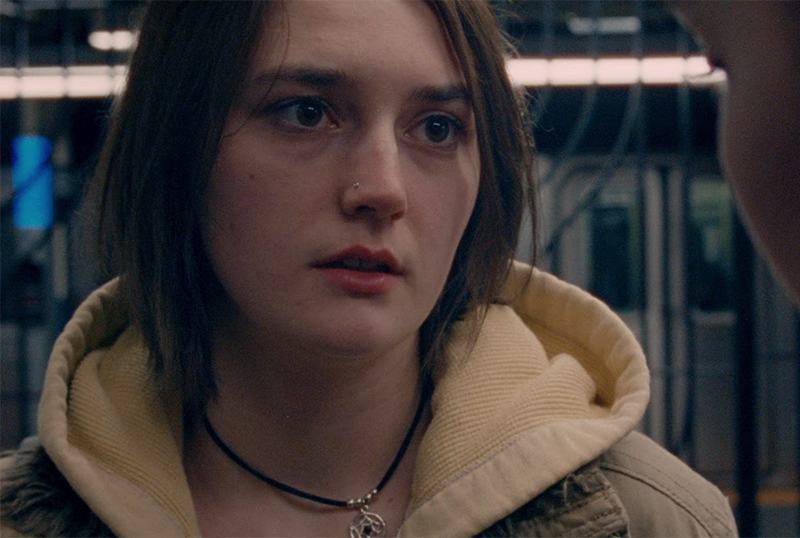
Autumn (Sidney Flanagan) is a talented 17 year-old in Pennsylvania whose crude father berates her for an ever-present foul mood. She’s worried, and when a visit to her local health clinic confirms her fears, Autumn confides only in her cousin Skylar (Talia Ryder) as she weighs her options.

In Autumn’s home state, those options are severely limited, so the girls scrape together as much money as they can and hop a bus to New York, encountering more hard realities along the way.

The over-reliance on metaphor that sometimes hampered It Felt Like Love now feels like that awkward school picture from just a few grades back. NRSA shows Hittman in full command of her blunt truth-telling, demanding we accept this reality of women fighting to control their own bodies amid constant waves of marginalization.

Flanagan, a New York musician making her acting debut, is simply a revelation. There isn’t a hint of angsty teen caricature in Autumn’s dour moodiness, just a beaten down worldview born from all that is revealed in her beautifully brutal interview at the New York clinic.

As an off-camera social worker asks Autumn to give the titular response to a series of questions, Hittman holds tight on Flanagan and she never shrinks from the moment. It’s a devastatingly long take full of hushed experience that may easily shake you.

Just three films in, Hittman has established herself as a filmmaker of few words, intimate details and searing perspective. NRSW is a sensitive portrayal of female friendship and courage, equal parts understated and confrontational as it speaks truths that remain commonly ignored.

Given the subject matter, the film’s PG-13 rating is surprising, but hopeful. This film deserves an audience, much like the conversations it will undoubtedly spark.

Moonlight and Teeth

The Other Lamb

by Hope Madden

The first step toward freedom is telling your own story.

Writer C.S. McMullen and director Malgorzata Szumowska tell this one really well. Between McMullen’s outrage and the macabre lyricism of Szumowska’s camera, The Other Lamb offers a dark, angry and satisfying coming-of-age tale.

Selah (Raffey Cassidy, Killing of a Sacred Deer, Vox Lux) has never known any life except that of Eden, the commune where she lives with the sisters, the wives, and the Sheperd (Michiel Huisman, The Invitation).

Szumowska doesn’t tell as much as she unveils: Selah’s defiant streak, Sheperd’s unspoken rules, what puberty can mean if you’re a good follower. She strings together a dreamlike series of visions that horrify on a primal level, the imagery giving the film the feel of gruesome poetry more than narrative.

Selah’s first period and the group’s migration to a new and more isolated Eden offer the tale some structure. Like many a horror film, The Other Lamb occupies itself with burgeoning womanhood, the end of innocence. Unlike most others in the genre, Szumowska’s film depicts this as a time of finding your own power.

The Other Lamb does not simply suggest you question authority. It demands that you do far more than that, and do it for your own good.

Selah’s emotional arc plays itself across Cassidy’s face, at first all eyes, piercing blue and eager. But restlessness and defiance outline every expression. Soon Selah’s painterly beauty gives way to the hardness of anger—a transformation Szumowska celebrates.

Speak No Evil

Resistance

by George Wolf

In the opening minutes of Resistance, a young Jewish girl asks her parents, “Why do they hate us?”

Then, just before the end credits, stark onscreen text reminds us of the magnitude of Nazi atrocities, and just how much of that was inflicted on children.

And during the nearly two hours in between, writer/director Jonathan Jakubowicz tells an incredible story you probably don’t know about an iconic figure you most likely do.

Legendary mime Marcel Marceau was born Marcel Mangel. And while taking a stage name is hardly unusual, Mangel’s motivation was: joining the French Resistance and helping save thousands of children orphaned by the Nazis in WWII.

Jesse Eisenberg stars as Marceau, and it’s a perfect vehicle for his offbeat strengths as an actor. Though Eisenberg’s French accent is shaky (he’s not alone), he nails the layers most important to making Marceau’s astonishing arc an authentic one.

Early on, Marceau is afraid of his father’s reaction to his ambitions on the stage, and seems most interested in entertaining children as a way to impress the lovely Emma (Clemence Poesy).

Eisenberg may never be an action hero, but his delicate, appeasing nature is a valuable tool for Jakubowicz to subtly reinforce how the Nazi threat was (and still is?) underestimated. Marceau’s hardening edges are never overplayed by Eisenberg, just as Jakubowicz wisely steers clear of any overt, Life is Beautiful sentimentality between Marceau and the children he is trying to shield from the horrors of war.

Indeed, the film is at its most gripping when juxtaposing the touching and the profane. Gentle moments appear and are quickly countered, never betraying the ever-present threat often personified by the sadistic Klaus Barbie (Matthias Schweighofer). Marceau and Barbie’s face to face meeting – historically accurate or not – is played with fine cinematic tension, demonstrating a passion and assured vision often lacking in Jakubowicz’s 2016 feature debut, Hands of Stone.

Marceau ultimately gave his first major performance in front of thousands of WWII troops. And although framing his story around a speech from General George S. Patton (Ed Harris) seems a bit misplaced, it also feels born of the sincere desire to convey the depth of Marceau’s heroism.

Resistance is a film built with passion and sincerity, employing a story that will be new for most of us to deliver a timely reminder meant for all of us.