What does true art require of its maker? It’s an incredibly
common theme in film (and books and sculpture and painting and any other kind
of art) because, for an artist, it’s a common point of introspection. Why am I
doing this, why aren’t I better than this, what would I give to be really
great?
There’s such an underlying element of the diabolical and desperate in these questions that it’s only sensible so many horror flicks have sprung from this well. From Roger Corman’s A Bucket of Blood in ’59 to Sean Byrne’s Devil’s Candy in 2015, horror movies love to explore what we’re willing to become if only our art could be great.
Joe Begos returns to the concept with Bliss, an
unrelenting attack on the senses that equates artistic obsession with addiction
and monstrosity.
Frenetically paced and entirely reliant on Dora Madison’s
impressive performance, Bliss works like a hypnotic pulse. Madison plays
artist and malcontent Dezzy, who opens the film dodging her landlord, tooling LA
in her convertible caddy and panicking. She can’t finish her latest piece, her
agent wants to drop her, she’s about to lose her exhibit space.
Why isn’t her dealer answering the goddamn phone?
When she does catch up with him, he has something potent for her. She goes a little overboard and by the time she’s semi-conscious again, a house party is in full rage, the drugs, beat and sexy look from an old friend propelling Dezzy into a hypnotic night of excess and debauchery. But somewhere in the stew and slurry of the night, her painting starts to take shape.
It’s intriguing that the more minor the character, the more
likable the performance. Begos seems not to want you to care about the lead or
those closest to her, and that’s always an intriguing approach to a film.
The only real problem with Bliss is its lack of originality, but that’s a pretty big problem. Quick cuts and quicker tempo, nimble performances and concussive beat, like Gaspar Noe’s Climax, Bliss leaves you feeling worn out. But with little new to say, it mainly leaves you feeling more hung over than entertained.
It’s the hap-happiest time of the year! Oh, our favorite thing about Oscar nominations is the excuse it gives us to dredge up those old horror flicks lingering in every good and bad actor’s past. This year’s crop was especially ripe, too. Here are the handful that made the final cut.
5. Al Pacino & Charlize Theron: The Devil’s Advocate
(1997)
A guilty pleasure, this one. Theron’s screen debut just two
years earlier came from an uncredited role in the clearly inferior Children
of the Corn 3, but she has no lines in that and how do we pass up a two for
one like this movie?
Al Pacino plays to type as Satan, disguised as NY lawyer
John Milton who invites unbeaten Florida lawyer Kevin Lomax (Keanu Reeves) to
join the firm (after Lomax knowingly gets a child molester acquitted). Lomax
and his saucy wife Mary Ann (Theron) head north, but Milton keeps Kevin working
late and Mary Ann becomes isolated and then paranoid and then possessed.
Theron’s performance is solid throughout and Pacino’s a lot
of fun chewing scenes and spitting them out. Reeves is Reeves. But this is such
a ludicrous, over-the-top morality play—one that Theron plays for drama and Pacino
plays for camp—that Reeves’s goofball in the middle feels somehow right.
4. Tom Hanks: He Knows You’re Alone (1980)
Tommy’s first show biz performance came by way of Armand
Mastroianni’s bride stalker, He Knows You’re Alone.
The first problem with the film is the plot. It is
absolutely impossible to believe that any knife wielding maniac is scarier than
a bride just 24 hours before her wedding. She’d kick his ass then slit his
throat, all the while screaming about seating arrangements.
The bride thing is a weak gimmick to introduce a slasher, so
we watch a shiny knife catch the light just before slicing through some friend
or acquaintance of bride-to-be Amy (Caitlin O’Heaney).
In the film that’s little more than a smattering of ideas
stolen from Wes Craven and John Carpenter, surrounded by basic stock images and
sounds from early 80s slashers, the only thing that stands out is Hanks. In an
essentially useless role, Hanks introduces the idea of comic timing and natural
character behavior. Too bad we have to wait a full hour for his first scene,
and that he only gets one more before his girlfriend’s head finds its way into
the fish tank and he vanishes from the film.
3. Renee Zellweger: Texas Chainsaw Massacre: The Next
Generation (1995)
Written and directed by Kim Henkel, Tobe Hooper’s
co-scriptor for the original, Texas Chainsaw Massacre: The Next Generation
amounts to one bizarre cabaret of backwoods S&M horror. You’ll think for a
while it’s a regular ol’ slasher, what with the unlikable teens, broken down
car, and bad decision-making. But if you stick it out, you’ll find it tries to
be something different – something almost surreal, kind of madcap. It doesn’t
work, but it counts that they tried, doesn’t it?
A profoundly unconvincing set-up involves Renee Zellweger as
well as several colleagues no longer in the acting profession. They deliver
teen clichés while wandering into a truly weird situation. The four prom-goers
are terrorized by Matthew McConaughey, now leader of Team Leatherface, and his
bizarre band. It’s not necessarily weird in a good way, but weird is rarely
ever entirely bad.
There’s a visit from a limo-driven S& M maestro of some
kind, paranoid delusions of Big Brother control, a more clearly cross-dressing
Leatherface, but absolutely no tension or terror, and shocking little in the way
of horror, either, regardless of Freaky Limo Guy’s line: I want these people to
know the meaning of horror.
(Hint: they should watch the original.)
https://www.youtube.com/watch?v=PNsgi_n-hro
2. Brad Pitt: Cutting Class (1989)
Someone’s killing off folks at the nameless high school
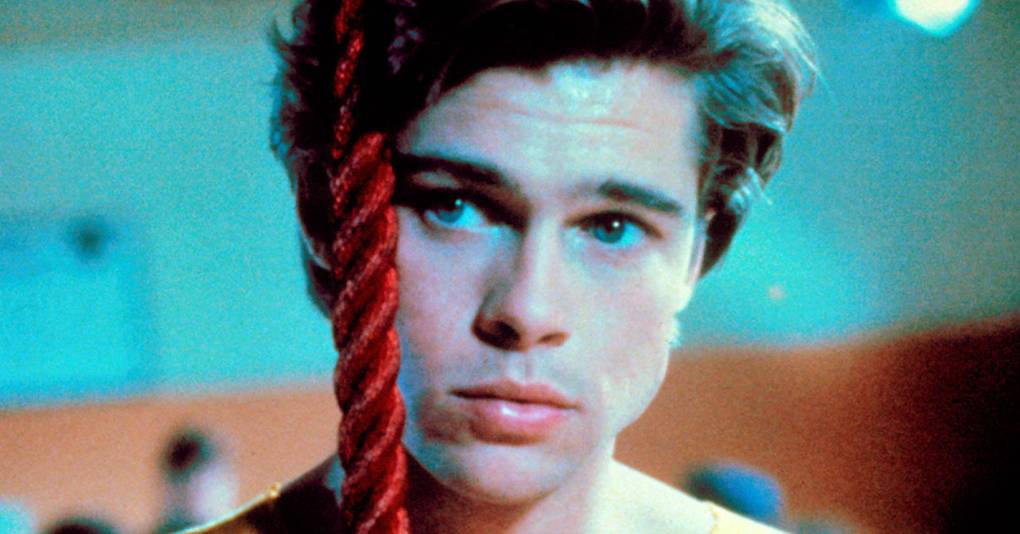
where Pitt, as Dwight Ingalls, portrays the horny, popular basketball star
repressing rage concerning his overbearing father. Perhaps he’s bottling up
something more?
Sexual frustration, no doubt, as he spends every second on
screen trying to get somewhere with girlfriend Paula (Jill Schoelen, frequent
flier on bad 80s Horror Express).
Usually, when you look back on a superstar’s early career
and find low-budget horror, one of two trends emerges. Either the superstar
stands out as clearly the greatest talent in the film, or else they just cut
their teeth on a very small role. Sometimes both. In Pitt’s case, well, at
least he looks like Brad Pitt.
Still, it’s fun to see him try on some tics and
idiosyncrasies he’ll come to rely on in later, better roles. (Like Pitt’s
Oceans character Rusty Ryan, Dwight eats in every scene.)
The freakishly uneven tone, the film’s episodic nature, each
scene’s seeming amnesia concerning other scenes’ actions, and the whiplash of
comedy to psychological thriller to comedy all add up to an exercise in incoherence.
1. Laura Dern: Grizzly II: The Concert (1987)
Here’s the crowning jewel for nearly any Skeletons in the Closet feature. It
features not just a current nominee, but one past winner and ever-the-winner
Charlie Sheen. It’s hard to come by and even harder to watch. The sequel to William
Girdler’s 1796 forest-astrophe Grizzly was filmed in 1983 and never
completed, but sort of, kind of released anyway in 1987. Every death scene ends
just before the death itself, because the bear side of the struggle was never
shot. So, we get a lot of bear’s eye view of the victim, but never a look at
the bear side of the sequence. It’s surreal, almost.
Sandwiched somewhere between the non-death sequences is a never ending
faux-eighties synth pop concert. The concert footage is interminably long, nonsensical
enough to cause an aneurism, and awful enough to make you grateful for the
aneurism. You will lose your will to live. So, why bother? Because this
invisible grizzly puppet kills Charlie Sheen, Oscar nominee Laura Dern, and
George Clooney. (Dern and Clooney are making out at the time, which actually
probably happened).
Shudder launches a new series this week, The Dead Lands.
Ep 1: Tell the Dead I’m Coming
by Rachel Willis
For anyone who thinks the zombie genre has been thoroughly
mined of ideas, you might be pleasantly surprised by the New Zealand horror
drama, The Dead Lands.
The best thing about writer/creator Glenn Standing’s show is that it’s more than a tale of the dead coming back to life. Rooted in the indigenous Maori culture and religion of New Zealand, the setting is Aotearoa “in the time of the stories.” As the credits play, we’re shown the gorgeous natural splendor of this world while the camera rolls over scenic vistas.
The peaceful atmosphere is destroyed as the credits end and
the camera focuses on a bloody wahaika. A scene of carnage unfolds, and we’re
introduced to Waka Nuku Rau (Te Kohe Tuhaka), a person “more monster than man.”
As the narrative opens, we learn this monstrous man may be the only hope for
restoring the balance between the living and the dead. When Waka is barred from
entering the afterlife, he returns to earth to seek honor to atone for his many
crimes.
The opening episode of The Dead Lands is a bit
clunky. There’s a lot to set up in the space of 44 minutes. The pacing stumbles
as much of the focus of this episode is devoted to helping the audience
understand what has gone wrong in Aotearoa. The veil between the living and
dead is falling away, and the dead seek to harm the living. Why this is
happening is the heart of show’s mystery.
However, the weaker elements are far overshadowed by the stronger moments and the promise of what’s to come. Waka is a thoroughly engrossing character. Unfortunately, we’re only given a glimpse of his morally repugnant past. Perhaps his history will be explored in future episodes, but when Waka runs into Mehe (Darneen Christian), a woman seeking his help, he comes across as a curmudgeon rather than someone to be feared.
Though Waka has an agenda behind his agreement to help Mehe,
he never seems untrustworthy. He’s a character easy to like when, based on what
we’ve been told, he should be someone who makes us question our own moral
compass.
As Mehe, Christian is a bit stiff compared to the charismatic Tuhaka, but their relationship has the potential to grow into something truly captivating to watch.
There is more than enough intrigue to attract viewers to this show and keep them interested.
Ep 2: The Sins of the Fathers
by Rachel Willis
Where the first episode tends to drag, the second episode of
The Dead Lands opens in a sprint. Beginning with a human sacrifice, new
characters are introduced: villains both living and dead, members of Mehe’s
tribe who might not be trustworthy, and others who might have the answers Waka
and Mehe seek.
The mystery of who “broke the world” becomes the central
focus in this episode, though many thrilling scenes are devoted to the politics
of Mehe’s tribe.
After an attack on her tribe in Tell the Dead I’m Coming,
her brother, Rangi, and the rest of the tribe sought refuge with their uncle, a
powerful shaman who might have insight into what has caused the imbalance
between the worlds of the living and the dead.
Though their uncle welcomes them with open arms, there is
something sinister afoot. Mehe is suspicious, and in this episode, Darneen
Christian better embodies her character.
While Waka still has his mission, Mehe is given her own
hero’s journey to complete. By giving our two main characters their own
challenges and desires, the opposite nature of the characters is heightened.
Waka is a man who cares for no one, while Mehe is devoted to the well-being of
her tribe.
Despite their opposite natures, the chemistry between the
two flourishes as Waka’s connection to Mehe deepens. Though Waka professes to
dislike her, it’s clear she’s the closest human connection he’s ever had. There
are even a few comedic moments shared between the two, and those liven the
otherwise tense atmosphere.
Though still plagued by a few missteps, particularly some strange cinematography choices, the second episode successfully builds upon the first. With The Sins of the Fathers, the show has found its footing.
Any time a film is remade, you have to ask why. Not to be
cynical, but because it’s a legitimate query. Is there a compelling reason to
watch this new one?
Nicolas Pesce hopes there’s reason to watch his retooling of
The Grudge.
The Grudge began in 2000 with Takashi Shimizu’s Japanese horror Ju-on, which spawned three Japanese sequels and now four English language reworkings, two of which Shimizu directed himself. His 2004 version starring Sarah Michelle Geller became a tentpole of our J-horror obsession of the early 2000s.
Pesce, working with co-writer Jeff Buhler (The Midnight Meat Train—that was your first problem), pulls story ideas from across the full spate of Ju-on properties and braids them into a time-hopping horror.
Is there room for hope? There is, because Pesce landed on horror fanatics’ radars in 2016 with his incandescent feature debut, The Eyes of My Mother. He followed this inspired piece of American gothic in 2018 with a stranger, less satisfying but utterly compelling bit of weirdness, Piercing.
And then there’s this cast: Andrea Riseborough, John Cho,
Lin Shaye, Betty Gilpin, Jacki Weaver, Frankie Faison, Damian Bichir—all solid
talents. You just wouldn’t necessarily know it from this movie.
Pesce’s basically created an anthology package—four stories
held together by a family of especially unpleasant ghosts. But that one
sentence contains two of the film’s biggest problems.
Let’s start with the ghosts. Shimizu’s haunters—Takako Fuji and Yuya Ozeki—were sweet-faced, fragile and innocent seeming. The perversion of that delicacy is one of the many reasons Shimizu’s films left such a memorable mark. Pesce’s substitute family loses that deceptive, macabre innocence.
The way the film jumps from story to story and back again
undermines any tension being built, and each story is so brief and so dependent
on short-hand character development (cigarettes, rosaries, ultrasounds) that
you don’t care what happens to anyone.
Jacki Weaver, who seems to be in a comedy, is wildly miscast. Go-to horror regular Shaye has the only memorable scenes in the film. Riseborough, who is a chameleonic talent capable of better things, delivers a listless performance that can’t possibly shoulder so much of the film’s weight.
Jump scares are telegraphed, CGI and practical effects are unimpressive, editing is uninspired and, worst of all, the sound design lacks any of that goosebump-inducing inspiration Shimizu used to such great effect.
One of the most fun facts in acting is that most of the greats, even the truly greats, started off in horror. And, apparently, they all co-starred at one point or another with Keanu Reeves, whose Oscar is apparently still forthcoming. Today we look at some horror films with casts dripping with future gold.
5. Constantine (2005)
Two Oscars plus three nominations. Not for Constantine,
obviously, but that’s the hardware and would-be hardware shared among the cast
of this one.
We have no explanation for this, but Keanu Reeves shows up
three times in this countdown, regardless of the fact that he’s never been
nominated for an Oscar.
No!
Francis Lawrence (of the many Hunger Games fame) made his directorial debut with this big screen take on the comic Hellblazer. Reeves mumbles his way through the lead role of John Constantine. Destined to hell because of an early-life suicide attempt and cursed with the ability to see demons and angels in their true form, Constantine battles on behalf of the light in the hopes of regaining favor and avoiding his eternal fate.
Tilda Swinton plays the angel Gabriel! Peter Storemare plays
Satan! I don’t know what else you need to convince you to waste two hours, but
Rachel Weisz also plays twins, Pruitt Taylor Vince plays a priest, Djimon
Hounsou plays a witch doctor, and there’s absolutely no reason any one of these
people said yes to this job. Glorious!
4. Bram Stoker’s Dracula (1992)
OK, well Coppola alone has five outright Oscars and one
Thalberg Memorial Award, as well as nine additional nominations. Add to that
Oldman’s win and nomination, Hopkins’s win and three nominations, Ryder’s two
nominations and Richard E. Grant’s nom and you have to just wonder why this
movie doesn’t work better.
Overheated, overperformed and somehow undeniably watchable,
Francis Ford Coppola’s take on Stoker’s classic vampire tale is a train wreck.
Keanu Reeves is awful. Winona Ryder is awful. Anthony
Hopkins is so over the top as to be borderline hilarious. And yet, Coppola
somehow matches that ridiculous volume and pitch with a writhing, carnal
atmosphere – almost an oversaturated Hammer horror, all heaving breasts and
slippery satin.
At the heart of the film is a glorious Gary Oldman, who is
particularly memorable as the almost goofily macabre pre-London Dracula. Tom
Waits makes an impression as Renfield, Richard E. Grant offers a nicely wearied
turn as the asylum’s keeper, Dr. Seward, and the lovely Sadie Frost joins a slew
of nubile vampire women to keep the film simmering. It’s a sloppy stew, but it
is just so tasty.
3. The Gift (2000)
Blanchett has two, Swank has two, Simmons has one, writer
Billy Bob Thornton has one plus, including Danny Elfman and Greg Kinnear,
there’s another 11 Oscar nominations for this cast and crew. And yet…
Thornton co-writes this supernatural backwoods thriller,
allegedly about experiences his mother had as a clairvoyant. Sam Raimi, who’d
just directed Thornton to an Oscar nomination with A Simple Plan, directs a
star-heavy cast: Cate Blanchette, Keanu Reeves, JK Simmons, Gary Cole, Hilary Swank, Giovanni Ribisi, Katie Holmes
and Greg Kinnear.
Blanchette is a small town Georgia fortune teller (though
she doesn’t like that label). Recently widowed and raising three young boys,
she’s the picture of vulnerability and Blanchette is, of course, excellent.
This is one of Reeves’s stronger performances, too, as the violent rube
suspected of murdering a lovely young missing person (Holmes).
Ribisi does the best by the film, which is a fun if
predictable little spook show. Raimi can’t quite find his tone, and humorless
horror is definitely not the filmmaker’s strong suit. Still, the cast is just
about enough to make the film really shine.
2. Zombieland (2009)
Emma Stone, Woody Harrelson, Jesse Eisenberg, Abigail
Breslin and Bill Murray each have at least one Oscar nomination; Stone’s also
won one. And in a lovely change of pace, the movie they made together kicks all
manner of ass.
Hilarious, scary, action-packed, clever and, when necessary,
touching, Zombieland ranks as one of the most fun zombie movies ever made. How
much of that is due to Rhett Reese and Paul Wernick’s spot-on screenplay?
Loads. How much credit goes to director Ruben Fleischer? Well, he did stage
that utterly fantastic theme park kiosk shootout of death, didn’t he?
But let’s be honest, the chemistry among the four leads,
their comic timing and simple, undeniable talent is what raises this film to
the highest of genre heights.
https://www.youtube.com/watch?v=p9gNJpJyYiA
1. American Psycho (2000)
Truth be told, Christian Bale should have won the Oscar for
this iconic slice of perfection. He did not, but he did win for The Fighter,
with three nominations in quick succession after that. Reese Witherspoon has
one win, one nom and Jared Leto has one win. Meanwhile, Chloe Sevigny has one
nomination to Willem Dafoe’s four.
It this film better than all of those? Hell yes. These fantastic
actors mingle in a giddy hatchet to the head of the abiding culture of the
Eighties. American Psycho represents the sleekest, most
confident black comedy – perhaps ever. Writer/director Mary Harron’s send
up of the soulless Reagan era is breathtakingly handled, from the set
decoration to the soundtrack, but the film works as well as a horror picture as
it does a comedy.
As solid as this cast is, and top to bottom it is perfect,
every performance is eclipsed by the lunatic genius of Bale’s work. Volatile,
soulless, misogynistic and insane, yet somehow he also draws some empathy. It
is wild, brilliant work that marked a talent preparing for big things.
My last note after watching In Fabric: “Well, that was
weird.”
Weird in a good way.
Nobody blends giallo’s surrealistic seduction with dry British wit (two elements that, to be honest, should not fit together at all) like Peter Strickland. Subversive and playful while boasting a meticulous obsession with the exploitation films of the Seventies, Strickland creates vintage-futuristic fantasies that live outside of time and evoke both nostalgia and wonder.
His latest follows a red Ambassadorial Function Dress and
the havoc it wreaks on its wearers.
This sounds like Yong-gyun Kim’s 2005 Japanese horror The
Red Shoes, but Strickland has something far less sensible, less predictable,
and more memorable in store for you.
(Quick PSA: If you can be less sensible than a Japanese ghost story
horror and still make a watchable, even fascinating, film, you are at the top
of your game.)
We meet Sheila (Marianne Jean-Baptiste), lonely
fiftysomething bank teller just finding her way back into the dating pool and
in need of a new dress. She heads, during sales season, to Dentley & Soper,
where a coven of sales women led by Strickland favorite Fatma Mohamed (she owns
this movie) will do what they can to usher clients toward a “transaction of
ecstasy.”
The dress, a “a double dream, diamond wrapped,” says the catalog,
is “body sensual, captivating, candlelight glances, canape conversations.”
This heightened perfume-ad speak also spills from the
department store sales women—each a cross between a Victorian witch and a
mannequin—hinting at the fetishistic nature of the entire film.
Strickland, apparently, is about as fond of consumerism as
Romero or Cronenberg. He’s also as fond of the color red as Argento. Unlike the
giallo films that clearly inform Strickland’s aesthetic, here commerce, not
violence itself, is the seductive, sexualized element.
Sheila is a good egg waiting to crack played with working
class grace by Jean-Baptiste (Secrets and Lies). In the tradition of the
genre, we root that good egg Sheila will somehow outwit the killer dress her saleswitch
conned her into purchasing.
Sheila’s story represents the first half of In Fabric,
a peculiar but somewhat straightforward horror film. At the film’s halfway
mark, Strickland makes a quick left turn into full blown absurdity, which
awaits you in the second half.
Not a frame, not a glance, not a bizarre line of dialog is wasted or misplaced in a bold vision that’s stylized nearly to death. In a good way. Strickland’s audacious anti-consumerism fantasy must be seen to be believed.
That’s the question at the heart of the mystery in director
Yûji
Shimomura’s martial arts thriller, Re:Born.
The film opens with teams of soldiers hunting a target. When the mission becomes compromised, their commander orders them to fall back.
But something is hunting these soldiers, dispatching them with skillful ease, moving in and out of shadows with inhuman speed. We’re given little information about the situation, immediately catching us off-guard as we try to keep up with what’s happening before our eyes.
The film crafts a fine balance between what we know and what we’re unsure of. Just as more pieces of the puzzle fall into place, new questions arise, forcing us to pay attention. When we meet main character, Toshiro (Tak Sakaguchi), we’re sufficiently intrigued. Who is this man, and how does he connect to the opening sequence?
Toshiro cares for his niece, Sachi, portrayed by the utterly
adorable Yura Kondo. Their relationship is interesting, as Sachi showers her
uncle with effusive affection while he holds himself back. He’s not cold, but
he’s detached. Toshiro’s brother, Kenji (Takumi Saitoh), adds another layer of
mystery to the story.
As the movie unfolds, the tension builds. A group of men and women are hunting Toshiro. He does his best to shield his niece from these sinister agents, but it’s a web of danger that encroaches into his daily life. Backstory is layered on backstory, but the film manages to reveal more of the mystery surrounding Toshiro without added confusion. We’re never given all the answers, but that’s a good thing. Remove all the mystery, and you’re left with little to ponder.
There is a fine line between a great action movie and a good
action movie. A great action movie understands the balance between fast-paced
action sequences and slower moments that give the audience time to catch their
breath. An action sequence that goes on too long starts to become wearying.
This is the trap Re:Born falls into as one particularly long action
sequence becomes tedious. However, it’s refreshing to watch choreographed fight
sequences that rely very little on CG to enhance them. No matter how good CG
gets, it will never replace the beauty of a well-orchestrated fight sequence
between skilled actors.
Re:Born has many of the elements of a great action film. A captivating story and great actors make-up for the few flat moments. This is a film that asks you to pay attention and rewards you for doing so.
Whether used to terrorize us or to break our hearts, dogs add something powerful to a horror movie. Unless it’s Zoltan: Dog of Dracula, because nothing, not even the most gorgeous dog, could save that piece of poo. But these dogs, these dogs are keepers.
6. The Woman (2011)
Maybe you haven’t seen Lucky McKee’s amazing, disturbing 2011 feminist horror The Woman? Get on it! But just in case, we’re going to avoid any spoilers, which means leaving you kind of wondering why this film made the list of best dogs in horror. Suffice it to say, the dogs are mentioned throughout but meeting them … well, please see this movie.
5. Cujo (1983)
A New England couple, struggling to stay afloat as a family, has some car trouble. This naturally leads to a rabid St. Bernard adventure.
Though the film contains many faults, once Donna (Dee Wallace) and her asthmatic son (pre-Who’s the Boss Danny Pintauro) find themselves trapped in their broken down Pinto (What? Those seem like such reliable cars!) with a rabid dog (bigger than the car) attacking, the film ratchets up the tensions and rewards you for your patience.
Profoundly claustrophobic and surprisingly tense, benefitting immeasurably by Wallace’s full commitment to the role, the film traps us in the heat inside that Pinto and quickly makes up for the entire rest of the picture.
4. The Omen (1976)
Billie F. Whitelaw, ladies and gentlemen. Her performance as little Damien’s new nanny really took things up a notch, didn’t they? Instantly, not only was Mummy (Lee Remick) unnecessary, but Daddy (Gregory Peck) found himself in a battle for Alpha—a battle that begins over a dog.
There are actually quite a number of great, terrifying dogs in The Omen, Richard Donner’s iconic Seventies horror. The dogs in the cemetery, the bones in the casket—what, exactly, was Damien’s mother, anyway? But Mrs. Baylock’s Hound of Hell—that’s when the unflappable Robert Thorn realized there may be things to fear inside his home.
3. I Am Legend (2007)
Yes, there are scary dogs in horror movies, but more often than not horror filmmakers use dogs to break our hearts. Oh, sure, kill all the people you want, but once we hear that off-screen whimper, we’re bawling.
Tell us Sam’s death in I Am Legend didn’t gut you. No? Well, stay away from us you sociopath.
Horror has done us some damage in the way they treat dogs: Jaws, Raw, Snowtown, The Babadook, It Comes at Night, Greta, Audition, The Hills H ave Eyes, The Wailing, Hounds of Love. But we not only loved Sam, we recognized Robert Neville’s (Will Smith) aloneness, his vulnerability to grief and madness, because of Sam. That dog is the only reason this movie works.
2. The Voices (2014)
Director Marjane Satrapi’s follow up to her brilliant animated Persepolis is a sweet, moving, very black comedy about why medicine is not always the best medicine.
Ryan Reynolds is Jerry. As Jerry sees it, his house is a cool pad above a nifty bowling alley, his job is the best, his co-workers really like him, and his positive disposition makes it easy for him to get along. Jerry’s kindly dog Bosco (also Ryan Reynolds) agrees.
But Mr. Whiskers (evil cat, also Reynolds) thinks Jerry is a cold blooded killer. And though Mr. Whiskers is OK with that, Jerry doesn’t want to believe it. So he should definitely not take his pills.
1. The Thing (1982)
Who’s a good boy?!
OK, not the new rescue dog on MacReady’s team. What a gorgeous boy he is, though. A perfect specimen, adaptable to Antarctica’s hostile climate, bred to survive. He makes those beard-tastic humans look positively vulnerable.
That’s a great horror movie tagline. It’s also just good
advice. Two for two before the credits even roll, Patrick Lussier. Onward!
Lussier co-writes and directs Trick, a new horror show about an unstoppable, maybe even supernatural serial killer who comes back to Smalltown, America on Halloween to kill teens.
Hang on, isn’t that the basic plot of the Halloween
franchise?
It is! But wait, there’s more! This loner wearing face paint
appeals to the disenfranchised of the world, creating an online following
that’s almost dangerous in its obsessive behavior. Who knows what his influence
might make them do…
Well, now that’s just Joker.
Correct! But this guy has a cool knife that says TRICK on
one side and TREAT on the other side.
Yeah…that’s kind of cool…So if the knife comes up TRICK, he
kills you, right? What if it comes up TREAT?
He still kills you. There’s no additional purpose to the knife. But stay with me, here! A beautiful, studious young woman who’s devoted to her invalid dad survived the first attack and now “Trick” Weaver may be coming back to claim her for his next victim!
Oh, come on! That’s every single slasher sequel. Ever! And
this isn’t even a sequel—that’s just lazy. Does Trick bring anything new
to the table? Offer anything provocative? Are the kills at least interesting?
Did I tell you about his cool knife?
Sigh.
Lussier (Drive Angry, My Bloody Valentine) cobbles a movie together from pieces of at least four different Halloween films plus a Scream vibe (even poaching two franchise actors, Omar Epps and Jamie Kennedy). His film would feel desperate to be socially relevant if it were not so incredibly lazy in just every conceivable way.
I was looking forward to a treat. Trick is like that time my babysitter said she was giving me a Tootsie Roll and it was really beef jerky.
Horror and social commentary are synonymous with one another. Fifty years ago, Night of the Living Dead tapped into America’s anxiety about the Vietnam War. 1978’s Dawn of the Dead used the zombie apocalypse to attack consumerism. More recently, Jordan Peele’s Get Out looked to horror to comment on race in America. These are all top-shelf examples of horror tackling social issues.
Of course, not everyone can be George Romero or Jordan Peele. The new Shudder exclusive, The Furies—screening as part of Australia’s Monster Fest in October before its release in Australian cinemas from November 7—is a stark example of that.
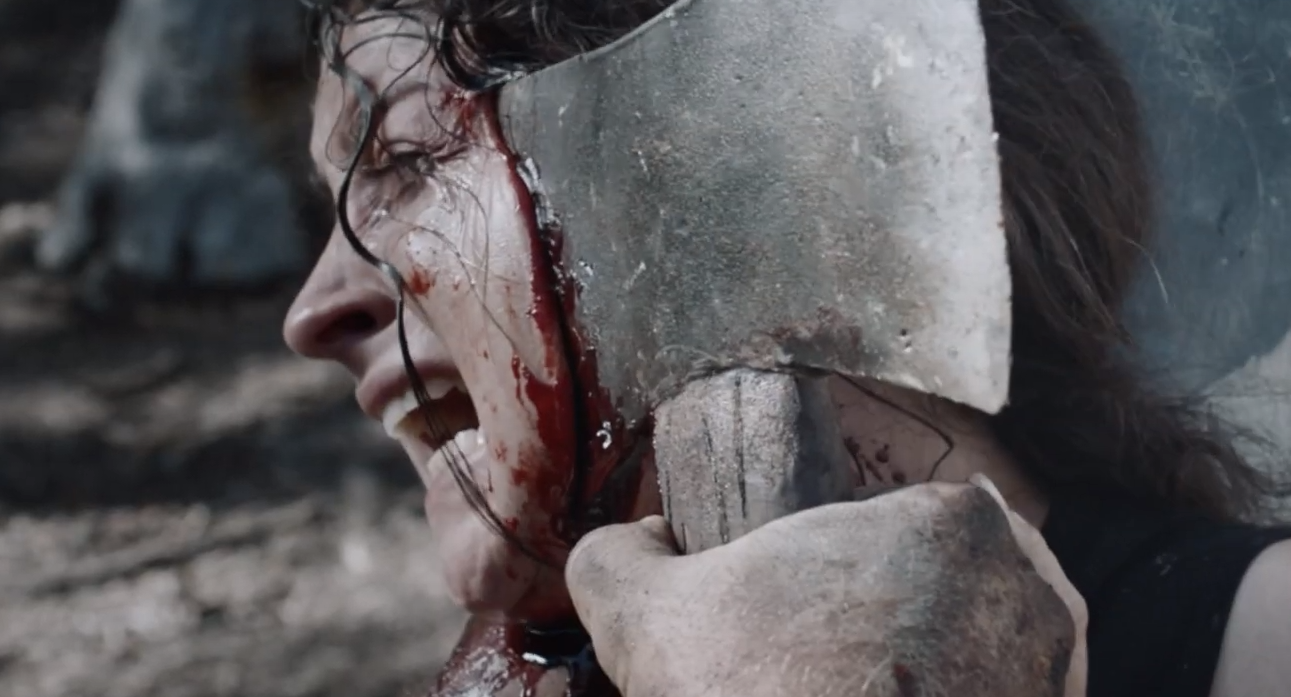
After being kidnapped right off the street, Kayla wakes up in a coffin-sized box somewhere in the Australian outback. Before she can get her bearings, she finds herself hunted by someone wearing a horrific mask. As Kayla makes her way through this hellscape of murder to find a friend, she and the other hunted girls start to succumb to their form of savagery.
The Furies starts strong with a visually impressive prologue. Director Tony D’Aquino gets everything on the screen – from production design to some top-notch gore effects. Visually, the movie is a feast.
Content-wise?
It’s a tonally confused mess.
There’s a weak attempt at commenting on women’s treatment in horror. When these characters aren’t being hunted down by armed slashers, they’re assigned another one of these ghouls as a protector. On paper this sounds like a novel idea: “Women are either fodder or in need of protection in these movies!” Unfortunately, D’Aquino never does anything more than set those ideas up.
Complicating things more is the way these women are written as merely paper-thin caricatures. They run, scream and die. Rinse, repeat. Kayla’s journey of “discovery” has the depth of a red Solo cup. Instead of looking inward at her own darkness and allowing that to come through in the performance, the movie settles for wearing a dark hoodie and saying tough things while handling a taser.
The messy ideas continue into the movie’s overall tone. The horror elements are strong, but there are also some half-realized sci-fi threads peppered about. Instead of exploring these nuggets in any meaningful way, D’Aquino treats them like the first episode of a network series to be explored later.
Despite some impressive visual sleight of hand with excellent cinematography and practical gore effects, The Furies can’t overcome the inherent shallowness of its story and execution.