We Die Alone—writer/director Marc Cartwight’s award-winning short horror/thriller—prizes both character and story. It benefits from committed performances that develop textured characters you feel for.
Baker Chase Powell is effective as Aidan. Cripplingly
anxious about women, Aidan is also far too handsome to believe his issues are
insurmountable. Surely someone will fall for this dangerously isolated young
man if given the chance, right?
Likewise, the tenderness and insecurity shining from Ashley
Jones’s performance—along with just a handful of ostensibly throwaway lines
from her co-stars—cement her as a believable lonely heart you hope can turn
things around.
And of course, there is the catalyst for their developing storyline,
Chelsea (a perfectly cynical Samantha Boscarino). The filmmaker brings together
characters, makes you root for them, makes you anxious for their emotional
wellbeing, and then delivers on a promise you didn’t realize he made.
Cartwright understands how story develops and uses this expertise to subvert expectations. His film plays with your preconceptions but never substitutes clever gimmick for story. The result is a sly, entirely satisfying journey into love, loneliness and how little we understand each other.
Here’s the thing about horror movies in 2020: they have to one up 2020. This year itself is such a horror show, it’s hard for cinema to keep up.
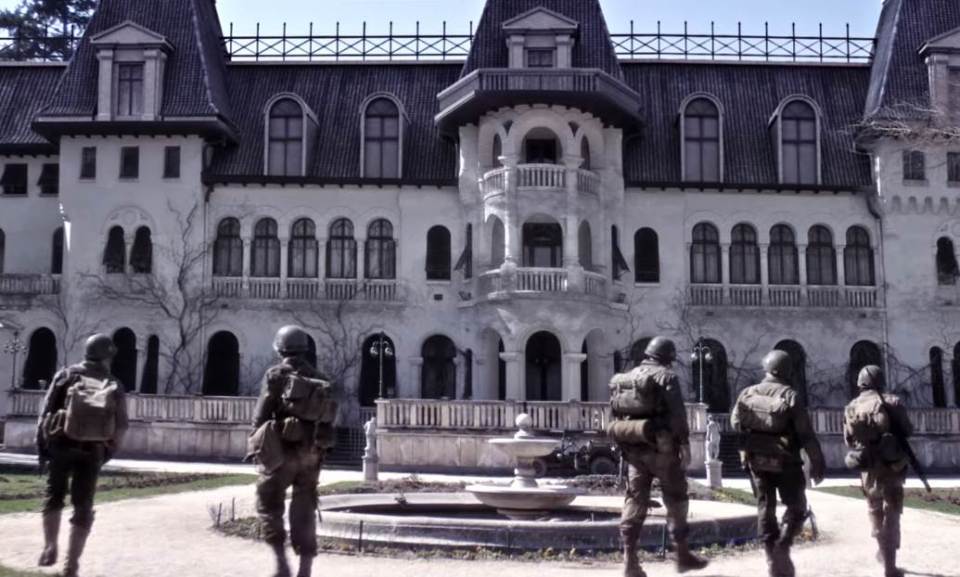
Writer/director Eric Bress (The Butterfly Effect) does what he can with the supernatural war tale, Ghosts of War.
Five WWII soldiers are ordered to hold tight in a French mansion circa 1944. It’s an isolated estate, once a Nazi stronghold. Terrible things happened there, and even though the surroundings suggest luxury, the mission may be the most dangerous the platoon has ever faced.
It reminds me of that time earlier this year when COVID trapped a Bolivian orchestra inside a haunted German castle surrounded by wolves.
So the film has that to compete with. Of course, the other
thing Ghosts of War has going against it is the surprisingly engaging
and unfortunately underseen Overlord, a
WWII horror show that drops us alongside a handful of soldiers into war torn
France just in time to find zombies.
Very little is more fun than Nazi zombies.
But Bress isn’t interested in zombies. Instead, he explores
the madness that weighs on men who’ve done the unthinkable by trapping them in
a situation where they must face their demons.
Kyle Gallner delivers an appropriately haunted performance
as one of the soldiers—each of whom Bress characterizes with quick, shorthand
ideas: the nut job (Gallner), the smartypants (Pitch Perfect’s Skylar
Astin), the hero (Theo Rossi), the big talker (Alan Ritchson), the leader who’s
in over his head (Brenton Thwaites).
Gallner and Astin are the only cast members given the
opportunity to differentiate themselves from the pack as the platoon stumbles
upon evidence of the haunting. Bress and his ensemble stumble here, rarely
developing any real dread, infrequently even delivering the jumps their quick
cut scares attempt.
Ghosts of War makes an effort to say something meaningful.
That message is waylaid by confused second act plotting and a third act reveal
that feels far more lurid and opportunistic than it does resonant or haunting.
Bress tries to take advantage of the audience’s preconceived notions in order to subvert expectations, but he doesn’t have as much to say as he thinks.
Many a film has used a building—a haunted house, for
instance—to represent the mental state of a character. From Shirley Jackson to
Stephen King to Daniel Kehlmann, writers have lured us into perfectly lovely structures
only to hold us inside, our ugly thoughts manifesting as danger, our madness
creating a labyrinthine, Escher-esque trap.
Such is the case for Relic, a compassionate but clear-eyed look at a different type of hereditary horror.
Edna (Robyn Nevin) has been missing for at least three days.
Her daughter Kay (Emily Mortimer) and her granddaughter Sam (Bella Heathcote)
move into Edna’s place to keep an eye out for her while local police
investigate.
And then, there she is, and it’s entirely likely she never
even left the house.
Well, that can’t be—unless there’s something seriously weird
about this house.
Co-writer/director Natalie Erika James keeps her metaphor right at the surface of the film. That keeps Relic from ever truly terrifying, honestly. There’s no simultaneous pull that something supernatural is afoot. But the sense of dread takes on a whole new tenor, and the film’s horror is honest as it hits on an emotional level.
Nevin does an admirable job with Edna, creating a fully dimensional
character, one who’s tough enough that when she becomes vulnerable, it comes as
a jolt.
Mortimer and Heathcote strike a believable love/disappointment/blame
balance and the emotional tug of war among the three women rings sadly true.
There’s not a lot of depth to this story. Relic isn’t hiding its themes—there are no subplots or red herrings, and the a-ha moments that allow Sam and Kay to piece together the mystery of Gram’s troubles feel almost perfunctory.
But James doesn’t shy away from the ugliness, guilt, anger or grief that fuel relationships tied up in this particularly painful genealogical horror. With its evocative analogy, Relic shows us what we are really afraid of, and it isn’t ghosts.
A poetry of dread – that’s what the best in this business can conjure with the right framing, movement, stillness. Whether it’s Dick Pope creating that just-off feel of bucolic 1950s Idaho for The Reflecting Skin or Owen Roizman forever narrowing the screen, our gaze and our options in The Exorcist, the cinematographer is horror’s true master. Mike Giolakis kept us looking around us and behind us to see where the monster might be in It Follows. John Alcott (The Shining), Chung-hoon Chung (The Handmaiden) and Mo-gae Lee (A Tale of Two Sisters) haunted and mesmerized us with color, movement and atmosphere. Has anybody done it better?
Here are our nominees for the best cinematography in horror.
Gorgeous. If you’re looking for something theatrical, a true marriage between cinematography and set design, Masaki Kobayashi’s Oscar nominee Kwaidan delivers the goods.
Yoshi Miyajima lenses four different ghost stories, each almost entirely shot on highly decorated sound stages, and what he captures is the feeling of make believe that gives each story the sense that it is being told, being embellished for your spooky enjoyment.
Each story is given its own look, its own personality. It’s bold and memorable filmmaking, and an absolute sight to behold.
4. Antichrist (2009) – Anthony Dod Mantle
Whether it’s the utter poetry of the opening tragedy, the claustrophobic dread of the middle section, or the lurking menace of the final reels, Antichrist is an absolute treasure trove of emotional manipulation.
At times, Anthony Dod Mantle’s cinematography feels at odds with the actual content on the screen—particularly in Act 1. But mining for beauty in pain is one of many ways director Lars von Trier succeeds in surprising and horrifying with this film.
Mantle finds a terrifying beauty in ugly thing von Trier throws at you, and the end result is a mesmerizing and brutal work.
https://www.youtube.com/watch?v=w4U5rdi9w-U&t=20s
3. Nosferatu (1922) – Fritz Arno Wagner
We needed to pay our respects to some of the earliest and most memorable work in cinema. Why F.W. Murnau’s Nosferatu? Because nearly 100 years later, there are still images that haunt your dreams.
Fritz Arno Wagner (who also lensed Fritz Lang’s glorious M) capitalizes on the unseemly, vermin-like look of Count Orlock (Max Schreck, genius) with creeping silhouettes, lurking shadows, and camera angles that emphasized his hideousness.
Whether it’s the shocking rise from the coffin, the shadow on the staircase, or the image of the sole survivor of the ship recently decimated by “the plague,” Murnau and Wagner’s images are as evocative today as they were in ’22.
2. The Lighthouse (2019) – Jarin Blaschke
The atmosphere is thick and brisk as sea fog, immersing you early with Oscar nominee Jarin Blasche’s chilly black and white cinematography and a Damian Volpe sound design echoing of loss and one persistent, ominous foghorn.
Director/co-writer Robert Eggers follows The Witch, his incandescent 2015 feature debut, with another painstakingly crafted, moody period piece. The Lighthouse strands you, along with two wickies, on the unforgiving island home of one lonely 1890s New England lighthouse.
Salty sea dog Thomas Wake (Willem Dafoe) keeps the light, mind ye. He also handles among the most impressive briny soliloquies delivered on screen in a lifetime. Joining him as second is one Ephraim Winslow (Robert Pattinson)—aimless, prone to self-abuse, disinclined to appreciate a man’s cooking.
1. Pan’s Labyrinth (2006) – Guillermo Navarro
In 2006, Guillermo Del Toro’s masterpiece may have somehow been overlooked as Oscar’s Best Foreign Language Film, but at least the Academy had the common sense to notice Guillermo Navarro’s cinematography.
He manages to create an atmosphere equally imaginative and bitterly realistic, something befitting a child’s logic. Like a fairy tale, the screen blends the magical beauty of good and evil. His vision is as hypnotic as it needs to be, as childlike as we need it to be. It’s beautiful, innocent and utterly heartbreaking.
Most weeks there’s at least one streaming movie option that
will cost you. These are ostensibly the films that were meant to be theatrical
releases, as opposed to your garden variety direct-to-streaming options. The
idea is that you’re paying a premium to get to see it now, rather than waiting
for theaters to open up.
It’ll be interesting to see how long this tactic lasts, but one thing is for sure: You Should Have Left is not worth $20.
Always likeable, always reliable Kevin Bacon reteams with
his Stir of Echoes writer/director David Koepp to bring Daniel Kehlmann’s
novel to the screen.
Bacon plays Theo, a man with a past and a much younger wife
(Amanda Seyfried), Susanna. She’s a sought after actress and he’s feeling a
little neglected, so they decide to spend the three weeks between her shoots
with their 6-year-old Ella (Avery Tiiu Essex) in a remote rental property one of
them found online.
Which one found it, though?
From the early dream sequences to the small town shopkeep
with an accent, an attitude and a secret to—well, hell, every single thing—You
Should Have Left squeezes the life out of standard horror tropes.
Not that this is horror, really. It’s certainly not scary. I
wouldn’t call it a thriller, either, assuming those have to thrill at some
point. Nope, it’s just a boring, predictable waste of talent.
Seyfried, in particular, elevates her stale character,
sharing a believably conflicted lived-in chemistry with Bacon. Uncharacteristically,
it’s Bacon who struggles.
Theo’s internal conflict is weakly depicted, his arc equally
anemic, and for that reason, his epiphany feels unearned. The actor does
develop a lovely onscreen relationship with Essex, although she’s asked to do
little more than look pensive.
Or maybe she was bored. Hard to blame her when Koepp works
so hard to make the film tedious. Uninspired sound design and mediocre FX blend
together with the filmmaker’s hum drum storytelling to betray a tiresome lack
of imagination.
No way Universal believes they deserve your $20 for this.
Has there ever been a place as glorious as the video store? The brain trust behind the horror anthology Scare Package clearly understands the secret joys of the independent VHS retailer and their beloved horror wares.
“This weekend is all about no rules, no clothes, and no cell
service,” begins Emily Hagins’s surprisingly fresh meta-horror Cold Open.
It sets the stage for a really funny way to spend about an hour and 40 minutes.
Chad Buckley of Rad Chad’s Horror Emporium (directed
by Aaron B. Koontz) is training a new employee, covering the ins and outs of
the VHS game and dodging that creepy regular customer. Periodically we get a
glimpse at the store’s rentals, taking shape as the set of horror shorts that
make up the anthology.
Chris McInroy’s consistently funny One Time in the Woods plays like a good natured Troma flick. So, it’s a bloody, gooey, gore-soaked, viscera-saturated mess with a bright disposition.
Noah Segan (Knives Out) makes his directorial debut with M.I.S.T.,E.R., which boasts the great casting of Noah Segan (how’d he get him?!) as well as Jocelyn DeBoer (Thunder Road, Greener Grass). You wouldn’t call it inspired, but a nice sleight of hand and one subtly creepy bartender are enough to keep you guessing and entertained.
Anthony Cousins’s The Night He Came Back IV: The Final Kill doesn’t offer much in the way of a fresh perspective and feels especially tame compared to the two other meta-horror episodes in the package. The two shorts that bridge sci fi and horror—Courtney and Hilary Andujar’s Girls’ Night Out of Body and Baron Vaughn’s So Much To Do—don’t answer nearly as much as they ask, but they do keep your attention.
The collection is weaved together with love and a lot of
nerdy horror know-how. Was it destined for Shutter? Well, that Jo Bob Briggs
cameo couldn’t have hurt.
Scare Package sports an excellent use of budget for a fun, campy set of horror-loving films—the kind of short movies that lovingly mock the genre. Most of the episodes offer a knowing lampooning, and each ends abruptly enough to avoid wearing out its welcome.
Witches, starvation, ghouls, oppression, Church and governmental oppression—there’s a reason they call them the Dark Ages! Filmmaker George Popov (Hex, The Droving) joins us to discuss the best horror movies about the Dark Ages.
6. Black Death (2010)
What Christopher Smith (Severance) delivers with Black Death that few if any horror filmmakers tackling the same themes match is a clear eye as to the flaws and merits on both sides of the witch hunt.
Eddie Redmayne is an innocent and a believer; Sean Bean is no innocent, but he does believe. Both are part of a Christian army who get word of a village untouched by pestilence—a village where some say the dead have been raised.
What follows is a punishingly human drama about using religion to suit your own ends, about what evil we are and are not willing to accept, and about the end of innocence.
5. The Masque of the Red Death (1964)
The sixth of seven Roger Corman/Vincent Price Poe films—and maybe the best—sees Price in a role that delights in its own evil.
No Corman film has ever used color to such glorious extreme, a tactic absolutely in keeping with Poe’s text. The film works from a short story, padding with subplots (one from Poe, one from elsewhere) that work well within the story and generate a little emotional depth beneath the lurid color and debauchery.
Stay through to the end, whatever you do, but do give this one a chance.
4. Hex (2017)
Two soldiers separated from their companies during England’s Civil War chase each other into a deep forest. The rebel Thomas (William Young) is young, soft and open to the dark poetry and doom of witchcraft. He’s not long in the woods before he sees his true enemy is not the countryman behind him with his sword drawn.
Richard (Daniel Oldroyd) fights for King and Country, strident and single-minded, logic keeps him from believing until he has little choice.
There is more happening here than you realize, and it’s to the filmmakers’ credit that you only recognize the film’s purpose when they are ready for you to do so. The result is a satisfying tale with more power than just magic.
3. Army of Darkness (1992)
Easily the most fun you’ll have with a Dark Ages film, Army of Darkness is Sam Raimi’s third and silliest installment in his Evil Dead trilogy. In it, like a Connecticut Yankee, hero Ash (Bruce Campbell at his buffest) finds himself transported to dark times.
You know what he finds. Deadites.
Ash must woo the girl (and then maybe accidentally get her changed into a deadite, which will necessitate killing her), say the spell (which he may or may not entirely screw up, inadvertently raising an army of darkness), and save the day.
Endlessly quotable, utterly bananas, and just a thrill ride of Monty Python meets Three Stooges meets Ray Harryhausen fun, Army of Darkness is a treasure.
2. The Head Hunter (2018)
In a land of yore, the geography forbidding, a far off
trumpet calls for the hardiest of warriors—those equipped to fight beasts.
Director Jordan Downey shows much and tells little in his
nearly wordless medieval fantasy, The Head Hunter. The filmmaker parses
out all the information you’ll need to follow this simple vengeance myth, but
pay attention. Very little in this film is without meaning—no creepy image, no
creak or slam.
In what is essentially a one man show, Christopher Rygh
delivers a quiet, brooding performance for a quiet, brooding film. He cuts an
impressive figure as the Vikingesque warrior at the center of this adventure
and his work speaks of joyless endurance.
https://www.youtube.com/watch?v=5ZqtRbifT6Q
1.Hagazussa (2017)
Making a remarkably assured feature debut as director, Lukas Feigelfeld
mesmerizes with his German Gothic poetry, Hagazussa: A Heathen’s Curse.
Settled somewhere in the 15th Century Alps, the film shadows lonely, ostracized women struggling against a period where plague, paranoia and superstition reigned.
It would be easy to mistake the story Feigelfeld (who also writes) develops as a take on horror’s common “is she crazy or is there malevolence afoot?” theme. But the filmmaker’s hallucinatory tone and Aleksandra Cwen’s grounded performance allow Hagazussa to straddle that line and perhaps introduce a third option—maybe both are true.
The film lends itself to a reading more lyrical than literal. Feigelfeld’s influences from Murnau to Lynch show themselves in his deliberate pacing and the sheer beauty of his delusional segments. He’s captured this moment in time, this draining and ugly paranoia that caused women such misery, with imagery that is perplexingly beautiful.
There is a moment that currently fascinates horror filmmakers. It is the moment when we forever lose the sweet little white boy destined to become a sociopath.
Director Brandon Christensen (writing with Colin Minnihan) examines
parental involvement and even responsibility with the imaginary friend horror, Z.
Beth Parsons (Keegan Connor Tracy) and her husband Kevin (Minnihan
regular Sean Rogerson) are at odds about how best to handle son Josh (Jett
Klyne) and his new buddy.
This sounds familiar.
Mother is immediately creeped out. Dad is lenient. Boy
begins to lash out, blaming imaginary friend. Mom wants to enlist expert help.
Dad agrees within reason, but begins to pull away once Mom becomes convinced of
a supernatural presence. Bodies begin to pile up.
That’s just in the last three years. This phenomenon means
two things: filmmakers have hit upon a provocatively of-the-moment topic and it
will be hard to find a unique perspective on that topic.
Though Z never seems fresh, there are moments that
feel more authentic than they have any right to. Christensen’s direction lets
conversations, in particular, breathe. Actors get the chance to give their
characters a heartbeat. Adult family relationships have a lived-in quality that
both reinforces themes and carves out layers for the story.
As is often the case in this subgenre, the film lives or
dies on the role of the mother. Lucky, then, that Tracy gives such a powerful
performance. Never showy, Tracy’s weary, passive, put-upon delivery creates a
mysterious yet believable character. Beth’s actions feel both natural and
unpredictable, which creates a lot of space for the filmmaker to build in
surprises.
Too much convenience, too many unearned jump scares and too
much predictability threaten to sink the effort, but a handful of narrative
choices and a few truly solid performances (plus a cameo from the always
welcome Stephen McHattie) elevate the film.
It’s no We Need to Talk about Kevin (the high water mark for the category), but what is? It is an unsettling way to worry about what we pass on to our kids.
It’s been almost exactly one year since Martin’s little
sister Meg disappeared. The Droving festival is upon us again, and
Martin’s come back to town to do his own investigating.
In filmmaker George Popov’s sophomore effort, following his underseen 2017 gem Hex, the co-writer/director once again weaves elements of a psychological thriller with supernatural themes to create an effectively off- kilter sensibility.
Martin (Daniel Oldroyd, also of Hex) isn’t exactly what he appears to be. His own arc, much of it grounded in slowly-revealed backstory, is what drives the film.
Martin’s internal journey is more deceptively complicated than expected. It creates an underlying unease that nicely offsets Droving’s almost poetic visuals. Though Oldroyd understated grace holds all the film’s unusual elements together, he can’t quite convince when the moment comes to unveil Martin’s most dramatic levels of psychic damage.
The clues Martin pieces together feel too easily sleuthed. The
Droving would have benefitted from some narrative complications, some
untidiness. Still, the mystery itself—built on a handful of tense set pieces
that deliver menace and weirdness in equal measure—is a good one.
Popov’s instinct for visual storytelling is again the most compelling argument for the film. Hex, made on next to nothing, delivered a spooky, medieval atmosphere thanks in large part to framing and cinematography.
For Droving, Popov works again with cinematographer Harry Young, whose shots are often beautifully lit, giving them a painterly quality. From early, eerily quiet pre-festival shots of Martin walking the streets of town to the more frenetic, dizzying festival footage, Popov sets a creepy stage for his thriller.
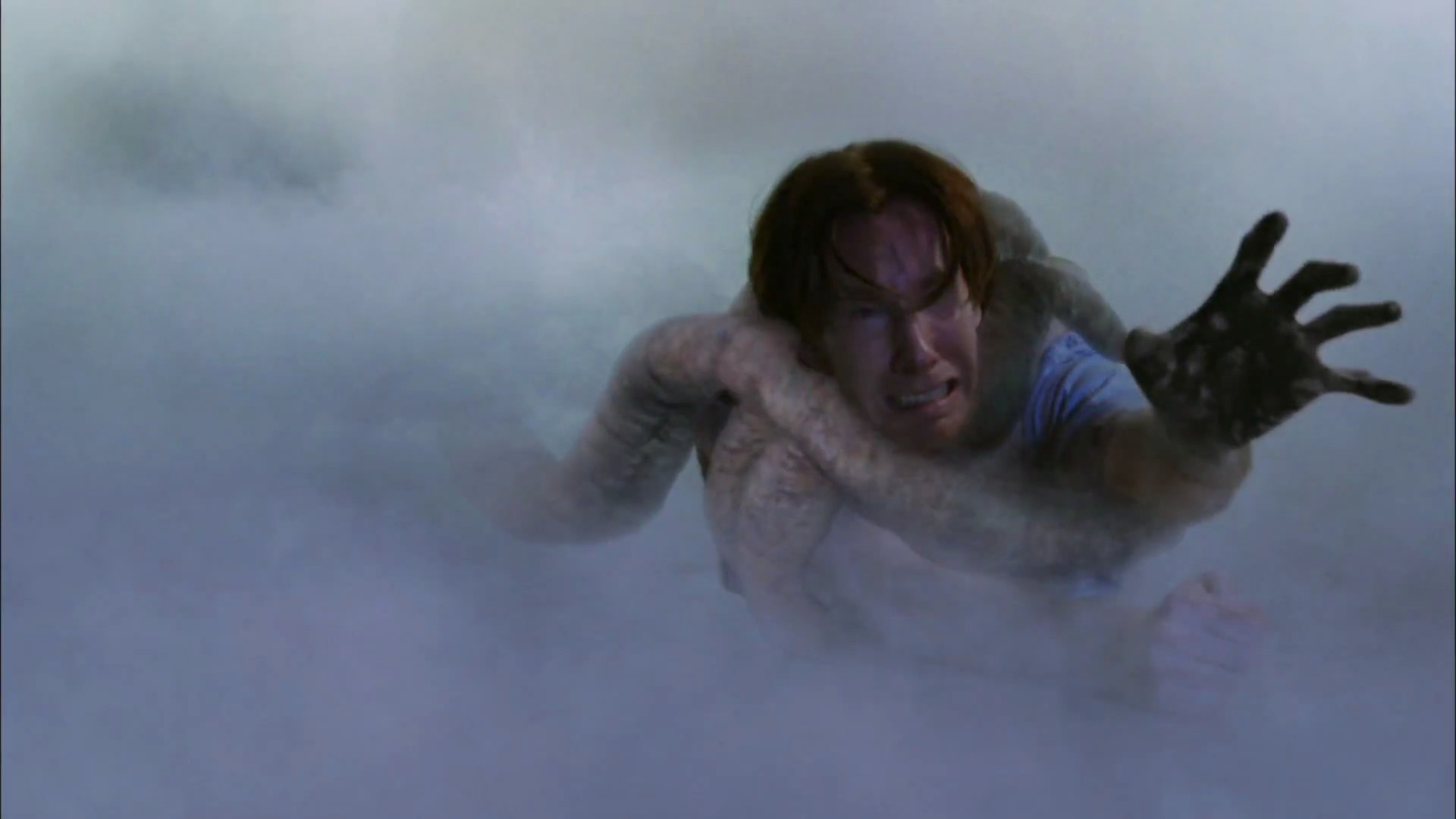
Frank Darabont really loves him some Stephen King, having adapted and directed the writer’s work almost exclusively for the duration of his career. While The Shawshank Redemption may be Darabont’s most fondly remembered effort, The Mist, an under-appreciated creature feature, is our vote for his best.
David Drayton (Thomas Jane) and his young son head to town for some groceries. Meanwhile, a tear in the space/time continuum (who’s to blame?!) opens a doorway to alien monsters. So Drayton, his boy, and a dozen or so other shoppers all find themselves trapped inside this glass-fronted store just waiting for rescue or death.
Marcia Gay Harden is characteristically brilliant. As the religious zealot who turns survival inside the store into something less likely than survival out with the monsters, she brings a little George Romero to this Stephen King.
In a Romero film, no matter how great the threat from the supernatural, the real monsters tend to be the rest of the humans. King does not generally go there, but he does so with The Mist and it’s what makes this one of his most effective films.
While Harden excels in a way that eclipses all other performances, the whole cast offers surprisingly restrained and emotional turns – Toby Jones is especially effective.
The FX look good, too, and let’s be honest, a full-on monster movie with weak FX is the lamest. The way Darabont frames the giants, in particular, gives the film a throw-back quality to the old matinee creature features. But he never gives into cheekiness or camp. The Mist is a genuinely scary film – best seen in the black and white version if you can find it.
Regardless, it’s the provocative ending that guarantees this one will sear itself into your memory. Though this is likely what kept The Mist from gaining an audience in theaters, it is a brilliant and utterly devastating scene that elevates the film from great creature feature to great film.