Tag Archives: horror

Fright Club: Best Half of 2017

We are halfway through 2017 already – whew! It’s been a sucktastic year in many respects, but not when it comes to horror movie output. The young year has already seen so many great flicks that we had to leave some real gems off this list, but we’re pleased to say that Senior Filmmaking Correspondent Jason Tostevin returns to keep us honest.

5. The Girl with All the Gifts

It is the top of the food chain that has the most reason to fear evolution.

Isn’t that the abiding tension in monster and superhero movie alike? The Girl with All the Gifts explores it thoughtfully and elegantly – for a zombie movie.

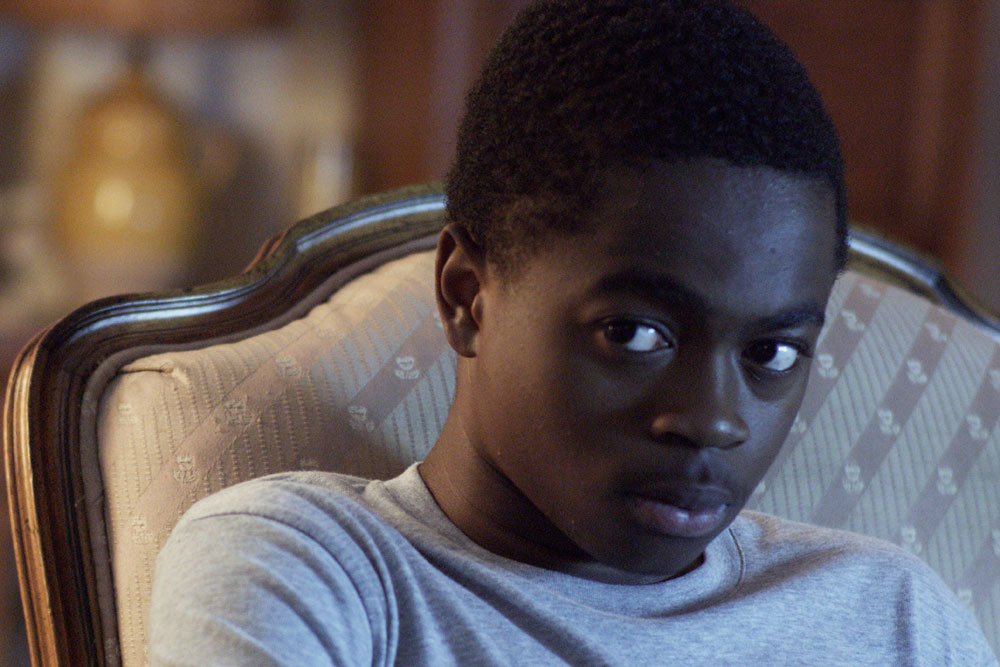
So, what’s the deal? A horde of “hungries,” each infected with a plant-based virus, has long since overrun the human population. Dr. Caldwell (Glenn Close), her researchers and the military are holed up while trying to derive a cure from the next generation, like Melanie (Sennia Nanua) – the offspring of those infected during pregnancy.

But much of the film’s success sits on Nanua’s narrow shoulders, and she owns it. The role requires a level of emotional nimbleness, naiveté edged with survival instinct, and command. She has that and more.

Cirector Colm McCarthy showcases his bounty of talent in a film that knows its roots but embraces the natural evolution of the genre. It’s not easy to make a zombie film that says something different.

But what Girl has to say is both surprising and inevitable.

And she says it really, really well.

4. The Blackcoat’s Daughter

Winter break approaches at a Catholic New England boarding school. Snow piles up outside, the buildings empty, yet Kat (Kiernan Shipka) and Rose (Lucy Boynton) remain. One has tricked her parents for an extra day with her townie boyfriend. One remains under more mysterious circumstances.

Things in writer/director Oz Perkins’s The Blackcoat’s Daughter quietly unravel from there – although quiet is not precisely the word for it. There is a stillness to the chilly, empty halls. But thanks to the filmmaker’s brother Elvis, whose disquieting score fills these empty spaces with buzzing, whispering white noise, a sinister atmosphere is born.

Perkins repays your patience and your attention. You can expect few jump scares, but this is not exactly a slow-burn of a film, either.

It behaves almost in the way a picture book does. In a good picture book, the words tell only half the story. The illustrations don’t simply mirror the text, they tell their own story as well. If there is one particular and specific talent Blackcoat’s Daughter exposes in its director, it is his ability with a visual storyline.

Pay attention when you watch this one. There are loads of sinister little clues to find.

3. Hounds of Love

Driven by a fiercely invested and touchingly deranged performance from Emma Booth, Hounds of Love makes a subtle shift from horrific torture tale to psychological character study. In 108 grueling minutes, writer/director Ben Young’s feature debut marks him as a filmmaker with confident vision and exciting potential.

It is the late 1980s in Perth, Australia, and at least one young girl has already gone missing when the grounded Vicki (Ashleigh Cummings) sneaks out her bedroom window to attend a party. This isn’t nearly as dumb a move as is accepting a ride from Evie White (Booth) and her husband John (Stephen Curry).

As the couple dance seductively and drink to celebrate, Young disturbingly conveys the weight of Vicki’s panicked realization that she is now their captive. It is just one in a series of moments where Young flexes impressive chops for visual storytelling, utilizing slo-motion, freeze frame, patient panning shots and carefully chosen soundtrack music to set the mood and advance the dreadful narrative without a spoken word.

And then, just when you might suspect his film to wallow in the grisly nature of the Whites’ plan for Vicki, Young turns to dialog sharp enough to upend your expectations, and three vivid characters are crafted in the suffocating dread of the White’s neighborhood home.

No doubt, events get brutal, but never without reminders that Young is a craftsman. Subtle additions, such as airplanes flying freely overhead to contrast with Vicki’s captivity, give Hounds of Love a steady dose of smarts, even as it’s shaking your core.

https://www.youtube.com/watch?v=UNEurXzvHqE

2. Raw

What you’ll find in writer/director Julia Ducournau’s notorious feature debut is a thoughtful coming of age tale.

And meat.

Justine (Garance Marillier, impressive) is off to join her older sister (Ella Rumpf) at veterinary school – the very same school where their parents met. Justine may be a bit sheltered, a bit prudish to settle in immediately, but surely with her sister’s help, she’ll be fine.

Ducournau has her cagey way with the same themes that populate any coming-of-age story – pressure to conform, peer pressure generally, societal order and sexual hysteria. Here all take on a sly, macabre humor that’s both refreshing and unsettling.

In a very obvious way, Raw is a metaphor for what can and often does happen to a sheltered girl when she leaves home for college. But as Ducournau looks at those excesses committed on the cusp of adulthood, she creates opportunities to explore and comment on so many upsetting realities, and does so with absolute fidelity to her core metaphor.

She immediately joins the ranks of Jennifer Kent (Babadook) and Ana Lily Amirpour (A Girl Walks Home Alone at Night) – all recent, first time horror filmmakers whose premier features predict boundless talent.

1. Get Out

Opening with a brilliant prologue that wraps a nice vibe of homage around the cold realities of “walking while black,” writer/director Jordan Peele uses tension, humor and a few solid frights to call out blatant prejudice, casual racism and cultural appropriation.

When white Rose (Alison Williams) takes her black boyfriend Chris (Daniel Kaluuya) home to meet the fam, she assures him race will not be a problem. How can she be sure? Because her Dad (Bradley Whitford) would have voted for Obama’s third term “if he could.” It’s the first of many B.S. alerts for Peele, and they only get more satisfying.

Rose’s family is overly polite at first, but then mom Missy (Catherine Keener) starts acting evasive and brother Jeremy (Caleb Landry Jones) gets a bit threatening, while the gardener and the maid (both black – whaaat?) appear straight outta Stepford.

Peele is clearly a horror fan, and he gives knowing winks to many genre cliches (the jump scare, the dream) while anchoring his entire film in the upending of the “final girl.” This isn’t a young white coed trying to solve a mystery and save herself, it’s a young man of color, challenging the audience to enjoy the ride but understand why switching these roles in a horror film is a social critique in itself.

Get Out is an audacious first feature for Jordan Peele, a film that never stops entertaining as it consistently pays off the bets it is unafraid to make.

https://www.youtube.com/watch?v=A2JbO9lnVLE

Fright Club: Underestimated Women in Horror

Horror is built, in large part, on the concept of the underestimated woman. What else is a final girl? But the label doesn’t just fit the bloody survivor. There are other women you don’t want to sell short. Mrs. Voorhees, anyone? How about Carrie White? Overlook these chicks at your own peril.

Who are the women of horror you should absolutely not, for any reason, underestimate?

5. May (2002)

Lucky McKee’s 2002 breakout is a showcase for his own talent as both writer and director, as well as his gift for casting. The entire ensemble surprises with individualized, fully realized, flawed but lovable characters, and McKee’s pacing allows each of his talented performers the room to breathe, grow, get to know each other, and develop a rapport.

More than anything, though, May is a gift from Angela Bettis to you.

As the title character, Bettis inhabits this painfully gawky, socially awkward wallflower with utter perfection. McKee’s screenplay is as darkly funny as it is genuinely touching, and we’re given the opportunity to care about the characters: fragile May, laid back love interest Adam (a faultless Jeremy Sisto), hot and horny Polly (a wonderful Anna Faris).

McKee’s film pulls no punches, mining awkward moments until they’re almost unendurable and spilling plenty of blood when the time is right. He deftly leads us from the sunny “anything could happen” first act through a darker, edgier coming of age middle, and finally to a carnage laden climax that feels sad, satisfying, and somehow inevitable.

4. The Loved Ones (2009)

Aussie teen Lola (a gloriously wrong-minded Robin McLeavy) asks Brent (Xavier Samuel) to the school dance. He politely declines, which proves to be probably a poor decision.

Writer/director Sean Byrne quietly crafts an atmosphere of loss and depression in and around the school without painting the troubles cleanly. This slow reveal pulls the tale together and elevates it above a simple work of outrageous violence.

Inside Lola’s house, the mood is decidedly different. Here, we’re privy to the weirdest, darkest image of a spoiled princess and her daddy. The daddy/daughter bonding over power tool related tasks is – well – I’m not sure touching is the right word for it.

The Loved Ones is a cleverly written, unique piece of filmmaking that benefits from McLeavy’s inspired performance as much as it does its filmmaker’s sly handling of subject matter. It’s a wild, violent, depraved way to spend 84 minutes. You should do so now.

3. Audition (1999)

Audition is a phenomenally creepy May/December romance gone very, very wrong.

A widower holds mock television auditions as a way of finding a suitable new mate. He is repaid for his deception.

Nearly unwatchable and yet too compelling to turn away from, Audition is a remarkable piece of genre filmmaking. The slow moving picture builds anticipation, then dread, then full-on horror.

Midway through, Miike punctuates the film with one of the most effective startles in modern horror, and then picks up the pace, building grisly momentum toward a perversely uncomfortable climax.

By the time Audition hits its ghastly conclusion, Miike and his exquisitely terrifying antagonist (Eihi Shina) have wrung the audience dry. She will not be the ideal stepmother.

Keep an eye on the burlap sack.

2. You’re Next (2011)

We’ve put this movie down now and again – mainly because it didn’t quite live up to expectations on first viewing. But there is one thing you can absolutely say for You’re Next – no one saw Erin (Sharni Vinson) coming.

Adam Wingard’s film – written by frequent collaborator Simon Barrett – crashes the anniversary of a snipey, bitchy family, celebrating at their isolated, ostentatious country place.

When masked marauders start picking off family members, party plus-one Erin shows off some skills. Level headed, calm, savvy and badass to the bone, she always knows what to do, how to do it, where to nail it, and the most vulnerable spot to land a punch.

No one knew what she had in store for them.

1. The Woman (2011)

There’s something not quite right about Chris Cleek (an unsettlingly cherubic Sean Bridgers), and his family’s uber-wholesomeness is clearly suspect. This becomes evident once Chris hunts down a feral woman (an awesome Pollyanna McIntosh), chains her, and invites the family to help him “civilize” her.

The film rethinks family – well, patriarchy, anyway. Notorious horror novelist and co-scriptor Jack Ketchum may say things you don’t want to hear, but he says them well. And director Lucky McKee – in his most surefooted film to date – has no qualms about showing you things you don’t want to see.

McIntosh never veers from being intimidating, terrifying even when she’s chained. Though she speaks nary a word of dialog, she’s the most commanding presence on the screen. And though Chris Cleek may not yet realize it, the true Alpha is never really in doubt.

Milo and Orlok

The Transfiguration

by Hope Madden

Milo likes vampire movies.

So, it would seem, does writer/director Michael O’Shea, whose confident feature debut shows us the relationship between the folklore and the life of a forlorn high school outcast.

Eric Ruffin plays Milo, a friendless teen who believes he is a vampire. What he is really is a lonely child who finds solace in the romantic idea of this cursed, lone predator. But he’s committed to his misguided belief.

The film opens in a public men’s room. A man washing his hands overhears what he believes to be a sex act underway in a nearby stall. In fact, Milo is sucking the life out of a middle aged business man, then pocketing his cash and heading silently back to the rundown NY apartment he shares with his older brother.

All this changes when Milo meets Sophie (Chloe Levine), another outsider and the only white face in Milo’s building. The two strike up a friendship and sweet courtship, despite the fact that Sophie prefers the glittery Twilight saga, while Milo’s interests (like, presumably, O’Shea’s) are more “realistic.”

O’Shea’s film borrows ideas from George Romero’s Martin, Tomas Alfredson’s Let the Right One In, and openly gushes over Murnau’s Nosferatu.

So does Milo. It’s a way the filmmaker authenticates the teen’s self-determined transformation. Inside and out, the film draws on the best in vampire cinema to help Milo deal with a world in which he is a freak no matter what he decides to do.

A profound loneliness haunts this film, and the believably awkward behavior of both Ruffin and Levine is as charming as it is heartbreaking.

Ruffin’s performance borders on impenetrable, which often works in the film’s favor, but as often does not. His big eyes and expressionless face depict a lost soul, his demeanor simultaneously sympathetic and menacing. But there’s too little arc.

The Transfiguration is a character study as much as a horror film, and the underwritten lead, slow burn and somewhat tidy resolution undercut both efforts.

Still, there’s an awful lot going for this gritty, soft-spoken new image of a teenage beast.

Verdict-3-5-Stars

Fright Club: Rituals

Everybody has their rituals, and that’s all fine and dandy. But we aren’t looking for fine and dandy, are we? Hell no – we’re looking for the kind of rituals that generally includes goats heads and/or black candles and/or virgins and/or special meat preparation.

Where will we find these? In some great horror movies. Check it.

5. Kill List (2011)

Never has the line “Thank you” had a weirder effect than in the genre bending adventure Kill List.

Hitman Jay (a volcanic Neil Maskell) is wary to take another job after the botched Kiev assignment, but his bank account is empty and his wife Shel (an also eruptive MyAnna Buring) has become vocally impatient about carrying the financial load.

Without ever losing that gritty, indie sensibility, Ben Wheatley’s fascinating film begins a slide in Act 2 from crime drama toward macabre thriller. You spend the balance of the film’s brisk 95 minutes actively puzzling out clues, ambiguities and oddities.

Everything builds, unsettlingly, to a climactic ritual you won’t see coming.

For those looking for blood and guts and bullets, Kill List will only partially satisfy and may bewilder by the end. But audiences seeking a finely crafted, unusual horror film may find themselves saying thank you.

4. The Wicker Man (1973)

In the early Seventies, Robin Hardy created a film that fed on the period’s hippie- versus-straight hysteria. Uptight Brit constable Sgt. Howie (Edward Woodward) flies to the private island Summerisle, investigating charges of a missing child. His sleuthing leads him into a pagan world incompatible with his sternly Christian point of view.

The deftly crafted moral ambiguity of the picture keeps the audience off kilter. Surely we aren’t to root for these heathens, with their nudey business right out in the open? But how can we side with the self-righteous prig Howie?

But maybe Howie’s playing right into something he doesn’t understand – and what would the people of Summerisle do if he didn’t play along? The ritual would be blown!

Hardy and his cast have wicked fun with Anthony Shaffer’s sly screenplay, no one more so than the ever-glorious Christopher Lee. Oh, that saucy baritone!

The film is hardly a horror movie at all –more of a subversive comedy of sorts – until the final reel or so. Starting with the creepy animal masks (that would become pretty popular in the genre a few decades later), then the parade and the finale, things take quite a creepy turn.

3. We Are What We Are (2010)

In a quiet opening sequence, a man dies in a mall. This is a family patriarch and his passing leaves the desperately poor family in shambles. An internal power struggle begins to determine the member most suited to take over as the head of the household, and therefore, there is some conflict and competition – however reluctant – over who will handle the principal task of the patriarch: that of putting meat on the table.

We’re never privy to the particulars – giving the whole affair a feel of authenticity – but adding to the family’s crisis is the impending Ritual, which apparently involves a deadline and some specific meat preparations.

Grau’s approach is so subtle, so honest, that it’s easy to forget you’re watching a horror film. Indeed, were this family fighting to survive on a more traditional level, this film would simply be a fine piece of social realism focused on Mexico City’s enormous population in poverty. But it’s more than that. Sure, the cannibalism is simply an extreme metaphor, but it’s so beautifully thought out and executed!

https://www.youtube.com/watch?v=EBkNz3_pzsw

2. Martyrs (2008)

This is one you may need to prepare yourself for. Equal parts orphanage ghost story, suburban revenge fantasy, and medical experimentation horror flick, the whole of Martyrs is a brutal tale that is hard to watch, hard to turn away from, and worth the effort.

Mining the heartbreaking loneliness of abandoned, damaged children, the film follows the profound relationship between Lucie (Mylene Jampanoi) and the only friend she will ever have, an undeterrably loving Anna (Morjana Alaoui).

Constantly subverting expectations, including those immediately felt for Anna’s love, writer/director Pascal Laugier makes a series of sharp turns, but he throws unforgettable images at you periodically, and your affection for the leads keeps you breathlessly engaged.

The third act offers the most abrupt change of course as well as tone. Here is where the ritual begins – it began long ago, but the subject wasn’t quite right. Though it feels like an abrupt shift, it ends up a gruesome but inevitable conclusion.

https://www.youtube.com/watch?v=Jbct9qWBSME

1. The Exorcist (1973)

For evocative, nerve jangling, demonic horror, you will not find better than The Exorcist.

Slow-moving, richly textured, gorgeously and thoughtfully framed, The Exorcist follows a very black and white, good versus evil conflict: Father Merrin V Satan for the soul of an innocent child.

But thanks to an intricate and nuanced screenplay adapted by William Peter Blatty from his own novel, the film boasts any number of flawed characters struggling to find faith and to do what’s right in this situation.

So was Friedkin, the director who balanced every scene to expose its divinity and warts, and to quietly build tension. The titular ritual was simply the climax of a film filled with rituals, big and small, Catholic and non-religious, that we use to keep us clean and safe.

Drama Happens

Tales of a 4th Grade Psycho

by Hope Madden

I learned precious little in my 12 years of Catholic schooling. (That’s more on me than it is on the schools, to be honest.) But one lesson that did stick: nuns are judgey.

When I was a 4th grader in Tiffin St. Mary’s Catholic Elementary school, my teacher, Ms. Teill, was charged with generating some kind of skit to entertain at an upcoming PTO gathering.

I volunteered my services.

I would not act, oh no. I prepared to write and direct my first stage play. I called it, “When a Stranger Calls.”

If that title sounds familiar to you, it’s because it is. I stole it from the box of a VHS rental I coveted at the local video store.

As a child, I was fascinated by horror films.

I attribute this to inaccess (my parents only allowed G-rated films until I was about 12), and my abiding fear of all things.

As a preschooler I was afraid of Sesame Street – you must admit it is lousy with monsters. I found Boo Berry cereal equal parts delicious and frightening. Trees and the woods still terrify me – a handicap in rural Ohio.

Odd as it sounds, my ritual for overcoming my fear was to write scary stories.

Not just any scary stories – I would rewrite those tales I overheard that frightened me, allowing me a sort of ownership, I suppose.

I had notebooks full of them – tales crafted of what I could glean from a commercial I’d seen for Helter Skelter, or after eaves dropping on the babysitter as she summarized the film Carrie over the phone to a friend, or after poring over the box for the VHS tape of David Cronenberg’s Rabid. All these became inspiration to my 10-year-old self. Little did Miss Teill know.

I’m not sure how familiar you are with the 1979 slasher whose plot I attempted to plagiarize.

A babysitter receives creepy phone calls telling her to check the children. She ignores the message, the children are slaughtered, and eventually she finds that the calls are being made from inside the house.

“Have you checked the children?”

In the film, the babysitter survives – a fact I did not grasp from the VHS box, so in my play, she dies. And the children die. So do the parents, the police who investigate – actually, every character in my play died except the maniac, who lived to kill another day.

So my friends and I rehearsed during recess. We honed our tale until we were ready to share it with our parents – and everyone else’s – as well as most of St. Mary’s faculty at the PTO meeting.

Poor Miss Teill. Well, I suppose she should have paid more attention during rehearsal.

As it happens, it was Holy Week – those sacred days leading up to Easter.

Let’s be honest, though, there is a lot of blood shed in those days leading up to Easter. Is this really that different?

Where do you think Sister Cleofa landed with that argument?

It turns out, child slaughter doesn’t play that well with the nuns.

My parents were mortified, as was the whole of the audience. As I recall, Miss Teill was reprimanded. I was definitely reprimanded, and had to promise to stop writing anything at all.

And to stop being morbid.

There were several children I had to promise to stop playing with, also, at their parents’ request.

But otherwise, the performance went well, I think.

Maniac Baby on Board

Prevenge

by Hope Madden

Anybody with any sense at all is afraid of pregnant women.

I myself all but pushed a man down a flight of stairs while I was pregnant, and still don’t see the problem with it.

With unassuming mastery, Alice Lowe pushes that concept to its breaking point with her wickedly funny directorial debut, Prevenge.

Lowe plays Ruth. Grieving, single and pregnant, Ruth believes her unborn daughter rather insists that she kill a bunch of people.

With her characteristically dry, oh-so-British humor, Lowe exposes awkward moments of human interaction and then forces you to stare at them until they become gigglingly unbearable.

Why such bloodlust from Ruth’s baby? Lowe, who also wrote the script, divulges just as much as you need to know when the opportunity arises. At first, there’s just the macabre fun of watching the seemingly ordinary mum pick off an unsuspecting exotic pet salesman.

And then on to the saddest, most pathetic 70s-loving disco club DJ of all time.

With each new victim we learn a bit more backstory and a little more about Ruth, who’s on a path that’s funny, bloody and just touching enough to leave a mark.

Lowe’s blackly comic timing as an actor is well proven, particularly in Ben Wheatley’s 2012 gem Sightseers, which she also co-penned. Wheatley’s picture predicted Lowe’s ability to zero in on anxieties around social awkwardness and exploit them for all their squirm-worthy horror and comedic worth, as well.

She ably showcases these skills and more in Prevenge, this time mining larger themes of grief and pre-partum depression with a weary authenticity. (Lowe, like her character Ruth, was 7 months pregnant during filming.)

Rarely gory (DJ Dan does get it pretty good, though), the film barely registers as horror, but as a comedy it treads some dark territory. It does so with authority, good will, subversive insight and a laugh.

It’s a thin plot requiring the ability to suspend disbelief, but it also announces a very fresh voice in horror.

Verdict-3-5-Stars

Delicious Dish

Raw

by Hope Madden

Much has been made of barf bags and fainting during screenings of writer/director Julia Ducournau’s feature debut, Raw.

A festival favorite, the film has been plagued by rumors of aggressive audience nausea, let’s say, as well as ambulance calls. Several theaters recently have offered vomit bags with ticket purchases.

Don’t let that cloud your expectations. Raw is no Hostel, no Human Centipede.

What you’ll find instead of in-your-face viscera and nihilistic corporeal abuse is a thoughtful coming of age tale.

And meat.

Justine (Garance Marillier, impressive) is off to join her older sister (Ella Rumpf) at veterinary school – the very same school where their parents met. Justine may be a bit sheltered, a bit prudish to settle in immediately, but surely with her sister’s help, she’ll be fine.

The film often felt to me like a cross between Trouble Every Day and Anatomy. The latter, a German film from 2000, follows a prudish med student dealing with carnage and peer pressure. In the former, France’s Claire Denis directs a troubling parable combining sexual desire and cannibalism.

Ducournau has her cagey way with the same themes that populate any coming-of-age story – pressure to conform, peer pressure generally, societal order and sexual hysteria. Here all take on a sly, macabre humor that’s both refreshing and unsettling.

A vegetarian from a meat-free family, Justine objects to the freshman hazing ritual of eating a piece of raw meat. But once she submits to peer pressure and tastes that taboo, her appetite is awakened and it will take more and more dangerous, self-destructive acts to indulge her blood lust.

In a very obvious way, Raw is a metaphor for what can and often does happen to a sheltered girl when she leaves home for college. But as Ducournau looks at those excesses committed on the cusp of adulthood, she creates opportunities to explore and comment on so many upsetting realities, and does so with absolute fidelity to her core metaphor.

She immediately joins the ranks of Jennifer Kent (Babadook) and Ana Lily Amirpour (A Girl Walks Home Alone at Night) – all recent, first time horror filmmakers whose premier features predict boundless talent.

Verdict-4-0-Stars

Identity Crisis

The Blackcoat’s Daughter

by Hope Madden

Winter break approaches at a Catholic New England boarding school. Snow piles up outside, the buildings empty, yet Kat (Kiernan Shipka) and Rose (Lucy Boynton) remain. One has tricked her parents for an extra day with her townie boyfriend. One remains under more mysterious circumstances.

Things in writer/director Oz Perkins’s The Blackcoat’s Daughter quietly unravel from there – although quiet is not precisely the word for it. There is a stillness to the chilly, empty halls. But thanks to the filmmaker’s brother Elvis, whose disquieting score fills these empty spaces with buzzing, whispering white noise, a sinister atmosphere is born.

Like Perkins’s Netflix-produced follow up I Am the Pretty Thing that Lives in the House, Blackcoat’s Daughter breathes atmosphere and tension. Perkins repays your patience and your attention. You can expect few jump scares, but this is not exactly a slow-burn of a film, either.

It behaves almost in the way a picture book does. In a good picture book, the words tell only half the story. The illustrations don’t simply mirror the text, they tell their own story as well. If there is one particular and specific talent Blackcoat’s Daughter exposes in its director, it is his ability with a visual storyline.

Perkins is also a master at generating tension, a kind built on unsure footing. The filmmaker routinely touches on your expectations, quietly toying with them. He introduces characters and situations rife with horror possibilities, but equally plausible as images of safety: priests in a boarding school, cars on an icy road, James Remar in a motel room.

Remar’s mug can be associated with so many villainous characters that his presence in this film as a concerned father figure is perfect. There is one masterpiece of a scene between Remar and Emma Roberts – one that dances with to so many different rhythms of danger – and it perfectly encapsulates this filmmaker’s power over an audience.

When the slow and deliberate dread turns to outright carnage – when Perkins punctuates his forbidding atmosphere with hard action – he loses his footing just a bit. But Blackcoat’s Daughter is a thoughtful little horror show, its final act a fascinating rethinking of old horror tropes.

Pay attention when you watch this one. There are loads of sinister little clues to find.

Verdict-3-5-Stars

Shout at the Devil

The Devil’s Candy

by Hope Madden

Hard rock music makes for both an evocative soundtrack and theme for horror. It possesses a throbbing, angry darkness perfectly suited to imagery, behavior and pace. The hilariously wrong Kiwi flick Deathgasm and last year’s brilliant Green Room knew this.

Writer/director Sean Byrne recognizes this ripe musical landscape. He returns to the genre after too long an absence with his own head banging horror show – The Devil’s Candy.

In 2009 the Tasmanian filmmaker released one of my all-time favorite films, The Loved Ones. And while Candy can’t match the unhinged lunacy of Byrne’s previous classic, his skill with a story, a camera and a cast are still evident.

Ethan Embry plays Jesse Hellman, struggling metalhead painter who, with his wife and pre-teen daughter, just bought a bargain of a house out in the Texas sticks. Why so cheap? Amityville shit.

So, the demented son (Pruitt Taylor Vince) of the deceased former owners lurks about. Meanwhile Jesse’s art becomes more disturbing and consuming. But Byrne shifts expectations, setting the film up as a haunted house/possession terror that turns into more of a serial killer thriller.

Still, so much about this film smacks of redundancy. Too many movies follow a young family into the damned home of their dreams, generating tension with either the fear that one family member will turn on another, or that the parents cannot keep their child safe. Or both.

No, Byrne’s follow up film does not boast the same unbridled originality as Loved Ones. But he almost makes up for that flaw with well-crafted characters, excellent on-screen chemistry among his performers, and a genuine love of metal.

The crossroads between Satan and music – in imagery and lyric – have long influenced and been influenced by horror films. Black Sabbath and White Zombie took their names from scary movies, and the list of flicks that set Satan and rock music against the innocent is too long – and mostly too awful – to mention. (OK, a few: Trick or Treat, Phantom of the Paradise, The Gate, Suck, Liquid Sky, Queen of the Damned – remember that piece of garbage?)

Byrne does a better job of exploding the clichés associated with this line of thinking than perhaps any filmmaker who’s taken up Dio’s sign of the horns. No longer the hysterical outsider condemning that devil music, the film simply uses metal as its backdrop and vehicle, no judgment involved.

Byrne’s also blessed with a lead in Embry, whose caring and vulnerability shine through his tough- looking exterior. Vince is another reliable (if typecast) actor, easily generating sympathy and terror in equal measure.

Clocking in at under 90 minutes, Devil’s Candy is a tight little rocker. The lyrics are familiar, but the riffs still kick ass.

Verdict-3-0-Stars

Fright Club: Celebrating Bill Paxton

Film lost one of the great character actors earlier this year. Bill Paxton – forever reliable, always memorable, often quotable – died in February at the age of 61.

Gone far, far too soon, he’s the horror icon-of-sorts we pay tribute to today. The man made a lot of films, many of them horror: The Colony, Impulse, Future Shock, Club Dread, Deadly Lessons, Mortuary. Sure, these are bad movies, but that doesn’t mean they aren’t enjoyable.

We want to spend most of our time with the horror films that are really worth seeing. Three of them are even quite good!

5. Night Warning (1982)

Here’s a weird one. And convoluted, too. Orphaned Billy (Jimmy McNichol) lives with his horny Aunt (Susan Tyrrell), plays basketball, and necks with his girlfriend Julia (Julia Duffy). Aunt Cheryl kills the TV repairman, claiming he was trying to rape her. When police realize the TV repairman was actually the longtime lover of Billy’s basketball coach, an evenhanded treatment of homophobia arises – surprising, given the time period. Not that it’s the point of the film, but it is the biggest surprise.

No one is really trying to unravel the murder mysteries piling up here. Aunt Cheryl is too busy trying to keep Billy to herself while small town cop Joe Carlson (go-to bigoted cop figure throughout the 70s and 80s, Bo Svenson) just wants to know whether or not Billy’s gay.

You know who else does? Billy’s on-the-court nemesis Eddie (Paxton).

This is very definitely a low budget, early Eighties horror flick. Don’t get your hopes up. But it is such a peculiar movie. Susan Tyrrell is fascinatingly unhinged and so, so creepy that you cannot look away, and if you’re up for one hot mess of a movie, this is an especially absorbing time waster.

4. Brain Dead (1990)

What?! Bill Paxton AND Bill Pullman – is this some kind of lottery jackpot?

No, the two Bills co-starred as a good guy doctor and a sleazy corporate monster. Guess who plays which.

Paxton – working the gap-toothed smirk – needs his old pal Rex (Pullman) to use his skills as a brain surgeon to extract some info from an old colleague, played by Bud Cort. (Bud Cort?! This cast is like a precious gift.)

The film becomes one of those “descent into madness” horrors where the character isn’t sure whether he’s the doctor or the madman. The writing is weak and the direction laughable, but there truly is something going on her. Who knows why Pullman, Paxton or Cort all agreed to this gig. By 1990, all three of them could have done better. But they did this, God bless ‘em, and it is weirdly worth a viewing.

https://www.youtube.com/watch?v=QtmqGe7740g

3. Near Dark (1987)

Back in ’87, future Oscar winner Kathryn Bigelow brought a new take on a familiar theme to the screen. A mixture of vampire and western tropes, Near Dark succeeds mostly on the charisma of the cast.

The always welcome Lance Henricksen is campy fun as the badass leader of a vampire family, while the beguiling Mae (Jenny Wright) – nomadic white trash vampire beauty – draws you in with a performance that’s vulnerable and slightly menacing.

The most fun, though, is Bill Paxton as the truest psychopath among the group looking to initiate a new member. All the film’s minor flaws are forgotten when you can watch an unhinged Paxton terrorize a barful of rednecks. Woo hoo!

2. Frailty (2001)

Director Paxton stars as a widowed country dad awakened one night with an epiphany. He understands now that he and his sons have been called by God to kill demons.

Frailty manages to subvert every horror film expectation by playing right into them.

Brent Hanley’s sly screenplay evokes such nostalgic familiarity – down to a Dukes of Hazzard reference – and Paxton’s direction makes you feel entirely comfortable in these common surroundings. Then the two of them upend everything – repeatedly – until it’s as if they’ve challenged your expectations, biases, and your own childhood to boot.

Paxton crafts a morbidly compelling tale free from irony, sarcasm, or judgment and full of darkly sympathetic characters. It’s a surprisingly strong feature directorial debut from a guy who once played a giant talking turd.

1. Aliens (1986)

Stop your grinnin’ and drop your linen.

Of all Paxton’s unforgettable roles, his Private Hudson has to be the favorite. Better than Weird Science’s Chet, that talking pile of shit, better than the skeevy Simon from True Lies, better even than the punk who’s stripped naked by Arnold Schwarzenegger in Terminator.

Paxton takes a character that could have been a formulaic Marine ready for the monster’s picking and turned him into an interesting, memorable character. He’s the guy you quote, he’s the guy who made you laugh, he’s the guy who kept your attention.

He’s the guy we will miss.

Game over, man.