There are a lot of things James Wan’s 2013 hit The Conjuring got right. Leaning toward practical effects over CGI, casting high-quality talent, and digging into an allegedly true story – all good choices that, matched with his eye for framing and skill with mounting dread, led to a chilling and memorable flick.
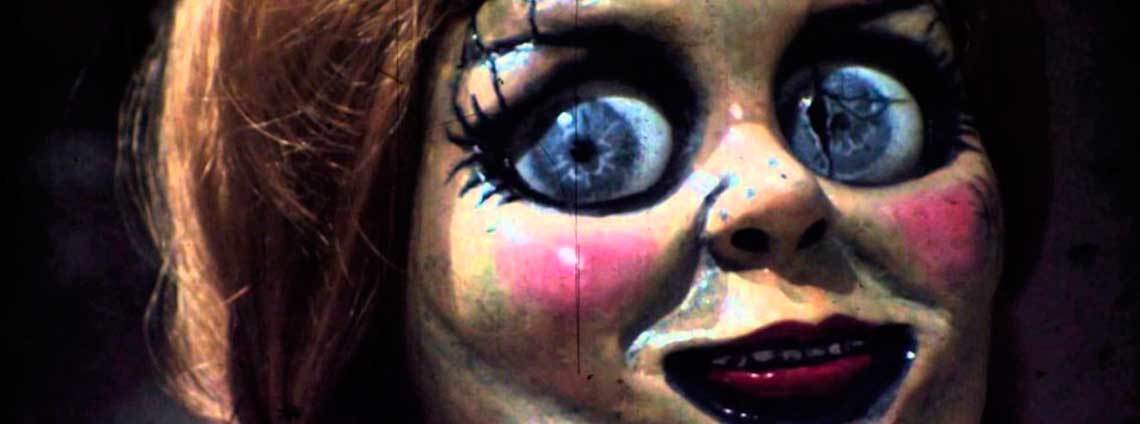
There’s also a creepy doll, the element that seems to be driving this unexpected franchise and the only item from the original film that made the leap to Annabelle: Creation.
You remember her – she terrorized a young family, and later a pair of nursing students before being locked in a glass case in that creepy room at Ed and Lorraine Warren’s house.
But did you ever wonder what kind of demonic hijinks created her in the first place? Or do you just find yourself in the mood to watch orphans being persecuted? Either way, may I introduce you to Annabelle: Creation?
Director David F. Sandberg (Lights Out) does what he does best, relying on good, old-fashioned jump scares. If that’s your bag – and you don’t get side tracked with nit-picky things like how utterly ignorant writer Gary Dauberman is of actual Catholicism (so maybe he shouldn’t have chosen a Catholic orphanage!) – then this film may be for you.
Years after a doll maker and his wife lose their precious daughter, they accidentally conjure up a demon to live in the single ugliest doll any toy maker has ever seen fit to make.
Bad choice.
Worse choice? Inviting those orphans to move in.
Welp, empty-headed horror it is. And there is something to be said for that in a mid-August slump. This is the sequel to a weak film, itself a sequel of sorts to the kind of movie that felt like a one-off.
It seems unlikely a franchise was the expectation back when Conjuring hit screens in ’13. Since then, filmmakers have scrambled to cobble together a universe of supernatural spookiness to spin off and connect. (Look closely at the picture from Sister Charlotte’s convent – any of those nuns look familiar?)
Sandberg offers little in the way of originality. (He’s clearly a pretty big fan of Wan’s Insidious.) But there are jumps aplenty and a couple of very freaky images in the third act.
Because if you can’t have a creepy nun, may as well make due with a disfigured mother and a scarecrow.
Australian campers find trouble in what amounts to Eden Lake meets Wolf Creek.
If you missed either of those two deeply troubling horror classics, you should watch them now. Right now, seriously.
Great, right? Terrifying, eh? Makes you kind of want to see what writer/director Damien Power has in store with his feature film debut, Killing Ground.
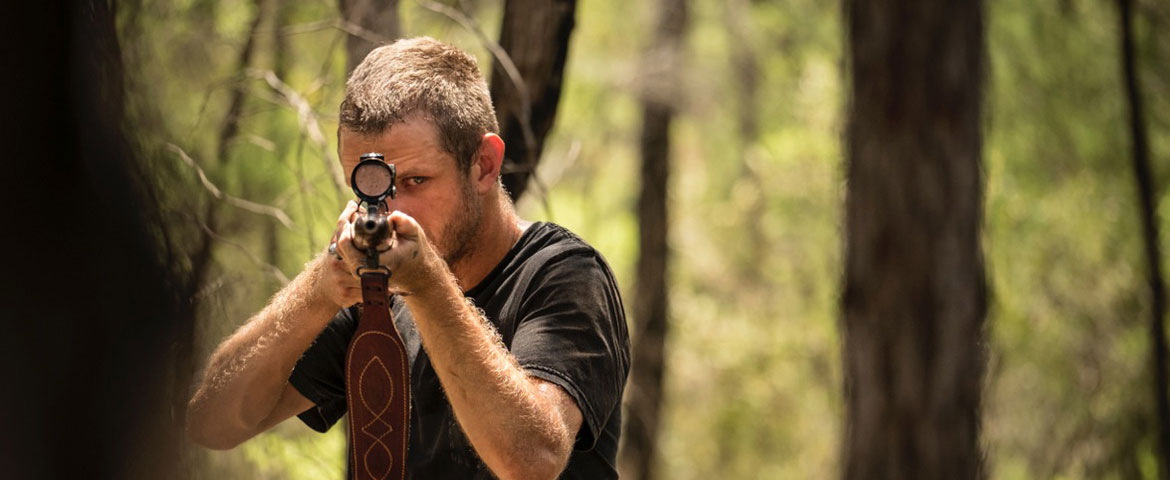
He starts off predictably enough: Sam (Harriet Dyer) and her boyfriend Ian (Ian Meadows) are headed to an out-of-the-way campsite Ian remembers from his childhood. They stop for directions, are warned off by a creepy Aussie with a barking pit bull, go anyway.
Right.
They arrive and are disappointed to see that they’ll be sharing the site with another group – based on the parked SUV and the pitched tent. But where are these other campers?
Though Power doesn’t explore a lot of new ground with this campsite horror flick, his approach is so authentic and spare that it breaks free of cinematic hyperbole and leaves you seriously wondering why in the hell anybody camps – anywhere, but especially in Australia.
His narrative builds tension by cross-cutting between the tale of the camping couple and the story of the family whose vacant tent begins to really worry Sam and Ian come nightfall.
From The Babadook to Wyrmwood to The Loved Ones, Australia’s horror output has been outstanding in recent years. Earlier this year, newcomer Ben Young rocked cinemas with his low-budget Aussie horror Hounds of Love.
Killing Ground isn’t quite ready to join those ranks, mainly because, at its core, it’s an unremarkable story – although a few clever twists and choices keep it fresh enough.
The tale is well told and beautifully performed. Aaron Pendersen and Aaron Glenane, in particular, craft believable, dimensional, terrifying characters.
A satisfying power struggle and the provocative use of ambiguities that refuse to offer a tidy ending help the film hang around after credits role.
The film community lost another of its greats, and we want to celebrate the wonderful and the weirdly watchable of Tobe Hooper.
Hooper’s ability to pervert social expectations, his unsurpassed gift for creating terrifying atmospheres among America’s backwoodsfolk, and his nonchalantly visceral presentation made every film an experience worth attempting. Not every one paid off, but those that did left a nasty mark.
5. Eaten Alive (1976)
We open on a backwoods Florida whore house. A bewigged young pro loudly protests the request of her new customer, Robert Englund, who plays a hillbilly who prefers backdoor action. She’s cast out of the cathouse with nowhere to go and nothing to do with that ridiculous wig, until kindly maid Ruby (Betty Cole, wardrobed in a traditional maid’s uniform because hookers are such sticklers about the way their help looks) offers her a stack of cash so she can afford a room at the nearby motel.
Unfortunately, the guy who runs that motel is a sadistic pervert who feeds his problematic borders to the gator out back.
Hooper’s follow up to The Texas Chainsaw Massacre is a lurid affair once again focused on delicious interlopers who misunderstand the customs of the locals.
Eaten Alive tries more openly at humor, mostly failing to find laughs (other than the ironic sort) but succeeding in creating an unsettling atmosphere for the carnage. It’s a B-movie, the kind that screams for a drive-in theater and a tub of greasy popcorn, but there is a time and a place for those movies, too.
https://www.youtube.com/watch?v=MSRpivA1mgo
4. Lifeforce (1985)
A naked alien vampire woman sucks seemingly willing men dry on her first trip to London.
Nope, Lifeforce is not a porno. It’s a silly horror film, especially if you come in expecting the kind of visceral gut punch Tobe Hooper tends to deliver. But as a SciFi guilty pleasure (and mash note to Hammer’s Quatermass and the Pit), it’s a bit of fun.
Mathilda May sure is naked. She plays one of three aliens saved from an otherwise decimated space ship found hiding in the tail of Halley’s Comet by European astronauts. Mysteriously, that European ship meets its own disaster before safely dropping off the three aliens on earth.
But wait! Don’t open her case!!
Of course they open her case, and she and her two henchmen begin sucking the life force from all they can find, creating their own kind of Brit zombipocalypse in one of the film’s nuttiest and greatest scenes.
The movie is a mess that lacks any hint of the characteristic Tobe Hooper vision, but it is more than peculiar enough to be compelling.
3. The Funhouse (1981)
Hooper creates a creepy atmosphere on the Midway with this periodically tense freak show. Double dating teens hit the carnival and decide to spend the night inside the park’s funhouse. What could go wrong?
Well, as would become the norm in every carnival-themed horror film to come, the ride is the secret hideaway of a carny’s deformed and bloodthirsty offspring. He hides his misfortune beneath a Frankenstein mask, but he can’t contain his violent rage when teased. (Not that it’s ever wise to pick on a premature ejaculator, particularly in a horror film.)
Sure, The Funhouse follows all the protocol of a slasher set inside an amusement park, and is, for that reason, somewhat predictable. Still, Hooper delivers pretty well. He develops a genre-appropriate seediness among the carnies, as well as an unwholesome atmosphere. He also pays open homage to the genre throughout the picture. (As a way of paying him back, the genre would rip off this film for years to come – most blatantly in 2006’s Dark Ride.)
It’s hard not to find Hooper’s post-Texas Chainsaw Massacre films lacking. This one’s no masterpiece, but it is a tidy, garish, claustrophobic and unsettling piece of indie filmmaking.
https://www.youtube.com/watch?v=BMoQQ7OsX5M
2. Poltergeist (1982)
This aggressive take on the haunted house tale wraps Hooper’s potent horrors inside producer Steven Spielberg’s brightly lit suburbia. In both of Spielberg’s ’82 films, the charade of suburban peace is disrupted by a supernatural presence. In E.T., though, there’s less face tearing.
Part of Poltergeist’s success emerged from pairing universal childhood fears – clowns, thunderstorms, that creepy tree – with the adult terror of helplessness in the face of your own child’s peril. JoBeth Williams’s performance of vulnerable optimism gives the film a heartbeat, and the unreasonably adorable Heather O’Rourke creeps us out while tugging our heartstrings.
Splashy effects, excellent casting, Spielberg’s heart and Hooper’s gut combine to create a flick that holds up. Solid performances and the pacing of a blockbuster provide the film a respectable thrill, but Hooper’s disturbing imagination guarantees some lingering jitters.
1. The Texas Chainsaw Massacre (1974)
Not everyone considers The Texas Chainsaw Massacre a classic. Those people are wrong. Perhaps even stupid.
Tobe Hooper’s camera work, so home-movie like, worked with the “based on a true story” tag line like nothing before it, and the result seriously disturbed the folks of 1974. It has been ripped off and copied dozens of times since its release, but in the context of its time, it was so absolutely original it was terrifying.
Hooper sidestepped all the horror gimmicks audiences had grown accustomed to – a spooky score that let you know when to grow tense, shadowy interiors that predicted oncoming scares – and instead shot guerilla-style in broad daylight, outdoors, with no score at all. You just couldn’t predict what was coming.
He dashes your expectations, making you uncomfortable, as if you have no idea what you could be in for. As if, in watching this film, you yourself are in more danger than you’d predicted.
But not more danger than Franklin is in, because Franklin is not in for a good time.
So, poor, unlikeable Franklin Hardesty, his pretty sister Sally, and a few other friends head out to Grampa Hardesty’s final resting place after hearing the news of some Texas cemeteries being grave-robbed. They just want to make sure Grampy’s still resting in peace – an adventure which eventually leads to most of them making a second trip to a cemetery. Well, what’s left of them.
If you watch much of horror, there’s something you might notice. People lose a lot of limbs in these movies. Naturally, we decided to look into this. We spent some time with the tragic (or maybe deserving) amputees of Audition and American Mary and others, but there turned out to be so many badasses who only get cooler once the limb is missing that we decided to hang out with them.
Thanks to the B Movie Bros for joining us for the podcast to talk through the list. Listen in HERE.
6. Arlen (Suki Waterhouse) – The Bad Batch (2017)
Writer/director Ana Lily Amirpour creates another unusual heroine with this one. Arlen’s a vane bit of white trash deemed part of “the bad batch.” Shortly into her investigation of her new home, she learns that at least one of the neighborhood communities is less welcoming – if better fed – than the other.
No crybaby, though, Arlen faces life as a double amputee with a lot of nerve and eventually some hallucinogenic drugs. What she does more than anything is refuse to conform and instead paves her own path.
https://www.youtube.com/watch?v=PVfpKaftzv4
5. Alonzo (Lon Chaney) – The Unknown (1927)
When Tod Browning makes a movie about side show freaks, color us excited. In this unseemly tale, the great silent monster Lon Chaney is The Amazing Alonzo, an armless knife thrower/sharp shooter/guitar player/smoker in a circus. He has eyes for his show partner Nanon (Joan Crawford, pre-wire hanger), but the circus strongman is hot for her.
So, it all sounds a tad like Browning’s infamous Freaks. But Nanon spurns the strongman because she can’t stand to be groped by men’s hands – which makes it seem like Alonzo is a shoe-in, except that he is not what he appears to be.
Camera trickery, an actual circus performer, and Chaney’s convincing performance work together to create a believable side show character in Alonzo. Browning couples this unsettling performance with an air of seediness and some bizarre plot twists to leave a lasting impression.
4. Candyman (Tony Todd) – Candyman (1992)
Oh my God, that voice! Yes, Candyman is a bad dude, but isn’t he kind of dreamy?
Like a vampire, the villain of Cabrini Green needed to be both repellant and seductive for this storyline to work, and Todd more than managed both. With those bees in his mouth and that hook for a hand, he is effortlessly terrifying. But it’s Todd’s presence, his somehow soothing promise of pain and eternity, that makes the seduction of grad school researcher Helen (Virginia Madsen) realistic.
Todd would go on to love again in the Candyman sequel Farewell to the Flesh, proving that you do not need two working hands to wreak bloody havoc.
https://www.youtube.com/watch?v=XROa2ZOqh8Q
3. Mia (Jane Levy) – Evil Dead (2013)
With the helpful pen of Oscar winner Diablo Cody (uncredited), Fede Alvarez turns all the particulars of the Evil Dead franchise on end. You can tick off so many familiar characters, moments and bits of dialog, but you can’t predict what will happen.
One of the best revisions is the character of Mia: the first to go and yet the sole survivor. She’s the damaged one, and the female who’s there without a male counterpart, which means (by horror standards), she’s the one most likely to be a number in the body count. But because of what she has endured in her life she’s able to make seriously tough decisions to survive – like tearing off her own damn arm. Nice!
https://www.youtube.com/watch?v=pxrbNDDWass
2. Cherry (Rose McGowan) – Planet Terror (2007)
Losing a leg – in most horror movies, this would spell doom for a character. Not in Robert Rodriguez’s half of Grindhouse, though. Indeed, for Rose McGowan’s Cherry Baby, an amputated limb turns her to the film’s most daring badass.
A machine gun for a leg! How awesome is that?! McGowan strikes the right blend of hard knock and vulnerability to keep the character interesting – beyond the whole leg of death thing. I mean, you’d hardly call her boring.
The entire film is a whole lot of throw-back fun – gory, lewd, funny, gross (so, so gross). It’s so much fun that even a lengthy Tarantino cameo doesn’t spoil things. And it makes the point that people who’ve been struck by physical disabilities can still be total badasses – not to mention hot as F.
https://www.youtube.com/watch?v=jmMApNy48Sc
1. Ash (Bruce Campbell) – Evil Dead 2 (1987)
What?! Like you didn’t know he’d be #1. Hell, he’s the entire reason we did this list.
When his hand turns evil, Ash does what he needs to do. Of course he does – he’s already dismembered nearly everyone who’s ever meant anything to him, what loyalty does he owe his own hand at this point?
Plus, if Cherry Baby was cool with a machine gun leg, how awesome is Ash with a chainsaw for an arm?!
Given the recent, tragic passing of filmmaking icon George A. Romero, you may find yourself nostalgic for the walking dead. Not just any hungry, re-animated cadaver, but the kind that serve as a parable or vehicle for self-awareness. The slow moving kind. The kind you don’t know whether to fear, pity or admire.
It Stains the Sands Red is here for you.
Director/co-writer Colin Minihan, with co-writer Stuart Ortiz (formerly known collectively as The Vicious Brothers), tests your patience, but the effort mostly pays off.
We open with some impressive aerial shots of the smoking, neon ruin of the Las Vegas strip. Cut to another gorgeous aerial of a sports car zipping up a desert highway. In it, a couple of coked-up strip club lowlifes, Molly (Brittany Allen) and Nick (Merwin Mondesir), are escaping to an airfield where they’ll meet with other lowlifes and head to an island off Mexico.
Naturally, this isn’t going to work out. But what Minihan has in store will surprise you.
He’s made a couple of fine choices with his film. The point of view character is not only an unlikely protagonist – an unpleasant thug with a drug habit – but she’s also female.
Soon the car goes off the road and one meathead catches her scent, and suddenly Molly’s stripper shoes are not her biggest problem as she faces a 30-mile trek across the desert to the airfield.
Molly names her zombie pursuer Smalls, but she may as well call him Wilson.
What develops is an often fascinating, slow moving but relentless chase as well as a character study. With a protagonist on a perilous journey toward redemption, It Stains the Sands Red takes a structure generally reserved for the man who needs to rediscover his inner manhood and tells a very female story.
Very female. Menstruation and everything.
Credit to the formerly Vicious for investing in a female’s perspective, and for doing it some level of justice.
Allen makes a great anti-heroine. Convincingly hard-knock and difficult to like, she never becomes the would-be lunch meat you root against.
As is too often the case in film – horror, thriller or otherwise – the only way a female can tap that survival instinct is by way of the maternal one. This picture becomes too predictable and too sentimental once it embraces this cliché, but that’s not reason enough to condemn it.
So many vampires – so many! And then there are all these other guys who may or may not be. Sometimes it’s hard to say. Sure they drink blood, but do they really need to? Let’s explore.
5. Vampire’s Kiss (1988)
Sure, Nicolas Cage is a whore, a has-been, and his wigs embarrass us all. But back before The Rock (the film that turned him), Cage was always willing to behave in a strangely effeminate manner, and perhaps even eat a bug. He made some great movies that way.
Peter Lowe (pronounced with such relish by Cage) believes he’s been bitten by a vampire (Jennifer Beals) during a one night stand. It turns out, he’s actually just insane. The bite becomes his excuse to indulge his self-obsessed, soulless, predatory nature for the balance of the running time.
Cage gives a masterful comic performance in Vampire’s Kiss as a narcissistic literary editor who descends into madness. The actor is hilarious, demented, his physical performance outstanding. The way he uses his gangly mess of limbs and hulking shoulders inspires darkly, campy comic awe. And the plastic teeth are awesome.
Peter may believe he abuses his wholesome editorial assistant Alva (Maria Conchita Alonso) with sinister panache because he’s slowly turning into a demon, but we know better.
4. The Transfiguration (2016)
Milo likes vampire movies.
Eric Ruffin plays Milo, a friendless teen who believes he is a vampire. What he is really is a lonely child who finds solace in the romantic idea of this cursed, lone predator. But he’s committed to his misguided belief.
All this changes when Milo meets Sophie (Chloe Levine), another outsider and the only white face in Milo’s building. A profound loneliness haunts this film, and the believably awkward behavior of both Ruffin and Levine is as charming as it is heartbreaking.
The Transfiguration is a character study as much as a horror film, and the underwritten lead, slow burn and somewhat tidy resolution undercut both efforts.
Still, there’s an awful lot going for this gritty, soft-spoken new image of a teenage beast.
3. The Reflecting Skin (1990)
Writer/director Philip Ridley has a fascinating imagination, and his film captures your attention from its opening moments.
Seth Dove lives with his emotionally abusive mother and his soft but distant father, who run a gas station in rural Idaho sometime after WWII. Seth’s older brother Cameron (Viggo Mortensen) is off serving in Japan. Seth has decided that the neighborhood widow Dolphin Blue (a wonderfully freaky Lindsay Duncan) is a vampire.
Positively horrible things begin to happen, each of them clouded by the dangerous innocence of our point of view character.
The film plays a bit like a David Lynch effort, but with more honesty. Rather than the hallucinatory dreaminess Lynch injects into films like Blue Velvet (the most similar), this film is ruled by the ferociously logical illogic of childhood.
With this point of view, the realities of a war blend effortlessly with the possibility of vampires. Through little Seth Dove’s eyes, everything that happens is predictably mysterious, as the world is to an 8-year-old. His mind immediately accepts every new happening as a mystery to unravel, and the jibberish adults speak only confirm that assumption.
This film is a beautiful, horrifying, fascinating adventure unlike most anything else available.
https://www.youtube.com/watch?v=DBGHoknFI2I
2. Cronos (1993)
In 1993, writer/director Guillermo del Toro announced his presence with authorty by way of this tender and unusual “vampire” flick. Del Toro favorites Federico Luppi and Ron Perlman star. Luppi is Jesus Gris, the elder statesman, an antique store owner, loving husband and doting grandfather.
Perlman plays Angel, a thug – what else? Angel’s miserable but very rich uncle wants an Archangel statue from Gris’s store, but the real value has already found its way into Gris’s veins.
A vampire film of sorts, it’s a beautiful story about faith and love – not to mention the real meaning of immortality. Performances are wonderful, and watching this masterful filmmaker find his footing is the real joy.
1. Martin (1978)
Martin (John Amplas) is a lonely young man who believes he’s a vampire. He may be – the film is somewhat ambivalent about it, which is one of the movie’s great strengths. He daydreams in black and white of cloaks, fangs and mobs carrying pitchforks.
Or are those memories? Does Martin’s uncle hate him because Martin, as he claims, is really in his Eighties, as his uncle would surely know? Romero has fun balancing these ideas, tugging between twisted but sympathetic serial killer and twisted but sympathetic undead.
Romero’s understated film is more of a character study than any of his other works, and Amplas is up to the task. Quietly unnerving and entirely sympathetic, you can’t help but root for Martin even as he behaves monstrously. It’s a bit like rooting for Norman Bates. Sure, he’s a bad guy, but you don’t want him to get into any trouble!
The film’s a generational culture clash wrapped in a lyrical fantasy, but quietly so. It’s touching, gory at times, often quite tense, and really well made. That, and it’s all so fabulously Seventies!
Who’s crazy, who’s not? Whose perspective can you believe? Why can’t I look in the basement?
All fine questions that have been asked in film since around 1920. We sifted through all the loonies and the asylums to generate a list of the best and nuttiest available.
Thanks to Senior Lunatic Correspondent Dr. Neil McRobert – affectionately known as NakMac – for returning, hangover and all, to help us count down the best horror films in set an asylum.
5. Lunacy (2005)
So, here’s one that lives up to its title. If you were to choose any “lunatics running the asylum” film, this is the one to go with.
Set in Czech Republic 2005, disturbed young Jean (Pavel Liska) accepts an invitation to stay with a man who believes himself the Marquis de Sade (Jan Triska) – frilly shirts, horse-drawn carriage and all.
If you’ve seen any of the films of Jan Svankmajer, you know to expect the unexpected. It turns out, his talent for the surreal and the grotesque so perfectly fit the topic of the film, it’s hard to imagine anyone else making it.
Animated meat cutlets, insane speechifying, burlesque and unpleasantness aplenty work together in a film that defies summarization but leaves an unmistakable impression.
4. The Brood (1979)
Dr. Hal Ragland – the unsettlingly sultry Oliver Reed – is a psychiatrist leading the frontier in psychoplasmics. His patients work through their pent-up rage by turning it into physical manifestations. Some folks’ rage turns into ugly little pustules, for example. Or, for wide-eyed Nola Carveth (Samantha Eggar), rage might turn into bloodthirsty, puffy coated spawn. This is Cronenberg’s reimagining of procreation, and it is characteristically foul.
What’s she so mad about? Her divorce. So angry, indeed, that she’s gone mad – and begun neglecting, even endangering, her puffy coated actual daughter.
Cronenberg wrote the film during his own ugly divorce and custody battle. He created a fantasy nightmare rooted firmly in the rage, despair, and the betrayal that comes from watching someone who once loved you turn into someone who seems determined to harm you.
Cronenberg is the king of corporeal horror, and The Brood is among the best of the filmmaker’s early, strictly genre work. Reed and Eggar both are unseemly perfection in their respective roles. Eggar uses her huge eyes to emphasize both her former loveliness and her current dangerous insanity, while Reed is just weird in that patented Oliver Reed way.
https://www.youtube.com/watch?v=RVQkJJxjdIM
3. Session 9 (2001)
Nyctophobia, dissociative identity disorder, creepy tapes, an abandoned asylum – the pieces are there for a spooky, if recognizable, horror movie. Credit writer/director Brad Anderson for swimming familiar waters and yet managing a fresh, memorable and disturbing film.
Gordon (Peter Mullan) needs some cash – and some sleep. Troubles at home aside, he’s having problems getting his latest assignment completed on time. With just a skeleton crew and an unreasonable turnaround time, Gordon has to remove the asbestos from the long-abandoned Danvers Lunatic Asylum.
He sneaks away a lot to call his wife and listen to these therapy tapes he’s found. Meanwhile, a couple of his guys are bickering over a shared girlfriend, another one’s a pothead, and then there’s Gordon’s sweet, mulleted nephew Jeff (Brendan Sexton III), who’s afraid of the dark.
Atmosphere is everything in this film. And though several surprises may not really surprise, performances are outstanding and Anderson has some seriously scary moments in store. Oh, poor Jeff.
https://www.youtube.com/watch?v=TYC83LCttW8
2. Titticut Follies (1967)
In 1967, the great documentarian Frederick Wiseman announced his presence with authority, producing the first film in American history to be banned for reasons other than obscenity or national security.
While the American legal system may have believed the filmmaker had violated the privacy of the patients of the Massachusetts Correctional Institution Bridgewater, the film suggests it cared less about the patients’ other rights.
Haunting and spare, juxtaposing patients’ day-to-day abasement against choreographed musical numbers performed with a saucy baritone on staff, Wiseman’s film rattles you. The filmmaker offers no voiceovers to guide you. Instead, he assaults your sensibilities with the raw and unacceptable truth.
1. The Cabinet of Dr. Caligari (1920)
Few films of the silent era or any other are as visually striking as this. A German Expressionist, director Robert Wiene uses light and shadow, exaggerated angles and gloomy spirals to envelope us in a nightmare.
In a story told in flashback we learn of Francis, who is visiting his bewitched beloved in an asylum. He tells the tale madness – a traveling hypnotist and his somnambulist, performing at a town fair; murder, magic and lunacy.
The film’s twist ending and framed storytelling have become commonplace in horror – particularly in “asylum” horror – but the look of this film has never been truly recreated.
Taken in the context of the time, Caligari becomes a metaphor and premonition of Germany’s mindless obedience to a lunatic, homicidal authority figure. Carl Mayer and Hans Janowitz wrote it just after WWI to reflect their experiences in the war, but it mirrored a growing, terrifying phenomenon in their country.
Three years ago, Ana Lily Amirpour dazzled moviegoers with her sleek and imaginative vampire fable A Girl Walks Home Alone at Night.
The film tells of a solitary female figure and the surprising impact of unlikely companionship. Amirpour called the film a “vampire western.”
If you haven’t seen the film (and you should, immediately), but you like the premise, then Amirpour’s follow up The Bad Batch might also appeal to you. It mines a similar vein, although the context is a bit more merciless.
The film’s provocative opening of mostly voiceover under credits introduces the concept of the “bad batch” – unwanteds. Drugs, immigration, petty crime – it’s never clear what this batch has been up to, but we know where they’re going. They’re headed to a quarantined expanse of arid Texas desert no longer considered part of These United States.
Once the images on screen take form, Amirpour creates an atmosphere of dystopian terror that the balance of the film never quite reaches again.
Newest resident Arlen (Suki Waterhouse – very impressive), realizes just how Mad Max this can get moments after gates are locked behind her. In a breathless and brutal piece of cinema, we are introduced to one of two communities thriving in this wasteland.
The Bridge People are hyper-bulked up, ultra-tanned cannibals represented by Miami Man (Jason Momoa). (They may not have access to steroids, but they’re certainly getting a lot of protein.)
The second community of Comfort offers a colorful, almost habitable environment led by charismatic leader The Dream (Keanu Reeves).
With these two communities, Amirpour moves very clearly into metaphorical territory, ideas she underscores nicely with strategic use of the American flag.
One version of America sees the vain, self-centered “winners” literally feeding on the weak. The second may seem more accepting, but it pushes religion, drugs and other “comforts” to encourage passivity.
It’s a clever but unwieldy storyline, and Amirpour has trouble concluding her tale.
She has a great cast, though. Joining Woodhouse, Momoa and Reeves are flashes of Jim Carrey, Giovanni Ribisi, Diego Luna and a host of the freakish and intriguing.
Amirpour has such a facility with creating mood and environment, and though the approach here is different than with her debut, she once again loads the soundtrack and screen with inspired images, sounds and idiosyncrasies.
Her opening sets such a high bar – one she fails to reach again – and her finale feels too conventional for this character and this world. They’re fairly slight criticisms, but with a filmmaker of such amazing talent, they can’t help but be a let-down.
A ripe topic for the genre, serial killers. There’s not much more terrifying than that. And while most films on that theme tend to be police procedurals, plenty of horror movies contend with that loner who thirsts for his (or her) next kill.
Some are done with humor – The Greasy Strangler and Sightseers among the best. Some (Peeping Tom, for instance) give us sympathetic villains. Some (Wolf Creek among them) do not. Others exploit the killers’ exploits for the sake of exploitation. We’re looking at you, Man Bites Dog and The Last Horror Movie.
All those mentioned above are required viewing, but what are the best of the best? Glad you asked!
5. Frailty (2001)
In 2001, actor Bill “We’re toast! Game over!” Paxton took a stab at directing the quietly disturbing supernatural thriller Frailty.
Paxton stars as a widowed dad awakened one night by an angel – or a bright light shining off the angel on top of a trophy on his ramshackle bedroom bookcase. Whichever – he understands now that he and his sons have been called by God to kill demons.
Whatever its flaws – too languid a pace, too trite an image of idyllic country life, Powers Boothe – Frailty manages to subvert every horror film expectation by playing right into them. We’re led through the saga of the serial killer God’s Hand by a troubled young man (Matthew McConaughey), who, with eerie quiet and reflection, recounts his childhood with Paxton’s character as a father.
Dread mounts as Paxton drags out the ambiguity over whether this man is insane, and his therefore good-hearted but wrong-headed behavior profoundly damaging his boys. Or could he really be chosen, and his sons likewise marked by God?
Brent Hanley’s sly screenplay evokes nostalgic familiarity, and Paxton’s direction makes you feel entirely comfortable in these common surroundings. Then the two of them upend everything – repeatedly – until it’s as if they’ve challenged your expectations, biases, and your own childhood to boot.
4. I Saw the Devil (2010)
Min-sik Choi (Oldboy) plays a predator who picks on the wrong guy’s fiancé.
That grieving fiancé is played by Byung-hun Lee (The Magnificent Seven), whose restrained emotion and elegant good looks perfectly offset Choi’s disheveled explosion of sadistic rage, and we spend 2+ hours witnessing their wildly gruesome game of cat and mouse.
Director Jee-woon Kim (A Tale of Two Sisters) breathes new life into the serial killer formula. With the help of two strong leads, he upends the old “if I want to catch evil, I must become evil” cliché. What they’ve created is a percussively violent horror show that transcends its gory content to tell a fascinating, if repellant, tale.
Beneath the grisly violence of this unwholesome bloodletting is an undercurrent of honest human pathos – not just sadism, but sadness, anger, and the most weirdly dark humor.
If you can see past the outrageously violent images onscreen, you might notice some really fine acting and nimble storytelling lurking inside this bloodbath.
3. American Psycho (2000)
A giddy hatchet to the head of the abiding culture of the Eighties, American Psycho represents the sleekest, most confident black comedy – perhaps ever. Director Mary Harron trimmed Bret Easton Ellis’s novel, giving it unerring focus. More importantly, the film soars due to Christian Bale’s utterly astonishing performance as narcissist, psychopath, and Huey Lewis fan Patrick Bateman.
There’s an elegant exaggeration to the satire afoot. Bateman is a slick, sleek Wall Street toady, pompous one minute because of his smart business cards and quick entrance into posh NYC eateries, cowed the next when a colleague whips out better cards and shorter wait times. For all his quest for status and perfection, he is a cog indistinguishable from everyone who surrounds him. The more glamour and flash on the outside, the more pronounced the abyss on the inside. What else can he do but turn to bloody, merciless slaughter? It’s a cry for help, really.
Harron’s send up of the soulless Reagan era is breathtakingly handled, from the set decoration to the soundtrack, but the film works as well as a horror picture as it does a comedy. Whether it’s Chloe Sevigny’s tenderness as Bateman’s smitten secretary or Cara Seymour’s world wearied vulnerability, the cast draws a real sense of empathy and dread that complicate the levity. We do not want to see these people harmed, and as hammy as it seems, you may almost call out to them: Look behind you!
As solid as this cast is, and top to bottom it is perfect, every performance is eclipsed by the lunatic genius of Bale’s work. Volatile, soulless, misogynistic and insane, yet somehow he also draws some empathy. It is wild, brilliant work that marked a talent preparing for big things.
2. Henry: Portrait of a Serial Killer (1986)
Henry offers an unforgivingly realistic portrayal of evil. Michael Rooker is brilliant as serial killer Henry (based on real life murderer Henry Lee Lucas). We follow him through his humdrum days of stalking and then dispatching his prey, until he finds his own unwholesome kind of family in the form of buddy Otis and his sister Becky.
Director John McNaughton’s picture offers a uniquely unemotional telling – no swelling strings to warn us danger is afoot and no hero to speak of to balance the ugliness. He confuses viewers because the characters you identify with are evil, and even when you think you might be seeing this to understand the origins of the ugliness, he pulls the rug out from under you again by creating an untrustworthy narrative voice. His film is so nonjudgmental, so flatly unemotional, that it’s honestly hard to watch.
What’s diabolically fascinating, though, is the workaday, white trash camaraderie of the psychopath relationship in this film, and the grey areas where one crazy killer feels the other has crossed some line of decency.
Rooker’s performance unsettles to the bone, flashing glimpses of an almost sympathetic beast now and again, but there’s never a question that he will do the worst things every time, more out of boredom than anything.
It’s a uniquely awful, absolutely compelling piece of filmmaking.
https://www.youtube.com/watch?v=IU3P6WXzvXU
1. The Silence of the Lambs (1991)
It’s to director Jonathan Demme’s credit that Silence made that leap from lurid exploitation to art. His masterful composition of muted colors and tense but understated score, his visual focus on the characters rather than their actions, and his subtle but powerful use of camera elevate this story above its exploitative trappings. Of course, the performances didn’t hurt.
Hannibal Lecter ranks as one of cinema’s scariest villains, and that accomplishment owes everything to Anthony Hopkins’s performance. It’s his eerie calm, his measured speaking, his superior grin that give Lecter power. Everything about his performance reminds the viewer that this man is smarter than you and he’ll use that for dangerous ends.
But it’s Ted Levine who goes underappreciated. Levine’s Buffalo Bill makes such a great counterpoint to Hopkins’s Lecter. He’s all animal – big, lumbering, capable of explosive violence – where Lecter’s all intellect. Buffalo Bill’s a curiously sexual being, where Lecter is all but asexual.
Demme makes sure it’s Lecter that gets under our skin, though, in the way he creates a parallel between Lecter and Clarice Starling (Jodie Foster). It’s Clarice we’re all meant to identify with, and yet Demme suggests that she and Lecter share some similarities, which means that maybe we share some, too.
You want to know the fears and anxieties at work in any modern population? Just look at their horror films.
There are certain anxieties that plague us no matter the era. It Follows, for instance, brilliantly brought horror’s long obsession with underage promiscuity into modern focus. Unfriended, #Horror, Rings, The Den and dozens of others touched on our loss of control in a digital age. You could even read The Witch as a comment on the power of radicalization.
What horror films had their fingers most firmly on the elevated pulse of their respective times?
6. Hostel (2005)
In April of 2004, photos and videos from Abu Ghraib detention center created a previously unimaginable public dialog about the appropriateness of torture. And we knew that what we were seeing on the news had to be far less graphic and horrific than what we didn’t see.
The sudden realization that there were so many more people on earth who believed there were appropriate uses for torture – and that there were others who could so easily be provoked to indulge their bloodlust – sparked a real, palpable discomfort in the US.
Writer/director Eli Roth created a new subgenre with this his meditation on that very bloodlust. As his tourists hit Slovakia in search of wild times, they become the fodder for someone else’s hedonistic indulgence. Graphic and provocative, Hostel is hardly a masterpiece or even a classic, but there is no question that it touched a nerve.
5. The Wolf Man (1941)
By 1939, the second great war had begun. The tale of shadowy European villainy turning a good hearted American man into a monster felt somehow compelling to an audience seeing yet another generation of soldiers facing and contributing to the real horror of war.
Like most of the films on this list, The Wolf Man created a mythology many would copy. But writer Curt Siodmak’s take on the monster that lurks inside a good man differs from many because he pulled on his own experience with Nazi Germany to create an atmosphere. He’d seen firsthand what it looks like when apparently good people turn suddenly savage.
Lon Chaney, Jr.’s sympathetic performance only drove home the point that it could be anybody. You want badly for this decent-hearted man to somehow be saved, but you know that he’s done too much. There is no redemption left for him now.
4. Rosemary’s Baby (1968)
The late Sixties saw cultural change like few eras before or since. Roman Polanski’s adaptation of Ira Levin’s tale mined more than a few, but it was the sexual revolution that most fed this picture’s dread.
The Pill was first approved for use in America in 1960. This led to some happy people, yes, but also a lot of worry. Whenever science steps into God’s territory, people get anxious. This tension fueled many horror films, but the way Polanski represents the female body as a reproductive tool entirely outside her own control is endlessly terrifying.
It helps that Mia Farrow is the picture of vulnerability, trying desperately and without success to regain power over her own body and future. Doctors are no help – they’re in on it. She can’t look to her husband because he benefits from this perversion of her biology as much as anybody. It’s a fascinating observation, filmed so that we can’t help but feel that we are voyeurs in her struggle.
3. Get Out (2017)
What took so long for a film to manifest the fears of racial inequality as smartly as does Jordan Peele’s Get Out.
Peele writes and directs a mash up of Guess Who’s Coming to Dinner, Rosemary’s Baby and a few other staples that should go unnamed to preserve the fun. Opening with a brilliant prologue that wraps a nice vibe of homage around the cold realities of “walking while black,” Peele uses tension, humor and a few solid frights to call out blatant prejudice, casual racism and cultural appropriation.
Peele is clearly a horror fan, and he gives knowing winks to many genre cliches (the jump scare, the dream) while anchoring his entire film in the upending of the “final girl.” This isn’t a young white coed trying to solve a mystery and save herself, it’s a young man of color, challenging the audience to enjoy the ride but understand why switching these roles in a horror film is a social critique in itself.
https://www.youtube.com/watch?v=A2JbO9lnVLE
2. Night of the Living Dead (1969)
Romero’s first zombie film – the first proper zombie film – hit upon cultural anxieties aplenty. The generation gap that accompanied the era of social change had people seeing those of the other generation as aliens – or maybe zombies?
The war in Vietnam – televised almost constantly, and for the first time – was reflected in Romero’s onscreen broadcasts of unimaginable horror. He depicts the changing paradigm of the generations in the power struggle going on inside the besieged house.
More than anything, though, Romero hit a nerve with his casting. The filmmaker has long said that African American actor Duane Jones got the part as the lead because he was simply the best actor in the cast. True enough. But his performance as the level headed, proactive, calm-under-pressure alpha male – followed by Romero’s gut-punch of a finale – spoke volumes and is one of the main reasons the film remains as relevant today as it was when it was released.
1. Godzilla (1954)
Is Godzilla the best film on this list? No. But, more than any other film in the genre, it spoke directly to global anxieties, became a phenomenal success, and changed the face of horror.
As Japan struggled to re-emerge from the 1945 bombings of Hiroshima and Nagasaki, director Ishiro Honda unleashed that dreaded kaiju—followed quickly by a tidal wave of creature features focused on scientists whose ungodly work creates global cataclysm.
Far more pointed and insightful than its American bastardization or any of the sequels or reboots to follow, the 1954 Japanese original mirrored the desperate, helpless impotence of a global population in the face of very real, apocalyptic danger. Sure, that danger breathed fire and came in a rubber suit, but history shows again and again how nature points out the folly of man.