Tag Archives: horror

Fright Club: Non-Franchise Halloween Movies

So, there’s this one set of movies you may or may not be aware of about a guy with a William Shatner fixation just trying to get home in time for Halloween. You may have heard of it.

Here’s the thing, there are also other Halloween-themed movies you could watch this holiday if you’re so inclined. Loads of them. And while we feel like you probably know which Michael Meyers movies to skip (5 & 8), which to love (1, duh), and which to watch for the ironic enjoyment (6—we’re looking at you, Paul Rudd!), you might need some direction outside that series. So, here are our five favorite non-franchise Halloween horror movies.

5. Night of the Demons (1988)

It’s Halloween night in the late Eighties and a bunch of high school kids decides to go hang out at Angela’s party because, as the resident goth girl, “Halloween is like Christmas to Angela.”

Where’s the party? At the old, abandoned funeral parlor built over sacred land above some kind of demonic water source. Natch.

Do not be confused – Night of the Demons is not exactly recommended viewing. It’s terrible. Once you get past its dirt-cheap sets and TV-level staging, you’ll notice that the film boasts among the most stilted and cardboard dialogue of any film from the Aquanet decade.

But Angela (Amelia “Mimi” Kinkade) looks cool. Every goth chick— Fairuza Balk’s Nancy Downs from The Craft in particular—owes Angela a little respect. And professional dancer Kinkade does the demonic transformation justice. The acting is atrocious—all of it— but the film boasts a campy, nostalgic, oh-so-80s quality, and we never disagree with Bauhaus on a soundtrack.

4. Murder Party (2007)

Jeremy Saulnier is a filmmaker worth watching. Murder Party is not the near-masterpiece of Blue Ruin or Green Room, but it is a savvy, funny, fun change of pace.

Chris Sharp plays lonesome loser Christopher. Alone with his selfish cat on Halloween night, he decides to follow a whim and hit the party advertised on a flier. A “Murder Party.”

Fun!

What Saulnier pieces together could have dripped with condescending judgment, as a group of insecure art students plot to kill the poor guy as a piece of art that will impress Alexander (Sandy Barnett) enough to nab them the grant Alexander keeps lording over them.

The comedy is more self-referential and human than snide, simultaneously mocking and empathizing with the group of artists as well as their would-be victim.

Funny, tender, biting and often quite bloody and energetic, Murder Party does not suggest the style of film to come from Saulnier, but it predicts a filmmaker who knows what he’s doing.

https://www.youtube.com/watch?v=qI_DqgxNR7U

3. Ginger Snaps (2007)

Ginger and Bridget, outcasts in the wasteland of Canadian suburbia, cling to each other and reject/loathe high school (a feeling that high school in general returns).

On the evening of Ginger’s first period, she’s bitten by a werewolf. Writer Karen Walton cares not for subtlety: the curse, get it? It turns out, lycanthropy makes for a pretty vivid metaphor for puberty.

This turn of events proves especially provocative and appropriate for a film that upends many mainstay female cliches. Walton’s wickedly humorous script stays in your face with the metaphors, successfully building an entire film on clever turns of phrase, puns, and analogies, stirring up the kind of hysteria that surrounds puberty, sex, reputations, body hair, and one’s own helplessness to these very elements.

A well-timed Halloween party allows Ginger to display her new look and skills in as insightful a high school horror film as you’ll find, peppered equally with dark humor and gore.

https://www.youtube.com/watch?v=Zoa1A987A_k

2. May (2002)

Who wants a little romance? How about the tale of a wallflower, the blossom of new love, the efficient use of veterinary surgical equipment, and a good sized freezer?

Lucky McKee’s 2002 breakout is a showcase for his own talent as both writer and director, as well as his gift for casting. The entire ensemble surprises with individualized, fully realized, flawed but lovable characters, and McKee’s pacing allows each of his talented performers the room to breathe, grow, get to know each other, and develop a rapport.

More than anything, though, May is a gift from Angela Bettis to you.

May’s vulnerability is painful yet beautiful to watch, and it’s impossible not to hope that cool outsider Adam is telling the truth when he reassures her, “I like weird.”

McKee’s film pulls no punches, mining awkward moments until they’re almost unendurable and spilling plenty of blood when the time is right—on Halloween night, of course.

He deftly leads us from the sunny “anything could happen” first act through a darker, edgier coming of age middle, and finally to a carnage-laden climax that feels sad, satisfying, and somehow inevitable.

1. Trick ‘r Treat (2007)

Columbus native Michael Dougherty outdid himself as writer/director of this anthology of interconnected Halloween shorts. Every brief tale compels attention with sinister storytelling, the occasional wicked bit of humor and great performances, but it’s the look of the film that sets it far above the others of its ilk.

Dougherty takes the “scary” comic approach to the film—the kind you find in Creepshow and other Tales from the Crypt types—but nothing looks as macabrely gorgeous as this movie. The lighting, the color, the costumes and the way live action bleeds into the perfectly placed and articulated moments of graphic artwork—all of it creates a giddy holiday mood that benefits the film immeasurably.

Dylan Baker (returning to the uptight and evil bastard he perfected for his fearless performance in Happiness) leads a whip-smart cast that includes impressive turns from Brian Cox, Anna Pacquin, Leslie Bibb and Brett Kelly (Thurman Merman, everybody!).

And it’s all connected with that adorable menace, Sam. Perfect.

HAPPY HALLOWEEN!

Needs More Politics and Candy Crush

Friend Request

by Rachel Willis

With a film like Friend Request, the task becomes creating fear out of something benign. In this case, how can a friend request on Facebook be scary? Director Simon Verhoeven tries to answer that question.

College student Laura (Alycia Debnam-Carey) has a perfect life. Instead of opening credits, the film begins with a montage of scenes from Laura’s Facebook page: pictures with friends, comments from her adoring 800+ Facebook friends, even hints of a love triangle. While there could be an element of not everything is as it seems on social media, the movie doesn’t tackle this. What we see is what we get.

Into this mix comes Marina (Liesl Ahlers), a shy, lonely woman in Laura’s 200-level psychology class. Because Laura is a nice person, when Marina sends her a friend request on Facebook, she accepts. Not only does she accept the request, she takes the time to try to get to know Marina. But because this is a horror movie, in less than two weeks, Laura regrets her decision.

There are a number of ways Friend Request could go, (Marina is perfect Single White Female material) but it takes a supernatural turn. After a falling out between Laura and Marina, Laura and all of her closest friends start having nightmares. Most of the dreams are comprised of jump scares. It works the first few times, but after the third or fourth one, they stop being effective.

At times the film is unintentionally funny. It’s hard to maintain a level of horror around Facebook. If the film had embraced the silliness of its premise, the audience could have been treated to a horror comedy that warns against the danger of too much screen time, but sadly, the film tries to maintain the scares beyond what is reasonable. The suspension of disbelief is often non-existent, as a slowly loading screen generally inspires more irrational rage than outright terror.

Friend Request does follow some interesting ideas, and the actors are mostly up to the task of carrying the film’s weaker elements, but too often there’s a sense that no one’s quite sure how to make Facebook scary. Perhaps if they’d shown the real ways Facebook sucks the life out of its users, they could have had a truly horrifying tale.

Neither Holly Nor Jolly

Red Christmas

by Hope Madden

A holiday celebration of bad taste, Aussie writer/director Craig Anderson’s Red Christmas is a yuletide grab bag of solid performances, provocative subject matter, lazy scripting and gore.

Horror icon and E.T. mom Dee Wallace (who also produces) stars as Diane, the matriarch of a big Australian family gathering for the last holiday at their family home. With all the kids grown, Diane is selling off her large country estate and taking some time for herself.

But first—the best Christmas ever!

She’s joined by a set of squabbling adult children and their spouses, a pot-head uncle, and a stranger bedecked in dirty bandages, black robes and the reek of urine.

That last guest will be trouble.

Anderson has a lot on his mind about family, birth, death, murder, choice and basically every other noun you can associate with abortion. He is neither subtle nor judgmental, honestly, with carnage and questions piling up on both sides of the issue.

His film weaves between the splatter comedy stylings of a young Peter Jackson and the nonsensical decision making of any 80s slasher.

“You stay here while I go do something stupid, leaving you entirely defenseless for no logical reason,” says everyone at one point or another.

I’m paraphrasing.

A great deal about Red Christmas is grotesque yet intriguing. At least as much of it is tedious and hair-brained.

Wallace delivers, regardless of Diane’s routinely questionable decisions in the face of ax-wielding danger. She masters that maternal support-and-shepherd-and-chastise behavior that allows Diane to feel recognizable and human, no matter the increasingly horrific circumstances.

Each member of the cast finds dimension in thinly drawn characters, and the relationships among them feel well-worn.

Whether clever or distasteful, Anderson manages to dispatch characters in manners grossly suited to the subject matter. So, bravo there, I guess.

Not that you see a great deal of the dismemberment—Anderson’s reliance on red and green filters ensures you see very little of anything. His framing and use of sound focus more on reaction and spillage, really, but his is not a film for the squeamish.

I’m not sure who it is for. Red Christmas offers a peculiar, sloppy bit of macabre that manages to be more memorable than it is enjoyable.

Fright Club: Food in Horror Movies

There is a lot about eating in horror movies. Sometimes it’s a single meal (Ray Liotta’s brain, for example), other times it’s a pervasive theme to the entire movie, as in Troll 2 or The Stuff.

We’re focused on the bigger theme here, which is a bit of a shame because spending some time talking about that spaghetti scene in Se7en, or the finger in the french fries in The Hitcher, or that tasty Texas barbeque in Texas Chainsaw Massacre would have been fun. Don’t even get us started on Oldboy and the octopus!

5. Motel Hell (1980)

It takes all kinds of critters to make Farmer Vincent’s fritters!

Farmer Vincent (Fifties heartthrob Rory Calhoun) makes the county’s tastiest sausage and runs the Motel Hello as well. Now if swingers keep disappearing from the motel, and mysterious, bubbly moans echo around the farm, that does not necessarily mean anything is amiss.

Farmer Vincent, along with his sister Ida (a super creepy Nancy Parsons) rids the world of human filth while serving the righteous some tasty vittles. Just don’t look under those wiggling, gurgling sacks out behind the butcherin’ barn!

Motel Hell is a deeply disturbed, inspired little low budget jewel. A dark comedy, the film nonetheless offers some unsettling images, not to mention sounds. Sure, less admiring eyes may see only that super-cheese director Kevin Connor teamed up with Parsons and Calhoun – as well as Elaine Joyce and John Ratzenberger – for a quick buck. But in reality, they teamed up to create one of the best bad horror films ever made.

So gloriously bad!

https://www.youtube.com/watch?v=LmxlnvqjSNM

4. Sweeney Todd: The Demon Barber of Fleet Street (2007)

Here’s a bizarre idea for a musical: The barber upstairs kills his clients and the baker downstairs uses the bodies in her meat pies. Odd for a Broadway musical, yes, but for a Tim Burton film? That sounds a little more natural.

Burton’s Sweeney Todd: The Demon Barber of Fleet Street is a full-on musical – Burton’s first – and every inch a stage play reproduction. For many films, this would be a criticism, but Burton’s knack for dark artificiality serves the project beautifully, and he achieves the perfect Dickensian Goth tone. His production is very stagy and theatrical but never veers from his distinct, ghoulish visual flair.

As in most of Burton’s best efforts, Sweeney Todd stars Johnny Depp in the title role. Depp is unmistakably fantastic – consumed, morose, twisted with vengeance – and he’s in fine voice, to boot.

With Burton’s help, Depp found another dark, bizarre anti-hero to showcase his considerable talent. With Depp’s help, Burton gorgeously, grotesquely realized another macabre fantasy.

3. The Bad Batch (2016)

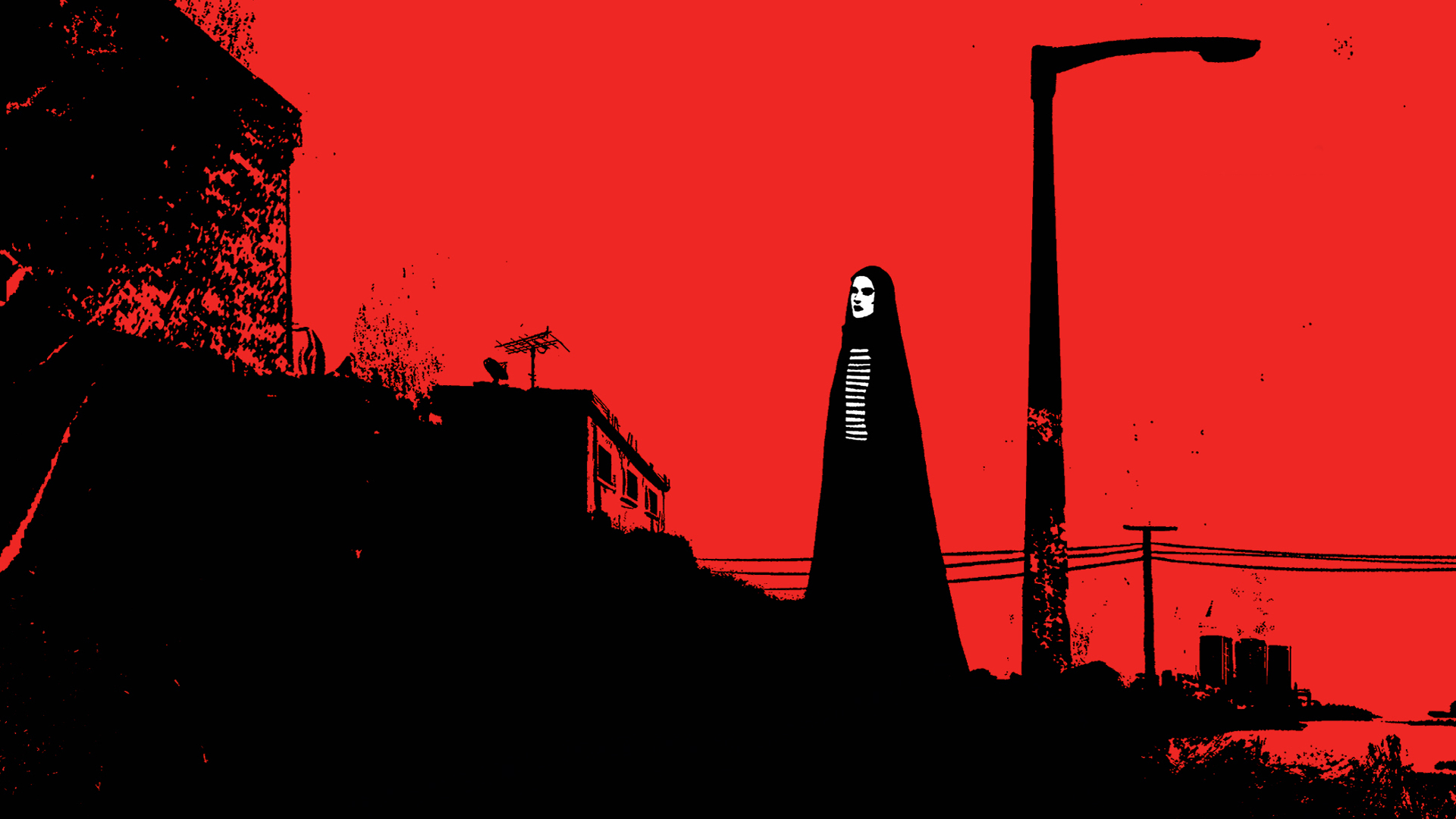
Ana Lily Amirpour follows themes that fascinated her with her feature debut A Girl Walks Home Alone at Night, this time setting those preoccupations in a wasteland of conformity, survival and food.

The Bridge People are hyper-bulked up, ultra-tanned cannibals represented by Miami Man (Jason Momoa). They may not have access to steroids, but they’re certainly getting a lot of protein. The second community of Comfort offers a colorful, almost habitable environment led by charismatic leader The Dream (Keanu Reeves).

One version of America sees the vain, self-centered “winners” literally feeding on the weak. The second may seem more accepting, but it pushes religion, drugs and other “comforts” to encourage passivity.

Amirpour has such a facility with creating mood and environment, and though the approach here is different than with her debut, she once again loads the soundtrack and screen with inspired images, sounds and idiosyncrasies.

2. The Greasy Strangler (2016)

Like the by-product of a high cholesterol diet, The Greasy Strangler will lodge itself into your brain and do a lot of damage.

A touching father/son story about romance, car washes and disco, this movie is like little else ever set to film, showcasing unholy familial unions, men in their underwear, and merkins. (Look it up.)

Brayden (Sky Elobar) and his dad Big Ronnie (Michael St. Michaels – that is a name!) share the family business: LA walking tours of disco landmarks. They live together, work together, eat together.

Father and son possess a seriously unusual family dynamic that seems to work for them until they meet Janet (Elizabeth De Razzo – brave and funny). Both men fall for this “rootie tootie disco cutie,” and if that wasn’t enough, there’s a marauder on the loose – an inhuman beast covered head to toe in cooking grease.

The result is ingenious. Or repellant. Or maybe hilarious – it just depends on your tolerance for WTF horror and sick, sick shit. Whatever else it may be, though, The Greasy Strangler is – I promise you – hard to forget.

https://www.youtube.com/watch?v=VPl1vcb4hao

1. Dumplings (2004)

Fruit Chan’s Dumplings satirizes the global obsession with youth and beauty in taboo-shattering ways.

Gorgeous if off-putting Aunt Mei (Bai Ling) balances her time between performing black market medical functions and selling youth-rejuvenating dumplings. She’s found a customer for the dumplings in Mrs. Li (Miriam Yeung ChinWah), the discarded wife of a wealthy man.

With darkest humor and sharp insight, Chan situates the horror in a specifically Chinese history but skewers a youth-obsessed culture that circles the globe.

The secret ingredient is Bai Ling, whose performance is a sly work of genius. There are layers to this character that are only slowly revealed, but Ling clearly knows them inside and out, hinting at them all the while and flatly surprised at everything Mrs. Li (and you and everyone else) hasn’t guessed.

Gross and intimate, uncomfortable and wise, mean, well-acted and really nicely photographed, Dumplings will likely not be for everyone. But it’s certainly a change of pace from your day-to-day horror diet.

Fright Club: Sisters in Horror

Oh, siblings—our closest friends and the bane of our existence. Horror movies know that, which is why both sibling rivalry and sisterly bonds populate so many worthwhile flicks: Sisters, Excision, Mama, Only Lovers Left Alive, Kiss of the Vampire. Too many to count, really, but that’s exactly what we plan to do: count down the five best.

5. The Lure (2015)

Sisters Gold (Michalina Olszanska) and Silver (Marta Mazurek) are not your typical movie mermaids, and director Agnieszka Smoczynska’s feature debut The Lure is not your typical – well, anything.

The musical fable offers a vivid mix of fairy tale, socio-political commentary, whimsy and throat tearing. But it’s not as bizarre a combination as you might thing.

The Little Mermaid is actually a heartbreaking story. Not Disney’s crustacean song-stravaganza, but Hans Christian Andersen’s bleak meditation on the catastrophic consequences of sacrificing who you are for someone undeserving. It’s a cautionary tale for young girls, really, and Lure writer Robert Bolesto remains true to that theme.

But that’s really too tidy a description for a film that wriggles in disorienting directions every few minutes. There are slyly feminist observations made about objectification, but that’s never the point. Expect other lurid side turns, fetishistic explorations, dissonant musical numbers and a host of other vaguely defined sea creatures to color the fable.

https://www.youtube.com/watch?v=vxhi_3hDUPE

4. Ginger Snaps (2000)

Sisters Ginger and Bridget, outcasts in the wasteland of Canadian suburbia, cling to each other, and reject/loathe high school (a feeling that high school in general returns).

On the evening of Ginger’s first period, she’s bitten by a werewolf. Writer Karen Walton cares not for subtlety: the curse, get it? It turns out, lycanthropy makes for a pretty vivid metaphor for puberty. This turn of events proves especially provocative and appropriate for a film that upends many mainstay female cliches.

Walton’s wickedly humorous script stays in your face with the metaphors, successfully building an entire film on clever turns of phrase, puns, and analogies, stirring up the kind of hysteria that surrounds puberty, sex, reputations, body hair, and one’s own helplessness to these very elements. It’s as insightful a high school horror film as you’ll find, peppered equally with dark humor and gore – kind of A Canadian Werewolf in High School, if you will.

https://www.youtube.com/watch?v=Zoa1A987A_k

3. Raw (2016)

Justine (Garance Marillier, impressive) is off to join her older sister (Ella Rumpf) at veterinary school – the very same school where their parents met. Justine may be a bit sheltered, a bit prudish to settle in immediately, but surely with her sister’s help, she’ll be fine.

Writer/director Julia Ducournau has her cagey way with the same themes that populate any coming-of-age story – pressure to conform, peer pressure generally, societal order and sexual hysteria. Here all take on a sly, macabre humor that’s both refreshing and unsettling.

A vegetarian from a meat-free family, Justine objects to the freshman hazing ritual of eating a piece of raw meat. But once she submits to peer pressure and tastes that taboo, her appetite is awakened and it will take more and more dangerous, self-destructive acts to indulge her blood lust.

In a very obvious way, Raw is a metaphor for what can and often does happen to a sheltered girl when she leaves home for college. But as Ducournau looks at those excesses committed on the cusp of adulthood, she creates opportunities to explore and comment on so many upsetting realities and does so with absolute fidelity to her core metaphor.

2. What Ever Happened to Baby Jane? (1962)

Bette Davis and Joan Crawford? Yes, please!

The two then-aging (just barely, if we’re honest) starlets played aging starlets who were sisters. One (Davis’s Jane) had been a child star darling. The other (Crawford’s Blanche) didn’t steal the limelight from her sister until both were older, then Blanche was admired for her skill as an adult actress. Meanwhile, Jane descended into alcoholism and madness. She also seemed a bit lax on hygiene.

Blanche winds up wheelchair bound (How? Why? Is Jane to blame?!) and Jane’s envy and insanity get the better of her while they’re alone in their house.

Famously, the two celebrities did not get along on set or off. Whether true or rumor, the performances suggest a deep, authentic and frightening hatred borne of envy that fuels the escalating tension.

Davis is at her unhinged best in a performance that earned her an Oscar nomination. Crawford pales by comparison (as the part requires), but between the hateful chemistry and the story’s sometimes surprising turns, this is a movie that ages well, even if its characters did not.

1. A Tale of Two Sisters (2003)

A lurid Korean fairy tale of sorts – replete with dreamy cottage and evil stepmother – Jee-woon Kim’s Tale of Two Sisters is saturated with bold colors and family troubles.

A tight-lipped father returns home with his daughter after her prolonged hospital stay. Her sister has missed her; her stepmother has not. Or so it all would seem, although jealousy, dream sequences, ghosts, a nonlinear time frame, and confused identity keep you from ever fully articulating what is going on. The film takes on an unreliable point of view, subverting expectations and keeping the audience off balance. But that’s just one of the reasons it works.

The director’s use of space, the composition of his frame, the set decoration, and the disturbing and constant anxiety he creates about what’s just beyond the edge of the frame wrings tensions and heightens chills. The composite effect disturbs more then it horrifies, but it stays with you either way.

Tale masters the slow reveal, and the dinner party scene is a pivotal one for that reason. One of the great things about this picture is not the surprise about to be revealed – one you may have guessed by this point, but is nonetheless handled beautifully – but the fact that Tale has something else up its sleeve. And under its table.

Fright Club: Best Hammer Horror

With more than 200 films to their credit, there are almost too many directions you can take when whittling down the best in Hammer horror. Ingrid Pitt could have her own countdown, and fans of the sultrier side of Hammer may be disappointed with this countdown. Fans of Terence Fisher should be pleased, though, but there are still many other films in their repertoire worthy of note, which is why Phantom Dark Dave joins us with his own list!

5. The Devil Rides Out (1968)

Terence Fisher directed many—most—of Hammer’s best films. The Devil Rides Out was his last good movie.

We open on Christopher Lee, tall and brooding, his hair slicked back and his goatee dark. He is the picture of Luciferian evil. But he’s the good guy, which is just one of the ways the film toys with you.

Lee is the wealthy, occult-intrigued de Richleau, and he’s trying—God help him!—to save the life of his young friend whose very soul is in the hands of the evil Mocata. (Rocky Horror’s Charles Gray, which, let’s be honest, may be why we love this movie. The man has no neck! It’s just a jump to the left! We digress.)

There’s a black mass followed by a white mass followed by a black mass. What more do you want from a Hammer film?

Well, if you want loads of extreme close-ups of Charles Gray’s evil looking eyes, then you are in luck!

4. Frankenstein Created Woman (1967)

It turns out, we have kind of a thing for Terence Fisher. Did not even know that until we started working on this list.

In this late-life sequel in Hammer’s Frankenstein franchise, the idea of the female equivalent gets upended in sometimes fascinating ways. The film’s prelude, as a little boy sneaks to watch his drunken father’s execution, sets the stage for a surprisingly touching yet moralistically ambiguous film. Hooray!

Yes, Hammer dried this well up, returning to the Frankenstein tale for sequels and re-toolings throughout the sixties and into the seventies. One constant – Cushing – never fails the picture. Committed to his evil doctor – whom he based on the real-life British Dr. Knox he would later portray in earnest in 1960’s Flesh and the Fiends – Cushing excels where the films around him fail.

This time, it’s the human soul (as well, of course, as the idea of the ideal woman) that preoccupies the doctor and the film. It’s a topic that generates surprisingly little traction in the world’s many Frankenstein efforts, and though this one is hardly flawless, it’s still consistently intriguing.

3. Curse of Frankenstein (1957)

Beginning in the late 1950s, Britain’s Hammer studios begin making lurid period horror, banking on the awesome duo of Peter Cushing and Christopher Lee. Their first collaboration was longtime Hammer director Terence Fisher’s take on the Shelley text, Curse of Frankenstein.

All bubbling potions and bunsen burners, Cushing’s laboratory (don’t forget to pronounce that middle ‘o’) is as fine a home to unholy alchemy as any. Jovially laissez-faire in matters of a moral nature, his sinister acts in the name of science are well played.

Cushing’s mad doctor is, at heart, a spoiled child. His behavior is outrageous, repugnant, but fascinating.

Christopher Lee made a fantastic Dracula – all elegance, height and menace. As Frankenstein’s monster, he’s rotty flesh, dead eye and sutures. Nasty! But the film’s real moment of genius was in making the doctor such a nonplussed agent of evil.

2. Curse of the Werewolf (1961)

The great, sultry, unseemly Oliver Reed makes his big screen debut in this one as Leon, the stricken ward of Spanish wealth with a hairy, toothy secret. So, that is awesome, but it is hardly the most interesting thing about this Terence Fisher movie.

Set in 18th Century Spain, the film opens on a cruel nobleman’s imprisonment of a beggar, who rots in a dungeon for decades, his only reminder of humanity the jailer and his lovely mute daughter. Naturally, that daughter is nearly raped by the nobleman, tossed into prison, and subsequently raped by the beggar. The territory is about as dark as Hammer gets, and it raises a lot of questions. Like, why is his offspring a werewolf?

Never explained, but a wealthy man takes pity on the dying girl’s offspring, raises him up and protects him from his own darker self. This is where Oliver Reed shines, because very few actors were ever more convincing when it came to the idea that they had unsettling impulses.

Fisher’s real fascination here is just that duality of man, and with Hammer flourish and Reed’s overacting, he makes a big splash in investigating it.

1. Horror of Dracula (1958)

In 1958, Hammer Films began its long and fabulous love affair with the cloaked one, introducing the irrefutably awesome Christopher Lee as the Count.

Their tale varies a bit from Stoker’s, but the main players are mostly accounted for. Peter Cushing steps in early and often as Van Helsing, bringing his inimitable brand of prissy kick-ass, but it’s Lee who carries the film.

Six foot 5 and sporting that elegant yet sinister baritone, Lee cuts by far the most intimidating figure of the lot as Dracula. Director Terence Fisher (what?!) uses that to the film’s advantage by developing a far more vicious, brutal vampire than what we’d seen previously.

Still, the film is about seduction, though, which gives Lee’s brute force an unseemly thrill. Unlike so many victims in other vampire tales, it’s not just that Melissa Stribling’s Mina is helpless to stop Dracula’s penetration. She’s in league. She wants it.

Ribald stuff for 1958!

Hello, Dolly

Annabelle: Creation

by Hope Madden

There are a lot of things James Wan’s 2013 hit The Conjuring got right. Leaning toward practical effects over CGI, casting high-quality talent, and digging into an allegedly true story – all good choices that, matched with his eye for framing and skill with mounting dread, led to a chilling and memorable flick.

There’s also a creepy doll, the element that seems to be driving this unexpected franchise and the only item from the original film that made the leap to Annabelle: Creation.

You remember her – she terrorized a young family, and later a pair of nursing students before being locked in a glass case in that creepy room at Ed and Lorraine Warren’s house.

But did you ever wonder what kind of demonic hijinks created her in the first place? Or do you just find yourself in the mood to watch orphans being persecuted? Either way, may I introduce you to Annabelle: Creation?

Director David F. Sandberg (Lights Out) does what he does best, relying on good, old-fashioned jump scares. If that’s your bag – and you don’t get side tracked with nit-picky things like how utterly ignorant writer Gary Dauberman is of actual Catholicism (so maybe he shouldn’t have chosen a Catholic orphanage!) – then this film may be for you.

Years after a doll maker and his wife lose their precious daughter, they accidentally conjure up a demon to live in the single ugliest doll any toy maker has ever seen fit to make.

Bad choice.

Worse choice? Inviting those orphans to move in.

Welp, empty-headed horror it is. And there is something to be said for that in a mid-August slump. This is the sequel to a weak film, itself a sequel of sorts to the kind of movie that felt like a one-off.

It seems unlikely a franchise was the expectation back when Conjuring hit screens in ’13. Since then, filmmakers have scrambled to cobble together a universe of supernatural spookiness to spin off and connect. (Look closely at the picture from Sister Charlotte’s convent – any of those nuns look familiar?)

Sandberg offers little in the way of originality. (He’s clearly a pretty big fan of Wan’s Insidious.) But there are jumps aplenty and a couple of very freaky images in the third act.

Because if you can’t have a creepy nun, may as well make due with a disfigured mother and a scarecrow.

Verdict-3-0-Stars

Camping in Australia – Just, No

Killing Ground

by Hope Madden

Australian campers find trouble in what amounts to Eden Lake meets Wolf Creek.

If you missed either of those two deeply troubling horror classics, you should watch them now. Right now, seriously.

Great, right? Terrifying, eh? Makes you kind of want to see what writer/director Damien Power has in store with his feature film debut, Killing Ground.

He starts off predictably enough: Sam (Harriet Dyer) and her boyfriend Ian (Ian Meadows) are headed to an out-of-the-way campsite Ian remembers from his childhood. They stop for directions, are warned off by a creepy Aussie with a barking pit bull, go anyway.

Right.

They arrive and are disappointed to see that they’ll be sharing the site with another group – based on the parked SUV and the pitched tent. But where are these other campers?

Though Power doesn’t explore a lot of new ground with this campsite horror flick, his approach is so authentic and spare that it breaks free of cinematic hyperbole and leaves you seriously wondering why in the hell anybody camps – anywhere, but especially in Australia.

His narrative builds tension by cross-cutting between the tale of the camping couple and the story of the family whose vacant tent begins to really worry Sam and Ian come nightfall.

From The Babadook to Wyrmwood to The Loved Ones, Australia’s horror output has been outstanding in recent years. Earlier this year, newcomer Ben Young rocked cinemas with his low-budget Aussie horror Hounds of Love.

Killing Ground isn’t quite ready to join those ranks, mainly because, at its core, it’s an unremarkable story – although a few clever twists and choices keep it fresh enough.

The tale is well told and beautifully performed. Aaron Pendersen and Aaron Glenane, in particular, craft believable, dimensional, terrifying characters.

A satisfying power struggle and the provocative use of ambiguities that refuse to offer a tidy ending help the film hang around after credits role.

Seriously, though, why do people camp?

Verdict-3-0-Stars

Fright Club: Best Tobe Hooper Movies

The film community lost another of its greats, and we want to celebrate the wonderful and the weirdly watchable of Tobe Hooper.

Hooper’s ability to pervert social expectations, his unsurpassed gift for creating terrifying atmospheres among America’s backwoodsfolk, and his nonchalantly visceral presentation made every film an experience worth attempting. Not every one paid off, but those that did left a nasty mark.

5. Eaten Alive (1976)

We open on a backwoods Florida whore house. A bewigged young pro loudly protests the request of her new customer, Robert Englund, who plays a hillbilly who prefers backdoor action. She’s cast out of the cathouse with nowhere to go and nothing to do with that ridiculous wig, until kindly maid Ruby (Betty Cole, wardrobed in a traditional maid’s uniform because hookers are such sticklers about the way their help looks) offers her a stack of cash so she can afford a room at the nearby motel.

Unfortunately, the guy who runs that motel is a sadistic pervert who feeds his problematic borders to the gator out back.

Hooper’s follow up to The Texas Chainsaw Massacre is a lurid affair once again focused on delicious interlopers who misunderstand the customs of the locals.

Eaten Alive tries more openly at humor, mostly failing to find laughs (other than the ironic sort) but succeeding in creating an unsettling atmosphere for the carnage. It’s a B-movie, the kind that screams for a drive-in theater and a tub of greasy popcorn, but there is a time and a place for those movies, too.

https://www.youtube.com/watch?v=MSRpivA1mgo

4. Lifeforce (1985)

A naked alien vampire woman sucks seemingly willing men dry on her first trip to London.

Nope, Lifeforce is not a porno. It’s a silly horror film, especially if you come in expecting the kind of visceral gut punch Tobe Hooper tends to deliver. But as a SciFi guilty pleasure (and mash note to Hammer’s Quatermass and the Pit), it’s a bit of fun.

Mathilda May sure is naked. She plays one of three aliens saved from an otherwise decimated space ship found hiding in the tail of Halley’s Comet by European astronauts. Mysteriously, that European ship meets its own disaster before safely dropping off the three aliens on earth.

But wait! Don’t open her case!!

Of course they open her case, and she and her two henchmen begin sucking the life force from all they can find, creating their own kind of Brit zombipocalypse in one of the film’s nuttiest and greatest scenes.

The movie is a mess that lacks any hint of the characteristic Tobe Hooper vision, but it is more than peculiar enough to be compelling.

3. The Funhouse (1981)

Hooper creates a creepy atmosphere on the Midway with this periodically tense freak show. Double dating teens hit the carnival and decide to spend the night inside the park’s funhouse. What could go wrong?

Well, as would become the norm in every carnival-themed horror film to come, the ride is the secret hideaway of a carny’s deformed and bloodthirsty offspring. He hides his misfortune beneath a Frankenstein mask, but he can’t contain his violent rage when teased. (Not that it’s ever wise to pick on a premature ejaculator, particularly in a horror film.)

Sure, The Funhouse follows all the protocol of a slasher set inside an amusement park, and is, for that reason, somewhat predictable. Still, Hooper delivers pretty well. He develops a genre-appropriate seediness among the carnies, as well as an unwholesome atmosphere. He also pays open homage to the genre throughout the picture. (As a way of paying him back, the genre would rip off this film for years to come – most blatantly in 2006’s Dark Ride.)

It’s hard not to find Hooper’s post-Texas Chainsaw Massacre films lacking. This one’s no masterpiece, but it is a tidy, garish, claustrophobic and unsettling piece of indie filmmaking.

https://www.youtube.com/watch?v=BMoQQ7OsX5M

2. Poltergeist (1982)

This aggressive take on the haunted house tale wraps Hooper’s potent horrors inside producer Steven Spielberg’s brightly lit suburbia. In both of Spielberg’s ’82 films, the charade of suburban peace is disrupted by a supernatural presence. In E.T., though, there’s less face tearing.

Part of Poltergeist’s success emerged from pairing universal childhood fears – clowns, thunderstorms, that creepy tree – with the adult terror of helplessness in the face of your own child’s peril. JoBeth Williams’s performance of vulnerable optimism gives the film a heartbeat, and the unreasonably adorable Heather O’Rourke creeps us out while tugging our heartstrings.

Splashy effects, excellent casting, Spielberg’s heart and Hooper’s gut combine to create a flick that holds up. Solid performances and the pacing of a blockbuster provide the film a respectable thrill, but Hooper’s disturbing imagination guarantees some lingering jitters.

1. The Texas Chainsaw Massacre (1974)

Not everyone considers The Texas Chainsaw Massacre a classic. Those people are wrong. Perhaps even stupid.

Tobe Hooper’s camera work, so home-movie like, worked with the “based on a true story” tag line like nothing before it, and the result seriously disturbed the folks of 1974. It has been ripped off and copied dozens of times since its release, but in the context of its time, it was so absolutely original it was terrifying.

Hooper sidestepped all the horror gimmicks audiences had grown accustomed to – a spooky score that let you know when to grow tense, shadowy interiors that predicted oncoming scares – and instead shot guerilla-style in broad daylight, outdoors, with no score at all. You just couldn’t predict what was coming.

He dashes your expectations, making you uncomfortable, as if you have no idea what you could be in for. As if, in watching this film, you yourself are in more danger than you’d predicted.

But not more danger than Franklin is in, because Franklin is not in for a good time.

So, poor, unlikeable Franklin Hardesty, his pretty sister Sally, and a few other friends head out to Grampa Hardesty’s final resting place after hearing the news of some Texas cemeteries being grave-robbed. They just want to make sure Grampy’s still resting in peace – an adventure which eventually leads to most of them making a second trip to a cemetery. Well, what’s left of them.

http://www.youtube.com/watch?v=eY4ldz615FA

Fright Club: Amputees in Horror

If you watch much of horror, there’s something you might notice. People lose a lot of limbs in these movies. Naturally, we decided to look into this. We spent some time with the tragic (or maybe deserving) amputees of Audition and American Mary and others, but there turned out to be so many badasses who only get cooler once the limb is missing that we decided to hang out with them.

Thanks to the B Movie Bros for joining us for the podcast to talk through the list. Listen in HERE.

6. Arlen (Suki Waterhouse) – The Bad Batch (2017)

Writer/director Ana Lily Amirpour creates another unusual heroine with this one. Arlen’s a vane bit of white trash deemed part of “the bad batch.” Shortly into her investigation of her new home, she learns that at least one of the neighborhood communities is less welcoming – if better fed – than the other.

No crybaby, though, Arlen faces life as a double amputee with a lot of nerve and eventually some hallucinogenic drugs. What she does more than anything is refuse to conform and instead paves her own path.

https://www.youtube.com/watch?v=PVfpKaftzv4

5. Alonzo (Lon Chaney) – The Unknown (1927)

When Tod Browning makes a movie about side show freaks, color us excited. In this unseemly tale, the great silent monster Lon Chaney is The Amazing Alonzo, an armless knife thrower/sharp shooter/guitar player/smoker in a circus. He has eyes for his show partner Nanon (Joan Crawford, pre-wire hanger), but the circus strongman is hot for her.

So, it all sounds a tad like Browning’s infamous Freaks. But Nanon spurns the strongman because she can’t stand to be groped by men’s hands – which makes it seem like Alonzo is a shoe-in, except that he is not what he appears to be.

Camera trickery, an actual circus performer, and Chaney’s convincing performance work together to create a believable side show character in Alonzo. Browning couples this unsettling performance with an air of seediness and some bizarre plot twists to leave a lasting impression.

4. Candyman (Tony Todd) – Candyman (1992)

Oh my God, that voice! Yes, Candyman is a bad dude, but isn’t he kind of dreamy?

Like a vampire, the villain of Cabrini Green needed to be both repellant and seductive for this storyline to work, and Todd more than managed both. With those bees in his mouth and that hook for a hand, he is effortlessly terrifying. But it’s Todd’s presence, his somehow soothing promise of pain and eternity, that makes the seduction of grad school researcher Helen (Virginia Madsen) realistic.

Todd would go on to love again in the Candyman sequel Farewell to the Flesh, proving that you do not need two working hands to wreak bloody havoc.

https://www.youtube.com/watch?v=XROa2ZOqh8Q

3. Mia (Jane Levy) – Evil Dead (2013)

With the helpful pen of Oscar winner Diablo Cody (uncredited), Fede Alvarez turns all the particulars of the Evil Dead franchise on end. You can tick off so many familiar characters, moments and bits of dialog, but you can’t predict what will happen.

One of the best revisions is the character of Mia: the first to go and yet the sole survivor. She’s the damaged one, and the female who’s there without a male counterpart, which means (by horror standards), she’s the one most likely to be a number in the body count. But because of what she has endured in her life she’s able to make seriously tough decisions to survive – like tearing off her own damn arm. Nice!

https://www.youtube.com/watch?v=pxrbNDDWass

2. Cherry (Rose McGowan) – Planet Terror (2007)

Losing a leg – in most horror movies, this would spell doom for a character. Not in Robert Rodriguez’s half of Grindhouse, though. Indeed, for Rose McGowan’s Cherry Baby, an amputated limb turns her to the film’s most daring badass.

A machine gun for a leg! How awesome is that?! McGowan strikes the right blend of hard knock and vulnerability to keep the character interesting – beyond the whole leg of death thing. I mean, you’d hardly call her boring.

The entire film is a whole lot of throw-back fun – gory, lewd, funny, gross (so, so gross). It’s so much fun that even a lengthy Tarantino cameo doesn’t spoil things. And it makes the point that people who’ve been struck by physical disabilities can still be total badasses – not to mention hot as F.

https://www.youtube.com/watch?v=jmMApNy48Sc

1. Ash (Bruce Campbell) – Evil Dead 2 (1987)

What?! Like you didn’t know he’d be #1. Hell, he’s the entire reason we did this list.

When his hand turns evil, Ash does what he needs to do. Of course he does – he’s already dismembered nearly everyone who’s ever meant anything to him, what loyalty does he owe his own hand at this point?

Plus, if Cherry Baby was cool with a machine gun leg, how awesome is Ash with a chainsaw for an arm?!

Super cool. Groovy, even.

https://www.youtube.com/watch?v=awxz-8XR938

