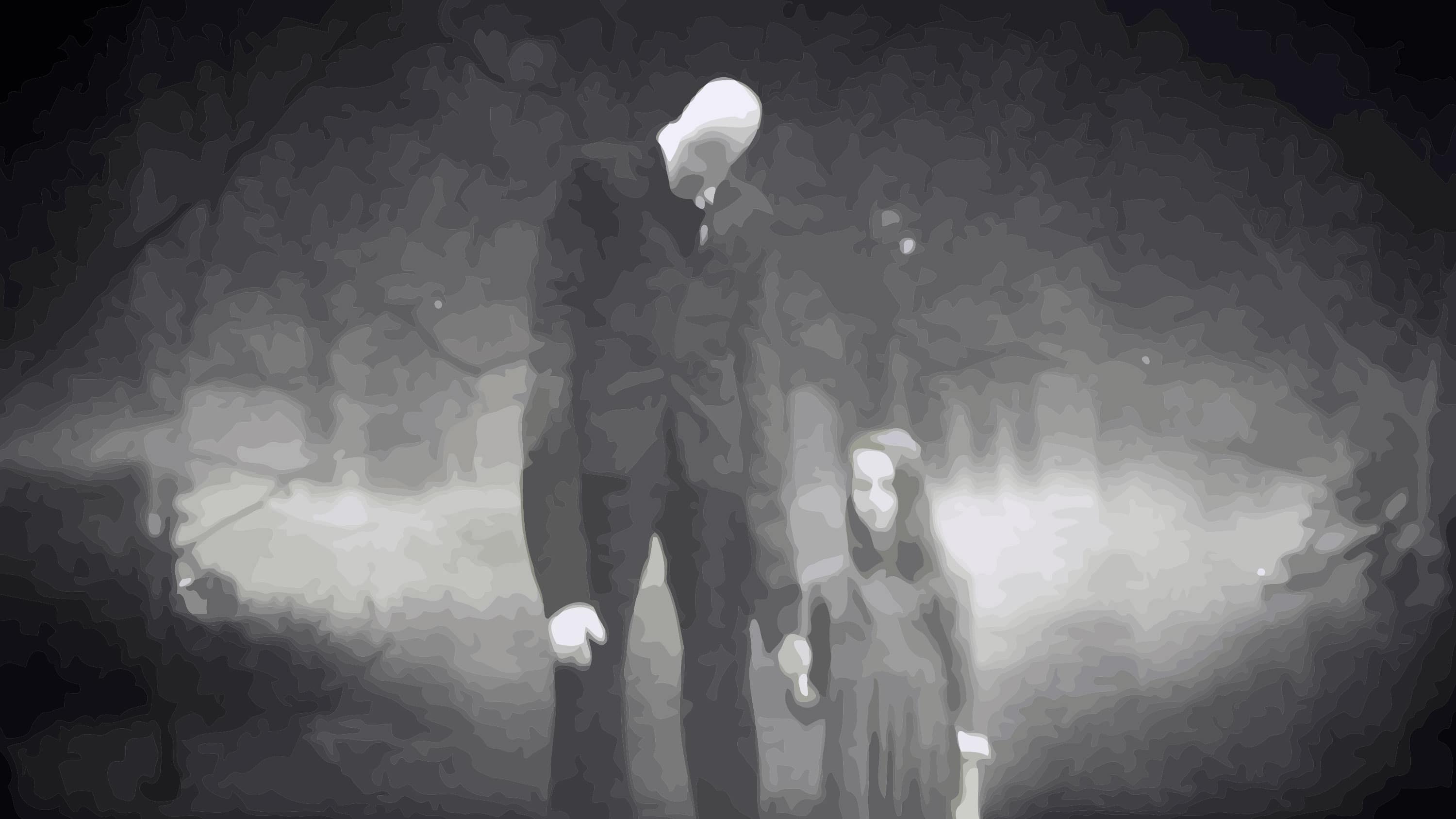
Ahoy! This we talk through the pros and cons (mostly cons) of The Meg, as well as (mostly pros) BlackKklansman and (entirely cons) The Slenderman. We also run through what’s worth it and what’s not in home entertainment.
A lot of horror romances don’t work out. Whether it’s the demon/internet connection hoping to impregnate you, the stalker/voyeur/vampire obsessed with you, or that dreamy girl who turns into a hungry panther every time she’s aroused – finding Mr. or Ms. Right in a horror movie can prove dangerous.
Let’s not even talk about prom dates.
Here are five of our favorite examples of the dire, bloody, terrifying reason that following your heart is not always your best bet.
5. Scream (1996)
Oh, poor Sidney Prescot (Neve Campbell). Her boyfriend Billy (Skeet Ulrich) is practically Johnny Depp levels of hot, but ever since that thing with her mom, Sid can’t get intimate. Plus, Billy Loomis might be the town’s serial killer.
No, love doesn’t turn out great for Sid and Billy. Or for Tatum (Rose McGowan) and Stu (Matthew Lillard). Or for Mr. and Mrs. Prescott. In fact, the only romance that seems to flourish at all ends up giving one guy a terrible limp.
4. It Follows (2014)
Moments after a sexual encounter with a new boyfriend, Jay (Maika Monroe) discovers that she is cursed. He has passed on some kind of entity – a demonic menace that will follow her until it either kills her or she passes it on to someone else the same way she got it.
Writer/director David Robert Mitchell has captured that fleeting yet dragging moment between childhood and adulthood and given the lurking dread of that time of life a powerful image. There is something that lies just beyond the innocence of youth. You feel it in every frame and begin to look out for it, walking toward you at a consistent pace, long before the characters have begun to check the periphery themselves.
Mitchell’s provocatively murky subtext is rich with symbolism but never overwhelmed by it. His capacity to draw an audience into this environment, this horror, is impeccable, and the result is a lingering sense of unease that will have you checking the perimeter for a while to come.
3. Trouble Every Day (2001)
Backed by a plaintive, spooky soundtrack by Tindersticks, Clair Denis’s metaphorical erotic horror examines gender roles, sex and hunger. Denis is one of France’s more awarded and appreciated auteurs, so a one-time voyage into horror should not be dismissed.
A newlywed American couple head to Paris, ostensibly to honeymoon, but Shane (Vincent Gallo) is really there to re-establish connection with old colleagues Coré (Béatrice Dalle) and her husband, Léo (Alex Descas). The three scientists once participated in an experiment, and Shane needs to find them.
The film is a startling work of biologic-horror, but its existential riffs on intimacy, dominance and violence—common fare in the genre—are clearer-headed and more disturbing here than in anything else that swims the same murky waters.
https://www.youtube.com/watch?v=oz5VlZc8tC4
2. Get Out (2017)
Writer/director Jordan Peele crafts an impeccable horror based in social anxiety, articulating something more relevant and powerful than anything horror had undertaken in decades. His is a brilliant take on modern racism, cultural appropriation and horror.
On a less metaphorical level, it’s also a look at a really, really bad romance. Poor Chris (Daniel Kaluuya) agrees to spend the weekend with his girl Rose (Allison Williams) and her parents, meeting the family and participating in a big, rich-white-people party.
But Rose’s relationships don’t turn out so rosy. Just ask Georgina and Walter.
1. Audition (1999)
The prolific director Takashi Miike made more than 70 movies in his first 20 or so years in film. Among the best is Audition, a phenomenally creepy May/December romance gone very, very wrong.
Audition tells the story of a widower convinced by his TV producer friend to hold mock television auditions as a way of finding a suitable new mate. He is repaid for his deception.
Nearly unwatchable and yet too compelling to turn away from, Audition is a remarkable piece of genre filmmaking. The slow moving picture builds anticipation, then dread, then full-on horror.
By the time Audition hits its ghastly conclusion, Miike and his exquisitely terrifying antagonist (Eihi Shina) have wrung the audience dry. She will not be the ideal stepmother.
A little something called Avengers: Infinity War finally comes home this week. Heard of it? Well, you should have. You can also pick up a fun misfire of a punk rock flick.
It’s the end of the summer! Quick, what lackluster genre trash can we tidy up with a PG-13 rating to cash in on kids’ free time before they have to go back to school next week?!
That’s the theme for this week at the movies, a period in which a 70-foot prehistoric shark movie contains no blood-not one drop. Also, a super creepy, tall, faceless but nattily clad monster terrorizes teens.
I love a good villain, and this film has an opportunity. Slender Man is a cool character. Born online in a meme contest in 2009, the elongated, pale, bald and faceless man in a black suit who beckons children was immediately embraced by a horror community who apparently has no idea what to do with him.
Sylvain White’s film positions him as an urban legend. Four girls watch a video to conjure the beastie. Bad things happen.
Do you know why bad things happen? Because kids today aren’t shown the classics, like The Ring. That movie knew how to maneuver a PG-13 rating.
So, the supernatural being haunts the woods. Or your phone. He’s electrical, you see. So, the woods. No, wait…
And therein lies the problem. We have a villain, born a meme. He has no real backstory, but he’s cool and he deserves a proper horror show. Screenwriter David Birke was absolutely not up to the task of creating that story. And even if he had done a proper job of it, White can’t manage to move scene to scene with any sense of dread or even narrative logic.
Boxes are checked with zero thought about why. Is there a scene in a library where one character stumbles upon some important background information? Why, yes, although it doesn’t make sense and leads nowhere.
Is there another scene of googling where a previous victim turns out to be in an asylum? Indeed! And again, this goes nowhere. Do they find her? Do they visit the asylum? Is she ever brought up again? Nope.
More than anything, Slender Man is just boring. And he shouldn’t be.
It’s not like he’s really been gone. He’s made a dozen or more TV episodes, documentaries, short films and basement-budget indies since his unfortunate 2013 compromised vision Old Boy. But BlacKkKlansman is a return to form—to the envelope-pushing enjoyment that showcases his skills as storyteller, entertainer and activist.
Earmarks of his most indelible marks on cinema—Do the Right Thing, Jungle Fever, Malcolm X—these three elements have rarely joined forces since 1992. You might get one (Get on the Bus) or two (Inside Man, Chi-Raq), but not all three.
Why now? Lee isn’t the first filmmaker to realize how painfully relevant historical tales of systemic racism are at the moment. But it wasn’t until 2014 that Ron Stallworth published the book detailing how he, a black cop in Colorado Springs in 1979, infiltrated the KKK.
You see how it all comes together?
If you don’t, you really should. Lee balances unexpected shifts between humor and drama, camaraderie and horror, entertainment and history lesson, popcorn-muncher and experimental indie with a fluidity few other directors could muster.
The story itself is beyond insane—a zany, hair-raising misadventure destined for the big screen. Stallworth (John David Washington), a rookie in Colorado Springs’s intelligence office, stumbles upon an ad in the newspaper, makes a call, and joins the Klan.
Of course, he’ll need a second officer to actually show up. Enter Flip Zimmerman (Adam Driver—perfect), who sounds about as much like Stallworth as he looks, plus he’s Jewish, which could further complicate his face-to-face relationship with the hate group.
Much sit-com-esque absurdity and dramatic police procedural thrills follow, but it’s the way Lee subverts these standard formats that hits home. The insidious nature of the racism depicted in 1979 echoes in both directions—in the history that brought our country to this moment in time, and in the future Ron Stallworth undoubtedly hoped he could prevent.
Yes, there are laugh out loud moments in this film, but there are far more rallying cries.
What’s your pleasure? Loads and loads of new releases to peruse at home this week. There’s one powerful cowboy movie and a whole slew of badass women. Let us help you sort it out.
One utterly amazing film and a bunch of not-so-terrible to talk through this week in the Screening Room. We love Eighth Grade! We also talk about Christopher Robin, The Darkest Minds and The Spy Who Dumped Me before turning our attention to what’s worth the effort in home entertainment. Listen in!
Let me not be misleading. I did not want to see this movie.
Not just because The Darkest Minds is yet another cinematic adaptation of a dystopian young adult novel.
No, wait. That is why. And if you think you already know every moment of this film, you are correct. The Darkest Minds = X-Men + Divergent + The Girl with All the Gifts. (Haven’t seen that last one? You should!)
Ruby (Amandla Stenberg) is one of the very few children in America who have survived a virus, but survivors have been left with super powers. Deemed threats by the US government, they are rounded up, placed in internment camps and quarantined.
That right. Within moments of “fade in,” the president of the United States is ordering that children be caged. I swear to God. The dystopian future is now.
But the horrifying reality of our day-to-day world is not novelist Alexandra Bracken’s point, nor is it the point of screenwriter Chad Hodge or director Jennifer Yuh Nelson (Kung Fu Panda 2 & 3). No, their point, as is required by their genre, is that our protagonist is so very special. So very special. She just doesn’t know it.
It’s also about evolution. It’s basically the youth of the world recognizing that they are the future and wondering why the hell they should wait to take over, seeing as how the adults are screwing things up to such a degree that we all may be dead before the youngsters can straighten things up.
That checks out.
To be perfectly honest, The Darkest Minds is nowhere near as awful as the trailer made it out to be. Yes, it is predictable to a fault, but the performances aren’t terrible. There are also shades of moral ambiguity here that are uncommon in this type of film.
Stenberg is a veteran of YA cinema—she’s Katniss’s beloved Rue from the original The Hunger Games, for God’s sake. That’s like ‘tween royalty. She’s exactly as awkward, angsty and unaware as she needs to be to become the vehicle for the “she’s so special” storyline. She’s surrounded by a capable cast of children and veterans that keep the story engaging and moving.
The action is adequate at best, the villain obvious and bland, and the climax will leave most people a bit underwhelmed.
And yet, I think these mutant kids may be right. They’ve convinced me. It’s time we just hand them the keys. They couldn’t do any worse, right?
That is an insightful comment, but when it’s delivered earnestly by a lonely, introverted 13-year-old determined to come out of her shell in the meanest of all worlds—middle school—it is a gut punch.
Who would have thought that the most truthful, painful, lovely, unflinching and adorable tween dramedy in eons would have sprung from the mind of 28-year-old comic Bo Burnham? Or that the first-time feature director could so compassionately and honestly depict the inner life of a cripplingly shy adolescent girl?
But there you have it.
Elsie Fisher’s flawless performance doesn’t hurt.
Fisher (Despicable Me‘s Agnes, “It’s so fluffy!”) is Kayla, and we are with her, immersed in her world, for the last week of the eighth grade. God help us.
In Fisher, Burnham has certainly found the ideal vehicle for his story, but his own skill in putting the pieces together is equally impressive. Burnham’s as keen to the strangulating social anxieties of middle school as he is to the shape-shifting effects of technology.
This is the least self-conscious and most accurate portrayal of the generational impact of social media yet presented, and not just as part of the narrative. He uses social media as a storytelling device, whether the way the screen lights up the isolated face of a lonely teen, or the way the sound of the same girl’s YouTube videos narrate the very advice she wishes she were hearing from somebody.
It’s equal parts heartbreaking and sweet, and it miraculously never hits a false note.
He depicts both the normal that we all must tragically know, of being wildly out of your element even in your own skin, and the new normal that feels beyond bizarre. If your greatest ineptitude is human contact, how much harder to hone that skill when your only practice is in a virtual world?
Mercifully, Eighth Grade is not a cautionary tale about the dehumanizing dangers of an online world. It simply accepts that this is the world in which Kayla lives, depicting it as authentically and insightfully as he does a random lunch with the cool kids at the mall, or an unbearably awkward situation with a boy in a car.
Still, the best scene in the film—one that’s as uplifting as it is genuine—casts aside the glow of the phone for starlight and bonfire as Kayla and her dad, beautifully brought to life by Josh Hamilton, share a moment that will just fucking kill you.
Seriously, Burnham was never a 13-year-old girl nor has he ever been father to one. How the hell did he get all of this so insanely right?
I don’t know, man, but good for him. Good for all of us.
The idea felt funny to us, as well. The film has raked in buckets of cash and gotten enthusiastic high fives from most audiences.
But there’s a relatively small, yet very committed band of naysayers, eager to point out that so much of the film fails basic tests of logic.
Hey, you like what you like and nobody’s a bad person for dissing A Quiet Place, but MaddWolf Court is in session to consider the accusations.
1. “I can’t believe they let themselves get pregnant!”
When have people ever stopped fucking?
2. The nail.
So much gnashing of teeth about the nail! Much has already been written about it, and we agree with the most common defenses: these exposed nails have happened in the history of building things, removing it could be loud, and most importantly, the nail is there to mess with you.
We’d say it worked.
3. The dad is a dick.
Unlikeable characters can be okay, ambitious even.
4. You can’t step on a twig but you can scream in a basement.
The soundproofed basement? The one they soundproof through the entire film in preparation for the coming of the baby? The one that gets flooded and you realize how utterly screwed the mom is going to be now?
5. Why didn’t they just build their house by the waterfall?
Houses are hard and noisy to build, or move. The ground near a waterfall is probably not that stable. Lumber is hard to transport when you can’t start your car for fear of slaughter.
6. Everything else the parents do
This movie is about an invasion of the Giant Ear Monsters, and people are upset because the characters don’t follow the universally accepted playbook for dealing with GEMs?
It reminds us of the horrifically realistic film Compliance, which got much finger-wagging from viewers upset with characters acting so unrealistically under pressure.
“No way they would do that, I wouldn’t have done that!” Well, congrats, but the real-life case history says people did exactly that.
Point being: you may think you know just what’s appropriate when the GEMs come, but you don’t. You’re overthinking, just enjoy the taut, well-executed ride.
And in closing, we propose that the chorus of voices eager to prove themselves smarter than A Quiet Place is actually a testament to how intelligent the film really is. It entertains us, scares us, and it also challenges us, which can be uncomfortable.
But countless nubile young women, making idiotic choice after illogical choice, on their way to a braless slaughter? Who cares? Classic slasher!
It’s also curious why the one line in the film that invites a closer inspection seems to be overlooked.
“Who are we if we can’t protect them?”
As a timely, tense metaphor for parenting in an increasingly terrifying and uncertain world, we think A Quiet Place…..nails it.