Bad Boys for Life

The Turning
Like a Boss
The Gentlemen (DVD)

It is creepy when you can’t see someone’s face, unless it’s hidden behind one of those big horse masks, which forever tickle George. But whether the voice on the other side of that mask is asking if Tamra’s home or is telling you where to find your missing daughter, whether that mask is made of burlap, human flesh or the NHL standard fiberglass/Kevlar mix, murder is highly likely.
Here are our favorite masks in horror.
There are so many reasons to love this movie, but the fact that it started that incredibly effective trend in horror movies: the anonymity of the group mask.
It was done again and to magnificent effect in The Purge films, Strangers, and You’re Next. But what Robin Hardy does with it gooses the macabre, medieval nuttiness of his story. A bunny has rarely looked so menacing.
What made Tobe Hooper’s 1974 classic the unnerving, even scarring, savage film that it was? The meat hook? The slam of that heavy metal door? The sound of the chainsaw?
There are so very many moments of terror, so many reasons to scream, you can almost overlook the fact that the main character, though he delivers no lines at all, is wearing somebody else’s face. In fact, depending on the scene (or his mood? his outfit?) he could be wearing any one of three different faces.
How messed up and genius is that?
Director Georges Franju casts a spell with the haunting Christiane (Edith Scob). Graceful and lifeless, the mask hides Christiane’s flaws and her humanity. She is otherworldly.
Unlike the grotesque image often drawn by a mask in a horror film, Christiane’s smooth, colorless visage is as lovely and melancholy as it is terrifying.
Thematically, it makes sense. Young Michael Myers is wearing a mask, looking through those little false eye holes, when he commits his first, soul-deadening murder. So when he comes home to pick up where he left off, naturally he’d need another costume.
But what John Carpenter created with his altered William Shatner mask was the prototypical boogeyman for all slashers to follow and for all retro horror after that. The soulless, colorless, unmoving face perfectly matched the lifeless killing machine, transforming Michael Myers into The Shape and changing the shape of horror as it did.
First of all, the sack head Jason from Part 2 is so much creepier than the hockey mask Jason of Parts 3 – X and beyond. That burlap sack has been a terrifying look in horror movies (from The Town that Dreaded Sundown to Nightbreed to The Orphanage to Trick or Treat).
But it’s the hockey mask you remember. That’s the image that became iconic. Hell, it even made goalies seem cool. (Yes, they stole the idea from the old Martin Landau/Jack Palance/Donald Pleasance film Alone in the Dark, released earlier the same year), but still, who wore it better?
Jason did.
The original Phantom’s mask may not be the coolest. In fact, his mask has evolved over the decades and iterations into something way, way cooler looking. But back in 1925, it was the mask and its removal that made this film a heart attack in the making.
Director Rupert Julian and star Lon Chaney used that mask and its removal to deliver one of cinemas first great scares.
“Is Tamara home?”
Writer/director Bryan Bertino creates an awful lot of terror beginning with that line.
A couple heads to an isolated summer home after a wedding. It was meant to be the first stop on their life together, or so we gather, but not all worked out as James (Scott Speedman) had planned. As he and what he’d hoped would be his fiancé, Kristen (Liv Tyler), sit awkwardly and dance around the issue, their very late night is interrupted by a knock and that immediately suspicious question.
Bertino beautifully crafts his first act to ratchet up suspense, with lovely wide shots that allow so much to happen quietly in a frame. This is a home invasion film with an almost unbearable slow burn.
Bertino creates an impenetrably terrifying atmosphere of not just helplessness, but sadistic game playing. The film recalls Michael Haneke’s brilliant Funny Games, as well as the French import Them, but Bertino roots the terror for his excruciating cat and mouse thriller firmly in American soil, with scratchy country blues on the turntable, freshly pressed Mormon youths on bicycles, and rusty Ford pick ups hauling folks in kids’ Halloween masks.
His image is grisly and unforgiving – part and parcel with the horror output of the early 2000s – but The Strangers is a cut above other films of its decade.
Yes, this couple makes a lot of bad decisions. Indeed, Kristen appears to be borderline mentally challenged. But in this particular situation, they probably just aren’t thinking clearly.
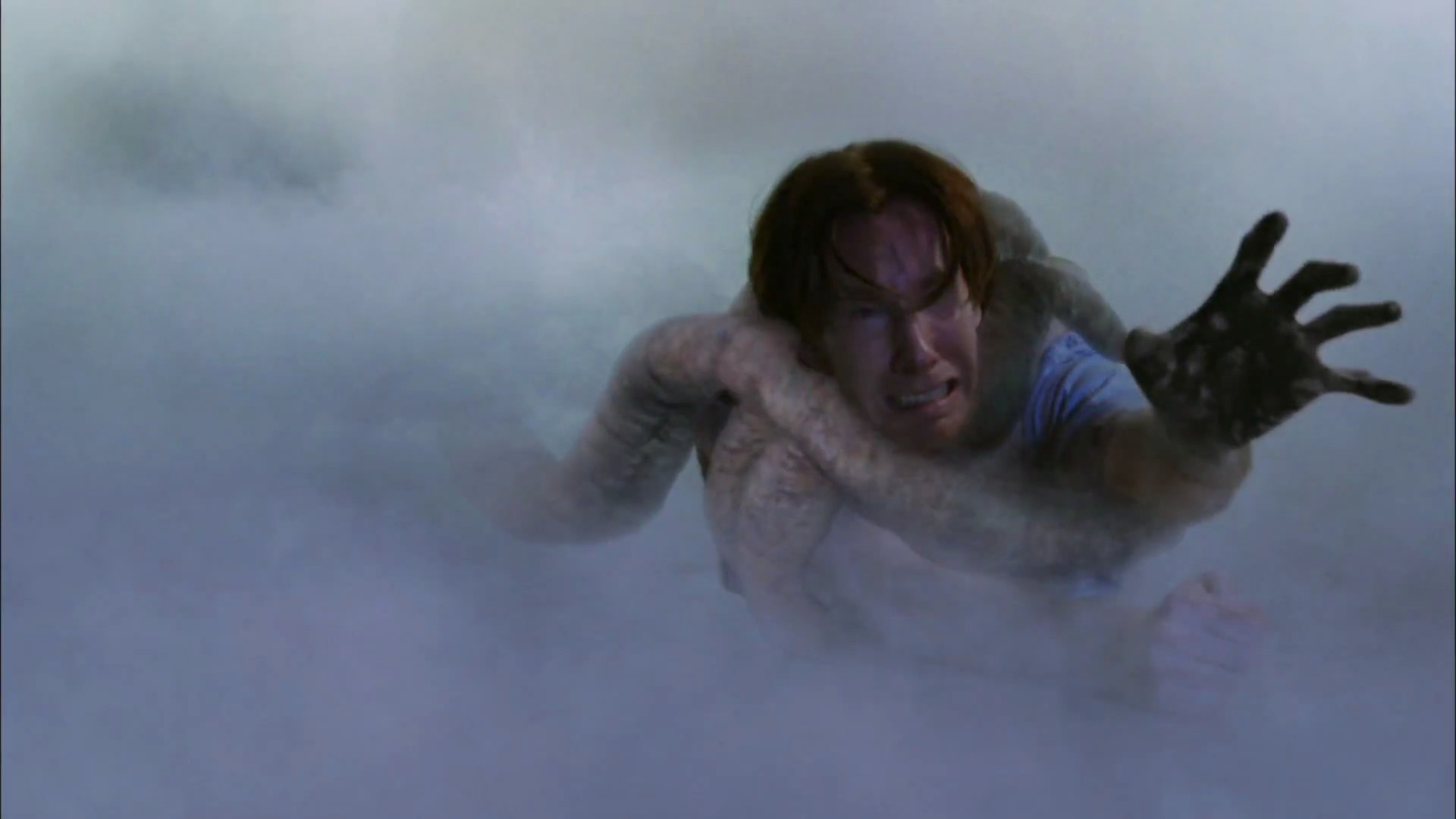
Frank Darabont really loves him some Stephen King, having adapted and directed the writer’s work almost exclusively for the duration of his career. While The Shawshank Redemption may be Darabont’s most fondly remembered effort, The Mist, an under-appreciated creature feature, is our vote for his best.
David Drayton (Thomas Jane) and his young son head to town for some groceries. Meanwhile, a tear in the space/time continuum (who’s to blame?!) opens a doorway to alien monsters. So Drayton, his boy, and a dozen or so other shoppers all find themselves trapped inside this glass-fronted store just waiting for rescue or death.
Marcia Gay Harden is characteristically brilliant. As the religious zealot who turns survival inside the store into something less likely than survival out with the monsters, she brings a little George Romero to this Stephen King.
In a Romero film, no matter how great the threat from the supernatural, the real monsters tend to be the rest of the humans. King does not generally go there, but he does so with The Mist and it’s what makes this one of his most effective films.
While Harden excels in a way that eclipses all other performances, the whole cast offers surprisingly restrained and emotional turns – Toby Jones is especially effective.
The FX look good, too, and let’s be honest, a full-on monster movie with weak FX is the lamest. The way Darabont frames the giants, in particular, gives the film a throw-back quality to the old matinee creature features. But he never gives into cheekiness or camp. The Mist is a genuinely scary film – best seen in the black and white version if you can find it.
Regardless, it’s the provocative ending that guarantees this one will sear itself into your memory. Though this is likely what kept The Mist from gaining an audience in theaters, it is a brilliant and utterly devastating scene that elevates the film from great creature feature to great film.
by Hope Madden
The year was 1988, and as far as you know, metal bands shouted “hail Satan” and evangelicals took to the airwaves warning their flocks about cults driven to spill virtuous blood.
Marc Meyers (My Friend Dahmer) jumps in the way back machine to road trip with three besties headed to a rock show. Alexis (Alexandra Daddario), Val (Maddie Hasson) and Bev (Amy Forsyth) are rockin’ like Dokken with those bare midriff black tees and upside down cross dangles, but something’s amiss.
For one thing, their hair is not nearly obnoxious enough. No way they’re en route to a rock concert in ’88. No one’s hair even grazes the car ceiling.
Also, that trio of dudes they’re flirting with (at least one of them is mulleted, so there is a whiff of authenticity) is clearly beneath them. Plus, with this nationwide ritualistic Satanic killing spree going on…
Here’s the thing, though. I was actually alive in rural Ohio in the late Eighties, and there honestly were people—like, people in authority—who believed our corn fields were lousy with covens. They believed metal music transmitted the words of the dark lord to the eager ears of teens.
It wasn’t true. It’s just that all rock bands in 1988 sucked.
Nonetheless, Meyers creates a nearly believable atmosphere for his spare, occasionally comical dive into Ozzy-inspires Satanism.
Hasson charms as the hot friend with a weak bladder. While the banter never feels quite fresh enough to be improvisational, the dialog among the three girls is random, comfortable fun.
Daddario and Hasson share a silly chemistry that keeps scenes bright and engaging, even when the slight plot begins to wear through.
In its best moments, We Summon the Darkness conjures Kevin Smith’s Red State (an underseen and under-appreciated horror gem). Johnny Knoxville plays intriguingly against type as the Midwestern pastor warning youngsters about the lures of the devil, and Daddario has enough screen presence to anchor the movie.
There’s just not a lot to see here. Pretty girls. Terrible music. Worse clothes. Religious zealots. Backwards thinking. Friends who drive you crazy on a road trip because they have to stop every ten minutes to pee.
Yes, that does sound like 1988 to me, actually. It’s just too bad Meyers couldn’t deliver the kind of inspired, memorable scares born of high school relationships, weirdos and misfits he shared in My Friend Dahmer. Instead the camaraderie and atmosphere become entertaining distractions from a forgettable story.
It’s time to get real. And by that, we mean real nasty.
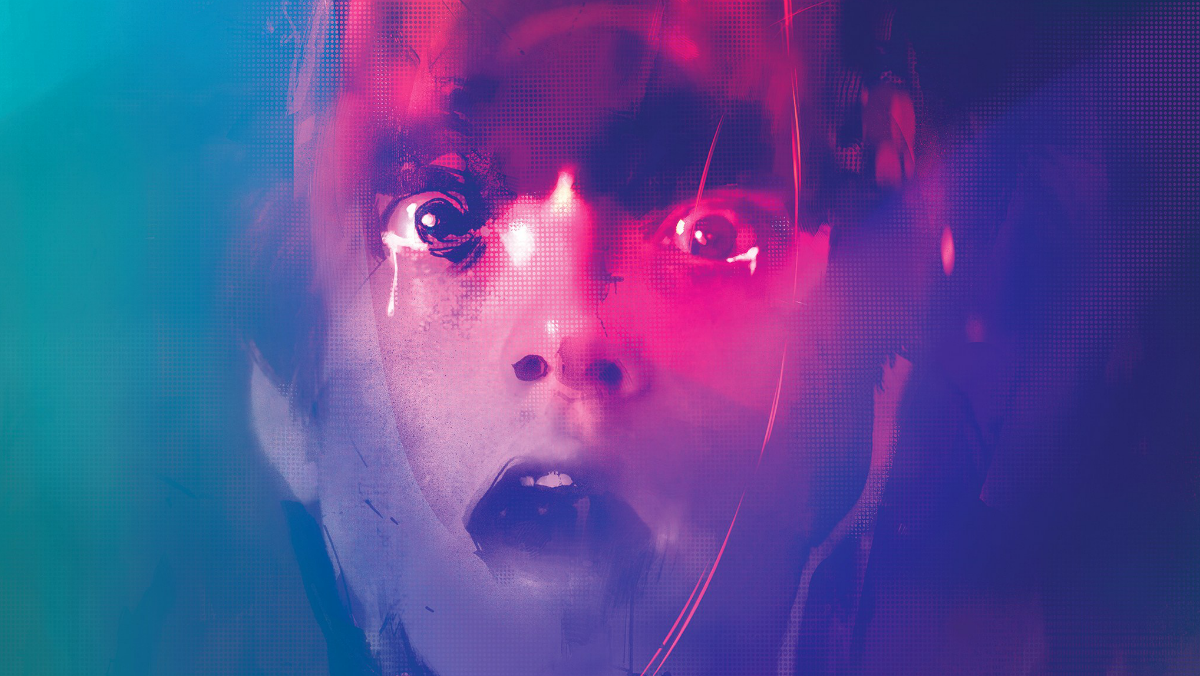
There’s something not quite right about Chris Cleese (an unsettlingly cherubic Sean Bridgers), and his family’s uber-wholesomeness is clearly suspect. This becomes evident once Chris hunts down a feral woman (an awesome Pollyanna McIntosh), chains her, and invites the family to help him “civilize” her.
The film rethinks family – well, patriarchy, anyway. Notorious horror novelist and co-scripter Jack Ketchum may say things you don’t want to hear, but he says them well. And director Lucky McKee – in his most surefooted film to date – has no qualms about showing you things you don’t want to see. Like most of Ketchum’s work, The Woman is lurid and more than a bit disturbing. (Indeed, the advanced screener I watched back when the film was first released came in a vomit bag.)
Aside from an epically awful performance by Carlee Baker as the nosey teacher, the performances are not just good for the genre, but disturbingly solid. McIntosh never veers from being intimidating, terrifying even when she’s chained. Bridgers has a weird way of taking a Will Ferrell character and imbibing him with the darkest hidden nature. Even young Zach Rand, as the sadist-in-training teen Brian, nails the role perfectly.
Nothing happens in this film by accident – not even the innocent-seeming baking of cookies – nor does it ever happen solely to titillate. The Woman offers a dark and disturbing adventure that finds something unsavory in our primal nature and even worse in our quest to civilize.
Don’t even ask about what it finds in the dog pen.
by Hope Madden
Phoenix, Oregon tells the outrageous story of Oregon hipsters polluting the glorious, white trash game of bowling. $18 pizzas? Organic pilsners?
What does a sister gotta do to get a large pep and a Bud?
That is, actually, the story it tells, but its focus is more on the small town coming-of-middle-age saga of the hipsters.
Journeyman James Le Gros is Bobby, a fiftyish bartender at what passes for a fine dining establishment in Phoenix, Oregon. His best friend Carlos (Jesse Borrego) is the chef who can no longer tolerate the cheapskate ways of whining, entitled restauranteur Kyle (Diedrich Bader).
He proposes that Bobby take the fifty grand his mom left him (along with the Airstream where he’s been living since he downsized after his divorce) and invest that cash in a dream: said hipster bowling alley/pie shop.
Bobby needs to think—wallow, really—the same way he always does, by drawing impressive panels in a graphic novel/memoire concerning the aliens who pre-determine his life.
But really, he mostly draws pictures of his ex-wife.
Gary Lundgren’s direction and production values betray a minimal budget and comfortably limited imagination. Like Bobby, Phoenix, Oregon doesn’t set out to impress anybody, so the fully grown slacker kind of vibe actually suits it.
Le Gros’s slyly low key performance certainly fits. Quiet and socially uncomfortable, he brings a realism to the life transition, intentionally but not obnoxiously calling to mind the same awkwardness of adolescence.
Lisa Edelstein, also bracingly realistic, enlivens all her scenes with the sexy vitality and charm of world worn freedom.
Characteristically, Kevin Corrigan is a wrong-headed hoot as a repairman with a chip on his shoulder, but even his generally raucous humor feels subdued. Phoenix, Oregon contents itself with a smirk and a shrug. The entire effort’s lack of showiness allows a hometown authenticity to drive the narrative.
Phoenix, Oregon, while pleasant throughout, offers low stakes, low energy, low drama. Rivalries are easily if not tidily overcome and life goes on. It’s sweet and charming in a low key, comfortable way, but it is hardly a thrill ride.
by Hope Madden
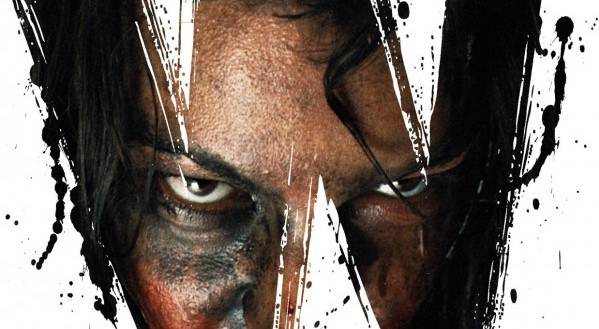
Director Adam Egypt Mortimer’s stylish image of mental illness takes a kind of demonic Fight Club angle, hits some mildly homoerotic notes (like Fight Club didn’t?), and offers a quick and absorbing- if hardly new- horror show.
Co-writing with Brian DeLeeuw an adaptation of DeLeeuw’s novel In This Way I Was Saved, Mortimer drops us mid-mom scream into an average afternoon in the life of poor little Luke (Griffin Robert Faulkner, painfully adorable).
As Luke wanders away from home to avoid his mother’s psychotic episode, he witnesses the aftermath of a gruesome murder, but finds a new friend: Daniel.
Quickly enough, Daniel is helping Luke cope with his personal trauma, taking his mind off his problems, and maybe encouraging some truly evil behavior.
From here Mortimer directs us to an effectively creepy doll house (such a great prop in nearly any terrifying film or terrifying child’s bedroom), which will become (as it does in Hereditary and The Lodge) a fine symbol for the madness of the mind.
Mortimer’s film looks great and benefits from a trio of strong performances.
Mary Stuart Masterson, playing Luke’s paranoid schizophrenic mother, gives a brave and believable performance in a role that can easily be overdone.
More importantly, Mortimer’s besties/worsties Luke and Daniel (Miles Robbins and Patrick Schwarzenegger, respectively) create complete characters and offer an uneasy chemistry that keeps the film intriguing.
As Luke’s life spins inevitably out of control, Daniel’s clothing takes on a more and more Tyler Durden style, and I can get behind that. And a certain point near Act 3, Daniel Isn’t Real takes a weird and welcome Clive Barker turn, which is when elements stop being so stylishly predictable and become sloppily fascinating.
The unfortunate Magical Negro trope that will not die surfaces here. It doesn’t entirely sink the film, but it does its damndest to do just that.
Even so, Daniel Isn’t Real is an Olympic-sized leap forward from Mortimer’s previous feature, Some Kind of Hate, the director here showcasing an unpredicted visual flair and storytelling finesse. Though his film treads some well-worn ground, the way Mortimer and team balance the supernatural and psychological push and pull creates an unnerving atmosphere.
by Hope Madden
A few years back, Aussie filmmaker Jennifer Kent unleashed the brilliant and devastating single parent nightmare, The Babadook. As much subtext as text, the film vibrated with the anxiety of a parent torn between resentment and the powerful fear that something demonic might harm her only child.
Fast forward two years, and first-time feature filmmaker, Iranian Babak Anvari, treads familiar ground yet manages to shift focus entirely and create the profound and unsettling Under the Shadow.
Here the social commentary sits even closer to the surface. The tale is set in Tehran circa 1988, at the height of the Iran/Iraq war and just a few years into the “Cultural Revolution” that enforced fundamentalist ideologies.
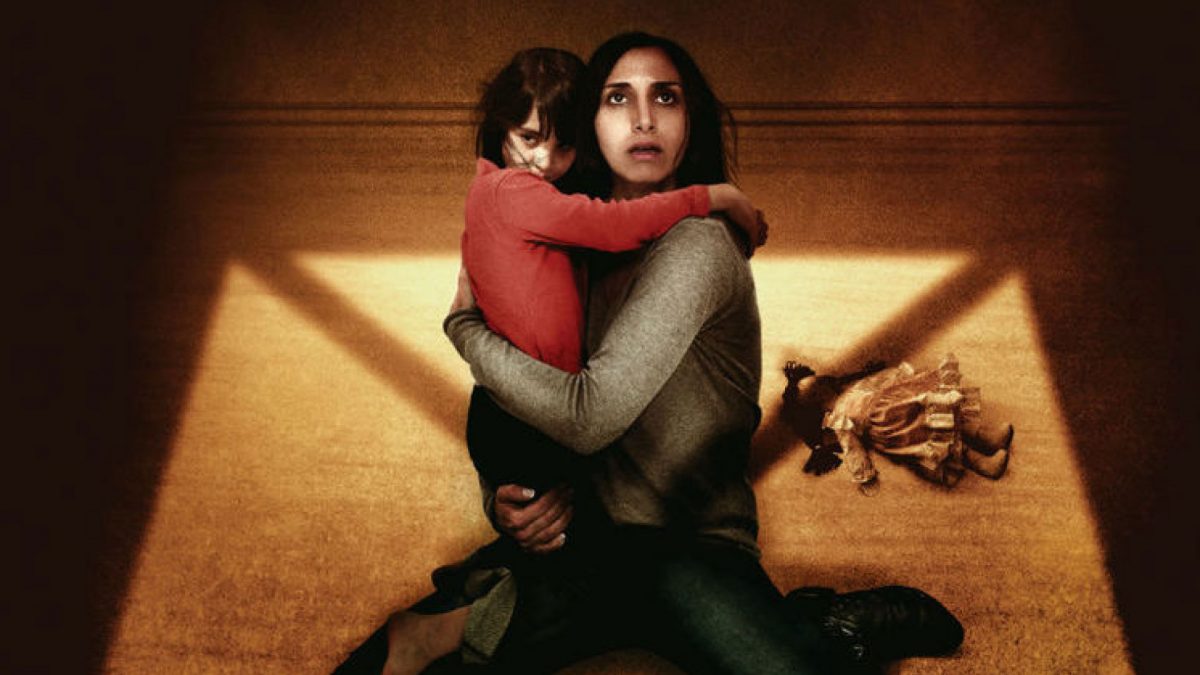
Shideh (a fearless Narges Rashidi) has been banned from returning to medical school because of her pre-war political leanings. Her husband, a practicing physician, is serving his yearly medical duty with the troops. This leaves Shideh and their young daughter Dorsa (Avin Manshadi) alone in their apartment as missiles rain on Tehran.
What begins as a domestic drama suitable for fellow Iranian filmmaker Asghar Farhadi (A Separation) turns slowly into something else entirely as Anvari dips into the horror trope toolbox to shake up our expectations with familiar devices.
When a dud missile plants itself in the roof of the building (shades of del Toro’s Devil’s Backbone), Dora starts talking to a secret friend. Maybe the friend would be a better mommy.
Frazzled, impatient, judged and constrained from all sides, Shideh’s nerve is hit with this threat. And as external and internal anxieties build, she’s no longer sure what she’s seeing, what she’s thinking, or what the hell to do about it.
The fact that this menacing presence – a djinn, or wind spirit – takes the shape of a flapping, floating burka is no random choice. Shideh’s failure in this moment will determine her daughter’s entire future.
Anvari casts the political climate meticulously, as forces beyond Shideh’s control – some supernatural, some cultural, all dangerous – surround her.
Though the strength of the cultural context sometimes undercuts the spookiness of the ghost story being told, Under the Shadow builds a strong case for itself as a horror film. Bursts of creepy imagery punctuate the increasingly tense atmosphere. It’s here that Anvari’s film is most effective, as you realize Shideh is better off dealing with ghouls than turning to neighbors or authorities for help.