A lump of coal on Christmas Day. Ten thousand spoons when all you need is a knife. The movie Get Hard.
What are huge disappointments, Alex?
Correct.
Will Ferrell and Kevin Hart are two of the funniest people around, and it’s easy to see the potential in an onscreen teamup. The problem is the project that brought them together should have died in the idea phase.
Ferrell is James King, a high-rolling hedge fund manager who lives in luxury but still can’t please his trophy girlfriend (Alison Brie). At their lavish engagement party, right in the middle of jamming on guitar with John Mayer, James is hauled away by the Feds and charged with securities fraud.
Ignoring his lawyers advice to take a plea deal, James is found guilty and sentenced to 10 years in San Quentin. Given 30 days to report, James turns to Darnell (Hart), the guy who details his car, to teach him how to survive inside.
See, Darnell is black, so James just assumes he’s been in prison, and that’s just one of the stereotypes the film tries, and fails, to have fun with. In the right hands, race, class and sexuality can be fertile ground for sharp comedy. Those hands never touch Get Hard.
Ferrell and creative partner Adam McKay (who gets a story credit) have been on target before, even managing to work some scattered moments of social commentary into their hilarious lunacy. The mistake may have been relying too much on director/co-writer Etan Cohen, who shows no instinct for restraint. The film is overplayed on all fronts, giving it a crass, borderline nasty and often humorless air.
With the “revenge of the common man” storyline you get the feeling the intention here may have been an updated Trading Places. It isn’t long, though, before you wished they’d have just done a straight-up remake, and spared us the buzzkill that is Get Hard.
The efforts of a talented, veteran cast, coupled with a refreshing attitude toward the love lives of senior citizens, enabled The Best Exotic Marigold Hotel to rise above a tendency for silly contrivance.
The Second Best Exotic Marigold Hotel can’t quite measure up.
Director John Madden and screenwriter Ol Parker return, along with most of the original cast, for a trip back to India where things are busy at the eccentric hotel which caters to “the elderly and beautiful.”
Hotel proprietor Sonny (Dev Patel) and girlfriend Sunaina (Tina Desai) are planning their wedding, but Sunny is distracted by business. He wants to expand, and has reached out to a U.S. firm for financial backing. When American “writer” Guy Chambers (Richard Gere) checks in to the hotel, Sonny is convinced he’s actually a spy sent by the prospective business partners.
Guy has barely gotten his room key before Madge (Celia Imrie) has the hots for him, he has his eye on Sonny’s mom (Lillette Dubey), Sonny is jealous of Sunaina’s childhood friend “Kush” (Shazad Latif), and Norman (Ronald Pickup) is afraid he accidentally took out a hit on his girlfriend Carol (Diana Hardcastle). Plus, Douglas (Bill Nighy) and Evelyn (Judi Dench) still haven’t gotten together!
Maybe Captain Stubing can talk some sense into everyone!
It doesn’t take long to realize how much this installment misses the dear departed Graham, as played by Tom Wilkinson. Beyond Wilkinson’s immeasurable talent, Graham’s thoughtful storyline grounded part one in a graceful humanity that the sequel sorely needs. Gere is a fine addition for sheer star power, but his character only serves as a means to add more empty conflict to all the sit-comery.
It’s too bad, because even with Wilkinson gone, this cast features a vast wealth of talent that can instantly improve most any flailing script. The odd man out again is Patel, whose exaggerated histrionics serve as an annoying distraction from his sublime co-stars.
Despite a few charming moments, this sequel is overlong, overdone, and easily Second Best.
There’s something inherently cool about heist movies, isn’t there? Exotic locales, beautiful people, and outlandish schemes to steal lots of cash often play well together. Focus has all the ingredients to be a solid entry to the genre – as long as you don’t mind a certain irony in the film’s title.
Will Smith is Nicky, a veteran con man operating a well-oiled group of sophisticated thieves. He isn’t looking for any new recruits, until young Jess (Margot Robbie) impresses him with her grifting skills and her eagerness to move into the big leagues. So, she joins the team, but after a big score and some quality alone time, Nicky leaves Jess disappointed and hurt.
Fast forward three years, and Nicky is hired to help a Formula One racing hotshot pull a con, only to discover that hotshot’s longtime girlfriend is his own former flame Jess. With old wounds reopened, Nicky is thrown off his game as we try to keep up with just who is conning whom.
The irony is, a film that points out how people are conned with misdirection can’t keep you from noticing the ridiculous age difference in the romantic leads. Older man/much younger woman casting may be a Hollywood tradition, but that doesn’t mean it’s a good one.
That’s not a knock on the actors. Smith is ultra smooth and remains in great shape, and Robbie’s sexy, spunky mix nearly steals the show, but he’s farther past 40 than she is past 19, and the romantic chemistry between them never feels quite true.
The writing/directing team of Glenn Ficarra and John Requa, already with fine credits including I Love You, Phillip Morris, Crazy, Stupid Love and Bad Santa, exhibit a nice feel for the basics that make a heist film tick. It’s often confident, clever and stylish, especially during an early segment which finds Nicky’s crew wandering through a crowd of Bourbon Street revelers and systemically pilfering at will.
Though the final con is a bit underwhelming and the few nods to character development are rushed enough to be unnecessary, Focus delivers some high-gloss fun. It’s fast-paced and sure to keep you guessing, which is good. You don’t want to look too hard for substance.
Valentine’s Day came and went, but we are still in a romantic mood. Why not celebrate those great, doomed romances so often found in horror? Surely, The Bride of Frankenstein may be the all-time best, but we wanted to share some of our lesser-appreciated favorites, beginning with one of the very best horror films of the last decade.
The Loved Ones (2009)
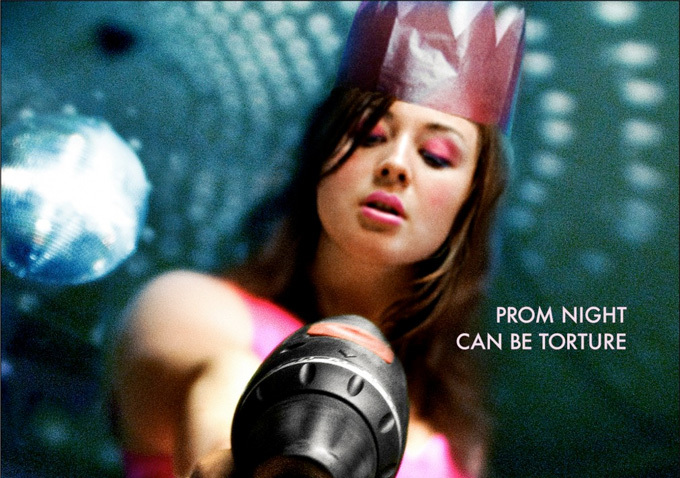
Brent (Xavier Samuel) is dealing with guilt and tragedy in his own way, and his girlfriend Holly tries to be patient with him. Oblivious to all this, Lola (a gloriously wrong-minded Robin McLeavy) asks Brent to the school dance. He politely declines, which proves to be probably a poor decision.
The Loved Ones is a cleverly written, unique piece of filmmaking that benefits from McLeavy’s inspired performance as much as it does its filmmaker Sean Byrne’s sly handling of subject matter. It’s a wild, violent, depraved to spend 84 minutes. You should do so now.
https://www.youtube.com/watch?v=olB5Wrg8Sxc
Thirst (2009)
Leave it to the great Chan-wook Park (Oldboy) to think of turning the Postman Always Rings Twice storyline into a vampire tale. Thirst would be a weird movie regardless, but the steamy/guilty romantic entanglements with an ailing friend’s young wife take on a peculiar tone when the other man is not just a vampire, but a former priest to boot.
Father Sang-hyeon (Kang-ho Song) volunteers for a medical experiment, but instead of a cure the procedure creates vampirism. The poor guy’s barely wrapped his head around his new drinking problem before he falls for his buddy’s scheming wife. Park’s visuals are a sumptuous wonder, and his romantic bloodletting is as curiously humorous as it is creepy.
May (2002)
Few horror films are as touching, funny, heartbreaking or bloody as May. Lucky McKee’s 2002 breakout is a showcase for his own talent as both writer and director, as well as his gift for casting. As the title character, Angela Bettis inhabits this painfully gawky, socially awkward wallflower with utter perfection. McKee’s screenplay is as darkly funny as it is genuinely touching, and we’re given the opportunity to care about all the characters: fragile May, laid back love interest Adam (a faultless Jeremy Sisto), hot and horny Polly (a wonderful Anna Faris).
McKee’s film pulls no punches, mining awkward moments until they’re almost unendurable and spilling plenty of blood when the time is right. He deftly leads us from the sunny “anything could happen” first act through a darker, edgier coming of age middle, and finally to a carnage laden climax that feels sad, satisfying and somehow inevitable.
https://www.youtube.com/watch?v=es0HnQqCqg0
The Signal (2007)
A transmission – a hypnotic frequency – broadcasting over TV, cell and landline telephones has driven the good folks of the city of Terminus crazy. David Bruckner, Dan Bush and Jacob Gentry created a film in three segments, or transmissions. Transmission 1 introduces our lover heroes as well as the chaos. Can Mya and Ben remain sane, reunite and outrun the insanity? Transmission 2 takes a deeply, darkly funny turn as we pick up on the illogical logic of a houseful of folks believing themselves not to have “the crazy.” The final transmission brings us full circle.
The movie capitalizes on the audience’s inability to know for certain who’s OK and who’s dangerous. Here’s what we do know, thanks to THE SIGNAL: duct tape is a powerful tool, bug spray is lethal, and crazy people can sure take a beating.
Hellraiser
Here’s an alternative to Fifty Shades of Grey. Clive Barker’s feature directing debut worked not only as a grisly splatterfest, but also as a welcome shift from the rash of teen slasher movies that followed the success of Halloween. Barker was exploring more adult, decidedly kinkier fare, and Hellraiser is steeped in themes of S&M and the relationship between pleasure and pain.
Hedonist Frank Cotton solves an ancient puzzle box, which summons the fearsome Cenobites, who literally tear Frank apart and leave his remains rotting in the floorboards of an old house. A gash on brother Larry’s leg spills blood on the floor, which awakens the remains of Frank, who then requires more blood to complete his escape from the underworld. Larry’s wife (and Frank’s lover) Julia, both repulsed and aroused by her old flame’s half-alive form, agrees to make sure more blood is soon spilled.
2014 was a banner year, with great films in an enormous range of genres: blockbusters and indies, horror and SciFi, dramas and comedies, as well as films from first time filmmakers, a lot of great stuff from women directors, and an unusually high number of excellent films with one-word titles. No idea that that trend might mean. Anyway, today we walk through our 20 favorites of the past 365 days.
20. Into the Woods: Rob Marshall proves again that he’s the man you want filming a musical, using inventive techniques to bring the cross-cutting fairy tale narratives in this Sondheim musical to glorious life. Not your traditional Disney effort, Into the Woods offers a sophisticated, often dark but insightful and imaginative look at the other side of fairy tales.
https://www.youtube.com/watch?v=sNVGDZHRJXM
19. The Lego Movie: The tone is fresh and irreverent, the voice talent spot-on, and the direction is endlessly clever. The Lego Movie was the most fun to be had at the cinema in 2014.
18. Guardians of the Galaxy: Director James Gunn nails the tone, the color, the imagery, and the sound of one Earthling dartin’ about space scavenging, smooching, and basically living the dream. The effortlessly likeable Chris Pratt leads a crew of ragtag misfits who collectively become the most enjoyable team of intergalactic scoundrels since Han Solo piloted the Falcon. This is the definition of a great summer movie.
17. Calvary: World-weary humor, brilliant writing and one stellar performance from the always remarkable Brendan Gleeson mark this underseen gem from Ireland about humanity, betrayal, forgiveness and redemption.
16. The Imitation Game: A wonderful mix of exciting historical mystery and heartfelt examination of the complicated man at the mystery’s center, The Imitation Game is a film about secrets boasting an Oscar-worthy performance from Benedict Cumberbatch.
15. American Sniper: The bio of America’s most lethal sniper is tense, heartfelt, and wise. Director Clint Eastwood hasn’t been this invested in years, and along with an astonishing lead performance from Bradley Cooper, strikes just the right tone with a story that could have easily been mined for manipulation. It isn’t, which is another reason to salute American Sniper.
14. Locke: A masterpiece in simplicity, Locke tags along on a solo car trip: just you, the great Tom Hardy, and several simultaneous crises he handles on his mobile.
13. Under the Skin: This hypnotic, low-key SciFi thriller – the latest from filmmaker-to-watch Jonathan Glazer – follows Scarlett Johansson around Glasgow in a van. Light on dialogue and void of exposition, Under the Skin demands your attention, but it delivers an enigmatic, breathtaking, utterly unique vision of an alien invasion.
12. The Babadook: A familiar tale given primal urgency, the horror fueled by compassion, the terror unsettling and genuine – this film is more than a scary movie, and it immediately ranks among the freshest and most memorable the genre has to offer.
11. Inherent Vice: Paul Thomas Anderson’s latest defies easy summarization as an inebriated PI (played by Joaquin Phoenix as you’ve never seen him) fits together pieces from several different puzzles to create an unpredictable, barely coherent but wildly enjoyable whole.
10. A Most Violent Year: This gem is a film about the merits versus moral compromise of the American dream, and a slow boil drama that keeps you on edge for its full 125 minute running time because there is absolutely no guessing what is coming next.
9. Snowpiercer: Though incompetently marketed and abysmally underseen, Snowpiercer is an immediate dystopian classic. Visionary direction from Joon-ho Bong maximizes claustrophobic tension while brazen casting victories (Oh my God, Tilda Swinton!) and another solid lead turn from Chris Evens work together to create an enthralling allegory of the makers and the takers.
8. Foxcatcher: Director Bennett Miller’s understated true crime film benefits from seriously unusual casting. Steve Carrel is revelatory as John du Pont, millionaire weirdo and wrestling enthusiast who bankrolled Olympic hopefuls (Mark Ruffalo and Channing Tatum, both award worthy), ensnaring then in his unpredictable psychosis. It’s riveting stuff.
7. Only Lovers Left Alive: The great Jim Jarmusch (Ohio boy!) updates the vampire genre with a well conceived twist on the unusual, aided by Tilda Swinton and Tom Hiddleston’s wonderful performances as well as his own dry humor and magnificent eye for visuals.
6. The Grand Budapest Hotel: The great eccentric genius Wes Anderson inches his way closer to mainstream acceptance and Oscar with the most meticulously framed, wickedly clever dark comedy. Filled with melancholy and whimsy, full to bursting with fascinating cameos, and boasting an almost unimaginably perfect performance by Ralph Fiennes, it’s a work of genius that could spring only from the mind of Anderson.
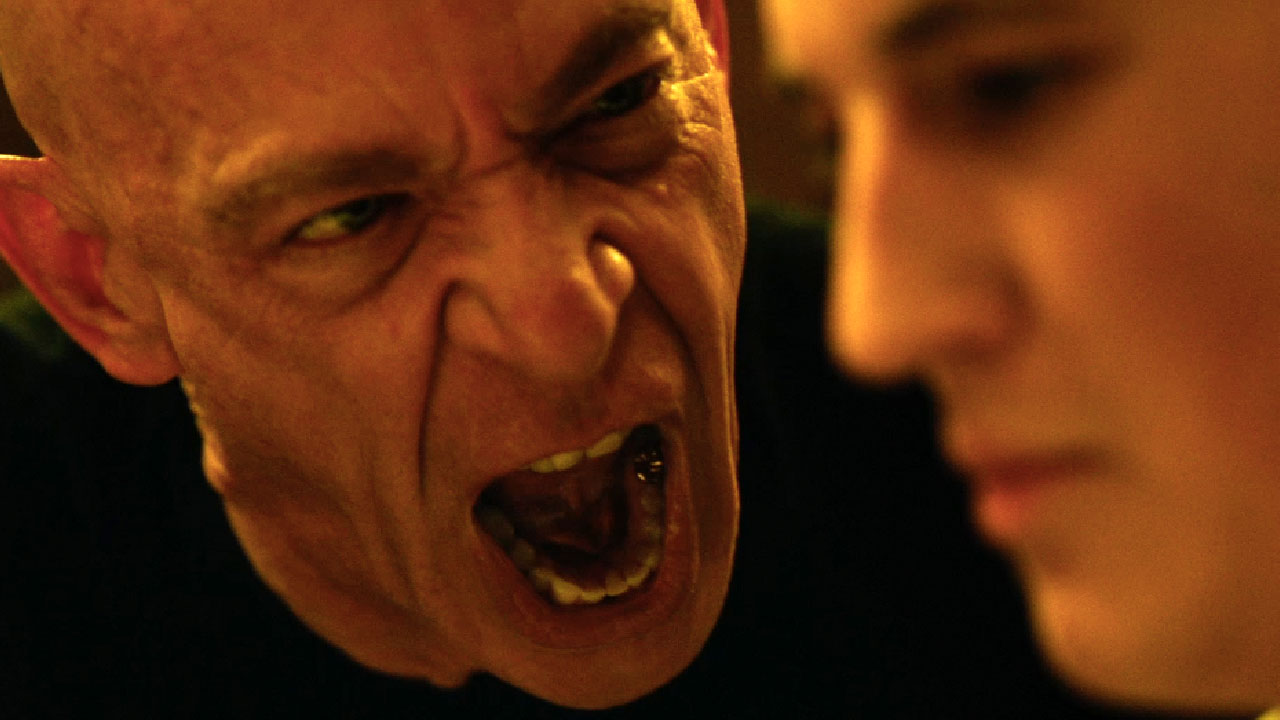
5. Whiplash: As sure as J.K. Simmons will walk home with his first Oscar this year, Whiplash will astonish you. No film this year ratchets tension like this one, as one musician and his mentor do battle that makes the Hobbit look light hearted. Brilliantly written, expertly directed, and boasting two excellent performances (not to mention some really great music!), Whiplash is easily one of the best features of 2014.
4. Nightcrawler: No telling why it took so long to combine Network and American Psycho, but Nightcrawler is here now, so buckle down for a helluva ride. Jake Gyllenhaal is at his absolute best in a film that is as scorchingly relevant an image of modern media as it is a brilliant character study in psychosis.
3. Birdman: Meta-magical-realism at its finest, Alejandro Gonzales Inarritu’s look at the transience and transcendence of fame will nab some Oscars this season. This is a brilliant director and a magnificent cast at their playful, creative best.
2. Selma: Ava DuVernay’s account of the civil rights marches in Selma, Alabama doesn’t flinch. You can expect the kind of respectful approach common in historical biopics, but don’t let that lull you. This is not a laudable and forgettable historical art piece, and you’ll know that as you watch little girls descend a staircase within the first few minutes. Selma is a straightforward, well crafted punch to the gut.
1. Boyhood: Richard Linklater manages the impossible. By checking in on one family every year for 12 years, collecting not the major incidents but all those everyday moments, he provides an achingly, hilariously, touchingly realistic impression of an entire childhood. The cast is brilliant, and the sense of family they evoke is as authentic as anything you will ever see on film. Boyhood is a film like none other ever made, and it is imperative viewing.
Man, those cenobites were scary cool, weren’t they?
Hellraiser, Clive Barker’s feature directing debut, worked not only as a grisly splatterfest, but also as a welcome shift from the rash of teen slasher movies that followed the success of Halloween. Barker was exploring more adult, decidedly kinkier fare, and Hellraiser is steeped in themes of S&M and the relationship between pleasure and pain.
Hedonist Frank Cotton solves an ancient puzzle box, which summons the fearsome Cenobites, who literally tear Frank apart and leave his remains rotting in the floorboards of an old house. Years later, Frank’s brother Larry moves into that house with his teenage daughter Kirsty and his new wife Julia (who, oh yeah, also happens to be Frank’s ex-lover).
A gash on Larry’s leg spills blood on the floor, which awakens the remains of Frank, who then requires more blood to complete his escape from the underworld. Julia, both repulsed and aroused by her old flame’s half-alive form, agrees to make sure more blood is soon spilled.
Meanwhile, young Kirsty accidentally opens the puzzle box, and when the Cenobites come for her, she offers a deal: let me go, and I’ll lead you to Uncle Frank.
What? A teenager in a horror flick doing some cool headed problem solving?
It was another way that Hellraiser rose above some weak production elements to stand out, and hail the arrival of Clive Barker as an important new name in horror.
In Stories We Tell, director Sarah Polley lets the secrets in her own family history speak to all families, eloquently questioning truths in which we often take comfort.
She already had an extensive list of acting credits when 2006’s Away From Her established Polley’s additional skills as a writer and director. Her instincts are just as true in the documentary genre, perhaps more so, as a story that has intensely private beginnings becomes universal, entertaining and genuinely moving.
Normally, we include a film’s trailer when posting a review, but not in this case. Avoid it if you can, as knowing absolutely nothing about Polley’s family dynamics before seeing Stories We Tell adds a wonderful element of discovery.
In much the same manner Bart Layton structured his incredible documentary The Imposterlast year, Polley moves the story along with the best possible pace, releasing new bits of information at the exact moment they will have the most impact. This holds true even halfway through the end credits, when she drops a bombshell that gives the entire saga a new perspective.
Though some of the family members involved are not shy about wanting the film anchored from their perspective, Polley is having none of it. Her film, personal as it may be, is crafted so well that a reexamination of your own family is almost inevitable. And yet, it unfolds in such an engrossing fashion, you may forget it’s not an adaptation of the latest best-selling novel.
It is a testament to Polley’s own storytelling skill that she can turn the focus inward, and still prompt you to look at your own world in a different way.
Stories We Tell is, so far, the best film of the year.