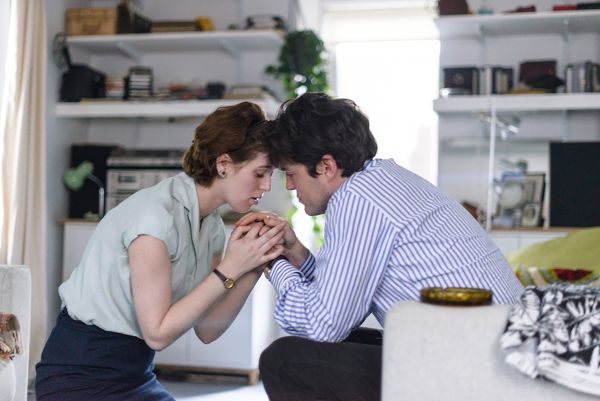
A couple of really great options this week in home entertainment. Also, a couple to steer clear of. Here is the low down.
Click the film title for the full review.
Us

Hotel Mumbai
The Beach Bum

Wonder Park

A couple of really great options this week in home entertainment. Also, a couple to steer clear of. Here is the low down.
Click the film title for the full review.
We are beyond delighted to have been allowed to screen Jim Jarmusch’s new zombie classic The Dead Don’t Die two days in advance of its national opening. To honor this remarkable film and its amazing cast, we look at the best other horror movies that star these actors.
Just when Shaun of the Dead convinced me that those Limey Brits had created the best-ever zombie romantic comedy, it turns out they’d only created the most British zom-rom-com. Writers Rhett Reese and Paul Wernick take the tried-and-true zombiepocalypse premise and sprint with it in totally new and awesome directions.
And the cameo. I cannot imagine a better one. I mean that. I’m not sure a walk on by Jesus himself could have brought me more joy.
That’s not true. Plus, in zombie movie?! How awesome would that have been?!
Jesse Eisenberg anchors the film with an inspired narration and an endearing dork characterization. But Woody Harrelson owns this film. His gun-toting, Twinkie-loving, Willie Nelson-singing, Dale Earnhart-number-wearing redneck ranks among the greatest horror heroes ever.
I give you, a trip to a loud and well-lit amusement park is not a recommendation Max Brooks would make during the zombiepocalypse. Still, you’ve got to admit it’s a gloriously filmed piece of action horror cinema.
The Dead Don’t Die is not Jim Jarmusch’s first foray into horror. In 2013, the visionary writer/director concocted a delicious black comedy, oozing with sharp wit and hipster attitude.
Great lead performances don’t hurt, either, and Jarmusch gets them from Tom Hilddleston and Tilda Swinton as Adam and Eve (perfect!), a vampire couple rekindling their centuries-old romance against the picturesque backdrop of…Detroit.
Not since the David Bowie/Catherine Deneuve pairing in The Hunger has there been such perfectly vampiric casting. Swinton and Hiddleston, already two of the most consistently excellent actors around, deliver cooly detached, underplayed performances, wearing the world- weariness of their characters in uniquely contrasting ways.
There is substance to accent all the style. The film moseys toward its perfect finale, casually waxing Goth philosophic about soul mates and finding your joy.
It is 1977 in “a divided Berlin,” when American Susie Bannion (Dakota Johnson, nicely moving the character from naivete to complexity) arrives for an audition with a world-renowned dance company run by Madame Blanc (Tilda Swinton, mesmerizing).
This “cover version” (The Tilda’s phrase, and valid) of Argento’s original lifts the veil on the academy elders early, via the diaries of Patricia (Chloe Moretz), a dancer who tells psychotherapist Dr. Josef Kiemperer (also The Tilda, under impressive makeup) wild tales of witches and their shocking plans.
Guadagnino continues to be a master film craftsman. Much as he draped Call Me by Your Name in waves of dreamy romance, here he establishes a consistent mood of nightmarish goth.
But even when this new Suspiria is tipping its hat to Argento, Guadagnino leaves no doubt he is making his own confident statement. Women move in strong solidarity both onstage and off, dancing with a hypnotic power capable of deadly results. In fact, most of the male characters here are mere playthings under the spell of powerful women, which takes a deliciously ironic swipe at witch lore.
A giddy hatchet to the head of the abiding culture of the Eighties, American Psycho represents the sleekest, most confident black comedy – perhaps ever. Director Mary Harron trimmed Bret Easton Ellis’s novel, giving it unerring focus. More importantly, the film soars due to Christian Bale’s utterly astonishing performance as narcissist, psychopath, and Huey Lewis fan Patrick Bateman.
There’s an elegant exaggeration to the satire afoot. Bateman is a slick, sleek Wall Street toady, pompous one minute because of his smart business cards and quick entrance into posh NYC eateries, cowed the next when a colleague whips out better cards and shorter wait times. For all his quest for status and perfection, he is a cog indistinguishable from everyone who surrounds him. The more glamour and flash on the outside, the more pronounced the abyss on the inside. What else can he do but turn to bloody, merciless slaughter? It’s a cry for help, really.
Harron’s send up of the soulless Reagan era is breathtakingly handled, from the set decoration to the soundtrack, but the film works as well as a horror picture as it does a comedy. Whether it’s Chloe Sevigny’s tenderness as Bateman’s smitten secretary or Cara Seymour’s world wearied vulnerability, the cast draws a real sense of empathy and dread that complicate the levity. We do not want to see these people harmed, and as hammy as it seems, you may almost call out to them: Look behind you!
As solid as this cast is, and top to bottom it is perfect, every performance is eclipsed by the lunatic genius of Bale’s work. Volatile, soulless, misogynistic and insane, yet somehow he also draws some empathy. It is wild, brilliant work that marked a talent preparing for big things.
Opening with a brilliant prologue that wraps a nice vibe of homage around the cold realities of “walking while black,” writer/director Jordan Peele uses tension, humor and a few solid frights to call out blatant prejudice, casual racism and cultural appropriation.
When white Rose (Alison Williams) takes her black boyfriend Chris (Daniel Kaluuya) home to meet the fam, she assures him race will not be a problem. How can she be sure? Because her Dad (Bradley Whitford) would have voted for Obama’s third term “if he could.” It’s the first of many B.S. alerts for Peele, and they only get more satisfying.
Rose’s family is overly polite at first, but then mom Missy (Catherine Keener) starts acting evasive and brother Jeremy (Caleb Landry Jones) gets a bit threatening, while the gardener and the maid (both black – whaaat?) appear straight outta Stepford.
Peele is clearly a horror fan, and he gives knowing winks to many genre cliches (the jump scare, the dream) while anchoring his entire film in the upending of the “final girl.” This isn’t a young white coed trying to solve a mystery and save herself, it’s a young man of color, challenging the audience to enjoy the ride but understand why switching these roles in a horror film is a social critique in itself.
Get Out is an audacious first feature for Jordan Peele, a film that never stops entertaining as it consistently pays off the bets it is unafraid to make.
Big week! So many movies! Some of them are even great. This week we break down Men in Black: International, Shaft, Late Night, The Dead Don’t Die, Halston plus everything worth your time in home entertainment.
Listen to the full podcast HERE.
by George Wolf
“JJ” Shaft walks gingerly into traffic, taking care to watch for cars. He doesn’t constantly drop expletives and he’s keen on Brazilian dance fighting.
So, he’s a little different from Dad, then?
It’s the first clue that writers Kenya Barris and Alex Barrow and director Tim Story might have a sound plan to bring Shaft into the 21st century. They need one, because successfully transplanting those solidly 1970s sensibilities to present day is a bit of a trick.
The Brady Bunch Movie got around it by having the 90s Bradys still living gloriously 70s while everyone else called them weird. Genius move.
2005’s Bad News Bears remake just tried to tone down the unacceptable elements. Swing and a miss.
Taking much more of a straight up comedic approach than John Singleton’s 2000 sequel, this Shaft‘s culture clashes between John (Samuel L. Jackson) and JJ (Jessie T. Usher) offer some amusingly organic attempts to freshen the air of misogyny and homophobia.
It’s not a bad strategy, but the dam can only be held back so long. Guys, quit being such pansies. Women like real men who only want sex, guns, and any chance to kill people!
And then there’s the matter of the unintentional comedy.
JJ is a data analyst at the FBI who’s also apparently a hacking genius: “This is the most advanced encryption I’ve ever seen…I’m in!” He drags Pops into a completely ridiculous drug case where the clues come easy and the henchman stand straight up in every line of fire while explaining their motivations for giving chase (“It’s that Shaft kid! He saw everything!”)
Is Jackson a wonderful badass who’s perfect for this? Duh.
Does Regina Hall (as JJ’s mother) brighten every scene she’s in? She always does.
Do the samples of Isaac Hayes’s original music remind it’s probably the greatest theme in movie history? You damn right!
And Richard Roundtree again, casually dismissing that “Uncle Shaft” business from last time? Love it so hard.
There are fun elements here, but the lazy execution never fully commits to the promising setup. Shaft’s early self-awareness ends up devolving into self-parody and sadly, I cannot dig that.
by George Wolf
Just weeks ago, Long Shot gave us an in-the-moment, proudly raunchy comedy with brains and big laughs. Audiences largely balked.
Late Night also offers plenty of insightful funny business, but trades the hard R-rating for a more agreeable sell, one that will hopefully translate into selling more tickets.
Mindy Kaling’s debut screenplay may be ultimately eager to please, but it’s also a sharp and solidly funny takedown of the challenge in navigating a social landscape in motion.
Kaling also stars as Molly, a factory worker who’s main outside interest is comedy. Though her only standup experience is cracking them up over the intercom at work, Molly lands an interview for a writing gig at her favorite late night talk show.
Her timing is perfect. Comic legend Katherine Newbury (a pitch-perfect, absolutely Oscar-worthy Emma Thompson) has ordered some diversity be added to her all male, all pale writing staff, so Molly gets the gig.
Katherine may have been the first woman to enter the late night wars, but her act has grown stale and complacent. Icon or no, Katherine faces an overthrow attempt from a network president (Amy Ryan) with eyes on an obnoxiously edgy comedian (Ike Barinholtz as Kaling’s barely-veiled swipe at Daniel Tosh) as new host.
Can Molly’s fresh comedic takes save her hero’s job?
Credit Kaling and director Nisha Ganatra for answering that question without sacrificing the bigger points at work.
From slut shaming and #metoo to diversity, office politics and the shifting sands of comedic relevance, Kaling’s script is brimming with writing-what-you-know confidence, even when it’s coasting on roads most traveled.
But still, in those most predictable moments, Thompson’s deliciously droll timing meshes irresistibly with Kaling’s wide-eyed enthusiasm. They both get able support from a uniformly solid ensemble, and the biggest question mark about Late Night becomes that R rating.
The convenient layups the film settles for in act 3 seem like an understandable trade-off for a greater chance at mainstream appeal. So why not trim a few of those F-bombs to get a PG-13?
Late Night deserves plenty of eyeballs. For F@#! sake, let’s hope it gets them.

One of the biggest and baddest hits DVD this week, plus two other middling efforts that were better than they should have been. Here’s the skinny.
Click the film title for the full review.

by Hope Madden and George Wolf
Hey, remember back in ’06 when director Brett Ratner and writer Simon Kinberg crashed the X-Men franchise into oblivion by telling the story of how the perpetually boring Jean Grey was really the most powerful of all mutants, plus maybe she was bad, and not even the love of two good mutants and the misguided belief of Dr. Charles Xavier could save her?
You don’t?! Because it was so bad it tanked the promising series until director Matthew Vaughn revived it five years later with Ashley Miller’s clever time warp, X-Men: First Class. Then there was another good one, then a terrible one—basically, we’re back on that downside of this cycle.
So why not put some polish on that old turd about Jean Grey, and this time give it the overly ominous title Dark Phoenix?
Some elements are the same: Jean’s powers are beyond anyone’s control and there’s a dark power that’s overtaking her. But this go-round, writer Kinberg also makes his feature debut behind the camera, spinning a yarn with more aliens, more girl power and less Wolverine.
The writing is just as bad, though.
How bad? Exposition and inner monologues continually jockey for position, with lines bad enough to choke even the bona fide talent of Jessica Chastain, who joins the fray as alien leader Vuk.
Sophie Turner returns as Jean – the role she took on in 2016’s abysmal X-Men: Apocalypse – with little more charisma than she wielded three years ago. James McAvoy, Michael Fassbender and Jennifer Lawrence all also return because, one assumes, contracts are contracts.
There’s really no excuse for a film with this cast to fail, but Kinberg’s story weaves and bobs with no real anchor, all the veterans repeat the same old conflict/guilt/resolution spirals and the newbies simply lack the charisma to draw attention away from the weakly choreographed set pieces.
Okay, some of the mutant vs. alien throwdown on a moving train has zip, but it’s too little, too late.
By then the attempts to make us care about a character that’s always been lacking in investment – for us and these X superfriends – have pulled up lame.
To paraphrase social historian Regina George: Stop trying to make Jean Grey happen, she isn’t going to happen.
Not the strongest week in theaters, sad to say. This week we break down Dark Phoenix, Secret Life of Pets 2, All Is True, The Tomorrow Man and all that’s fit to watch in home entertainment.
Listen to the full podcast HERE.
by George Wolf
The Souvenir rests at the hypnotic intersection of art and inspiration, an almost shockingly self-aware narrative from filmmaker Joanna Hogg that dares you to label its high level of artistry as pretense.
It is an ode to her craft and her experience, reflecting on both through an autobiographical tale of hard lessons learned.
Julie (Honor Swinton Byrne – Tilda’s daughter) is a young film school student with a privileged background and a cautiously supportive mother (played, of course, by Tilda, who’s customarily splendid). It is the early 1980s, and Julie has high aspirations for projects that will mine truths she has yet to experience.
That changes when she begins a relationship with Anthony (Tom Burke) a complicated older man who preys on Julie’s naivete.
Hogg lays the relationship bare, literally opening her diaries and projects for a portrait of the artist on her own unapologetic terms.
While other cast members had scripted dialog, Byrne worked improvisationally from Hogg’s own journal, with Julie’s student films also closely resembling those in the director’s past.
In her first major role, Byrne is tremendously effective (which, given her lineage, should not be that surprising). In her hands, Julie’s arc is at turns predictable, foolish and frustrating, yet always sympathetic and achingly real.
The intimacy of Hogg’s reflection on a toxic relationship is worthy on its own, but her story’s added resonance comes from its unconventional structure, and the brilliantly organic way Julie’s thoughts on filmmaking tell you why that has to be.
The Souvenir is finely crafted as a different kind of gain from pain, one that benefits both filmmaker and audience. It is artful and cinematic in its love for art and cinema, honest and forgiving in its acceptance, and beautifully appreciative for how life shapes us.
From sublime to interesting to tired and predictable, this week’s home entertainment offerings certainly vary. Here is our take on each one.
Click the film title for the full review.