Tag Archives: film

Shiver and Sing

Gimme Danger

by Hope Madden

Quick, who said this: “I went to Detroit with a tab of mescaline and a shovel.”

Who but Iggy Pop?

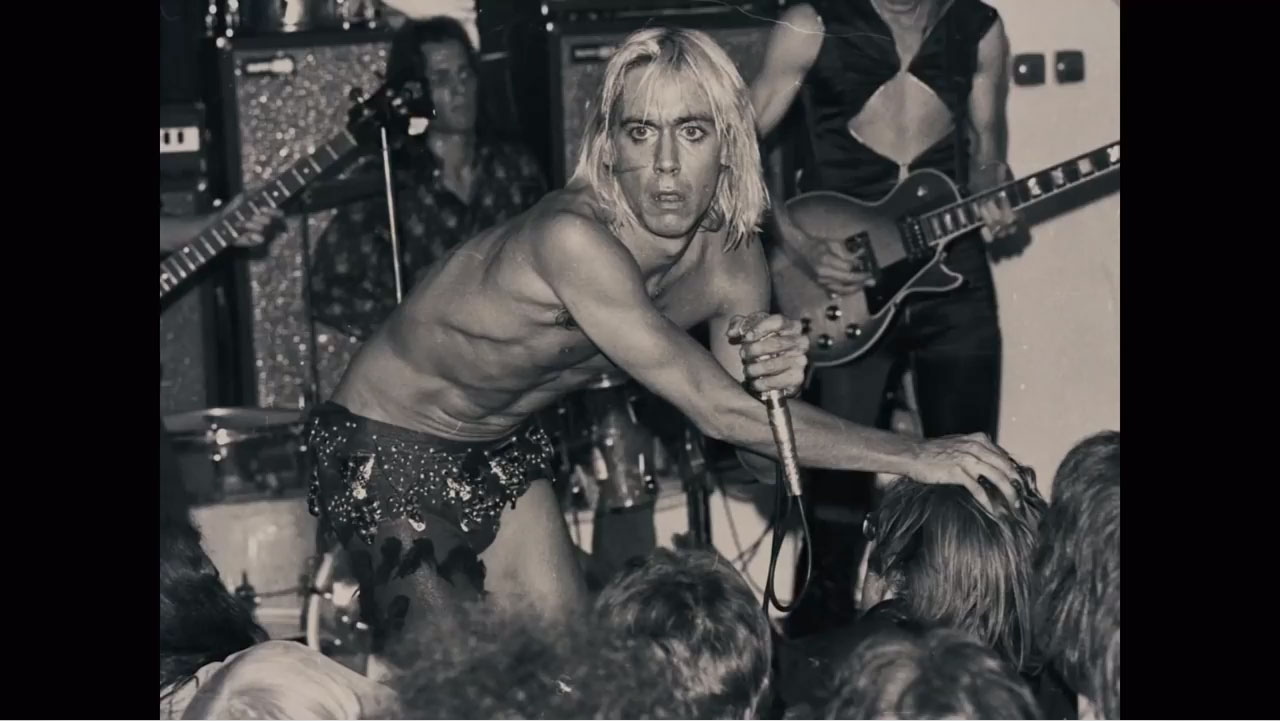
Effortlessly odd and forever fascinating, Pop and his band, the seminal punks The Stooges, are the subject of Jim Jarmusch’s new documentary, Gimme Danger.

Rock docs forever champion their subjects, frequently making a case for someone’s misunderstood and underappreciated genius. The fact that this kind of treatment could possibly be needed for arguably the first ever punk band, a group who influenced The Ramones, The Sex Pistols, David Bowie and dozens of others – well, it’s just disheartening, isn’t it?

While the story – from Ann Arbor trailer park to punk stardom to Ann Arbor trailer park – fits with the traditional “Behind the Music” approach, it’s never wise to expect the expected with Jarmusch.

Sure, the filmmaker pieces together vintage Stooges performances with interviews, but Gimme Danger is awash in the kind of wry cinematic mastery that has become Jarmusch’s trademark. Interviews with Pop take place in his home, the singer sometimes perched on a golden throne bedecked by skulls, sometimes barefoot in the laundry room in front of a washer/dryer set.

Likewise, on-again, off-again Stooge guitarist James Williamson sits through his interviews, guitar in hand, in a public men’s room.

Why? Why not?

Jarmusch has always brought an unusual perspective to his films, and The Stooges are an unusual subject. The pairing works, and for all Jarmusch’s droll use of animation, Three Stooges bits and vintage advertising as backdrop to Stooge insanity, his own affection and respect for the band is always evident.

Indeed, very early in the film, he proclaims The Stooges, “The greatest rock and roll band of all time.”

Jim Jarmusch is a native Ohioan who loves The Stooges.

Oh my God – we have so much in common!

His relationship with Pop goes back decades, since the singer co-starred in Jarmusch’s Dead Man and an early Coffee and Cigarettes short. In both, Pop (billed here as Jim Osterberg as Iggy Pop) haunts and bewilders with his sinewy frame and enormous eyes.

Oddly enough, Gimme Danger neglects some of the more jarring and lurid details of the Pop life. Jarmusch remains reverent throughout the film, focusing exclusively on The Stooges’ musical history. Almost quizzically missing is detail of Pop and crew’s self-destructive behavior, Pop’s infamous stage antics, or any mention of his solo musical or dramatic career.

Nope, Jarmusch wants you to realize that the world’s first punk band – as infamous record scout Danny Fields notes – reinvented music as we know it.

Truth.

Verdict-4-0-Stars

https://www.youtube.com/watch?v=WJhABiPQ4AU

Halloween Countdown, Day 30: Hellraiser

Hellraiser (1987)

“The box…you opened it. We came.”

Man, those cenobites were scary cool, weren’t they?

Hellraiser, Clive Barker’s feature directing debut, worked not only as a grisly splatterfest, but also as a welcome shift from the rash of teen slasher movies that followed the success of Halloween. Barker was exploring more adult, decidedly kinkier fare, and Hellraiser is steeped in themes of S&M and the relationship between pleasure and pain.

Hedonist Frank Cotton solves an ancient puzzle box, which summons the fearsome Cenobites, who literally tear Frank apart and leave his remains rotting in the floorboards of an old house. Years later, Frank’s brother Larry moves into that house with his teenage daughter Kirsty and his new wife Julia (who, oh yeah, also happens to be Frank’s ex-lover).

A gash on Larry’s leg spills blood on the floor, which awakens the remains of Frank, who then requires more blood to complete his escape from the underworld. Julia, both repulsed and aroused by her old flame’s half-alive form, agrees to make sure more blood is soon spilled.

Meanwhile, young Kirsty accidentally opens the puzzle box, and when the Cenobites come for her, she offers a deal:  let me go, and I’ll lead you to Uncle Frank.

What? A teenager in a horror flick doing some cool headed problem solving?

It was another way that Hellraiser rose above some weak production elements to stand out, and hail the arrival of Clive Barker as an important new name in horror.

Listen weekly to MaddWolf’s horror podcast FRIGHT CLUB. Do it!

Bringing Your Work Home

Ouija: Origin of Evil

by Hope Madden

It’s a rare thing for a sequel to better its predecessor. It helps when the bar is not particularly high in the first place.

Such is the case for Ouija: Origin of Evil. A prequel to the 2014 by-the-numbers spook flick Ouija, the new iteration takes us back to a stylish 1965 where a struggling widow (Elizabeth Reaser) tries to eek out a living as a fortune teller.

Though her goal is noble – she just wants to bring peace to the grieving – her gig is a scam. Worse still, she enlists the help of her 9 and 16-year-old daughters. But when she brings a Ouija board home to liven up the act, her youngest turns out to be the real medium.

This is not a great film. It is, however, not half bad.

Director Mike Flanagan (Absentia, Hush), who co-wrote with Jeff Howard, has proven that he can mine even familiar territory for chills. His casting certainly doesn’t hurt.

Rather than relying on fresh faced teens to carry a supernatural slasher, he turns to seasoned actors – Reaser and Henry Thomas (that’s right – Elliot!) – to ground the fantastical elements with understated but believable performances.

The important roles, though, are the kids. Annalise Basso – so strong in Flanagan’s middling Oculus – again nails a performance as a normal kid living through extraordinary circumstances.

Lulu Wilson plays the wee spiritualist Doris, and though she occasionally slips into something too cloying, for the most part she handles her part with a nice balance of innocence and eeriness.

Flanagan wisely picks up enough from the previous film for this origins story to make it a proper standalone effort. He does get a bit heavy handed with the tiresome FX (is anyone still undone by a crab walking pre-adolescent at this point?), but for 2/3 of the film his approach is more measured. He lets the appealing performances and family dynamic do most of the heavy lifting.

Elements that weaker filmmakers would have hit hard Flanagan allows to linger, to become intriguing rather than damning.

As has been the case throughout his career, he can’t quite close the deal. Though never terrifying and rarely fresh, Origin of Evil still brings enough era-specific nods and spook house moments to be a fun seasonal escape – but never more than that.

Verdict-2-5-Stars

Valley Dogs

In A Valley of Violence

by Cat McAlpine

Paul (Ethan Hawke) just wants to make it to Mexico, and freedom. Unfortunately, a random and heart-wrenching act of violence detours him down a bloody path to revenge. Writer/director Ti West brings his experience in the horror genre to the Wild West, with surprising but refreshing reserve.

In a Valley of Violence benefits from West’s time in horror. The build is steady and slow. Paul transforms from quiet stranger to calculating killer, but all the blood is earned. The shootouts aren’t elaborate but they are grisly and realistic.

The first note I wrote down was “color”. (The second note I wrote down was “His dog wears a bandana.”) West has colorized an homage to old westerns, bright and yellow. At the turning point, though, his roots show.

The camera work changes with Paul. A flashback is handled with a shaky cam and a flashlight. It feels like found footage, and though it’s a jarring stylistic change, it’s not unwelcome.

Another scene is shot from a single vantage point that makes the view feel like a security camera. The small room almost gets that fisheye quality, as Paul sneaks up behind an unsuspecting bather. These touches gently meld the horror and western genres, using cues from both to shape the viewers’ journey.

The performances are as realistic as West’s measured use of bullets and blood. Hawke is brooding and dangerous, but soft, too. His dog is an excellent device to extrapolate the way PTSD can function. Paul confidently banters with his dog, makes her promises, plots with her… but when he’s faced with people he keeps his mouth shut and his eyes low.

As the sheriff, John Travolta plays with equal restraint and mastery. He’s quiet but commanding, a good match to Hawke. As he devolves into panic, Travolta becomes funnier and more terrifying.

These performances from the two veterans balance out a younger cast of characters who are spoiling for adventure.

Karen Gillan shines with absurdity and humor, and she’s hard not to watch, even sprinting across the back of a shot. Taissa Farmiga is all wide-eyed wonder, but carries enough grit to make her character arc as compelling as Paul’s.

Most of the absurdity comes from a truly excellent Burn Gorman, as the priest. His drunken ramblings about sinners are bizarre, and showcase some of the best writing in the film. The priest’s appearances divide the film into three distinct parts, highlighted by Paul’s changing interaction with him each time. He serves as a beautiful device and a welcome, though momentary, release of pressure.

In a Valley of Violence is an homage to the traditional western with updates from the horror genre, not with blood, but with tension. Paired with a fantastic score from Jeff Grace and a cast that delivers, West has avoided the trappings of the modern shoot-em-ups and rejoined the classics with some fresh perspective.

Verdict-4-0-Stars

https://www.youtube.com/watch?v=ek8cjysuvJ4

Halloween Countdown, Day 22: Housebound

Housebound (2014)

You need to see Housebound.

Funny and scary, smartly written and confidently directed as to take full advantage of both, this is a film that makes few missteps and thoroughly entertains from beginning to end.

Gerard Johnstone writes and directs, though his brightest accomplishment may be casting because Morgana O’Reilly’s unflinching performance holds every moment of nuttiness together with brilliance.

O’Reilly plays Kylie, a bit of a bad seed who’s been remanded to her mother’s custody for 8 months of house arrest after a recent spate of bad luck involving an ATM and a boyfriend who’s not too accurate with a sledge hammer.

Unfortunately, the old homestead, it seems, is haunted. Almost against her will, she, her hilariously chatty mum (Rima Te Wiata) and her deeply endearing probation officer (Glen-Paul Waru) try to puzzle out the murder mystery at the heart of the haunting. Lunacy follows.

Kylie’s disdain for every single person and event in this film is beautifully animated – O’Reilly constantly looks as if she’s just smelled something foul. But her expressions also share those fleeting moments of regret that make her utterly, admirably human.

Good horror comedies are hard to come by, but Johnstone manages the tonal shifts magnificently. You’re nervous, you’re scared, you’re laughing, you’re hiding your face, you’re screaming – sometimes all at once. And everything leads up to a third act that couldn’t deliver better.

The film is so much fun it all but begs to be seen with a group.

Listen weekly to MaddWolf’s horror podcast FRIGHT CLUB. Do it!

https://www.youtube.com/watch?v=BT1KcYiPb4I

Halloween Countdown, Day 17: They Look Like People

They Look Like People (2015)

A lot of horror films introduce characters with a kind of cinematic shorthand: disheveled, bearded, worn white tee shirt = sketchy but sympathetic. Skinny jeans, self-empowerment in the headphones, checks his flex in the gym mirror = douchebag.

Generally it happens so the film can devote less time to character development and jump right into the carnage, but They Look Like People writer/director Perry Blackshear has other aims in mind.

Christian (Evan Dumouchel) is killing it. He’s benching 250 now, looks mussed but handsome as he excels at work, and he’s even gotten up the nerve to ask out his smokin’ hot boss. On his way home from work to change for that date he runs into his best friend from childhood, Wyatt (MacLeod Andrews), who’s looking a little worse for wear. Christian doesn’t care. With just a second’s reluctance, Christian invites him in – to his apartment, his date, and his life.

But there is something seriously wrong with Wyatt.

Blackshear’s film nimbly treads the same ground as the wonderful Frailty and the damn near perfect Take Shelter in that he uses sympathetic characters and realistic situations to blur the line between mental illness and the supernatural.

Wyatt believes there is a coming demonic war and he’s gone to rescue his one true friend. Andrews is sweetly convincing as the shell shocked young man unsure as to whether his head is full of bad wiring, or whether his ex-fiance has demon fever.

The real star here, though, is Dumouchel, whose character arc shames you for your immediate assessment. Blackshear examines love – true, lifelong friendship – in a way that has maybe never been explored as authentically in a horror film before. It’s this genuineness, this abiding tenderness Christian and Wyatt have for each other, that makes the film so moving and, simultaneously, so deeply scary.

They Look Like People can only barely be considered a horror film. It lacks the mean-spiritedness generally associated with the genre and replaces it with something both beautiful and terrifying. Whatever the genre, though, Blackshear’s film is a resounding success.

Listen weekly to MaddWolf’s horror podcast FRIGHT CLUB. Do it!

Halloween Countdown, Day 14: Freaks

Freaks (1932)

Short and sweet, like most of its performers, Tod Browning’s controversial film Freaks is one of those movies you will never forget. Populated almost entirely by unusual actors – midgets, amputees, the physically deformed, and an honest to god set of conjoined twins (Daisy and Violet Hilton) – Freaks makes you wonder whether you should be watching it at all. This, of course, is an underlying tension in most horror films, but with Freaks, it’s right up front. Is what Browning does with the film empathetic or exploitative, or both? And, of course, am I a bad person for watching this film?

Well, that’s not for me to say. I suspect you may be a bad person, perhaps even a serial killer. Or maybe that’s me. What I can tell you for sure is that this film is unsettling, and the final, rainy act of vengeance is truly creepy to watch.

Beautiful ‘normal’ Cleopatra (Olga Baclanova) performs in the circus, flirting with sideshow manager Hans (Harry Earles) for the perks – the gifts, and the chance to mock him with the other ‘normals’ in the group. When she realizes that Hans is loaded, she decides to marry and then kill him, with the help of dunderheaded Hercules (Henry Victor).

Among the film’s drawbacks are the ridiculously thick accents of most of the principal actors. Earles, in particular, is almost impossible to understand, but he is – god help me – absolutely adorable. That’s Hans’s problem, of course. His baby face and tiny stature make him tough to take seriously, and his tendency to fall for opportunistic bitches that tower over him isn’t helping.

To make things even more unseemly, Hans is loved truly by fellow little person Frieda, played by the actor’s own sister Daisy. The two characters are not, as far as I can tell, meant to be related, but they look exactly alike, which just makes the whole effect all the weirder. I have no idea if this was intentional or not, but I’m for it.

Well sir, the close knit “family” of freaks gets wind of Cleopatra’s plan, and they exact revenge. The revenge itself – the final act – makes no logical sense, but the perpetration is awesome.

Browning’s camera stays near the ground, filming everything as lowly, dark, hiding, creeping. He’s taking the inconcrete fear we have of what is abnormal and making it literal: that which we hide from view will creep forth and kill us.

Or, turn us into a chicken lady.

Listen weekly to MaddWolf’s horror podcast FRIGHT CLUB. Do it!

Bottom Line Business

The Accountant

by Hope Madden

For a middling thriller, The Accountant offers a handful of worthy items.

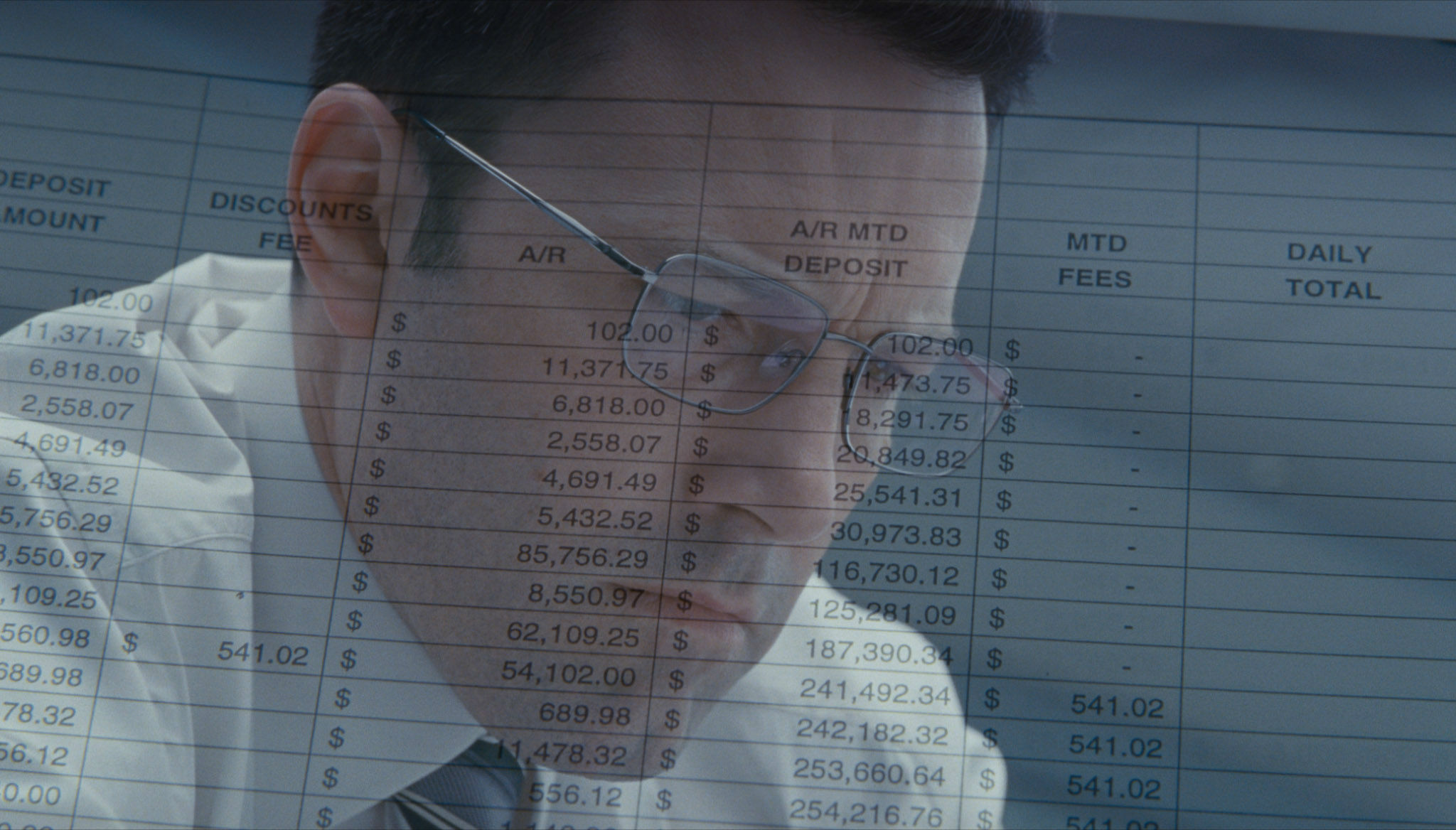
Its central character Christian (Ben Affleck) is an unusual choice for a hero. He’s a mathematical genius on the autism spectrum whose youth was spent learning to function in society, and developing mad mercenary skills. Why the second? Never really clear.

Affleck is a proven director. He doesn’t direct The Accountant, but recent roles suggest he’s become savvier with his acting choices as well. He seems to recognize what the rest of us have known for a while – he lacks range.

What better character for him, then, than a man who struggles to show the slightest emotion?

The film also boasts – much thanks to Affleck’s performance – humor. Rather than an amalgam of stereotypes and contrivances, Affleck’s bean counter comes off as a relatable human.

Another item of note: director Gavin O’Connor (Warrior) choreographs the impeccable action sequences with the kind of clarity and efficiency that reflect the film’s protagonist. Even as that sounds potentially dull, the result is quite the opposite. These are some of the clearest and most interesting action pieces of the year, actually.

O’Connor’s direction and Affleck’s performance are subtle with Christian’s tics, focusing our attention instead on slight changes in the character that make him more provocative. By pairing him with Anna Kendrick’s corporate CPA Dana – a sweet, jovial type – O’Connor explores the social awkwardness in all of us.

Now for the problems.

These fall mostly to the script, penned by Bill Dubuque, whose triad of storylines climaxes in a clean and witty shootout. Too bad every intentional surprise has long-since been guessed, leaving only those inconsistencies in the plot that are probably not supposed to have been noticed, either.

Christian, drawn to puzzles and possessing a super human knack for math, often works with disreputable clients. He’s taken a legit client – a robotics firm that makes prosthetics for the medical industry. But this isn’t as it seems, and brings Christian in contact with a corporate hitman who wants him silenced.

Meanwhile, the Treasury Department is finally piecing together Christian’s whereabouts and may be onto him. Why now? Another mystery.

The criss-crossing, flash-backing, money-following and head-scratching don’t pay off because, at its core, the thriller is just exploiting a gimmick. But Affleck and O’Connor are not, which is why the film turns out as well as it does.

Verdict-3-0-Stars

https://www.youtube.com/watch?v=wmKtb-Pvpf4

Halloween Countdown, Day 10: Jacob’s Ladder

Jacob’s Ladder (1990)

Jacob’s Ladder isn’t exactly a horror film, but it is as unsettling and creepy as any movie you’ll watch. The entire 113 minutes transpires in that momentary flash between life and death, with both light and dark trying to make a claim on Jacob Singer’s soul.

Tim Robbins plays Singer with a weary sweetness that’s almost too tender and vulnerable to bear. In a blistering supporting turn, Elizabeth Pena impresses as the carnal angel Jezebel. The real star here, weirdly enough, is director Adrian Lyne.

Known more for erotic thrillers, here he beautifully articulates a dreamscape that keeps you guessing. The New York of the film crawls with unseemly creatures hiding among us. Filmed as a grimy, colorless nightmare, Jacob’s Ladder creates an atmosphere of paranoia and dread.

By 1990, the Vietnam film has run its course, but with some distance from the post-Platoon glut, the “flashback” crisis that underlines Singer’s confused nightmare feels less stale. It allows the movie to work on a number of levels: as a metaphysical mystery, a supernatural thriller, and a horror film.

The horror is peppered throughout, and there are several scenes that will make your skin crawl.

The storyline is challenging and may seem like a sleight of hand more than anything, but Robins’s deeply human performance and some memorable scares make it a standout for the season.

Listen weekly to MaddWolf’s horror podcast FRIGHT CLUB. Do it!

Train in Vain

The Girl on the Train

by Hope Madden

Not every book makes for a good movie – not even those page turners that seem cinematic as you read them.

Paula Hawkins’s insanely popular novel The Girl on the Train, for instance, had the feel of a pulpy film noir from the get go. Unfortunately, director Tate Taylor (The Help, Get On Up) can’t deliver on that promise.

Emily Blunt does, though. As the titular traveler – a vodka-addled protagonist of the most unreliable sort – her performance is as frustrating, sympathetic and confused as it needs to be to sell the sordid tale.

Rachel (Blunt) lives vicariously through the couple she passes twice daily on her commute. So fortunate they’re always home – on the porch, in the yard, or conveniently screwing just inside the window. How lovely they are. How vibrant.

Of course, some of this could be the overactive imagination of a very lonely woman who’s really diverting her own attention away from the house two doors down. The one that used to be hers, with the husband that used to be hers, along with his new wife and baby.

Yes, her imagination gets her into lots of trouble. That and her blackouts.

Taylor, with the help of screenwriter Erin Cressida Wilson, takes a stab at shifting the points of view of the three female leads – Rachel, her ex’s new wife Anna (Rebecca Ferguson), and that dreamy neighbor Megan (Haley Bennett, who is everywhere right now).

Only Blunt manages to keep your attention, though. Bennett and Ferguson are saddled with one-dimensional props for characters: misty eyed sexpot and brittle housewife, respectively. What should be an intriguing mystery soaked in the criss-crossing perspectives of three damaged women becomes a character study kept in motion by lifeless cogs.

Not that their male counterpoints fare any better. Taylor wastes Luke Evans and Edgar Ramirez with broadly drawn stereotypes, though Justin Theroux gets to chew a little scenery.

It’s impossible to watch this film without longing for David Fincher (Gone Girl, Girl with the Dragon Tattoo), whose proven that dark chick lit can create undeniably watchable cinema. Like Rachel’s own window on the world, Taylor’s film is little more than a bleary mess.

Verdict-2-0-Stars