Tag Archives: Ethan Hawke

Put It Right On Me

The Weight

by George Wolf

A few desperate men are given the chance to wipe their slates clean. Transport some precious cargo across 100 miles of hazardous terrain —including one very unstable bridge — and they’ll all be free to start new lives.

The Weight will bring to mind Sorcerer and The Wages of Fear, specifically, but on a more general level it recalls a throwback brand of thriller that’s dense with themes of sin and redemption layered through the choices, toil and sweat of conflicted souls.

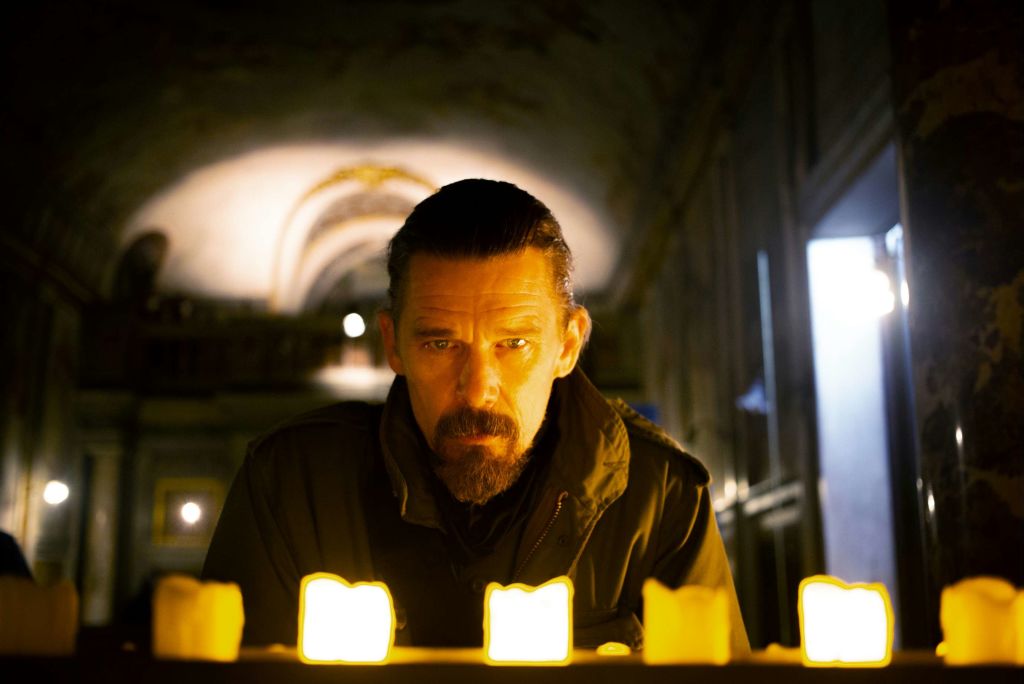
It’s 1933 in Oregon, and the country is still reeling from the Great Depression. Sam Murphy (Ethan Hawke) is already struggling to provide for his young daughter Penny (Avy Berry) when a brush with the law lands him in a labor camp.

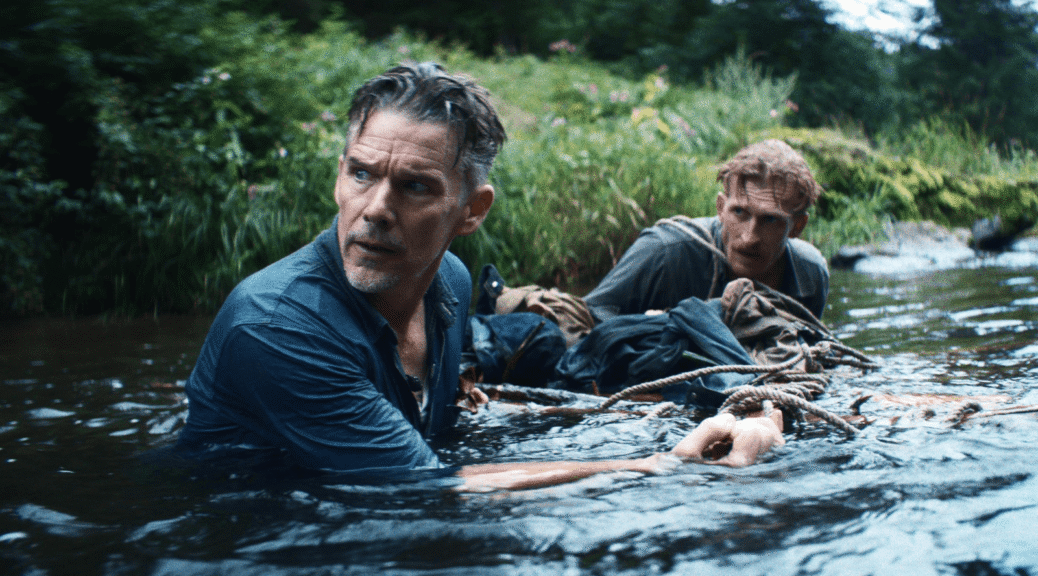
Warden Clancey (Russell Crowe) notices that Murphy is a quiet man who can solve problems, so he presents a tempting offer: move the stash of gold out of Blackhawk mine before FDR confiscates it, and Murphy will be out of jail in time to save his daughter from becoming a ward of the state.

It’s an easy call, so Murphy handpicks a small team, and heads out — under the watchful eyes of two armed chaperones, of course.

Director Padraic McKinley, reuniting with Hawke after The Good Lord Bird series, crafts his big screen debut with detail and vision, adapting the weighty script from Matthew Booi, Shelby Gaines and Leo Scherman into a tense and visually striking adventure. The forests and rivers become daunting obstacles that raise the stakes, while McKinley illuminates an exquisite fight for life via lighting bursts of a thunderstorm.

And of course Hawke is perfect. He’s become such a reliably wonderful actor, and this type of understated inner struggle is his sweet spot, finding an authentic, cautious chemistry with a terrific Crowe and the solid ensemble, including Julia Jones (Dexter: New Blood) as a runaway woman eager to join the mission and not look back.

You may guess a plot turn or two, and a tighter grip in the editing room would have trimmed some bloat from the nearly two-hour runtime, but The Weight still carries plenty of welcome genre heft. It manages to balance familiarity with richness of character and craft, giving us the kind of movie we should be glad to still find in the theater.

Lonely in Your Nightmare

Black Phone 2

by Hope Madden

I was cautiously optimistic about director Scott Derrickson’s sequel to his creepy 2021 Joe Hill adaptation, Black Phone. And lo and behold, within the first ten minutes, Black Phone 2 had worked three of my favorite things into its tale: Pink Floyd, Duran Duran, and extreme profanity from children.

I’m listening.

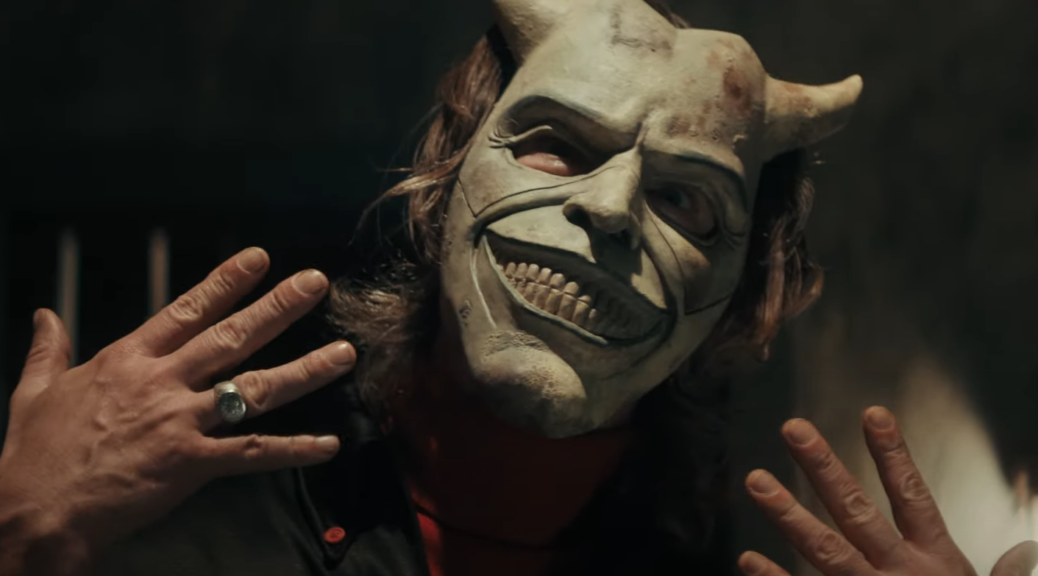
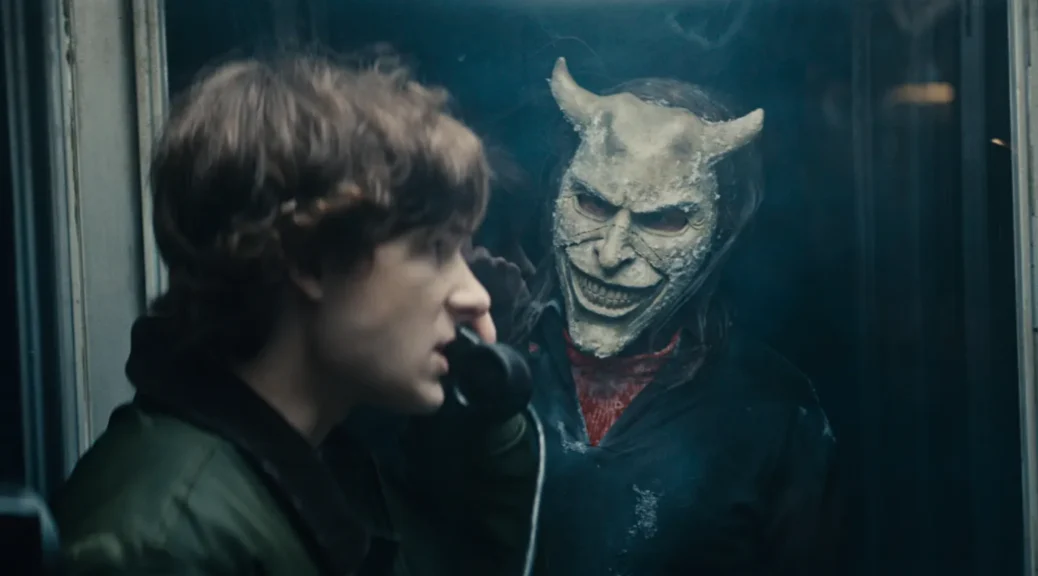
Finney (Mason Thames) and his little sister Gwen (Madeleine McGraw) are struggling to find a new normal after Finney killed serial killer The Grabber (Ethan Hawke) a few years back. What Finn doesn’t want to admit is that he still sees that masked demon in a top hat everywhere he looks. Meanwhile, Gwen’s dreams have taken a decidedly sinister turn.

Last time out, Derrickson, writing with longtime collaborator C. Robert Cargill, filled out Hill’s short story with a just-strong-enough b-story about Gwen and her dreams. It gave the film a larger world to live in and enhanced the supernatural elements of Hill’s original nicely.

For the sequel, Cargill and Derrickson mine Gwen’s abilities for the bulk of the story, as her dreams lead the two siblings to a Christian sleepaway camp called Alpine Lake. Derrickson’s early 80s timeline allows for an analog look that lets him artfully conjure Friday the 13th, of course, as well as A Nightmare on Elm Street (the original and episode 4). There’s even a little Curtains thrown in there. Fun!

The script tries to close too many circles, find too many coincidences, and the story collapses on itself. Worse, a perfectly grotesque and bloody climax is kneecapped by an unfortunately saccharine ending.

Still, there is plenty of bloodshed and gore, and Hawke still cuts an impressive figure in that mask. We don’t see or hear enough of him in a story that feels rushed, but you don’t need much of The Grabber to be creeped out.

My real worry was that if Gwen and crew didn’t figure out what’s what and get home from camp in time, she might miss the Duran Duran show. Talk about tension!

Call Me Maybe

The Black Phone

by Hope Madden

It can be tough to turn a short story into a feature-length film. Filmmakers wind up padding, adding needless plotlines, losing the pointed nature of the short. And Joe Hill’s story The Black Phone is short and to the point. It’s vivid and spooky, and it plays on that line between the grotesque and the entertaining that marks children’s lives.

Director Scott Derrickson (Sinister, Dr. Strange), adapting Hill’s story with longtime writing collaborator C. Robert Cargill, has his work cut out for him.

The first thing he does is change up the villain, which is generally a terrible idea. It works out well here, though, because Ethan Hawke and his terrifying assortment of masks are the stuff of nightmares.

Hawke plays The Grabber. With his top hat, black balloons and big black van, he’s managed to lure and snatch a number of young boys from a small Colorado town. Finney (Mason Thames) is his latest victim, and for most of the film Finney waits for his punishment down a locked cement basement.

Not much else down there besides a filthy mattress and an old, disconnected rotary phone.

Derrickson does stretch the tale with the kind of secondary plot you might find in one of Hill’s dad Stephen King’s books. Back at home, wearing a yellow slicker and rain boots, Finney’s little sister Gwen (Madeleine McGraw) dreams of the missing boys. Her dreams are so accurate they draw the interest of local police.

This is not the film’s strongest element, but it doesn’t play too poorly, either. Derrickson understands that a film’s hero needs some backstory, some arc to make their journey meaningful. He gets heavy-handed with Finney’s family drama, but he doesn’t overwhelm the primary creepiness with it. And he links the two storylines together smoothly with a shared bit of the supernatural.

The phone.

Time period detail sets a spooky mood and Derrickson has fun with soundtrack choices. But the film’s success—its creepy, affecting success—is Hawke. The actor weaves in and out of different postures, tones of voice, movements. He’s about eight different kinds of creepy, every one of them aided immeasurably by its variation on that mask.

Derrickson hasn’t reinvented the genre. But, with solid source material and one inspired performance, he’s crafted a gem of a horror movie.

From the Land of the Ice and Snow

The Northman

by Hope Madden

Robert Eggers releases his third feature this week, a Viking adventure on an epic scale called The Northman.

You had me at Robert Eggers.

On display once again are the filmmaker’s aesthetic instincts, his mastery of framing, and his ability to squeeze every ounce of brutal beauty from a scene. This film is gorgeous, simultaneously broadcasting the wonder and unconquerable ruggedness of its Nordic land and seascapes.

There are also familiar faces. Anya-Taylor Joy plays Olga, a spoil of war too cunning to remain long in bonds. She’s joined in smaller roles by Eggers favorites Ralph Ineson, Kate Dickie, and Willem Dafoe as a wizened court jester.

Now, if you’re not a fan of the director’s two previous features, 2015’s The Witch and 2019’s The Lighthouse, that does not necessarily predict your feelings about his latest effort. Eggers is working in a different genre with a different, far larger cast and scope this time around.

Alexander Skarsgård is the film’s titular hero; Claes Bang, his uncle and foe.

What you have is a classic vengeance tale: prince witnesses royal betrayal and the murder of his father. He loses his mother and his crown and vows revenge. You’ve seen the trailer.

I will avenge you, father.

I will save you, mother.

I will kill you, Fjolnir.

Skarsgård is cut to play a Viking. His performance is primarily physical: blind rage looking for an outlet. He’s believably vicious, bloodthirsty, single-minded and, when necessary, vulnerable. The entire cast around him is equally convincing.

Nicole Kidman – who played Skarsgård’s wife in the HBO series Big Little Lies, graduates to mother here, while Ethan Hawke plays his father, King Aurvandil War-Raven.

That’s a good name.

Oh, plus Bjork because Iceland. In fact, Egger’s co-writer here, beloved Icelandic novelist and screenwriter Sjón, penned not only last year’s gorgeous folk horror The Lamb, but also Bjork’s early work with Lars von Trier, Dancer in the Dark.

Classic is exactly how The Northman feels. The story is gritty and grand, the action brutal and the storytelling majestic. As is the case with Eggers, expect a fair amount of the supernatural and surreal to seep in here and there, but not enough to outweigh the meticulously crafted period realism.

Brothers in Harms

Zeros and Ones

by Hope Madden

Abel Ferrara, man. Dude refuses to follow a traditional film structure, and sometimes that works so well. Bad Lieutenant and The Addiction — two of my favorites — took on a dreamlike atmosphere thanks to the filmmaker’s loose structure and it suited both pictures.

Beginning with 2014’s Pasolini, Ferrara seems to have abandoned the standard framework entirely, his films becoming more dreamlike than lucid. His latest, Zeros and Ones, follows that path.

Ethan Hawke stars in this hazily connected sequence of scenes emphasizing one man’s journey toward a realization about himself, his brother and the world around him. Hawke plays both the journeyman, a military specialist of some kind, and his brother, a freedom fighter in Rome.

Hawke wanders empty post-pandemic Rome as bits of military and religious debauchery and double-crossing weave and bob across the screen. Meanwhile, Hawke’s voiceover oscillates between meta-Christian reflections and calls to action.

For his part, Hawke delivers two discernibly different characters, sure, but in keeping with Ferrara’s themes, two distinct types: apostle and wayward soldier. Nothing feels scripted, and with a veteran like Hawke, that works out fine. Like Willem Dafoe in so many of Ferrara’s recent films, Hawke inhabits the desolate dreamscape with a weary resignation, a ghost guiding us toward some dark inevitability.

Zeros and Ones is a pandemic film, but rather than feeling like a filmmaker doing whatever they can with the situation, this one seems like an opportunity Ferrara has been waiting for. He isn’t doing his best within unreasonable constrictions, he’s finally found that empty, nihilistic apocalypse he’s prepared for. The empty streets and lonesome, masked figures feel apiece of his greater goal.

What was that goal? What is it always? The world is filth, hope is futile, man is doomed. You’ve seen his films, right? If so, you probably already know where you’ll fall on Zeros and Ones. It is less poetic and self-indulgent than Tommaso or Siberia, less sensible than his earlier work, and less compelling than a lot of what he’s done. And the explosions look ridiculous.

And yet, there is nothing quite like an Abel Ferrara film.

A Shot in the Dark

Tesla

by Matt Weiner

Nikola Tesla is having a moment. Hot on the heels of 2019’s The Current War comes Tesla, another take on the inventor from writer and director Michael Almereyda. And while both treatments are anchored around Tesla’s rivalry with Thomas Edison over electrifying the country, Tesla is so far apart in style and tone that the subject could be a completely different person.

Almereyda has already shown that he can handle big sci-fi themes on a small budget. His adaptation of Marjorie Prime was moving and challenging. Tesla also has the rhythm of a stage play, one where characters and dialogue take precedence over strict history.

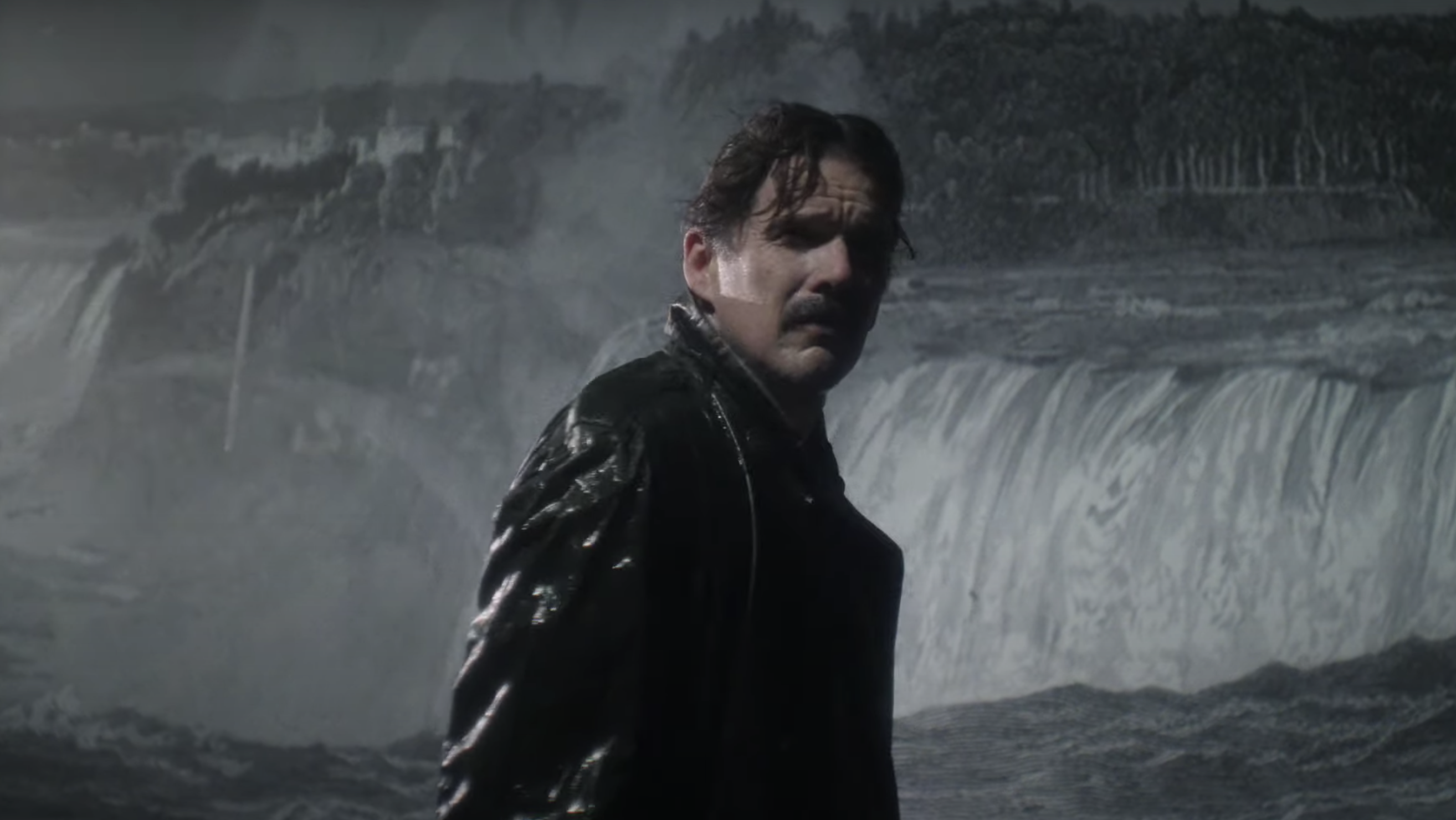
This is still a biopic though. The story begins as Tesla (Ethan Hawke) splits from Thomas Edison (Kyle MacLachlan), and follows through his partnership with George Westinghouse (Jim Gaffigan) and his ultimate victory in the war of the currents.

But as Tesla’s personal and professional lives unravel, Almereyda takes his film off the rails as well. From historical counterfactuals and modern-day interruptions to an arresting musical number, Tesla the movie surrenders all control over its title character—and does so gleefully. These big swings don’t always connect, but the attempts are always compelling.

In Almereyda’s version, Tesla is a cipher. Hawke trades in his usual charm for a portrayal that blends tortured genius and mad scientist, and despite his quiet demeanor he fills every scene with an intensely heavy presence.

It’s up to the supporting cast, especially MacLachlan’s flighty yet imperious Edison, to draw out whatever they can from the inscrutable Tesla. It’s an unusual effect for a biopic, but it works. Tesla is the rare adaptation that seems determined to obscure its subject rather than illuminate him.

This Tesla is a man not so much ahead of his time but completely outside of it. Almereyda suggests that the enduring appeal of Tesla can’t be neatly captured in the war of the currents against Edison. There’s Tesla the pioneering genius who lit up the Chicago World’s Fair, and there’s Tesla who died penniless in a hotel room dreaming of death rays. And somewhere in between, there’s a man who raises the curiosity of everyone he meets.

But in this telling, the closest we can come to unsolvable mysteries are a reflection here, a spark there. This Tesla is a brief light guiding us toward some greater understanding, one that vanishes just as quickly.

Belle of the Ball

The Truth

by Matt Weiner

Actors getting lost in a role can become the stuff of legends, or the butt of jokes—as Olivier’s advice allegedly went to Dustin Hoffman, “Why don’t you just try acting?” In The Truth, director Hirokazu Kore-eda takes one of film’s most iconic actresses and sets to demolishing the notion that an artist could ever separate who they are from what they have to say.

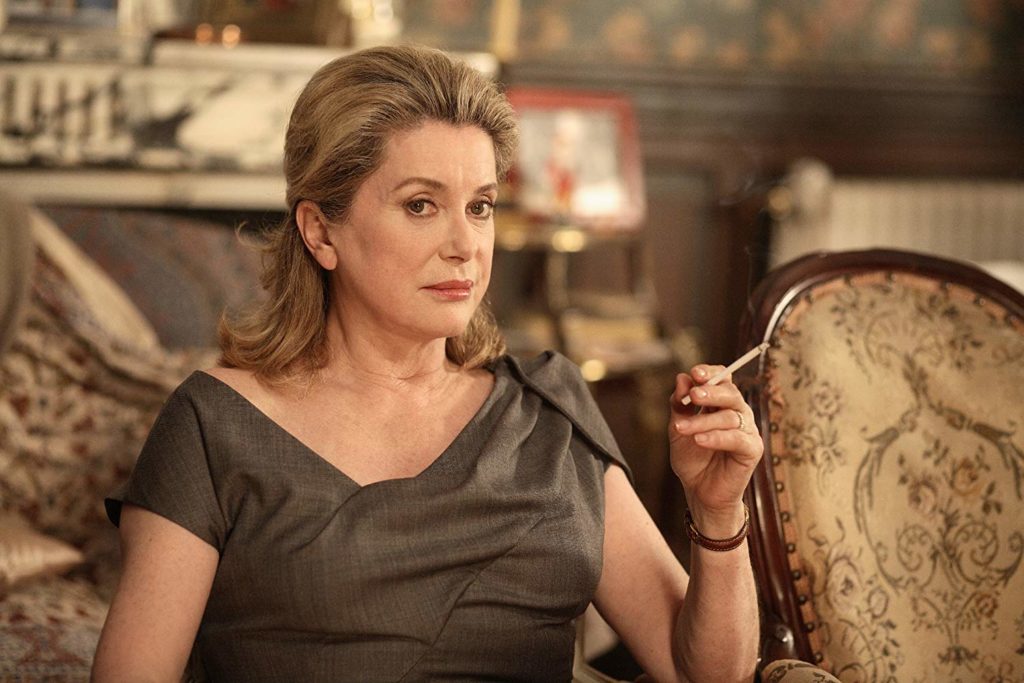
The film is Kore-eda’s first foray outside of Japan, and a worthy follow-up to his masterful 2018 drama Shoplifters. The drama, also written by Kore-eda, has a lighter touch in The Truth, but it’s no less arresting thanks to a brilliant self-referential performance from Catherine Deneuve.

Deneuve plays Fabienne, an idol of French cinema now at a point in her life when she’s ready to look back on her storied career. Fabienne’s daughter Lumir (Juliette Binoche) has brought along her family from America to pay Fabienne a visit. When Lumir gets an early look at Fabienne’s memoir, she lashes out at the wide gulf between Fabienne the myth and Fabienne the mother, the one who pursued her art to the detriment of everything else in her life.

One family’s drama becomes a delightful interrogation of memory and art. And as if the unreliable memoir weren’t enough to drive the point home, Fabienne is also currently filming a new movie against an up-and-coming actress playing her younger version.

The film’s quirky sci-fi twist forces Fabienne to face her younger self, and the grande dame of French cinema isn’t quite ready to relinquish her fading star power to what she sees as a poor imitation of her own youthful rise to celebrity.

Kore-eda blurs the lines even further by referencing Deneuve’s breakout years, specifically Belle de Jour, with posters and costumes dotting Fabienne’s house and still exerting a powerful hold on her sense of self-worth. (Ethan Hawke’s understated turn as Lumir’s bohemian husband Hank also feels like an alternate universe version of Jesse from the Before trilogy… but that might also just be Hawke’s natural “these are my ‘just chilling in France’ vibes.” Either way, the man is living his best life.)

The result is a family drama that manages to humanize the dysfunction without fully absolving anyone. Fabienne might be a legend, but she’s still only human. Living an entire life unmoored, unable to process anything in the moment without layers of artifice to mediate any real emotion, seems like it should be punishment enough.

Hellhound on My Trail

Blaze

by George Wolf

Outlaw country musician Blaze Foley lived too hard and died too young, a life so steeped in cultish mystery that even the director of his biopic believed an urban legend about what led to Foley’s tragic death.

Ethan Hawke, who also co-wrote the film with Foley’s ex-wife Sybil Rosen, presents Blaze’s story with respectful grace and an observational tone that moves casually but cuts deeply. Seemingly drawing inspiration from frequent collaborator Richard Linklater (who has a cameo role in the film), Hawke’s directing style is unassuming and unhurried, mining resonance from small moments that define his subject.

It seems cosmically right that a virtual unknown singer-songwriter, Ben Dickey, plays Foley, who may be best known to mainstream country fans as the writer behind songs recorded by artists such as Merle Haggard, Willie Nelson, Lyle Lovett, and John Prine.

Dickey, who was working as a chef when Hawke offered him the role, is a revelation. Though more physically imposing than the real Foley, Dickey reveals the demons that frequently bested Blaze, pushing him to sabotage his relationship with Sybil (Alia Shawkat-also stellar) as well as his chances at big-time music business success.

With music such a big part of the film, Hawke’s decision to present it in its live, raw glory reaps big dividends.

Dickey mimics Blaze’s phrasing, picking and rambling onstage persona to eerie perfection, getting an impressive assist from Charlie Sexton as fellow troubadour Townes Van Zandt. Sexton (who had an 80s hit with “Beats So Lonely,” has been Bob Dylan’s guitarist for years and appeared alongside Hawke in Boyhood) gives the film solid layers of reference as the drawling Van Zandt charms a radio DJ (Hawke) with stories of Blaze, the little-known legend.

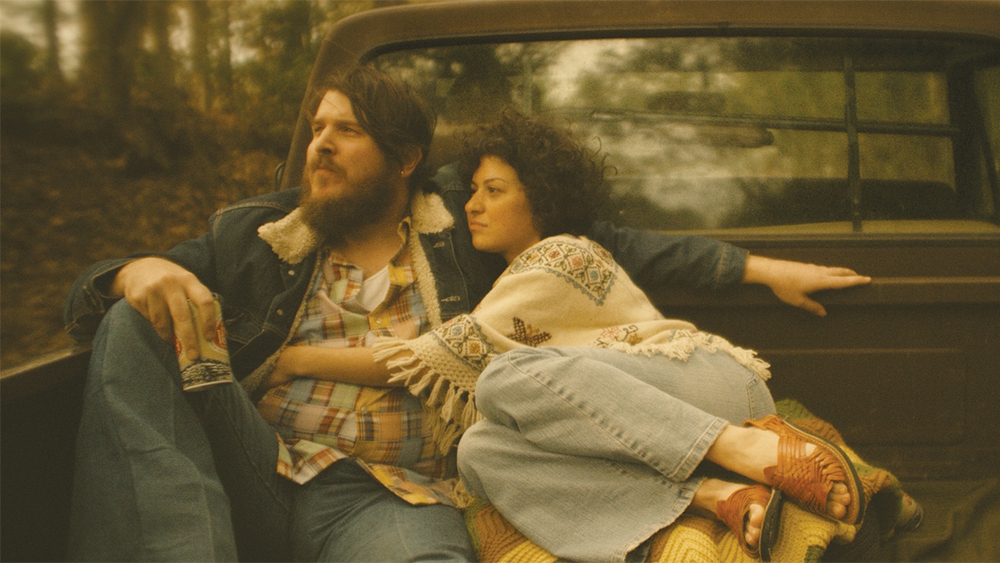
From dreaming of stardom while riding in a truck bed, to antagonizing barroom audiences, to a visit with Blaze’s once-abusive, now senile father (Kris Kristofferson), sequence after sequence rings more organic and true than most found in music biopics.

It’s clear this a passion project for Hawke (and, of course, for Rosen), who is smart enough not to let that passion interfere with authenticity. Blaze gives Foley the re-birth he clearly earned – as a conflicted, damaged soul longing to be heard.


An Unfortunate Movie Mixtape

Juliet, Naked

by Brandon Thomas

Movies that mix music and quirk tend to punch me right in the feels (is a 36-year-old allowed to say “feels”?). Once, Begin Again and Sing Street are a few examples of movies that gave my tear ducts a workout. The only feelings Juliet, Naked conjured in me were boredom, apathy and a dash of frustration.

Annie (Rose Bryne) is stuck in a rut. She lives in her sleepy hometown and works the same job her father did. Her boyfriend, Duncan (Chris O’Dowd), is more interested in a long-disappeared musician than starting a family with her. When a CD demo for Duncan’s favorite musician, Tucker Crowe (Ethan Hawke), shows up at their home, Annie is the first to listen. Her negative reaction to the album, mixed with Duncan’s over-the-top positive one, sets off a chain of events that ends with Crowe himself visiting her in England.

I realized halfway through Juliet, Naked that director Jesse Peretz (Our Idiot Brother) was trying to reinvent the classic rom-com. Instead, it’s more of a Frankenstein’s monster hybrid, as one part indie drama mixed with your classic rom-com clichés makes for strange bedfellows. It’s not to say that these tropes couldn’t exist together – they could – but it would need to be in the hands of a stronger filmmaker.

The cast fares a little bit better. Hawke and Byrne do what they can with a messy script, and they have an undeniable chemistry. The problem – again – lies in that it sometimes feels like the characters are moving between two different films. One moment, Hawke’s character is lamenting his shortcomings as a father, and the next he’s in a hospital bed surrounded by all of his ex-wives/lovers. It’s a scene that wouldn’t feel out of place in a network sitcom.

Byrne is the one saving grace. She’s always been able to lift the material she’s given and it’s no different here. There’s a sweetness to Annie that never feels naïve. She’s a competent, driven woman who just hasn’t allowed herself to go after what she wants in life.

There’s a behind-the-camera pedigree to Juliet, Naked that makes its shortcomings all the more disappointing. It’s based on the book by Nick Hornby (About a Boy, High Fidelity), and produced by Judd Apatow (Bridesmaids, Superbad, Pineapple Express). Apatow has especially shown himself to be adept at producing really funny, thoughtful comedies.

Had Juliet, Naked kept both feet firmly in one genre, I think the film would’ve had something nice to say. Instead, it’s a murky mess of what could have been.


Suitable for Framing

Maudie

by George Wolf

“Show me how you see the world…”

Thanks to a glorious performance from Sally Hawkins, Maudie shows us the enduring flame of creativity, and how a Canadian folk hero harnessed it to rise above the challenging hand life dealt her and become a sought-after artist.

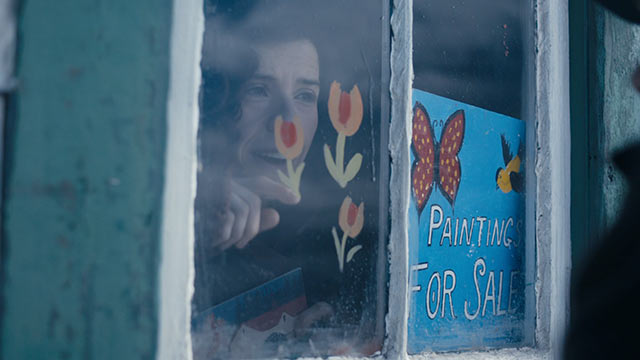
Born in Nova Scotia in 1903, Maud Dowley suffered with rheumatoid arthritis from a very young age. By 1937 both her parents had died, and not long after Dowley answered an ad from local fish peddler Everett Lewis for a “live-in housekeeper.” The two were married some weeks later, and Maud began her professional art career selling small, hand painted Christmas cards to the locals.

While director Aisling Walsh and writer Sherry White can’t follow through on all the possibilities for resonance that Maud’s story offers, Hawkins carries the film. Hers is a warm, endlessly captivating performance that fills nearly every frame with the sweetest of heartbreaks.

As Maud’s gruff and often disagreeable husband Everett, Hawke continues his recent streak of impressive performances with a turn that gives Hawkins a fitting bookend. But this is her show, to such an extent that the sheer joy of watching her can compensate for when the film takes the road more traveled.

While Maud’s talent and ingenuity are in focus, and we see her rise above those who would cast her off as nothing but a burden, Maudie‘s spirit soars. But Walsh and White then become too satisfied with a by-the-numbers love story pastiche.

It’s a curious destination for a film that seemingly had much more to say.

Still, it has Hawkins in nearly every scene, all suitable for framing.

Verdict-3-5-Stars