Tag Archives: Mason Thames

Inane Blacktop

Idiots

by Matt Weiner

It took many years and a last-minute safe-for-work title change for Idiots to reach screens. Writer-director Macon Blair, always a welcome presence in front of the camera, has talked openly about the decade-plus and numerous cast changes to get his latest feature made.

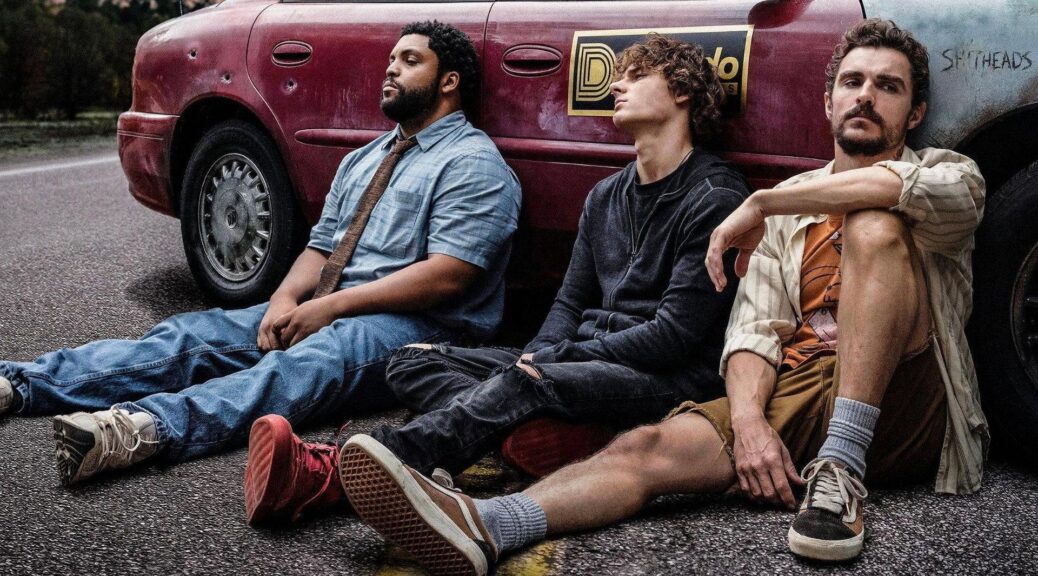
That’s a lot of pressure for an antagonistic road comedy that follows two in-over-their-heads contractors who transport troubled teens to rehab centers. Davis (O’Shea Jackson Jr.) is well-meaning and religious, with a genuine empathy for his passengers. Mark (Dave Franco), on the other hand, seems more likely to be the one in the backseat being escorted.

The pair gives the impression they would be outmatched in the best of circumstances, let alone trying to handle their latest charge. Sheridan Kimberley (Mason Thames) is a sociopathic son of hands-off billionaires eager to get him out of sight, out of mind, and in compliance with the latest legal deal to keep him out of prison.

Sheridan plots to turn Mark and Davis against each other and escape their custody, which sends the pair on a road trip from hell that ends up roping in a vengeful sex worker (Kiernan Shipka), celebrity-worshiping sycophants and a band of Soundcloud-rapping bounty hunters/kidnappers whose incompetence rivals only Mark and Davis.

For a crass hard-R comedy, there’s sadly only one scene that comes close to the gross goo-fest to be had in Blair’s more focused and self-assured Toxic Avenger remake. Idiots does the best it can do with the low budget, but more physical comedy would’ve helped distract from all the implausible character decisions and their incongruent philosophizing.

Idiots counts Danny McBride, Jody Hill and David Gordon Green among its executive producers. Whether or not they played a direct hand in day-to-day production, the comic sensibilities of the HBO mainstays behind shows like Vice Principals and Righteous Gemstones are firmly part of the film’s DNA. Blair’s story takes major tonal swings for a grossout comedy with few redeeming characters. Or any redemption at all. This works for lovable losers like McBride’s Kenny Powers or Seth Rogen and the elder Franco brother in Pineapple Express. It’s a difficult register to pull off across a feature-length comedy, though, and Blair’s uneven script doesn’t pick up the slack consistently enough. Still, though there’s something to be said for a comedy willing to be this nihilistic and … well, idiotic.

Lonely in Your Nightmare

Black Phone 2

by Hope Madden

I was cautiously optimistic about director Scott Derrickson’s sequel to his creepy 2021 Joe Hill adaptation, Black Phone. And lo and behold, within the first ten minutes, Black Phone 2 had worked three of my favorite things into its tale: Pink Floyd, Duran Duran, and extreme profanity from children.

I’m listening.

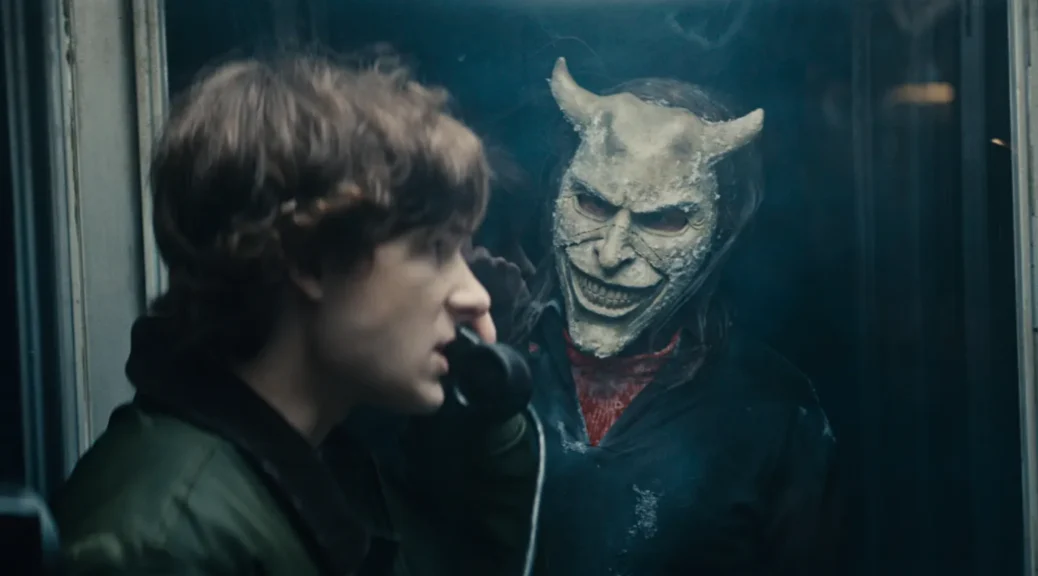
Finney (Mason Thames) and his little sister Gwen (Madeleine McGraw) are struggling to find a new normal after Finney killed serial killer The Grabber (Ethan Hawke) a few years back. What Finn doesn’t want to admit is that he still sees that masked demon in a top hat everywhere he looks. Meanwhile, Gwen’s dreams have taken a decidedly sinister turn.

Last time out, Derrickson, writing with longtime collaborator C. Robert Cargill, filled out Hill’s short story with a just-strong-enough b-story about Gwen and her dreams. It gave the film a larger world to live in and enhanced the supernatural elements of Hill’s original nicely.

For the sequel, Cargill and Derrickson mine Gwen’s abilities for the bulk of the story, as her dreams lead the two siblings to a Christian sleepaway camp called Alpine Lake. Derrickson’s early 80s timeline allows for an analog look that lets him artfully conjure Friday the 13th, of course, as well as A Nightmare on Elm Street (the original and episode 4). There’s even a little Curtains thrown in there. Fun!

The script tries to close too many circles, find too many coincidences, and the story collapses on itself. Worse, a perfectly grotesque and bloody climax is kneecapped by an unfortunately saccharine ending.

Still, there is plenty of bloodshed and gore, and Hawke still cuts an impressive figure in that mask. We don’t see or hear enough of him in a story that feels rushed, but you don’t need much of The Grabber to be creeped out.

My real worry was that if Gwen and crew didn’t figure out what’s what and get home from camp in time, she might miss the Duran Duran show. Talk about tension!

Fire in the Sky

How to Train Your Dragon

by Hope Madden

If it weren’t for Toy Story, How to Train Your Dragon would be remembered as the finest animated trilogy ever made. The tale of outsider love, parental expectations, physical limitations and dragons was as emotionally satisfying as it was visually stunning. So, it was both disappointing and inevitable to learn that it would be given the live-action treatment.

Dean DeBlois, co-writer and co-director of the animated features, returns with a surprisingly game adaptation.

Mason Thames is Hiccup, the puny, brainy son of Viking chieftain Stoick the Vast (Gerard Butler, reprising his role from the animated series). A disappointment as a Viking, Hiccup eventually finds that his weakness (empathy) is, indeed, his greatest strength. Next, to convince the thick-headed Vikings that the dragons they fight and fear are really, really cool.

And they are cool.

Hiccup’s new bestie, Toothless—the last of the Night Furies—is as beautifully, charmingly, mischievously feline as fans of the original remember. Wisely, DeBlois and team lean the balance of dragons more toward live action. They’re detailed and intimidating—decidedly less kid-friendly than their animated counterparts. One of them is always on fire, which is badass.

The ragtag gang of Vikings-in-training (Julian Dennison, Bronwyn James, Harry Trevaldwyn, and Gabriel Howell) endear and amuse. Likewise, Nick Frost cuts a fun, comical figure as wizened old Gobber, Viking trainer.

Butler, who brought power and pathos to the cartoon, is perhaps even more effective in the flesh (though under pounds of makeup and prosthetics). His confused affection, misdirected pride and aching tenderness lend real humanity to the tale.

Too bad the leads can’t muster the same. Thames and Nico Parker, as Hiccup’s rival/love interest Astrid, share no real chemistry. Parker lacks the fire the role calls for, and Thames can’t mine his fish-out-of-water moments for comedy.

DuBlois also inexplicably cuts the legs from under the original film’s all-is-lost moment, rushing to emotional safety and limiting the power of the film’s breathless climax.

But whatever its flaws, once How to Train Your Dragon is airborne, it’s pure cinema. DuBlois takes to the skies with an untamed wonder that makes the ride both real and magical. Though it may not be the masterpiece of its animated predecessor, this live action dragon adventure is a worthwhile trip.

Call Me Maybe

The Black Phone

by Hope Madden

It can be tough to turn a short story into a feature-length film. Filmmakers wind up padding, adding needless plotlines, losing the pointed nature of the short. And Joe Hill’s story The Black Phone is short and to the point. It’s vivid and spooky, and it plays on that line between the grotesque and the entertaining that marks children’s lives.

Director Scott Derrickson (Sinister, Dr. Strange), adapting Hill’s story with longtime writing collaborator C. Robert Cargill, has his work cut out for him.

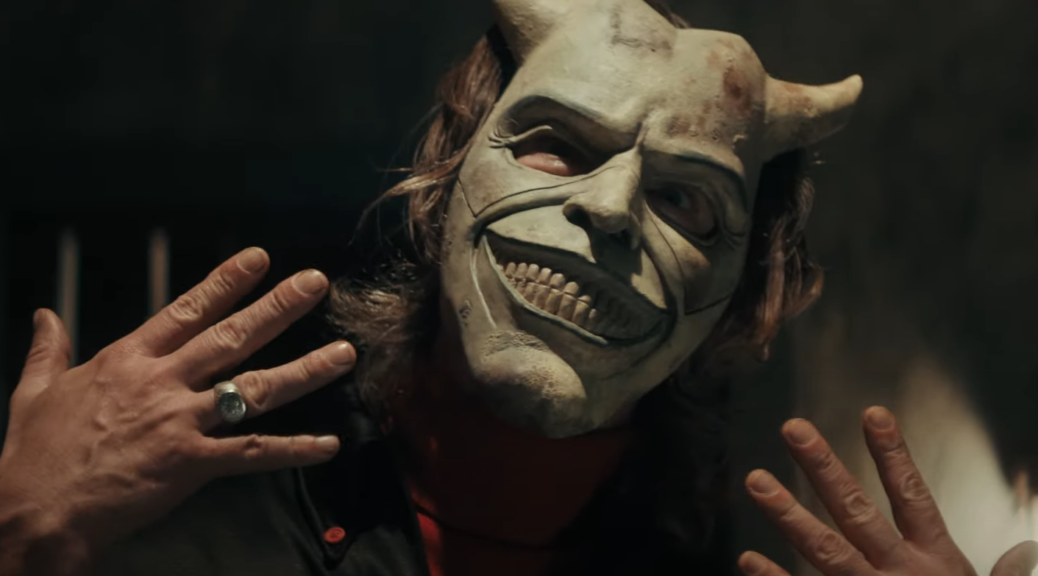
The first thing he does is change up the villain, which is generally a terrible idea. It works out well here, though, because Ethan Hawke and his terrifying assortment of masks are the stuff of nightmares.

Hawke plays The Grabber. With his top hat, black balloons and big black van, he’s managed to lure and snatch a number of young boys from a small Colorado town. Finney (Mason Thames) is his latest victim, and for most of the film Finney waits for his punishment down a locked cement basement.

Not much else down there besides a filthy mattress and an old, disconnected rotary phone.

Derrickson does stretch the tale with the kind of secondary plot you might find in one of Hill’s dad Stephen King’s books. Back at home, wearing a yellow slicker and rain boots, Finney’s little sister Gwen (Madeleine McGraw) dreams of the missing boys. Her dreams are so accurate they draw the interest of local police.

This is not the film’s strongest element, but it doesn’t play too poorly, either. Derrickson understands that a film’s hero needs some backstory, some arc to make their journey meaningful. He gets heavy-handed with Finney’s family drama, but he doesn’t overwhelm the primary creepiness with it. And he links the two storylines together smoothly with a shared bit of the supernatural.

The phone.

Time period detail sets a spooky mood and Derrickson has fun with soundtrack choices. But the film’s success—its creepy, affecting success—is Hawke. The actor weaves in and out of different postures, tones of voice, movements. He’s about eight different kinds of creepy, every one of them aided immeasurably by its variation on that mask.

Derrickson hasn’t reinvented the genre. But, with solid source material and one inspired performance, he’s crafted a gem of a horror movie.